Degree Library
Viticulture and Enology Degree Guide: Courses, Careers, Costs, and How to Choose
A viticulture and enology degree combines the study of grape growing with the science and practice of winemaking. Depending on the program, students may…
By Tome Fierre · Staff Writer Assessment.com · Published October 5, 2026 · Last updated October 6, 2026
A viticulture and enology degree combines the study of grape growing with the science and practice of winemaking. Depending on the program, students may explore plant and soil science, vineyard management, fermentation, wine quality, research, and the business realities of agricultural production. Graduates may pursue work in vineyards, wineries, laboratories, sales, or related food and agricultural fields, but job options depend on experience, location, and the curriculum they choose. Programs do not all have the same balance: one may emphasize vineyard science, another winery production or research. Review course plans and practical learning requirements before deciding. Not sure whether viticulture and enology fits you? Take the Free MAPP Career Assessment to see how your motivations, interests, and natural preferences align with this degree and the careers it can lead to.
A viticulture and enology degree studies grape growing and winemaking, combining agricultural and plant science with wine production and, in some programs, research or business. Courses and practical requirements vary by college. Graduates may pursue vineyard, winery, laboratory, quality, sales, or related agricultural and food-science work; the degree does not guarantee a particular job or salary.
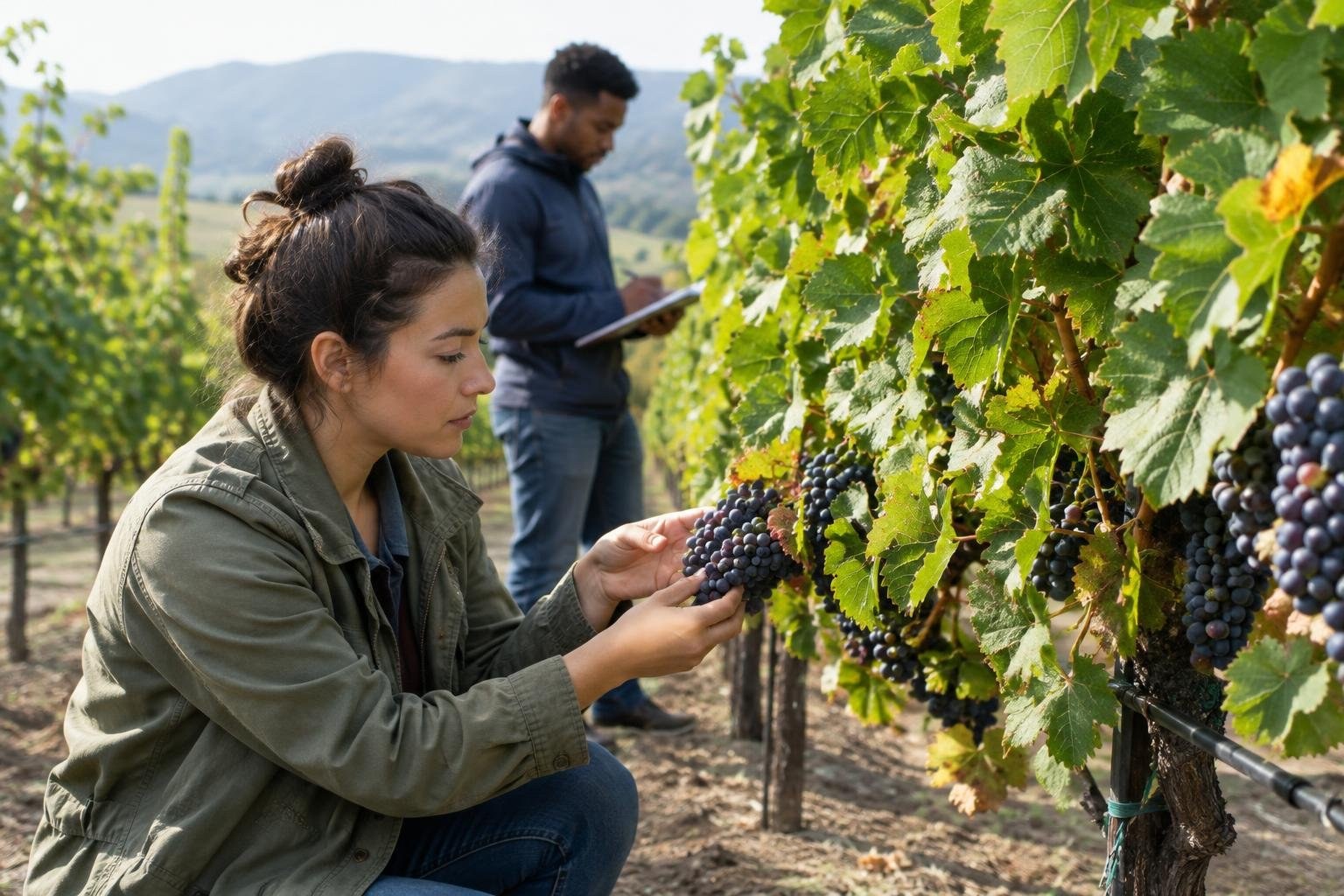
What Is a Viticulture and Enology Degree?
Viticulture and enology is an academic and professional field concerned with grape production and winemaking. Viticulture addresses the cultivation of grapevines and vineyard systems; enology addresses the science and practice of making and evaluating wine. A combined program connects these topics, although its emphasis can differ by institution.
Colleges may offer related study through certificates, associate or bachelor’s degrees, and graduate credentials. Program titles and credential availability vary, so search catalogs for terms such as viticulture, enology, wine science, or related plant and food-science subjects. A program title by itself does not establish what students will learn: the official catalog and degree plan are more useful.
The field overlaps with plant science, horticulture, agriculture, food science, chemistry, and agricultural business. Consider a related major if you want a broader food-science foundation, a wider range of crops, or a stronger emphasis on business rather than grapes and wine.
What Do Students Study?
Course plans vary, but students may encounter plant and soil science, grape production, laboratory methods, fermentation, wine production, quality evaluation, agricultural operations, and business or communication subjects. Look at course descriptions and prerequisites, not just course titles. Ask how lessons connect to practical tasks and how much choice students have through electives or concentrations.
Useful applied learning can include field observations, laboratory exercises, production-related projects, internships, or research. The availability and structure of these experiences are school-specific. Ask whether they are required, how students obtain placements, whether travel or seasonal schedules are involved, and what access online or transfer students receive.
At the graduate level, the focus may become more specialized or research-oriented. Washington State University describes research-based master’s and doctoral work in horticulture with projects related to viticulture and enology. UC Davis lists a viticulture and enology master’s program and related graduate groups through which doctoral study may be pursued. These examples illustrate possible routes, not a universal structure.
Before applying, request a sample sequence for your intended start date and ask an adviser which courses depend on seasonal availability. That can help you understand the workload and plan prerequisites, practical experiences, and graduation timing.
Skills You Can Develop
Coursework can build a foundation in biology, chemistry, mathematics, plant science, and the principles behind grape and wine production. Depending on the program, students may also study grapevine physiology, wine chemistry, fermentation, sensory science, and winery systems.
Applied coursework, research, and internships can give students opportunities to use scientific concepts in practical settings. When comparing programs, review course descriptions and ask what methods, projects, or field experiences are included. Use examples from courses and placements to describe your experience when discussing future opportunities.
Who Is This Degree Best For?
This degree may interest students who want to study grape production and winemaking through biological and physical sciences, practical production knowledge, or both. Programs can include subjects such as chemistry, plant science, fermentation, sensory science, economics, and management, so review the curriculum to see whether its mix suits your goals.
Consider which parts of the subject matter appeal to you: vineyard and grape production, winery processes, scientific study, or business topics. Compare required courses and practical opportunities before deciding. Assessment.com’s Free MAPP Career Assessment, Degree Matching, and Career Matching can help you reflect on your interests, alongside direct research into programs and occupations.
Admissions, Length, and Academic Demands
Admissions rules depend on the credential and college. An undergraduate applicant may need a high school diploma or equivalent and the materials required by that institution. Transfer admission, graduate admission, prerequisite courses, GPA expectations, essays, recommendations, and other requirements are set by individual programs. Do not assume one university’s rule applies elsewhere.
For graduate study, UC Davis states that its Viticulture and Enology program offers an M.S.; related doctoral study is available through specified graduate groups. An example of a published preparation pathway is not a universal prerequisite. Check the current admissions page for the exact program and degree you intend to pursue.
Completion time depends on credential level, credit requirements, transfer evaluation, course sequencing, and whether you enroll full time or part time. Accelerated pathways may be available at some colleges, but confirm that courses and practical requirements fit the proposed schedule.
Academic challenges may include scientific prerequisites, balancing laboratory and field work, and scheduling around courses offered at particular times. Prepare by reviewing required classes, meeting an adviser, and asking about tutoring, transfer-credit evaluation, and realistic part-time plans.
Online, Hybrid, and On-Campus Options
Program pages describe different course and experience options, including practical grape-growing and winemaking study, laboratory work, research, and internships. The available information here does not establish whether a particular degree can be completed online or in a hybrid format.
Before enrolling, ask the college which courses can be taken remotely and where any laboratory, vineyard, winery, research, or internship requirements take place. Confirm whether students arrange placements themselves and whether the schedule fits your location and plans. Use the program’s current degree requirements to verify the answers.
Cost, Financial Aid, and Ways to Manage Expenses
The available program descriptions do not provide comparable tuition or total-cost figures. Request an itemized estimate from each college for the credential you plan to pursue, including tuition, fees, supplies, and any expenses tied to practical coursework or placements.
Compare the expected cost through completion, then ask the college’s financial-aid office which grants, scholarships, loans, or other aid may apply to you. Confirm eligibility and terms directly with the school and aid provider. If you are considering a transfer route, request a written evaluation of which credits will count toward the degree and how that affects your remaining requirements.
Compare the full requirements as well as price. Program descriptions include different credential and practical-study options, so check that the estimate covers the specific course plan and experiences you intend to complete.
Careers, Pay, and Industry Change
Program descriptions connect viticulture and enology study with grape and wine production, vineyard management, practical production knowledge, and scientific study. Depending on the preparation and experience a student builds, possible directions to investigate include vineyard or winery work, production-related roles, and research or further study.
The cited program descriptions do not establish salaries or hiring requirements for particular occupations. To assess pay, qualifications, and openings, identify specific job titles and consult current occupational information and local postings. Treat a degree as preparation to investigate career options, not a promise of a particular job or income.
Internships, Experience, and Credentials
Some program descriptions identify research and internship opportunities, while others describe practical learning in grape production, vineyard management, winemaking, or sensory analysis. Ask each college which experiences are available, whether they are required, how students qualify, and whether you must arrange a placement.
Before accepting an internship or other practical opportunity, request a clear description of its learning goals, schedule, costs, supervision, and responsibilities. Keep an accurate record of projects and methods you complete so you can explain your experience when applying for work or further study. Check current job postings to see which experiences employers request for the roles you are considering.
Related Degrees and Graduate-School Options
Related paths include plant science or horticulture for broader plant-focused study; food science for a wider range of food products and processing; agricultural business or agribusiness for a stronger management and commerce emphasis; chemistry for deeper chemical study; and biology for broader life-science preparation. Program names and curricula vary, so compare required courses and career preparation directly.
- Plant science or horticulture: Consider this if you want to study plants or crops beyond grapes.
- Food science: Consider this if food processing, safety, or product science interests you more than vineyards and wine.
- Agribusiness: Consider this if operations, marketing, finance, or management is your priority.
- Chemistry: Consider this if you want a broader chemical-science foundation.
- Biology: Consider this if you want a wider life-science route and may specialize later.
For graduate work, UC Davis describes its Viticulture and Enology program as offering an M.S., with doctoral studies pursued through related graduate groups. Washington State University describes research-based master’s and Ph.D. degrees in horticulture with projects related to viticulture and enology. The appropriate path depends on research interests and each institution’s admissions rules.
Advantages, Drawbacks, and Is It Worth It?
A potential advantage of this field is that programs can connect grape production with winemaking and scientific study. Some published curricula also include research or internship opportunities. Compare those offerings with your goals to decide whether the program gives enough attention to the subjects and experiences you want.
A specialized program may not match every student’s plans. If you want a broader focus, compare it with related fields such as plant science, food science, or chemistry, and review required courses rather than relying on program names. Whether the degree is worth its cost depends on your goals and the specific curriculum and opportunities available. Ask colleges for complete cost and program information before deciding.
How to Choose a Qualified Program
Use this checklist when comparing programs:
- Does the curriculum cover grape production, winemaking, or both in the balance you want?
- Which science, business, and practical courses are required?
- Are research, internships, laboratory work, or field experiences available or required?
- What credential does the program award, and what are its admission and completion requirements?
- What is the full estimated cost, including any expenses tied to practical learning?
- Which courses and experiences can be completed in your preferred format and location?
Request current written answers from each college and compare degree plans directly. Program descriptions show that courses and practical opportunities vary, so confirm what applies to your intended credential and start date. Assessment.com’s education-matching resources can help organize interests and options; verify program details with the colleges.
Credentials, Rules, and Safety
The available program descriptions do not specify professional licensing or credential requirements for particular jobs. If a role you are considering mentions a license, certificate, or other qualification, verify the requirement with the relevant official agency or employer before enrolling or paying for training.
For field, laboratory, or production experiences, ask the college what training and supervision are provided and what responsibilities students may have. Request written guidance about safety expectations, required equipment, and whom to contact with concerns. Follow the program’s instructions and do not perform tasks without appropriate training and authorization.
Safe Ways to Reduce Costs
To compare expenses, ask colleges for itemized estimates for the same credential and course plan. Confirm tuition, fees, supplies, and any costs associated with laboratory work, field experiences, research, or placements. The available program descriptions identify different credentials and practical-learning options but do not provide comparable cost figures.
Before committing, request a written explanation of aid eligibility, transfer-credit decisions, and any costs not included in the tuition estimate. If you are considering an optional credential, first check whether it is relevant to the work you want and verify its requirements and price with the provider or employer.
Mistakes, Red Flags, and an Enrollment Checklist
Common points to verify include the balance of viticulture and enology courses, the practical experiences included, the credential awarded, and the complete cost. Program descriptions show that curricula and experience options differ, so do not assume that a program name alone tells you what you will study.
Before You Enroll
- Read the current catalog and course sequence.
- Confirm admission, credential, and completion requirements with the college.
- Get the full cost estimate and aid information in writing.
- Ask whether practical experiences are available or required and how they are arranged.
- Review job postings for the roles you hope to pursue and note their stated qualifications.
- Compare at least one related program or major before deciding.
Pause if a college cannot clearly explain its curriculum, costs, or practical requirements. Verify claims directly with the institution and other relevant official sources before making an enrollment decision.
From Degree to Career: Possible Routes
Possible directions to investigate include grape-production and vineyard work, winemaking and winery systems, or scientific research related to viticulture and enology. Program descriptions also identify internships and research opportunities, which may help students explore practical or research-focused interests.
- Production-focused study: Compare coursework in grape growing, vineyard management, winemaking, and winery systems.
- Research-focused study: Ask about research projects and the preparation required for graduate study. Washington State University describes research-based master’s and doctoral work in horticulture with projects related to viticulture and enology.
- Further study: UC Davis offers an M.S. in Viticulture and Enology, with doctoral study pursued through related graduate groups.
These are examples of areas to explore, not guaranteed job sequences. Check each employer’s requirements and each institution’s current program and admissions information. The Free MAPP Career Assessment can help you explore careers and related degrees; pair that reflection with direct research into programs and employers.
Take the Free MAPP Assessment →
Frequently asked questions
Is viticulture and enology hard?
It can be challenging if you are new to biology, chemistry, math, or working outdoors. Programs may combine scientific concepts with vineyard, winery, laboratory, and business topics. The exact workload depends on the school and degree level. Reviewing sample course plans and asking about practical requirements can help you judge whether the demands fit your preparation and interests.
Is a viticulture and enology degree worth it?
It may be worthwhile for students who want scientific and practical preparation for work related to grape growing, wine production, quality, or agricultural research. Value depends on tuition, aid, local opportunities, the program’s experience options, and your goals. Compare likely entry-level roles and required experience rather than assuming the degree leads to one specific job or salary.
What jobs can I get with a viticulture and enology degree?
Depending on the curriculum and experience you build, possible directions include vineyard or winery operations, production support, laboratory work, quality assurance, sales, and agricultural or food-science research support. Job titles and requirements vary by employer. Some advanced research or academic roles may call for graduate education, while operations and sales roles may value practical experience and communication skills.
How much can you make with a viticulture and enology degree?
There is no single salary for this degree. Pay depends on the occupation, employer, region, experience, education, and seasonality of the work. Research specific job titles using current U.S. Bureau of Labor Statistics and O*NET information, and compare local postings for vineyard, winery, laboratory, quality, and sales positions. Treat a degree-level salary estimate as a rough guide, not a promise.
Can you earn a viticulture and enology degree online?
Some coursework may be available online, but a fully online route may not provide the field, lab, winery, or research experience that particular careers require. Availability varies by college and program. Ask whether practical components are required, where they take place, whether students must arrange placements, and whether online students have equal access to equipment, faculty, and career support.
Does viticulture and enology require math or science?
Many programs draw on science and quantitative reasoning, although the amount and level vary. Students may encounter biology, chemistry, plant and soil topics, measurement, data interpretation, and production decisions. Check prerequisites and required courses at each college. If you need preparation, ask about tutoring, introductory coursework, or other academic support before enrolling.
Do you need graduate school for viticulture and enology careers?
Not necessarily for every career. A bachelor’s degree may prepare students for some industry and technical roles, depending on coursework and experience. Graduate study can be relevant for advanced research, specialized scientific work, or some academic careers. UC Davis describes a viticulture and enology master’s program and related graduate-group routes for doctoral study; requirements differ across institutions and fields.
What certifications help in viticulture and enology?
Certifications and licenses depend on the role and location, and a degree does not automatically confer a professional license. Before paying for a credential, check current employer postings and ask programs or professional organizations which qualifications are valued for your intended work. Verify eligibility, renewal rules, fees, and whether the training is recognized by employers in your target region.
What is the difference between viticulture and enology?
Viticulture focuses on grape growing, including vines, growing conditions, and vineyard decisions. Enology focuses on winemaking and related production and quality topics. Many programs combine the fields, but course balance and practical opportunities differ. Compare required courses and electives to see whether a program emphasizes vineyard science, winery processes, business, research, or a mixture.
How long does a viticulture and enology degree take?
The time required depends on credential level, enrollment pace, transfer credits, and program rules. Certificates and associate degrees generally involve fewer credits than bachelor’s degrees; graduate programs have separate admission and completion requirements. Ask each college for its published credit plan, typical full-time sequence, part-time options, and how prior coursework is evaluated before planning a completion date.
People Also Ask
What do viticulture and enology mean?
Viticulture is the study and practice of growing grapes; enology is the study and practice of winemaking. A combined degree may address both, with the balance depending on the college.
What can you do with a viticulture and enology degree?
Potential work includes vineyard and winery operations, production support, laboratory and quality roles, sales, and related agricultural or food-science work. Responsibilities and qualifications vary by employer.
Is viticulture and enology a science degree?
Programs vary in their science requirements. Review the prerequisites and required courses to see how much biology, chemistry, math, and data analysis a specific program includes.
Can I study viticulture and enology online?
Some classes may be offered online, but practical field, laboratory, winery, or research experiences may require in-person participation. Confirm requirements directly with each college.
How do I choose a viticulture and enology program?
The best choice depends on your goals, finances, desired region, and whether you prefer grape growing, wine production, research, or business. Compare curricula and hands-on learning rather than relying on a program name alone.
Should I get a master's degree in enology?
Graduate study can support research or other specialized scientific and academic pathways, but it is not necessary for every industry role. Check education requirements for your intended job.
Is viticulture different from enology?
Viticulture centers on grape production and vineyard systems; enology centers on winemaking. Combined programs link both areas, while individual colleges may let students specialize.
How much does a viticulture and enology degree cost?
Program costs differ by institution, residency, credential, aid, and practical fees. Request a complete estimate that includes tuition, fees, supplies, housing, and any travel or placement costs.
Viticulture and enology can suit students who want to connect plant and soil science with wine production, quality, and the business of a specialized agricultural industry. The degree is not a guarantee of a particular job or salary: opportunities depend on the program, location, experience, and the kind of work you want to do. Compare actual course plans, hands-on opportunities, total costs, and career outcomes before enrolling. If the science, seasonal fieldwork, and production environment appeal to you, investigate programs and speak with students, faculty, and employers. If your main interest is food science, agriculture, business, or fermentation more broadly, compare those paths too. A good decision weighs career prospects alongside your motivations and preferred way of working.
Sources
- Viticulture and Enology | UC Davis Graduate Studies
- Viticulture and Enology studies | Here are 6 things you should know! -
- Viticulture & Enology | Washington State University
- Viticulture and Enology | UC Davis Graduate Studies
- General Catalog - Viticulture & Enology, Bachelor of Science
- Viticulture and Enology Program and Degree Options | Colorado Mesa University
- UC Davis | Viticulture and Enology Major
- Viticulture and Enology: A comprehensive guide for a wine degree
- Get Details About Viticulture and Enology Program from AP Guru
- General Catalog - Viticulture & Enology, Bachelor of Science
- Enology and Viticulture Option | Food Science & Technology
- Viticulture & Enology Major and Minor
- 2026 Viticulture and Enology. Degree Guide