Degree Library
Veterinary Microbiology and Immunobiology Degree Guide: Courses, Careers, Requirements, and Fit
A guide to veterinary microbiology and immunobiology degrees: what students study, admissions and timelines, program costs, career possibilities, graduate study, and how to compare programs.
Veterinary microbiology and immunobiology is a life-science field focused on microorganisms, immune systems, and disease in animals, with connections to human health and public health. Students learn to investigate how pathogens behave, how immune responses work, and how laboratory methods can help detect or study disease. The name may describe a major, concentration, or graduate specialization rather than one standardized degree offered everywhere. Related programs can lead toward laboratory research, animal-health science, diagnostics, or graduate and professional study. A bachelor’s degree is not the same as a Doctor of Veterinary Medicine (DVM), and it does not by itself qualify someone to practice as a veterinarian. Not sure whether veterinary microbiology and immunobiology fits you? Take the Free MAPP Career Assessment to see how your motivations, interests, and natural preferences align with this degree and related careers.
Millions of people Take the MAPP Career assessment to see which Degrees are the best Match!
You can too,
What Is a Veterinary Microbiology and Immunobiology Degree?
Veterinary microbiology and immunobiology brings together microbiology, immunology, and animal or biomedical science. Students investigate microbes and other infectious agents, how host immune systems respond, and how these processes relate to disease detection and health. Depending on the program, the subject may sit within veterinary science, biomedical science, or animal and comparative biomedical sciences.
There is no single credential structure. Colleges may offer a related bachelor’s major, an undergraduate concentration, a graduate certificate, a master’s, or doctoral research specialization. A related bachelor’s degree can be a foundation for jobs or further study, but it is not a substitute for a DVM. Veterinary medicine is a separate professional pathway.
At the undergraduate level, veterinary science courses may cover anatomy, biochemistry, histology, immunology, microbiology, molecular biology, pathology, pharmacology, toxicology, and virology. Graduate study can focus more deeply on topics such as immunology, nutrition, veterinary pathology, physiology, or toxicology as they relate to human and animal health.
What Do Students Study? Courses, Labs, and Research
Course lists differ by college, so review the catalog rather than assuming every program uses the same title or sequence. Common foundations include biology, chemistry, biochemistry, and laboratory science. More advanced study may include microbiology, immunology, virology, molecular biology, pathology, disease ecology, epidemiology, or toxicology.
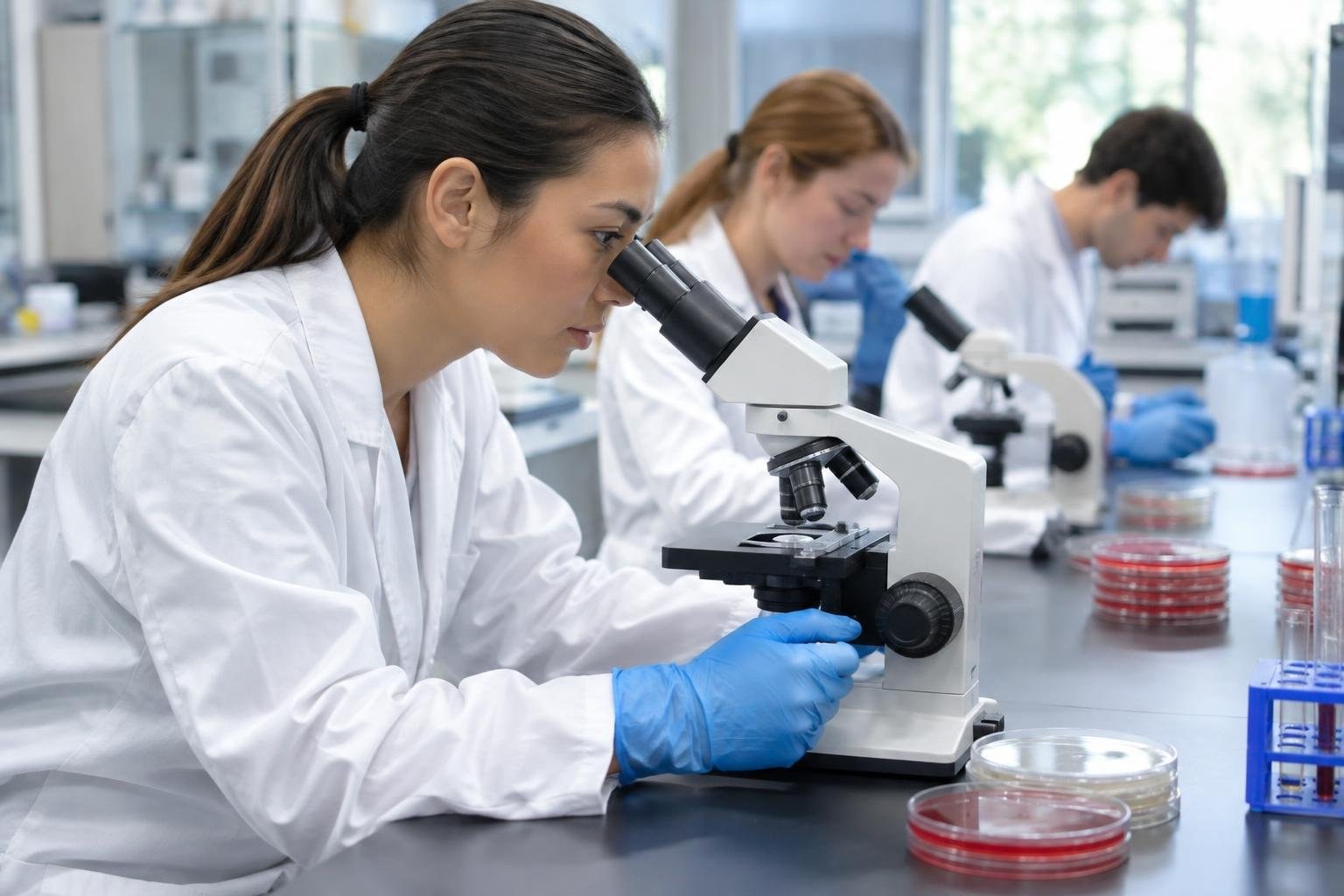
Laboratory courses teach students to follow protocols, work carefully with samples, document observations, and interpret results. Depending on the program, students may complete research, an internship, a supervised laboratory experience, or a capstone project. Graduate work may involve a research question and a thesis or dissertation. For example, graduate specializations may include disease detection using molecular technologies alongside microbiology, parasitology, pharmacology, or toxicology.
Ask whether lab sections are guaranteed, how students access research placements, and whether a capstone or thesis is required. A course title alone does not tell you how much practical experience the program provides.
Skills You Can Develop
- Scientific and technical: Students build a foundation in biological systems, microbes, immune response, and laboratory practice.
- Analytical: Coursework and research develop the ability to evaluate observations, compare evidence, and interpret scientific results.
- Communication: Lab records, presentations, reports, and research discussions help students explain methods and findings clearly.
- Professional: Careful procedure-following, attention to detail, collaboration, and responsible handling of research materials are useful in laboratory settings.
- Technology: Depending on coursework, students may encounter molecular and other disease-detection methods. Specific equipment and software vary by institution.
These skills can be relevant to research, diagnostic, biological laboratory, and animal-health settings. The degree does not guarantee eligibility for every laboratory occupation; employers may ask for particular experience or qualifications.
Who Is This Degree Best For?
This field may appeal to students curious about infectious disease, animal health, the immune system, and how evidence is produced in a laboratory. You may enjoy it if you are comfortable with close observation, structured experiments, reading scientific material, and revisiting a question when results are uncertain.
It is not limited to one personality type. Students who prefer hands-on work may value laboratory courses; students drawn to concepts may enjoy immunology or disease mechanisms; and those interested in communication or policy may later explore public-health or science-related work. Be realistic about the biology and chemistry prerequisites and the patience detailed research can require.
Does Veterinary Microbiology Match You?
Consider more than prestige, salary, or headlines about job growth. Think about the work you want to do day to day, how much education you are prepared to complete, and whether you prefer laboratory research, clinical practice, or another setting. The free MAPP Career Assessment and Assessment.com’s Degree Matching and Career Matching tools can help you reflect on options. They are exploration tools, not admissions or career guarantees.
Admissions, Length, and Academic Difficulty
What to check first: Admission requirements are set by each college and credential. Undergraduate applicants should confirm high-school preparation, application materials, prerequisite courses, and any placement rules. Graduate programs may require a bachelor’s degree in a biomedical or related field; one example of a microbiology graduate program states this as its minimum application requirement.
There is no universal GPA, test, interview, or experience rule for this field. Check the current program page for requirements, deadlines, recommendations, research statements, and any laboratory background expectations.
A bachelor’s degree commonly takes about four years of full-time study in the U.S., but individual plans vary. Transfer credits, part-time enrollment, course sequencing, and availability of required lab courses can change the timeline. Graduate certificates, master’s degrees, and doctoral programs have different lengths. Veterinary school is a separate four-year professional curriculum in the cited Iowa State example, with prerequisite undergraduate coursework required before entry.
Students often find the combination of science prerequisites, detailed laboratory work, and advanced reading challenging. Prepare by strengthening biology and chemistry, planning each term with an adviser, and seeking tutoring early if foundational courses are difficult.
Online vs. On-Campus Programs
Some colleges may deliver lectures online or use hybrid formats, but this is a laboratory-centered discipline. A fully online option may not provide the same access to equipment, supervised practical work, or faculty research as an on-campus program. Graduate research commonly depends on the design of the project and the facilities available.
Before enrolling online, ask how required labs are completed, whether attendance at a campus or scheduled in-person session is necessary, how samples and equipment are handled, and whether the format meets any later program or employer expectations. Do not assume an online degree automatically satisfies prerequisites for veterinary school or a specific job; verify with the receiving institution or employer.
Cost and Financial Aid: What Changes the Price?
Costs depend on the specific school, credential, enrollment plan, and the expenses included in its estimate. Because veterinary school is a separate professional program, evaluate its costs as a distinct step rather than treating an undergraduate major as the entire pathway. Veterinary programs have their own prerequisites and curriculum, and graduate programs set their own entry requirements.
Ask each college for a written estimate covering your planned timeline and applicable fees. Compare the total amount you would pay after grants and scholarships, and confirm aid terms directly with the college. Check whether required laboratory courses, transfer credits, and your intended course sequence affect your plan. Do not rely on a single price for this field across institutions.
Careers, Jobs, Salary, and Employment Outlook
A veterinary microbiology or immunobiology education can connect to several kinds of work, but the degree title alone does not determine a job or salary. Potential directions include laboratory research, biological or veterinary laboratory support, animal-health science, disease surveillance, biotechnology, and graduate research. A DVM is required for veterinary clinical practice.
| Career direction | Typical education or preparation | Pay and outlook | How the degree may apply |
|---|---|---|---|
| Biological laboratory technician | Often a relevant science degree or equivalent preparation; employer requirements vary | Check current BLS data and local postings | Biology and laboratory coursework may be relevant; practical experience matters. |
| Microbiology laboratory or research role | Requirements vary; specialized research roles may favor graduate study | Check current BLS data and local postings | Microbiology, immunology, and research preparation can support applications. |
| Veterinary or animal-health research support | Relevant science education; experience may be required | Varies by employer, role, and region | Animal disease and laboratory knowledge may apply. |
| Diagnostic laboratory support | Training and any required credentials depend on the position | Check the employer’s requirements and current wage data | Coursework in microbiology and disease detection can be relevant. |
| Agricultural or food scientist | Relevant science education; specialization varies | Use current occupation-specific BLS data | Some work addresses safety, efficiency, and biological processes in agriculture. |
| Research scientist or university researcher | Advanced study is commonly important; individual roles differ | Varies widely; compare job postings | Graduate research may develop specialization and research methods. |
| Veterinarian | DVM and state licensure | Use current BLS data for veterinarians | The degree may help with scientific preparation, but does not replace veterinary school. |
These are career directions, not guaranteed outcomes or a promise that a particular major meets an employer’s requirements. For current wage and outlook comparisons, consult the U.S. Bureau of Labor Statistics Occupational Outlook Handbook and local job listings by occupation and location. Pay is shaped by education, experience, employer, and geography; avoid relying on a broad degree-level salary claim.
Employers and research settings may include universities, laboratories, animal-health organizations, government agencies, and biotechnology or agricultural businesses. Hiring needs and role requirements vary. Laboratory automation and molecular tools can change daily tasks, but students should assess actual job descriptions rather than assume technology will eliminate or guarantee particular work.
Find out which Career or College Major is right for you!
Take the MAPP free today!Experience, Credentials, and Licensure
Internships, undergraduate research, faculty projects, and supervised lab work can help students test their interest and build evidence of practical skills. Ask about access to research groups, how placements are allocated, and whether experience is paid or credit-bearing. Relevant campus organizations, scientific presentations, volunteer work, and professional networking can also help students learn about career options.
How to Stand Out to Employers
- Build a clear record of laboratory, research, or project experience.
- Be prepared to explain your role, methods, and what you learned, without overstating results.
- Develop careful documentation and communication habits.
- Request references from people familiar with your work.
- Check whether the positions you want require specific credentials, training, or work authorization.
Completing a degree is not the same as earning a professional license. In particular, veterinary practice requires a DVM and state licensure. Certification or credential requirements for other laboratory roles depend on the employer and position; verify them before paying for a course or exam.
Graduate School and Professional Pathways
Possible next steps include a research-focused master’s or doctorate in microbiology, immunology, pathology, veterinary science, or a related biomedical field. Graduate training can help students pursue specialized research questions or prepare for positions that expect advanced expertise. The appropriate choice depends on the intended work, and not every graduate needs an advanced degree.
Students interested in clinical veterinary practice should investigate DVM admissions and prerequisites directly. An undergraduate veterinary-related major is not a mandatory master’s degree, nor does it confer the right to practice. Colleges set their own DVM prerequisites and selection processes. Other students may pursue graduate study related to public health, biotechnology, or biomedical science, depending on program entry criteria and career goals.
Related Degrees and How They Compare
Compare veterinary microbiology with related options by looking at the actual courses and occupations, not only the major name.
- Microbiology: Consider this if you want to study microorganisms across a broader range of settings, not primarily veterinary or animal health.
- Immunology: Consider this if immune systems and host responses are your main interest.
- Animal science: Consider this if you want a broader focus that may include animal biology, care, production, or management.
- Veterinary science: Consider this if you want broad preparation related to animal health or potential professional study.
- Biology: Consider this if you prefer a broad life-science foundation and want flexibility to specialize later.
- Biomedical science: Consider this if you want a wider focus on biological processes relevant to human and animal health.
- Public health: Consider this if population-level disease prevention and health systems matter more than laboratory specialization.
- Veterinary medicine: Consider this if your goal is to diagnose and treat animals as a veterinarian; this is a DVM pathway, not an interchangeable undergraduate major.
Veterinary microbiology versus animal science often comes down to depth and emphasis: microbiology concentrates on microbes and immune responses, while animal science may cover a wider range of animal topics. Veterinary microbiology versus veterinary medicine is a more consequential distinction: one is a scientific field of study, while the other is a professional clinical degree path with licensure.
Advantages, Drawbacks, and Is It Worth It?
Potential advantages: The field offers a focused way to study animal disease and immune response, builds a strong life-science foundation, and may connect to research or further professional education. It can also expose students to topics relevant to animal and human health.
Potential drawbacks: The curriculum can be science-intensive, laboratory access may limit online flexibility, and some desired roles require graduate education or substantial experience. A specialized major may be less direct for students who want broad business, clinical, or animal-management training.
Whether it is worth the investment depends on the program’s total cost, your education plan, the roles you intend to pursue, local opportunities, and personal fit. Compare likely requirements for specific jobs before assuming a bachelor’s degree is sufficient. Use current occupation data and job postings, and ask colleges for program-level outcomes and how those figures are calculated.
How to Choose the Right Program: A Practical Checklist
Choosing a qualified college program means checking whether it can credibly deliver the education and preparation you need. Start with institutional accreditation and confirm the institution’s current status through recognized sources. Then inspect course descriptions, laboratory facilities, faculty areas, undergraduate research access, internship support, transfer policies, career services, and graduate outcomes.
Ask whether the curriculum meets prerequisites for your intended next step, including any veterinary or graduate programs you may apply to. Accreditation of an institution and preparation for a particular professional pathway are separate questions. Do not assume a program’s marketing language guarantees admission, licensing eligibility, employment, or a specific result.
Questions to Ask Before Enrolling
- What is the full estimated cost, including fees and lab expenses?
- Which laboratory courses and research opportunities are available to undergraduates?
- How are internships or faculty research placements arranged?
- Will credits transfer, and have transfer rules been confirmed in writing?
- Does the program meet prerequisites for my intended graduate or professional schools?
- What are the program’s graduation and career outcomes, and how are they measured?
- What advising, tutoring, financial aid, and career services are available?
- Which courses require in-person attendance, even in a hybrid or online program?
Save safely: Compare net cost across several schools, investigate transfer credit before enrolling, apply for legitimate grants and scholarships, and ask about paid research or work opportunities. Do not choose a program on a low advertised price alone if it lacks required courses, lab access, or a usable path to your goals.
Red flags: Be cautious of guaranteed job or veterinary-school admission claims, unclear total fees, vague answers about laboratory access, or pressure to pay for credentials before you confirm employers require them. Keep copies of current program requirements and financial offers.
From Degree to Career: Possible Pathways
Career progression is not automatic, but these examples show how education and experience can combine:
- Relevant bachelor’s degree → laboratory support role → supervised experience → specialized diagnostic or research work. Advancement depends on employer expectations and demonstrated skills.
- Relevant bachelor’s degree → research assistant role → graduate study → specialized research career. Graduate admissions and employment are competitive and vary by institution or employer.
- Undergraduate science preparation → meet DVM prerequisites and apply → DVM program → state licensing requirements → veterinary practice. Admission is not guaranteed, and the undergraduate major alone does not confer clinical authority.
Use job descriptions and program advisers to map the actual steps for your preferred destination. A degree can be one part of a pathway, not a promise of its endpoint.
Next Steps: Compare Programs and Test Your Fit
Before committing, compare the credential level, curriculum, admission requirements, practical learning opportunities, total cost, and fit with your career plans. Check course catalogs for the subjects and laboratory coursework available, and ask schools about research access and program outcomes. Confirm professional requirements with the relevant licensing authority or receiving school.
Assessment.com’s Degree Matching and Career Matching resources can help you organize your career exploration. Use them as starting points, not guarantees.
Take the Free MAPP Assessment →
Factors That Affect the Project
A research project’s scope depends on the question a student chooses and the program’s available focus areas. Veterinary and animal-science graduate specializations may cover molecular biology, disease detection, epidemiology, microbiology, parasitology, pharmacology, or toxicology. Before committing to a project, ask which topics and methods are available, what facilities and faculty supervision are involved, and whether the work fits your interests and timeline.
For example, one graduate specialization includes disease detection using conventional and advanced molecular technologies alongside several other areas of study. This illustrates why project options can differ across programs; check the current faculty and program information rather than assuming every school offers the same research experience.
Frequently asked questions
Is veterinary microbiology and immunobiology hard?
It can be demanding because students study biology and chemistry alongside specialized topics such as microbiology, immunology, pathology, and molecular biology. Laboratory courses may require careful procedures, detailed records, and interpretation of results. The difficulty depends on your preparation, course load, and program. Reviewing prerequisite requirements and trying introductory biology or chemistry coursework can help you assess your readiness.
Is a veterinary microbiology degree worth it?
It may be worthwhile if you want a science-focused education connected to animal health, infectious disease, research, or public health and you understand the training required for your target job. Outcomes depend on the degree level, experience, location, and employer. Compare total cost and program opportunities with job requirements; the major name alone does not guarantee a particular salary or position.
What jobs can I get with a veterinary microbiology degree?
Depending on the program and your additional training, related work may include laboratory research, biological or veterinary laboratory support, diagnostic testing, animal-health research, or public-health work. Some positions require a graduate degree, professional credential, substantial experience, or a DVM. Check job postings and professional requirements for the specific occupation you want.
How much can you make with a veterinary microbiology degree?
There is no single salary for this degree. Pay depends on occupation, education, experience, employer, and location, and a degree does not guarantee a particular job. Compare current U.S. Bureau of Labor Statistics occupation data and local job postings for roles such as microbiologist, biological technician, or veterinarian. A veterinarian must complete a DVM and meet state licensing requirements.
Can I earn a veterinary microbiology degree online?
Some lecture material may be available online, but hands-on laboratory work is central to many programs. Online students should check whether labs are offered on campus, through scheduled intensives, or through another approved arrangement. Graduate research may also require access to a laboratory, faculty supervision, or in-person collaboration.
Does veterinary microbiology require math?
Yes. Students commonly study biology, chemistry, biochemistry, and quantitative methods such as statistics. The amount of math varies by program and specialization. Review course requirements and ask whether placement, tutoring, or prerequisite courses are available if you need to strengthen your background.
Do I need graduate school after this degree?
Not for every job. A bachelor’s degree may be relevant to some laboratory or technical roles, while research leadership and specialized scientific positions may favor or require a master’s or doctorate. Veterinary microbiology is not itself a veterinary license: diagnosing and treating animals as a veterinarian requires a DVM and state licensure.
What certifications help veterinary microbiology graduates?
Useful experience and credentials depend on the role. Research projects, internships, laboratory experience, and training in safe laboratory procedures can strengthen an application. Some jobs may require a specific employer-recognized credential or license, but requirements vary. Ask program advisers and prospective employers what is actually required before paying for an additional certification.
How is veterinary microbiology different from veterinary medicine?
Veterinary microbiology focuses on microorganisms and their relationship to animal health, disease, and sometimes human health. Veterinary medicine is the professional clinical pathway to becoming a veterinarian and requires a DVM and state licensure. The two fields may overlap in courses and research, but a microbiology degree alone does not qualify someone to practice veterinary medicine.
People Also Ask
What is veterinary microbiology and immunobiology?
It is the study of microorganisms and immune responses as they relate to animal health, infectious disease, and related areas of human and public health.
What do you study in a veterinary microbiology major?
Coursework often includes microbiology, immunology, biochemistry, anatomy, pathology, molecular biology, and laboratory methods. Exact requirements depend on the college and degree level.
What can you do with a veterinary microbiology degree?
Graduates may pursue laboratory, research, diagnostic, animal-health, or public-health-related roles, depending on degree level and experience. Some careers require further study or credentials.
How long does a veterinary microbiology degree take?
A bachelor’s program commonly takes about four years of full-time study, but program design, transfer credits, and attendance pace change the timeline. A DVM is a separate professional degree.
Can veterinary microbiology be studied online?
Some programs offer online coursework, but laboratory work and research may require in-person facilities or supervised practical experience. Verify the format with each school.
Does veterinary microbiology prepare you for veterinary school?
No single undergraduate major is required for every veterinary school, but applicants must complete each school’s prerequisites and admission process. Veterinary school leads to a DVM, followed by state licensing requirements.
What is the difference between veterinary microbiology and animal science?
Veterinary microbiology centers on microorganisms and immune responses; animal science is broader and may cover animal production, nutrition, behavior, or management. Course content varies by school.
Can you become a veterinarian with a microbiology degree?
A veterinary microbiology degree is not a veterinary license. Practicing as a veterinarian requires a DVM and compliance with the licensing requirements of the relevant state.
Veterinary microbiology and immunobiology may suit students who want to study microbes, immune responses, and disease in animals, with connections to human and public health. Programs vary, so compare their courses, lab and research opportunities, admission requirements, and total costs before choosing. A bachelor’s degree may support some laboratory pathways or further study, but becoming a veterinarian requires a separate DVM and state licensure. Think about whether detailed scientific work and the careers connected to the field match your goals. Assessment.com’s Degree Matching, Career Matching, and Matching Jobs tools can help you explore options. Use them as starting points, not guarantees. Take the Free MAPP Career Assessment to explore careers, degrees, and educational pathways that may fit your motivations, interests, and natural preferences.
Want to see your options? Try our comprehensive Degree, Program & College Search tool
College Search ToolSources & Official Resources
- Undergraduate Programs – College of Veterinary Medicine & Biomedical Sciences
- Graduate Programs — Department of Veterinary and Biomedical Sciences
- College of Veterinary Medicine | Iowa State University Catalog
- Veterinary Science < University of Nebraska–Lincoln
- Animal, Dairy, and Veterinary Sciences - MS, PhD
- Microbiology, Immunology, and Pathology Graduate Programs Frequently Asked Questions - Master of Science in Microbiology - College of Veterinary Medicine & Biomedical Sciences
- Veterinary Science | School of Animal and Comparative Biomedical Sciences
- Microbiology and Infectious Disease Concentration – College of Veterinary Medicine & Biomedical Sciences
- Bachelor of Science in Medical Microbiology and Infectious Disease – College of Veterinary Medicine & Biomedical Sciences
- Veterinary Microbiology and Preventive Medicine | Iowa State University Catalog
- Microbiology and Immunology Training Program Department of Comparative Pathobiology | Purdue Veterinary Medicine
- Microbiology and Immunology | College of Veterinary Medicine