Degree Library
Veterinary Medicine Degree Guide: Courses, Careers, Requirements, and How to Choose
A veterinary medicine degree can mean different things: an undergraduate program that studies animal health and biology, or the professional Doctor of…
By Tome Fierre · Staff Writer Assessment.com · Published October 5, 2026 · Last updated October 6, 2026
A veterinary medicine degree can mean different things: an undergraduate program that studies animal health and biology, or the professional Doctor of Veterinary Medicine (DVM) degree required to become a veterinarian. Programs may cover animal anatomy and physiology, reproduction, microbiology, disease, welfare, food safety, and research. The right route depends on whether you want to provide clinical care, study animal health, work in an animal-related industry, or prepare for professional school. A bachelor’s degree can provide a foundation, but it does not by itself qualify a graduate to practice veterinary medicine. Not sure whether this field fits you? Take the Free MAPP Career Assessment to explore how your motivations, interests, and preferences may align with related careers and education paths.
A veterinary medicine degree may refer to an undergraduate program in veterinary or animal science or to the professional Doctor of Veterinary Medicine (DVM). Undergraduate study can cover animal biology, health, welfare, and research, and may prepare students for related jobs or veterinary school. To practice as a veterinarian, graduates generally need a DVM and must meet state licensing requirements.
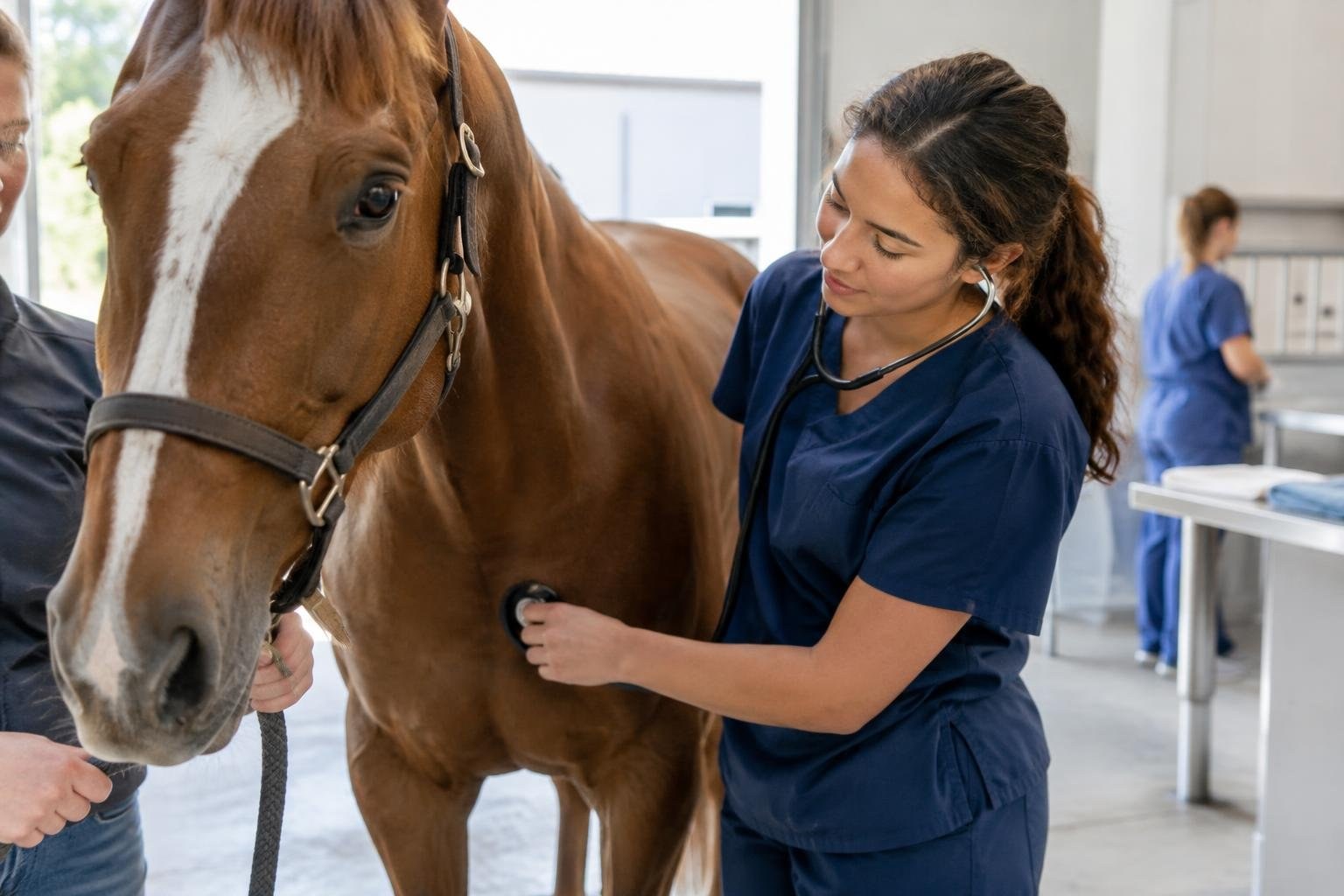
1. What Is a Veterinary Medicine Degree?
Veterinary medicine concerns animal health and the prevention, diagnosis, and treatment of disease. In college catalogs, however, the label can refer to more than one credential. Undergraduate degrees called veterinary science, veterinary and biomedical science, or animal and veterinary biosciences study animal biology, health, welfare, and related research. The DVM is a separate professional degree for people preparing to practice as veterinarians.
Programs vary in emphasis. Some focus on biomedical science and preparation for veterinary or graduate school; others include animal production, business, or broader agriculture-related study. The University of Wisconsin–Madison describes animal and veterinary biosciences as addressing animal health and welfare, biomedical advances, food safety, precision livestock farming, and land and water stewardship. The University of Nebraska–Lincoln notes that its veterinary science bachelor’s program can support animal health or biomedical science work and preparation for veterinary medical school.
Read the credential name and curriculum rather than relying on the word “veterinary.” A bachelor’s degree is not a DVM, and neither the title of a major nor completion of an undergraduate program alone grants a veterinary license.
2. What Do You Study?
Course plans depend on the school and credential. Undergraduate students may study biology, chemistry, animal anatomy and physiology, reproduction, microbiology, disease ecology, pathology, animal care, and population health. Some programs add food safety, animal production, business, or research methods. The University of Arizona describes topics including human-animal relationships, animal reproduction, anatomy and physiology, microbiology, disease ecology, and pathology in its veterinary science program.
Learning may include lectures, laboratory exercises, research projects, and supervised work with animals. Look for opportunities to practice observation, data collection, scientific writing, and safe animal handling. A capstone, internship, or research experience may be part of a particular program, but these requirements are not universal.
DVM programs are professionally oriented and include advanced biomedical and clinical education. Their structure and admission requirements are set by individual veterinary schools. Ask for the current catalog, a sample term-by-term plan, and clear information about which experiences are required versus optional.
What students learn: how animal systems function; how health and disease are studied; how to interpret scientific evidence; and how animal health connects with welfare, food systems, research, or clinical practice.
3. Skills You Can Develop
Students develop scientific literacy by reading research, recording observations, and using evidence to explain biological processes. Laboratory and research work can build attention to detail, data handling, problem-solving, and written communication. Animal-related coursework can also strengthen practical observation and awareness of welfare and safety.
Depending on electives and experience, students may develop skills in animal care, production systems, research support, communication with clients or colleagues, and business operations. These skills can be relevant to animal health companies, agriculture, laboratories, nonprofit organizations, education, and further professional study. Penn State describes its veterinary and biomedical sciences program as preparation for agriculture, business, science, and some STEM work that may not require additional schooling. That does not mean every graduate qualifies for every role: employers set job-specific requirements.
Students interested in clinical practice should also build interpersonal skills. Veterinarians communicate with clients and teams, explain options, and make decisions using scientific information. A bachelor’s student can begin developing those abilities through employment, volunteering, research, and presentations.
4. Who Is This Degree Best For?
This field may suit students interested in animal health, biology, and questions that can be explored through scientific study. Programs can address topics such as animal health and welfare, reproduction, anatomy and physiology, microbiology, and disease ecology. Students may also be interested in how animal science connects with biomedical research, food safety, agriculture, or preparation for further study.
Think about which parts of the subject interest you most. Some programs describe routes toward animal-related work or professional school, while others emphasize research, business, or agricultural applications. Compare course plans with the work and education path you are considering rather than assuming that an interest in animals alone identifies the right program.
Does Veterinary Medicine Match You?
Consider whether you want to study animal biology and health, pursue research, explore agriculture-related work, or prepare for professional school. The Free MAPP Career Assessment, Degree Matching, and Career Matching can help you explore related paths; use them as reflection tools alongside program research, not as guarantees of success.
CTA: Take the Free MAPP Assessment →
5. Admissions, Length, and Academic Difficulty
Requirements depend on whether you are applying to an undergraduate major or a DVM program. Undergraduate admissions may consider prior coursework, grades, and general college application materials. Some programs expect preparation in biology, chemistry, or math; confirm prerequisites with the department. DVM schools set their own prerequisite courses, application standards, and selection processes. Do not assume that every school requires the same degree, tests, experience, or interview.
Time to completion varies with credential, full-time or part-time attendance, transfer credit, course sequencing, and program design. A student may complete undergraduate preparation before applying to a DVM program; the DVM is a distinct stage. Ask schools for the published credit requirements and a realistic schedule, especially where laboratory courses are offered only once a year.
Students often find the science sequence and balancing of laboratory, reading, and practical work challenging. Prepare by strengthening study habits, checking prerequisite gaps, and seeking tutoring early. Shadowing or volunteering may help clarify career fit, but confirm that any experience is safe, supervised, and permitted by the organization.
6. Online, Hybrid, or On Campus?
Online, hybrid, and in-person formats are program-specific. Before applying, read the current catalog and ask the department how the format works for the particular courses and credential you are considering. Do not rely on a general description of a major to determine whether it fits your schedule or education plan.
Ask which courses require campus attendance, how laboratory or animal-related learning is handled, and whether any placements or other practical experiences are part of the curriculum. Request a current degree plan and confirm that its courses align with the prerequisites for your intended next step. Course requirements can change, so verify details with the school and the relevant professional program.
7. Cost, Financial Aid, and Value
The available program descriptions do not provide a universal price for veterinary or animal science study. To compare options, request each school’s current estimated total cost for the credential and course plan you are considering. Ask which tuition, fees, supplies, travel, or other expenses are included in the estimate and which are not.
Compare the full route you intend to take, including prerequisite coursework and any professional or graduate education needed for your goal. Ask the financial aid office what grants, scholarships, work opportunities, or other aid may be available and what conditions apply. Do not treat a general career salary or an advertised starting figure as a promise of future earnings.
Before enrolling, put the program’s written cost estimate beside its credential, curriculum, and next-step requirements. Confirm how transfer credits are evaluated and whether the courses you plan to take fit your intended pathway.
8. Careers, Employers, Pay, and Outlook
Career possibilities depend on the credential, experience, and any additional qualifications a role requires. The examples below are pathways to investigate, not guaranteed outcomes. Pay and outlook are occupation-specific; consult current U.S. Bureau of Labor Statistics or O*NET information for the exact job title rather than assuming that a degree has one salary.
Career areaTypical preparationHow the degree may applyVeterinarianDVM and applicable state licenseUndergraduate science study may help prepare for veterinary school; it does not authorize practice.Animal or biomedical research supportRequirements vary; a related bachelor’s may be usefulScientific coursework and research experience can support laboratory or project work.Animal production or agriculture rolesVaries by role; experience may matterAnimal health, biology, and production knowledge may be relevant.Animal health or agricultural businessVaries by employer and positionScience knowledge can complement sales, operations, or customer support skills.Veterinary or animal science educatorOften advanced study for college teaching; requirements varyResearch and subject expertise can form part of a longer academic pathway.Veterinary specialist or academic researcherAdvanced professional or graduate education may be requiredA DVM, graduate degree, specialized training, or research experience may be necessary.
Potential employers and fields to explore include veterinary practices, universities, research organizations, animal health businesses, agricultural operations, and nonprofits. Cal Poly Pomona’s Huntley College of Agriculture describes preparation for animal production, business, animal-related industries, and further study. Penn State describes agriculture, business, and science pathways. Another source lists zoology, wildlife biology, and agricultural management among related career examples. Research each occupation’s current education and experience requirements before choosing a program. Technology may support tasks such as recordkeeping or analysis, but it does not replace a role’s required qualifications or hands-on responsibilities.
9. Experience, Credentials, Licensing, and Safety
Internships, supervised animal experience, research, volunteering, and relevant employment can help students understand the work and demonstrate practical skills. Ask whether the program helps students find placements and whether those experiences carry academic credit. Keep a record of projects, research methods, presentations, and responsibilities; follow privacy and animal welfare rules when documenting work.
Credentials, licensing, and safety
A degree and a professional license are different. To practice as a veterinarian, a graduate generally needs a DVM and must satisfy the licensing rules that apply in the state or jurisdiction where they intend to work. Confirm current requirements with the relevant licensing authority and veterinary school. Undergraduate veterinary science study does not itself provide a veterinary license. Other animal-related occupations may have separate requirements, so check job postings and official credentialing bodies.
Ask about animal handling instruction, laboratory safety, supervision, and what protective equipment or training is required. Do not accept unsupervised work beyond your training. Program claims about accreditation, clinical access, or license preparation should be checked with the accreditor or licensing authority, not taken on marketing language alone.
How to stand out to employers
Build a combination of scientific coursework, reliable hands-on experience, clear communication, and documented project work. Seek feedback from supervisors and faculty, participate in relevant student or professional groups, and tailor applications to the role. For research positions, explain methods and results accurately; for animal-facing work, describe the tasks you have actually performed.
10. Graduate and Professional School Options
Possible next steps include a DVM for students pursuing veterinary practice, a master’s or doctorate for research or advanced academic work, or other professional and graduate programs connected with biomedical science, public health, agriculture, or business. The right choice depends on the role, not on a general assumption that more schooling is always better. Some animal-related jobs may be accessible after a bachelor’s degree, while clinical practice and many research or teaching paths require further credentials.
Before adding a degree, review job announcements for the positions you want, speak with program advisers, and compare the added cost and time with the actual qualification it provides. Ask whether prerequisites can be completed efficiently and whether the program has a clear record of supporting students into the next step.
11. Related Degrees and Comparisons
Consider these alternatives if your interests point in a different direction:
- Animal science: Consider this instead if you want a broader emphasis on animal production, management, and related industries.
- Veterinary technology: Consider this instead if you are interested in a clinical-support role rather than becoming a veterinarian; verify program and credential requirements.
- Biology: Consider this instead if you want a broad foundation in living systems and several possible science pathways.
- Zoology or wildlife biology: Consider this instead if you are more interested in wildlife, ecology, or animal populations outside domestic animal care.
- Animal behavior: Consider this instead if behavior, learning, and human-animal interaction are your central interests.
- Agricultural science: Consider this instead if you want to focus more on food systems, agriculture, or production.
- Biomedical science: Consider this instead if you prefer human or comparative biomedical research over animal-focused professional practice.
Veterinary science vs. veterinary medicine
Names are not consistent across schools. Veterinary science often describes scientific study of animal health, biology, and research, while veterinary medicine commonly refers to the professional field and DVM preparation. Compare the actual courses, credential awarded, admissions path, and career eligibility. A veterinary science bachelor’s may support professional-school applications or related work, but a DVM is the professional credential associated with becoming a veterinarian.
12. Advantages, Drawbacks, and Is It Worth It?
Potential advantages: the field connects life science with animal health, welfare, research, food safety, agriculture, and biomedical questions. Programs may provide a useful foundation for further study and may prepare students for some science or animal-related roles. Students can choose among clinical, research, business, and production interests.
Potential drawbacks: undergraduate study alone does not qualify someone to practice as a veterinarian; professional school adds time and cost. Science prerequisites and hands-on requirements can be demanding, and career eligibility varies by employer and credential. A student who wants frequent direct animal contact may discover that some jobs involve substantial research, documentation, client communication, or business work instead.
Whether the degree is worth it depends on the specific job goal, the program’s total cost, available financial aid, location, and the education needed to qualify. Compare likely routes rather than judging the degree by a single salary figure. Discuss debt and career plans with family or an adviser, and confirm that the degree will satisfy the requirements of the next step.
13. How to Choose a Program and Avoid Costly Mistakes
Compare programs using a written checklist, and verify claims with official sources:
- Credential and accreditation: What degree is awarded? Is the professional program accredited by the relevant recognized accreditor?
- Curriculum: Do required courses match your interests and the prerequisites for your next step?
- Hands-on access: Are laboratories, animal facilities, research, internships, or clinical experiences available and supervised?
- Total cost: What are tuition, fees, housing, equipment, travel, and likely time to completion?
- Format and timing: Which components are online, hybrid, or in person, and when are required courses offered?
- Outcomes and support: What information does the school provide about completion, further study, career services, and employer connections?
- Transfer and aid: Which credits transfer, what aid is available, and what conditions apply?
Choose a qualified education provider by checking its institutional standing and, for professional veterinary education, program accreditation through the appropriate official source. Ask for written answers about clinical placements, student supervision, safety, and any promises related to licensure. A school cannot guarantee admission to another program, a job, or a license.
Ways to reduce cost safely include comparing public and private options, applying for aid and scholarships, considering transferable coursework, and avoiding unnecessary credits. Do not choose a program solely because it is cheaper or advertised as accelerated. Confirm transferability, required hands-on training, and whether the credential will serve your goal before paying a deposit.
Questions to ask before enrolling: What credential will I earn? What is the complete estimated cost? How are practical experiences arranged? What are the prerequisites for my next step? Which credits transfer? What aid is available? What safety training is required? How does the program report outcomes?
CTA: Explore colleges and programs that fit your goals →
14. From Degree to Career, Final Checklist, and References
A possible route is veterinary science bachelor’s degree → research or animal-health support role → experience with laboratory methods or animal populations → specialized graduate study or professional school. Another route is related undergraduate study → DVM program → required state licensing steps → clinical practice or further specialization. A student interested in animal production might follow animal or agricultural science study → an entry role in production or an animal-related business → practical industry experience → supervisory or specialized work.
These are examples, not guaranteed promotions or admissions outcomes. Build your plan around posted job requirements and the rules of the professional school or licensing authority relevant to your goal.
Sources and references
- University of Wisconsin–Madison, Animal and Veterinary Biosciences, BS
- Cal Poly Pomona, Department of Animal and Veterinary Sciences
- Penn State, Veterinary and Biomedical Sciences
- Indeed Career Guide, Veterinary Science vs. Veterinary Medicine
- University of Arizona, Veterinary Science
- University of Nebraska–Lincoln, Veterinary Science
For current occupation pay and outlook, consult the U.S. Bureau of Labor Statistics and O*NET for the exact job title. For program accreditation and state licensing, use the relevant accreditor and state authority.
Before Choosing a Degree, Find Out What Fits You
Choosing a college program can affect years of education and decades of work. Salary, job growth, and school reputation matter, but so does whether the work fits your motivations, interests, and natural preferences.
Take the Free MAPP Career Assessment to explore careers that may fit you, how related careers align with your profile, degrees and education pathways connected with those careers, and potential jobs along those paths. Also explore Degree Matching, Career Matching, and Matching Jobs as starting points for research.
CTA: Take the Free MAPP Assessment →
Factors That Affect Your Education Plan
When planning your education route, start with the role you want to explore. A program may emphasize animal health and welfare, biomedical science, food safety, animal production, or preparation for professional or graduate school. Those differences can affect which courses and experiences are most relevant to your goal.
Also consider the credential and the sequence of study. Veterinary science bachelor’s programs may support related work or preparation for veterinary school, while becoming a veterinarian requires a separate professional education path. Course requirements can change, so compare current degree plans and review them with an academic adviser before choosing electives or assuming credits will meet another program’s prerequisites.
Use a checklist to compare each program’s curriculum, credential, available areas of specialization, and connection to your intended next step. Ask advisers which requirements are current and which experiences are part of the program.
Frequently asked questions
Is veterinary medicine hard to study?
It can be academically demanding because many programs include biology, chemistry, anatomy, physiology, microbiology, and other science courses. DVM study adds intensive clinical training and a substantial workload. Students who enjoy life sciences and can build steady study habits may find the challenge meaningful. The difficulty varies by program and by a student’s preparation.
Is a veterinary medicine degree worth it?
It may be worthwhile for students whose goals and interests align with the work and who understand the education required. A bachelor’s degree can support careers in animal health, research, agriculture, or preparation for further study, but becoming a veterinarian requires a DVM and a state license. Compare total cost, career requirements, likely debt, and alternatives before deciding.
What jobs can I get with a veterinary medicine degree?
Possible paths include animal-care and production roles, laboratory or research support, animal health and agricultural businesses, and preparation for graduate or professional school. A bachelor’s degree alone does not make someone a veterinarian. Specific jobs may require additional education, experience, certification, or a license.
How much can I make with a veterinary medicine degree?
There is no single salary for a veterinary medicine degree because earnings depend on the occupation, degree level, location, employer, and experience. Veterinarians, research staff, animal-care workers, educators, and agricultural business employees are separate occupations with different pay data. Look up current U.S. Bureau of Labor Statistics or O*NET information for the specific job you are considering.
Can I earn a veterinary medicine degree online?
Some coursework may be available online, especially foundational or lecture-based classes. Animal handling, laboratory work, clinical training, and other hands-on requirements may need in-person attendance. Online availability and acceptable clinical arrangements differ by program, so confirm the full delivery plan before enrolling.
Does veterinary medicine require math?
Many programs require quantitative coursework, but the amount varies. Undergraduate veterinary and animal science programs may include chemistry, biology, statistics, or related requirements. DVM prerequisites commonly include science and math coursework, with exact requirements set by each veterinary school. Review program and admissions requirements early.
Do I need graduate school to become a veterinarian?
To practice as a veterinarian, you need a Doctor of Veterinary Medicine from a program accredited by the relevant veterinary education accreditor and must meet state licensing requirements. A bachelor’s degree in veterinary science or animal science can help prepare for veterinary school, but it is not a substitute for the DVM and license.
What is the difference between veterinary science and veterinary medicine?
The veterinary medicine degree family includes undergraduate preparation and the professional DVM degree, while veterinary science programs may emphasize animal biology, health, research, and biomedical topics. A DVM prepares graduates for clinical practice after licensing; a veterinary science bachelor’s degree may lead to other animal-related work or further study.
What are alternatives to a veterinary medicine degree?
Yes. Programs may offer animal science, veterinary or biomedical science, biology, zoology, animal behavior, or agricultural study. Consider animal science for broader production and management topics, biology or zoology for biological and ecological study, and veterinary technology for a distinct clinical-support pathway with its own program and credential requirements.
People Also Ask
What can you do with a veterinary medicine degree?
A veterinary science or animal science bachelor’s degree can be a foundation for veterinary school or for some animal, research, and agriculture-related work. It does not replace a DVM or state licensure for veterinary practice.
How long does it take to become a veterinarian?
The total timeline depends on the credential and the student’s preparation. Undergraduate study takes multiple years, and the DVM is a separate professional program. Prerequisite coursework, transfer credits, enrollment pace, and program structure affect the overall route.
Can you become a veterinarian with an animal science degree?
No. A veterinary science or animal science bachelor’s degree is not a veterinary license. Veterinary practice requires a DVM and satisfaction of the applicable state licensing requirements.
Are veterinary degrees available online?
Some classes may be offered online, but laboratory, animal-handling, and clinical requirements can require in-person work. Ask each school how it arranges and evaluates hands-on components.
What do you study in veterinary medicine?
Biology, chemistry, anatomy, physiology, microbiology, and animal behavior or welfare may appear in curricula. Course names and depth differ by program, so compare current degree plans and prerequisites.
What degree is similar to veterinary medicine?
Possible alternatives include animal science, veterinary technology, biology, zoology, animal behavior, and agricultural science. The best fit depends on whether you want clinical support, research, animal production, wildlife study, or veterinary practice.
Veterinary medicine can lead to work in clinical care, animal health research, public health, education, agriculture, and related industries, but the path depends on the credential. A bachelor’s degree in veterinary or animal science is not the same as a Doctor of Veterinary Medicine (DVM), and it does not by itself qualify someone to practice as a veterinarian. Compare programs by their accreditation, prerequisites, cost, hands-on learning, and graduate outcomes. Most importantly, connect the education you are considering to the work you actually want to do.
Sources
- Animal and Veterinary Biosciences, BS < University of Wisconsin-Madison
- Department of Animal & Veterinary Sciences
- Veterinary and Biomedical Sciences — Academics — Penn State College of Agricultural Sciences
- Veterinary Science vs. Veterinary Medicine: What's the Difference? | Indeed.com
- Veterinary Science | School of Animal and Comparative Biomedical Sciences
- Veterinarian Medicine Degrees & Careers for Military Veterans
- Veterinary Science < University of Nebraska–Lincoln
- Study Veterinary Medicine, why & how to study
- Best Veterinary Degree Programs of 2025 - Intelligent
- Veterinarian Medicine Degrees & Careers for Military Veterans
- Steps to Becoming a Veterinarian — Undergraduate — Department of Veterinary and Biomedical Sciences
- Studying veterinary medicine abroad
- 2026 What Degree Do You Need to Become a Veterinarian? | Research.com
- Veterinary Medicine Overview - CareerExplorer
- 2027 What Major DO You Need to BE a Veterinarian: Complete Student Guide | Research.com