Degree Library
Veterinary Animal Health Technology and Assistant Programs: Degrees, Careers, and How to Choose
Compare veterinary assistant and veterinary technology programs, what students may learn, career routes, credentials, costs, and questions to ask before enrolling.
Veterinary/animal health technology and veterinary assistant programs prepare students for support roles in animal-care and veterinary settings. The names can sound similar, but the education and work may differ: veterinary assistants commonly help with handling, husbandry, clerical work, and routine clinic support, while veterinary technicians receive training for a wider range of medical support tasks alongside veterinarians. Some veterinary technology programs lead to an associate or bachelor's degree, while assistant roles may also be learned on the job. Program names alone do not tell you which route fits your goal. Compare the curriculum, practical training, and requirements for jobs where you want to work. Not sure whether this field fits you? Take the Free MAPP Career Assessment to explore how your motivations, interests, and preferences align with animal-care careers and related education paths.
Millions of people Take the MAPP Career assessment to see which Degrees are the best Match!
You can too,
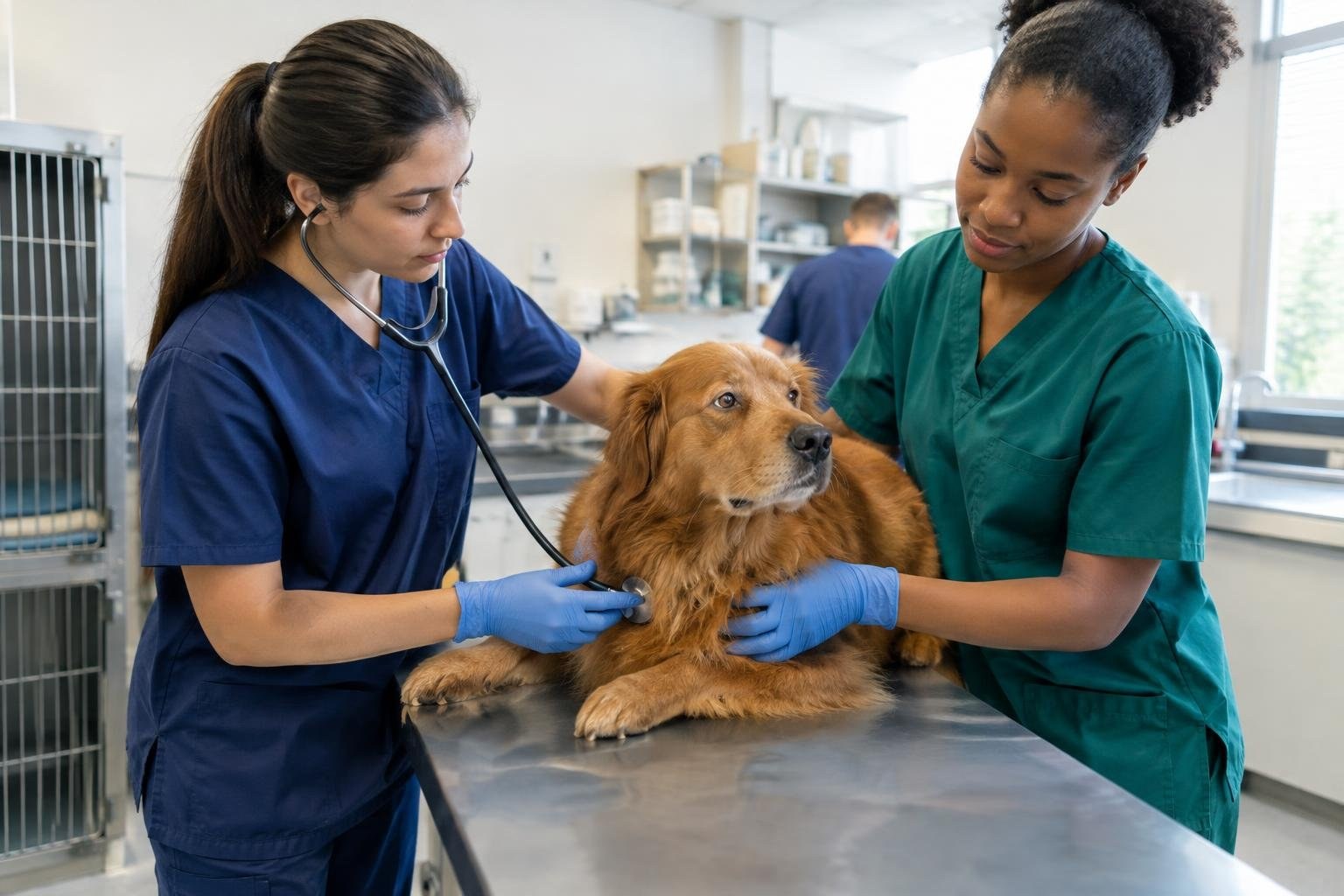
What Is Veterinary/Animal Health Technology?
What Is a Veterinary/Animal Health Technology or Assistant Program?
These programs prepare learners for support work in veterinary and animal-care environments. Veterinary assistant preparation generally centers on assisting clinic staff, animal handling, husbandry, and clerical responsibilities. Veterinary technology education prepares professional support staff to provide medical care with veterinarians and can include patient monitoring, client education, surgical and dental assistance, laboratory diagnostics, medicines and treatments, and anesthesia-related procedures. For examples of these role descriptions, see LaGuardia Community College’s veterinary technology resource and Chattanooga State’s veterinary technology program information.
The terms are not interchangeable. A veterinary assistant may be trained on the job, while veterinary technician education commonly involves a formal veterinary technology program. Associate and bachelor's degrees are among the degree paths described for veterinary technicians. Schools use different program names, so examine the credential and coursework rather than assuming that a title guarantees a particular role or scope of practice.
These programs are distinct from becoming a veterinarian. A veterinary technology or assistant credential prepares a student for a support role; it does not qualify a graduate to practice as a veterinarian.
What Do You Study in a Veterinary Technology Program?
What Students Learn
Coursework and practical training depend on the school and credential. A veterinary technology curriculum should be evaluated for how it connects classroom learning to the clinical support duties graduates expect to perform. Examples of work associated with veterinary technicians include monitoring patients, helping with surgical and dental procedures, supporting laboratory diagnostics, educating clients, and assisting with treatments. Assistant-oriented preparation may emphasize safe animal handling, husbandry, clinic assistance, and administrative tasks. These role descriptions are reflected in Chattanooga State’s veterinary technology information and LaGuardia Community College’s veterinary technology resource.
When reviewing a course catalog, look for evidence that students practice relevant skills, not only study them in a lecture. Ask whether learning includes supervised handling, lab work, clinical placements, or other practical experiences. Find out what equipment or transportation you will need, who arranges placements, and how students are evaluated. Do not assume that every program includes the same clinical exposure simply because its title contains “veterinary technology.”
At the associate level, some programs are designed both for career preparation and transfer. College of Western Idaho, for example, describes its Animal Veterinary Sciences Associate of Science program as a route for transfer to four-year programs and opportunities in veterinary medicine, animal behavior, and agricultural industries. That is a particular program example, not a guarantee that every associate degree transfers in the same way. See College of Western Idaho’s program information.
Skills, Interests, and Personal Fit
Skills and Work Styles to Consider
Veterinary support work brings together practical tasks and communication. Depending on the role, relevant skills can include careful observation, following procedures, handling animals safely, supporting diagnostic work, communicating with clients, and coordinating with veterinarians and other staff. Technicians may contribute to patient monitoring, treatment, surgery, dental care, and laboratory procedures; assistant duties can include animal restraint, husbandry, and clerical support.
Consider whether you enjoy active, hands-on work and can stay attentive when tasks require consistency and care. Animal-care settings may also involve interacting with concerned clients and coordinating with a team. These are questions for self-reflection, not a checklist that determines who can succeed. Ask a program whether students can observe or gain supervised exposure to the work before committing.
Does Veterinary Animal Health Training Match You?
Salary, reputation, or a broad interest in animals is not enough to decide. Think about the actual tasks, the credential required for your intended role, the cost of training, and whether the learning format suits you. The Free MAPP Career Assessment can help you reflect on motivations, interests, and work preferences. Assessment.com also offers Degree Matching and Career Matching tools to explore related options; use those tools as one input alongside program research and conversations with professionals.
Who Should Consider This Education?
Who Is This Program For?
This path may appeal to students who want to contribute to animal care in a veterinary setting and are interested in learning practical clinical or support skills. It may also suit adult learners and career changers who want to compare a formal college program with assistant training or employer-based learning. People interested in animal behavior, agricultural industries, or later transfer study may want to investigate broader animal science options as well.
Do not select a program solely because you like animals. Review the day-to-day responsibilities described for assistant and technician roles, and ask whether you can explore the setting before enrolling. For instance, a prospective student might compare a clinic-focused technician curriculum with a broader animal science program if their interests also include behavior, production, or research.
Admissions and Prerequisites
Admissions rules are set by each institution. Check whether the program expects prerequisite courses, a minimum academic record, an application essay, an interview, previous animal experience, or placement testing. Do not assume a requirement applies everywhere. Ask how transfer credit is assessed, whether prerequisite courses expire, and what support is available if you need to refresh science or math skills.
Before applying, request the current catalog and a term-by-term course plan. If you are a parent helping a student, encourage them to speak directly with an adviser and ask questions about practical training, workload, and career outcomes rather than choosing based on the program name alone.
Degree Levels, Online Options, and Time to Complete
Credential Levels, Format, and Completion Time
Veterinary assistant preparation and veterinary technology degrees are different education routes. Assistant roles may be learned on the job, while veterinary technicians commonly complete an associate or bachelor's degree in veterinary technology. The time to finish a particular program depends on its credential, course sequence, whether a student attends full or part time, transfer credits, and the arrangement for practical experience. Confirm the actual timeline with the school rather than relying on a general estimate.
Programs may offer some coursework online, on campus, or in a hybrid format, but a format label does not tell you how hands-on competencies are taught. Ask what must be completed in person, how clinical or supervised experience works, whether you must find a placement, and whether online students have the same access to instruction and feedback. If you are considering transfer, get written confirmation of which credits will count at the receiving institution.
Tuition, Costs, and Financial Aid
Costs and Financial Aid
Total cost varies by institution and student circumstances. Compare tuition and required fees, books, supplies, equipment, travel, and any costs connected with labs or practical placements. Online study may change some expenses but does not necessarily eliminate costs associated with in-person skills training. Ask the school for a complete cost estimate for the full program, not just a per-credit tuition figure.
Check whether you may qualify for federal or state financial aid, institutional grants, scholarships, work-study, or employer tuition assistance. Eligibility and award amounts depend on individual and program circumstances. If you are choosing between a certificate and a degree, compare the total cost of each route with its career relevance and the education expected for jobs you want.
Ways to Keep Education Affordable
- Ask for a degree audit before enrolling if you have prior college credit.
- Compare total program costs across public, private, and community colleges, including fees and required equipment.
- Ask whether the program has transfer agreements and request written details before planning a later bachelor's degree.
- Submit financial aid forms by the applicable deadlines and ask the aid office about scholarships and payment plans.
- Consider part-time study carefully: it may spread payments over a longer period, but can also extend the time before completing the credential.
College of Western Idaho presents its animal veterinary sciences associate degree as a transfer-oriented option. Students interested in that route should confirm transfer destinations, course equivalencies, and total costs directly with both institutions.
Jobs, Careers, and Employment Outlook
Find out which Career or College Major is right for you!
Take the MAPP free today!Careers and Employment Pathways
Graduates may seek work in veterinary practices and other animal-care settings, but eligibility depends on education, employer expectations, and applicable state rules. Veterinary assistants commonly support animal handling, restraint, kennel and husbandry duties, clerical work, and veterinary staff. Veterinary technicians provide a broader range of professional medical support with veterinarians, including tasks such as patient monitoring, client education, lab diagnostics, treatment assistance, and surgical or dental support. See LaGuardia Community College’s role descriptions and Chattanooga State’s description of veterinary technician duties.
Potential settings and related paths to investigate include veterinary clinics, animal-care organizations, and education or transfer routes connected to animal behavior and agricultural industries. College of Western Idaho identifies veterinary clinics, the Boise Zoo, Idaho Fish and Game, and the University of Idaho among organizations connected with its program experience or pathways. That list is specific to the program described and should not be treated as a promise of placement or employment. See College of Western Idaho’s program information.
Career Comparison
| Career direction | Education to investigate | How the training may apply | Pay and outlook |
|---|---|---|---|
| Veterinary assistant | On-the-job training or a relevant assistant program, depending on employer | Animal handling, husbandry, clinic and clerical support | Check current BLS and local job-posting data; pay varies by location and employer |
| Veterinary technician | Veterinary technology education; associate or bachelor's route described by education sources | Clinical support such as monitoring, lab diagnostics, treatments, and assistance with procedures | Check current BLS, employer requirements, and state credential rules |
| Transfer to further animal-related study | Associate degree with transfer planning, where available | Builds an education pathway toward a related four-year program | Career outcome depends on later study and the target occupation |
No salary or employment-growth figure is included here because it should be checked against current, occupation-specific U.S. Bureau of Labor Statistics data and the relevant state or metro area. Job titles can overlap, and animal-care experience alone does not substitute for a required credential. Ask employers what qualifications they expect before choosing a degree level.
Accreditation, Certification, and State Requirements
Accreditation, Certification, and Licensure
A program's completion credential and a professional license or certification are not necessarily the same thing. Before enrolling in veterinary technology education, ask which accrediting body, if any, evaluates the program, whether program status affects eligibility for an exam, and what graduates must do to qualify for work in the state where they plan to practice. Confirm requirements with the relevant state authority and credentialing organization; do not rely on a school's marketing language alone.
Ask whether the program prepares students for any applicable credentialing exam and whether its practical requirements meet the expectations of local employers. Rules can vary by state and by job title. A veterinary assistant role and a veterinary technician role may have different employer or state requirements, so confirm the route for the specific work you intend to pursue.
Experience and How to Stand Out to Employers
Internships, Practical Experience, and Building a Strong Application
Hands-on exposure can help you understand whether animal-care work matches your expectations. Ask programs about supervised animal handling, clinic or other practical placements, and opportunities to learn from professionals. Some schools describe partnerships or local experiential connections; for example, College of Western Idaho names veterinary clinics, the Boise Zoo, Idaho Fish and Game, and the University of Idaho in its program information. Contact the school to learn what access actually means for a student and whether opportunities are guaranteed or competitive.
How to Stand Out to Employers
- Build relevant experience through supervised volunteering, paid work, or school-based practical learning where available.
- Keep a clear record of completed training and the tasks you have been taught to perform.
- Practice professional communication with clients and coworkers, in addition to technical skills.
- Request references from people who can speak accurately about your reliability and experience.
- Tailor applications to the employer's stated education, experience, and credential requirements.
Experience is useful, but it does not replace education or licensing requirements where those apply. Ask employers and state authorities which qualifications are required for the role you want.
Graduate School and Further Education
Graduate Study and Transfer Options
Some students use an associate degree as a transfer step toward a four-year program, while others enter the workforce after completing the education required for their target role. A transfer pathway only works as planned if the receiving institution accepts the credits and prerequisites. Ask both schools to review your proposed course sequence before you enroll.
If you are considering advanced study, begin with the career you want rather than assuming that more education automatically improves job prospects. Compare the admission requirements, time, and cost of the next credential, and confirm that it is relevant to the occupation or specialization you have in mind. Animal science, animal behavior, and agricultural industries are among the broader areas named as possible transfer or career directions by one associate-degree program.
Related Degrees and Career Alternatives
Related Degrees and Alternatives
If your interest is animal-related but you are unsure about a clinic-centered role, compare programs by their daily work and course content. The following are useful categories to investigate; names and offerings differ across colleges.
- Animal science: Consider this instead if you want a broader study of animals, production, behavior, or related industries.
- Veterinary medicine: Consider this if your goal is to become a veterinarian and you are prepared to research a separate professional education and licensing pathway.
- Animal behavior: Consider this if your main interest is understanding or working with animal behavior rather than clinical support.
- Agricultural studies: Consider this if you are more interested in agriculture and related industries than veterinary clinical work.
- Veterinary assistant training: Consider this if you want to investigate an entry route focused on animal handling, husbandry, and support duties.
- Veterinary technology: Consider this if you want formal preparation for a broader set of clinical support responsibilities with veterinarians.
When comparing veterinary technology and animal science, inspect actual course lists and transfer agreements. One associate-level animal veterinary sciences program describes transfer and pathways in veterinary medicine, animal behavior, and agricultural industries, but that does not establish that all programs have the same focus or transfer value.
Pros, Cons, and Is Veterinary Technology Worth It?
Advantages, Drawbacks, and Whether It Is Worth It
Potential advantages: focused education can help students prepare for defined support responsibilities; some programs combine academic work with practical experience; and an associate degree may offer a transfer route at institutions that have suitable agreements. Veterinary technology can also provide a structured way to prepare for clinical support tasks that are not typically the focus of general assistant training.
Potential drawbacks: programs can differ in practical exposure, cost, and transferability; a credential may not meet every state's requirements; and an education does not guarantee a job or a particular salary. Assistant roles may have different entry routes, so a longer degree may not be necessary for every job a student is considering.
Whether the education is worth the investment depends on the total cost, your target occupation, the qualifications employers ask for, available financial aid, and your personal fit with the work. Compare local job postings and contact potential employers. Ask a program to explain its completion, transfer, and credential-preparation information in writing before making a commitment.
How to Compare Veterinary Programs
How to Choose the Right Program
Look beyond the program name. A useful comparison should answer what you will learn, what practical experience you will complete, what credential you will earn, and how that credential connects to your intended job.
- Curriculum: Compare required courses and the clinical, laboratory, and animal-handling skills taught.
- Practical training: Ask what is supervised, where it takes place, who arranges placements, and whether students pay added costs.
- Accreditation and credentials: Verify current program status and requirements with the relevant authority and credentialing organization.
- Total cost: Request a full estimate covering tuition, fees, supplies, travel, and practical training.
- Format and schedule: Confirm which activities are online, in person, or arranged at an external site.
- Transferability: Obtain a course-by-course assessment from the receiving college if you plan to transfer.
- Outcomes and career support: Ask what outcome data the school publishes, how it defines those measures, and what support it provides for job searches.
- Employer relationships: Ask what partnerships mean in practice and whether they provide observation, placement, or employment opportunities.
Compare at least two programs if possible. Assessment.com's Degree Matching and Career Matching resources can help you explore alternatives, while Matching Jobs can support further career discovery. Treat online matching as a starting point, then verify details with colleges, employers, and state authorities.
A Program Evaluation Checklist
Questions to Ask Before Enrolling
- What exact credential will I earn, and what role is it designed to prepare me for?
- What are the current admissions prerequisites and application deadlines?
- Which classes and practical experiences are required, and how long does completion usually take for a student with my schedule?
- What is the full estimated cost, including fees, books, equipment, and travel?
- What financial aid, scholarships, employer assistance, or payment plans might apply?
- What accreditation or program approval does the school hold, and how can I verify it?
- Does the curriculum meet the requirements for any credential or license I may need in my state?
- Are clinical placements required, who secures them, and are they guaranteed?
- Which credits transfer, and can the receiving college confirm that in writing?
- What career services and employer connections are available, and what outcomes does the program report?
Write down the answers and compare them across schools. If a school cannot clearly explain how its credential relates to the job you want, pause and verify the information with employers or the relevant state authority.
Possible Education-to-Career Routes
From Education to Career: Illustrative Routes
There is no guaranteed career ladder, but it can help to map plausible next steps before choosing a credential. For example:
- Assistant preparation or on-the-job learning → veterinary assistant role → build experience in animal handling and clinic support → explore additional formal education if a broader clinical role is the goal.
- Veterinary technology associate degree → entry-level technician role if the graduate meets employer and state requirements → develop experience in clinical support areas → consider further education or specialization where it fits a defined goal.
- Animal veterinary sciences associate degree → confirm transfer credit with a four-year institution → complete the receiving program's requirements → pursue a career aligned with the advanced study and applicable qualifications.
These are examples, not guaranteed outcomes. Job titles, duties, credentials, and transfer rules vary. Confirm the requirements for the position and location you have in mind.
Final Decision: Is This the Right Program for You?
Is Veterinary Animal Health Technology Right for You?
This path may be worth exploring if you want a practical role supporting animal care and are ready to compare the distinct training routes for veterinary assistants and technicians. It may be less suitable if your main goal is to become a veterinarian, if you prefer a field with little hands-on animal contact, or if you have not confirmed that the credential leads toward the work you want.
Before choosing, compare course requirements, program costs, practical learning, transfer options, and the rules that apply where you hope to work. Think about what tasks you would actually do, not only the appeal of working with animals. A careful fit check can help you choose between assistant training, veterinary technology, animal science, or another path.
Before Choosing a Degree, Find Out What Fits You
Choosing a college program can affect years of education and decades of work. Salary, job growth, and school reputation matter, but so does whether the work fits your motivations, interests, and natural preferences. Explore careers that match you, compare related careers, and review degrees and educational pathways connected with those jobs. Use Degree Matching, Career Matching, and Matching Jobs as tools for exploration, then verify program and credential details directly with schools, employers, and state authorities.
Frequently asked questions
What is the difference between a veterinary assistant and a veterinary technician?
Veterinary assistant programs focus on supporting daily animal care and clinic operations. Veterinary technology programs prepare students for a broader range of clinical support responsibilities, which can include patient monitoring, laboratory diagnostics, client education, and assisting with surgery and anesthesia. The exact scope and credential requirements depend on the program and state. Compare program outcomes and local rules rather than relying on the title alone.
Is a veterinary technology degree worth it?
It depends on the credential, curriculum, and your goals. Assistant training may be offered through shorter or workplace-based routes, while veterinary technology education may involve an associate or bachelor's degree. A program's value also depends on total cost, hands-on learning, and whether it prepares you for the roles you want. Compare those factors with current local job postings before deciding.
Is veterinary technology a difficult major?
The academic difficulty depends on your preparation and the program's coursework and clinical expectations. Veterinary technology work can involve animal handling, patient monitoring, laboratory tasks, and communication with clients. Ask programs what science courses, practical requirements, and support services they offer, and consider whether you are comfortable with both detailed procedures and direct animal-care settings.
What jobs can I get with veterinary animal health training?
Potential roles include veterinary assistant and veterinary technician or technologist, depending on education, employer requirements, and any state credential rules. Veterinary assistants may handle and restrain animals, support kennel and husbandry work, and assist veterinary staff. Technicians may perform a wider range of medical support tasks. Confirm the qualifications required for each job in the state where you plan to work.
Can I earn a veterinary technology degree online?
Some veterinary technology courses may be available online, but practical skills require appropriate supervised experience. Ask whether the program includes campus labs, an approved clinical placement, or other in-person work, and who arranges it. Before enrolling in a distance program, confirm that its curriculum and any required practical training will meet the expectations of employers and credentialing authorities in your intended state.
Do I need a license or certification to work as a veterinary technician?
Veterinary technology roles generally require more formal education than veterinary assistant roles, but exact requirements vary by employer and state. A veterinary technology degree does not itself guarantee permission to use a protected title or perform every task. Check state rules and the eligibility requirements for any credentialing exam before selecting a program.
People Also Ask
What do veterinary assistants and veterinary technicians do?
Veterinary assistants commonly support animal handling, kennel and husbandry duties, clerical work, and veterinary staff. Veterinary technicians receive more formal technical education and may assist with patient monitoring, laboratory diagnostics, treatments, surgery, and anesthesia. Responsibilities depend on the employer and applicable state rules.
How long does veterinary technology school take?
A veterinary technology program may lead to an associate or bachelor's degree. Assistant preparation can take different forms, including on-the-job training. Program length depends on the credential, course load, prior credits, and practical requirements, so ask each school for a degree map and realistic completion estimate.
How much does a veterinary technology program cost?
There is no single tuition figure that applies to every school. Compare tuition and required fees, books, equipment, transportation, and any costs associated with in-person or supervised practical training. Ask the financial aid office for a written estimate of your total program cost and available grants, scholarships, and payment options.
How do I choose a veterinary technology program?
Look for programs that explain how students practice clinical skills, whether placements are required, and how those experiences are arranged. Ask about the curriculum, instructor access, completion rates if reported, transfer options, and eligibility for any state credential or exam relevant to your career goal.
How is veterinary technology different from animal science?
The two fields share an interest in animal health, but their coursework and career focus differ. Veterinary technology emphasizes clinical support, while animal science may focus more broadly on animals, production, behavior, or research. Review actual course lists and the jobs you hope to pursue before deciding between them.
Does veterinary technology require math or science?
Math and science expectations vary by program. Before applying, review its course sequence and prerequisites, then ask admissions whether you will need biology, chemistry, or mathematics preparation. If you have been away from school, ask about placement support, tutoring, and ways to refresh relevant skills.
Veterinary/animal health technology and veterinary assistant programs can be a starting point for people interested in practical animal care and veterinary settings. The right route depends on the work you want to do, the credential employers or regulators expect where you plan to work, and the time and cost you can manage. Compare actual program curricula and outcomes, and distinguish veterinary assistant training from veterinary technician education before enrolling. A program can support a career goal, but it does not guarantee a job, certification, or licensure.
Want to see your options? Try our comprehensive Degree, Program & College Search tool
College Search ToolSources & Official Resources
- Animal Veterinary Sciences at CWI: Let's Get Started
- Veterinary Technology - A.A.S. | Chattanooga State Community College
- Careers in Veterinary Medicine - Veterinary Technology Resources - LibGuides at LaGuardia Community College
- Veterinary Technology at Dallas College | Degrees and Certificates, Veterinary Technology
- Veterinary Technology | Academic and Career Programs | Austin Community College District
- Veterinary Technology AAS | Yakima Valley College
- Veterinary Technology (Vet Tech) Associate’s Degree Program | Platt College
- Earn a two-year Veterinary Technician degree or certificate
- Veterinary & Animal Science | Holyoke Community College
- Veterinary Assistant Career Guide | Online Certificate Programs - USCI
- Veterinary Technology Program | Purdue Veterinary Medicine