Degree Library
Veterinary Technology Programs: Courses, Careers and How to Choose
Explore what veterinary and animal health technology programs teach, how to compare credentials and hands-on training, and what to check before enrolling.
Veterinary and animal health technology programs prepare students for practical work supporting animal care. Depending on the curriculum, students may study animal anatomy, behavior, disease, pharmacology, handling, and clinical skills, with laboratory or clinical learning included in some programs. Credentials and program names vary, so compare the actual courses and experiences rather than relying on the title alone. This guide is for prospective students and families weighing education options connected with veterinary technology, including associate and bachelor’s pathways. Not sure whether this field fits you? The Free MAPP Career Assessment can help you explore how your motivations, interests, and natural preferences connect with careers and education paths.
Millions of people Take the MAPP Career assessment to see which Degrees are the best Match!
You can too,
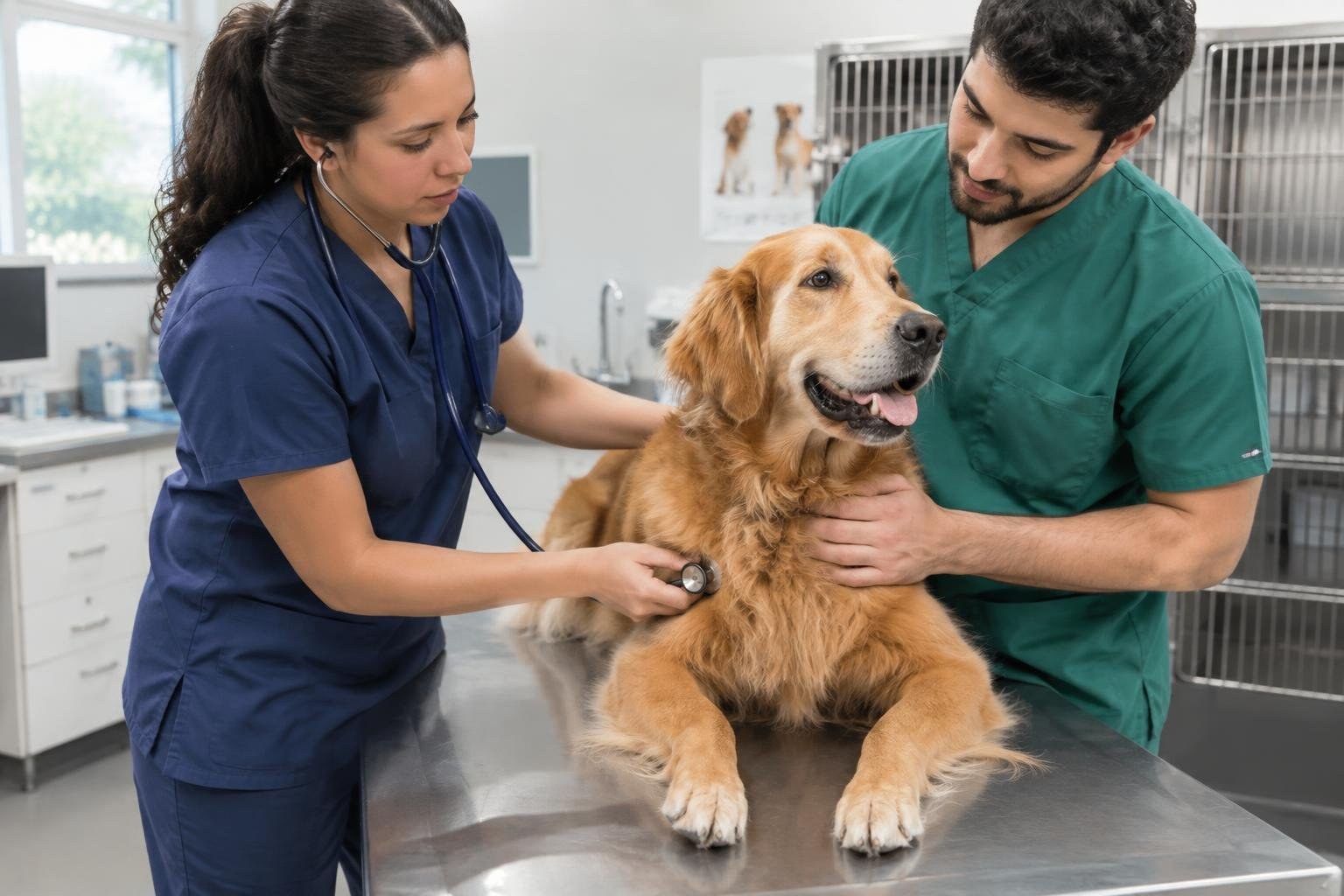
What Is a Veterinary or Animal Health Technology Program?
Veterinary and animal health technology is an education area focused on knowledge and technical skills used in animal-care settings. Program titles and credential levels are not uniform. The programs described in the available materials include an associate of applied science option and associate and bachelor’s pathways.
The label “other” signals that a broad program category may include programs that do not fit a more specific title. It is not enough information to tell you what one school teaches. Use the program’s catalog and degree plan to determine its subject focus, credential, and practical training.
This field is not interchangeable with veterinary medicine. A veterinary technology credential should not be assumed to qualify a graduate to work as a veterinarian. Review the education and legal requirements for the exact occupation you intend to pursue.
For examples of program content, see PennWest’s veterinary technology program description and Chattanooga State’s A.A.S. program page.
What Do You Study in Veterinary Technology?
Coursework varies by school and credential. Examples in program descriptions include animal anatomy, behavior, disease, pharmacology, animal handling, and clinical skills. PennWest also identifies practice management, recordkeeping, and laws pertaining to animal care, as well as laboratory and clinical experiences.
These subjects connect knowledge with practical responsibilities. Anatomy and disease content helps students understand animal health; handling relates to working safely and appropriately with animals; pharmacology introduces medications; and clinical or laboratory work gives students practice applying course material in a supervised setting. The exact sequence and depth are program-specific.
Some programs describe specialized preparation in small- and large-animal care, laboratory animal management, or shelter medicine. Ask whether a specialization is a set of required courses, an elective group, or simply an area in which the program offers exposure. Look for clear descriptions of what students actually do in laboratories and clinical placements.
Before applying, download the current catalog and course sequence. Check prerequisites, required experiences, and whether a capstone, internship, or other culminating activity is specified. Do not infer that a course or experience is included just because it is common in another program.
Skills You Can Build
Students may develop a foundation in animal anatomy, behavior, disease, and clinical skills, alongside technical knowledge connected with handling and pharmacology. Program descriptions also identify recordkeeping, practice management, and experience in laboratory and clinical settings.
Those areas can support work that requires careful observation, following procedures, communicating information, and keeping accurate records. They do not guarantee that a graduate will qualify for every animal-care position. Employers and jurisdictions may set requirements beyond the courses a student completes.
When evaluating a curriculum, ask the program to show how students practice each skill, how performance is assessed, and which settings are represented. For example, if you are interested in shelter medicine or laboratory animal care, ask whether students receive relevant coursework or supervised exposure rather than assuming that a general program offers a concentration.
Who Is This Program For? Admissions and Personal Fit
This pathway may be worth exploring if you are interested in animal health and willing to study anatomy, behavior, disease, and clinical subjects. Consider whether you like learning practical procedures, paying close attention to details, and applying scientific information to real situations. Those are questions for self-reflection, not requirements that every successful student share one personality type.
Think about the settings and kinds of animals that interest you. Program examples include small- and large-animal care, laboratory animal management, and shelter medicine, but the availability and depth of these subjects differ by school. Make sure the program you choose connects to the work you want to investigate.
Does Veterinary Technology Match You?
Salary, reputation, and job-growth claims should not make the decision on their own. Consider your motivation for working in animal care, your interest in science and hands-on learning, the total education commitment, and the practical work involved. The Free MAPP Career Assessment, Degree Matching, and Career Matching can help you reflect on how your preferences line up with related careers and education routes.
For entry requirements, consult each school’s current admissions page. The available program descriptions do not establish a universal GPA, test, essay, or experience requirement. Ask admissions staff for the current prerequisites and whether previous coursework or experience can be considered.
Credentials, Program Length, Difficulty, and Learning Format
Credential options named in the program information include associate and bachelor’s degrees. One example is an associate of applied science program; another institution describes associate and bachelor’s pathways. A separate career-advice source says aspiring veterinary technicians typically need at least a two-year associate’s degree in veterinary technology, but individual employers and jurisdictions may impose additional requirements.
Completion time depends on the credential, enrollment pace, accepted transfer credits, and course availability. A two-year associate’s degree is a common described route, but do not treat that as a guaranteed timeline for every student or program. Ask the college to provide a term-by-term plan based on your transcript and whether required laboratory or clinical courses are offered every term.
Online and hybrid availability is school-specific. Even if lectures are remote, laboratory or clinical components may require in-person participation. Ask where those requirements happen, whether the school helps arrange placements, and whether the location is feasible for you before committing.
Academic challenges may include learning unfamiliar scientific vocabulary and combining classroom material with practical expectations. Review course prerequisites early, ask about tutoring and academic support, and find out how practical skills are evaluated.
Tuition, Other Costs, and Financial Aid
Program costs depend on the college, residency status, credential, delivery format, and the courses and experiences required. Ask for a complete estimate rather than comparing tuition alone. Include mandatory fees, books, supplies, technology, transportation, and any costs connected with laboratories or clinical participation if applicable.
Compare the total cost of completing the program, not just the advertised price for one term. Request a personalized estimate that reflects your expected course load and transfer credits. Ask whether changing enrollment pace could affect aid eligibility or add terms, and confirm any financial-aid conditions directly with the college.
Ways to Make the Path More Affordable
- Complete the financial-aid application and ask the school about grants, scholarships, and payment arrangements.
- Check whether the college accepts relevant transfer credit before enrolling, and get any evaluation in writing.
- Compare public and private institutions using your actual net-price estimates, not sticker prices alone.
- Ask employers whether education assistance is available if you are already working.
- Consider a lower-cost starting institution only after confirming that credits will transfer into the program you intend to finish.
Do not assume a course will transfer or that aid will cover every cost. Confirm details with the receiving program and financial-aid office.
Careers, Jobs, and Employment Outlook
Animal-care career preparation is not one-size-fits-all. Program descriptions connect veterinary technology with technician preparation, and identify possible areas of study such as small- and large-animal care, laboratory animal management, shelter medicine, and practice management. The education-to-job connection depends on the program and the position’s requirements.
| Career direction | How the education may apply | What to verify |
|---|---|---|
| Veterinary technician | Program coursework may build animal-care knowledge and technical skills relevant to technician work. | Credential, employer expectations, and state requirements for the role. |
| Small- or large-animal care settings | Some programs describe specialized training in these areas. | Whether the program includes substantive coursework or supervised experience with the animals and setting you prefer. |
| Laboratory animal management | Some programs identify this as a specialization or training area. | Which courses and practical experiences are available, and what employers require. |
| Shelter medicine | Some programs describe specialized training related to shelter medicine. | Whether this is an established concentration, elective, or limited exposure. |
| Veterinary practice management-related work | Coursework in practice management and recordkeeping may be relevant. | Whether the position requires additional business, supervisory, or workplace experience. |
The sources available for this guide do not establish current wage or employment-outlook figures. For a sound comparison, search current U.S. Bureau of Labor Statistics and O*NET data for the exact occupation and compare the relevant geography, year, and job title. Do not treat a broad program name as a single occupation or assume every related job has the same prospects.
Technology and automation may change how animal-care workplaces handle records and routine processes. Rather than assuming a role will disappear or remain unchanged, ask employers and program staff which tools students use and which hands-on responsibilities remain central to the work.
Find out which Career or College Major is right for you!
Take the MAPP free today!Accreditation, Certification, and Licensure
Program completion is an education milestone, not proof that a graduate meets every employer, certification, or state licensing requirement. Requirements can depend on the job and location. Before enrolling, ask the program which credentials or examinations its curriculum is designed to prepare students for, then confirm the current rules with the relevant state authority or professional organization.
Check whether any claimed accreditation applies to the specific program and credential you plan to complete. PennWest’s program page describes its veterinary technology program as AVMA accredited; that statement should not be generalized to other schools. Confirm current status and scope with the school and the accrediting organization.
Ask for the program’s written explanation of graduate eligibility, practical requirements, and any steps students must complete after graduation. Verify answers independently when a credential is important to your employment plan.
Experience, Projects, and Preparing for Employment
Experience can help you test whether an animal-care pathway fits before you take on its full cost. Ask programs about supervised laboratory or clinical learning, and look for opportunities such as volunteering, entry-level animal-care work, or informational conversations with people in the settings you are considering. Confirm any age, training, safety, or site requirements with the organization offering the experience.
Build a record of your learning without sharing confidential information about animals, clients, or employers. You might keep a private skills log, note the procedures you have observed or practiced under supervision, and reflect on what work you enjoyed or found challenging. Follow workplace rules and never perform tasks beyond your training or authorization.
How to Stand Out to Employers
- Be prepared to explain the practical skills and coursework you completed.
- Describe supervised experiences accurately and distinguish observation from independent responsibility.
- Keep references who can speak to reliability, communication, and careful work.
- Ask employers which credentials, experience, or additional training they expect for the specific position.
These steps can help you make informed choices, but no course, volunteer activity, or credential guarantees a job.
Related Degrees and Alternative Pathways
Related options include animal sciences, veterinary medicine, veterinary assisting, and programs focused on a particular animal-care setting. These paths are not interchangeable. Compare their credentials, course plans, and intended occupations with the requirements for the work you want to do.
- Animal sciences: Consider this if you want a broader study of animals and want to compare programs with less emphasis on technician preparation.
- Veterinary medicine: Consider this if your goal is to become a veterinarian; investigate the separate professional education and licensing pathway.
- Veterinary assisting: Consider this if you are comparing a potentially different training route for support work. Verify the role’s duties and requirements rather than assuming the title is equivalent to veterinary technology.
- Specialized animal-care training: Consider programs focused on laboratory animal management, shelter medicine, or small- and large-animal care if that setting is your priority.
These are comparison directions, not claims that every college offers these programs or that a particular credential leads to a specific position. Confirm program availability and requirements with schools and employers.
Advantages, Drawbacks, and Is It Worth It?
There is no universal answer to whether this education is worth the investment. Weigh the credential against the jobs you are targeting, the total amount you would borrow or pay, and the additional steps required for employment. A program that includes the animal-care subjects and practical learning you want may be a better fit than one selected solely for its title or advertised outcomes.
Potential advantages
- Coursework can combine animal-health subjects with practical skills.
- Some programs describe laboratory or clinical experiences and specialized study areas.
- Associate and bachelor’s program options are described by the institutions in the available material.
Potential drawbacks
- Program names and curriculum vary, so comparing colleges takes careful review.
- Hands-on learning may require in-person participation even when some instruction is online.
- Education completion may not satisfy every employer or jurisdiction’s requirements.
- Costs and employment outcomes must be assessed for the individual school, credential, and location.
Make a personal decision using a realistic budget and a specific career target. If your preferred role requires more education or a separate credential, include that commitment in your plan from the start.
How to Choose the Right Veterinary Technology Program
Compare at least two programs using the same questions. A school’s program title or marketing language is not a substitute for details about the credential, actual courses, practical training, and total price.
- Accreditation: Is the specific program accredited now, and what does that status cover?
- Curriculum: Which anatomy, behavior, disease, pharmacology, clinical, laboratory, and management subjects are required?
- Practical learning: What in-person experiences are required, where do they happen, and who arranges them?
- Cost and aid: What is the estimated total cost after grants and scholarships, including fees and supplies?
- Format and time: Which courses are online, hybrid, or campus-based, and what is a realistic completion plan?
- Transfer: Which prior credits will count toward the exact program, confirmed in writing?
- Outcomes and support: What graduate information can the school provide, and what career services or employer connections are available?
- Credential preparation: What examinations or state requirements does the program address, and what must students do separately?
Ask to speak with an adviser and request written answers. Assessment.com’s education-matching and career-matching tools can also help you reflect on whether the work and training align with your interests before you commit.
From Education to Career: Next Steps and Questions
Career progress is individual, not guaranteed. A possible planning sequence is: veterinary technology coursework → an entry-level animal-care or technician role for which you meet the requirements → supervised experience and deeper skills in a setting of interest → specialization or additional education if it serves your goals → roles with broader responsibility when employers require and recognize that preparation.
Use this sequence as a conversation starter with programs and employers, not as a promised progression. Ask what qualifications are expected at each step and which skills you would need to demonstrate.
Questions to Ask Before Enrolling
- What exact credential will I earn, and which courses and practical experiences are required?
- What is my full estimated cost, and what financial aid or scholarships might apply?
- Which credits will transfer, and can I receive a written evaluation before enrolling?
- What in-person, laboratory, or clinical commitments should I plan for?
- What accreditation applies to this program, and how can I independently verify it?
- Which employers or job settings does the curriculum address?
- What additional certification, examination, or state authorization might my intended role require?
- What academic, career, and financial support can I use if I need help during the program?
Compare the answers against your goals, finances, preferred learning format, and interest in the daily work. Explore colleges and programs that fit your goals before making a commitment.
Frequently asked questions
Is a veterinary technology program hard?
It can be demanding for students who are new to animal anatomy, disease, pharmacology, or clinical terminology. Program descriptions also point to animal handling and clinical or laboratory experiences, which call for careful, responsible work. Ask programs for sample course sequences and the amount and type of hands-on learning so you can judge the fit before applying.
Is a veterinary technology degree worth it?
The credential label alone does not determine value. Compare total cost with the curriculum, practical experience, transfer options, and the specific jobs you want to pursue. Check what graduates are prepared for and whether additional education, an exam, or a state credential applies to your intended role. A program is a stronger fit when its verified outcomes and costs align with your goals.
What jobs can I get with a veterinary technology credential?
Program preparation can connect with veterinary technician work and areas such as small- or large-animal care, laboratory animal management, and shelter medicine. Some programs also include practice management topics. The actual roles available to you depend on your credential, experience, employer, and applicable state requirements, so verify these before choosing a program.
How much can veterinary technology graduates make?
Pay depends on the occupation, location, employer, experience, and credential. The available program information does not establish a reliable national salary figure, so compare current wage data for the exact occupation and location you are considering. Also distinguish entry-level jobs from roles that require additional education or experience.
Can I earn a veterinary technology degree online?
Some veterinary technology courses may be offered online or in hybrid formats, but do not assume the whole program can be completed remotely. Training may involve laboratory or clinical experiences, and one program source describes both as part of its curriculum. Ask each school which activities require in-person attendance and where they take place.
Does veterinary technology require a lot of math or science?
Coursework may include animal anatomy and pharmacology, and a particular program may include other science subjects. The research available here does not establish a standard mathematics requirement across programs. Review the current catalog and prerequisites for each school, and ask an adviser whether any required math or science courses can be completed before enrollment.
Do I need graduate school after a veterinary technology program?
Not every career connected to animal health has the same education requirements. Check the education and licensing rules for the exact occupation you want before selecting a pathway.
What certifications or licenses do veterinary technicians need?
Credential requirements depend on the role and jurisdiction. Before enrolling, ask the program which examinations or credentials its curriculum prepares students for, then confirm current requirements with the relevant state authority or professional organization. Program completion and professional authorization to work are not automatically interchangeable.
People Also Ask
What does “Veterinary/Animal Health Technologies/Technicians, Other” mean?
The term “other” is a broad program-category label rather than a detailed description of one uniform curriculum. Check a school’s catalog, required courses, credential awarded, and hands-on experiences to understand exactly what its program covers.
Is veterinary technology the same as veterinary medicine?
A veterinary technology program focuses on preparation for animal health support work. Veterinary medicine is a separate professional pathway. Do not assume a technology credential qualifies you to diagnose or treat animals as a veterinarian; verify the education and legal requirements for the job you want.
How long does it take to complete a veterinary technology program?
The supplied program examples include an associate of applied science program and associate and bachelor’s options. The time required depends on the specific credential, prior credits, and course schedule. Check the school’s degree map and transfer evaluation for your personal timeline.
How can I tell whether a veterinary technology program has enough hands-on learning?
Compare required animal-care coursework and look for documented laboratory, clinical, or other practical learning. Ask how those experiences are arranged, where they occur, and whether students must attend in person. Match the curriculum to the animal-care setting you want to explore.
What should I check about veterinary technology program accreditation?
Look beyond the word “accredited” in promotional copy. Confirm the program’s current status and the scope of any accreditation directly with the accrediting organization, then check whether your intended employer or state credential process recognizes the program.
How do I compare the cost of veterinary technology programs?
Ask for a full estimate of tuition and fees, equipment or technology costs, and any costs tied to required practical learning. Compare the net price after grants and scholarships, and ask whether transfer credits or employer support can reduce the amount you pay.
A veterinary/animal health technology program may suit students who want structured training for practical animal-care work and are interested in anatomy, behavior, disease, and clinical skills. The right path depends on the exact credential, curriculum, hands-on learning, total cost, and the rules that apply to the job and location you have in mind. Compare programs carefully, confirm what graduates are prepared to do, and consider whether the day-to-day work fits your interests as well as your career goals. Before Choosing a Degree, Find Out What Fits You. Choosing a college program can affect years of education and decades of work. Salary, job growth, and school reputation matter, but so does whether the work fits your motivations, interests, and natural preferences. The Free MAPP Career Assessment can help you explore careers that match you, compare related careers with your profile, and identify degrees and educational pathways connected with those careers. Consider Degree Matching, Career Matching, and Matching Jobs as you weigh next steps.