Degree Library
Veterinary Anatomy Degree Guide: Courses, Careers, Requirements, and Fit
Veterinary anatomy is the study of animal body structures and how those structures relate to function, health, and disease. In college, it may appear as a…
By David Slack · Staff Writer Assessment.com · Published October 5, 2026 · Last updated October 6, 2026
Veterinary anatomy is the study of animal body structures and how those structures relate to function, health, and disease. In college, it may appear as a dedicated area of study, a concentration, or a major within veterinary science, animal science, or biomedical sciences. The exact credential and curriculum vary by school, so prospective students should check the program’s official degree plan rather than rely on its title alone. Students may study anatomy alongside physiology, biology, pathology, microbiology, and research methods. The subject can support careers in research, education, animal-health industries, or preparation for further study. It does not, by itself, qualify a graduate to practice veterinary medicine. Not sure whether veterinary anatomy fits you? Take the Free MAPP Career Assessment to see how your motivations, interests, and natural preferences align with this degree and the careers it can lead to. Take the Free MAPP Assessment →
Veterinary anatomy is the study of animal body structures and how they relate to function. Colleges may offer it as a major, concentration, or part of veterinary science, animal science, or biomedical science. Graduates may pursue research, education, animal-health work, or further study, but the degree alone does not qualify someone to practice as a veterinarian.
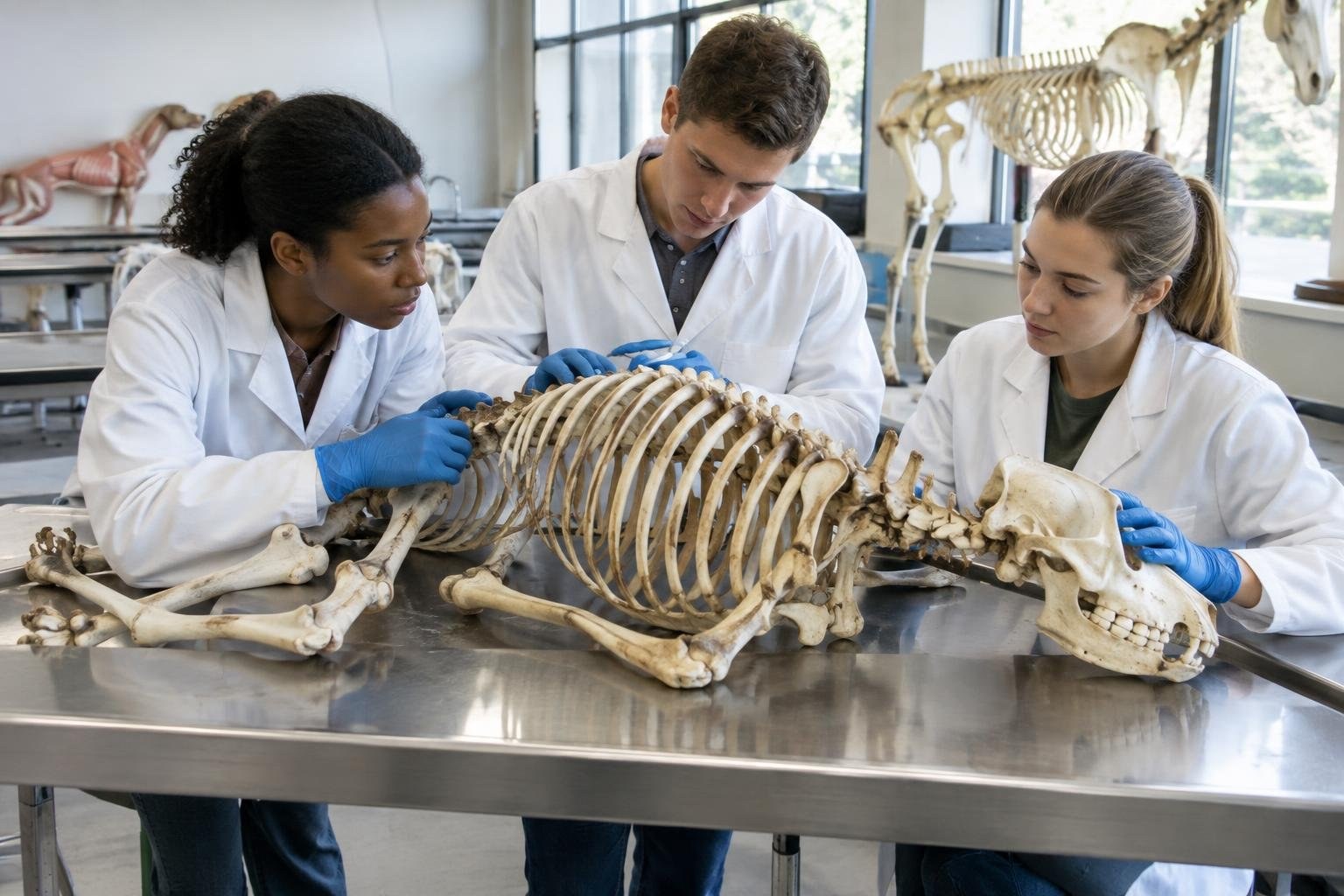
What Is a Veterinary Anatomy Degree?
Veterinary anatomy examines animal structures, including how organs, tissues, and body systems are arranged and how their form relates to function. It can provide a foundation for understanding animal biology and related scientific study.
Schools may offer veterinary anatomy as a major or concentration, or include it within veterinary science, animal science, comparative biomedical science, or a related program. Check the institution’s official degree plan for the exact award and curriculum.
Veterinary science and veterinary medicine are different fields of study. Veterinary science programs can prepare students for further study or animal-health and biomedical fields, but the program title alone does not establish preparation for a particular professional role. Confirm the education and other requirements for your intended next step.
What Do You Study?
Coursework depends on the program and credential. A broad undergraduate curriculum may begin with biology, chemistry, and animal science before moving into anatomy and related subjects. Anatomy instruction connects structure with function rather than asking students only to memorize names.
- Foundational sciences: biology and chemistry build the vocabulary and concepts needed for advanced study.
- Anatomy and physiology: students examine structures and how body systems function. Some programs include comparative approaches across species.
- Related biomedical topics: microbiology, pathology, reproduction, disease ecology, or animal care may appear in the curriculum.
- Laboratory and research learning: depending on the institution, students may work with models, specimens, laboratory methods, or faculty research.
- Advanced study: graduate programs can focus on areas such as animal disease, immunology, parasitology, neuroscience, or another research specialty.
Some programs include a capstone, supervised research, or internship, while others do not. Ask for the current course catalog and degree map; course titles and requirements can change.
Skills You Can Develop
Veterinary anatomy students develop scientific knowledge and transferable skills that can apply to research, animal-health, education, and related settings.
- Scientific observation: describe structures accurately and notice meaningful differences.
- Biological reasoning: connect form and function, and relate anatomy to physiology or disease.
- Research literacy: read scientific material, interpret evidence, and, where included, collect or analyze data.
- Communication: explain technical information in writing and in conversations with classmates, supervisors, or the public.
- Professional practice: follow laboratory procedures, work carefully, collaborate, and manage detailed assignments.
Specific software, laboratory methods, and technical skills depend on the program and the experience a student chooses to pursue.
Who Is Veterinary Anatomy Best For?
This field may appeal to students who are curious about animal biology, enjoy learning how complex systems fit together, and can stay engaged with detailed scientific material. It may also suit students considering research, teaching, animal-health work, or veterinary school.
There is no single personality type required. Some students are drawn to hands-on lab work; others prefer reading, data, or conceptual questions. Consider your willingness to study biology and chemistry and to handle detailed coursework. If you are primarily interested in treating animals, learn about the full veterinary-school pathway before choosing an undergraduate major.
Does Veterinary Anatomy Match You?
Salary, reputation, and job growth are only part of a degree decision. The everyday tasks and learning environment matter too. The Free MAPP Assessment, Degree Matching, and Career Matching can help you explore how your motivations and preferences relate to this field and to alternatives. Use the results as a starting point, then verify program and career requirements.
Admissions, Length, and Academic Difficulty
Admissions requirements are school-specific. Colleges may consider prior academic work, prerequisite science courses, grades, and application materials. Research or graduate programs can have additional subject, degree, or experience expectations. Do not assume that one school’s policy applies to another.
Time to completion depends on the credential, course load, transfer credits, and required laboratory or research work. A certificate or associate degree, bachelor’s degree, and graduate degree represent different amounts of study; part-time and accelerated schedules can change the calendar time. Ask each institution for the total credits, course sequence, and realistic completion plan.
The most common academic challenge is keeping up with technical content while building a strong science foundation. Review prerequisite expectations before enrolling, use academic support early, and meet with an adviser each term. Students aiming for veterinary school should map prerequisites and experience requirements with both their undergraduate adviser and prospective veterinary programs.
Online vs. On-Campus Veterinary Anatomy Programs
Some lectures and general coursework may be available online, while laboratory instruction, research, or other practical components may require campus attendance. Hybrid formats may combine remote study with scheduled in-person work. Availability depends on the institution and the specific credential.
Before choosing an online option, ask whether all required courses are offered remotely, whether labs use in-person sessions or another approved format, and whether the program supports the next step you want. If you plan to apply to veterinary school or graduate school, confirm that prerequisite coursework and laboratory credits will be accepted by the schools you may apply to.
Cost and Financial Aid
There is no single price for a veterinary anatomy degree in the saved program information. Total cost will depend on the institution and the specific credential and course plan. Compare each school’s published tuition, fees, and financial-aid information, and ask what costs apply to any practical or research requirements. The Utah State University program page, for example, directs prospective students to information about tuition, scholarships, and other financial aid.
Before committing, compare the written cost information and aid offer for each program you are considering. Ask the financial-aid office how your planned course load and transfer credits affect the estimate, and use the school’s current information rather than assuming that costs are the same across institutions.
Careers, Jobs, Salary, and Outlook
Potential directions described by program sources include animal-health and biomedical fields, agriculture, business, science, and further study. Specific roles and qualifications depend on the employer and the career path.
Career directionWhat the saved sources supportWhat to verifyAnimal-health or biomedical workVeterinary science programs describe preparation for animal-health or biomedical fields.Review job postings for required degree, experience, and skills.Research or academic workVeterinary science graduate study may prepare students for research or instructor roles.Check the education and experience expected for each position.Agriculture, business, or science rolesVeterinary and biomedical sciences programs describe these as possible career areas.Confirm the employer’s role-specific requirements.Veterinary medicineVeterinary science programs may help students prepare for veterinary-school applications.Check the requirements of the veterinary programs and professional authorities relevant to your plans.
Program descriptions identify possible directions, not guaranteed jobs or pay. Review current employer and program requirements before choosing a course of study.
Experience, Credentials, and Professional Requirements
Relevant experience can help students test their interests and demonstrate skills. Look for supervised research, laboratory work, internships, animal-related volunteering, faculty projects, and student organizations. Ask about expectations, training, supervision, and whether an experience is appropriate for your age, preparation, and intended career.
How to Stand Out to Employers
- Describe research, lab, or course projects in clear, specific terms.
- Build references through dependable work with faculty or supervisors.
- Keep a record of relevant methods, coursework, and experience, following privacy and safety rules.
- Choose additional training based on target job postings and employer requirements rather than collecting credentials without a plan.
A degree does not equal professional licensure. Students considering clinical veterinary work must check the veterinary education and licensing requirements that apply where they plan to practice.
Graduate School and Further Education
Relevant experience may help you explore whether research, laboratory, or animal-health work suits you. Program sources describe research skills and hands-on experiences as part of some animal and veterinary science pathways. Ask each department what supervised experiences are available and what preparation or training they require.
How to Present Your Preparation
- Describe relevant course or research work accurately.
- Ask faculty or supervisors about appropriate references.
- Check job postings for the experience and qualifications employers request.
Education and role requirements vary. Confirm the preparation expected for the specific position or further-study program you are considering.
Related Degrees and Comparisons
Possible next steps include graduate study in veterinary science, animal science, biomedical science, or a related discipline. The supplied sources describe veterinary science Ph.D. study in areas such as animal disease, parasitology, neuroscience, and immunology, and identify research or instruction as possible roles for graduates. Requirements vary by program.
Students interested in veterinary medicine can review veterinary-school programs and their admissions requirements. Some veterinary science and pre-veterinary programs are designed to help students prepare for applications, but the specific prerequisites and admissions decisions belong to each program. Check those requirements directly.
Advantages, Drawbacks, and Is It Worth It?
Potential advantages: focused study of animal structure; a foundation for further study in veterinary or biomedical science; and possible routes into research, education, or animal-health work.
Potential drawbacks: the degree name may not be offered consistently; some career goals require graduate or professional education; hands-on learning can make fully remote study difficult; and the degree alone does not provide a veterinary license.
Whether the program is worth it depends on your intended career, total cost, academic fit, location, and willingness to pursue further education if needed. Compare actual graduate and career pathways, not assumed outcomes.
How to Choose the Right Program: A Student Checklist
Use this checklist to compare colleges and avoid choosing on a program name alone:
- What exact degree or certificate will appear on the transcript?
- Is the institution appropriately accredited, and are any relevant professional requirements met?
- Which anatomy, biology, chemistry, laboratory, and research courses are required?
- What is the full estimated cost after aid, including fees and living expenses?
- Are internships, research, or supervised laboratory experiences available?
- Does the program meet prerequisite expectations for the graduate or veterinary programs you may consider?
- Which courses require campus attendance, and what are the transfer-credit rules?
- What career advising, faculty mentoring, and employer or research connections are available?
- Can the school explain outcomes and typical next steps without promising a job or admission?
To save responsibly, compare net cost, ask about scholarships and aid, review transfer policies before enrolling, and avoid paying for unnecessary credits. Do not skip required lab or research preparation simply to reduce cost.
Red flags: unclear credential names, vague claims that the degree guarantees veterinary-school admission or a job, no transparent course plan, or pressure to commit before you understand total costs and delivery requirements.
Assessment.com’s education-matching tools can help you explore options alongside this practical comparison. Explore colleges and programs that fit your goals →
From Degree to Career
Illustrative pathways may look like these, but none is guaranteed:
- Veterinary anatomy studies → research assistant or laboratory role → research experience → specialized graduate study → research scientist or academic role.
- Veterinary or animal science bachelor’s degree → veterinary-school application → Doctor of Veterinary Medicine → applicable licensure → clinical veterinary practice.
- Veterinary anatomy studies → relevant animal-health or biomedical role → experience and targeted training → technical or supervisory opportunities.
Actual progression depends on qualifications, hiring needs, academic performance, and the requirements of the role.
Questions to Ask Before Enrolling and Sources
Before accepting an offer, ask the department and financial-aid office about the credential, curriculum, total cost, aid conditions, lab attendance, transfer credits, research opportunities, career advising, and preparation for further study. If veterinary school is your goal, confirm prerequisites with the veterinary programs you may apply to. If you want a research or teaching career, ask what graduate education and experience are typical for the roles you are considering.
Sources and references
- University of Nebraska–Lincoln, Veterinary Science catalog
- Utah State University, Veterinary Science BS
- University of Arizona, Veterinary Science
- Penn State, Veterinary and Biomedical Sciences
- Cal Poly Pomona, Pre-Veterinary Science and Graduate School option
- Indeed, Veterinary Science vs. Veterinary Medicine
- U.S. Office of Personnel Management, Veterinary Medical Science Series
- U.S. Bureau of Labor Statistics, Occupational Outlook Handbook
Program curricula, admissions rules, costs, and professional requirements vary. Check the current official information from each college and relevant licensing authority.
Factors That Affect the Project
Several choices can shape a veterinary anatomy student’s degree plan and any research or capstone project. The program’s required courses and available hands-on experiences differ by institution, and course requirements can change. For example, the University of Arizona advises students to review their course plan with an adviser because required courses may change. Ask whether the program offers relevant research or practical learning, what preparation is expected, and how the plan fits your intended next step.
Frequently asked questions
Is veterinary anatomy hard?
Veterinary anatomy can be academically demanding because it involves detailed structures, scientific terminology, and biology-based coursework. The challenge varies by program and by your preparation in biology and chemistry. Lab or dissection work may be part of some courses. Strong study routines, early use of tutoring and faculty support, and practice connecting structure to function can help.
Is a veterinary anatomy degree worth it?
It can be worthwhile for students whose goals align with animal biology, biomedical research, teaching, or preparation for further study. Its value depends on the actual credential, tuition, career outcomes, and whether additional education is needed for the work you want. Review program requirements and career pathways before enrolling rather than assuming the degree leads directly to a particular job.
What jobs can I get with a veterinary anatomy degree?
Possible directions include animal or biomedical research support, laboratory work, education, and preparation for veterinary or graduate school. Titles and requirements differ by employer. Becoming a veterinarian requires a Doctor of Veterinary Medicine from an appropriate veterinary program and state licensure; an undergraduate degree in veterinary anatomy alone does not authorize clinical practice.
How much can you make with a veterinary anatomy degree?
There is no single salary for veterinary anatomy graduates because the field is an area of study rather than one standardized occupation. Pay depends on the job, education level, employer, experience, and location. Compare current U.S. Bureau of Labor Statistics data for specific occupations, such as animal scientist, postsecondary teacher, or veterinarian, and check the year and job definition.
Can I study veterinary anatomy online?
Some lectures and other coursework may be offered online, but anatomy programs can include laboratory learning, specimen-based instruction, research, or other in-person requirements. The format depends on the school and the course. Ask for a current degree plan and confirm whether labs, exams, research experiences, or any professional prerequisites require campus attendance.
Does veterinary anatomy require a lot of math?
Biology is central to veterinary anatomy, and programs may require chemistry, statistics, or other sciences. The amount of mathematics varies. Research-focused coursework may involve statistics and interpreting data, while the core anatomy material emphasizes structures, scientific terminology, and relationships between anatomy and function. Check the required course sequence for each program.
Do you need graduate school after veterinary anatomy?
No, not to work in every animal or research-related role. Graduate study may be important for specialized research, university teaching, or advanced scientific positions. A veterinary anatomy bachelor’s degree may also be used as preparation for a Doctor of Veterinary Medicine program, but admission requirements vary and the undergraduate degree does not replace the DVM.
What is the difference between veterinary anatomy and veterinary medicine?
Veterinary anatomy is a scientific field of study focused on animal structures and how they relate to function. Veterinary medicine is a clinical profession centered on diagnosing, treating, and preventing animal health problems. A veterinary anatomy degree can support preparation for veterinary school, but becoming a licensed veterinarian requires the professional veterinary education and licensing steps applicable in the jurisdiction.
What certifications do veterinary anatomy graduates need?
There is not one universal certification that turns a veterinary anatomy graduate into a veterinarian or replaces a degree. Credentials depend on the intended job and may be set by employers, professional organizations, or licensing authorities. For clinical veterinary practice, verify the requirements of the state or jurisdiction where you plan to work.
How should I choose a veterinary anatomy program?
Compare the exact credential, curriculum, required lab or research experience, total cost, transfer policies, student support, and career or graduate-school outcomes. If your goal is veterinary school, confirm that you can complete the prerequisite courses and gain relevant experience. Ask the department for the written degree plan and verify professional requirements with the relevant schools or licensing authority.
People Also Ask
What is veterinary anatomy?
Veterinary anatomy studies animal body structures and how they connect to function. Schools may offer it as a degree, concentration, or subject within veterinary or biomedical science programs.
What degree do you need to study animal anatomy?
The title varies by institution. Look for veterinary anatomy, veterinary science, animal science, or biomedical sciences, then review the official curriculum to see how much anatomy is included.
What can you do with a veterinary anatomy major?
Veterinary anatomy may lead toward research, education, animal-health work, or preparation for professional school. Exact eligibility depends on the employer and additional education or experience.
Can I become a veterinarian with a veterinary anatomy degree?
A veterinary anatomy degree is not a veterinary license. Clinical practice generally requires a Doctor of Veterinary Medicine and applicable state licensure.
Can veterinary anatomy be studied online?
Some coursework may be online, but hands-on laboratory or research requirements can require campus participation. Check the program’s current delivery and attendance policies.
How much does a veterinary anatomy program cost?
Costs depend on institution type, residency, program length, fees, and whether laboratory or research activities are required. Compare each school’s complete cost of attendance and financial aid offer.
What are the admission requirements for veterinary anatomy?
Admissions criteria are set by each college. Programs may consider prior coursework, academic records, and other application materials; prerequisites and transfer rules differ.
Is Veterinary Anatomy Right for You? Before choosing a program, compare its official degree plan, required courses, total cost, and available research or practical experiences. If you are considering further study or a clinical career, check the relevant program requirements and discuss your plans with an adviser. Explore Your Options Choosing a college program means weighing the curriculum and possible next steps alongside your interests and motivations. Take the Free MAPP Career Assessment to explore careers and degree pathways related to your profile. Explore Degree Matching, Career Matching, and Matching Jobs to compare education and career options. Take the Free MAPP Assessment →
Sources
- Veterinary Science vs. Veterinary Medicine: What's the Difference? | Indeed.com
- Department of Animal & Veterinary Sciences
- Veterinary and Biomedical Sciences — Academics — Penn State College of Agricultural Sciences
- Animal Science, B.S. - Pre-Veterinary Science/Graduate School
- Veterinary Science < University of Nebraska–Lincoln
- Veterinary Science - BS
- Veterinary Science | School of Animal and Comparative Biomedical Sciences
- Veterinary Medical Science Series 0701
- Guide to Veterinary Careers - Career Center
- What degree do you need to be a veterinarian? | MCPHS
- Education Requirements To Become a Veterinarian in 2026
- Prerequisite Credits and Courses | Cornell University College of Veterinary Medicine
- How to Become a Veterinarian in 7 Steps (2026) - Vety
- Veterinary Science Degrees | TopUniversities
- Veterinary School: Costs, Requirements, & Top Schools – Sallie