Degree Library
Turf and Turfgrass Management Degree Guide: Courses, Careers, Online Options & Fit
A turf and turfgrass management degree teaches students how to establish and care for grasses used on golf courses, sports fields, parks, lawns, and other…
By David Slack · Staff Writer Assessment.com · Published October 5, 2026 · Last updated October 6, 2026
A turf and turfgrass management degree teaches students how to establish and care for grasses used on golf courses, sports fields, parks, lawns, and other managed landscapes. Depending on the program, students study plant and soil science alongside irrigation, pest management, equipment, sustainability, communication, and business operations. The credential may be a certificate, associate degree, bachelor’s degree, or graduate program, and the mix of classroom, field, and work-based learning varies by school. Graduates may pursue technical, grounds, lawn-care, sports-field, golf-course, sales, research, or management work. Not sure whether turfgrass management fits you? Take the Free MAPP Career Assessment to see how your motivations, interests, and natural preferences align with this degree and the careers it can lead to.
Turf and turfgrass management is a field of study focused on the science and practical care of grasses used in lawns, golf courses, sports fields, parks, and similar landscapes. Programs may combine plant and soil science, turf selection, irrigation, pest management, equipment, and business skills. Certificates, associate degrees, bachelor's programs, and graduate study are available at some institutions. Career options include turf technician, grounds or lawn-care supervisor, sports-field staff, golf-course operations, and related sales or research roles.
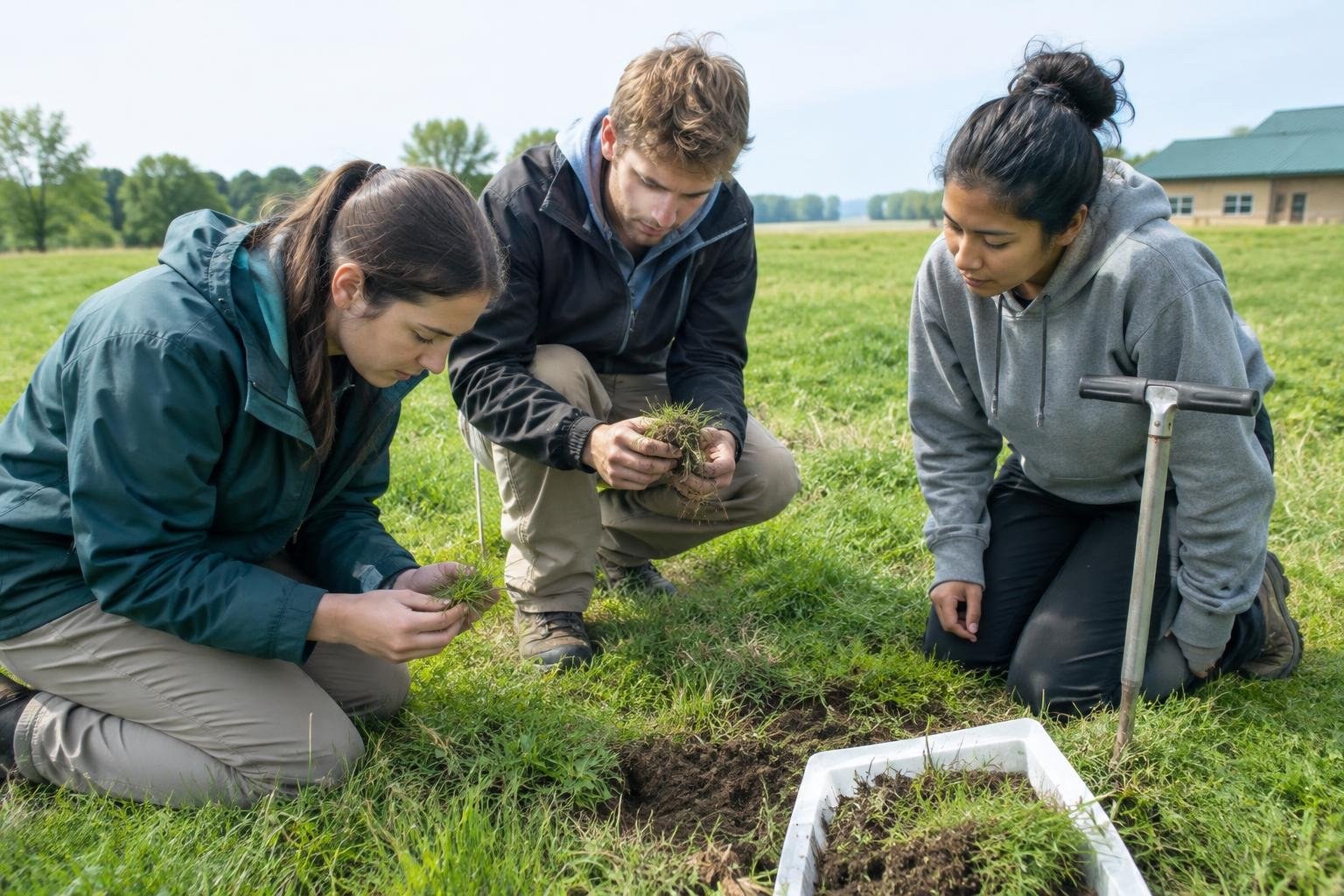
What Is a Turf and Turfgrass Management Degree?
A turf and turfgrass management degree prepares students to make informed decisions about managed grass systems. The field combines plant and soil science with operational questions: which grass suits a site, how to manage water and nutrition, how to recognize disease or pests, and how to maintain a usable surface while managing labor, equipment, and resources.
Programs may be listed as turfgrass science, turfgrass management, turf management, or as a concentration within plant science, horticulture, or agriculture. The Classification of Instructional Programs code supplied for this guide is 01.0607. Available credentials and course sequences depend on the institution.
Related disciplines overlap but have different emphasis. Horticulture covers many kinds of plants and plant-based businesses; agronomy often emphasizes field crops and soil systems; landscape management may focus more on design, installation, and maintenance. Read the actual curriculum rather than assuming that program names mean the same thing everywhere.
What Do Turfgrass Students Study?
Coursework varies by credential and college. A common foundation is plant biology, soil science, chemistry, and the principles of turf growth. More specialized study may address turfgrass selection, plant physiology, weeds, plant pathology, insect pests, irrigation and drainage, nutrition, pesticide use, and resource management.
Some programs also teach the operational side of the work: equipment, budgeting, labor and employment issues, communication, training, and supervision. This is important because turf managers often have to connect scientific recommendations with staffing, schedules, customer needs, and available resources.
Hands-on opportunities can include field observations, laboratory work, maintenance projects, internships, or applied research. A program's catalog and department can clarify whether these are required, optional, or dependent on the student's location. A Penn State World Campus associate degree page describes a 61-credit curriculum that includes biology, chemistry, ethics, and turf-related topics such as weed control and insect pest management. Other schools have different requirements.
In practical terms, students learn to observe conditions, identify likely causes of turf problems, compare management choices, communicate recommendations, and evaluate results. They are not simply memorizing plant names or maintenance calendars.
Skills You Can Develop
Students develop technical knowledge of grasses, soils, water management, pests, diseases, and maintenance practices. They also build observation and problem-solving skills, including noticing patterns in plant health and considering more than one possible cause before recommending an intervention.
Communication matters. A technician may explain a treatment plan to a supervisor; a manager may train a crew, coordinate vendors, or respond to a client. Programs with business components can strengthen budgeting, planning, scheduling, and people-management skills. Digital mapping, spreadsheets, equipment systems, and recordkeeping tools may be used in particular courses or workplaces, but software varies by employer.
These skills connect to work in golf-course and sports-field operations, parks, lawn-care services, landscape businesses, research, product sales, and turf-related education. The balance of science and management you need depends on the role you intend to pursue.
Who Is This Degree Best For?
The field may appeal to students interested in plants, outdoor environments, sports surfaces, golf, landscape operations, or practical environmental management. It can also suit people who enjoy a mix of observation, science, hands-on tasks, and coordination with others.
There is no single personality type required. Some jobs emphasize plant diagnosis and technical decisions; others involve crew leadership, customer service, sales, research, or equipment. Consider whether you are comfortable working outdoors in changing weather, following safety procedures, and sometimes working early, seasonally, or on weekends. Those expectations vary by employer and region.
Does Turfgrass Management Match You?
Salary, school reputation, and job-growth headlines are only part of a decision. Day-to-day fit matters too: the tasks you enjoy, work conditions you can accept, and problems you want to solve. The Free MAPP Career Assessment can help you reflect on motivations and preferences. Assessment.com’s Degree Matching and Career Matching tools can be useful starting points for comparing education and occupational directions; use them alongside program research and conversations with people in the field.
Take the Free MAPP Assessment →
Admissions, Program Length, and Academic Demands
Admissions requirements depend on the credential and institution. Applicants to undergraduate programs generally need to meet the college's admission requirements; some programs may expect preparation in math, biology, or chemistry. A certificate may have fewer entry requirements than a degree. Graduate programs can require a related bachelor's degree, prior science coursework, recommendations, a statement of purpose, or research experience.
Ask admissions staff whether standardized tests, a portfolio, an interview, work experience, or prerequisite courses are required. Do not assume requirements from one college apply to another.
Time to completion also varies. A certificate may take less time than an associate or bachelor's degree. Full-time, part-time, transfer, and accelerated options change the timeline, as do prerequisites and course availability. Penn State lists its online associate program as 61 credits; that credit total is specific to that program, not a universal standard.
Students often find the applied sciences challenging when they must connect classroom concepts to changing field conditions. Prepare by reviewing course prerequisites, refreshing basic biology or chemistry if needed, and asking about tutoring, labs, advising, and access to field experience.
Online, Hybrid, or On Campus?
Online study can make coursework more accessible for students who work or live far from a campus. Penn State World Campus lists online associate and bachelor's turfgrass programs, and its turfgrass offerings include certificates. Online delivery does not automatically mean that every practical requirement can be completed remotely.
Ask how students gain experience with field conditions, plant identification, equipment, or applied projects. Find out whether the program requires campus visits, local work experience, internships, or access to a suitable site. Hybrid programs may combine online coursework with on-campus labs or field instruction. A campus program may provide regular access to research plots, equipment, and instructors, but students should confirm what is actually available.
Choose a format based on your schedule and learning needs, not just convenience. Compare how the program assesses hands-on competence and whether its practical expectations can be met where you live.
Cost, Financial Aid, and Ways to Save
There is no single reliable price for a turfgrass management degree. Total cost depends on public or private status, residency, credential level, course load, online or campus fees, books, supplies, transportation, housing, and any required field or lab expenses. Ask each institution for a written estimate of the full program cost, not just the advertised per-credit tuition.
Financial aid may include federal or state aid, institutional scholarships, employer tuition assistance, and payment plans, depending on eligibility and availability. Students may reduce the number of credits they need through accepted transfer work, but confirm transfer decisions in writing before enrolling. Compare the cost of certificates that can stack into a longer credential with the cost of earning each separately.
Ways to Reduce Cost Without Undermining Your Training
- Compare total completion cost, including fees and required travel.
- Ask which prior credits or credentials may transfer.
- Check whether scholarships or employer assistance apply to the specific program.
- Compare online and campus formats, including any technology or field costs.
- Do not skip necessary hands-on learning solely to save money; ask whether a lower-cost program still teaches the skills employers expect.
Careers, Salary Research, and Job Outlook
The degree can connect to a range of work, but no program guarantees a job, salary, or promotion. The table describes plausible directions, not a promise of eligibility. Pay and outlook depend on the occupation, location, employer, experience, and year. Consult current U.S. Bureau of Labor Statistics and O*NET information for the closest occupational classification, then compare local job postings.
Career directionTypical preparationPay and outlookHow the degree may applyTurfgrass or grounds technicianCertificate, associate degree, or relevant experience may fit some rolesCheck current local postings and BLS/O*NET dataPlant, soil, pest, and maintenance knowledgeGolf-course maintenance assistantExperience and turf education can help; requirements varyVaries by region and employerSupports daily course maintenance and turf decisionsAssistant golf course superintendentOften benefits from a degree and field experienceVerify by occupation and locationCombines turf science with scheduling and team coordinationSports-field operations staffRelevant experience, certificate, or degree may be requestedVaries; review employer postingsApplies turf selection, surface care, and resource planningLawn-care supervisorExperience and relevant training; duties may affect credentialsVaries by business and regionSupports treatment planning, crew training, and customer communicationIrrigation or grounds technicianTechnical training and employer-specific experienceCheck current occupational dataBuilds knowledge of water management and turf conditionsTurf-product sales or service representativeRelevant education and communication skillsCompensation may vary by employer and roleConnects product knowledge with customer needsResearch or extension assistantBachelor's may be preferred; advanced research can require graduate studyReview institution or government postingsSupports trials, data gathering, demonstrations, or outreachGrounds or turf managerExperience plus relevant education; employer requirements varyVaries with responsibility and locationCombines technical choices with budgets, staff, and operations
Work settings can include golf courses, sports venues, parks, lawn-care and landscape companies, equipment or product suppliers, universities, and research organizations. The UMass Stockbridge program describes graduates working in lawn-care research, sales, and direct maintenance. Turf-related work is also changing as employers balance plant health, resource use, customer expectations, and operating costs. New tools can support monitoring and planning, but they do not remove the need for sound field judgment and safe work practices.
Experience, Credentials, Safety, and Employer Readiness
Internships, seasonal work, research projects, student organizations, and volunteer experience can help students test the work and build a record of practical skills. Ask whether a program connects students with golf courses, athletic facilities, parks, lawn-care businesses, or university research teams. Keep a portfolio of projects, field observations, presentations, and measurable responsibilities where appropriate.
How to Stand Out to Employers
- Pair classroom knowledge with supervised field experience.
- Show that you can explain a recommendation clearly and document results.
- Build familiarity with safe equipment use and workplace procedures.
- Ask employers which credentials or licenses are relevant to the duties in your state.
- Seek experience with planning, customer service, or team coordination if you want management work.
Completing a degree is not the same as holding a professional license or pesticide credential. State rules may apply to pesticide application and other regulated activities. Confirm current requirements with the appropriate state agency; ask the school which exams or credentials its curriculum prepares students to pursue.
Related Degrees and Graduate Study
Related paths include horticultural science, plant science, agronomy and crop science, soil science, landscape management, agricultural business, environmental science, and plant protection or integrated pest management. Choose turfgrass if managed grass systems and grounds operations are your focus. Consider a broader plant degree if you want more flexibility across crops, ornamentals, nurseries, or plant research.
- Horticultural science: consider this if you want a broader study of plant production and ornamental or nursery systems.
- Plant science: consider this if you want a wider scientific foundation that may include turf as one specialization.
- Agronomy and crop science: consider this if field crops and agricultural production interest you more than lawns and sports surfaces.
- Soil science: consider this if soil properties and management are your main interest.
- Landscape design or management: consider this if planning, installing, or maintaining whole landscapes is a stronger draw.
- Plant protection and integrated pest management: consider this if pest diagnosis and plant health are your primary focus.
- Agricultural business: consider this if you prefer sales, finance, or operations in agriculture over plant science.
Graduate school may be useful for advanced research, specialized scientific work, or some academic careers. A master's or doctorate is not automatically necessary for turf operations. Ask employers in your preferred path about their actual education requirements before committing to additional study.
Is It Worth It? Program Comparison and Enrollment Checklist
A turfgrass program can be worthwhile when its curriculum, experience opportunities, and cost align with a realistic career goal. Potential advantages include specialized applied science, access to field-based learning, and preparation for several kinds of turf-related work. Programs may combine plant science with communication, business, and management skills.
Possible drawbacks include a specialized focus that may be narrower than a general plant-science degree, variable seasonal or outdoor working conditions in some jobs, and costs that may not be justified if the intended role does not require a degree. Actual benefits depend on your region, experience, the credential, and employer demand. Compare outcomes and job postings rather than relying only on promotional claims.
How to Choose a Qualified Program
Start by confirming institutional accreditation and checking whether the curriculum matches your target work. Review faculty expertise, field or lab access, internships, online requirements, transferability, graduation information, career services, and employer connections. Ask what practical work students complete and how the school assesses those skills.
Get a written estimate of total cost and financial aid. Ask about licensing or certification preparation if the job you want requires it. Compare student support and course availability, particularly if you plan to study part time. Assessment.com’s education-matching resources can help you explore options, but use the college catalog and direct conversations with program staff to verify details.
Questions to ask before enrolling: Is the institution accredited? What is the full cost to completion? Which credits transfer? Are internships or field projects required? Does the program prepare students for any state-required credentials? What online or campus attendance is expected? What career support and employer relationships are available? How does the school report completion and employment outcomes?
Red flags: pressure to enroll before you can review costs, vague claims of guaranteed employment, unclear transfer rules, no explanation of practical training, or credential promises that are not confirmed by the relevant state authority. Ask for policies and claims in writing.
From Degree to Career: Possible Pathways
Career paths are not automatic, and people may progress differently. One possible route is:
Certificate or associate degree → turf or grounds technician → field experience and greater responsibility → assistant supervisor or specialist in irrigation, sports fields, or golf-course maintenance → management role, if experience and employer needs support advancement.
Another route might be:
Bachelor's degree → research or extension assistant → additional research experience or graduate study → specialized research, outreach, or academic work.
These examples illustrate options rather than promised outcomes. Before committing, talk to people in the roles you want and ask what helped them qualify, what their work is like, and what they would look for in a new graduate.
Explore colleges and programs that fit your goals, compare requirements and costs, and check current local opportunities. Use the Free MAPP Assessment and career and degree matching tools as one part of that decision.
Is Turf and Turfgrass Management Right for You?
Turf and turfgrass management may be a good fit if you want to apply plant and soil science to real landscapes and are comfortable with a mix of technical, outdoor, and operational work. It may be less suitable if you want a purely indoor career or prefer a broad plant curriculum without a focus on managed grass systems. In that case, compare horticulture, plant science, agronomy, or environmental programs.
Consider the education commitment, local employer needs, practical training, and total cost together. Your best next step is to compare program catalogs and speak with both advisors and working professionals. Before choosing a degree, find out what fits you.
Before Choosing a Degree, Find Out What Fits You
Choosing a college program can affect years of education and decades of work. Salary, job growth, and school reputation matter, but so does whether the work fits your motivations, interests, and natural preferences.
Take the Free MAPP Career Assessment to discover careers that match you, how related careers align with your profile, degrees and educational pathways tied to those careers, and potential jobs connected with those paths. You can also explore Degree Matching, Career Matching, and Matching Jobs as you compare your options.
Take the Free MAPP Assessment →
Factors That Affect the Project
For a prospective student, the project is choosing an education path that fits a career goal. Several factors can change which program makes sense and what you need to plan for:
- Credential and career target: A certificate, associate degree, bachelor’s degree, or graduate program involves a different level of study. Start with the work you want to pursue, then compare the preparation employers request. Penn State’s turfgrass certificates are integrated into its associate and bachelor’s programs, which may offer a path to earn multiple credentials within those programs.
- Course coverage: Compare required courses with the skills you want to build. Programs may cover plant and soil science, turf selection, weeds, pests, irrigation, and resource management. If you are aiming toward supervision, check whether the curriculum also includes communication, training, budgeting, or management.
- Delivery format and practical learning: Online, hybrid, and campus programs may differ in how students access fieldwork, equipment, and applied projects. Ask what hands-on work is required, how it is assessed, and whether you can complete it where you live.
- Time and cost: Credit totals, transfer decisions, course availability, and full-time or part-time study affect the time and cost of completing a program. Penn State’s listed 61-credit associate degree is one program’s requirement, not a standard for all turfgrass degrees.
- Workplace responsibilities: A role focused on plant and soil decisions may call for different preparation from one involving staff, finances, or customer communication. Compare course descriptions and ask program staff how the curriculum relates to your intended direction.
Before enrolling, write down your preferred career direction, the practical experience you need, and your budget and schedule limits. Use that list to compare catalogs and ask each school for a written estimate of your remaining credits and total cost.
Frequently asked questions
What is turf and turfgrass management?
Turf and turfgrass management focuses on the science and practical care of grasses used in lawns, golf courses, athletic fields, parks, and other managed landscapes. Students may study soils, plant health, irrigation, pests, equipment, sustainability, and business or crew management. Programs range from certificates and associate degrees to bachelor's and graduate study.
Is turfgrass management a hard degree?
It can be challenging for students who are not prepared for applied science, including plant biology, chemistry, soils, and pest identification. Programs may also expect students to connect classroom concepts to field conditions and make decisions involving water, equipment, budgets, or staff. The challenge depends on the credential, course sequence, and a student's preparation.
What jobs can I get with a turfgrass management degree?
Possible roles include assistant golf course superintendent, sports-field or grounds assistant, turf technician, lawn-care supervisor, irrigation technician, research or extension assistant, and sales or service roles with turf-related businesses. Job titles and education requirements vary. Some positions emphasize field experience, while management and research roles may favor a bachelor's or graduate degree.
How much can you make with a turfgrass management degree?
There is no single salary for this degree. Pay depends on occupation, region, experience, employer, seasonality, and responsibility for budgets or staff. Compare the specific job titles you are considering using current U.S. Bureau of Labor Statistics or O*NET information, and review local job postings to understand entry requirements and compensation in your area.
Can I earn a turfgrass management degree online?
Yes. Some turfgrass programs offer online certificates and degrees. Penn State World Campus lists an online associate degree described as 61 credits and an online bachelor's degree. Online study may still involve field activities or work experience, so ask each school how practical competencies are taught and assessed.
Does turfgrass management require math and science?
Many programs include science coursework, and the exact amount of math varies by school and credential. Students may need quantitative skills to interpret soil or plant data, calculate application rates, plan irrigation, or manage budgets. Review the catalog and prerequisites to see which biology, chemistry, mathematics, or statistics courses are required.
Do you need a bachelor's degree to work in turfgrass management?
Not for every career. Entry-level technical, grounds, lawn-care, and assistant roles may accept a certificate, associate degree, relevant experience, or a combination. A bachelor's degree may help with some management, research, or extension paths. Advanced research and academic careers can require graduate education. Check actual employer postings for your target role.
How is turfgrass management different from horticulture?
Compare coursework with the work you want to do. Turfgrass management centers on managed grasses, soils, irrigation, pests, and grounds operations. Horticulture is broader and may include ornamental plants, nursery production, landscape plants, and other plant systems. Program titles vary, so compare required courses, field opportunities, and graduate outcomes rather than relying on the name alone.
What certifications or licenses might turfgrass professionals need?
There is no universal certification requirement for completing a degree or working in every turf occupation. Pesticide application rules and other credentials can depend on state law and job duties. Ask the program which credentials it prepares students for, then confirm current requirements with the relevant state agency or certifying organization.
Is a turfgrass management degree worth it?
The best fit depends on your interests, preferred work setting, budget, and career goal. Compare the total cost, curriculum, in-person requirements, transfer policies, internships, and employer connections. Talk with current students and people working in the field, and use an interest or career assessment to help evaluate whether the work matches your motivations.
People Also Ask
What do you study in turfgrass management?
Students learn applied plant and soil science, turf selection and maintenance, irrigation, drainage, pest management, equipment, and sometimes business or crew management. Course lists differ by program.
How long does a turfgrass management degree take?
Program length depends on the credential and course load. Certificates are typically shorter than degrees; associate and bachelor's programs take longer. Transfer credits and part-time study affect the timeline.
Are there online turfgrass management programs?
Some programs are fully or primarily online, while others use campus facilities and field instruction. Ask how each program assesses hands-on skills and whether any in-person work is required.
What can you do with a turfgrass degree?
Graduates may work in golf, sports, lawn care, parks, landscaping, turf-product businesses, research, or education. The specific job depends on experience, location, degree level, and employer requirements.
Do you need graduate school for a turfgrass career?
Some entry-level roles do not require graduate school. Advanced research, university teaching, or specialized scientific work may call for a master's or doctorate, depending on the position.
Do turfgrass managers need a pesticide license?
Check current state requirements for pesticide application or any other regulated duties. A degree alone may not satisfy every state or employer credential requirement.
What is the difference between turfgrass management and horticulture?
Turfgrass programs focus on managed grasses and grounds operations. Horticulture generally covers a broader range of plant systems, which may include ornamental plants and nursery production.
How much does a turfgrass management degree cost?
Compare total tuition and fees, supplies, travel, field requirements, lost work time, and financial aid. Costs vary by institution, residency, degree level, and delivery format.
A turf and turfgrass management degree can suit students who want to combine plant and soil science with practical work managing lawns, sports fields, golf courses, parks, and other landscapes. Programs range from certificates to graduate study, so compare the credential with the roles you want, the hands-on experience offered, total cost, and local employer needs. The degree can build useful technical and management skills, but it does not guarantee a particular job or salary. Consider whether the day-to-day work, outdoor conditions, and education commitment fit you before enrolling.
Sources
- Turfgrass Science | Education Profile | AgCareers.com
- Academic Programs:Turfgrass Science and Management
- Associate of Science in Turfgrass Management : Stockbridge School of Agriculture : UMass Amherst
- Turfgrass Online Degree and Certificate Programs
- Turfgrass & Golf Course Management | College of Agriculture & Natural Resources at UMD
- Turfgrass Science and Management Associate Degree Online - Penn State World Campus
- Turfgrass Science Bachelor's Degree Online - Penn State World Campus
- Turfgrass Degrees and Certificates — Research — Department of Plant Science