Degree Library
Soil Science and Agronomy Degree Guide: Courses, Careers, Cost, and Fit
Learn what a soil science and agronomy degree covers, common courses and admissions requirements, career paths, online options, costs, graduate study, and how to choose a program that fits your goals.
A soil science and agronomy degree examines how soil, plants, water, climate, and management practices affect crops and land. Students learn to study soil properties, support crop production, interpret field and laboratory data, and evaluate approaches to soil and resource management. Depending on the program, the emphasis may be more scientific, applied, or research-focused. Graduates may pursue work in crop production, soil testing, agricultural research, conservation, consulting, or related industries. Job requirements vary: some roles begin with a bachelor’s degree, while advanced research or academic work may require graduate education. The degree is relevant to students interested in applying science to food production and land stewardship. Not sure whether soil science and agronomy fits you? Take the Free MAPP Career Assessment to see how your motivations, interests, and natural preferences align with this degree and the careers it can lead to.
Millions of people Take the MAPP Career assessment to see which Degrees are the best Match!
You can too,
What Is a Soil Science and Agronomy Degree?
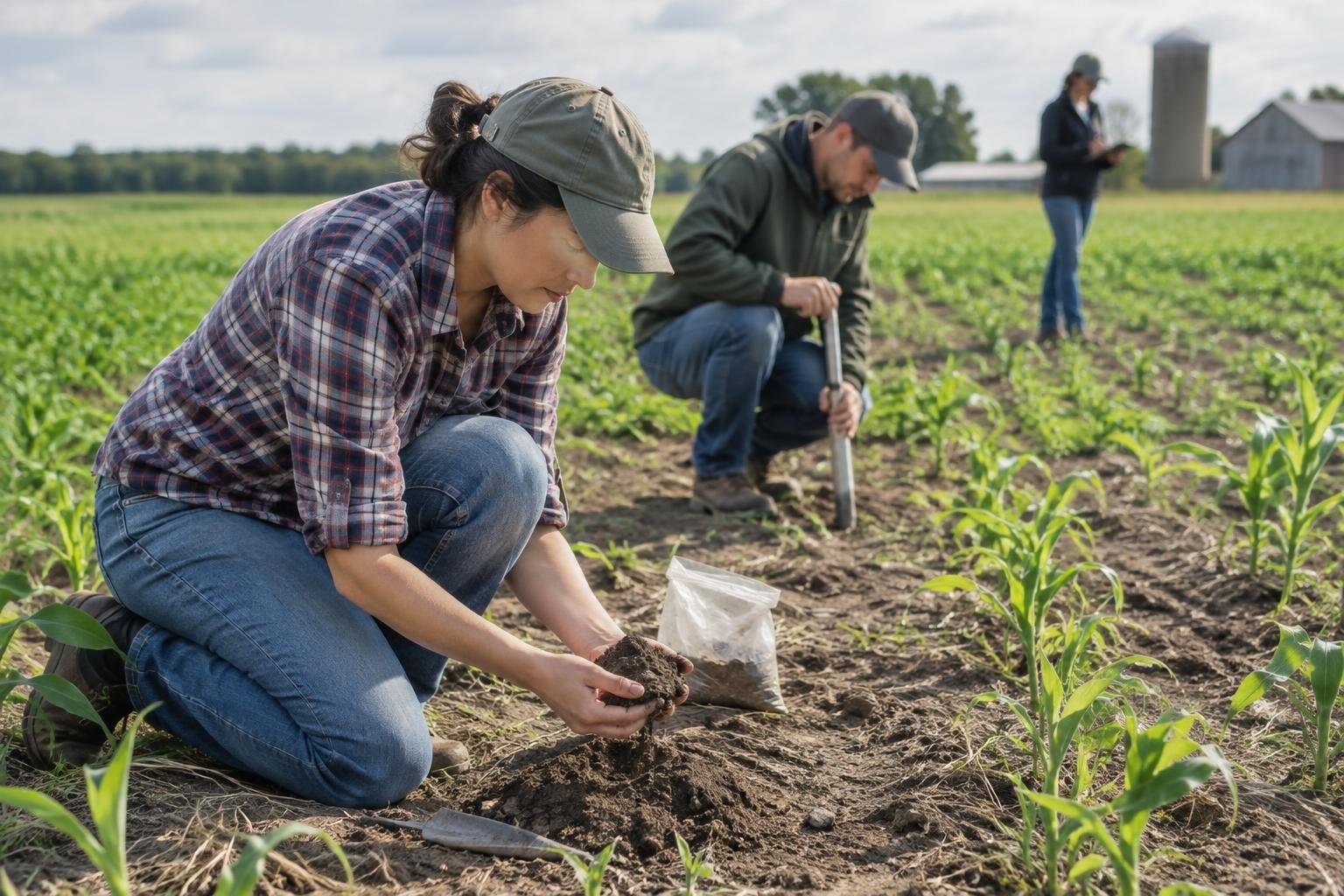
A soil science and agronomy degree explores how soil and plants function, how crops are produced, and how agricultural decisions affect land and resources. Soil science centers on the physical, chemical, and biological properties of soil and its connections to water, plants, and the atmosphere. Agronomy applies plant and soil knowledge to crop production and management. Programs commonly bring the subjects together.
“Soil Science and Agronomy, General” is a broad program label, not a promise that every school covers the same subjects. Related names include agronomy, soil science, crop science, plant and soil systems, and agricultural sciences. The Classification of Instructional Programs identifies the topic under CIP 01.1201, but a school’s curriculum and credential determine what students actually study.
Credentials can range from certificates and associate degrees to bachelor’s, master’s, and doctoral degrees. Shorter programs may focus on practical or technical preparation. A bachelor’s degree usually offers broader scientific study, while graduate programs add advanced coursework and, in many cases, research. The exact sequence and concentration differ by institution.
The field overlaps with plant science, environmental science, agricultural engineering, and agricultural business. Agronomy commonly emphasizes crop production and management; soil science gives more attention to soil properties and processes. Environmental science may cover broader ecosystems and policy, while agricultural engineering focuses more on designing systems and equipment. Compare course lists and learning experiences, not just degree titles.
What Do You Study in an Agronomy Major?
Students build from foundational science toward applying it to soils, plants, and production decisions. A general program may include biology, chemistry, plant science, soil properties, crop production, ecology, and research or data methods. Some programs include physics, calculus, statistics, geography, or water-related study; prerequisites and required courses vary.
Intermediate and advanced study can cover soil-plant relationships, nutrient cycles, organic matter, soil condition, crop management, irrigation or water processes, plant breeding, seed science, weed science, entomology, and integrated pest management. Oregon State University’s graduate agriculture offerings illustrate the breadth of possible specialties, including crop production, genetics, soil and water science, biological control, and waste management. These are examples of subject areas, not requirements for every undergraduate degree.
Labs teach students how to collect and analyze samples, use scientific methods, and interpret results. Fieldwork can help connect classroom concepts to variable soils, crop conditions, and management practices. Some programs provide internships, faculty research, a capstone, or a thesis; ask whether such work is required or optional.
Texas State’s agricultural sciences curriculum describes study of nutrient cycling, soil-plant relationships, organic matter, indicators of soil condition, and soil amendment and nutrient management strategies. These examples show how students may connect underlying science with decisions about soil management. Curricula change, so check the current catalog and course descriptions for each program.
Skills You Develop
The degree can develop skills that matter in agricultural, research, and conservation settings. Specific competencies depend on coursework and experience, so students should seek practice applying concepts as well as learning them.
- Scientific skills: Understand soil and plant systems, use laboratory or field methods, and evaluate evidence.
- Analytical skills: Interpret measurements, compare conditions, draw conclusions from data, and communicate uncertainty.
- Applied problem solving: Connect soil, crop, water, and management information to practical questions about production or land use.
- Communication: Explain findings clearly in reports, presentations, and discussions with researchers, growers, employers, or community partners.
- Professional skills: Plan projects, maintain careful records, follow safety procedures, and work effectively with a team.
- Technology: Depending on the program, use laboratory instruments, spreadsheets, mapping tools, or other data and agricultural technologies. Confirm which tools the curriculum teaches.
These skills may support work in soil testing, agricultural research, crop production, conservation, technical sales, or consulting. Employers can have different expectations, so review job postings and seek internships or projects that develop skills relevant to the roles you want.
Who Is This Degree Best For?
This major may interest students who want to study how soil and plants function and how agricultural decisions affect crop production and land. Coursework may include soil-plant relationships, nutrient cycles, organic matter, and approaches to soil condition and nutrient management. Consider whether you want to study these topics through scientific coursework and, where offered, laboratory or field experiences.
Programs can differ in emphasis, so compare course lists and practical requirements. Think about whether you are interested in crop production, soil processes, water, or related research, and check what each program actually teaches before deciding.
Does Soil Science and Agronomy Match You?
Consider your interest in the subject, the cost and length of study, practical learning opportunities, and the qualifications requested for your target roles. The Free MAPP Assessment can help you reflect on motivations and preferences. Degree Matching and Career Matching can help you explore possible educational and occupational paths; treat them as decision aids, not guarantees.
Take the Free MAPP Assessment →
Admissions, Length, and Difficulty
Admissions: Requirements depend on credential and school. Undergraduate programs typically set their own rules for transcripts, prior coursework, and application materials. Graduate programs may require a related bachelor’s degree and science preparation. For example, the University of Nebraska–Lincoln describes its agronomy master’s as requiring a bachelor’s degree, preferably in agronomy or a closely related field; thesis-track preparation includes specified science and mathematics coursework. That is one university’s requirement, not a universal rule.
Ask admissions staff about prerequisite biology, chemistry, physics, calculus, or statistics; minimum grades; transfer credit; application deadlines; and whether relevant work or research experience is expected. Tests, essays, interviews, and other materials are program-specific.
Length: The timeline depends on degree level, course load, transfer credits, and whether you study part time. Certificates and associate degrees usually require less study than bachelor’s degrees. Master’s degrees add advanced coursework and may include a thesis or other research; doctoral timelines vary with research and program requirements. Request an individualized degree plan rather than relying on a general estimate.
Difficulty: Common challenges include scientific prerequisites, interpreting data, learning lab or field methods, and relating theory to complex growing conditions. Prepare by reviewing course sequences, strengthening foundational science and math, and asking about tutoring, advising, and research opportunities.
Online vs. On-Campus Programs
Online, hybrid, and campus-based options depend on the credential and specialization. Some lectures or general courses may be available online, but soil and crop study can require laboratories, field sampling, research, or internships that are difficult to complete entirely at a distance.
Before enrolling online, ask how students meet practical requirements, whether campus visits are necessary, where field experiences take place, and whether the program helps arrange placements. Also check access to faculty, laboratory resources, advising, and research opportunities. An online label alone does not tell you whether the program will provide the practical experience you need.
On-campus programs may offer more direct access to laboratories, demonstration areas, faculty research, and in-person collaboration. Hybrid formats can combine remote classes with scheduled practical work. Compare the real delivery schedule and travel requirements with your family, work, and financial responsibilities.
Cost, Financial Aid, and Ways to Save
Program cost depends on the school, credential, course load, delivery format, fees, and any required practical work. Tuition and fees are only part of the cost of attendance, so ask each school for a full estimate that includes books, equipment, transportation, housing, and field or laboratory expenses where applicable.
Compare the total cost and ask what financial aid and scholarships the school offers. Confirm which charges apply to online or practical courses, and request a written estimate based on your enrollment plan. Do not compare programs on tuition alone if their fees or required costs differ.
Questions to Compare Program Costs
- What is the estimated total cost for the credential and course load I plan to take?
- Which fees, books, equipment, and field or laboratory expenses are additional?
- What financial aid or scholarships are available, and what are their requirements?
- How do transfer credits affect the courses and total cost remaining?
Careers, Jobs, Salary, and Outlook
A soil science and agronomy degree can prepare students for several occupational directions, but there is no single job outcome. Graduates may work for agricultural businesses, farms, laboratories, research groups, public agencies, conservation organizations, or educational institutions. Actual eligibility depends on the employer, degree level, practical experience, and location.
| Career direction | Typical education or preparation | How the degree may apply |
|---|---|---|
| Agricultural research assistant or technician | Often relevant postsecondary science preparation; requirements vary | Supports sample collection, experiments, records, and interpretation of crop or soil information. |
| Soil testing or laboratory technician | Relevant science coursework and laboratory practice | Applies soil sampling, measurement, and analytical methods. |
| Crop production or farm operations role | Education and experience vary by employer | Supports understanding of crop systems, field conditions, and production decisions. |
| Agricultural or crop adviser | Relevant degree and applied experience; some positions may require additional credentials | Provides a foundation for evaluating crop, soil, nutrient, and management questions. |
| Conservation or land-management technician | Relevant education and field experience; requirements vary | Connects soil and plant knowledge with land and resource management. |
| Agricultural technical sales or support | Relevant subject knowledge and communication skills; employer-specific | Helps explain products, practices, or technical information to agricultural clients. |
| Extension or agricultural education support | Role-specific education and communication preparation | Uses agricultural knowledge to help share research and practical information. |
| Soil scientist or agronomy specialist | Qualifications depend on duties; advanced roles may prefer graduate study | Specialized coursework or research can support deeper soil or crop expertise. |
| University or advanced research scientist | Graduate education is commonly relevant; specific requirements vary | Graduate study develops research design, subject expertise, and independent investigation. |
These are examples, not guaranteed outcomes or definitive entry requirements. Check current job postings for the exact occupation and region. For salary and outlook, consult current U.S. Bureau of Labor Statistics and O*NET data for the specific job title; occupational statistics do not represent every graduate or entry-level offer. Because graduates enter different occupations, avoid treating one salary figure as the “salary for the degree.”
Some opportunities involve established agricultural operations; others are linked to research, conservation, or changing production practices. Technology and automation can change how data are collected and how equipment is used, but they do not eliminate the need for people who can interpret results, understand local conditions, and communicate sound decisions. The impact differs by employer and role.
Find out which Career or College Major is right for you!
Take the MAPP free today!Internships, Experience, Credentials, and Safety
Relevant experience can help students connect scientific study to employment. Look for internships, faculty research, laboratory or field projects, farm or conservation work, and opportunities to present results. Ask whether a program offers placements, research assistantships, employer projects, or an applied capstone. Build professional relationships with instructors, alumni, and people working in roles that interest you.
How to Stand Out to Employers
- Keep a record of projects, methods, data, and your role in each result.
- Practice explaining technical findings to people without a science background.
- Seek experience relevant to your preferred setting, such as a lab, farm, research group, or conservation project.
- Learn the software, equipment, or field methods that target employers request.
- Check whether a credential is actually required or preferred before investing in it.
Completing an academic degree is not the same as meeting every professional or state requirement. Rules can vary by occupation and location. Before relying on a license or certification, verify its current requirements with the relevant licensing authority or credentialing organization. Follow lab, field, equipment, and workplace safety procedures, and ask schools how required safety instruction is delivered.
Graduate School Options
Graduate education can help students deepen a specialty, prepare for research, or qualify for positions with higher educational expectations. A master’s in agronomy or a related area may involve advanced study in crop production, soil management, and agricultural research. Thesis and non-thesis options differ by institution. A doctorate may suit people aiming for independent research or certain academic careers, but it requires a substantial research commitment.
Other possible directions include graduate study in plant science, soil and water science, environmental fields, agricultural engineering, or a professional business program. Choose a next degree for a defined reason, such as a role’s stated qualifications or the need to develop particular expertise. Review prerequisites, funding, research expectations, and career outcomes before applying.
Related Degrees and Comparisons
Related degrees can share courses but lead to different emphases. Consider these alternatives if your interests point elsewhere:
- Agronomy: Consider this instead if you want a stronger focus on crop production and management than soil processes.
- Soil science: Consider this instead if you want to concentrate more deeply on soil properties, formation, and soil-water-plant relationships.
- Plant science or crop science: Consider this instead if plant growth, breeding, genetics, or crop systems are your main interest.
- Environmental science: Consider this instead if you want broader study of environmental systems, impacts, and policy beyond agricultural production.
- Agricultural engineering: Consider this instead if designing equipment, infrastructure, or technical systems is your main goal.
- Natural resources or range management: Consider this instead if land stewardship and natural-resource systems are more central to your interests.
- Agricultural business or agribusiness: Consider this instead if you prefer management, markets, finance, or sales to laboratory and field science.
- Horticultural science: Consider this instead if you want to focus on cultivated plants, gardens, or specialized crop systems.
Soil science versus agronomy is not always a sharp divide: many programs combine the topics. Compare foundational sciences, specialization choices, practical requirements, graduate-school preparation, and the kinds of jobs graduates pursue. Earning potential is tied more closely to occupation, experience, and location than to a degree label alone.
Advantages, Drawbacks, and Is It Worth It?
Advantages include studying practical questions about crops, soil, water, and land; developing scientific and analytical skills; and exploring several settings, including agriculture, research, conservation, and education. Programs may offer opportunities for fieldwork, laboratory methods, or faculty research. A broad degree can also leave room to select a specialization.
Drawbacks may include demanding science prerequisites, a need for hands-on experience, and uncertainty about which occupation best fits until you explore specific roles. Some advanced research or academic paths require more education. Field-based work may involve conditions and schedules that not every student prefers. Costs can rise when travel, equipment, or additional semesters are needed.
Whether the degree is worth it depends on the price after aid, the program’s quality and fit, your career goals, local opportunities, and your willingness to pursue additional experience or education. Compare the total cost with the qualifications required for actual jobs you would accept. Talk with students, faculty, and working professionals when possible, and avoid assuming that an appealing job title is representative of every graduate’s experience.
How to Choose the Right Program: A Student and Parent Checklist
Choosing a college program is a major decision for students and families. Use this checklist to compare what schools actually provide:
- Accreditation: Verify the institution’s current accreditation through recognized official resources. Do not assume a program has a specialized accreditation without checking.
- Curriculum: Compare course requirements, concentrations, science prerequisites, and elective options.
- Practical learning: Ask about labs, field experiences, research, internships, and how students access them.
- Faculty and facilities: Review faculty expertise and the availability of relevant laboratories or research opportunities.
- Cost and aid: Request a full cost estimate and compare financial aid, scholarships, and transfer-credit evaluations.
- Format: Confirm campus visits, fieldwork, lab attendance, travel, and scheduling requirements for online or hybrid study.
- Outcomes: Ask how the school reports completion, further study, and employment outcomes, and how those figures are defined.
- Career support: Check advising, internship assistance, career services, employer connections, and alumni networks.
- Transferability: Get written confirmation of how previous coursework applies to the degree and whether credits will transfer elsewhere.
- Credentials: If your intended career has licensing or certification rules, confirm that the curriculum meets the relevant requirements.
Ask direct questions before paying a deposit: What is required to graduate? What practical experiences are included? What costs are not shown in tuition? Which courses are available every term? How are job and graduate-school outcomes measured? Assessment.com’s career and education matching tools can help you reflect on fit, but the school and relevant authorities are the sources for admissions, accreditation, and qualification requirements.
Explore colleges and programs that fit your goals →
From Degree to Career: Example Pathways
Career paths are not automatic promotions. These examples show possible routes, with requirements dependent on employer, experience, and location:
- Soil science and agronomy degree → laboratory or research support role → experience with soil or crop methods → technical specialization → advanced research or supervisory work, potentially with graduate education.
- Soil science and agronomy degree → production or agricultural support role → field experience and stronger advisory skills → crop or soil focus → experienced adviser or specialist role.
- Soil science and agronomy degree → conservation or land-management support → project and field experience → specialized resource-management work → program leadership or advanced technical work.
Use job descriptions as a reality check. Note required education, experience, tools, travel, and any stated credentials. If the roles you want repeatedly ask for graduate training or a particular specialization, plan for that before selecting electives.
Questions to Ask Before Enrolling
- Which courses, concentrations, and science prerequisites are required for this credential?
- What labs, field experiences, or research opportunities are included, and how are they completed?
- What is the full estimated cost, including fees and practical-course expenses?
- How do previous credits apply to the degree plan?
- What education, experience, and skills do employers request for the roles I am considering?
- If I am considering graduate study, what prerequisites and research expectations apply?
- For online or hybrid study, which courses or practical requirements require in-person attendance?
Compare written answers from each school. Check the current catalog and program requirements, and use job postings to guide questions about career preparation.
Factors That Affect the Project
If you are planning a research, capstone, or field project in soil science and agronomy, its scope and design will depend on several choices:
- Topic and specialization: Crop production, soil and water science, plant genetics, nutrient management, and other subjects can lead to different questions and methods.
- Degree level and format: A project may be shaped by whether your program offers a capstone, thesis, or other research option. Requirements differ among institutions.
- Preparation: Your prior coursework matters when a project involves advanced science or quantitative methods. Graduate prerequisites, for example, can include specified biology, chemistry, physics, or calculus coursework.
- Methods and practical access: Sampling, laboratory analysis, fieldwork, and data interpretation may each be relevant. Check what facilities, field experiences, and research opportunities the program makes available.
- Project scope: Choose a question that fits the subject area, methods, and time available within your program. Discuss expectations and requirements with the relevant faculty before committing to a plan.
Before enrolling, compare program specializations and ask how students complete research or applied work. A project that matches your interests but depends on methods or resources the program does not provide may need to be narrowed or redesigned.
Frequently asked questions
Is soil science and agronomy hard?
Programs vary, but coursework may combine biology, chemistry, soil and plant systems, and data interpretation. Review the required science and math courses before applying, and ask the school what tutoring or prerequisite support is available.
What jobs can I get with this degree?
Possible paths include soil testing, crop production, agricultural research support, conservation, and technical roles. Search current job postings in your area to compare the education, experience, and skills employers request.
How much can I make with a soil science and agronomy degree?
There is no single salary for the degree because graduates pursue different occupations. Identify a job title first, then compare current occupational data with local postings and entry-level requirements.
Can I earn this degree online?
Some courses may be online, but labs, fieldwork, research, or internships can require in-person participation. Ask how online students complete each practical requirement and whether campus visits or travel are necessary.
Does agronomy require a lot of math?
The amount depends on the program. Check the degree plan for required math, statistics, and science courses, and ask whether those courses are prerequisites or part of the major.
Do I need graduate school for a career in agronomy?
Not for every role. Compare job postings for the positions you want: technical and production roles may have different education requirements from advanced research or academic positions. A master’s program can offer further study in crop production, soil management, and agricultural research.
What is the difference between agronomy and soil science?
Agronomy generally emphasizes crop production and management, while soil science focuses more on soil properties and processes. Since programs often combine the fields, compare required courses and areas of specialization rather than relying on the degree title.
How long does a soil science and agronomy degree take?
Duration depends on the credential, course load, transfer credit, and program requirements. Request a degree plan from each school that includes prerequisites, required practical work, and the courses needed to graduate.
People Also Ask
What classes do agronomy majors take?
Programs may combine soil science, crop production, plant science, chemistry, ecology, water, nutrient management, and data methods. Check the catalog for required courses and whether labs, fieldwork, or research are part of the degree.
What can you do with an agronomy degree?
Graduates may pursue work in agriculture, research, conservation, education, or related businesses and public agencies. The roles to target depend on the degree level, experience, specialization, and local employers.
Can you become a soil scientist with a bachelor’s degree?
It depends on the position. Compare current job postings for soil-related roles and note whether employers ask for a bachelor’s degree, field or laboratory experience, or graduate education.
Can soil science be studied online?
Some programs offer online coursework, but lab and field requirements may still involve in-person work. Ask the school to explain how distance students complete each practical component before enrolling.
What science is needed for agronomy?
Coursework may cover soil properties, crop production, plant and soil relationships, nutrient management, and data analysis. Requirements vary, so check the curriculum and ask about math and science prerequisites.
Should I get a master's in agronomy?
A master’s can provide advanced study in areas such as crop production, soil management, and agricultural research. Compare the program’s requirements and research options with the qualifications requested for the jobs you want.
Soil science and agronomy may be a good fit if you want to apply science to crops, soil, water, and land management. Before enrolling, compare each program’s courses, practical learning, total cost, and the qualifications required for jobs that interest you. Consider how the subject matter and work settings fit your preferences, and use career and degree matching tools to explore options. Take the Free MAPP Career Assessment to reflect on your motivations, interests, and natural preferences.
Want to see your options? Try our comprehensive Degree, Program & College Search tool
College Search ToolSources & Official Resources
- Graduate Degrees | College of Agricultural Sciences
- Master of Science in Agronomy | College of Agricultural Sciences and Natural Resources | Nebraska
- Our Graduate Degree Programs — Academics — Penn State College of Agricultural Sciences
- Master of Science Programs - Department of Soil and Crop Sciences
- Utah State University Degrees and Programs by interests
- Department of Agricultural Sciences | Texas State University
- Degrees | AGNR | USU
- Degrees and Programs - Department of Soil and Crop Sciences
- Online Soil and Crop Sciences Degree | Colorado State University Online
- Degrees & Programs: Soil & Crop Sciences - Cornell CALS