Degree Library
Soil Microbiology Degree Guide: Courses, Careers, Requirements, and Is It Right for You?
Learn what a soil microbiology degree covers, what students study, how programs differ, and which research, agriculture, and environmental career paths may follow. Explore admissions, costs, online options, graduate study, and ways to assess whether this field fits you.
Soil microbiology is the study of microorganisms in soil and how they interact with plants, nutrients, and environmental conditions. A soil microbiology degree or concentration typically combines microbiology and biology with soil science, chemistry, ecology, and research methods. Depending on the program, students may study soil organisms in a laboratory, collect samples in the field, or investigate questions related to agriculture and environmental quality. Graduates may pursue laboratory, agricultural, environmental, or research-related work. Some roles are accessible after undergraduate study, while independent scientific research and many university careers typically require graduate education. Program titles and course plans vary, so compare actual requirements rather than assuming every program called soil microbiology has the same focus. Not sure whether soil microbiology fits you? Take the Free MAPP Career Assessment to see how your motivations, interests, and natural preferences align with this degree and the careers it can lead to.
Millions of people Take the MAPP Career assessment to see which Degrees are the best Match!
You can too,
What Is a Soil Microbiology Degree?
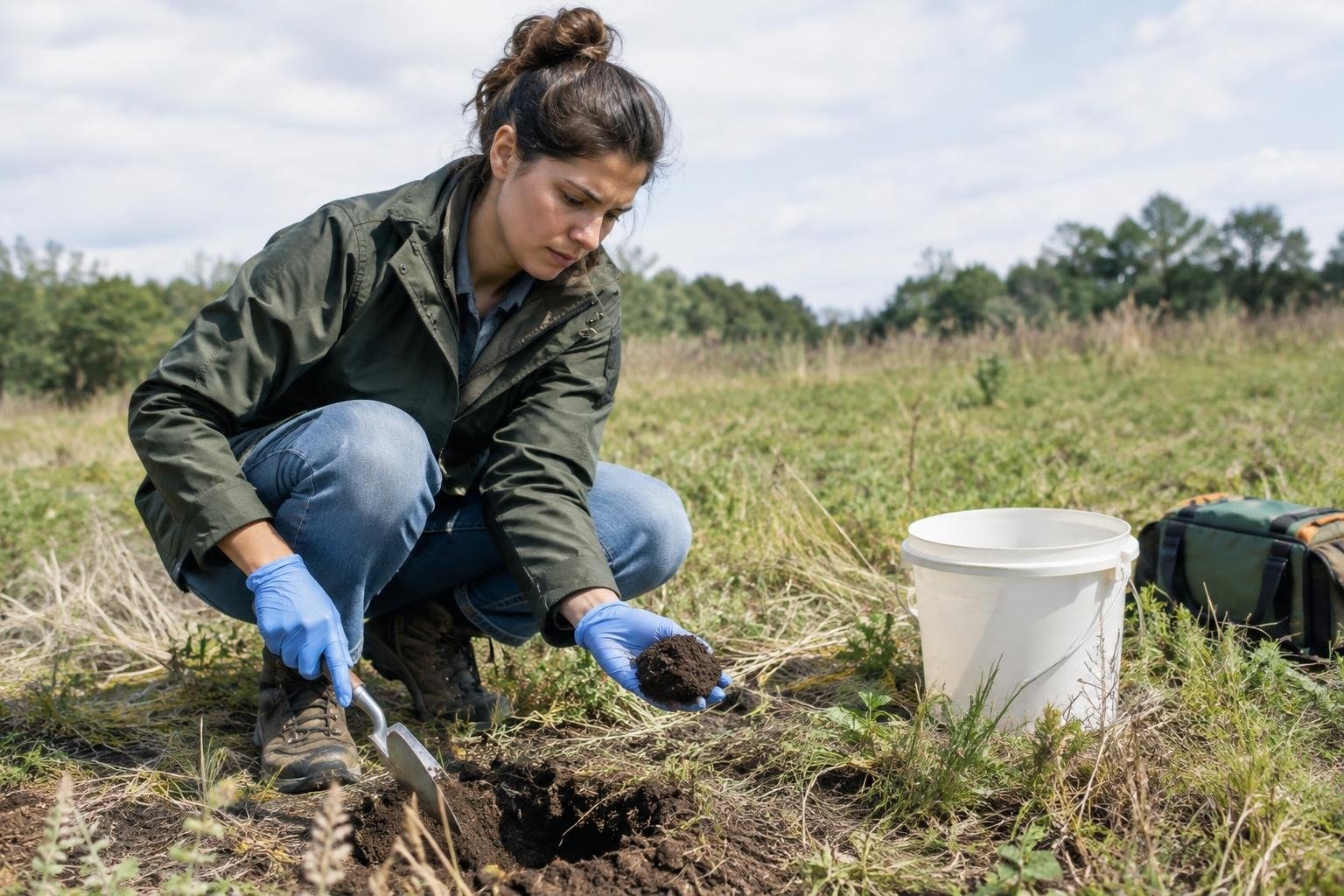
A soil microbiology degree prepares students to study microscopic life in soil and its relationships with plants and the surrounding environment. Students may examine how microbes participate in nutrient processes, interact with roots, or respond to differences in soil and environmental conditions. The exact scope depends on the school and the chosen credential.
Soil microbiology may appear as a major, concentration, emphasis, or research area within soil science, microbiology, plant science, agricultural science, or environmental science. The program context supplied for this guide identifies CIP code 01.1203. Confirm a program's official classification and awarded credential with its catalog, since similar titles can represent different curricula.
How it differs from neighboring fields
- Soil science may cover physical, chemical, biological, and management properties of soils.
- Microbiology may study microorganisms in many settings, not just soil.
- Plant science centers on plants, though soil and microbial relationships may be part of the curriculum.
- Environmental science can cover broader environmental systems, impacts, and management approaches.
Students considering this field should look at course lists, faculty research, and hands-on components, not just the major title.
What Do You Study in Soil Microbiology?
Most programs build from science foundations toward specialized soil and microbial study. Course names differ, but students may encounter biology, chemistry, microbiology, soil properties, ecology, plant-soil relationships, and research methods. New Mexico State University's plant and environmental sciences curriculum describes topics including soil-plant relations, soil chemistry, physics, microbiology, water use, ecosystem services, and environmental quality, illustrating the range of connected study areas.
At advanced levels, coursework may address soil microbiology and biochemistry alongside soil physics and chemistry. Students might learn to frame a scientific question, select methods, record observations, analyze results, and explain what the evidence does and does not show.
How learning may be organized
- Foundational courses: establish biological, chemical, and quantitative knowledge.
- Laboratory work: may develop sample handling, observation, measurement, and safe lab practices.
- Field experience: may involve collecting or describing samples and relating them to site conditions.
- Research or capstone work: may let students investigate a focused question and communicate findings.
- Internships or assistantships: depend on the institution and may provide experience with faculty research, laboratories, farms, or agencies.
Not every program offers all these components. Ask for sample course plans and details about required research, labs, and fieldwork before enrolling.
Skills You Can Develop
Students develop a mix of scientific and professional skills. The specific tools and methods depend on the curriculum and research area.
- Scientific reasoning: asking testable questions and interpreting evidence.
- Laboratory and field practices: following protocols, handling samples, and keeping reliable records.
- Data skills: organizing observations and using appropriate analysis methods. Ask programs which software or tools students use rather than assuming a standard package.
- Communication: writing reports, presenting results, and explaining technical ideas to people outside the specialty.
- Teamwork and project planning: coordinating research, field tasks, or laboratory responsibilities.
These skills can be relevant to laboratory, environmental, agricultural, research-support, and science communication work. Practical experience can help students show employers how they apply classroom learning.
Who Is This Degree Best For?
Soil microbiology may appeal to students who are curious about how small-scale biological processes connect to agriculture, plants, and environmental systems. It can also suit people who like careful observation, evidence-based problem-solving, and a combination of laboratory, field, and desk-based work.
You do not need to arrive with one particular personality or career plan. Consider whether you are willing to work through science prerequisites, handle detailed procedures, and tolerate results that may be uncertain or take time to interpret. Some programs emphasize applied agriculture; others lean more toward environmental science or research.
Does soil microbiology match you?
Pay, job growth, or the perceived prestige of a science major cannot tell you whether the day-to-day work will be satisfying. Compare your interests and work preferences with the tasks involved. Assessment.com's Free MAPP Career Assessment, Degree Matching, and Career Matching tools can offer another way to explore potential alignment. Treat those tools as a starting point for reflection, not as a substitute for reviewing programs and speaking with advisers or professionals.
CTA: Take the Free MAPP Assessment to explore careers and education paths connected with your interests.
Admissions, Program Length, and Academic Difficulty
Admissions requirements vary by school and credential. Undergraduate applicants generally need to meet the institution's admission rules and any course prerequisites. Programs may ask for prior biology or chemistry, while graduate programs typically expect relevant prior study. Do not assume a particular GPA, test score, portfolio, or interview is universal; confirm current requirements with the department.
Undergraduate study may take different amounts of time depending on credential, credit load, transfer credits, and course availability. Graduate certificates, master's degrees, and doctorates have separate structures and admission standards. Part-time, accelerated, and online routes can change the schedule. Request a term-by-term plan showing prerequisites and required courses.
The challenging parts may include chemistry, quantitative work, detailed laboratory procedures, and sustained research projects. Students can prepare by refreshing science foundations, practicing clear note-taking, attending office hours, and seeking tutoring before small gaps become larger ones.
Online vs. On-Campus Soil Microbiology Programs
Online, hybrid, and campus options vary. Lectures or some theory courses may be delivered online, while laboratory instruction, field sampling, research, or access to specialized facilities may require in-person participation. Ask a program to identify every campus visit, residency, placement, or locally arranged activity before you commit.
For an online option, confirm how practical skills are taught and assessed, whether equipment or lab kits are required, and whether required experiences can be completed near you. Check that the format supports your intended next step, especially if you plan to apply to graduate school or a position that expects hands-on experience.
Cost and Financial Aid: What to Compare
Compare the cost of each specific program using its current tuition and fee information rather than assuming one price applies to every soil microbiology degree. Program curricula can differ: New Mexico State University lists subjects such as soil-plant relations, soil chemistry, physics, and microbiology, while the University of Arkansas describes advanced soil science coursework. Different course requirements and credential paths make it important to request an estimate for the program and timeline you are considering.
Ask the school’s financial-aid office for a current estimate and check which expenses are included. Before enrolling, confirm how required courses, labs, field activities, transfer credits, and course scheduling affect your own plan. For graduate study, ask the department about any available funding and its terms rather than assuming support is guaranteed.
Questions to ask about cost
- What is the current estimated total for this credential and course plan?
- Which tuition, fees, materials, or required activities are included in that estimate?
- How could course sequencing or my expected course load change the time to completion?
- Which transfer credits apply to this specific program?
- What financial aid or graduate funding may be available, and what conditions apply?
Careers You Can Pursue with a Soil Microbiology Degree
A soil microbiology degree can lead toward several career areas, but the credential alone does not guarantee a particular title, salary, or job. Employers may include universities, agricultural organizations, laboratories, public agencies, and environmental or research organizations. Specific openings depend on location, experience, education, and current hiring.
| Career direction | Typical preparation to investigate | How the degree may apply |
|---|---|---|
| Laboratory or research assistant | Relevant undergraduate science study and practical lab experience | Supports sample work, data recording, and research tasks |
| Soil or environmental science technician | Science coursework and field or laboratory experience | Connects soil and microbial knowledge to testing or monitoring work |
| Agricultural research support | Undergraduate preparation; specialized work may prefer graduate study | Applies biological and soil concepts to agricultural research |
| Soil or environmental scientist | Requirements vary; specialized research roles may require graduate education | Provides a scientific foundation for soil and environmental questions |
| Microbiology researcher | Graduate education often supports independent research responsibilities | Builds specialty knowledge and research methods |
| University faculty or academic researcher | Doctoral study is common for research and faculty career paths | Advanced study enables specialization, teaching, and independent research |
The U.S. Bureau of Labor Statistics and O*NET publish occupational information, but a major does not map to one occupation. Look up current pay and outlook for the exact role, occupation, and geography you are considering.
Research-intensive and specialized positions may require graduate education and experience. An undergraduate degree may be a starting point for assistant or technical opportunities, subject to employer requirements. AI and automation may change data and laboratory workflows, but students should focus on transferable strengths such as sound methods, interpretation, communication, and responsible handling of evidence rather than assuming any occupation is either immune or certain to disappear.
Internships, Research, Credentials, and Employer Preparation
Relevant experience helps connect coursework with workplace expectations. Look for research assistant opportunities, internships, field projects, laboratory work, class projects, and professional or student organizations related to soil, agriculture, microbiology, or environmental science. Ask faculty about research openings and what preparation is expected.
How to stand out to employers
- Keep a clear record of research, field, and lab projects, including your specific contribution.
- Practice explaining methods and findings to both technical and general audiences.
- Build dependable habits around documentation, safety procedures, teamwork, and deadlines.
- Seek experiences that match the type of position you want, rather than collecting unrelated activities.
Professional credentials are occupation-specific. Completing a degree does not automatically confer a license or certification. Before paying for a credential, ask target employers whether they recognize it and verify any legal or professional requirement with the relevant authority.
Graduate School Options
Graduate study may help students pursue deeper specialization, research independence, or academic careers. Options can include a master's degree, doctoral degree, or a related graduate certificate. The right choice depends on the work you want and whether employers in that area require or prefer advanced training.
At Utah State University, the Animal, Dairy, and Veterinary Sciences department describes master's and PhD pathways, with many PhD graduates pursuing university faculty or research careers and many master's graduates continuing to doctoral study. This is an example from an adjacent field, not a guarantee about soil microbiology outcomes. Some universities also offer focused certificates; for example, Kansas State describes a graduate certificate in agricultural biosecurity research. Check whether a certificate is relevant to your goal and whether its credits can apply to a later degree.
Graduate admissions can require a relevant bachelor's degree and other department-specific qualifications. Ask about faculty research fit, funding, thesis expectations, and graduate placement information before applying.
Related Degrees and Comparisons
Related majors can cover overlapping science while emphasizing different questions. Consider these alternatives before choosing:
- Soil science: consider this if you want a broader focus on soil properties, classification, or management.
- Microbiology: consider this if you want to study microorganisms across more environments than soil.
- Plant science: consider this if plants and crop systems interest you more than microbial processes.
- Environmental science: consider this if you want a wider view of environmental systems and issues.
- Agricultural science: consider this if you want a broad connection to production, animal or plant systems, and agriculture-related careers.
- Ecology: consider this if you are more interested in relationships among organisms and ecosystems.
- Biochemistry: consider this if you prefer molecular and chemical processes.
For example, Texas State's agricultural sciences description connects livestock and poultry production with processing, feed, animal health, nutrition, biotechnology, and preparation for industry or further study. New Mexico State University's plant and environmental sciences description includes soil and environmental areas such as ecosystem services and water use. These examples show why curriculum comparison matters: adjacent degrees may share topics but prepare students for different kinds of work.
Advantages, Drawbacks, and Is It Worth It?
Potential advantages: the subject connects biology with agriculture and environmental questions; programs may offer laboratory, field, and research experiences; and the skills can apply across several science-related settings.
Potential drawbacks: a narrow specialization may not match every employer's needs; practical experience can matter alongside the degree; advanced research careers may require additional years of study; and science prerequisites can be demanding. Program costs and the availability of local work also vary.
Whether the degree is worth it depends on your goals, total cost, academic interests, willingness to pursue further study, and the opportunities available where you plan to work. Ask schools for transparent outcome information and verify what occupations graduates actually enter. Compare the degree with related majors and consider whether a broader undergraduate program followed by a focused graduate specialization would better fit your plans.
How to Choose the Right Soil Microbiology Program
A reputable program should be clear about its curriculum, faculty, practical experiences, costs, and outcomes. Accreditation should be checked at the institution and program levels where relevant, using recognized accrediting bodies and the school's official information. Do not treat a program's marketing language as proof of a particular credential or professional qualification.
What to compare
- Whether the curriculum includes the soil, microbial, chemistry, and research subjects you want.
- Faculty expertise, lab access, field opportunities, and undergraduate research access.
- Required in-person work and how online courses handle practical learning.
- Total tuition, fees, aid, time to completion, and transfer-credit policies.
- Graduation and employment outcomes, including how the institution defines and reports them.
- Career advising, internship support, employer connections, and graduate-school preparation.
- Whether any claimed certification or licensing preparation is recognized by the relevant authority.
Use Assessment.com's Degree Matching and Career Matching resources to explore options, then confirm details with the college and people working in the field.
From Degree to Career: Example Pathways
Career paths are not guaranteed, and progression depends on openings, performance, experience, and additional study. A student might follow a path such as:
- Soil microbiology bachelor's degree → laboratory or research assistant role → experience with research methods and field sampling → specialization in an agricultural or environmental topic → advanced research or technical role, with graduate education if required.
- Related science bachelor's degree → research support position → master's research training → specialized scientist or doctoral study, depending on the chosen career.
- Doctoral study → postdoctoral or other research experience → university, government, or industry research role, depending on qualifications and openings.
Use these examples to plan skills and experience, not as promised outcomes. Discuss realistic routes with faculty, alumni, and employers.
Questions to Ask Before Enrolling: A Practical Checklist
Before you enroll, ask the program and financial-aid office these questions:
- What credential will I earn, and what is the official program title?
- Which courses, labs, field experiences, and research activities are required?
- What is the estimated total cost, including fees and any required travel or equipment?
- Which transfer credits will count toward this specific degree?
- What practical work is required for online or hybrid students?
- How does the school report completion, employment, or graduate-school outcomes?
- What internships, research positions, and career services are available?
- Do target employers require a credential, certification, or license beyond the degree?
- What financial aid, scholarships, assistantships, or employer support may apply?
- Can I speak with current students, alumni, or faculty about the day-to-day program?
Red flags include unclear total costs, vague descriptions of hands-on work, unsupported promises of employment, and difficulty getting direct answers about requirements. Save written responses and compare programs using the same checklist.
Is Soil Microbiology Right for You?
Soil microbiology may be a strong match if you are drawn to microorganisms, soil, plants, and environmental or agricultural questions, and you are prepared for science coursework and careful research. Students who want broader study, less laboratory work, or a career that does not require specialized science preparation may prefer an adjacent major.
Before deciding, compare real course plans, practical learning, total cost, job requirements, and graduate-school expectations. A degree can open a direction, but fit depends on the work you want to do and the preparation that work requires. Explore related careers and programs, then speak with advisers or professionals before making a final choice.
Before Choosing a Degree, Find Out What Fits You
Choosing a college program can affect years of education and decades of work. Salary, job growth, and school reputation matter, but so does whether the work fits your motivations, interests, and natural preferences.
Take the Free MAPP Career Assessment to discover careers that may match you, how related careers align with your profile, degrees and educational pathways tied to those careers, and potential jobs connected with those paths. Explore Degree Matching, Career Matching, and Matching Jobs as you compare your options.
CTA: Take the Free MAPP Assessment or explore colleges and programs that fit your goals.
How to Plan a Soil Microbiology Degree
Planning a soil microbiology degree means checking what each program actually teaches and how its courses connect to your next step. New Mexico State University lists soil-plant relations, soil chemistry, physics, and microbiology among its environmental and soil science topics. The University of Arkansas describes a graduate course covering doctoral-level concepts in soil physics, soil chemistry, and soil microbiology or biochemistry. These examples illustrate why a program title alone does not tell you the course level or scope.
How to compare course plans
- Use the official catalog to identify required courses, electives, and the credential awarded.
- Compare coverage of soil, microbiology, chemistry, and related environmental or plant topics.
- Check whether advanced coursework is intended for graduate students and whether the program offers the preparation you need.
- Ask an adviser how prerequisites and course sequencing affect your individual plan.
Compare several plans side by side, then confirm current requirements with each department before applying.
Factors That Affect the Project
The scope and direction of a soil microbiology project depend first on the question being investigated. A project focused on soil microbial life may differ from one examining soil-plant relations, soil fertility, water use, or environmental quality. These topics draw on different parts of soil and environmental science, including soil chemistry, physics, and microbiology.
Methods also shape what a project can examine. Soil microbial ecology involves problem-solving and methods for identifying and characterizing microbial life, while advanced soil science coursework may address doctoral-level concepts in soil physics, chemistry, and microbiology or biochemistry. A project's level and available methods should match its goals and the student's course or research setting.
Before beginning, define the research question with an adviser, identify the soil or environmental factors relevant to it, and confirm which methods and resources are available. A focused question helps keep the work aligned with the evidence the project can gather.
Frequently asked questions
What is soil microbiology?
Soil microbiology is the study of microorganisms in soil and their interactions with plants, nutrients, and environmental conditions. A degree or concentration in the field combines biology and microbiology with soil science, chemistry, ecology, and research methods. Program names and credential levels vary, so check each catalog for the actual courses and degree awarded.
Is soil microbiology hard?
It can be challenging because students may need to combine biology, chemistry, quantitative reasoning, laboratory procedures, and field observations. The level of difficulty depends on the program and your preparation. Students who build a strong foundation in science, seek help early, and practice careful data recording may find the workload more manageable.
What jobs can I get with a soil microbiology degree?
Graduates may pursue roles in soil and environmental research, agriculture, laboratory work, conservation, or related science fields. The exact job title depends on the degree level, experience, and employer. Research and faculty positions commonly require graduate study, while some technical or assistant roles may be available with an undergraduate degree and relevant experience.
How much can you make with a soil microbiology degree?
There is no single salary for this degree. Pay depends on the occupation, education, employer, experience, and location. Compare current U.S. Bureau of Labor Statistics or other reliable occupational data for the specific job you want, rather than treating a degree title as a salary guarantee. Ask programs for career outcome data and how it is measured.
Can I earn a soil microbiology degree online?
Some courses may be available online, but a fully online route may not provide the laboratory, field, or research experience needed for a particular goal. Ask whether labs are remote, arranged locally, or held on campus, and confirm that the curriculum meets any requirements for your intended graduate program or employer.
Does soil microbiology require a lot of math?
Many programs require chemistry and biology, and students may also use statistics, data analysis, or other quantitative methods. The amount of mathematics varies by school and course plan. Review required courses and ask an adviser which math prerequisites apply before enrolling.
Do I need graduate school to work in soil microbiology?
Not every job requires graduate school. An undergraduate degree may prepare students for some entry-level laboratory, technical, agricultural, or assistant roles, depending on the employer. Independent research, university faculty work, and some specialized scientific positions often require a master's or doctoral degree and substantial research experience.
What certifications help soil microbiology graduates?
Useful preparation depends on the job. Employers may value laboratory competence, field sampling, data analysis, safety training, and experience with relevant research methods. Some careers or positions may require separate credentials, but a degree in soil microbiology does not automatically grant a professional license. Verify requirements with the employer or relevant licensing authority.
How is soil microbiology different from soil science?
Soil science is broader and may emphasize soil formation, classification, physical and chemical properties, fertility, or land management. Soil microbiology focuses more directly on microorganisms and their roles in soil systems. Program boundaries overlap, so compare course requirements and research opportunities rather than relying only on the degree name.
Is a soil microbiology degree worth it?
Value depends on the total cost, the career you want, whether that work requires graduate education, and the quality of a program's research and practical opportunities. It may be worthwhile for students drawn to soil, microbes, agriculture, or environmental research, but compare related majors if you want a broader or less laboratory-focused pathway.
People Also Ask
What does a soil microbiologist study?
Soil microbiology focuses on microorganisms and their roles in soil, including interactions with plants and environmental conditions. Programs combine biological science with soil and environmental study.
What courses are in a soil microbiology degree?
Students commonly take biology, microbiology, chemistry, soil science, ecology, and research-method courses. Advanced work may include laboratory or field research, depending on the program.
What can you do with a soil microbiology degree?
It can lead to laboratory, agricultural, environmental, or research-related work. The roles available depend on the degree level, skills, experience, and employer requirements.
Can soil microbiology be studied online?
Some programs offer online classes, but laboratory, field, and research components may require in-person work. Confirm the format and practical requirements directly with each school.
Do soil microbiologists need a PhD?
Some entry-level technical and assistant roles may accept undergraduate graduates, while many research leadership and university positions require graduate education.
What is the difference between soil science and soil microbiology?
Soil microbiology is narrower in focus, emphasizing microorganisms and their interactions in soil. Soil science covers a wider range of soil properties and applications.
A soil microbiology degree can suit students who want to understand how microorganisms shape soil, plant growth, and environmental processes. The right program depends on whether you want practical laboratory or field work, a research career, or a broader path in agriculture or environmental science. Compare curriculum, research opportunities, total cost, and the education required for your intended work before enrolling. If you enjoy the questions but are unsure about the career direction, use career and degree matching tools to explore related options before making a commitment.
Want to see your options? Try our comprehensive Degree, Program & College Search tool
College Search ToolSources & Official Resources
- Animal, Dairy, and Veterinary Sciences - MS, PhD
- Agricultural Biosecurity Certificate Program | K-State
- Microbiology, Immunology, and Pathology Graduate Programs Frequently Asked Questions - Master of Science in Microbiology - College of Veterinary Medicine & Biomedical Sciences
- Plant and Environmental Sciences | New Mexico State University Academic Catalog
- Department of Agricultural Sciences | Texas State University
- Graduate Instruction and Course Description | Crop, Soil, and Environmental Sciences | University of Arkansas
- Degrees | AGNR | USU
- Utah State University Degrees and Programs by interests
- SWS 5305C Soil Microbial Ecology - Microbiology & Cell Science Online Degree Programs - University of Florida, Institute of Food and Agricultural Sciences - UF/IFAS