Degree Library
Plant Sciences, Other Degree Guide: Courses, Careers, Costs & How to Choose
Plant Sciences, Other is a broad program category for studies of plants and related agricultural systems. Explore typical coursework, program formats, costs, career directions, and how to compare schools before enrolling.
Plant Sciences, Other is a broad academic program category for studying plants and related agricultural systems. Depending on the college, students may explore plant biology, crop production, horticulture, soil and water relationships, pest management, or plant research. The exact curriculum matters: similar program titles can lead to different coursework and career preparation. Students consider this field for careers involving crops, greenhouses, nurseries, agricultural businesses, research, restoration, or further study. Some roles are hands-on and field-based; others focus on laboratory work, data, advising, sales, or management. The degree itself does not guarantee a particular job, salary, or professional credential. Not sure whether Plant Sciences, Other fits you? Take the Free MAPP Career Assessment to explore how your motivations, interests, and natural preferences may align with this degree and related careers. Take the Free MAPP Assessment →
Millions of people Take the MAPP Career assessment to see which Degrees are the best Match!
You can too,
What Is a Plant Sciences, Other Degree?
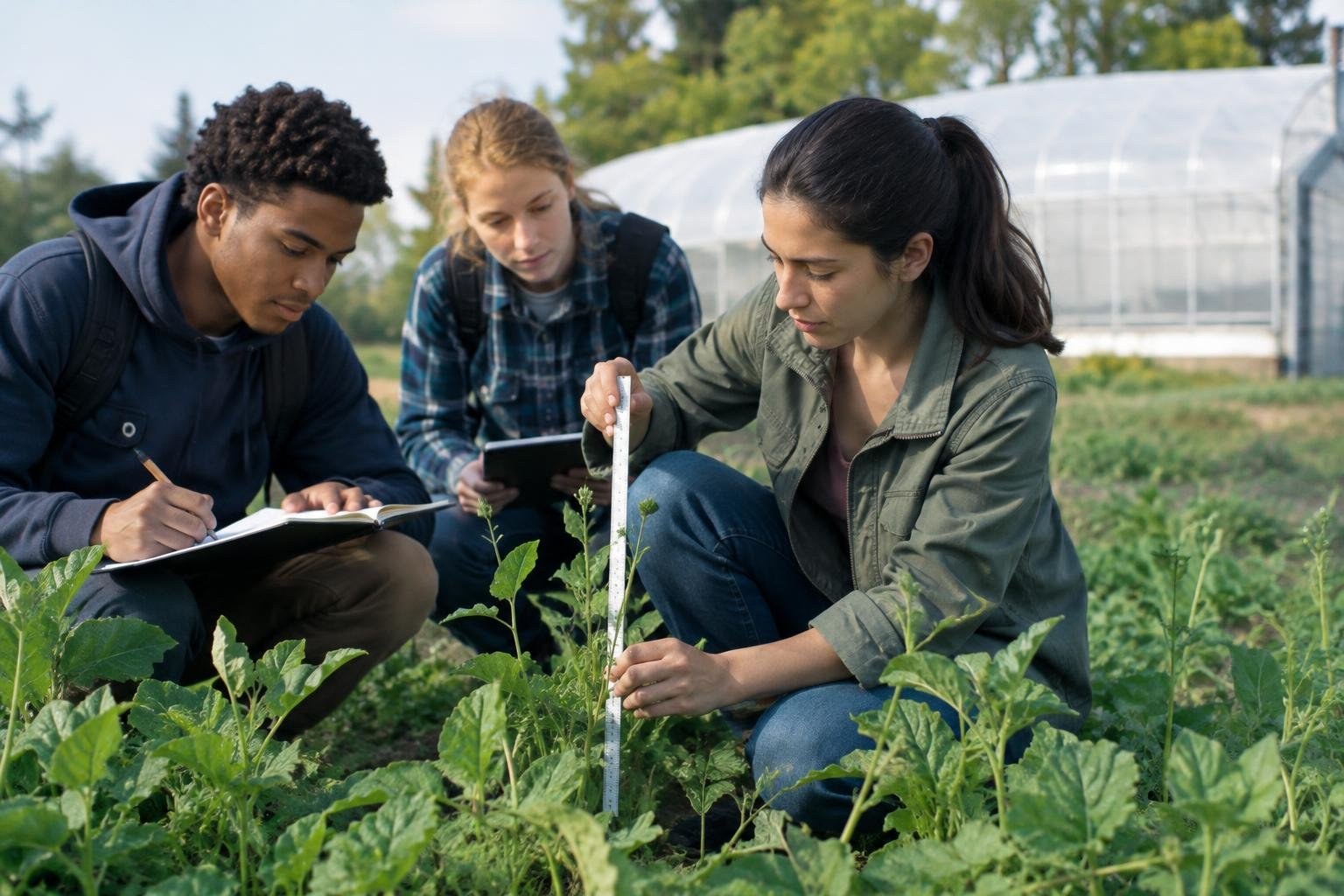
Plant Sciences, Other refers to a broad grouping of programs focused on plants and related systems rather than one nationally uniform major. A college may use a name such as plant science, plant biology, or another specialized title. The program classification includes multiple possible credential levels, but each institution decides which degrees or certificates it offers.
Study can connect plant biology with agriculture, horticulture, soil and water, crop production, or plant health. Related areas include agronomy, horticulture, sustainable agriculture, and agricultural engineering. They overlap, but each program can differ in its balance of biology, production, business, fieldwork, and technology.
For example, an associate transfer pathway may be designed to prepare students to continue into a bachelor’s program in plant science, horticulture, or a related major. A graduate program may instead emphasize advanced research or a specialized professional interest. Confirm the exact credential and curriculum rather than assuming all programs under this label are alike.
What Do Plant Science Students Study?
Plant science programs commonly build from foundational science toward applied plant and agricultural topics. Depending on the school, students may study biology, chemistry, plant structure and function, soils, crop or horticultural production, plant pests, and methods for collecting and interpreting data. A degree plan may also include general education and electives.
Course titles alone do not tell you what students learn. A plant biology class may develop understanding of growth and reproduction; a soils course may examine how soil conditions relate to plant production; a research methods class may teach students to frame questions, collect observations, and interpret results. Field or laboratory classes can help students practice observation and measurement.
Some programs offer research, internships, projects, or a capstone. Others emphasize applied training or transfer preparation. Advanced study can focus on areas such as plant pathology, integrated pest management, plant breeding, horticulture, agronomy, urban agriculture, or irrigation design. Not every program offers each area, so compare course plans and ask how students obtain practical experience.
Skills You Can Develop
Students can develop scientific observation, plant identification, basic experimental and data skills, written communication, and the ability to explain technical information. Applied programs may also build familiarity with production practices, field or greenhouse routines, and agricultural systems. The depth of training depends on the courses and opportunities available.
These skills may be useful in roles involving crop or greenhouse operations, horticulture, irrigation, farm management, agricultural sales, restoration, or research support. A student interested in lab research should seek appropriate coursework and research experience; someone drawn to production or advising may benefit from fieldwork and communication practice.
Ask schools which software, equipment, or methods students actually use. Technology exposure varies, and a degree title alone does not confirm training in a specific tool or system.
Who Is This Degree Best For?
This field may suit students who want to study plants through a mix of science courses and experiential learning. Cornell describes a Plant Sciences curriculum with introductory biology, chemistry, and statistics, plant-focused core courses, options connected to student interests, an experiential practicum, and a senior symposium. The program is designed for students with varied interests and career paths, but curricula differ among colleges.
To assess your fit, compare required courses and practical experiences at the schools you are considering. Think about whether you would enjoy studying plant biology, exploring applied plant topics, and learning through hands-on experiences. Review sample assignments and ask advisers how students choose courses related to their interests.
Does Plant Sciences Match You?
Consider the day-to-day subjects and study activities alongside possible career directions. The free MAPP Career Assessment can help you reflect on motivations and preferences. Use Degree Matching, Career Matching, and Matching Jobs to generate options for further research, not as a substitute for reviewing programs and job requirements.
Admissions, Length, and Academic Difficulty
Admissions rules are set by each college. Applicants may need a high school diploma or equivalent for undergraduate admission and may be asked to meet course prerequisites or submit transcripts. Transfer students should check how prior coursework applies to the major and whether a formal transfer pathway is available. Graduate programs typically have separate academic and application requirements.
Completion time depends on credential, course load, transfer credit, and scheduling. A student attending full time may follow the institution’s published plan; part-time, online, or accelerated schedules can differ. Ask for a term-by-term course map, because required classes may be offered only at certain times.
Students may find science coursework, quantitative reasoning, research writing, or field and lab assignments demanding. Preparation can include reviewing biology and chemistry foundations, strengthening math skills, and arranging academic support early. For transfers, obtain a written credit evaluation before making enrollment decisions.
Online vs. On-Campus Programs
Online study is available in some plant-related areas: Oregon State discusses an online horticulture degree. That example does not establish that a specific Plant Sciences, Other program can be completed remotely. Cornell’s Plant Sciences curriculum includes an experiential practicum, so check each college’s course delivery and any hands-on requirements directly.
Ask whether required labs, field experiences, greenhouse work, research, or internships require in-person participation. If comparing online, hybrid, and campus options, check the actual course plan, practical requirements, and access to advising before choosing a format.
Cost and Financial Aid
Compare the official estimated cost of each program you are considering, using the same credential and enrollment plan where possible. College of the Desert describes an associate transfer pathway intended for students planning to continue into a bachelor’s program in plant science, horticulture, or a related major. If you are considering a transfer route, ask both institutions how the pathway affects your course plan and total estimated cost.
Request a written estimate directly from each college and check which charges apply to your own enrollment plan. Compare those estimates with the courses and practical experiences you want, and confirm transfer details with the institutions before making a decision.
Careers, Jobs, Salary, and Outlook
Career options depend on degree level, experience, location, and the employer. Plant science graduates may explore plant production, horticulture, farm or irrigation operations, agricultural sales, research support, restoration, or further study. A program may prepare students for some roles more directly than others.
| Career direction | Typical preparation to investigate | How plant science can apply |
|---|---|---|
| Greenhouse, nursery, or horticulture support | Relevant coursework and practical experience; requirements vary by employer | Plant care, production practices, and observation |
| Crop or farm operations support | Applied training and experience; some employers value additional business skills | Crop systems, plant growth, and production knowledge |
| Irrigation or agricultural operations | Relevant technical skills and experience; role requirements vary | Understanding plant needs and production settings |
| Agricultural sales or technical support | Product knowledge, communication, and sometimes field experience | Explaining plant-related products or practices to customers |
| Plant or soil science research support | Relevant science coursework; advanced or specialized roles may require graduate study | Observation, sample work, data collection, and research methods |
| Plant scientist or specialized researcher | Check employer requirements; graduate education may be relevant for advanced research positions | Specialized plant science knowledge and research preparation |
| Extension, consulting, or college instruction | Requirements depend on position; advanced degrees may be expected for some roles | Applying and communicating plant science knowledge |
These are career directions, not guaranteed outcomes. A graduate degree, professional experience, or role-specific credentials may be required for some positions. Penn State’s veterinary and biomedical sciences program, for example, describes preparation for further study in areas including plant and animal-related science contexts; university program descriptions can help students see how academic pathways connect to research and graduate education.
There is no meaningful salary figure for the entire degree category because it includes many occupations. Compare current wage and outlook information for the exact occupation and location you have in mind. For salary research, distinguish an entry-level role from a specialized or supervisory position and check the education requirements employers list.
Employers may include farms, nurseries, greenhouses, agricultural suppliers, research organizations, public agencies, and educational institutions. Technology and automation can change how some production and data tasks are performed, but students should assess specific tools and job duties rather than assuming a whole career will disappear or remain unchanged.
Find out which Career or College Major is right for you!
Take the MAPP free today!Internships, Experience, Credentials, and Safety
Practical experience can help students connect course material to a work setting. Look for internships, research projects, field classes, campus farms or gardens, greenhouse work, volunteer activities, student organizations, and employer events. Ask whether placements are paid, credit-bearing, or independently arranged, and whether the program helps students find them.
How to Stand Out to Employers
Build examples of what you can do: a project report, research poster, field notebook, plant-care plan, data analysis, or documented work experience. Practice explaining your contribution in plain language. A portfolio can be useful for roles that value project evidence, but requirements vary.
Certification is not the same as completing a degree. Some regulated activities, such as pesticide application, may involve separate jurisdiction-specific training, testing, or authorization. Check current state and local rules and employer expectations before enrolling in a credential course. Do not assume that a college major automatically grants permission to perform regulated work.
Graduate School Options
Further study can make sense for students aiming at specialized research, advanced scientific roles, or academic careers. Possible directions include a master’s or doctorate in plant and environmental sciences, plant science, or a related discipline. Penn State also describes graduate study in engineering for biological and agricultural systems as an opportunity to develop expertise related to professional interests.
Graduate school is not automatically necessary for every plant-related job. Compare the roles you want, their stated requirements, tuition and funding, research fit, and likely time commitment. Ask undergraduate advisers and potential graduate departments which prerequisites and research experience they expect.
Related Degrees and Comparisons
Compare Plant Sciences, Other with related programs by reading required courses and identifying the work each curriculum prepares you to explore.
- Horticulture: Consider this instead if you want a program centered on cultivated plants, gardens, landscapes, or nursery and greenhouse production.
- Agronomy: Consider this instead if you are most interested in field crops and crop production systems.
- Crop Production: Consider this instead if your priority is applied crop production and farm-level practice.
- Agroecology and Sustainable Agriculture: Consider this instead if you want to focus on relationships between agriculture and ecological systems.
- Soil Science: Consider this instead if soil properties and their role in land or crop systems are your central interest.
- Plant Biology: Consider this instead if you prefer a more biological or research-centered curriculum.
- Agricultural Business and Management: Consider this instead if business operations, management, or sales are more appealing than laboratory or plant-focused science.
- Agricultural Engineering: Consider this instead if you want a stronger engineering emphasis on agricultural or biological systems.
Plant sciences versus horticulture is not a simple ranking. Horticulture may emphasize cultivated plants and landscapes, while a broader plant sciences program may include plant biology, crops, or research. Agronomy commonly focuses on field-crop systems. Actual curriculum and career preparation vary by institution, so compare course requirements and internship opportunities directly.
Advantages, Drawbacks, and Is It Worth It?
Advantages can include studying living systems, combining science with practical settings, and exploring work across production, horticulture, research, or agricultural business. Programs may offer routes into further study, and some include hands-on experience.
Tradeoffs include variation in what a broad program title means, the need to seek relevant experience, and the possibility that a preferred specialist role requires graduate education. Some work settings may involve outdoor conditions, seasonal schedules, or travel; verify what a specific job involves rather than assuming all plant science careers share the same routine.
Whether the degree is worth it depends on total cost, credential level, transferability, intended occupation, geography, and personal fit. Compare realistic job requirements and likely next steps before committing. Avoid treating a broad degree label as a promise of a particular position or income.
How to Choose the Right Program
When comparing colleges, look beyond the program name. Check institutional and program accreditation where applicable, course content, faculty expertise, facilities, field access, and opportunities for internships or research. Ask how students get practical experience and whether those experiences are available to commuters, transfer students, and online learners.
Compare tuition and fees, financial aid, typical time to completion, class availability, student support, transfer-credit policies, career services, and employer connections. If a career may involve regulated work, ask how the program addresses relevant preparation, then verify current requirements with the appropriate agency. Do not rely on a school’s general marketing description as proof that a credential is required or sufficient.
Assessment.com’s Degree Matching and Career Matching tools can help generate fields and occupations to investigate. Use them alongside program catalogs, adviser conversations, and job postings. Explore colleges and programs that fit your goals →
From Degree to Career: Possible Pathways
Career development is not automatic, but students can plan a sequence that connects study with experience. For example:
- Plant science coursework → greenhouse or nursery support role → practical experience with production routines → a specialty in plant health or operations.
- Plant science bachelor’s program → research assistant role → experience with data and research methods → graduate study or a more specialized research position.
- Applied plant studies → agricultural sales or technical support → experience working with products and customers → a more specialized account, advising, or management role.
These are illustrative pathways, not guaranteed promotions. Employers set their own requirements, and a person’s progress can depend on experience, location, further education, and available opportunities.
Questions and Checklist Before Enrolling
Use these questions to compare program details and likely next steps:
- What credential and major name will appear on the degree?
- Which introductory science and plant-focused courses are required?
- What practical learning, such as a practicum, research, or field experience, is included?
- If I am considering a transfer pathway, which courses are intended to lead into the bachelor’s program?
- What is the institution’s estimated total cost for my enrollment plan?
- Which career directions does the curriculum support, and what additional preparation may be useful?
- For advanced research or specialized study, what graduate programs and prerequisites should I investigate?
- Can I complete the required practical experiences in my preferred program format?
Ask the college to clarify program and transfer details before enrolling, especially when they affect your course plan, cost, or next educational step.
Frequently asked questions
Is a plant sciences degree hard?
It can be challenging for students who are new to biology, chemistry, statistics, or field and laboratory work. The workload depends on the program and may include scientific reading, data analysis, plant identification, experiments, and outdoor assignments. Ask schools for sample course plans and talk with current students to understand the expectations.
Is a plant sciences degree worth it?
It may be worthwhile if the curriculum, practical experience, and likely career paths support your goals at a cost you can manage. Outcomes depend on factors such as degree level, location, experience, and employer needs. Compare total program cost with job requirements and investigate specific occupations rather than assuming one degree leads to a fixed salary.
What jobs can I get with a plant sciences degree?
Possible paths include greenhouse or nursery work, crop and horticulture support, irrigation or farm operations, plant research assistance, restoration work, and agricultural sales. The role and level of responsibility depend on the employer and your training. Some research, teaching, or specialized scientist roles may require graduate study or substantial experience.
How much can I make with a plant sciences degree?
There is no single salary for Plant Sciences, Other because the category includes different credentials and career paths. Pay varies by occupation, education, employer, region, and experience. Compare current wage information for the specific job you want, such as soil and plant science, agricultural sales, or horticulture work, rather than relying on a degree-wide average.
Can I earn a plant sciences degree online?
Some coursework may be available online, but availability depends on the institution and program. Plant identification, greenhouse work, laboratories, field studies, internships, or research may require in-person participation. Ask whether online students can access required facilities and how any practical requirements are scheduled.
Does plant sciences require math?
Many plant-science programs include some quantitative work, such as measurement, experimental design, data interpretation, or statistics. The amount of advanced math varies by program and specialization. Review course prerequisites and required classes before applying, especially if you are considering plant biology, engineering-related systems, or research.
Do I need graduate school for plant science careers?
Not for every career. Some entry-level technical, horticulture, farm, greenhouse, and support positions may accept an associate or bachelor’s degree, relevant experience, or a combination. Research leadership, college teaching, and some specialized scientist roles may favor or require graduate education. Check job postings and program outcomes for your intended path.
What certifications or licenses help plant science graduates?
That depends on the job. A degree alone does not automatically grant a professional license or permit. Certain activities, including regulated pesticide application, may have jurisdiction-specific requirements. Check the applicable state or local agency and ask employers which credentials they expect before paying for a certification course.
How is plant sciences different from horticulture or agronomy?
Plant science focuses on plants and their production, biology, or management. Horticulture commonly emphasizes cultivated plants, including fruits, vegetables, ornamentals, and landscapes. Agronomy often concentrates on field crops and soil or crop systems. Program names overlap, so compare required courses and practical experience rather than relying on the title alone.
How can I prepare for a plant sciences program?
Start by reading the degree audit or sample four-year plan, confirming transfer-credit rules, and checking which classes are offered each term. Identify prerequisites and required field, lab, internship, or research work early. Meet an academic adviser before registering, especially if you are transferring or planning to finish on an accelerated schedule.
People Also Ask
What is Plant Sciences, Other?
It is a broad program category, not one standardized curriculum. Schools may focus on plant biology, crop systems, horticulture, or related topics. Review the course list and practical requirements to understand what a particular program teaches.
What classes do plant science majors take?
Coursework may include plant biology, chemistry, soil, crop or horticultural systems, pest management, research methods, and field or laboratory work. The mix varies by college and specialization.
What can you do with a plant science degree?
Potential work includes horticulture, crop and farm operations, greenhouse or nursery production, research support, agricultural sales, and restoration. Specific qualifications depend on the occupation and employer.
What degree levels are available in plant sciences?
The CIP grouping includes several credential levels, but individual colleges decide which credentials and majors to offer. Confirm the exact degree awarded by the program you are considering.
Can I study plant science online?
It depends on the program. Online courses may be possible, while fieldwork, laboratories, research, or internships can require in-person participation. Confirm all requirements before enrolling.
What is the average salary for a plant science graduate?
Pay is tied to the occupation, not a single broad degree label. Research current wage information for specific roles and compare it by location, experience, and education requirements.
Is an associate degree in plant science useful?
An associate degree may prepare students for some technical or operational roles and can also support transfer to a bachelor’s program. Check transfer agreements and employer requirements before deciding.
Do plant scientists need a master’s or PhD?
Some roles are open to bachelor’s graduates, while research, advanced teaching, or specialized scientist positions may call for graduate study. Look at job postings in your area to see common requirements.
What is the difference between plant science, horticulture, and agronomy?
Horticulture often centers on cultivated plants and landscapes; agronomy often focuses on field crops and production systems. Plant sciences is broader and may combine plant biology with applied topics. Program curricula differ.
Is Plant Sciences, Other Right for You? Plant Sciences, Other can suit students who want to understand how plants grow, how crops and landscapes are managed, and how science can address agricultural and environmental problems. Depending on the program, study may emphasize plant biology, horticulture, crop systems, soil, pest management, or applied research. Graduates may pursue technical, field, business, research, or further-study paths, but a degree does not guarantee a particular job or salary. Before choosing, check what the program actually teaches, what experience it provides, where graduates go, and whether additional education or credentials are needed for your intended work. Compare the total cost and format with your career goals, and consider whether the day-to-day subjects and work settings interest you. A strong fit can matter as much as a program’s name or reputation. Before Choosing a Degree, Find Out What Fits You Choosing a college program can affect years of education and decades of work. Salary, job growth, and school reputation matter, but so does whether the work fits your motivations, interests, and natural preferences. Take the Free MAPP Career Assessment to explore careers that may align with your profile, related career options, and degrees or educational pathways connected with those careers. Use Degree Matching, Career Matching, and Matching Jobs as starting points for further research, not as guarantees of an outcome. Take the Free MAPP Assessment →
Want to see your options? Try our comprehensive Degree, Program & College Search tool
College Search ToolSources & Official Resources
- Our Graduate Degree Programs — Academics — Penn State College of Agricultural Sciences
- Agriculture Plant Science AS-T Degree | College of the Desert Catalog
- B.S. in Animal Sciences | Animal & Food Sciences
- Veterinary and Biomedical Sciences, B.S. | Penn State
- Master of Science Degree in Agriculture (Plant Science)
- Agriculture & Life Sciences | Virginia Tech Academic Catalog
- Plant and Environmental Sciences (MS, PhD)
- Plant Sciences Major & Minor - Cornell CALS
- Plant Sciences, B.S. - University Bulletins - Penn State
- Plant Science - UF Catalog - University of Florida
- Which online plant or agricultural science degree should I choose?
- Plant Sciences (BS) | Cornell University
- Plant Sciences | Plant Sciences