Degree Library
Plant Protection and Integrated Pest Management Degree Guide: Courses, Careers, Requirements, and Fit
Plant Protection and Integrated Pest Management is a science-focused area of study about preventing, identifying, and managing threats to plants. Students…
By Tome Fierre · Staff Writer Assessment.com · Published October 5, 2026 · Last updated October 6, 2026
Plant Protection and Integrated Pest Management is a science-focused area of study about preventing, identifying, and managing threats to plants. Students may study plant diseases, insects, weeds, crop science, and the environmental effects of pest-control choices. The aim is to help protect crops and other plant populations while considering economic and ecological consequences. Programs can be offered at different levels and under different names. Some emphasize crop production and field application; others focus on laboratory science, research, or broader plant and environmental systems. Graduates may pursue work connected with agriculture, plant health, pest management, research, or outreach, but job requirements vary. Not sure whether this field fits you? Take the Free MAPP Career Assessment to explore how your motivations, interests, and natural preferences may align with related careers and education paths.
A Plant Protection and Integrated Pest Management degree prepares students to apply plant, crop, and environmental sciences to managing insects, plant diseases, weeds, and related threats. Programs may include entomology, plant pathology, weed science, crop science, and environmental toxicology. Degree names, hands-on requirements, career options, and any licensing rules vary by school, employer, and state.
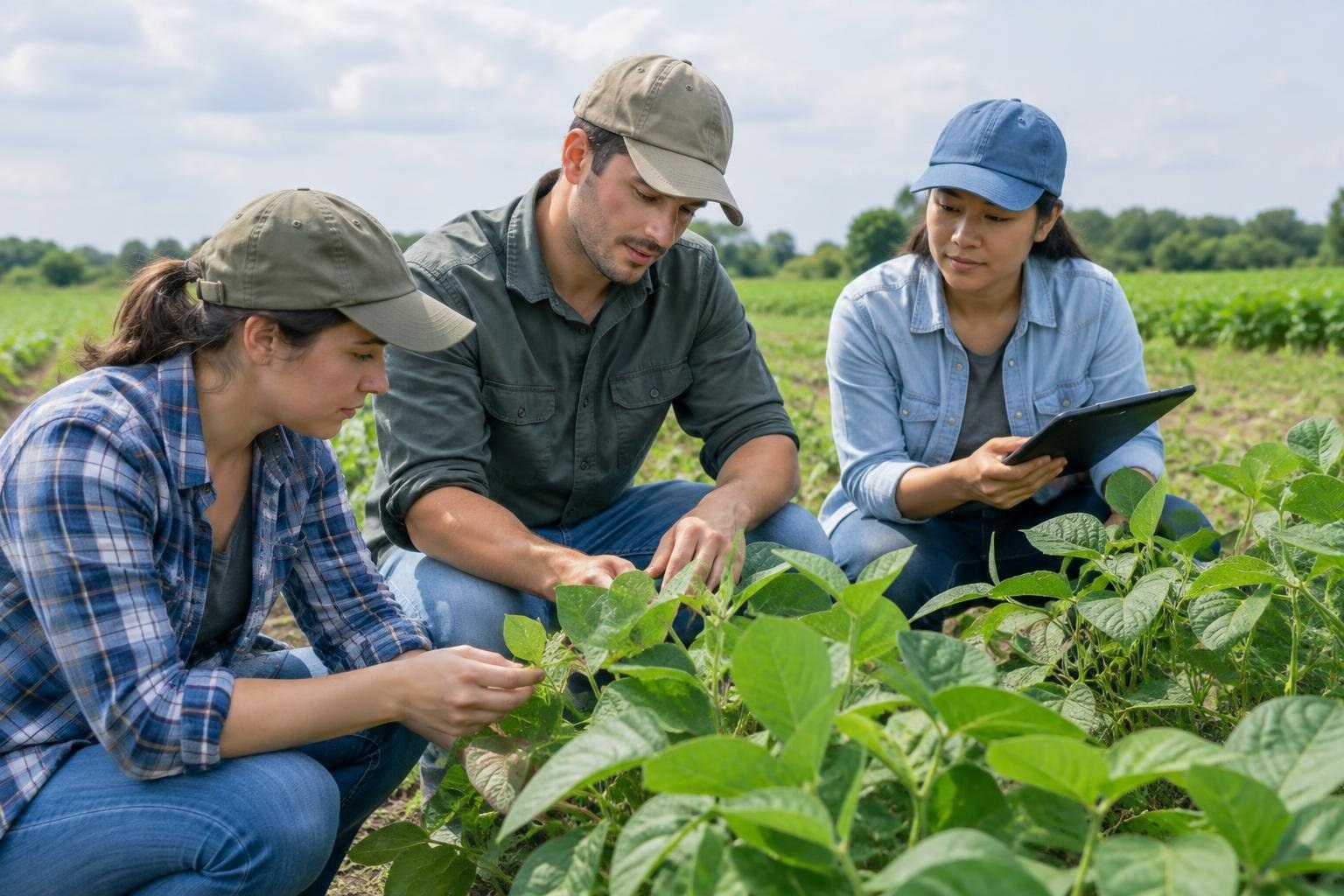
What Is a Plant Protection and Integrated Pest Management Degree?
Plant Protection and Integrated Pest Management (IPM) is an interdisciplinary field focused on understanding threats to plants and choosing ways to manage them. It can address agricultural crops as well as other plant populations. The field combines scientific knowledge with practical decisions about reducing pest damage, limiting economic loss, and considering environmental effects.
Programs may appear under titles such as plant protection, integrated pest management, crop protection, agricultural biology, or plant science. Those labels are not interchangeable guarantees of the same curriculum. Compare required courses, specialization options, field or lab components, and degree level. The supplied federal classification identifies this topic under CIP 01.1105; confirm a school's reported program classification with that institution.
Plant protection differs from broader plant science in emphasis. Plant science may cover plant biology, breeding, horticulture, soils, or crop systems, while plant protection places greater weight on pests and plant health. It also differs from general environmental science, which may address a wider range of ecosystems and environmental issues.
For an example of the breadth of plant protection subjects, the program description from O's List includes entomology, plant pathology and physiology, weed science, crop science, and environmental toxicology. Treat any one school's curriculum as an example, not a universal standard.
What Do You Study? Courses and Hands-On Learning
Students may build a foundation in biology, chemistry, plant science, and agricultural systems before progressing to specialized courses. Subject areas can include plant pathology, nematology, entomology, virology, weed science, pesticide use and regulation, toxicology, plant nutrition, plant breeding, and biotechnology.
These subjects help students recognize how different pests affect plants and crops, assess possible control approaches, and understand tradeoffs. An integrated perspective matters: a pest-management decision can involve crop productivity, environmental effects, and the practical context in which a control method is used.
Depending on the program, learning may include laboratory exercises, field observation, research, internships, or a capstone. Ask for the current course catalog and degree map. Find out which experiences are required, whether they are available to all students, and whether additional fees or travel are involved. Curricula change and can differ even between programs with similar names.
Advanced study may allow a narrower focus. Colorado State University's master's specialization, for example, describes coursework and an internship centered on pest management. That is one graduate option, not a required step for every student.
Skills You Can Develop and Where They Apply
The degree can develop scientific literacy and the ability to connect evidence with practical decisions. Students may learn to observe plant symptoms, investigate possible causes, understand pest biology, compare management approaches, and communicate findings to people with different technical backgrounds.
- Scientific and technical: plant, crop, pest, and environmental concepts relevant to protection work.
- Analytical: interpreting observations or research and weighing potential costs and effects.
- Communication: explaining risks and recommendations to growers, colleagues, clients, or the public.
- Professional: documenting work, following safety procedures, collaborating, and learning from field or lab experience.
- Technology: tools vary by program and job. Ask whether instruction covers relevant data, laboratory, mapping, or crop-monitoring tools before assuming a specific software skill is included.
These abilities can support work in plant health, pest management, crop protection, agricultural research support, or outreach. They do not guarantee eligibility for a particular job; employers may require experience, a specific degree, or state credentials.
Who Is This Degree Best For?
This major may appeal to students interested in applying science to plant-health and crop-protection questions. The field brings together subjects such as entomology, plant pathology and physiology, weed science, crop science, and environmental toxicology. A graduate pest-management specialization at Colorado State combines coursework with an internship, illustrating one way a program may connect study with practice.
When comparing your interests with a program, review its required courses and practical components rather than assuming every degree with a similar title covers the same topics. Consider whether you want to study plant pests and crop protection, and whether the program’s project or internship format suits your learning goals.
Does Plant Protection Match You?
Think about the subjects you want to study, the kind of practical work offered by the program, and whether you are prepared for its stated course requirements. Assessment.com’s Free MAPP Career Assessment can help you reflect on motivations and preferences; Degree Matching and Career Matching can help you explore education and work paths to investigate. Use matching tools as prompts for research, not as guarantees of fit or employment.
Admissions, Length, and Academic Difficulty
Admissions rules are set by each institution and degree. Undergraduate applicants may need a high school credential and preparation in science; transfer students should check how previous coursework applies. Graduate applicants commonly need a bachelor's degree and relevant preparation, but requirements vary by program.
For instance, Cal Poly Pomona's M.S. in Agriculture with a Plant Science focus asks applicants for a bachelor's degree and relevant biological and physical science coursework. Clemson describes graduate study in Plant and Environmental Sciences for students with baccalaureate backgrounds in fields including agronomy, biology, chemistry, horticulture, plant sciences, and soil sciences. These are examples, not national admission rules.
Time to completion depends on credits, course availability, enrollment pace, transfer credit, and degree level. A bachelor's program may have a school-specific credit requirement; Penn State's Veterinary and Biomedical Sciences B.S. requires at least 121 credits, but that is a different degree and should not be used as a plant-protection requirement. Request the exact degree map for the program you are considering.
Students often find science sequences, laboratory work, and balancing theory with applied projects demanding. Prepare by reviewing prerequisites, refreshing biology and chemistry, planning a realistic course load, and asking about tutoring or advising. Accelerated, part-time, and transfer timelines must be confirmed with the institution.
Online vs. On-Campus Programs: What to Check
Online, hybrid, and campus formats depend on the institution and credential. Online coursework may work well for some theory-based classes, while laboratories, field observations, internships, or research may require in-person participation. Do not assume an online label means every degree requirement can be completed remotely.
Before enrolling, ask where required practical work takes place, whether the school helps arrange placements near you, whether travel is required, and how often you must attend campus. Confirm that the format fits your schedule and location, and get answers about residency or in-person requirements in writing.
Cost, Financial Aid, and Ways to Control Education Expenses
Costs are specific to the school and program, so compare current estimates directly rather than assuming one price applies to all plant protection degrees. Ask each institution for its full cost estimate and clarify whether it includes tuition, fees, books, required laboratory or field expenses, travel, and living costs.
Compare financial aid offers and ask the school which grants, scholarships, work-study options, payment plans, or other funding may be available to you. For graduate programs that include an internship or other practical component, ask whether participation involves additional expenses and what funding, if any, is offered. Colorado State’s pest-management specialization is one example of a coursework-and-internship program; its format is not a cost estimate for other schools.
Before committing, request an itemized estimate for your own enrollment plan, confirm aid terms with the financial-aid office, and compare the likely total cost with the specific courses and practical experiences included in each program.
Careers, Employers, Pay, and Job Outlook
Plant protection graduates may pursue different roles depending on degree level, experience, specialization, location, and employer requirements. Use this table as a starting point for career research, not a promise of qualification. There is no single median salary for a major: compare current pay and outlook for the specific occupation and region using the U.S. Bureau of Labor Statistics, then review actual employer postings.
Possible career directionCommon preparation to investigateHow the field may applyCrop or plant protection specialistRelevant degree and experience; check employer requirementsApplies pest and crop knowledge to plant-health concernsIntegrated pest management professionalRelevant coursework and practical experience; state rules may apply to specific workConsiders approaches to managing pests in agricultural or other settingsAgricultural research assistant or technicianScience coursework; laboratory or field experience may helpSupports research on crops, pests, and management methodsPlant health or crop scouting roleRelevant training and field skills; requirements vary by employerObserves crops and reports signs of pest or disease problemsAgricultural extension or outreach supportRelevant education and communication experience; some roles may require graduate studyHelps share science-based information with agricultural communitiesPlant pathology or entomology research pathwayAdvanced coursework; research positions may favor a graduate degreeFocuses on diseases, insects, or other specialized topicsEnvironmental or agricultural program staffRelevant science background; duties and qualifications varySupports programs addressing crop protection or ecological concernsGraduate researcher or university instructorGraduate degree requirements depend on research and teaching roleBuilds specialized expertise and may conduct or teach research
Higher-level research and academic roles may require a master's or doctorate, while some technical or support work may be open to bachelor's graduates. Ask employers which credentials matter in your intended region. Agricultural work can be affected by changing pest pressures, management practices, research, and technology. Evaluate such changes through current local job postings and employer conversations rather than assuming a particular occupation is expanding or declining.
AI and digital tools may support data analysis or monitoring in some settings, but technology does not remove the need to understand plants, assess evidence, and communicate decisions. Ask programs how students learn to use current tools and evaluate their limits.
Internships, Credentials, Safety, and Building Experience
Relevant field, lab, research, internship, and outreach experience can help translate coursework into evidence of readiness. Look for opportunities through the department, university extension programs, research groups, agricultural organizations, employers, or community projects. A portfolio might include a research poster, a documented field project, a presentation, or examples of clear technical communication, where the program and employer allow it.
How to Stand Out to Employers
- Build practical experience that matches the jobs you want, not just a long list of activities.
- Keep clear records of projects, methods, results, and your role.
- Practice explaining technical information to both specialist and non-specialist audiences.
- Ask target employers which certifications or licenses they require before paying for a credential.
- Use faculty, professional groups, and internships to learn about regional employers and hiring needs.
A degree is not automatically a professional license. Rules for pesticide-related duties can vary by state, activity, and product. Check the appropriate state agency and prospective employer for current requirements. Follow program safety training for laboratory and field work, and ask what supervision and safety equipment are provided. Do not assume every credential comes with a warranty of employment or salary.
Graduate School Options
Graduate study may be useful for students who want deeper specialization, research responsibility, or some academic roles. Potential directions include plant science, plant and environmental sciences, agricultural biology, pest management, or related subjects. A master's may be coursework-based, internship-based, research-based, or a combination; a doctorate is generally a longer research-focused commitment, but the exact structure varies.
Relevant undergraduate preparation matters. Clemson lists several related bachelor's fields as possible backgrounds for Plant and Environmental Sciences graduate study. Cal Poly Pomona's program describes expectations for prior plant-related and science coursework. Contact programs directly about prerequisites, research fit, funding, and whether your previous credits meet their standards.
Compare the benefit of graduate study with its cost and time. Speak with people doing the jobs you want and review job postings to see whether an advanced degree is required, preferred, or not mentioned.
Related Degrees and How to Compare Them
- Plant science: Consider this if you want a wider study of plant biology, breeding, or related subjects.
- Agronomy or crop science: Consider this if your main interest is crop systems, soils, and agricultural production.
- Horticulture: Consider this if you are drawn to cultivated plants, gardens, or horticultural production.
- Soil science: Consider this if you want to focus on soil properties and their role in agricultural or environmental systems.
- Entomology: Consider this if insects and their biology are your central interest.
- Plant pathology: Consider this if you want to concentrate on plant diseases and their causes.
- Environmental science: Consider this if you prefer a broader focus on environmental systems and issues.
- Agricultural biology: Consider this if you want a broader biological approach to agricultural challenges.
Plant Protection vs. Plant Science
Plant science can range across plant biology, crop systems, breeding, and related disciplines. Plant protection focuses more directly on pests and plant health. Their course plans may overlap, and a program's actual electives and required classes matter more than a title alone. Cornell's Integrative Plant Science description, for example, includes crop systems, sustainability, soils, remote sensing, and plant breeding. That breadth illustrates why students should compare individual curricula before choosing.
Advantages, Drawbacks, and Is the Degree Worth It?
Whether the degree is worthwhile for you depends on your goals and the actual program you choose. Compare required courses, practical work, total cost, and the qualifications listed for the roles you want to investigate. Treat each school’s curriculum as its own offering, not as a standard shared by all programs.
How to Choose a Program and Avoid Costly Mistakes
Compare programs using the same questions so you can see differences in curriculum and practical learning. Review the current course plan, areas of study, faculty expertise, and any field, laboratory, research, or internship component described by the school. Program descriptions show why this matters: plant protection may span several scientific subjects, while Colorado State’s graduate pest-management specialization includes coursework and an internship.
Factors That Affect Your Program Plan
Several factors can change the scope, timing, and cost of your degree plan. Programs with similar names may have different required courses and electives. Degree level and prior coursework can affect which prerequisites apply, while transfer-credit decisions must be confirmed with the school. Required labs, fieldwork, research, or internships can shape where and when you study, and whether travel or additional expenses are involved. Enrollment pace and course availability also affect how long completion takes. Compare these details in each program’s current course map and request an itemized cost estimate for your intended plan.
- Which required courses address the topics I want to study?
- What practical components are included, and where do they take place?
- What is the complete cost estimate for my enrollment plan, and what aid may be available?
- How does the school evaluate transfer credit, if I have prior coursework?
- What does the school report about program outcomes, and how are those outcomes defined?
- What should I verify with the relevant state authority if my intended work involves regulated pesticide duties?
- Can I complete the requirements in my preferred format and on a schedule that works for me?
Confirm accreditation and any career-related recognition directly with the institution and the relevant authority. Request answers about curriculum, cost, and required practical experiences from the school before enrolling.
How to Reduce Cost Safely
Compare itemized cost estimates and aid offers. Before paying for an optional credential, ask employers or the relevant regulator whether it is needed for your intended work. Do not choose a program based on price alone without checking its courses and practical requirements.
From Degree to Career: Decision Checklist and Final Fit
Use career pathways as questions to investigate, not as guaranteed steps. A plant-protection degree may offer study across subjects including entomology, plant pathology, weed science, crop science, and environmental toxicology. Graduate options also differ: the University of Georgia describes a hands-on, non-thesis professional master’s designed to prepare students for IPM careers, while Colorado State describes a pest-management specialization combining coursework and an internship.
Before enrolling, look at the course plan and practical requirements for the programs you are considering. Then compare them with the education and experience requested in job descriptions for the kind of work you want. Ask programs and prospective employers which credentials and experience are relevant to your goal.
Questions to Ask Before Enrolling
- What is the complete cost estimate for my program and enrollment plan?
- Which courses and practical experiences are required?
- What project, research, or internship options are available?
- How are transfer credits evaluated?
- What career services and financial aid can I access?
- What should I verify about licenses or certifications for my intended work?
Is Plant Protection and Integrated Pest Management Right for You?
This field may be worth exploring if you want to study plant-health and pest-management subjects through applied science. Compare program content and practical requirements with your interests and the qualifications sought for your intended work. Choose based on the actual courses, costs, and experiences offered rather than the degree name alone.
Before Choosing a Degree, Find Out What Fits You
Choosing a college program can affect years of education and decades of work. Salary, job opportunities, and school reputation matter, but so does whether the work aligns with your motivations, interests, and preferences.
Take the Free MAPP Career Assessment to explore careers that may fit you, related career paths, degree options, and jobs connected with those paths. Use Degree Matching, Career Matching, and Matching Jobs as starting points for further research.
Take the Free MAPP Assessment →
Frequently asked questions
What does plant protection and integrated pest management study?
It applies scientific principles to managing threats such as insects, plant diseases, and weeds, while considering crop production and environmental effects. Compare course lists for coverage of entomology, plant pathology, weed science, and crop science.
What courses are included in a plant protection degree?
Courses may cover plant pathology, nematology, entomology, virology, weed science, pesticide use and regulation, toxicology, plant nutrition, plant breeding, and biotechnology. Check the current degree map to see which subjects are required and which are electives.
Do plant protection programs include hands-on experience?
Practical requirements vary by program. Review whether field observation, laboratory work, research, or an internship is required. Colorado State’s pest-management specialization, for example, combines coursework with an internship.
What careers can this degree prepare me to explore?
Potential directions include integrated pest management and other plant-protection work. The University of Georgia describes its professional master’s as preparation for IPM careers, while Colorado State describes its specialization as preparation for pest-management work. Check job postings for the roles and qualifications relevant to your area.
Do I need a graduate degree for plant protection work?
Graduate study is available in related areas, including plant and environmental sciences. Compare job postings for your intended role to see whether an advanced degree is required or preferred, then check graduate program prerequisites before deciding.
What preparation do graduate programs in plant science expect?
Requirements differ by program. Clemson lists related backgrounds such as agronomy, biology, chemistry, horticulture, plant sciences, and soil sciences for graduate study. Cal Poly Pomona describes a bachelor’s degree and relevant science coursework for its plant-science-focused master’s program. Confirm requirements directly with each school.
How does plant protection differ from plant science?
Plant science can cover a wider range of topics, including crop systems, soils, and plant breeding. Plant protection places more emphasis on threats to plant health and ways to manage them. Compare required courses and electives because program titles alone do not establish the curriculum.
How can I compare plant protection programs?
Compare required courses, practical components, faculty areas, degree level, and total cost. Ask where field, lab, or internship requirements take place, and compare the program with education and experience listed in job postings for work you want to pursue.
People Also Ask
What is plant protection and integrated pest management?
It applies scientific principles to managing threats to crops and other plant populations, including insects, plant diseases, and weeds. When comparing programs, look for coverage of plant pathology, entomology, weed science, crop science, and environmental effects.
What do students study in a plant protection major?
Programs may include plant pathology, nematology, entomology, virology, weed science, pesticide use and regulation, toxicology, plant nutrition, plant breeding, and biotechnology. Use the school’s current course catalog to distinguish required classes from electives.
Do plant protection degrees include fieldwork or internships?
Requirements vary. Check whether the program requires field observation, laboratory work, research, or an internship. Colorado State’s pest-management specialization is one example that combines coursework and an internship.
What careers can I explore with a plant protection degree?
Possible directions include plant protection and integrated pest management. Compare the preparation described by programs with the education and experience requested in local job postings before choosing a degree path.
How is plant protection different from plant science?
Plant science often covers a broader range of topics, while plant protection focuses more directly on pests and plant health. Compare actual course plans, including required classes and electives, to understand the difference between specific programs.
Can I study plant protection online?
Online availability and practical requirements depend on the school and degree. Ask whether required laboratory, field, research, or internship work can be completed remotely or at an approved local site before enrolling.
What do graduate programs look for in applicants?
Graduate requirements vary. Clemson lists several related science and agriculture backgrounds for its Plant and Environmental Sciences graduate program, while Cal Poly Pomona describes a bachelor’s degree and relevant science coursework for its plant-science-focused master’s program. Verify current requirements with each school.
What should I compare when choosing a plant protection program?
Compare course requirements, practical learning, faculty expertise, degree level, and total cost. Ask the school to explain where required hands-on work occurs, then compare the curriculum with qualifications in job postings for your intended career direction.
Plant Protection and Integrated Pest Management can suit students who want to apply biology, crop science, and environmental knowledge to problems affecting plants and food production. Programs differ in level, curriculum, and practical experience, so compare the actual courses and outcomes rather than relying on the major name alone. Before committing, consider the science coursework, total cost, preferred work setting, and whether your goals require graduate study. A career assessment can help you test whether the field’s day-to-day work aligns with your interests and preferences.
Sources
- Veterinary and Biomedical Sciences, B.S. | Penn State
- MSc Plant Protection, Master of Science in Plant Protection, Syllabus, Eligibility, Duration, Degree Course
- Masters (MSc) in Plant Protection – College of Agriculture and Veterinary Medicine
- Master of Science in Bioagricultural Sciences, Plan B, Pest Management Specialization | Colorado State University Catalog
- Plant and Environmental Sciences (MS, PhD)
- Master of Science Degree in Agriculture (Plant Science)
- O's List: Major Details - Plant Protection and Integrated Pest Management
- MPS in Integrative Plant Science | Cornell CALS
- Master of Plant Protection and Pest Management (MPPPM) - Graduate | Entomology
- Plant Protection and Integrated Pest Management Majors: Salary Info & Career Options - Grad Degree
- Integrated Pest Management | Plant and Soil Sciences | Mississippi State University
- Best Plant Protection and Integrated Pest Colleges 2026
- Plant Science - Career Pathway Guide
- Plant Protection and Integrated Pest Management | Appily
- Plant Protection and Integrated Pest Management Major
- Plant Protection MPS Concentration - Cornell CALS