Degree Library
Ornamental Horticulture Degree Guide: Courses, Careers, Cost, and Program Choices
An ornamental horticulture degree teaches the science and practical methods involved in growing and managing plants used in gardens, landscapes,…
By Kieth Nelson · Staff Writer Assessment.com · Published October 5, 2026 · Last updated October 6, 2026
An ornamental horticulture degree teaches the science and practical methods involved in growing and managing plants used in gardens, landscapes, greenhouses, nurseries, and related settings. Programs may cover ornamental plants alongside fruits, vegetables, floriculture, landscape crops, or horticultural business, but the exact emphasis varies by college. Students learn how plants grow, how to recognize common production challenges, and how to make informed decisions about cultivation and plant use. Depending on the credential and specialization, graduates may pursue work in plant production, landscape and grounds management, horticultural sales, or further study. Not sure whether ornamental horticulture fits you? Take the Free MAPP Career Assessment to see how your motivations, interests, and natural preferences align with this degree and the careers it can lead to.
An ornamental horticulture degree prepares students to grow, manage, and use plants in settings such as greenhouses, nurseries, gardens, and landscapes. Programs combine plant-focused study with applied experience, and may lead to production, landscape, grounds, sales, or further-study pathways. Courses, hands-on requirements, and career outcomes vary by school.
What Is an Ornamental Horticulture Degree?
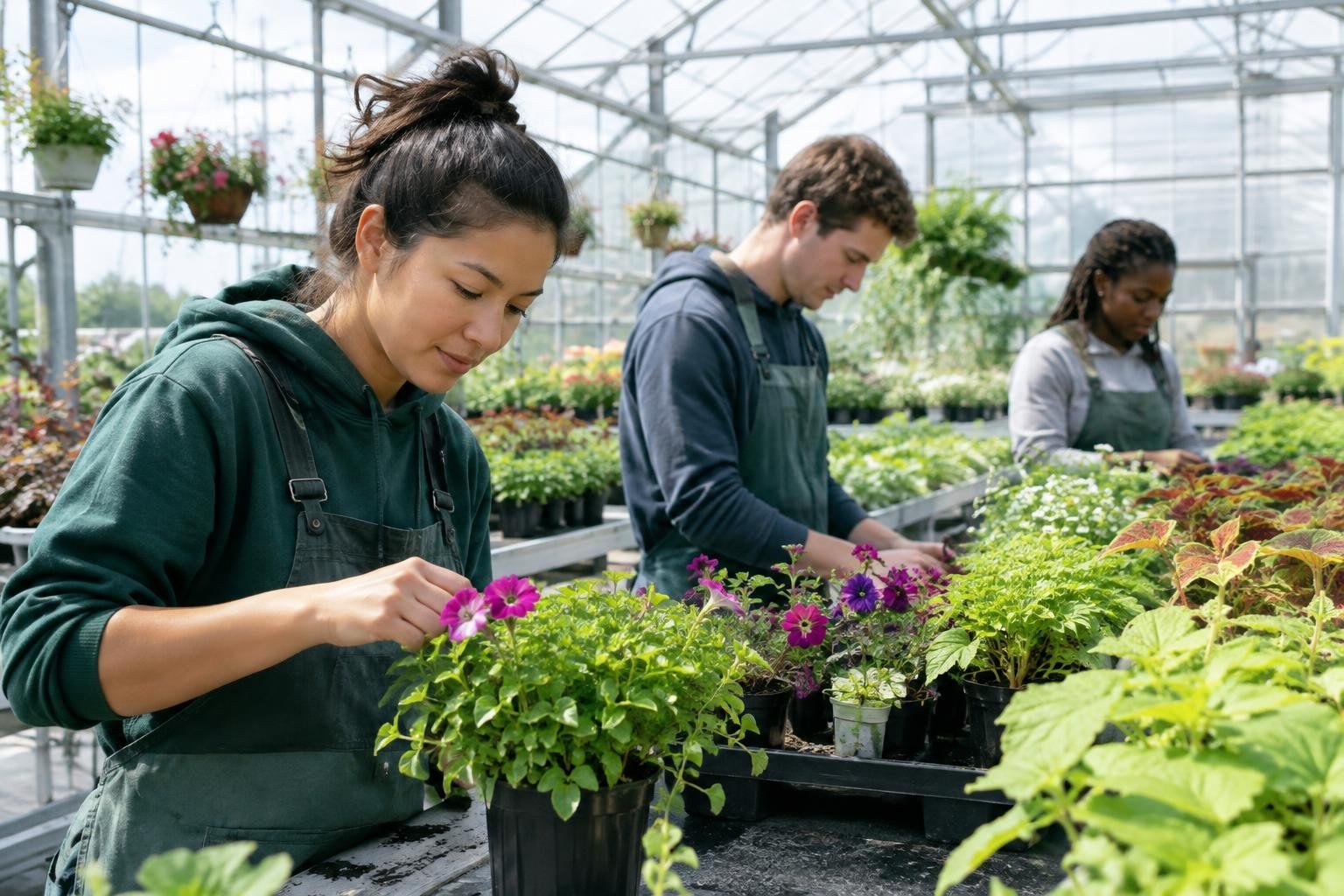
Ornamental horticulture is the scientific and practical study of cultivating plants used in gardens, landscapes, nurseries, and related settings. Programs may cover flowers, foliage plants, nursery crops, landscape plants, and, in some curricula, fruit and vegetable production. The degree can prepare students for production, management, marketing, or design-and-maintenance work, depending on the school’s focus.
Schools use different names and offer different credentials, including certificates, associate degrees, bachelor’s degrees, and graduate study. Some programs are called horticulture, ornamental horticulture, or horticultural science. The label alone does not reveal the emphasis: check the required classes, electives, and practical learning. Horticulture overlaps with plant science, landscape design, agriculture, and environmental studies, but the balance of cultivation, biology, design, and business can differ.
A college program description characterizes horticultural science as applying scientific principles to garden and ornamental plants as well as fruit, vegetable, landscape, and nursery crops. Individual degrees may be narrower or broader than that description.
What Do You Study?
Course plans differ, but ornamental horticulture students generally study plants and the conditions that affect their growth. The aim is to learn how to make sound cultivation and management decisions, not simply memorize plant names.
- Plant and soil foundations: Learn how plant structures, growth, soils, and environmental conditions affect cultivation.
- Plant production: Study methods for growing flowers, nursery crops, landscape plants, or other crops emphasized by the program.
- Plant health: Develop ways to observe plant condition and think through production or maintenance problems. Specific pest and disease coursework varies.
- Design, maintenance, or business electives: Depending on the school, coursework may support landscape and residential design, crop marketing, or horticultural business skills.
- Applied learning: Greenhouse work, field activities, projects, internships, or research may give students practice connecting classroom concepts to plants and growing environments.
For example, Texas A&M describes its bachelor’s curriculum as preparing students for production, management, and marketing of fruit, vegetable, landscape, floriculture, and other ornamental crops, as well as residential design, construction, and maintenance. This is one example, not a universal curriculum.
Before enrolling, ask for a sample course sequence and find out which activities are required, where they take place, and whether students arrange internships themselves.
Skills You Can Develop
Depending on the course plan and practical experience, students can develop plant observation, cultivation, and problem-solving skills. They may learn to evaluate how growing conditions affect plants, follow production routines, and communicate about plant care or project needs.
- Technical and scientific: Plant-focused knowledge, careful observation, and familiarity with cultivation practices.
- Analytical: Comparing plant conditions, identifying possible causes of problems, and making decisions based on evidence.
- Communication: Explaining recommendations to customers, colleagues, or supervisors and documenting work clearly.
- Professional and interpersonal: Planning tasks, working with teams, managing time, and adapting to seasonal priorities.
- Business and digital: Some programs include marketing or management. Software and technology skills depend on courses and job settings, so ask about specific training rather than assuming every program teaches the same tools.
These skills can transfer to nursery and greenhouse operations, landscape and grounds work, sales, or further study. Employers may also expect practical experience beyond coursework.
Who Is This Degree Best For?
Ornamental horticulture may appeal to students who are curious about plants and enjoy learning through observation and practical application. Some career paths involve regular hands-on work; others emphasize planning, management, customer service, marketing, or research. No single personality type is required.
Think about whether you enjoy noticing details, solving practical problems, working with living materials, and adapting to conditions that can change. Consider how you feel about outdoor or greenhouse work, physical tasks, variable schedules, and communicating with customers or teams. The realities differ by role and employer, so talk with people in the occupations you are considering.
Does Ornamental Horticulture Match You?
A salary estimate, a school’s reputation, or a promising job title cannot tell you whether the day-to-day work will suit you. Weigh your interests, preferred work setting, learning style, and tolerance for the education required. The Free MAPP Career Assessment can help you explore how your motivations and preferences relate to careers. Assessment.com’s Degree Matching and Career Matching tools can help you compare possible directions; use them as prompts for research, not as guarantees of a particular outcome.
Admissions, Length, and Academic Demands
Admissions rules are set by individual colleges. Certificate, associate, and bachelor’s programs may have different application requirements. Graduate applicants may need prior related study or other preparation. Check each program’s current admissions page for prerequisites, records, essays, test policies, portfolios, or experience requirements rather than assuming they are standard.
Time to completion depends on the credential, course load, transfer credit, and school calendar. A full-time bachelor’s plan often follows a multi-year sequence, while certificates and associate degrees are generally shorter. Part-time study can extend the timeline; transfer credit or an accelerated schedule can change it. Ask for the total credits, a term-by-term plan, and a written transfer-credit evaluation.
Challenges may include learning scientific concepts, keeping up with practical work, and balancing studies with seasonal or field-based activities. Prepare by reviewing the course prerequisites, asking about tutoring and advising, and visiting a greenhouse or nursery if you can. If you are transferring, confirm that required courses will be offered when you need them.
Online vs. On-Campus Horticulture Programs
Online, hybrid, and campus options exist, but delivery and practical requirements vary. Oregon State’s College of Agricultural Sciences offers an online undergraduate horticulture program through Ecampus. That is evidence that online study is possible, not a guarantee that every school or course can be completed remotely.
Ask how students gain practical experience and whether the program requires in-person greenhouse, lab, field, internship, or project work. Clarify where those activities occur, whether you must find a local placement, and whether there are extra travel or supply costs. Campus programs may make facilities and peer collaboration more accessible; online programs can offer scheduling flexibility, but students still need to plan how they will meet any applied-learning expectations.
Cost and Financial Aid
There is no single reliable price for an ornamental horticulture degree across the United States. Total cost depends on the college, public or private status, residency, credential, online or campus format, transfer credits, and time to completion. Add fees, books, course materials, transportation, and any costs associated with practical activities or internships.
Request a program-specific estimate covering the full degree, not only the first term or advertised tuition rate. Compare financial aid eligibility, scholarships, grants, payment plans, and employer support where available. Students and families can also ask about lower-cost transfer pathways, but should confirm that credits apply to the intended major and will not add time to graduation.
Do not judge value by tuition alone. Compare what students learn, access to applied experience, completion expectations, and the employment paths relevant to your goals. If a school provides outcome data, ask what graduates and time period it covers.
Careers, Pay, and Employment Prospects
Possible careers depend on the credential, specialization, experience, location, and employer. The table describes directions related to program subject matter, not promised jobs. Check current postings in the places where you may want to work, and compare their education and experience requirements.
Career directionTypical preparation to investigateHow horticulture may applyGreenhouse or nursery productionRelevant coursework or hands-on experience; employer requirements varyPlant growing, production routines, and plant-condition observationLandscape or grounds workExperience and qualifications vary by role and employerKnowledge of landscape plants, cultivation, and maintenanceLandscape or grounds supervisorMay require relevant experience or management preparationPlant knowledge can support team and site decisionsFloriculture or ornamental crop workProgram specialization or experience may be usefulStudy of flowers and other ornamental cropsHorticultural sales or customer supportProduct knowledge and communication skills; requirements varyExplaining plant or cultivation options to customersHorticultural business or operationsBusiness preparation and experience may helpPrograms may combine production, management, and marketingResearch or academic workAdvanced study may be needed for some rolesGraduate programs can support specialized research preparation
Pay and job outlook cannot be stated accurately for the degree as a whole: graduates enter different occupations, and earnings depend on role, region, experience, and employer. Look up current wage and outlook data for the specific job titles you are considering in the U.S. Bureau of Labor Statistics Occupational Outlook Handbook and O*NET, then compare those figures with local job postings. For any estimate, note its publication year and occupation definition.
Longer-term paths may involve managing a production operation, specializing in a crop or setting, or pursuing research and advanced study. None is automatic. Technology and changing production practices can affect tasks and employer needs, but the impact differs by occupation. Ask employers and program advisers which practical and digital skills are useful in your target area.
Experience, Certifications, Safety, and Standing Out
Practical experience can help you test your interests and show employers what you can do. Ask whether the college offers internships, greenhouse or field projects, research opportunities, student organizations, or connections with nurseries and landscape employers. If you take part in volunteer work or a paid job, keep a record of responsibilities and the plant-related skills you use.
How to Stand Out to Employers
- Build experience in the kind of setting you want to enter, such as a nursery, greenhouse, garden, or grounds operation.
- Keep a concise record of projects, crops or plants studied, and responsibilities.
- Practice explaining plant-care decisions clearly to both technical and nontechnical audiences.
- Ask local employers which experience, credentials, or practical skills they value.
A degree and a professional credential are not interchangeable. There is no single license requirement for every horticulture job. Requirements depend on the occupation, employer, and jurisdiction. Before paying for a certification, verify who awards it, what it covers, whether employers recognize it, and whether renewal or additional requirements apply. Follow employer safety instruction and applicable rules when handling equipment or materials.
Graduate Study Options
Further study can support specialization, research, teaching, or management goals, but it is not necessary for every horticulture career. Options may include a graduate certificate, master’s degree, Master of Agriculture, or doctorate. Cornell describes graduate horticulture study as interdisciplinary, while Texas A&M distinguishes professional graduate preparation from doctoral research preparation. Those are examples of program approaches, not universal requirements.
Before committing, identify the work you want the additional credential to make possible. Review admission prerequisites, research or internship expectations, total cost, and whether employers in your intended field request the credential.
Related Degrees and Alternatives
Compare ornamental horticulture with related programs by looking at what students actually study and the work they want to do:
- Plant science: Consider it if you want a broader or more science-centered study of plants; compare research and biology requirements.
- Landscape design: Consider it if spatial planning and design are more central to your interests than plant production.
- Agriculture or crop science: Consider it if you want a wider focus on agricultural production or field crops.
- Environmental studies: Consider it if ecosystems, policy, or environmental issues are your main interests.
- Floriculture: Consider a focused option if flowers and floral or ornamental crop production are your priority.
- Horticultural business or agribusiness: Consider it if management, marketing, or operations matter more to you than intensive plant study.
Related degrees can lead to overlapping work, but employers may value different coursework and experience. Compare course catalogs, practical requirements, transfer pathways, and current job listings before deciding.
Advantages, Drawbacks, and Is It Worth It?
Advantages may include applied learning, opportunities to focus on cultivated plants, and pathways into a range of plant-related settings. Some programs offer certificates or associate-level study as well as bachelor’s and graduate options, giving students different entry points.
Tradeoffs include variation in program content, the need to gain practical experience, and uncertainty about pay or job availability without researching a specific role and location. Some students may find that a broader plant science, landscape design, or business program is a better fit. A degree is most likely to feel worthwhile when its curriculum, cost, and hands-on opportunities connect to realistic goals.
To save safely, compare total degree costs, investigate transfer credit before enrolling, seek eligible aid, and choose a program with relevant coursework rather than paying extra for a label alone. Do not skip important practical experience or assume credits will transfer without written confirmation.
How to Choose the Right Ornamental Horticulture Program
Choosing an ornamental horticulture program means comparing what students study, how they gain practical experience, and how the credential fits their goals. Use this checklist to evaluate colleges:
- Accreditation: Confirm the institution’s accreditation status through authoritative education sources and check whether any specialized accreditation applies to your intended pathway.
- Curriculum: Compare required courses, specializations, and the balance of science, production, design, and business.
- Facilities and faculty: Ask what greenhouses, gardens, labs, or other learning resources students can use.
- Experience: Find out whether internships, practical work, or research are available or required, and who arranges placements.
- Cost and aid: Request the total estimated cost and discuss grants, scholarships, and transfer options.
- Format and timing: Confirm which courses are online, in person, or hybrid, and check whether practical requirements affect your schedule.
- Outcomes and career support: Ask how the school reports completion and employment outcomes, and what career advising or employer connections are available.
- Transfer and credentials: Obtain written confirmation of transfer credit and verify any credential claims with the organization that awards the credential.
Be cautious of unclear total costs, vague claims about guaranteed jobs, unanswered questions about required practical work, or unclear transfer-credit policies. Ask specific questions and keep written answers.
Before You Enroll: Questions to Ask
- What will the full program cost, including fees and materials?
- Which courses and practical experiences are required?
- Are any internships, labs, or field activities in person?
- How are completion and employment outcomes defined and reported?
- Will my previous credits count toward this specific degree?
- What career advising, financial aid, and employer connections can students access?
From Degree to Career
Career paths are not guaranteed, but a student might use this general progression to plan and test options:
- Degree or certificate → entry-level nursery, greenhouse, landscape, or grounds role.
- Related work experience → greater responsibility for plant production, customer support, or daily operations.
- Specialization or added preparation → a focused crop, landscape, sales, or management direction.
- Advanced education or sustained experience → possible preparation for research, teaching, or higher-level management, depending on employer requirements.
Use job descriptions and conversations with employers to check what each step actually requires in your region. Assessment.com’s Degree Matching, Career Matching, and Matching Jobs tools can help you explore connections between interests, education, and work. Treat their results as a starting point for further research.
Is Ornamental Horticulture Right for You?
Before Choosing a Degree, Find Out What Fits You
Start with the work and learning you want to pursue, then compare programs by their courses and practical requirements. Horticulture degrees can differ in their emphasis on production, management, marketing, landscape crops, floriculture, and design or maintenance. Utah State University describes certificate and associate options with hands-on greenhouse experience, while Texas A&M describes a bachelor’s program spanning crop production, management, marketing, and residential landscape work. These examples show why it is useful to compare actual course plans instead of relying on a degree title.
Ask colleges for a sample sequence, details about applied work, and a full cost estimate. Consider whether the available credential and hands-on requirements fit your goals and schedule. The Free MAPP Career Assessment can be a starting point for exploring how your motivations, interests, and preferences relate to possible careers. Use assessment results alongside program research and conversations with people in the work you are considering.
Take the Free MAPP Assessment →
Explore colleges and programs that fit your goals →
Factors to Compare When Choosing a Program
When comparing ornamental horticulture programs, consider how the credential, course sequence, delivery format, and practical requirements fit your education and career goals:
- Credential and next step: Utah State University describes certificate and associate options with hands-on greenhouse experience, and notes that students may continue toward a bachelor’s in plant science or pursue horticulture. Check how each credential fits your plans.
- Curriculum emphasis: Programs can differ in their focus on production, management, marketing, landscape plants, floriculture, or design and maintenance. Compare required courses, not just program titles.
- Practical requirements: Find out whether greenhouse, field, internship, or other applied work is required and where it takes place.
- Format and schedule: Oregon State offers an online undergraduate horticulture program through Ecampus. Confirm whether courses and practical activities at any program you are considering fit your schedule and location.
- Total cost and time: Ask for a full cost estimate and a term-by-term plan. Course load, transfer credit, and required activities can affect your timeline and expenses.
Get answers in writing, especially about transfer credits, hands-on requirements, and whether practical work is arranged by the school or the student.
Frequently asked questions
What does an ornamental horticulture degree cover?
It focuses on scientific principles and practical methods for cultivating and managing garden and ornamental plants. Depending on the program, study may also include fruit, vegetable, landscape, nursery, and floriculture crops.
How can I compare ornamental horticulture programs?
Compare required courses, applied-learning requirements, credential level, and total cost. Ask for a sample course sequence and confirm whether greenhouse, field, or internship work is required and where it takes place.
Can I complete a horticulture degree online?
Some horticulture programs are offered online, including Oregon State’s undergraduate program through Ecampus. Before enrolling, confirm that required courses are available in your preferred format and ask how any practical work is completed.
How long will it take to finish the degree?
Program length depends on the credential, course load, transfer credit, and school schedule. Request a term-by-term plan and written transfer-credit evaluation so you can estimate your own timeline.
How should I estimate the total cost?
There is no single price across schools. Request a full-program estimate that includes tuition, fees, books, materials, transportation, and any costs for practical activities. Compare aid options and confirm whether transfer credits apply to the major.
What kinds of jobs can this degree lead to?
Possible directions include nursery or greenhouse production, landscape and grounds work, floriculture, horticultural sales, or horticultural business. Check local job postings for the education and experience employers request, since qualifications vary by role.
Do I need graduate school for a horticulture career?
Graduate study is not needed for every horticulture career. It may support goals such as specialized research, teaching, or management, but requirements depend on the role. Review job descriptions and ask employers whether an advanced credential is expected.
What should I check before enrolling?
Review the curriculum and practical requirements, request the total cost and completion plan, and ask for written confirmation of transfer credits. For any certification, confirm directly with the awarding organization what it covers and whether employers in your target area recognize it.
People Also Ask
What subjects might I study in ornamental horticulture?
Programs may cover flowers, foliage, nursery and landscape plants, and sometimes fruits and vegetables. Review required courses and electives to see whether a school emphasizes cultivation, production, management, marketing, or design and maintenance.
Which credentials are available in ornamental horticulture?
Credentials range from certificates and associate degrees to bachelor’s and graduate study. Utah State University describes certificate and associate options that include greenhouse experience, while Texas A&M’s bachelor’s program spans crop production, management, marketing, and residential landscape work. Compare the course plans and practical requirements, not just degree titles.
Can I study horticulture online and still get practical experience?
Online study is available through programs such as Oregon State’s undergraduate horticulture program. Before enrolling, ask whether any greenhouse, field, lab, internship, or project work must be completed in person, where it takes place, and whether you need to arrange a local placement.
How can I compare the cost of horticulture programs?
Costs depend on the school, credential, residency, format, transfer credits, and time to completion. Request a full-program estimate that includes fees, books, materials, transportation, and applied-learning costs. Get a written transfer-credit evaluation and check whether those credits apply to the major.
What kinds of work can ornamental horticulture prepare me for?
Potential directions include nursery or greenhouse production, landscape and grounds work, floriculture, horticultural sales, and business operations. Check local job postings for the education and experience employers request, since requirements vary by role and location.
What should I ask a college before enrolling?
Ask for a sample course sequence and details about required greenhouse, field, internship, or research experience. Compare total cost, format, schedule, and transfer policies, and request written answers about credits and practical requirements before you enroll.
Is graduate school necessary for a horticulture career?
Graduate education is not required for every horticulture role. It may support research, teaching, specialization, or management goals. Review job descriptions in your intended field and ask employers whether an advanced credential is expected before committing to the added time and cost.
An ornamental horticulture program combines plant science with the practical skills used to grow, manage, design, and market ornamental and landscape plants. It may be a strong fit if you enjoy learning how plants respond to their environment and want applied work in greenhouses, nurseries, landscape businesses, public gardens, or related fields. The right choice depends on the specific curriculum, hands-on opportunities, cost, and the kind of work you want after graduation. Compare programs carefully, and weigh career possibilities alongside your interests and preferred work style.
Sources
- 2026 Horticultural Science Degree Guide
- MS/PhD Field of Horticulture - Cornell CALS
- Horticulture Bachelor's Degree Online | Oregon State Ecampus
- Horticulture - BS
- B.S. Horticulture - Department of Horticultural Sciences
- Graduate Programs - Department of Horticultural Sciences
- Degrees | AGNR | USU
- Utah State University Degrees and Programs by interests
- Ornamental Horticulture
- Ornamental Horticulture - AAS, UC
- Ornamental Horticulture - Fullerton College
- Ornamental Horticulture and Landscape Management | College of Agriculture & Natural Resources at UMD
- Ornamental Horticulture Programs 2026: Schools, Cost & Careers | Trade Schools Directory
- Ornamental Horticulturist - Seed Your Future
- The Best Ornamental Horticulture Colleges 2026
- Ornamental Horticulture