Degree Library
Livestock Management Degree Guide: Courses, Careers, Cost, and Fit
Learn what livestock management programs teach, which careers they can support, how to compare credentials and costs, and what to ask before enrolling.
A livestock management degree or program teaches students how animal care and production connect with the day-to-day decisions involved in managing livestock operations. Depending on the school and credential, study may include animal management, production practices, and related agricultural or business subjects. Some programs focus on practical preparation for dairy, beef, and specialty livestock work; others sit within a broader animal science major. Graduates may pursue production and farm-management roles or continue into more specialized study. A degree alone does not guarantee a particular job, salary, or professional qualification, so students and parents should look closely at course plans, practical experience, and employer requirements. Not sure whether livestock management fits you? Take the Free MAPP Career Assessment to see how your motivations, interests, and natural preferences align with this degree and the careers it can lead to.
Millions of people Take the MAPP Career assessment to see which Degrees are the best Match!
You can too,
What Is a Livestock Management Degree?
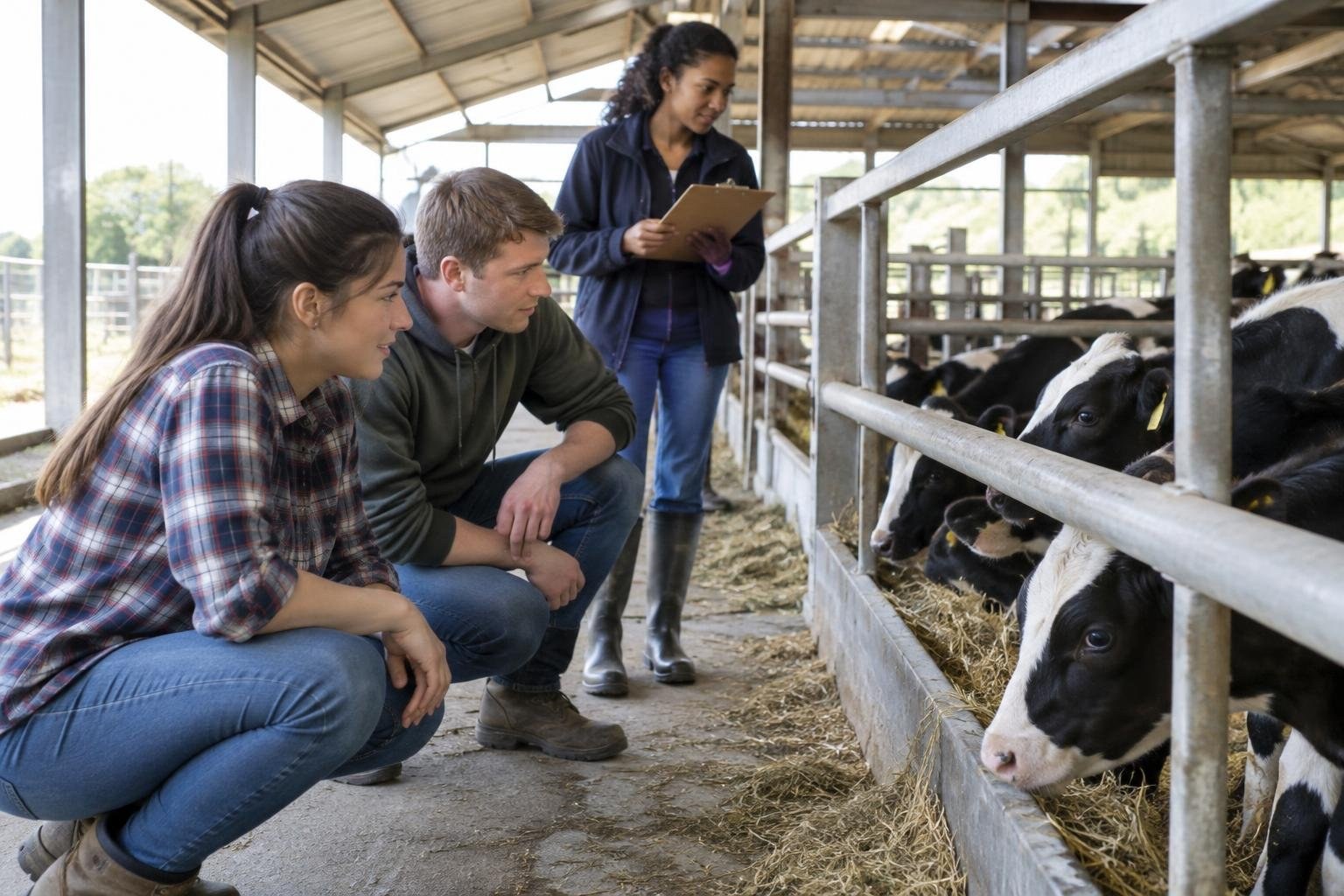
Livestock management is an applied area of agricultural study focused on the care, production, and management of livestock. It connects knowledge about animals with practical decisions involved in production operations. The exact definition depends on the school: one college may offer a dedicated animal science management associate degree focused on dairy, beef, and specialty livestock, while another may offer production management within a broader animal and dairy sciences bachelor’s degree.
Related names include animal science, animal and dairy sciences, livestock production, and farm management. These are not automatically interchangeable credentials. An animal science major may offer broader study of animal biology, nutrition, genetics, husbandry, or research, while a livestock-management option may emphasize production and operations. Check the curriculum and credential awarded, not only the program title.
Livestock management is also different from veterinary medicine. Veterinary practice is a separate professional pathway, and completing a livestock-focused degree does not qualify someone to practice as a veterinarian. Students considering that goal should check the admissions and licensing requirements of veterinary schools and relevant authorities.
What Do Students Study? Courses and Practical Learning
Coursework varies by institution and credential. Programs in animal science and animal and dairy sciences may include animal biology, physiology, nutrition, genetics, husbandry, and production-related study. A livestock-management associate program may focus on the management of dairy, beef, and specialty livestock. A production-oriented bachelor’s option may connect animal production with agronomy, agricultural economics, and business.
Look for more than course titles. Ask what students actually do: Is there supervised work with animals? Are projects based on production decisions or farm operations? Does the program include a field experience, internship, research project, or capstone? These opportunities are school-specific and should be confirmed in writing. Programs elsewhere in agriculture may combine animal science with plant science, natural resources, or agricultural mechanics, illustrating how broad agricultural curricula can be.
For each program on your shortlist, request a current degree plan and identify required courses, electives, prerequisites, and any experience expected before graduation. That makes it easier to see whether the program’s emphasis matches your interests.
Skills You Can Build
Students can develop animal-care and production knowledge alongside skills in observation, problem-solving, communication, and operational decision-making. In practice, those capabilities can matter when coordinating animal production, discussing care or feed-related questions with colleagues, or organizing work on a livestock operation. The balance of technical and business preparation depends on the track.
Ask the department how it teaches and assesses each skill. A course plan may show relevant subjects, but supervised animal work, projects, research, or internships can help students apply what they learn. If a program promotes a particular software, technical procedure, or industry credential, confirm whether it is part of the curriculum and whether employers in your target area value it.
Who Is This Program Best For?
Livestock management may appeal to students interested in animal care, food and agricultural production, and practical decisions about how operations work. It can also suit learners who want a connection between animal science and agricultural business. Direct experience with animals can help students decide whether the everyday work is a good fit.
There is no single personality type required. Some students are drawn to hands-on tasks; others prefer planning, research, or management. Consider how you feel about structured routines, working outdoors or in agricultural settings when required, and balancing animal-related concerns with operational needs. The specific work environment varies by employer.
Does Livestock Management Match You?
Salary, program reputation, and employment prospects are only part of a sound education decision. Think about the tasks you want to do, your preferred learning style, and the education and experience a target role requires. The Free MAPP Assessment can help you reflect on motivations and interests. Assessment.com’s Degree Matching and Career Matching tools can be useful starting points for exploring options; use them alongside course plans and conversations with people in the field.
Admissions, Credential Levels, Time, and Difficulty
Admission requirements are set by each college. Before applying, check whether the program requires particular secondary-school courses, a minimum academic record, essays, references, an interview, or prior animal or agricultural experience. Do not assume that a requirement at one institution applies to all others. Contact admissions if your record, transfer credits, or work experience needs individual review.
There is no single national completion timeline for a livestock management credential. The research-backed examples include an associate degree and a bachelor’s degree, while animal and dairy sciences also appears at master’s and doctoral levels. Time to finish depends on the credential, course sequence, enrollment pace, and accepted transfer credit. Ask for a term-by-term plan for full-time and part-time attendance.
Programs may be offered in different formats, but livestock study can involve practical learning that is not replicated by watching online lectures. Confirm whether any labs, animal experiences, internships, or research activities require campus attendance or travel. Ask how online students access any required experience before committing.
Students often find it useful to prepare by reviewing course prerequisites, talking with an adviser, and getting appropriate exposure to animal or agricultural settings. Follow the school’s safety and supervision rules for any experience.
Tuition, Costs, and Financial Aid
Tuition cannot be responsibly summarized with one figure for all livestock management programs. Total cost depends on the school, credential, residency classification, delivery format, fees, books, equipment, and living expenses. Obtain an itemized estimate for the full program, including costs that may not appear in the advertised tuition rate.
Complete the Free Application for Federal Student Aid if eligible, then ask the college financial-aid office about grants, scholarships, work-study, payment plans, and institutional awards. Agriculture departments, community organizations, and employers may offer funding, but availability and eligibility vary. Students should verify each award directly and understand its renewal conditions.
Transfer credit, starting at a community or technical college, and taking courses part time may affect total cost, but only if the courses apply to the intended degree. Ask for a written transfer evaluation before enrolling elsewhere. Compare net cost after confirmed aid, not just tuition per credit or the first-year price.
Careers, Jobs, Pay, and Employment Outlook
Livestock management study can connect to farm and livestock production work, animal-related industries, and further study. Examples in program descriptions include livestock managers and animal nutritionists; an animal science degree may also support work in agriculture, research, and animal health. A program focused on production can prepare students for work with livestock and companion animals or related agronomy and agribusiness fields.
| Career direction | Typical education to investigate | Pay and outlook | How study may apply |
|---|---|---|---|
| Livestock or farm operations manager | Relevant agricultural education and experience; employer expectations vary | Check current BLS or O*NET data for the specific occupation and location | Production and management study can provide relevant animal and operations knowledge |
| Animal nutrition-related work | Requirements depend on job duties and employer; verify science and credential requirements | Check current occupation-specific data; do not use a degree-wide salary estimate | Animal nutrition is identified as an animal science subject and career direction |
| Livestock production employee or supervisor | Employer-specific; practical experience may be important | Pay and hiring conditions vary by region, employer, and responsibility | Applied livestock programs may focus on dairy, beef, or specialty livestock management |
| Agribusiness or agricultural operations role | Relevant education, business preparation, and experience vary | Compare job postings and current occupational data | Some animal science tracks connect production with agricultural economics and business |
| Agricultural research assistant | Requirements vary; advanced research roles may require graduate study | Check the occupation and research sector separately | Animal science can provide a foundation for research-oriented study |
| Scientist or university researcher | Graduate education is commonly relevant; exact requirements depend on position | Use current occupational data for the specific research occupation | Graduate animal and dairy sciences programs can lead toward research careers |
| University faculty member | Graduate education is generally an important pathway; verify individual postings | Pay and openings vary by institution and field | Doctoral graduates in the cited department commonly pursue faculty and research careers |
| Veterinary professional pathway | Separate veterinary education and applicable licensing requirements | Research veterinary occupations separately from livestock management | A pre-veterinary course option can be preparation, not a veterinary qualification |
This is a pathway guide, not a salary forecast or promise of employment. BLS and O*NET pay and outlook are reported by occupation, not by degree title. Match the specific job title, geography, and data year when researching earnings and hiring. Some jobs may be accessible after an associate or bachelor’s degree, while research and academic paths can require further study. Employers set role-specific requirements.
Hiring conditions can differ across production systems and regions. Rather than assuming a field is expanding or declining, investigate local employer postings, internship availability, and current occupational data for each job you are considering. Automation and data tools may change operational tasks, but their effect depends on the workplace and role; ask employers which technologies they expect new hires to use.
Find out which Career or College Major is right for you!
Take the MAPP free today!Experience, Certifications, and Licensure
Practical experience can help students test their interest and show employers how they apply classroom learning. Ask about internships, supervised animal work, research projects, student organizations, and connections with agricultural employers. Opportunities are not guaranteed by a degree title, so learn how students obtain them and whether they are required or optional.
How to Stand Out to Employers
- Build relevant experience through a school-approved internship, work placement, or supervised project.
- Keep a concise record of responsibilities and skills from coursework and work experience.
- Ask instructors and agricultural employers what entry-level applicants need to demonstrate.
- Research role-specific credentials before paying for a certificate or training course.
Do not confuse completing a livestock management degree with earning a professional license. Requirements depend on the occupation and jurisdiction. Veterinary medicine, for example, is a distinct professional route; check veterinary education and licensing requirements separately if that is your goal.
Graduate School Options
Graduate school may make sense for students pursuing advanced research, university teaching, or specialized animal and agricultural study. Animal and dairy sciences departments offer master’s and doctoral pathways; one program source reports that nearly all of its PhD graduates pursue faculty or researcher careers and that many master’s graduates continue to doctoral study. This describes that department’s reported pathway, not a guarantee for every graduate program or student.
Other students may prefer to enter the workforce after an associate or bachelor’s degree and gain experience before deciding whether additional education is useful. Ask graduate advisers about prerequisites, research expectations, funding, and the career outcomes relevant to your specific interest.
Related Degrees and Alternatives
- Animal science: Consider this if you want broader study of animal biology, nutrition, genetics, husbandry, and possible research or pre-professional options.
- Animal and dairy sciences: Consider this if you want a wider animal-focused program with options such as business and industry, food science, pre-veterinary study, or production management.
- Dairy science: Consider this if your primary interest is dairy production and related study.
- Agricultural business or agribusiness: Consider this if you prefer business and operational decisions in agriculture over a primarily animal-focused curriculum.
- Animal nutrition: Consider this if you want to focus more closely on nutrition-related study and verify the education employers expect.
- Pre-veterinary course plan: Consider this if your goal is applying to veterinary school; confirm each school’s prerequisites and understand that undergraduate preparation is not a veterinary degree.
- Agricultural production operations: Consider this if you want broad preparation across production systems rather than a livestock-centered focus.
- Agricultural mechanics or mechanization: Consider this if equipment and technology are more appealing than animal production.
Compare degree plans, elective choices, practical requirements, and next-step qualifications. Similar-sounding programs can lead to different preparation, and a specialization or track may be housed within a broader major rather than offered as a separate degree.
How to Choose the Right Program
Accreditation, transferability, and preparation for a specific job should be checked before enrollment. Confirm the institution’s recognized accreditation status through appropriate official channels, then ask whether a target employer, licensing authority, or transfer institution accepts the program or its credits. Do not assume a general agricultural degree meets requirements for a regulated occupation.
Compare more than accreditation. Review the required curriculum and specializations; access to faculty, facilities, and livestock; practical placements; total net cost; class format; graduation and completion information; career services; employer relationships; and credit-transfer rules. Ask how the program measures outcomes and whether published figures refer to this specific program and a clearly defined group of graduates.
Students should also ask how the major prepares them for the actual roles they want. If employers require experience or additional credentials, find out whether students can gain those while enrolled. Assessment.com’s degree and career matching resources can help with exploration, but a college adviser and relevant employers can answer program-specific questions.
Advantages, Drawbacks, and Is It Worth It?
There are real tradeoffs. A focused program can connect animal and production study to agricultural work, and some offerings explicitly emphasize practical preparation for livestock sectors. A broader animal science degree can keep several directions open, including production, pre-professional study, or research, depending on the institution.
On the other hand, program names alone may not tell employers what a graduate can do. Hands-on opportunities, local job availability, additional education, and total cost all affect the decision. A student who wants veterinary practice may need a different education pathway; someone more interested in agricultural business, animal research, or equipment may find a better fit in a related major.
To judge whether it is worth it, compare the likely cost and time commitment with the work you want, the actual courses and experiences available, and verified requirements in current job postings. There is no universal answer for every student or family.
From Degree to Career: Example Pathways
Possible pathways are examples, not guaranteed promotions. Experience, performance, location, further study, and employer needs shape what comes next.
- Livestock management program → entry-level livestock production role → experience with a particular production operation → supervisory or farm-management responsibilities.
- Animal science bachelor’s → animal-related or research-support role → advanced study or specialized experience → scientist or university researcher pathway.
- Animal science pre-professional option → complete prerequisites and apply to veterinary school → professional veterinary education → meet applicable licensure requirements.
Discuss these routes with department advisers and people who hire for the jobs you are considering. Ask what qualifications and experience actually distinguish candidates.
Questions to Ask Before Enrolling
Before enrolling, use this checklist with an admissions counselor, program adviser, and financial-aid office:
- What credential will I earn, and what courses are required?
- What is the full estimated cost, including fees, supplies, and living expenses?
- What grants, scholarships, employer support, and other aid can I confirm?
- Does the program provide practical animal experience, internships, or research, and how are placements arranged?
- Which specific jobs do graduates pursue, and what evidence supports the outcome claims?
- Do my target occupations require further education, certification, or licensure?
- What parts of the program must be completed on campus or in person?
- Will credits transfer to my intended next school or pathway?
- What career services, employer contacts, and application support are available?
- Can I speak with current students, recent graduates, or employers about the program?
Keep written answers and compare schools using the same questions. That makes differences in cost, practical experience, and career preparation easier to see.
Frequently asked questions
Is a livestock management degree hard?
Livestock management can be challenging because it combines animal science with practical production and business decisions. Some programs include science courses, applied projects, or hands-on animal work, and the level of quantitative study depends on the school and track. Review sample course plans and ask about prerequisites before applying.
Is a livestock management degree worth it?
It can be worthwhile for students whose goals align with animal production, farm operations, or related agricultural work. Value depends on program cost, hands-on experience, local opportunities, and whether the degree matches the job’s requirements. Compare the curriculum and likely career paths before deciding, rather than assuming the credential guarantees a particular job or salary.
What jobs can I get with a livestock management degree?
Possible directions include livestock production or farm management, animal nutrition-related work, and agricultural research or teaching after further study. Programs may also prepare students for related animal or agribusiness roles. Specific job requirements vary, so check employer postings and determine whether a role calls for additional education, experience, or a separate credential.
How much can you make with a livestock management degree?
There is no single salary for livestock management graduates. Pay depends on the occupation, employer, location, experience, and education. Compare current U.S. Bureau of Labor Statistics or O*NET information for the specific job titles you are considering, and review local employer postings for entry-level requirements and pay ranges.
Can you earn a livestock management degree online?
Some coursework may be offered online, but availability depends on the institution and course. Ask whether practical animal experience, labs, internships, or other activities must be completed in person. A fully online format may not provide the same direct experience as a program with access to livestock facilities or supervised field learning.
Does livestock management require a lot of math or science?
The amount of math and science varies by program and specialization. Livestock management studies may include animal biology and production subjects, while business-focused options can emphasize operations and management. Check the required courses and their prerequisites at each school; do not assume every program has the same scientific or quantitative demands.
Do you need graduate school for livestock management?
Not for every livestock management career. Some production and operational roles may be accessible with an associate or bachelor’s degree plus relevant experience, depending on the employer. Research, university faculty, and advanced specialist roles may call for graduate education. Veterinary practice is a separate professional pathway with its own education and licensure requirements.
What certifications or licenses are required for livestock management?
A degree in livestock management does not, by itself, establish eligibility for a professional license or certification. Requirements depend on the job and jurisdiction. Before enrolling, identify the occupations you want and ask employers or relevant professional and licensing organizations what education, examinations, or credentials they require.
What is the difference between livestock management and animal science?
Livestock management generally focuses on animal production and managing livestock operations. Animal science is a broader field that can include animal biology, nutrition, genetics, welfare, and production, with possible pre-professional or research options. Compare course plans: the best choice depends on whether you want a production-focused program or broader preparation for animal-related study and careers.
People Also Ask
What degree do you need to manage livestock?
The name does not identify one standard credential. Schools may offer livestock-focused associate study or include production management as an option within an animal science bachelor’s program. Graduate study can lead toward research or university careers, but the appropriate level depends on the work a student plans to pursue.
What do you learn in livestock management?
Program content is institution-specific. Examples of relevant study areas include animal management and livestock production; some programs also integrate agricultural business or related sciences. Compare the required courses and practical learning opportunities rather than relying on a program title.
How long does it take to study livestock management?
There is no universal completion time because credentials, enrollment intensity, transfer credits, and school requirements differ. Ask each institution for its published plan of study and an estimate based on your intended full-time or part-time schedule.
Does livestock management prepare you to become a veterinarian?
Not necessarily. A livestock management program can be designed for production and operations work, while veterinary medicine is a distinct professional route. Students who want to become veterinarians should confirm veterinary-school prerequisites and licensing requirements with the relevant schools and authorities.
How do I choose a livestock management program?
Compare the course plan, practical animal experience, credential level, full cost, and career support. Ask where required hands-on learning takes place and whether the program has transfer arrangements or employer connections relevant to your goals.
What should I study instead of livestock management?
Options can include animal science, dairy science, agricultural business, or a pre-veterinary course plan. The right alternative depends on whether a student prefers broader animal biology, a particular livestock sector, business operations, or preparation for professional veterinary study.
Livestock management may suit students who want to understand animal care and production while also making practical decisions about operations, resources, and business. Programs vary widely, so compare the actual curriculum, hands-on learning, total cost, and career preparation rather than relying on a degree title alone. If you are deciding between livestock management, animal science, or a pre-veterinary pathway, start with the work you want to do and the credentials it requires. Personal fit matters alongside earnings and opportunity.
Want to see your options? Try our comprehensive Degree, Program & College Search tool
College Search ToolSources & Official Resources
- Animal and Dairy Sciences | Major Maps
- Animal, Dairy, and Veterinary Sciences - MS, PhD
- Animal Science Management - Associate Degree | Chippewa Valley Technical College
- Bachelor’s in Animal Sciences | Martin-Gatton College of Agriculture, Food and Environment
- Bachelor's Degree in Animal Sciences | University of Kentucky'
- CIP - Classification of Instructional Program ACADEMIC CIP CODES
- Degrees | AGNR | USU