Degree Library
Large-Animal and Equine Veterinary Medicine: Education, Careers, Costs & Training
Large-animal, food-animal, and equine veterinary medicine focuses on preventing, diagnosing, and treating health problems in animals such as cattle, sheep,…
By David Slack · Staff Writer Assessment.com · Published October 5, 2026 · Last updated October 6, 2026
Large-animal, food-animal, and equine veterinary medicine focuses on preventing, diagnosing, and treating health problems in animals such as cattle, sheep, goats, pigs, and horses. Surgery is one possible area of practice, but it requires professional veterinary training and, for specialist roles, additional education and supervised clinical experience. There is generally no direct undergraduate degree that qualifies a graduate to perform veterinary medicine. Many students start with an animal-science, biology, or related bachelor’s program that includes the prerequisites needed for veterinary-school applications. They then complete a Doctor of Veterinary Medicine (DVM or equivalent) program and meet licensing requirements. Some graduates enter general or mixed practice; others pursue further training in a specialty. Not sure whether this path fits you? Take the Free MAPP Career Assessment to explore how your interests, motivations, and work preferences may align with veterinary careers and related education paths.
Large-animal, food-animal, and equine medicine is a veterinary practice area, not usually a stand-alone undergraduate major. Students typically complete veterinary-school prerequisites and animal experience, earn a veterinary degree, meet licensing requirements, and pursue additional supervised training if aiming for a specialty such as surgery.
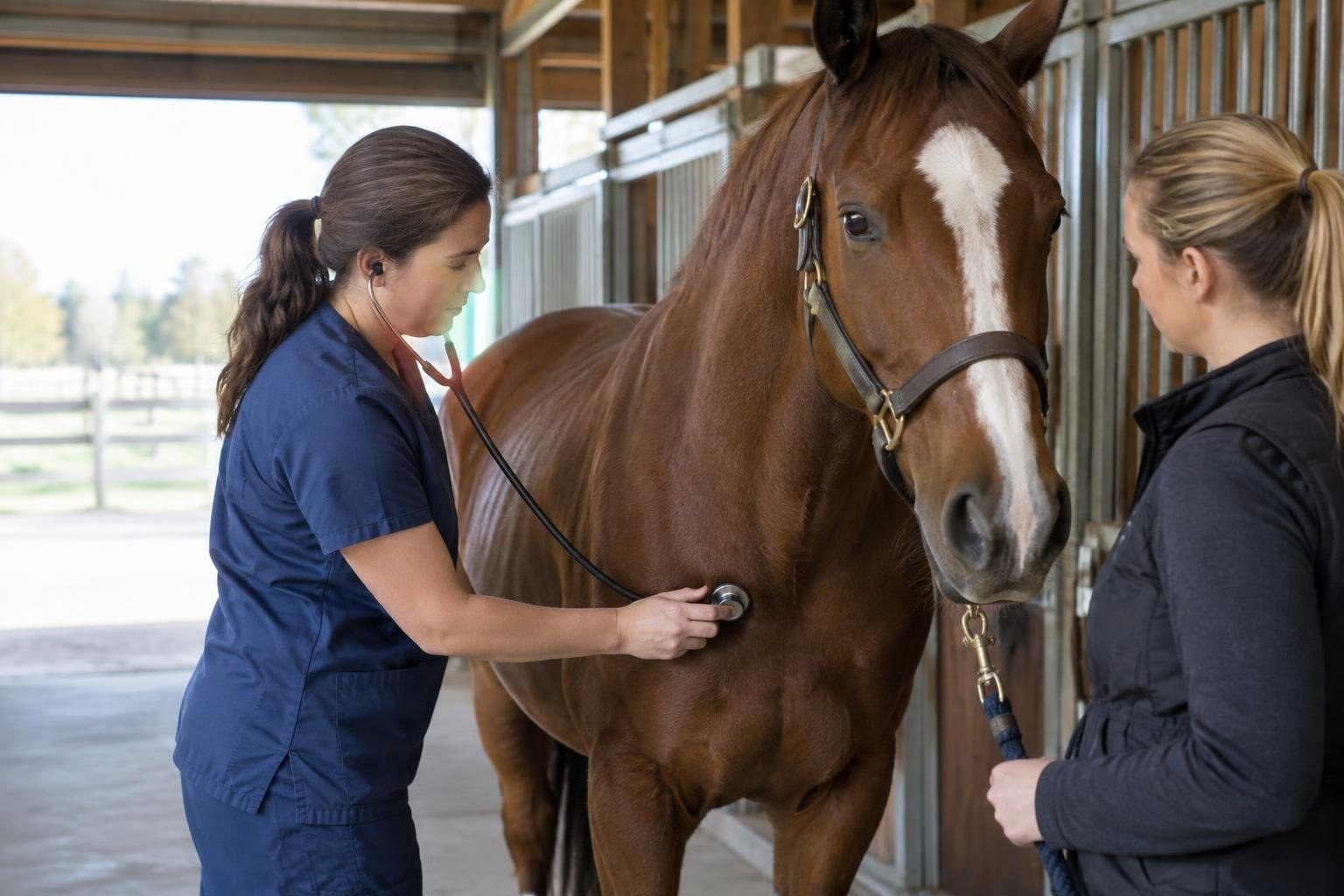
What Is Large-Animal and Equine Veterinary Medicine?
Large-animal veterinary medicine applies veterinary science to animals such as horses and livestock. Depending on the job, veterinarians may provide preventive care, diagnose illness or injury, perform procedures, advise owners on herd health, or support animal health in research and public or agricultural settings. Equine medicine focuses on horses; food-animal work commonly involves animals raised for food production. The daily work and patient mix differ by practice.
The phrase “large-animal surgery and medicine” describes a career direction or clinical focus, not a standard bachelor’s degree title. Undergraduate programs may use names such as animal science, animal and veterinary biosciences, or pre-veterinary science. These degrees can help students complete prerequisite courses, but a bachelor’s degree alone does not qualify someone to diagnose or treat animals as a veterinarian.
At the professional level, students pursue a Doctor of Veterinary Medicine or an equivalent veterinary degree. A veterinary degree, a license to practice, and recognition as a specialist are distinct milestones. Students should verify the requirements for the state or jurisdiction and specialty they have in mind.
What students may study before veterinary school
Animal-science curricula commonly combine biology and animal-focused subjects. Depending on the program, students may study animal nutrition, physiology, breeding, welfare, production, and management, with options in areas such as equine science or pre-veterinary preparation. Some programs include animal handling, research, internships, or other experiential requirements. Curricula and available facilities differ by college.
What veterinary education adds
Veterinary training develops the knowledge and clinical judgment needed to care for animals. Students build on foundational sciences and learn to examine patients, evaluate symptoms, consider diagnostic information, and plan treatment. Clinical education gives students supervised experience. Surgical specialization requires more training than simply completing an undergraduate major or a veterinary degree.
Program descriptions from Johnson & Wales, West Virginia University, Cal Poly Pomona, the University of Kentucky, the University of Wisconsin–Madison, Southern Illinois University, and the University of Minnesota illustrate the variety of undergraduate animal-science pathways and specializations. They are examples, not a guarantee that every college offers the same courses, experience, or admissions preparation.
How the Education and Training Path Works
A common pathway has several stages: undergraduate preparation, veterinary-school admission, professional education, licensing, and, for specialty practice, additional supervised training. The sequence and time needed vary. Students should check current requirements at each veterinary school and licensing authority rather than assuming one major or course plan works everywhere.
- Choose an undergraduate route. Animal science is one option; biology or another major can also work if it allows you to complete the prerequisites required by your intended veterinary schools. Some animal-science programs offer pre-veterinary plans or course sequences designed to support applications.
- Complete prerequisite coursework. Identify required courses and academic expectations directly from each school. Plan with an academic advisor so degree requirements and veterinary-school prerequisites fit together.
- Build relevant experience. Seek appropriate animal handling, farm, equine, research, volunteer, or veterinary-clinic experience. Opportunities vary by region and college. Follow workplace safety rules and work under qualified supervision.
- Apply to veterinary school. Admissions requirements, selection criteria, and application schedules vary. Ask programs how they evaluate academic preparation and experience, and confirm the details for the application year.
- Complete professional and clinical education. Veterinary programs include scientific and clinical learning. Students interested in large-animal practice should investigate the program’s relevant clinical experiences, facilities, and placements.
- Meet licensing and specialty requirements. A veterinary degree does not automatically confer a license. Check the rules where you intend to practice. Students considering surgery should ask specialty organizations and veterinary programs about current training and credentialing routes.
Start by looking for a gap between your interest and the real work. If you have had little contact with livestock or horses, arrange an informational conversation or supervised experience before choosing a costly professional pathway. Interest in animals matters, but so do comfort with science, communication with owners, practical problem-solving, and the realities of animal care.
Courses, Experience, and Skills
Undergraduate study may include biology, chemistry, animal physiology, nutrition, genetics, animal welfare, and production or management topics. A pre-veterinary concentration may organize courses around common preparation needs, but students must confirm that the specific courses satisfy the current prerequisites of their target veterinary schools.
Advanced undergraduate work may include research, laboratory assignments, animal handling, internships, or a capstone. Some schools describe internship or experiential learning opportunities as part of their programs. For instance, the supplied program descriptions identify hands-on research, animal experience, internships, or academic enrichment at particular institutions. Availability and requirements are program-specific.
Veterinary education builds toward supervised clinical work. For large-animal or equine interests, compare whether the program offers relevant patient exposure and clinical opportunities. A program’s name is not enough: ask what students actually do, when they do it, and whether opportunities are guaranteed, competitive, or dependent on placement.
Skills the path can develop
- Scientific reasoning: connect anatomy, physiology, and other scientific knowledge to animal health questions.
- Observation and analysis: gather information, evaluate findings, and make careful decisions.
- Communication: explain care plans and options to animal owners, farm teams, and colleagues.
- Practical and technical skills: develop handling, examination, laboratory, and clinical abilities under appropriate supervision.
- Professional judgment: balance animal welfare, safety, available information, and the needs of the setting.
These skills can be relevant in veterinary practice, animal research, livestock and equine management, animal-health businesses, and education. A student’s eventual role depends on education, experience, licensing, and employer needs.
Who May Be a Good Fit?
This path may appeal to students who want to combine animal health, science, and practical problem-solving. Large-animal and equine work can involve outdoor settings, travel, hands-on tasks, and communication with owners or agricultural businesses. Students should learn what those activities mean in their intended career before committing to years of education.
Consider arranging a supervised visit, informational interview, or suitable entry-level experience. Ask practitioners about routine tasks as well as challenging ones. Contact with animals is not the same as clinical work, and a student’s experience should follow the site’s safety and supervision rules.
Does this path match you?
Salary, status, and job projections are only part of a college decision. Consider whether you enjoy sustained science study, can manage a demanding training process, and want the responsibilities of animal care. The Free MAPP Career Assessment can help you reflect on motivations and work preferences. Use Degree Matching and Career Matching as exploration tools, then verify program and career requirements with colleges and professional authorities.
Take the Free MAPP Assessment to explore how your preferences may connect with animal-health careers and education paths.
Admissions, Length, and Academic Demands
Admissions rules depend on the college and credential. Undergraduate applications may consider prior coursework and the institution’s standard admissions criteria. Veterinary-school applicants must satisfy each program’s current academic and application requirements. Do not assume that a particular bachelor’s degree, grade threshold, test, experience requirement, or interview process applies everywhere.
Ask admissions offices for a current prerequisite list and a sample plan. If you are comparing several veterinary schools, build a checklist for each one. Confirm course equivalencies before registering, especially when transferring credits or taking courses online.
Timelines also vary. A bachelor’s program is commonly planned across several academic years, while professional veterinary education and any later specialty training add additional time. Part-time, transfer, and accelerated arrangements depend on specific programs and may not align with every veterinary-school application schedule. Get a written degree audit and application plan before relying on an estimated completion date.
Academic challenges and preparation
Students can face intensive science coursework, laboratory expectations, competing degree and prerequisite requirements, and the effort of finding meaningful experience. Prepare by reviewing course sequences, using academic support early, and avoiding an overloaded schedule. Ask how the college supports students who need to repeat a prerequisite or change their plan.
Online, Hybrid, and Campus Programs
Some undergraduate animal-science coursework may be offered online, but availability depends on the institution and course. Online study may be convenient for lectures, yet it may not provide the animal handling, laboratories, internships, or clinical experience relevant to this path. Veterinary clinical education requires practical learning, so students should not assume that a fully online option can replace in-person components.
Before enrolling, ask which courses are online, whether labs require campus attendance, how the program arranges animal experience, and whether veterinary schools accept the format and credits. For a hybrid program, request a clear list of required campus visits and placements. Confirm whether students must secure their own field experience.
Factors That Affect the Path: Cost, Time, and Outcomes
The cost and timeline of this education path depend on the choices you make at each stage. Undergraduate programs differ in their course options and experiential opportunities: some describe internships, research, animal handling, or equine-focused study. Compare the actual degree plan and available experiences rather than relying on a program label alone.
When estimating the full commitment, review tuition and fees, living expenses, books and supplies, travel, and any costs tied to animal or clinical experiences. Then consider veterinary-school expenses and any further training required for a specialty. These are planning categories, not a price estimate. Request current figures from each institution and compare the complete route, not only the first degree.
Several factors can change your plan:
- Program and course choices: Check whether required veterinary-school prerequisites fit within the undergraduate degree plan.
- Experience opportunities: Find out whether animal handling, internships, or research are built into the program, optional, or something you arrange independently.
- Professional and specialty goals: A veterinary degree and applicable license are needed for veterinary practice; a surgical goal involves additional training.
- Transfer credits and course scheduling: Ask an advisor for a written plan and confirm course equivalencies with your target veterinary schools.
- Financial aid and location: Request current cost and aid information from each institution before comparing options.
For career pay, use current data for the specific occupation and location you are considering. Do not treat a broad occupational figure as a guaranteed starting salary or a measure of one college’s value.
Careers, Employers, Pay, and Outlook
Career options depend on which stage of education a student completes. A bachelor’s degree in animal science or a related field may support roles in animal care and management, research support, agricultural businesses, or preparation for further study. Veterinary jobs require a veterinary degree and the applicable license. A specialty surgery career entails additional training and credentialing beyond a general undergraduate degree.
Career directionTypical preparationHow study may applyPay and outlookVeterinarian in mixed or large-animal practiceVeterinary degree and applicable licenseClinical training supports animal diagnosis, prevention, and treatmentCheck current BLS veterinarian data; pay and outlook vary by location and role.Equine veterinarianVeterinary degree and applicable license; relevant experienceEquine-focused study and clinical exposure can help build relevant preparationUse current occupational data and local employer information; no single figure applies to all equine roles.Veterinary surgeon or surgical specialistVeterinary degree, license, and further specialty trainingProfessional education provides a foundation; additional supervised training is requiredPay depends on specialty, setting, experience, and geography; verify current data.Animal or livestock research roleRequirements vary; advanced study may be needed for some positionsAnimal science and research experience may be relevantConsult current occupational data for the specific job title.Farm, ranch, or equine facility managementEducation and experience vary by employerAnimal production, equine, and management coursework may applyLocal employer and BLS data are more useful than a broad degree-wide estimate.Animal-health or agricultural business rolesRequirements vary by sales, technical, or management positionAnimal and agricultural knowledge can support product or service workPay and outlook depend on the occupation, employer, and region.College teaching or academic researchAdvanced qualifications often depend on the roleGraduate study and research can build on undergraduate preparationCheck data for the specific teaching or research occupation.
Schools describe animal-science graduates pursuing paths in veterinary medicine, animal care and management, research, agricultural industries, laboratory work, education, and related businesses. These are possible directions, not guaranteed placements. Ask colleges for outcomes by program and clarify whether reported figures apply to the degree, the institution, or a broader group of graduates.
Technology and automation may change recordkeeping, diagnostics, farm monitoring, and business workflows. These tools can support professional work, but they do not eliminate the need for qualified clinical judgment, animal handling, communication, and safe care. Students should build digital competence while learning how to evaluate information responsibly.
Experience, Credentials, and Safety
Experience can help students test their interest and understand the work. Consider supervised volunteering, internships, research, campus animal facilities, farm or stable work, professional conversations, and relevant student organizations. Some programs incorporate internships, research, or other enrichment, while others may expect students to seek opportunities independently.
How to stand out to employers and veterinary programs
- Keep a clear record of relevant experience, responsibilities, and skills.
- Seek a mix of animal settings when feasible, rather than relying on one brief exposure.
- Build communication, teamwork, and professional habits alongside science knowledge.
- Ask supervisors for feedback and follow safety and animal-welfare protocols.
- Confirm that any credential or certificate is recognized by the employer or professional body you care about.
Do not confuse an undergraduate certificate or animal-handling course with a veterinary license. Credentials, licenses, and specialty recognition have different purposes. Check requirements with the relevant licensing authority or professional organization before paying for a course that claims to qualify you for clinical work.
Graduate School and Related Degrees
Possible next steps include a graduate degree in an animal-related science, research training, or other advanced study relevant to a student’s goals. Veterinary school is the professional route for those who want to practice as veterinarians. Further specialty training may be appropriate for graduates targeting advanced clinical practice such as surgery. Each route has separate admission, time, cost, and credential requirements.
Compare veterinary medicine with related undergraduate subjects before choosing a major:
- Animal science: consider this if you want broader study of animal biology, nutrition, production, welfare, or management, with veterinary school as one possible next step.
- Biology: consider this if you prefer a wider biological-sciences foundation and can fit veterinary prerequisites into the degree.
- Equine science: consider this if you want a horse-focused undergraduate emphasis, while recognizing that it does not qualify you to practice veterinary medicine.
- Agriculture or animal production: consider this if your main interest is agricultural systems, livestock operations, or production management rather than clinical diagnosis and treatment.
- Veterinary technology: consider this if you are interested in supporting veterinary care in a technician role; confirm the education and credential rules for your jurisdiction.
To choose among these, compare curriculum, professional outcomes, required graduate education, and the kind of work you want to do. The same degree title can vary across colleges, so review actual course plans and experiential opportunities.
Is This Path Worth It? Advantages and Tradeoffs
Value depends on the student’s goals, costs, and eventual work. An animal-science degree can offer several directions and may prepare a student for further study, but it is not a veterinary license. A veterinary career can require years of study and substantial financial planning. Whether the investment makes sense depends on the student’s finances, academic fit, access to experience, preferred location, and intended occupation.
Potential advantages: opportunities to connect science with animal care; exposure to livestock, equine, research, or agricultural subjects; and possible routes into practice, research, management, or further education.
Potential drawbacks: a long training path for licensed veterinary work; differing prerequisite rules; additional cost for professional and specialty education; and the possibility that undergraduate animal-focused study alone will not lead to the clinical role a student originally imagined.
Reduce cost safely by comparing net price rather than published tuition alone, checking transferability before enrolling, planning prerequisites early, and asking about paid or credit-bearing experience. Avoid choosing a program solely because it advertises a pre-veterinary label; that label does not guarantee admission to veterinary school.
How to Choose a Qualified Program
Compare programs using evidence that relates to your goal, not just a college’s marketing language. Review accreditation with the relevant accrediting organization, confirm prerequisites with target veterinary schools, and ask for details about faculty, facilities, clinical or animal experience, internships, graduation outcomes, and career support.
- What is the program’s current accreditation status, and who can verify it?
- Which courses satisfy prerequisites at the veterinary schools I may apply to?
- What is the complete estimated cost, including fees, supplies, travel, and living expenses?
- Are animal handling, laboratories, internships, research, or clinical placements included, optional, or competitive?
- How are online courses, transfer credits, and course equivalencies handled?
- What support is available for advising, applications, tutoring, and career planning?
- What outcomes does the school report, and how are those outcomes calculated?
- What licensing or specialty requirements will apply after graduation?
Use official program pages and direct conversations with admissions and academic advisors. For a licensed professional pathway, independently confirm accreditation and licensing requirements with the appropriate authorities. Assessment.com education-matching tools can support exploration, but they do not replace program verification or admissions advice.
Explore colleges and programs that fit your goals by comparing curriculum, total cost, experience opportunities, and the requirements of veterinary schools you may target.
Questions, Red Flags, and a Decision Checklist
Use this checklist before paying a deposit or committing to a course plan:
- Get current degree requirements and a written course plan.
- Check each target veterinary school’s prerequisites and confirm course equivalencies.
- Verify accreditation and professional licensing information with the responsible organization.
- Ask for total estimated costs and compare financial-aid offers.
- Find out whether hands-on experiences are included and how students obtain them.
- Confirm online attendance, laboratory, travel, and placement requirements.
- Ask how credits transfer and what happens if you change programs.
- Request program outcome data and clarify what it measures.
- Ask about advising, career services, employer connections, and application support.
- Speak with a veterinarian in the practice area you are considering and learn about routine responsibilities as well as difficult parts of the work.
Red flags include vague promises of veterinary-school admission, unclear costs, claims that an undergraduate degree alone qualifies someone to practice veterinary medicine, and credentials whose recognition cannot be verified. Get important claims in writing and confirm them with the relevant school or authority.
From Degree to Career: A Realistic Pathway
Example pathway: animal-science bachelor’s degree → supervised animal-care, research, or veterinary experience → veterinary-school application → veterinary degree and applicable license → general or mixed practice → further supervised specialty training for a surgical career goal. This is an illustrative sequence, not a guaranteed admission or employment outcome.
Another student may choose a biology degree with the required prerequisites, then explore research or animal-health work before deciding whether to apply to veterinary school. A third may prefer animal production or facility management and enter agricultural work after undergraduate study. The right sequence depends on the student’s goals and the requirements of specific schools and occupations.
Is Large-Animal and Equine Veterinary Medicine Right for You?
This path may suit students who want challenging science, practical animal work, and sustained professional training. It may be less suitable for someone seeking a short route directly from undergraduate study to independent clinical practice. Before deciding, explore the work firsthand where possible, map requirements across schools, calculate the full cost, and compare related degrees. Career fit matters alongside pay, reputation, and job projections.
Before Choosing a Degree, Find Out What Fits You. Choosing a college program can affect years of education and decades of work. Salary, job growth, and school reputation matter, but so does whether the work fits your motivations, interests, and preferences.
Take the Free MAPP Career Assessment to explore careers, related career alignment, degrees and educational pathways, and potential jobs connected with those paths. Also explore Degree Matching, Career Matching, and Matching Jobs as starting points for further research.
Take the Free MAPP Assessment and use your results as one part of a careful college and career decision.
Sources and Further Reading
Program-specific examples in this guide come from the following university program descriptions. They illustrate possible curricula and experiences; they are not independent endorsements or universal requirements.
- Johnson & Wales University, Animal Science BS
- West Virginia University, Animal and Nutritional Sciences BS
- Cal Poly Pomona, Animal Science BS
- University of Kentucky, Animal Sciences
- University of Wisconsin–Madison, Animal and Veterinary Biosciences
- Southern Illinois University, Animal Science
- University of Kentucky, BS in Animal Sciences
- University of Minnesota, Animal Science
For current occupational information, consult the U.S. Bureau of Labor Statistics Occupational Outlook Handbook entry for veterinarians. Verify current school admissions, program costs, accreditation, licensing, and specialty requirements directly with the responsible organization.
Frequently asked questions
Can I major in large-animal or equine veterinary medicine?
Usually, no. Large-animal, food-animal, and equine surgery and medicine are veterinary practice areas rather than typical undergraduate majors. Students commonly complete science prerequisites and relevant experience before applying to veterinary school, then pursue further training if they want a surgical specialty.
Do I need a bachelor’s degree before veterinary school?
An undergraduate degree is not always required before applying to veterinary school, but applicants must complete each school’s prerequisite courses and other admission requirements. Many applicants earn a bachelor’s degree first. Requirements differ, so check the current admissions pages of the veterinary schools you may apply to.
Is large-animal veterinary medicine hard?
Veterinary school is academically demanding because students study extensive biomedical science and develop clinical skills. Large-animal practice can also involve physically challenging work, travel, unpredictable schedules, and emotionally difficult decisions. Shadowing or working with veterinarians can help you assess the realities before enrolling.
Is veterinary school worth the cost?
Veterinary school and clinical training require substantial investment, but cost and career value depend on tuition, financial aid, debt, location, specialty training, and the work you want to do. Compare total program costs and current occupational pay data rather than relying on a single salary figure or a promise of a particular outcome.
What jobs can I get with veterinary training focused on large animals?
Veterinarians work in private practices, farms and ranches, equine facilities, government agencies, diagnostic laboratories, universities, and animal-health businesses. Possible directions include food-animal practice, equine practice, mixed practice, research, public health, and teaching. Some academic and specialty roles require additional training.
Can I study animal science or pre-veterinary coursework online?
An undergraduate animal-science or related program may be available partly or fully online, but online coursework alone does not replace hands-on animal experience or the clinical education required in veterinary school. Confirm how a program handles labs, animal contact, clinical placements, and prerequisites for schools you may apply to.
Does veterinary medicine require a lot of science and math?
Science coursework is central. Depending on the college and veterinary schools targeted, prerequisites may include subjects such as biology, chemistry, physics, and related sciences. Exact courses and minimum grades vary by school. Review current requirements early and map them against your undergraduate degree plan.
What license or certification do veterinarians need?
A veterinary license is required to practice as a veterinarian, and licensing rules vary by jurisdiction. A veterinary degree and a license are different steps. Students seeking a surgical specialty generally need additional supervised training and must confirm the current credentialing pathway with the relevant veterinary specialty organization.
How is animal science different from veterinary medicine?
Animal science often emphasizes animal biology, nutrition, breeding, production, and management. Veterinary medicine prepares students to diagnose, prevent, and treat animal health problems and leads to professional licensure. An animal-science degree can support veterinary-school preparation, but it does not itself qualify someone to practice as a veterinarian.
What should I ask before choosing a veterinary program?
Ask how many graduates complete the program, what the total cost is, how it supports clinical experience, whether its prerequisites match your target veterinary schools, and what its accreditation status is. For professional programs, confirm the accreditor directly and ask about clinical placements, student support, and licensing preparation.
People Also Ask
Is large-animal veterinary medicine an undergraduate major?
Usually not. It is a veterinary practice area reached through veterinary education and clinical training, rather than a common undergraduate major.
What should I study to become an equine veterinarian?
Students commonly complete science prerequisites and relevant animal experience, then apply to veterinary school. Specific admission requirements vary by program.
What subjects do I need for veterinary school?
Veterinary medicine requires substantial science study. Exact prerequisite courses depend on the veterinary schools a student plans to apply to.
Do large-animal veterinarians need a license?
Veterinarians need to satisfy licensing requirements where they practice. Specialty surgery roles generally involve additional supervised training.
Can I earn an animal-science degree online?
Animal-science programs may be online or hybrid, but practical experience and veterinary clinical education require hands-on components.
Is animal science a good major for veterinary school?
The best route depends on a student’s target veterinary schools, prerequisite courses, budget, academic preparation, and access to animal experience.
Where do food-animal veterinarians work?
Large-animal veterinarians may work in private practice, farms, ranches, equine facilities, government, research, or animal-health organizations.
How much do large-animal veterinarians earn?
Compare total costs and consult current BLS occupational data for the relevant veterinarian occupation, location, and publication year. Pay varies by role and setting.
Large-animal, food-animal, and equine medicine can be a rewarding direction for students interested in animal health, but it is a professional veterinary pathway, not usually a stand-alone undergraduate major. Most students build a foundation through undergraduate study, gain relevant animal and clinical experience, then apply to an accredited Doctor of Veterinary Medicine program. The work can involve demanding science courses, physical and emotional challenges, and additional training for surgery. Compare programs, costs, accreditation, and career requirements, and consider whether the day-to-day work fits your interests before committing.
Sources
- Animal Science Bachelor’s Degree | Providence | Johnson & Wales University
- Animal and Nutritional Sciences, BS | West Virginia University
- Animal Science, B.S.
- Bachelor's Degree in Animal Sciences | University of Kentucky'
- Animal and Veterinary Biosciences, BS < University of Wisconsin-Madison
- Animal Science | Agriculture - SIU Academic Programs
- B.S. in Animal Sciences | Animal & Food Sciences
- Animal Science Major - University of Minnesota Twin Cities
- Equine Veterinarian Schools and Training Programs - Learn.org
- What Is a Large Animal Veterinarian? Training and Career Path | Ross Vet
- Doctor of Veterinary Medicine | Doctor of Veterinary Medicine Program
- How to Become an Equine Veterinarian: Education, Skills & Job Requirements – [Guide] | Mad Barn
- Veterinary School: Costs, Requirements, & Top Schools – Sallie
- Veterinary Schools: Becoming an Equine Vet
- 2027 Vet Careers: Guide to Career Paths, Options & Salary | Research.com
- Large Animal Vet Tech - Equine Veterinary Technician Schools