Degree Library
Landscaping and Groundskeeping Degree Guide: Courses, Careers, Costs & Fit
A practical guide to landscaping and groundskeeping programs: what students learn, costs and timelines to compare, career options, credentials, and how to decide whether this outdoor-focused field fits.
A landscaping and groundskeeping program teaches students to establish, maintain, and improve outdoor spaces. Depending on the school and credential, coursework may cover plant care, soils, landscape installation, grounds maintenance, equipment, safety, and business or crew operations. The field can lead to hands-on work or, with experience and further preparation, technical and supervisory roles. Programs range from short certificates to associate and bachelor’s degrees. The name, curriculum, and career preparation differ by school, so compare specific course plans rather than assuming every program covers the same skills. Landscaping and groundskeeping is also distinct from landscape architecture, a separate profession with different education and potential licensing requirements. Not sure whether this field fits you? Take the Free MAPP Career Assessment to explore how your motivations, interests, and natural preferences may align with landscaping and groundskeeping and related careers. CTA: Take the Free MAPP Assessment →
Millions of people Take the MAPP Career assessment to see which Degrees are the best Match!
You can too,
What Is a Landscaping and Groundskeeping Degree?
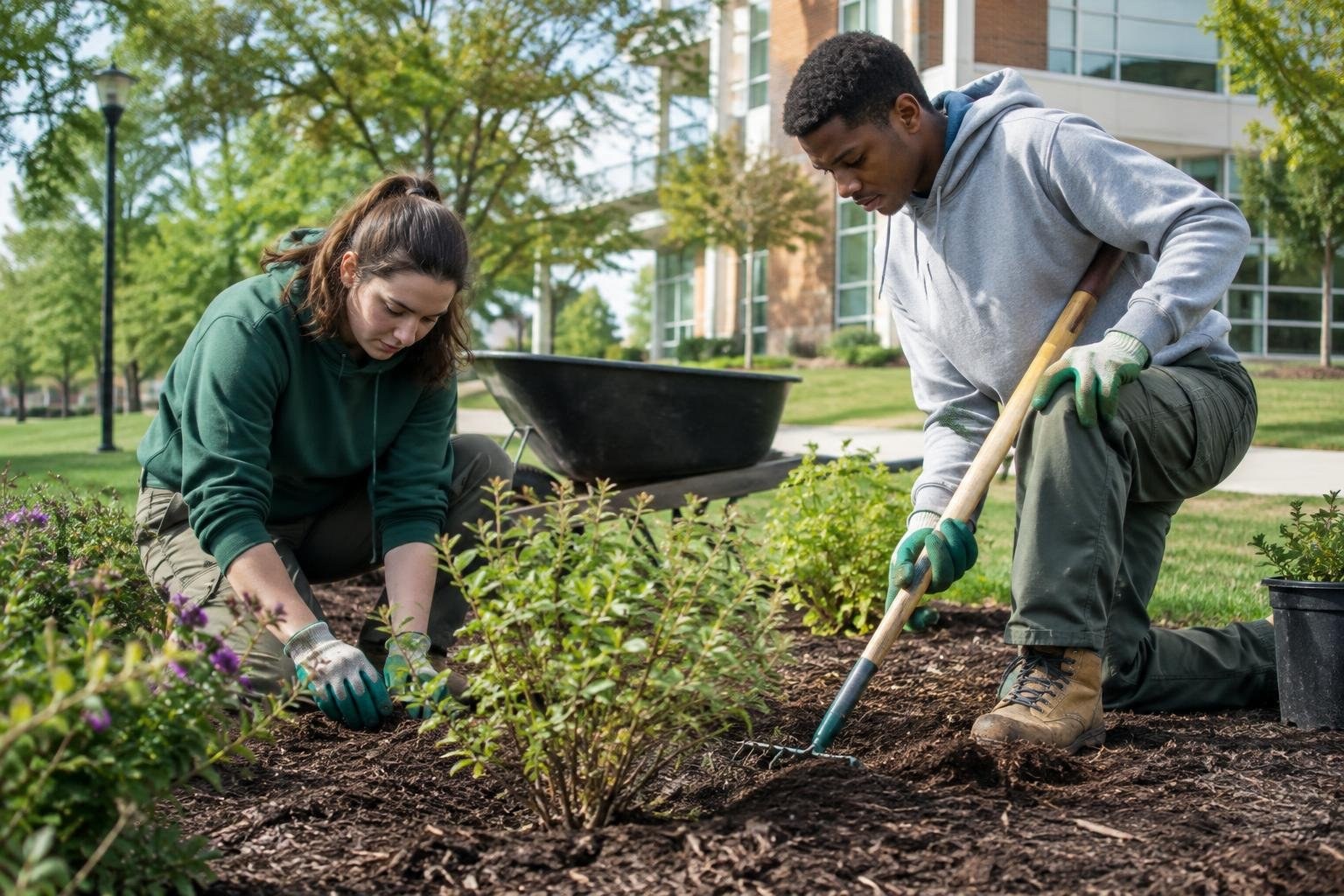
Landscaping and groundskeeping programs focus on managing and maintaining ornamental plants, groundcovers, and outdoor spaces. Depending on the program, study may include horticulture, plant and soil care, irrigation and nutrition, turf and plant maintenance, equipment operation, supervision, or purchasing.
Program titles and credentials can vary. Compare the credential awarded and the required courses rather than relying on a name alone. Related study may also cover soil, water, pest management, crops, and greenhouse production.
What Do You Study?
Field labs, internships, supervised work, or capstone projects can help students connect classroom knowledge to real sites. Ask what facilities and equipment students can use, whether field placements are arranged by the school, and how practical skills are assessed. Utah State University describes related agriculture and food study areas involving soil, water, pest management, crops, and greenhouse production.
Skills You Can Develop
Students may develop practical plant-care knowledge, observation skills, basic measurement and estimating ability, equipment awareness, and an understanding of safe work practices. These capabilities can support grounds maintenance, installation, nursery, and landscape operations roles.
- Technical skills: plant and site care, tool and equipment use, maintenance planning, and recognizing when a site needs specialist attention.
- Analytical skills: observing site conditions, comparing options, estimating materials, and adjusting plans when conditions change.
- Communication: discussing work scope and schedules with clients, coworkers, supervisors, or vendors.
- Professional skills: reliability, time management, teamwork, customer service, and documentation.
- Technology: depending on the program and employer, students may encounter digital scheduling, mapping, estimating, or recordkeeping tools. Ask which software is actually taught.
These are potential learning outcomes, not guarantees. A program’s course descriptions and practical requirements are the best guide to its specific skills.
Who Is This Field Best For?
This field may appeal to students who like working outdoors, caring for plants, using tools, solving visible practical problems, or coordinating physical projects. It can also suit people who enjoy a mix of independent tasks and teamwork. You do not need one particular personality type to succeed.
Be realistic about the work. Some roles involve repetitive tasks, physical effort, exposure to changing weather, equipment, and early or seasonal schedules. Other jobs emphasize planning, client communication, purchasing, or supervision. Think about whether you prefer hands-on work, technical problem-solving, business operations, or a combination.
Does Landscaping and Groundskeeping Match You?
Do not choose only by salary expectations, a school’s reputation, or broad claims about job growth. Day-to-day tasks and personal fit matter too. The Free MAPP Career Assessment can help you reflect on motivations and preferences; Degree Matching and Career Matching can help you investigate related pathways, while Matching Jobs can connect career ideas to work tasks.
CTA: Take the Free MAPP Assessment →
Admissions, Length, and Academic Demands
Admission requirements depend on credential and institution. Certificate and associate programs may have different entry requirements from four-year programs. Schools can require an application, transcripts, placement information, prerequisite courses, or other materials. Do not assume a test, minimum GPA, portfolio, or interview is required unless the school says so.
A bachelor’s degree commonly takes about four years of full-time study, while certificates and associate degrees may take less time; actual completion depends on credits, course availability, transfer work, and whether a student studies full time. For example, the University of Minnesota’s animal science major lists 120 graduation credits and required summer terms. That is an example from a related program, not a universal landscaping degree requirement.
Students often find that success depends on balancing classroom concepts with practical learning, following safety directions, and building reliable work habits. Prepare by reviewing course prerequisites, asking about math or science expectations, and gaining supervised exposure to outdoor work if possible.
Online, Hybrid, or On Campus?
When comparing delivery formats, start with the credential and course plan. Ask whether the program includes hands-on work, equipment practice, or an internship, and where those activities take place. If you need remote or flexible study, ask the school which requirements can be completed remotely and whether any in-person attendance or travel is required.
Before enrolling, confirm the schedule, practical requirements, and support available to students in your preferred format. The course plan should make clear what training is included.
Cost, Financial Aid, and Budgeting
There is no price estimate in the available program information, so ask each school for the full cost of the credential you are considering. Request a written estimate that separates tuition, fees, books, tools, required clothing or protective equipment, transportation, and any field-placement expenses.
Ask the financial aid office about grants, scholarships, work-study, payment plans, and any employer assistance that may apply to you. If you are considering transfer credits or beginning at another college, confirm in writing which credits will count toward your intended credential before using that estimate in your budget.
Compare the total amount you expect to pay with the training and practical experience included. Consider how study time, commuting, and equipment purchases fit your personal budget, and avoid basing borrowing decisions on assumed future pay.
Careers, Earnings, and Job Outlook
Related job titles include grounds maintenance worker, landscaping worker, and nursery or garden-center worker. Tasks may include maintaining grounds with hand or power tools, planting, mowing, trimming, watering, and other site work. Some entry-level positions rely on supervised on-the-job training; certificates or further study may provide additional preparation. Requirements vary by employer, so compare local job postings with the courses and experience in a program.
Check current labor-market information for your location and target occupation rather than treating a program credential as a guarantee of employment or pay.
Find out which Career or College Major is right for you!
Take the MAPP free today!Experience, Credentials, Safety, and Employer Readiness
Practical experience can help you test whether the work suits you and build examples of tasks you have completed. The available career guidance describes supervised on-the-job training in equipment operation, safety procedures, and employer practices, as well as certificates, internships, and apprenticeships as possible preparation.
How to Stand Out to Employers
- Describe specific projects, tasks, tools, and safety training you have completed.
- Explain your role in a project rather than making broad claims about your abilities.
- Ask an instructor or supervisor for a reference when you have earned one.
- Check with employers about which qualifications they value for the work you want.
Before taking on work involving specialized services or equipment, ask the employer what training and rules apply. Follow the safety instruction provided for the job.
Graduate Study and Further Education
Further education can help students move toward specialized plant science, research, teaching, business, or design roles, but the right next step depends on career goals. Options may include horticulture, plant or environmental sciences, business, or a graduate credential in a related specialty. The Clemson Plant and Environmental Sciences program, for example, lists master’s and doctoral study for students with relevant undergraduate preparation.
Some students pursue landscape architecture, but that is a distinct professional pathway. Confirm required degree accreditation and state licensing rules rather than assuming that landscaping coursework substitutes for them. Other students may build a career through supervised experience and employer training instead of immediately pursuing another degree.
Related Degrees and Program Comparisons
- Horticulture: consider this if you want broader study of plants, production, and plant science.
- Turfgrass management: consider this if you want a stronger focus on managed turf and related maintenance.
- Landscape architecture: consider this if you want professional site planning and design and are prepared to meet applicable education and licensing requirements.
- Plant nursery operations: consider this if plant propagation, growing, and nursery business operations interest you.
- Environmental science: consider this if your main interest is ecosystems, environmental processes, or resource management.
- Agricultural business: consider this if you prefer sales, operations, or management in an agriculture-related industry.
- Construction management: consider this if you are more interested in coordinating building and site projects than maintaining plants and grounds.
- Arboriculture or urban forestry: consider these if your interests center on tree care and urban tree management; check relevant credentials and job requirements.
For each alternative, compare required courses, hands-on work, career duties, further education, and local employer expectations. Similar names do not guarantee equivalent training.
Advantages, Drawbacks, and Is It Worth It?
Potential advantages: applied learning, visible project outcomes, opportunities to work outdoors, and several possible routes into maintenance, installation, plant care, or operations work. A program can also provide structure, access to equipment or facilities, and a chance to gain supervised experience.
Potential drawbacks: physical work and weather exposure in some jobs, variable seasonal schedules, program costs, and the need to build practical experience beyond classroom study. A credential may not be necessary for every entry-level job, and it does not automatically grant a professional license.
Whether the program is worth it depends on its total cost, your likely debt, the skills and experience it provides, local opportunities, and the specific work you want. Compare the credential with direct employment, a shorter certificate, community college, or a related degree. A school should be able to explain the outcomes it tracks and how students receive career support.
How to Choose the Right Program
- Verify institutional and program standing. Check recognized accreditation and ask whether any career-specific approval or licensing preparation applies.
- Read the curriculum. Look for the actual balance of plant knowledge, maintenance, installation, equipment, business, and fieldwork.
- Inspect practical learning. Ask about sites, tools, labs, internships, safety instruction, and how field skills are assessed.
- Calculate full cost. Include fees, books, equipment, commuting, and living expenses, then ask about aid and transfer credit.
- Ask for outcomes. Request clear information about completion, employment support, and how the school defines and measures graduate outcomes.
- Check delivery and flexibility. Confirm online attendance rules, in-person requirements, schedule, and part-time options.
- Talk with employers. Ask local organizations which credentials, experience, and skills they value for your target job.
- Confirm credential portability. Check transferability and any state or local rules tied to the work you intend to do.
Assessment.com’s MAPP and related Degree Matching, Career Matching, and Matching Jobs tools can help you explore fit, but use them as one input alongside program research and conversations with employers.
CTA: Explore colleges and programs that fit your goals →
From Degree to Career: Possible Pathways
Career steps depend on the employer, the work, and the experience a person gains. One possible route is to begin with supervised grounds or landscape work, build experience with tools and site tasks, and then seek roles with greater responsibility. Another is to combine landscaping coursework with further study in a related plant or environmental subject. These are possibilities, not guaranteed promotions; compare job requirements and the preparation each role requests.
Enrollment Checklist: Questions and Red Flags
- What exact credential will I earn, and what courses are required?
- What is the total estimated cost, including tools, fees, and field requirements?
- What practical experience, internship, or supervised fieldwork is included?
- Which employers recruit students or graduates, and what evidence supports the school’s outcome claims?
- Do any intended jobs require a license, certification, or safety training?
- Are online courses paired with in-person labs or travel?
- Will credits transfer if I change programs or continue to a bachelor’s degree?
- What career advising and financial aid are available?
- Can I speak with current students, graduates, or local employers before enrolling?
Red flags: pressure to enroll immediately, vague promises of guaranteed jobs or earnings, unclear total costs, claims that one credential qualifies you for regulated work without naming the applicable rules, or reluctance to explain field training. Pause and verify details independently before paying a deposit.
Frequently asked questions
Is a landscaping and groundskeeping degree worth it?
It can be a good fit if you like plants, practical work, outdoor settings, and solving visible site problems. The value depends on the program’s cost, field experience, local employment options, and the career you want. Compare actual course requirements and job duties rather than choosing by the program name alone.
What jobs can I get with a landscaping and groundskeeping degree?
Programs vary. Depending on the credential and coursework, graduates may seek entry-level grounds work, landscape installation or maintenance roles, nursery or garden-center work, or crew-lead positions after gaining experience. Some roles require additional study, a license, certification, or substantial work experience. Review job postings in the area where you plan to work.
How much can you make in landscaping and groundskeeping?
Pay differs by occupation, location, employer, experience, and season. Use the U.S. Bureau of Labor Statistics Occupational Outlook Handbook and current state labor-market data to compare wages for grounds maintenance workers and related occupations. A program credential does not guarantee a particular salary or job.
Can you study landscaping and groundskeeping online?
It depends on the credential. Certificates and some courses may be available online, but practical skills may require in-person fieldwork, labs, equipment use, or an internship. Ask whether those requirements are included, where they take place, and whether online students must travel to campus or a partner site.
Does landscaping and groundskeeping require math?
The work may involve measurements, estimating quantities, reading site plans, and basic calculations. Some programs also include plant, soil, water, or business concepts that use quantitative reasoning. The amount of math varies by program and specialization, so check course descriptions and prerequisites.
Do you need a degree to work in landscaping?
Not always. Some entry-level jobs emphasize practical ability and experience, while employers may prefer a relevant certificate, associate degree, or bachelor’s degree for specialized, supervisory, or technical work. Landscape architecture is a separate profession with its own education and state-specific licensing requirements.
Does a landscaping degree qualify me to design landscapes or apply pesticides?
A general landscaping and groundskeeping credential does not automatically make someone a licensed landscape architect, pesticide applicator, or other regulated professional. Requirements depend on the service and jurisdiction. Confirm the rules with the applicable state or local authority before offering regulated work.
How do I choose a landscaping and groundskeeping program?
Compare program accreditation and institutional standing, required field experience, equipment access, internship support, total cost, transfer options, and documented student outcomes. Ask for a course-by-course plan and confirm which credential is awarded. For a regulated career, verify that the program meets the relevant licensing or certification requirements.
What is the difference between landscaping, horticulture, and landscape architecture?
Landscaping and groundskeeping generally centers on installation and care of outdoor spaces. Horticulture focuses more broadly on plant production and plant science. Landscape architecture emphasizes planning and design of sites and may require an accredited professional degree and state licensure. Course offerings and job boundaries vary, so compare specific programs.
What certifications help in landscaping and groundskeeping?
Experience with plants, tools, equipment, customer service, and safe work practices can help. Depending on your goals, useful preparation may include supervised work, internships, student projects, or credentials recognized by employers in your area. Ask local employers and program advisors which qualifications they actually value.
People Also Ask
What do you learn in a landscaping and groundskeeping program?
Landscaping and groundskeeping programs teach plant and site care, installation, maintenance, equipment use, and safety, with details varying by credential and school.
Can you earn a landscaping and groundskeeping degree online?
Some programs offer online coursework, but practical training may require in-person fieldwork, labs, or equipment practice. Confirm requirements with each school.
Do landscapers need a college degree?
No. Many entry-level roles value practical experience, while specialized and supervisory roles may call for education, experience, or credentials. Requirements depend on the job.
How is landscaping different from horticulture?
Landscaping and groundskeeping is generally focused on installing and maintaining outdoor spaces. Horticulture is broader plant study, while landscape architecture focuses on site planning and design.
How much does a landscaping and groundskeeping program cost?
Cost depends on credential, institution, residency, course fees, equipment, transportation, and whether the program requires field experience. Ask each school for a complete cost estimate.
What careers are related to groundskeeping?
Job titles include grounds maintenance worker, landscaping worker, crew leader, and related plant-care or nursery roles. Specific opportunities depend on skills, experience, location, and employer requirements.
Can I become a landscape architect with a groundskeeping degree?
A landscaping and groundskeeping credential by itself does not establish eligibility for landscape architect licensure. Check state requirements and the relevant professional education pathway.
What should I look for in a landscaping program?
Check the credential awarded, field training, equipment access, total cost, transferability, internship support, and whether coursework aligns with local employer and licensing requirements.
Is Landscaping and Groundskeeping Right for You? A landscaping and groundskeeping program can suit students who enjoy outdoor work, plants, practical problem-solving, and seeing a project take shape. Depending on the program, it can prepare you for hands-on grounds work, landscape installation, crew leadership, or further study in horticulture, landscape design, or a related field. The work is not only planting and mowing. It may involve physical labor, equipment, changing weather, customer communication, safety procedures, and seasonal schedules. A degree or certificate also does not automatically qualify someone to provide regulated services or practice landscape architecture. Check the credential and rules relevant to the work you want. Compare the curriculum, total cost, field experience, local job opportunities, and the actual tasks you would do day to day. Before choosing a program, consider whether its learning style and career paths match your interests and preferences. The Free MAPP Career Assessment can help you explore those preferences alongside Degree Matching, Career Matching, and Matching Jobs. Before Choosing a Degree, Find Out What Fits You Choosing a college program can affect years of education and decades of work. Salary, job growth, and school reputation matter, but so does whether the work fits your motivations, interests, and natural preferences. Take the Free MAPP Career Assessment to discover careers that may match you, how related careers align with your profile, and degrees and educational pathways connected with those careers. CTA: Take the Free MAPP Assessment →
Want to see your options? Try our comprehensive Degree, Program & College Search tool
College Search ToolSources & Official Resources
- Animal Science Major - University of Minnesota Twin Cities
- Agricultural Biosecurity Certificate Program | K-State
- Bachelor's Degree in Animal Sciences | University of Kentucky'
- Animal Sciences - UF Catalog - University of Florida
- Department of Animal & Veterinary Sciences
- Plant and Environmental Sciences (MS, PhD)
- Utah State University Degrees and Programs by interests
- Landscaping and Groundskeeping Workers Career Guide: Salary, Skills & Job Outlook