Degree Library
Horticultural Science Degree Guide: Courses, Careers, Requirements, and Fit
Explore what horticultural science students study, how programs differ, what careers the degree may support, and how to compare cost, format, practical experience, and personal fit.
Horticultural science is the study of cultivated plants and the science and practices used to grow, manage, and use them. A college program may cover plant biology, soils, environmental conditions, propagation, pest management, greenhouse or nursery production, and the business or research settings where horticultural knowledge is applied. The subject connects scientific study with practical decisions about healthy plants and productive growing systems. Programs range from certificates and associate degrees to bachelor’s and graduate degrees. Graduates may explore work in nurseries, greenhouses, landscaping and plant-care businesses, agriculture, public gardens, education, or research. The degree is not a single job qualification: career options depend on the credential, experience, specialization, employer, and sometimes further education. Not sure whether horticultural science fits you? Take the Free MAPP Career Assessment to see how your motivations, interests, and natural preferences align with this degree and the careers it can lead to. Take the Free MAPP Assessment →
Millions of people Take the MAPP Career assessment to see which Degrees are the best Match!
You can too,
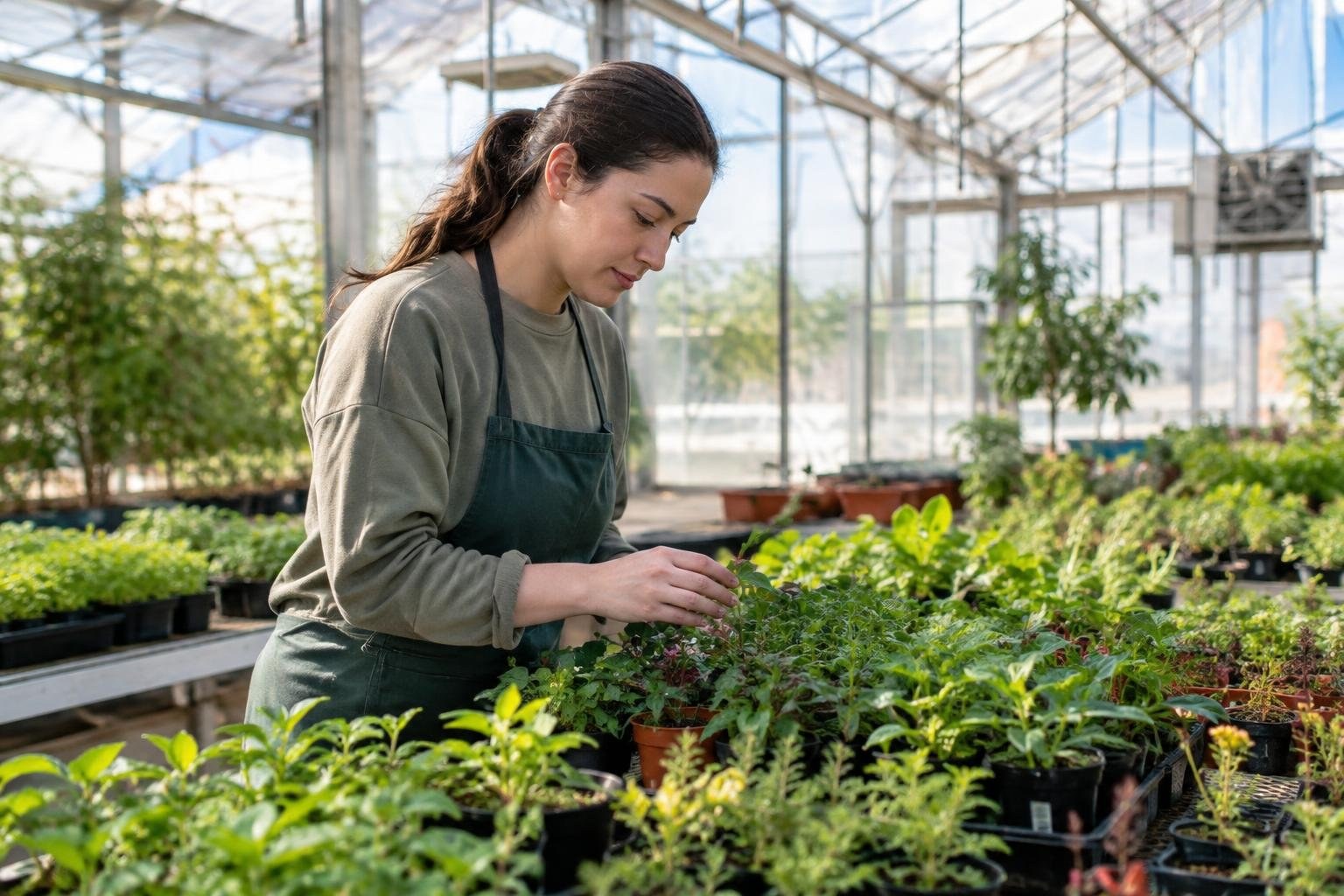
What Is a Horticultural Science Degree?
Horticultural science is an academic field concerned with cultivated plants and the systems used to propagate, grow, maintain, and use them. It brings together plant science and applied topics such as greenhouse production, nursery management, landscape plants, soil and water, pest management, and horticultural research.
The degree name can vary. Colleges may offer horticulture, horticultural science, ornamental horticulture, horticultural sciences, or a concentration within plant or agricultural science. The title alone does not tell you exactly what you will study. Compare required courses and practical experiences.
Certificate and associate programs may focus on specific skills or provide a route to further study. Bachelor’s programs usually provide broader undergraduate study. Graduate certificates and degrees offer more specialized work; research-oriented master’s and doctoral programs may involve directed research. The University of Florida lists master’s and doctoral pathways in horticultural sciences, while Texas A&M describes its M.S. as science-based and including directed horticultural research.
Horticultural science is not the same as landscape design or general agriculture. Design programs may emphasize planning and visual composition; general agriculture may cover a wider range of production and business topics. Horticultural science centers on cultivated plants, though programs can include business, environmental, and design-related courses.
University of Florida graduate catalog; Texas A&M horticultural sciences graduate programs.
What Do Horticultural Science Students Study?
Horticultural science programs teach students how plant traits and growing conditions affect plant health, production, and use. Exact curricula differ by institution, credential, and concentration. Review the catalog for required classes, electives, laboratory work, and field or greenhouse experience.
- Foundations: plant biology, basic chemistry, soils, environmental science, and introductory horticulture establish how plants grow and respond to their surroundings.
- Applied study: courses may explore propagation, plant identification, plant health, pest management, crop or greenhouse production, and ornamental or food horticulture.
- Practical work: labs, greenhouse activities, field projects, or internships can help students observe plants, collect information, and apply course concepts. Whether these are required depends on the program.
- Advanced study: upper-level courses may concentrate on particular crops, production systems, or research questions. Graduate programs can add specialized coursework and directed research.
NC State describes its graduate certificate as offering deeper study of particular crops or production systems; its listed areas include horticulture, crop science, plant science, and related backgrounds. The University of Florida offers thesis and nonthesis master’s options as well as a Ph.D. Students interested in research should ask how faculty projects, research supervision, and thesis expectations work.
Course names are only a starting point. Ask what students actually do in laboratories, greenhouses, field experiences, internships, or research projects, and whether those activities are available to students in your preferred format.
NC State graduate certificate information; University of Florida graduate catalog.
Skills You Can Develop
Horticulture programs can develop scientific and practical knowledge related to plant growth, propagation, soils, plant nutrition, plant identification, crop production, and management. The specific skills students practice depend on the program and its courses.
- Plant knowledge: study plant growth and physiology, identification, and production.
- Applied methods: learn about propagation, soils, plant nutrition, and production systems.
- Professional skills: some programs include business and professional skills alongside plant science.
- Experience applying learning: some programs include an internship or undergraduate research experience.
Review the course requirements and practical experiences for the exact program you are considering. Horticulture curricula and opportunities differ by college.
Who Is This Degree Best For?
Horticultural science may interest students who want to learn about plants and connect that study with production, management, or other practical applications. Some horticulture programs include plant science, production systems, and an internship or undergraduate research experience. Program curricula and opportunities vary, so review the course list and ask what students do in practical or research work.
Horticulture can lead toward different settings, including food production, plant nurseries, public gardens, greenhouse production, teaching, public parks, urban agriculture, and research labs. Consider which of these subjects and settings interest you, then compare relevant program options.
Does Horticultural Science Match You?
Think about the topics you want to study and the type of work you hope to explore. Assessment.com’s Free MAPP Career Assessment can help you reflect on motivations and preferences. Use it as one input alongside program catalogs and conversations with students, faculty, and professionals.
Explore the Free MAPP Career Assessment.
Admissions, Program Length, and Academic Difficulty
Admissions rules are set by each institution and credential. Undergraduate programs generally review an applicant’s prior education and the college’s application requirements. Some programs may ask for transcripts, prerequisite courses, an essay, or other materials; do not assume a portfolio, interview, or standardized test is required unless the school says so. Graduate certificates and degrees commonly require prior undergraduate study, but subject preparation and admission criteria differ.
For example, NC State’s horticultural science graduate certificate requires a bachelor’s degree and identifies horticulture, crop science, plant science, agricultural education with a plant science concentration, or a closely related degree as relevant preparation. That is an example, not a universal rule.
Time to completion depends on credential, course load, transfer credit, course availability, and research or practical requirements. Full-time, part-time, accelerated, and online options can change the timeline. Ask the registrar how previously earned credits apply and request a term-by-term plan. For a thesis or doctorate, ask about research milestones and expected timelines directly.
The academic demands can include biology and other sciences, careful observation, data interpretation, technical reading, and practical work. Prepare by reviewing prerequisites, refreshing relevant science and math, arranging time for labs or field activities, and asking about tutoring or academic advising. Students with limited plant experience can seek introductory or volunteer opportunities, but should not assume experience is an admission requirement unless stated.
Online vs. On-Campus Horticultural Science
Online, hybrid, and campus-based horticultural science options may be available, but the mix of formats varies. Theory-based classes may be easier to deliver remotely than courses requiring plant identification, laboratory observations, greenhouse practice, field work, or research facilities. A program advertised as online may still include in-person sessions or experiences arranged locally.
Before enrolling, ask which courses are fully online, which require campus attendance, and whether practical components can be completed near you. Confirm travel expectations, access to facilities, scheduling, and any added fees. If you need a flexible schedule, ask whether part-time study is possible and whether required courses are offered often enough to maintain progress.
Format should support the learning you need, not just convenience. Compare how online students receive hands-on experience and advising with the campus option. The University of Cincinnati describes a horticulture bachelor’s program with part-time and night classes for nontraditional students, illustrating that schedule flexibility can be available at some institutions, though offerings vary.
University of Cincinnati horticulture program.
Cost and Financial Aid
Compare the full cost of each program you are considering. Ask the college for an estimate that applies to your credential, enrollment plans, and program requirements, and request an itemized breakdown of tuition, fees, materials, and any required travel or practical activities.
Before choosing a credential, compare its curriculum and requirements with your goals. Horticulture study is available through different program types, including certificates, associate degrees, bachelor’s degrees, and graduate study. Confirm any transfer-credit decisions and the total cost of the pathway directly with the colleges involved.
Review financial aid and scholarship terms with the institution. Ask what costs are included in the estimate, what conditions apply to aid, and whether the estimate changes with your course load or program format. Compare the written figures before making an enrollment decision.
Careers, Jobs, Pay, and Outlook
Horticulture study can relate to work in food production, plant nurseries, community-supported agriculture, public gardens, greenhouse production, teaching, public parks, vegetable production, urban agriculture, extension and community education, research labs, and health sciences. These are examples of directions, not guarantees of a particular job.
Preparation depends on the role. One source describes two-year horticulture or horticultural technology programs as preparation for entry-level positions in nurseries, landscape services, and greenhouse operations. Other positions may accept hands-on experience, while formal education in horticulture, botany, or a related plant science may be expected for many professional roles. Check current postings for the specific job and location you have in mind.
This article does not provide salary figures or a job-outlook estimate. Compare current wage information and job postings for specific occupations rather than treating a degree title as a pay or employment guarantee.
Find out which Career or College Major is right for you!
Take the MAPP free today!Internships, Experience, Credentials, and Licensure
Experience can help you test whether you like a specialty and demonstrate that you can apply classroom learning. Look for internships, campus greenhouse work, research projects, nursery or garden-center jobs, volunteer opportunities, plant collections, community gardens, and student organizations. Availability and paid status vary, so clarify responsibilities, supervision, hours, and any course credit before committing.
How to Stand Out to Employers
- Keep a record of projects, crops or plant groups studied, methods used, and results.
- Describe what you did and learned, not only the name of a course.
- Build communication skills by explaining plant-care recommendations clearly.
- Seek experience related to the employer’s setting, such as production, research, education, or customer support.
- Ask faculty and career services about relevant internships and employer connections.
Certificates can add focused knowledge, but their value depends on the role and the issuing institution. NC State describes its graduate certificate as a way for practitioners and other horticulture professionals to develop knowledge in particular crops or production systems. Its program requires a bachelor’s degree; that condition does not apply to every horticulture certificate.
Completing a degree is not the same as earning a professional license. Requirements for any regulated activity depend on the work and jurisdiction. Ask the program and relevant employer or government authority whether a job requires a license, credential, safety training, or other qualification. Do not assume that one certificate is legally required or accepted everywhere.
Graduate School Options
Graduate study can deepen scientific knowledge or prepare students for research and other specialized work. Options may include a horticultural science master’s, a related plant or agricultural science degree, or a doctorate. Some institutions offer thesis and nonthesis master’s pathways; others structure graduate work differently.
A thesis route may suit students who want substantial research experience, while a nonthesis option may emphasize coursework or another culminating experience. Confirm the actual requirements and ask how faculty research, funding, advising, and time to completion work. Texas A&M describes its M.S. as a science-based education with directed horticultural research. The University of Florida lists M.S. options and a Ph.D. in horticultural sciences.
A graduate certificate may be useful for focused professional learning or a defined specialization, but admission requirements can be restrictive. NC State’s certificate requires a bachelor’s degree and a relevant academic background. Before enrolling, verify whether certificate credits can apply to a graduate degree and whether the credential is valued in the role you want.
Graduate education can expand some opportunities, but it adds time and cost. Use job postings, faculty conversations, and program outcomes to determine whether the additional credential is necessary for your goal.
Texas A&M graduate programs; University of Florida graduate catalog.
Related Degrees and Comparisons
Compare horticultural science with nearby programs by looking at required courses, hands-on learning, and the work you hope to do. Names and curricula differ by school, so use the degree audit and catalog rather than a title alone.
- Plant science: consider this if you want broader study of plant biology, genetics, or research.
- Ornamental horticulture: consider this if you want a more focused emphasis on ornamental plants, greenhouse experience, or landscape-related work.
- Agriculture, general: consider this if you want a wider introduction to agricultural subjects rather than a plant-centered curriculum.
- Crop production: consider this if your primary interest is producing crops and managing production systems.
- Agroecology and sustainable agriculture: consider this if you want to focus on agriculture in relation to ecological and sustainability questions.
- Landscape architecture or design: consider this if planning and designing outdoor spaces is a stronger interest than plant production or plant science. Check each program’s actual curriculum.
- Greenhouse operations and management: consider this if you want focused preparation for controlled growing environments and their day-to-day operations.
- Soil science: consider this if soils and their physical, chemical, or biological properties are your central interest.
Utah State University lists options in ornamental horticulture that include certificates or an associate degree, greenhouse experience, and possible continuation to plant science study. That is one institutional example, not a standard pathway at every college.
Utah State agriculture and food programs.
Advantages, Drawbacks, and Is It Worth It?
Potential advantages: horticulture programs can connect plant science with practical study, and program options include different credentials and areas of emphasis. Some programs include greenhouse experience, internships, or undergraduate research.
Considerations: program requirements and opportunities differ. A certificate, associate degree, bachelor’s degree, or graduate program may involve different curricula and preparation. Identify the work or further study you are aiming for, then compare the relevant courses and experiences at each institution.
To decide whether a program is a good fit for you, review its curriculum, practical opportunities, and credential requirements. Ask the college for current program and cost information, and compare those details with the qualifications listed for jobs that interest you.
How to Choose the Right Horticultural Science Program
Compare programs using their published requirements and opportunities. A degree title alone may not show which topics or practical experiences a particular college includes.
- Curriculum: compare required courses, electives, and areas of emphasis with the plants or growing systems you want to study.
- Practical learning: ask whether the program includes greenhouse work, internships, or undergraduate research, and whether these experiences are required or optional.
- Faculty and facilities: ask which relevant facilities and student experiences are available in the program you plan to attend.
- Credential and next steps: compare the program’s credential and requirements with those listed for your intended career or further study.
- Cost and format: request current program-specific cost information and confirm how courses and practical activities are delivered.
- Student support: ask what advising and career resources are available and how to access them.
Use official catalogs and program staff to verify details before enrolling. For example, horticulture programs may include greenhouse experience or internships, but those opportunities should be confirmed for the exact college and credential.
From Degree to Career: Possible Pathways
Education and experience can combine in different ways, depending on a person’s goals and the requirements of a specific role. These examples are possible directions, not guaranteed career ladders:
- Certificate or associate study: explore horticulture coursework and, where offered, greenhouse experience; compare the preparation with entry-level roles in nurseries, landscape services, or greenhouse operations.
- Bachelor’s study: build knowledge through horticulture courses and any available internship or undergraduate research experience; explore plant production, public gardens, teaching, community education, or research settings.
- Graduate study: consider a specialized research pathway if it aligns with your goals. Some horticultural science graduate programs offer master’s thesis or nonthesis options and doctoral study.
Before choosing a credential, compare its requirements with current job descriptions and program details. Job titles and employer expectations differ.
Questions to Ask Before Enrolling
Use these questions when comparing colleges and speaking with program staff:
- Which courses and practical experiences are part of this exact credential?
- Does the program include an internship, greenhouse experience, or undergraduate research?
- What are the current total costs for my enrollment plan, and what is included in the estimate?
- How will any transfer credits apply to this program?
- What qualifications do employers list for the roles I want to explore?
- What graduate or certificate options are available if I want further specialization?
- How are courses and practical activities delivered in the format I plan to attend?
- What advising and career resources can students use?
Ask for program requirements and cost details in writing. Compare the answers with the curriculum and job requirements relevant to your goals.
A Practical Enrollment Guide: Compare, Plan, and Avoid Surprises
What the program includes and how it works
Start with the catalog and degree plan. Identify core science courses, electives, labs, practical experiences, and any research or capstone requirement. Then ask how those elements are delivered in the program format you plan to attend. This helps you see whether the curriculum is broad, specialized, or suited to a particular career direction.
Signs this degree may fit your goals
You may want to explore horticultural science if you are curious about plant growth and care, enjoy practical problem-solving, and want to connect science with growing or plant-management settings. It may be less aligned if your main interest is animal health, general business, or designing outdoor spaces without a substantial plant-science focus. Compare related majors before deciding.
Cost considerations and factors that affect the commitment
Tuition is only one part of the expense. Program level, school, residency, fees, supplies, practical work, travel, housing, aid, transfer credit, and pace can change total cost and time. Request an individualized cost estimate and degree plan. Ask what additional expenses are typical for required activities at that institution.
Options and tradeoffs
Compare a certificate, associate, bachelor’s, and graduate pathway against your target work. A shorter credential may provide focused learning or a starting point, while a bachelor’s offers broader undergraduate study. Graduate education can support research or specialization but takes additional time. Check whether credits transfer and whether the credential meets employer expectations.
What to expect and when
Expect a mix of foundational coursework and, depending on the program, applied plant learning. Course sequencing, class availability, practical requirements, and research can affect completion time. Ask for a sample schedule for full-time and part-time enrollment, and whether online students must attend campus or travel for labs, fieldwork, or other requirements.
How to choose a qualified college program
Verify institutional accreditation, inspect the curriculum, and ask about faculty, facilities, internships, student advising, and career services. Check official school catalogs and confirm claims with the departments responsible. For any job requiring a credential or license, consult the relevant employer or government authority rather than relying only on a college’s marketing.
Credentials, safety, and practical requirements
Do not assume that a horticultural science degree grants a professional license. Requirements depend on the work and jurisdiction. Ask whether practical courses involve safety training, special equipment, or attendance at a particular location. Confirm the actual requirements before enrolling, especially if a career involves regulated activities.
Ways to manage costs safely
Compare net price across schools, apply for aid and scholarships, ask about employer support, and investigate transfer agreements before taking courses elsewhere. Check course equivalencies in writing. A lower initial tuition bill may not save money if credits do not count toward graduation or if required courses delay completion.
Common mistakes and a decision checklist
Avoid choosing only by a major title, assuming all online programs include hands-on training, treating advertised salary figures as guarantees, or overlooking total cost. Before committing, confirm curriculum, accreditation, practical experience, transferability, aid terms, career support, and the education expected for your preferred jobs.
Frequently asked questions
Is horticultural science hard?
Horticultural science can be challenging because it combines plant biology and other sciences with applied growing and management problems. Some programs include chemistry, statistics, soil science, pest management, laboratory work, or greenhouse experience. The difficulty depends on your preparation and the program’s focus. Ask for a sample degree plan and course descriptions so you can see the quantitative and hands-on expectations before enrolling.
Is a horticultural science degree worth it?
A horticultural science degree may be worth considering if you want a science-based education focused on plants and have identified work or further study that uses it. Value depends on total cost, financial aid, location, program quality, experience opportunities, and the education required for your target role. Compare specific programs and job requirements rather than assuming the degree guarantees a particular salary or position.
What jobs can I get with a horticultural science degree?
Possible directions include greenhouse or nursery production, horticultural operations, plant care, landscape or garden-related work, agricultural support, education, and research. Job titles and requirements vary by employer. Some technical or supervisory roles may favor a bachelor’s degree and relevant experience; research and specialized academic roles may require graduate education. Confirm qualifications in current job postings for the region and specialty you are considering.
How much can I make with a horticultural science degree?
Earnings depend on the occupation, experience, location, employer, and level of responsibility, so there is no single salary for this degree. Compare wage information for specific job titles using current U.S. Bureau of Labor Statistics or O*NET data, and review local job postings. Remember to distinguish entry-level roles from positions that require advanced education, management experience, or specialized expertise.
Can I earn a horticultural science degree online?
Some horticulture courses may be offered online, especially theory-based classes. Plant identification, laboratory work, greenhouse practice, field study, internships, or research may require in-person participation. Requirements differ by school and course. Ask whether online students have access to equivalent practical experiences, where those experiences take place, and whether travel or campus visits add costs.
Does horticultural science require math?
The amount of math and science varies by program. Students commonly encounter biological concepts, measurement, data interpretation, and sometimes chemistry, statistics, soil science, or environmental science. A program’s exact prerequisites and course sequence are the best guide. If you are concerned, ask about tutoring, placement options, foundational courses, and how much quantitative work is required in the specialty you want.
Do I need graduate school for horticulture careers?
Graduate school is not automatically required for every horticulture-related job. A certificate, associate degree, or bachelor’s degree may suit different roles, depending on the employer and responsibilities. A master’s or doctorate can be relevant for advanced research, specialized technical work, or some university positions. Review real job descriptions in your intended field to understand what level of education is expected.
Are there horticultural science certificates?
A graduate certificate can provide focused study for people who already have relevant education or experience. For example, NC State describes its horticultural science graduate certificate as requiring a bachelor’s degree, with applicants generally expected to have a related academic background. Requirements are program-specific, so confirm eligibility, credit requirements, and whether courses can apply to a future degree.
How does horticultural science compare with plant science or agriculture?
Horticultural science typically focuses on cultivated plants and their production, care, and uses. Plant science can be broader or more oriented toward plant biology and research, while agriculture, general may cover a wider range of agricultural subjects. These labels are not standardized across every college. Compare course lists, facilities, concentrations, and intended career pathways rather than relying on the major name alone.
Do horticultural science students work in greenhouses?
Horticultural science programs can include greenhouse, laboratory, field, or research experiences, but the requirements vary. Ask whether practical work is required, how often students use facilities, whether internships are available, and what costs or travel may be involved. A program with relevant hands-on experience can help you connect course concepts to actual growing and management decisions.
People Also Ask
What is horticultural science?
Horticultural science studies cultivated plants and the science and practices involved in growing, managing, and using them. Programs may cover plant biology, soils, propagation, pest management, greenhouse production, and related fields.
What can you do with a horticultural science degree?
A horticultural science degree can prepare students for plant-focused roles in settings such as greenhouses, nurseries, landscaping, public gardens, agriculture, education, and research. The education and experience required differ by job.
How long does a horticultural science degree take?
Program length depends on the credential, course load, transfer credits, and school. Certificates and associate degrees are shorter pathways than bachelor’s degrees; graduate study follows a bachelor’s degree and may involve specialized coursework or research.
Can horticultural science be studied online?
Some coursework may be online, but practical plant, lab, greenhouse, field, or internship requirements may need in-person participation. Students should ask each college how it delivers hands-on learning.
What subjects do you study in horticultural science?
The field can involve biology, chemistry, statistics, soil science, and measurement, but course requirements differ. Review the program’s degree plan and prerequisites for its actual science and math expectations.
What education do you need to study horticultural science?
A bachelor’s degree is required for some graduate horticulture programs and certificates, but entry requirements vary. Some colleges also offer certificate or associate-level study in horticulture.
What is the difference between horticultural science and plant science?
Horticultural science focuses on cultivated plants and their production, care, and uses. Plant science may emphasize broader plant biology or research, while agriculture, general may cover multiple agricultural subjects. Compare curricula because names vary by school.
Do horticulturists need a master’s degree?
A graduate degree may be useful for research or specialized roles, but it is not a universal requirement for horticulture-related work. Check the education requirements for the specific job and employer.
Is Horticultural Science Right for You? Horticultural science may suit students who want to study plants and apply that knowledge in settings such as greenhouses, nurseries, public gardens, agriculture, education, or research. The field connects plant science with practical questions about growing, managing, and using plants. Horticulture programs also offer varied areas of study and career directions, so compare the curriculum and experience at each college with the work you hope to do. Before choosing, consider whether you enjoy learning about plant growth and solving practical growing problems. Compare program requirements, hands-on opportunities, and the education listed for jobs that interest you. Assessment.com’s Free MAPP Career Assessment, Degree Matching, Career Matching, and Matching Jobs tools can help you explore how your motivations and preferences relate to possible paths. Before Choosing a Degree, Find Out What Fits You A college program should fit your interests as well as your education and career goals. Take the Free MAPP Career Assessment to explore careers, educational pathways, and potential jobs connected with your profile. Take the Free MAPP Assessment →
Want to see your options? Try our comprehensive Degree, Program & College Search tool
College Search ToolSources & Official Resources
- Bachelor of Science - Horticulture - Horticulture | University of Cincinnati
- Horticultural Science (Certificate) < North Carolina State University
- Graduate Programs - Department of Horticultural Sciences
- Horticultural Sciences - Graduate Catalog - University of Florida
- Graduate Certificate | Horticultural Science
- Utah State University Degrees and Programs by interests
- Horticulture, BS < University of Wisconsin-Madison - Guide
- Degrees and Programs: Horticulture - Cornell CALS
- Horticulture Major - Oklahoma State University | Oklahoma State University
- Degree and Pathways - Undergraduate | Horticulture
- Bachelor's Degree in Horticultural Science | University of Kentucky'