Degree Library
Floriculture and Floristry Operations and Management Degree Guide
A floriculture or floristry operations and management degree focuses on flowering and ornamental plants and the work involved in growing, handling,…
By David Slack · Staff Writer Assessment.com · Published October 5, 2026 · Last updated October 6, 2026
A floriculture or floristry operations and management degree focuses on flowering and ornamental plants and the work involved in growing, handling, marketing, or managing them. Programs may emphasize greenhouse and nursery production, flower handling, floral business operations, or a broader horticulture foundation. The program name alone does not tell you how much science, design, or business a particular curriculum includes. Students may pursue certificates, associate degrees, bachelor’s degrees, or graduate study. Graduates can explore work in greenhouses, nurseries, garden centers, floral businesses, and related plant or landscape operations. Job requirements differ, so compare courses and local job postings before settling on a career target. Not sure whether floriculture fits you? Take the Free MAPP Career Assessment to see how your motivations, interests, and natural preferences align with this degree and the careers it can lead to. Take the Free MAPP Assessment →
A floriculture and floristry operations and management program prepares students to understand flowering and ornamental plants and the operations involved in producing, handling, marketing, or managing them. Programs may lead to certificates, associate degrees, or bachelor’s degrees, with graduate options also available. Courses and hands-on requirements vary by institution, so compare curricula, costs, and career preparation before enrolling.
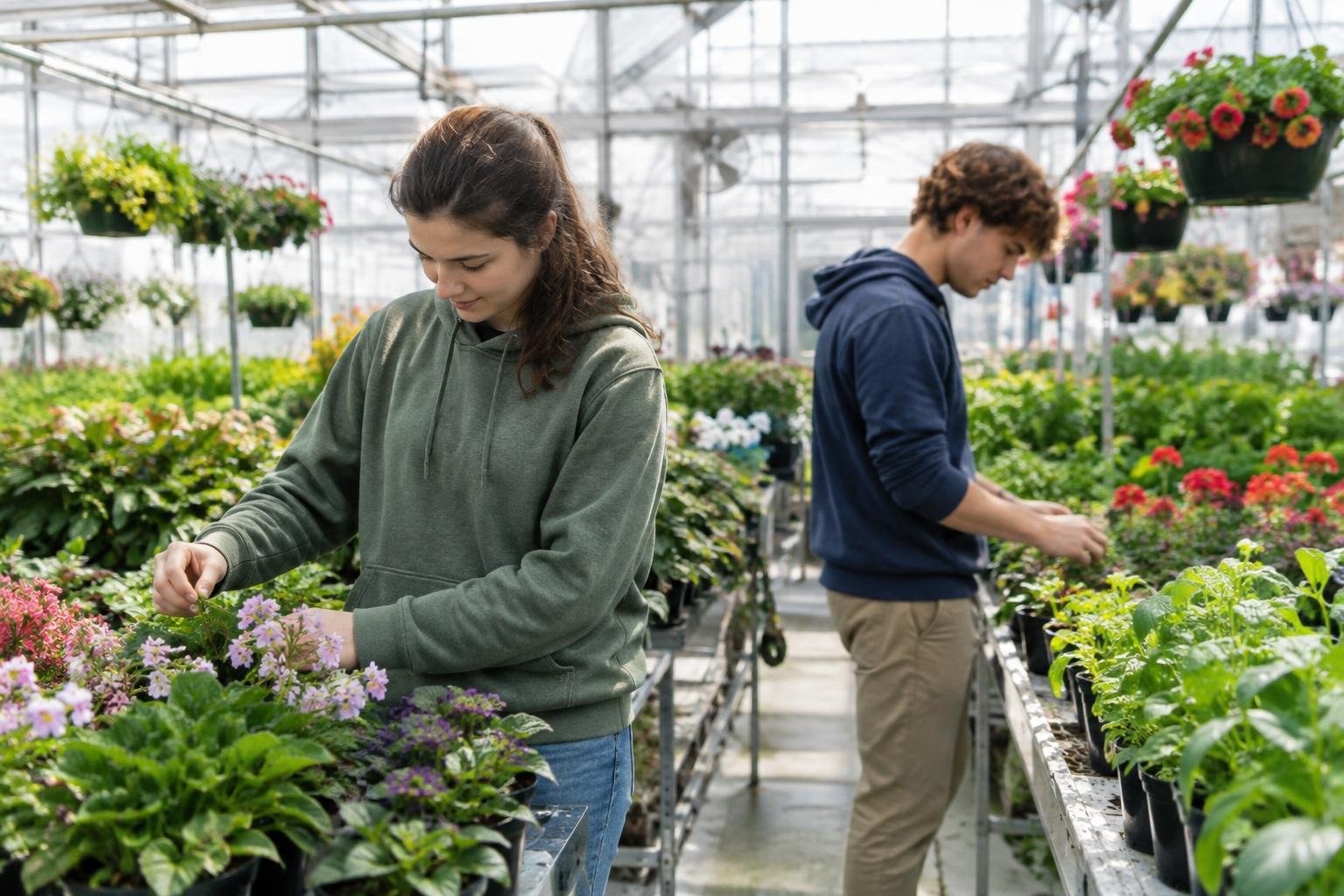
What Is a Floriculture/Floristry Operations and Management Degree?
Floriculture/Floristry Operations and Management is an education field focused on flowering and ornamental plants and their production, handling, and business operations. Programs can connect plant science with greenhouse or nursery work, floral products, marketing, and management. Some colleges use broader horticulture degree names and offer floriculture as a concentration or course sequence.
The Classification of Instructional Programs (CIP) lists floriculture/floristry operations and management among agriculture-related instructional fields. A CIP label helps describe a program for education reporting; it is not a professional license or a guarantee that two programs with similar names have identical courses.
Related study areas include horticultural science, ornamental horticulture, greenhouse operations, plant nursery operations, landscape horticulture, and floral design. Floriculture usually centers on flowering and ornamental plants and the systems that produce or move them. Floral design programs may focus more on arranging flowers and visual composition, while broader horticulture can include many other plant groups and production systems.
What the program includes: Depending on its level and emphasis, a student may learn to identify and grow plants, manage growing conditions, understand production schedules, handle flowers after harvest, communicate with customers, and contribute to a nursery, greenhouse, or floral operation. The exact mix is institution-specific.
What Do You Study? Courses, Projects, and Skills
Course plans vary, but a program may introduce plant science and identification before moving into production, handling, and business topics. Look for courses that teach how growing conditions affect plant quality, how production is planned, and how flowers and ornamental plants are prepared for sale or use. Some programs also connect horticultural study with landscape or research interests.
Applied learning can be important in a field involving living plants and production environments. Ask whether the program includes greenhouse or nursery practice, fieldwork, a cooperative placement, internship, research project, portfolio, or capstone. Do not assume a course title means a specific activity is included; request syllabi or examples of student projects.
Program descriptions from Texas A&M illustrate the potential breadth of a horticulture degree, including production and marketing of floriculture and ornamental crops alongside other horticultural areas. This is an example of one institution’s description, not a template every college follows.
Skills you may develop include plant observation, communicating technical information, planning tasks, customer service, recordkeeping, teamwork, and basic business decision-making. Depending on the curriculum, students may also use digital tools for scheduling, sales, inventory, or documenting plant work. Confirm which skills are actually taught and practiced.
Who Is This Degree Best For?
This field may interest students who want to connect plant knowledge with production, marketing, or management. Texas A&M describes its horticulture bachelor’s program as covering production, management, and marketing of floriculture and ornamental crops, alongside other horticultural areas. Its description also notes research-related opportunities for students interested in science or technology. Program emphasis differs, so review the actual course plan and consider which parts of the work appeal to you.
Think about whether you would prefer plant production, business operations, research-related study, or a broader horticulture foundation. If you are considering a specific occupation, compare its stated requirements with the courses and experience offered by each program.
Does Floriculture Match You?
Daily tasks, work settings, schedule, and interest in the subject all matter when choosing a degree. The Free MAPP Career Assessment can help you reflect on motivations and preferences. Assessment.com’s Degree Matching, Career Matching, and Matching Jobs tools may help you explore connections, but pair them with college and employer research.
Explore the Free MAPP Assessment →
Admissions, Length, and Academic Difficulty
Admission requirements depend on the credential and college. Certificate and associate programs may have different entry requirements from bachelor’s or graduate programs. Colleges may consider prior coursework, transcripts, placement, application materials, or other criteria. Confirm current requirements with admissions rather than assuming that one school’s rules apply everywhere.
For planning, ask for the required course sequence, credit total, transfer policy, and whether courses are offered every term. A full-time student may follow a different timeline from a part-time student; transfer credits and course availability can also affect completion time. Do not rely on a generic estimate when a program can provide a degree audit.
Graduate certificates may have prior-degree prerequisites. For example, North Carolina State University states that applicants to its online horticultural science certificate must hold a bachelor’s degree, with relevant prior study in horticulture, crop science, plant science, agricultural education with a plant-science concentration, or a closely related area. That requirement is specific to that certificate, not a universal rule for floriculture study.
Common academic demands can include learning plant terminology, following detailed care or production processes, balancing multiple assignments, and applying science in practical settings. Prepare by reviewing introductory biology or horticulture material if recommended, visiting a greenhouse or nursery, and building study habits before a demanding course load.
Online vs. On-Campus Floriculture Study
Online, hybrid, and campus formats may be available, but availability depends on the institution and credential. Online classes can make lectures and some assignments more flexible. Practical plant work may still require campus access, field experiences, an internship, or an arranged local activity. Ask how the college assesses hands-on learning for remote students.
In-person study can provide direct access to greenhouses, nurseries, laboratories, faculty, and classmates. Hybrid formats may combine online instruction with scheduled practical sessions. Compare the travel time, work schedule, equipment access, and placement expectations, not only the advertised format.
Before enrolling online, ask whether all required courses are offered remotely, whether placements must be found by the student, whether there are location restrictions, and whether any in-person attendance is required. Get answers in writing when a format or placement is central to your decision.
Cost, Financial Aid, and Ways to Save
There is no single cost estimate that applies to every program. When comparing options, ask each college for the full cost of the credential you plan to complete, including tuition, required fees, books, supplies, and travel or living expenses that apply to you. Ask the financial-aid office about grants, scholarships, work-study, loans, employer assistance, and payment plans. Confirm how transfer credits apply to the major before relying on them in your budget.
Program format and schedule can also affect how you plan for time and expenses. For example, the University of Cincinnati describes a horticulture bachelor’s program with part-time and night-class options for non-traditional students. Check directly with each school for current schedules, costs, and financial-aid details, and compare the total amount you expect to pay rather than tuition alone.
Careers, Jobs, Pay, and Outlook
There is no single job or salary attached to this degree. Possible employment settings include greenhouses, nurseries, garden centers, floral businesses, plant distributors, and landscape-related operations. The work may involve production, plant care, customer service, sales, coordination, or supervision. Job titles and minimum education requirements differ by employer and location.
Career directionCommon preparation to investigateHow the study may applyGreenhouse or nursery production workerPractical plant-production experience; education requirements varyPlant care, production routines, and growing-environment knowledgeGreenhouse or nursery supervisorRelevant experience; management skills; requirements varyProduction planning, communication, and operations knowledgeFloral business employee or managerBusiness, customer-service, and floral-product experienceFlower handling and operations knowledge, if included in the programGarden-center sales or plant specialistPlant knowledge and customer-service abilityIdentification, care guidance, and communication skillsOrnamental plant or landscape operations supportRole-specific training and field experienceKnowledge of ornamental plants and production or maintenance systemsHorticulture research or extension supportRelevant experience; some positions may require further educationPlant-science preparation and research interest, depending on courseworkPlant-product sales representativeProduct knowledge, sales experience, and employer-specific requirementsUnderstanding of plants, customers, and commercial operationsSmall-business owner or operatorBusiness planning, market knowledge, experience, and adequate resourcesMay contribute plant and operations knowledge; does not guarantee business success
This list describes possible directions, not guaranteed outcomes. Use the U.S. Bureau of Labor Statistics and O*NET to research current wages and outlook for the specific occupation and location. Do not treat a single salary average as the expected pay for every graduate.
Direct entry and longer-term paths: some entry-level production, retail, or support roles may be accessible with practical experience and relevant coursework. Supervisory, technical, research, or business-owner paths often depend on additional experience, specialized training, or further education. Ask employers and program staff what graduates typically do, and verify any outcome claims against the method and time period used.
Technology can support inventory, scheduling, sales, and production records. Digital tools may change tasks, but plant care, quality judgment, communication, and adapting to local growing conditions remain important in many roles. Avoid predictions that automation will eliminate or guarantee particular jobs.
Experience, Credentials, and Employer Preparation
Practical experience can help you explore plant-focused work and demonstrate relevant tasks to employers. Look for supervised work, internships, seasonal roles, student projects, or other opportunities in a greenhouse, nursery, garden center, or floral business. A floriculture diploma program described by IndCareer includes hands-on training in nurseries and experimental farms, as well as greenhouse operations and cut-flower production and handling. The opportunities in your own program may differ, so ask what practical work is included and how it is arranged.
Ask instructors or career services what employer introductions, work-based learning, or student projects are available. If you are considering a formal credential or training, check its requirements with the issuing organization and prospective employer before paying. A degree does not automatically confer a professional license.
How to Stand Out to Employers
- Describe plant-care, production, customer-service, or sales tasks you have completed.
- Explain how coursework or projects relate to the employer’s products and operations.
- Ask supervisors or instructors who know your work for references.
- Be ready to discuss your availability for hands-on or seasonal work.
Before accepting a placement, ask about its dates, hours, location, supervision, learning goals, pay status, and whether it earns academic credit. Confirm the details with the school and employer.
Graduate School and Further Study
Graduate study is not a standard requirement for every floriculture-related job. A bachelor’s degree may offer a broader foundation or opportunities to pursue more advanced study, depending on the college. Graduate certificates and master’s programs can support focused professional learning, management preparation, research interests, or specialization.
Examples demonstrate how different these options can be. The University of Nebraska–Lincoln describes a 12-credit graduate certificate in floriculture and nursery production management for nursery, greenhouse, and garden-center professionals, as well as extension agents involved in horticulture. Texas A&M describes a Master of Agriculture in Horticulture emphasizing management training, problem-solving, critical thinking, communication, and directed horticultural internships. These are individual program examples, not universal admission or curriculum requirements.
Before pursuing graduate study, identify the role or expertise you want to gain. Compare prerequisites, delivery format, total cost, and whether employers value the credential. A graduate degree is not automatically a better investment if your target role prioritizes practical experience.
Related Degrees and How to Compare Them
Compare floriculture with related options by reading course lists, not just program titles. Relevant alternatives include:
- Horticultural science: consider this for a wider scientific study of plants and horticultural systems.
- Ornamental horticulture: consider this if you are focused on decorative plants and their production or use.
- Greenhouse operations and management: consider this if greenhouse systems and facility operations are your primary interest.
- Plant nursery operations and management: consider this if you want a program centered on nursery production and business activity.
- Landscape horticulture: consider this if you are more interested in designing, building, or maintaining planted spaces.
- Plant science or crop science: consider this for a broader or more technical emphasis on plants and production.
- Floral design: consider this if arranging flowers, visual composition, and customer commissions matter more than growing operations.
- Agricultural business: consider this if business, sales, and management are your priority and you want less plant-science specialization.
Programs can overlap. For example, a horticulture degree may include floriculture, landscape, fruit, or vegetable topics. Texas A&M’s description of its horticulture bachelor’s program includes production and marketing across several crop categories and landscape-related work, illustrating why the specific curriculum matters.
Advantages, Drawbacks, and Is It Worth It?
Potential advantages: floriculture study can connect plant knowledge with production, management, and marketing. The Texas A&M horticulture program description includes floriculture and ornamental crops within a broader range of horticultural topics, illustrating one way a college may combine those areas.
Tradeoffs to consider: a broad horticulture curriculum may cover more than floriculture, while another program may offer a narrower focus. Program content and applied learning opportunities differ, so check the course plan and ask what practical work is available. Work settings and tasks also depend on the position you pursue.
Whether a program is worth the investment depends on its fit with your goals, total cost, available experience, and the requirements of jobs you may seek. Compare course plans and costs, review job postings, and speak with students or graduates when possible. A different or broader program may be a better fit for some students; others may prefer a dedicated floriculture focus.
How to Choose a Program: Accreditation, Safety, Cost, and Checklist
Compare programs by their actual courses, credential, cost, and opportunities for applied learning. Texas A&M’s horticulture bachelor’s description includes floriculture and ornamental crops as part of a broader curriculum, illustrating why students should look beyond a program title and examine its stated subject areas.
Ask each college for its published learning outcomes, course requirements, total cost, and details about greenhouse, nursery, or other practical learning. Confirm whether internships or placements are available and how they are arranged. If accreditation, transfer credit, or recognition by a future employer or school matters to your decision, verify the relevant details with the college and appropriate official sources.
Questions to ask before enrolling:
- What credential will I receive, and which courses cover floriculture, plant production, and business?
- What is the estimated total cost, including fees, supplies, and travel that applies to me?
- What practical learning or internships are available, and how are they arranged?
- Are there in-person requirements for online students?
- Which credits will transfer and count toward this program?
- What career services or employer connections can the college describe?
- What safety instruction and facility rules apply to courses or placements?
Request clear answers before committing. Be cautious about promises of guaranteed employment or income, or claims about outcomes that do not explain how they were measured.
From Degree to Career: Realistic Pathways
A program can be one step toward work in a plant-focused field, but career paths are not automatic. Texas A&M describes horticulture study that includes floriculture and ornamental crop production, management, and marketing. The University of Nebraska–Lincoln describes a graduate certificate in floriculture and nursery production management designed for nursery, greenhouse, and garden-center professionals and horticulture extension agents. These examples show that education options can serve different interests and stages of professional development.
Use program descriptions to identify relevant coursework and experience to build, not as promises of a particular job or promotion. Compare course requirements, costs, and applied-learning opportunities, and ask employers about the education and experience they value for roles you are considering.
Explore colleges and programs that fit your goals →
Factors That Affect Your Program Choice
Your program choice can be affected by the credential you want, the balance of plant science and business courses, the practical learning offered, and the schedule and format that work for you. Floriculture may be offered as a focused program or included within a broader horticulture curriculum, so compare course plans rather than relying on the program title alone.
Also consider how the curriculum relates to your career interests. Texas A&M describes a horticulture bachelor’s program that includes floriculture and ornamental crops alongside other areas, while the University of Cincinnati describes part-time and night-class options for its horticulture bachelor’s program. These are examples, not options available at every school. Ask each college about its current requirements, total cost, hands-on learning, and course availability before deciding.
Frequently asked questions
What is a floriculture or floristry operations and management degree?
Floriculture/Floristry Operations and Management combines the growing and handling of flowering and ornamental plants with elements of business and operations. Depending on the program, students may study plant care, greenhouse or nursery production, postharvest handling, floral business practices, marketing, and management. The precise balance varies by school.
Is floriculture a difficult major?
It can be challenging if you are unfamiliar with plant biology, production systems, or business planning, but the difficulty depends on the program and your preparation. Expect a mix of scientific concepts and applied work. Ask for the course sequence and look for opportunities to gain plant-care experience before enrolling.
What jobs can I get with a floriculture degree?
Possible paths include greenhouse or nursery operations, flower production, floral business support, garden-center sales, and roles involving ornamental plants or landscaping. Job titles and requirements vary by employer. Some positions emphasize plant production; others place more weight on customer service, design, sales, or management experience.
How much can you make with a floriculture degree?
There is no single reliable salary figure for this degree because it is a program category rather than one occupation. Pay depends on the job, region, employer, experience, and whether you manage a business or facility. Compare current wage data for the specific occupation and location you are considering.
Can I earn a floriculture degree online?
Some horticulture and floriculture coursework may be offered online, but the format varies. Plant production and handling are hands-on subjects, so ask whether online students must complete labs, visits, internships, or other in-person requirements. Confirm that the delivery format suits your intended career and schedule.
Does floriculture require math or science?
Plant science is central to many floriculture programs, so students may encounter biology, plant identification, growing conditions, and production data. The amount of math and science depends on the curriculum. Review course descriptions and prerequisites rather than assuming every program has the same technical demands.
Do you need graduate school for floriculture careers?
Graduate study is not automatically required for floriculture-related work. A certificate, associate degree, or bachelor’s degree may fit different goals, while graduate study can support advanced professional education or specialized interests. Check job postings and program outcomes for the roles you want before deciding to continue your education.
What certifications help with floriculture jobs?
Useful preparation depends on the role. Employers may value plant-production experience, business or customer-service skills, and relevant training. For formal credentials, verify the requirements with the credentialing organization and the employer. A degree by itself should not be presented as a professional license.
How is floriculture different from horticulture?
Floriculture focuses on flowering and ornamental plants and the operations associated with growing, handling, and selling them. Horticulture is broader and may cover fruits, vegetables, landscape plants, and other plant-related areas. A floriculture specialization can provide a narrower focus; compare actual course plans because program names are not standardized.
Is a floriculture degree worth it?
A program may be worthwhile if its curriculum supports your goals, its total cost is manageable, and it offers useful applied experience. Compare the likely roles you want, the education employers request, and local opportunities. Do not base the decision on the degree name alone or assume it guarantees a particular salary.
People Also Ask
What does a floriculture major study?
Floriculture programs prepare students for plant-focused work by combining relevant plant science with production, handling, and sometimes business or management. The mix varies by school.
What degree do you need to work in floriculture?
Program names and credentials vary. Review each college’s curriculum and confirm which credential it awards before applying.
Where do floriculture graduates work?
Potential settings include greenhouses, nurseries, garden centers, floral businesses, and landscape-related operations. Specific jobs depend on experience and employer needs.
Is floriculture a good career choice?
A degree may help build plant and business knowledge, but there is no guarantee of a job or a particular pay level. Experience and local demand matter.
Are floriculture courses available online?
Some coursework may be available online, but applied plant-production learning can involve in-person experiences. Verify requirements directly with the college.
How do I choose a floriculture college program?
Compare course lists, hands-on learning, internships, program costs, delivery format, and the career preparation relevant to your goals.
What is the difference between floriculture and horticulture?
Horticulture is broader; floriculture focuses more narrowly on flowering and ornamental plants and related operations. Specific content differs by program.
Does floriculture involve business management?
The field combines plant-focused work with operational or business tasks. The balance depends on the role and on the courses you choose.
Is Floriculture/Floristry Operations and Management Right for You? This field may suit you if you want to work with flowers and ornamental plants and are interested in combining plant science with production, design, sales, or business operations. Depending on the program, you may learn about growing and handling flowers, greenhouse or nursery management, floral businesses, or plant-focused products and services. A degree does not guarantee a particular job or income. Opportunities depend on your location, experience, specialization, employer, and business skills. Compare program costs and course content, and seek hands-on experience before choosing a path. If you prefer broader plant science, landscape work, or a mostly artistic approach to floral design, a related program may be a better match. Before Choosing a Degree, Find Out What Fits You When comparing programs, consider whether the subject and daily work fit your interests and preferences, as well as the cost, job outlook, and school reputation. Take the Free MAPP Career Assessment to explore careers that may align with your profile, related career paths, and degrees connected with those paths. Assessment.com’s Degree Matching, Career Matching, and Matching Jobs tools can help you investigate options, but they are starting points for research, not promises of admission or employment. Take the Free MAPP Assessment →
Sources
- Bachelor of Science - Horticulture - Horticulture | University of Cincinnati
- PG Diploma in Floriculture: Course, Jobs, Fees & Eligibility
- Graduate Certificate | Horticultural Science
- Floriculture and Nursery Production Management (Certificate) | Graduate Studies | Nebraska
- B.S. Horticulture - Department of Horticultural Sciences
- Graduate Programs - Department of Horticultural Sciences
- Floriculture Schools and Colleges in the U.S.
- CIP - Classification of Instructional Program ACADEMIC CIP CODES
- CIP - Classification of Instructional Program ACADEMIC CIP CODES