Degree Library
Farm and Ranch Management Degree Guide: Courses, Careers, Costs & How to Choose
A farm and ranch management degree prepares students to understand agricultural production and the decisions that keep an operation running. Depending on…
By Tome Fierre · Staff Writer Assessment.com · Published October 5, 2026 · Last updated October 6, 2026
A farm and ranch management degree prepares students to understand agricultural production and the decisions that keep an operation running. Depending on the program, students may study crops, livestock, soils, equipment, business planning, marketing, and the management of people and resources. Programs may lead to certificates, associate degrees, bachelor’s degrees, or graduate study, and their emphasis varies by school. Graduates may pursue work in farm or ranch operations, agricultural production, sales, services, or related businesses. Some roles are hands-on; others focus more on planning, supervision, or business support. A degree is not a guarantee of a management job or farm ownership, and practical experience can matter alongside education. Not sure whether farm and ranch management fits you? Take the Free MAPP Career Assessment to see how your motivations, interests, and natural preferences align with this field and the careers it can lead to.
A farm and ranch management degree teaches students to understand agricultural production and help plan or manage farm and ranch operations. Coursework may cover crops, livestock, soils, agricultural business, budgets, equipment, and marketing. Program levels and hands-on requirements vary. Graduates may pursue agricultural operations, production, sales, or service roles, with qualifications depending on the job and employer.
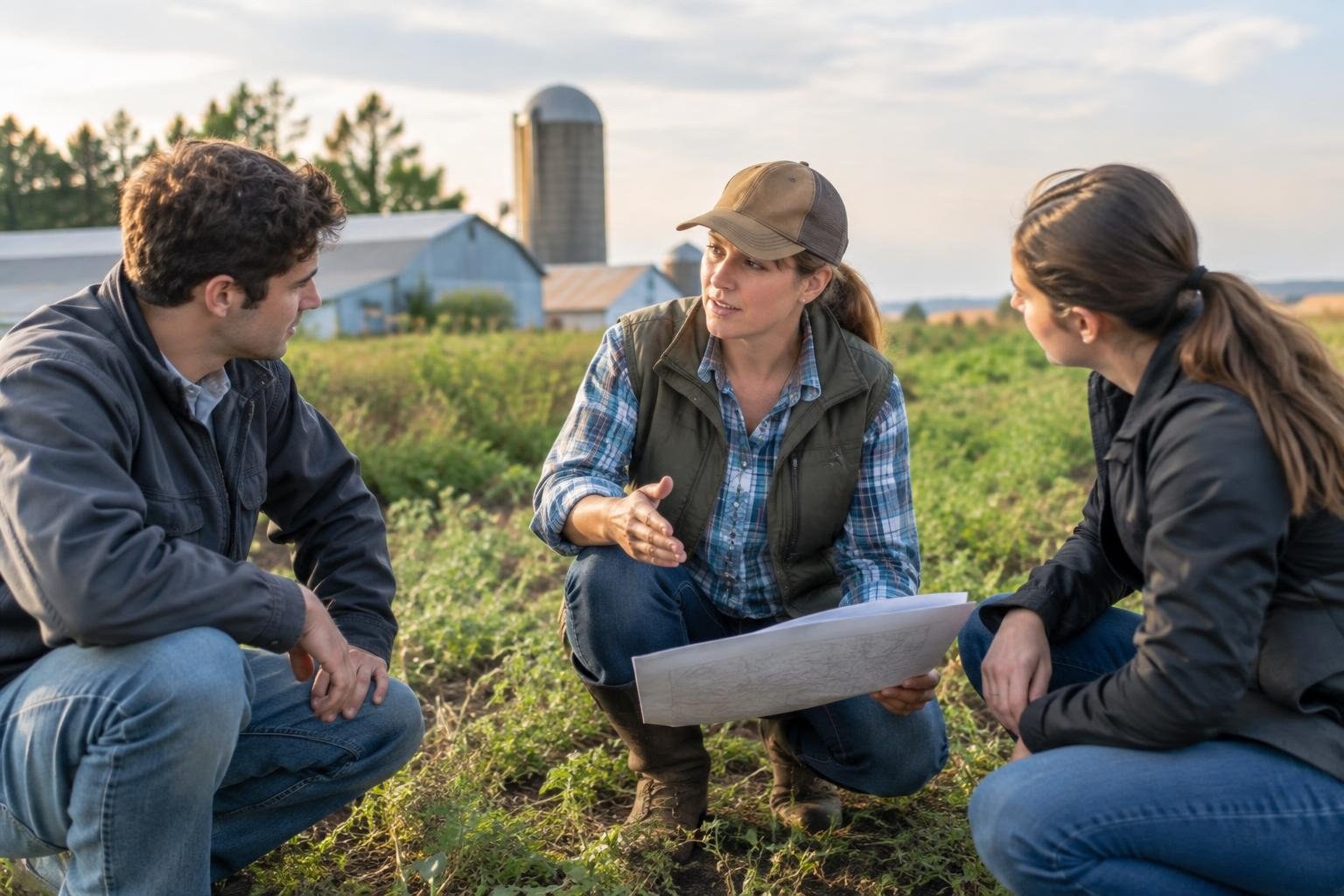
What Is a Farm and Ranch Management Degree?
Farm and ranch management is a focus within agriculture that connects production with the organization and business of operating farms and ranches. Students may learn about crops, livestock, soils, agricultural operations, and business decisions. The federal Classification of Instructional Programs (CIP) description for the related agriculture field includes basic animal, plant, and soil science alongside production and agricultural operations. A program’s exact scope depends on its curriculum.
Credential options can include certificates, associate and bachelor’s degrees, graduate certificates, master’s degrees, and doctorates, but not every institution offers every level under this exact name. Program titles may include farm management, ranch management, agricultural production, or agricultural business. Read course requirements rather than assuming similar titles mean identical training.
Compared with a broad agribusiness program, a farm- and ranch-focused course of study may place more attention on production operations. Compared with animal science, it may devote more space to managing an operation rather than the biological study of animals. The dividing line is not universal: programs can overlap.
What Do You Study?
Courses depend on the credential, institution, and local agricultural context. A program may introduce students to crop and livestock production, soils, agricultural business, and farm operations, then build toward more specialized or applied study. Potential learning activities include production planning, recordkeeping, equipment-related instruction, field exercises, internships, and projects. Confirm what a specific school actually requires.
- Production foundations: Learn basic concepts in plants, animals, soils, and agricultural systems.
- Business and operations: Explore how managers organize resources, make operating decisions, and connect production with sales or services.
- Applied learning: Depending on the program, practice may involve fieldwork, labs, supervised experience, or projects. Ask how much is required and where it takes place.
- Advanced study: Upper-level or graduate work may specialize in an agricultural topic or prepare students for research or other advanced roles.
Course names alone do not show how much practical experience a program provides. Ask to see a current degree plan and examples of field or project work.
Skills You Can Develop
Students can develop agricultural knowledge along with transferable business and work skills. The mix matters: an operations employee may use production and equipment knowledge daily, while an agricultural sales representative may rely more on communication and customer support.
- Production literacy: Understand basic animal, plant, soil, and farm-operation concepts.
- Planning and analysis: Organize information, compare options, and think through practical production or business problems.
- Communication: Explain recommendations, work with suppliers or customers, and coordinate with colleagues.
- Professional skills: Build reliability, teamwork, problem-solving, and attention to safety.
- Technology: Depending on the program and workplace, use spreadsheets, business tools, or agricultural technology. Ask which tools students actually learn.
Skills should be supported with examples. Projects, supervised work, internships, or an employment record can help students show how they apply what they learned.
Who Is This Degree Best For?
This field may appeal to students who are curious about how food and agricultural products are produced, enjoy practical problems, and want to connect operational details with business choices. Farm and ranch work can involve changing conditions, physical settings, coordination, and responsibility for resources. Specific jobs differ substantially; a management degree does not mean every graduate works outdoors or operates machinery.
You do not need to have grown up on a farm to study the subject. However, it is useful to investigate the realities of the work: talk to employers, visit an operation where appropriate, or seek a seasonal or volunteer experience. Consider whether you prefer hands-on production, planning, sales, research, or a combination.
Does Farm and Ranch Management Match You?
Salary, job availability, and school reputation matter, but they do not show whether you will find the subject or work satisfying. The Free MAPP Career Assessment can help you explore how your motivations and preferences align with careers. Assessment.com’s Degree Matching and Career Matching tools can support exploration, while Matching Jobs can help connect career interests with types of work. Use these tools as a starting point, not a substitute for program and employer research.
Take the Free MAPP Assessment.
Admissions, Length, and Academic Demands
Admissions, time to completion, and academic expectations vary by school and credential. Check the institution’s current requirements rather than relying on a general rule. Applicants may need prior transcripts or evidence of completed prerequisite study; some programs may use placement or other program-specific steps. Graduate programs can have distinct academic and research requirements.
Certificates and associate degrees are generally shorter credentials than bachelor’s degrees, while graduate study follows previous higher education. Actual timelines depend on course availability, transfer credits, enrollment pace, and whether students attend year-round. Ask for a degree map showing a realistic full-time and part-time route.
Expect to combine science and business concepts with practical decision-making. Students who have not studied agriculture may need time to learn field-specific terms. Build a plan for math and writing support if needed, and ask whether the program offers advising, tutoring, or introductory coursework.
Online vs. On-Campus Study
Online, hybrid, and campus options vary. Some theoretical or business courses may be taught online, while programs with practical components may ask students to attend labs, field sessions, internships, or supervised activities in person. A fully online label does not by itself confirm that a program can provide the experience you need for your goals.
Before enrolling, ask which classes must be attended on campus or at a partner site, whether field placements are arranged by the school, and who pays for travel or equipment. If you live far from campus, confirm that practical requirements can be completed in a reasonable location and timeframe.
Cost and Financial Aid
Do not compare programs using tuition alone. Total cost can include fees, books, supplies, transportation, housing, equipment, technology, and any travel tied to fieldwork or internships. Costs depend on the institution, student residency, credential, enrollment pace, and aid eligibility. Request an individualized cost estimate and confirm which expenses are included.
Ask about grants, scholarships, work-study where available, employer assistance, and payment plans. Students may also want to compare transfer pathways from a community college, but confirm in writing which credits will apply to the intended program. A lower-cost starting point does not save money if credits do not transfer or extend time to graduation.
To compare value, estimate the full cost through completion and examine the actual courses, practical experience, and career support offered. Do not rely on a broad salary promise as proof that one program will pay for itself.
Careers, Salary, and Job Outlook
A farm and ranch management credential can relate to work in agricultural production, farm or ranch operations, equipment and agricultural supply businesses, sales, and services. The duties and minimum qualifications are employer-specific. A graduate may begin in an assistant, technician, production, sales, or support position and build responsibility through experience. A management title is not guaranteed immediately after graduation.
Career directionTypical preparation to investigateHow the degree may applyFarm or ranch operations supportRelevant education, practical skills, and employer-specific experienceConnects production knowledge with day-to-day operationsAgricultural production worker or supervisorExperience and role-specific knowledge; education expectations varySupports understanding of production and coordinationAgricultural sales or serviceProduct knowledge, communication, and often customer-facing experienceProvides context for agricultural customers and operationsFarm or ranch managerSubstantial operational responsibility may require experience and business judgmentCan contribute planning, production, and management foundationsAgricultural educator or researcherRequirements vary; advanced study may be needed for some research or academic postsCan provide a foundation for further specialization
Mississippi State University Extension describes animal and dairy science graduates applying knowledge to areas such as animal selection, breeding, nutrition, reproduction, and growth. Michigan State University notes research opportunities in animal science through public agencies, universities, and private companies. These are related examples, not a guarantee that every farm-management curriculum qualifies graduates for every role.
Pay and job outlook should be checked for the specific occupation and location using current U.S. Bureau of Labor Statistics and O*NET information. A broad degree category does not have one defensible median salary or outlook figure. Farm ownership is a separate business decision involving land, capital, and operational risks, not an automatic outcome of a credential.
Internships, Experience, Credentials, and Safety
Hands-on experience can help students test their interests and demonstrate applied skills. Explore internships, seasonal jobs, research, supervised projects, volunteer work, and agricultural organizations. Opportunities depend on local employers and the program. Ask the department whether it helps students find placements, how placements are supervised, and whether work can be paid.
How to Stand Out to Employers
- Seek experience connected to the role you want, such as production, equipment, livestock, crops, or agricultural customer service.
- Keep a clear record of projects and responsibilities. Describe what you did and what you learned without overstating outcomes.
- Practice communicating operational information and working as part of a team.
- Ask employers which safety, equipment, software, or product training they value. Requirements are not uniform.
Completing a degree is not the same as earning a professional license. Do not assume a particular license or certification is required across farm and ranch management. Verify requirements for specific duties and locations with the employer and appropriate government or professional authority.
Graduate School Options
Graduate school is not a standard requirement for every farm or ranch operations role. A master’s, graduate certificate, or doctorate may be appropriate for a student pursuing advanced specialization, research, or some academic careers. The right path depends on the desired role and the admissions and employment requirements attached to it.
Before continuing, review job postings and speak with program advisers or professionals in the field. Ask whether relevant work experience could be more useful than another credential. For research-focused paths, check the specific expectations for graduate study and the research opportunities available at potential schools.
Related Degrees and Comparisons
Related programs can offer different balances of production, science, business, and practical training. Consider these alternatives:
- Agricultural business or agribusiness: Consider this instead if you want broader business study across agricultural industries.
- Animal science: Consider this instead if animal biology, nutrition, breeding, behavior, or reproduction is your central interest.
- Agriculture science and management: Consider this instead if you want a wider grounding in agriculture, production, services, and management.
- Crop or plant science: Consider this instead if you want to focus more closely on crops, plants, or production systems.
- Soil science: Consider this instead if your main interest is soil systems and related agricultural applications.
- Agricultural technology: Consider this instead if you are drawn to technology used in agricultural production and business.
- Veterinary preparation: Consider this instead if your goal is veterinary school and you are prepared to meet its separate prerequisites and admissions requirements.
- Agricultural education: Consider this instead if teaching or training is a primary career goal.
Farm and ranch management tends to connect operational and business decisions with agricultural production. A broad agricultural business degree may offer more exposure to business across sectors; animal science usually studies animals more directly. Compare required courses and graduate-school prerequisites rather than relying on degree titles alone.
Advantages, Drawbacks, and Is It Worth It?
Advantages: The field joins applied agricultural knowledge with business and operations; programs may offer practical experiences; and the credential can relate to several parts of the agricultural industry.
Tradeoffs: Program titles and curricula vary; local job options may influence opportunity; some roles require experience beyond a degree; practical requirements can complicate online study; and education does not guarantee high pay, management responsibility, or farm ownership.
To decide whether it is worth the investment, compare complete program costs with your intended job, the local market, likely experience requirements, and your willingness to pursue hands-on work. Consider whether a shorter credential, transfer route, or related major could meet your goals. Discuss the financial plan with family or an adviser, but make the decision around evidence and fit rather than prestige alone.
How to Choose the Right Program
Choosing a college program is similar to selecting a long-term education partner: compare what is taught, what it costs, and what support students receive. There is no single credential that qualifies every school or program for every agricultural career. Verify details directly with the institution and relevant authorities.
Program comparison checklist
- Accreditation: Check the institution’s current accreditation status through the appropriate recognized accreditor and the U.S. Department of Education’s resources. Ask whether any program-specific approval matters for your intended path.
- Curriculum: Compare course plans, specializations, and the balance of business, crops, animals, soils, and operations.
- Practical learning: Ask about fieldwork, labs, internships, research, supervision, and any travel or equipment costs.
- Total price: Request a full cost estimate and a clear explanation of financial aid and renewal conditions.
- Format and timing: Confirm in-person requirements, course availability, part-time options, and a realistic graduation plan.
- Outcomes and support: Ask how the school defines and tracks outcomes, what career services are offered, and which employers engage with students.
- Transferability: Get written confirmation about how existing credits apply to the specific credential.
- Career preparation: Ask which skills and experiences the program helps students develop for their intended roles.
Use Assessment.com’s education-matching tools to explore possibilities, then verify program facts with schools. Explore colleges and programs that fit your goals.
From Degree to Career: Possible Pathways
Career steps are possibilities, not guaranteed promotions. For example, a student may complete a farm management credential, start in an operations support or production role, build experience with a particular operation, and take on broader planning or supervisory responsibilities. Another graduate may begin in agricultural sales or services and specialize in products or customers. A research-oriented student may pursue advanced education before seeking specialized research work.
Ask employers what experience they expect for the next step. Build a pathway around actual duties and opportunities rather than assuming that completing a degree automatically leads to a senior role.
Questions to Ask Before Enrolling: Practical Checklist
Before you commit, use this checklist:
- What is the institution’s accreditation status, and have I verified it?
- What is the estimated total cost through graduation, including fees and practical learning expenses?
- What outcomes does the school report, and how are they measured?
- Are fieldwork, internships, or other experiences available and accessible to me?
- What career or additional-education requirements should I verify separately?
- Which courses require campus attendance, travel, or specific equipment?
- Will my existing credits transfer into this exact program?
- What career services and employer connections are available?
- What aid can I receive, and what conditions apply?
- Have I explored the actual work through a conversation, visit, or relevant job experience?
Red flags: Be cautious of guaranteed-job or guaranteed-income promises, unclear total charges, vague fieldwork descriptions, pressure to enroll before reviewing documents, or transfer claims that are not confirmed in writing. Ask for evidence and take time to compare.
Common Questions About Process, Fit, Cost, and Risk
What does the program include and how does it work? A program may combine agriculture foundations, production, business, and operations, with applied learning that varies by school. Request a current course plan and ask how field or project requirements fit into the degree.
What signs suggest this path may fit? Interest in agriculture, practical problem-solving, and coordinating resources can be a useful starting point. A job shadow, seasonal role, or conversation with an employer can help test that interest. Farm experience is not necessarily an admissions requirement, but expectations vary.
What affects the cost? School type, residency, credential, aid, course load, housing, supplies, and any travel or equipment connected with fieldwork can affect total expense. Obtain a school-specific estimate; no universal price applies.
What affects the student experience? Curriculum, location, agricultural focus, access to field sites, internships, class format, and employer connections differ. Ask how each factor works in practice, not just what a program title suggests.
What options should students compare? Compare farm management with agricultural business, animal science, agriculture science, and crop or plant-focused study. Look at required coursework and target job qualifications to identify the closest match.
What should I expect, and how long will it take? Time depends on credential level, transfer credits, course availability, and study pace. Request a degree map for your situation and ask whether applied requirements have limited availability.
How do I choose a qualified school? Verify institutional accreditation, review the curriculum and instructors, check practical-learning arrangements, ask about career support, and independently confirm any claimed outcomes or professional requirements.
Are permits, licenses, or safety credentials required? There is no single rule for every farm-management job. Requirements may depend on a particular task, location, employer, or equipment. Verify applicable rules with the responsible authority and ask employers what training they require.
How can I reduce cost safely? Compare net costs after aid, investigate transfer pathways before enrolling, ask about paid experience, and avoid borrowing for expenses you have not confirmed. Do not sacrifice necessary practical training or assume credits will transfer without written confirmation.
What mistakes should I avoid? Do not choose on the degree name alone, treat a degree as a promise of farm ownership, overlook fieldwork costs, assume all agricultural jobs require the same credential, or trust unsupported job and salary guarantees.
Frequently asked questions
Is farm and ranch management a difficult degree?
Farm and ranch management can be challenging because it combines agricultural science with business decisions and practical problem-solving. Students may work with topics such as soils, crops, livestock, equipment, finances, and farm operations. The difficulty varies by program and by a student’s strengths. Reviewing sample course plans and asking about fieldwork can help you gauge the academic and practical demands.
Is a farm and ranch management degree worth it?
It can be worthwhile for students seeking agricultural operations, farm or ranch management, production, sales, or related work. Value depends on tuition, aid, location, experience, and the jobs available in the student’s target area. Compare likely entry-level roles and their requirements with the full cost of education. A degree alone does not ensure farm ownership, a management position, or a particular salary.
What jobs can I get with a farm and ranch management degree?
Potential paths include farm or ranch operations, agricultural production, equipment or supply sales, agricultural services, and supervisory work. A certificate or associate degree may prepare students for some technical and operational roles; employers may prefer a bachelor’s degree or substantial experience for other positions. Responsibilities and qualifications vary by employer, commodity, operation size, and region.
How much can you make with a farm and ranch management degree?
There is no single salary for graduates because the title covers varied work, from production and equipment operation to sales and management. Pay depends on occupation, experience, employer, region, and whether compensation includes housing, benefits, or business income. Check current U.S. Bureau of Labor Statistics and O*NET information for each specific occupation, rather than relying on a broad degree-level estimate.
Can I earn a farm and ranch management degree online?
Some agricultural business and management courses may be available online, but availability depends on the school and credential. Programs that include labs, equipment, livestock, crop work, internships, or other field experiences may require in-person participation. Ask whether any practical requirements can be completed near you and confirm that an online curriculum supports your intended career or transfer plan.
Does farm and ranch management require a lot of math?
Math is commonly relevant, even when advanced mathematics is not the focus. Students may use arithmetic, percentages, spreadsheets, budgeting, measurements, and basic statistics to compare costs, yields, prices, and operating decisions. Course prerequisites vary. If math is a concern, ask schools about required courses, tutoring, placement policies, and whether you can complete foundational coursework before starting major requirements.
Do I need a graduate degree for farm or ranch management careers?
Not necessarily. Many operational, production, sales, and support roles do not require graduate education, although employers may value a relevant bachelor’s degree or experience. A master’s or doctorate may make sense for advanced research, specialized academic work, or certain leadership paths. Identify a target occupation first, then check typical job requirements before committing to additional study.
What certifications help in farm and ranch management?
There is no single credential required for every farm or ranch management job. Useful training may include equipment, safety, business software, or commodity-specific knowledge, depending on the work. Some duties can be subject to separate rules or employer requirements. Ask prospective employers and program advisers which credentials are valued locally, and verify any legal requirements with the relevant authority.
How does farm and ranch management compare with animal science?
Farm and ranch management programs generally emphasize the business and operational side of agriculture, while animal science focuses more directly on animal biology, behavior, growth, breeding, nutrition, and reproduction. Their courses can overlap, particularly in livestock production. Choose based on the work you want: managing agricultural operations, studying animals, or preparing for a mix of both.
How do I know if farm and ranch management is right for me?
A student may be ready to explore the field if they enjoy practical problem-solving, agriculture, coordinating people and resources, and making decisions with changing conditions. That does not mean they must already have farm experience or plan to own land. Try a course, job shadow, seasonal role, or conversation with local agricultural employers to test your interest before choosing a program.
People Also Ask
What is farm and ranch management in college?
Programs combine agricultural production knowledge with business and operational planning. The exact curriculum depends on the school and credential.
What do you study in a farm management degree?
Students may study crop and livestock production, soils, agricultural business, budgeting, marketing, and farm operations. Course lists differ by school.
What can I do with a farm and ranch management degree?
Entry-level opportunities may include production, farm or ranch support, agricultural sales, and services. Experience and education expectations vary by job.
Are farm and ranch management degrees available online?
Programs are offered in different formats, but fieldwork, labs, and internships may require in-person participation. Ask each school about practical requirements.
Is a degree in farm management worth it?
Compare the program’s total cost with your intended career, local opportunities, and the value of hands-on experience. Outcomes are not guaranteed by a degree.
What is the difference between farm management and agribusiness?
Farm management usually emphasizes operations and business decisions; agricultural business programs may cover a wider range of agricultural industries.
What are the requirements for a farm and ranch management degree?
Admissions standards vary. Schools may consider prior education, transcripts, placement, and program-specific requirements.
How long does a farm and ranch management degree take?
Some programs offer certificates or associate degrees, while others offer bachelor’s and graduate credentials. Time to completion depends on credits, enrollment pace, and transfer work.
Farm and ranch management programs combine agricultural production knowledge with business and operational decision-making. They can suit students interested in how farms and ranches work, but the right program depends on the kind of operation, career, and education path a student has in mind. Compare coursework, hands-on experience, total cost, transfer options, and graduate outcomes before enrolling. A degree can build useful skills, but it does not guarantee a particular job, income, or farm ownership. Consider personal fit alongside career prospects, and investigate local opportunities and the experience employers expect.
Sources
- Career Opportunities with a Bachelor of Science in Animal and Dairy Sciences | Mississippi State University Extension Service
- Bachelor's Degree in Animal Sciences | University of Kentucky'
- 26 College Degrees for Animal Lovers To Pursue | Indeed.com
- Career Opportunities - Department of Animal Science
- Animal Science | Education Profile | AgCareers.com
- Agriculture Science, Education, and Management AS Degree | Shasta College
- Utah State University Degrees and Programs by interests
- CIP 01 Agriculture/Animal/Plant/Veterinary Science and Related Fields | ASPIRE