Degree Library
Equestrian/Equine Studies Degree Guide: Courses, Careers, Costs & How to Choose
An equine studies degree combines animal science with horse-focused learning in areas such as anatomy, behavior, nutrition, health, and management. Explore common courses, career options, costs, program formats, and how to choose a pathway that fits your goals.
An Equestrian/Equine Studies degree is a college program focused on horses, their care, and the businesses and activities built around them. Depending on the school, students may study equine anatomy, behavior, nutrition, reproduction, health, handling, and stable or farm management alongside foundational animal science. Programs range from certificates and associate degrees to bachelor’s and graduate study, and the same subject may appear as equine science, equine management, or a concentration within animal science. Graduates may pursue work in stable operations, training, riding instruction, breeding, equine sales, or related businesses. The degree can also support further study, but it does not by itself qualify someone to practice veterinary medicine. Program names, hands-on requirements, and career preparation vary, so compare the actual curriculum and experience offered rather than relying on the title alone. Not sure whether Equine Studies fits you? Take the Free MAPP Career Assessment to see how your motivations, interests, and natural preferences align with this degree and the careers it can lead to.
Millions of people Take the MAPP Career assessment to see which Degrees are the best Match!
You can too,
What Is an Equestrian/Equine Studies Degree?
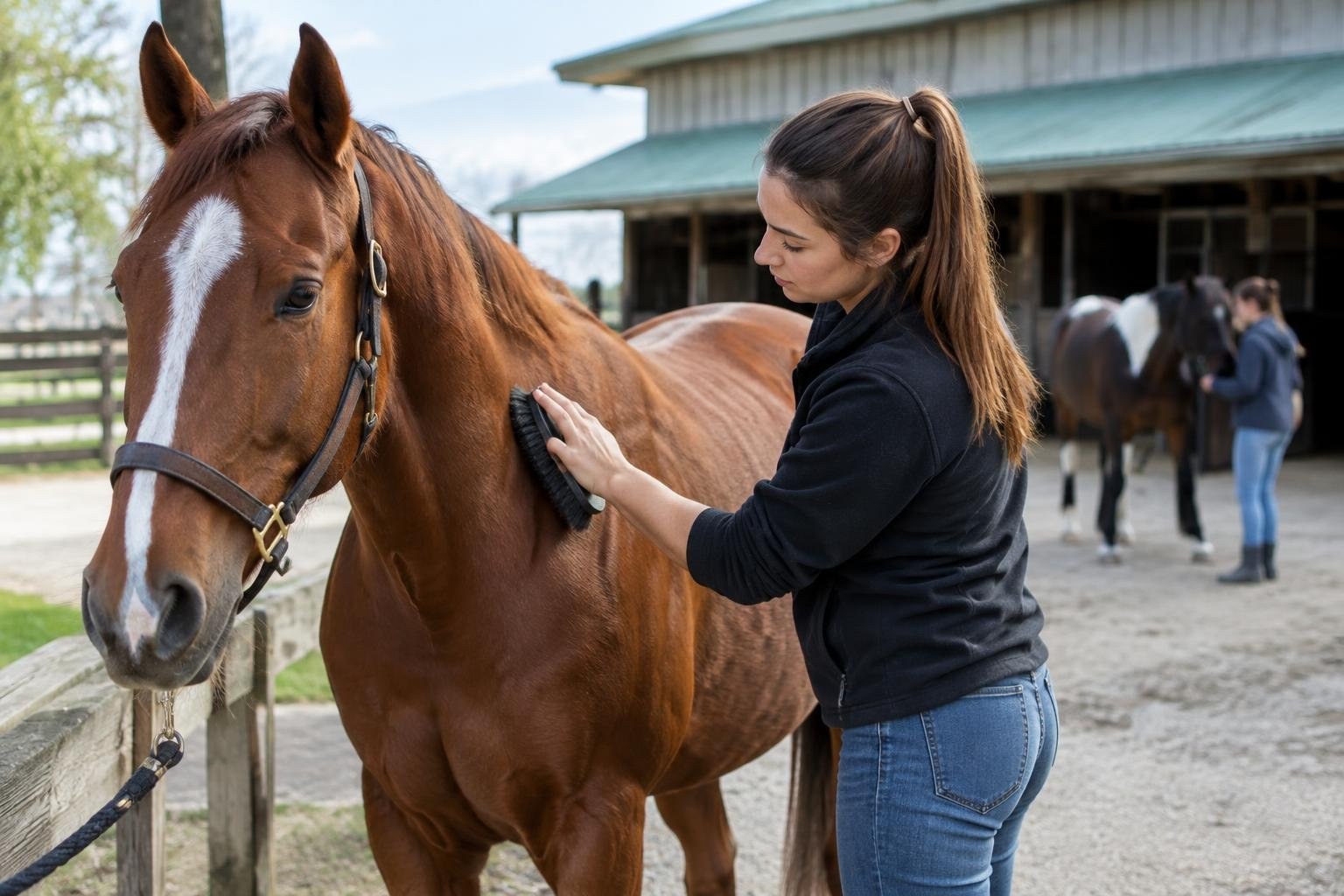
Equestrian/Equine Studies is an academic field focused on horses and the knowledge needed to care for, manage, train, or work with them. Programs combine animal science with specialized study of equine anatomy, behavior, nutrition, reproduction, health, and management. The University of New Hampshire describes its equine studies option as hands-on preparation in care, management, husbandry, and the use of horses; program emphasis varies by college.
Credentials may include certificates, associate degrees, bachelor’s degrees, graduate certificates, and master’s degrees. Names include equine studies, equine science, equine management, and equine science and management. Some are stand-alone majors; others are concentrations within animal science or a related degree. Read the course plan to see what the program actually teaches.
What it is not
An equine degree is not a veterinary degree or professional license. It may offer useful preparation for later veterinary education, but students must meet the separate admissions, education, and licensing requirements for veterinary practice. It is also distinct from riding instruction alone: college programs may include science, business, management, and research alongside practical horse work.
What Do You Study? Courses and Practical Learning
Coursework differs across schools, but many programs combine classroom study with labs or supervised experience. Students may learn how a horse’s body works, how behavior affects handling, how nutrition relates to condition and performance, and how health and management decisions affect animal welfare. Programs may also cover reproduction, breeding, stable operations, facility management, or the equine business sector.
At the introductory level, expect foundational animal science and biology. Later courses may focus on equine care, management, training principles, or business. Depending on the program, a practicum, internship, research project, or capstone may connect classroom learning with a farm, stable, or other equine setting. Check whether these experiences are required, how they are arranged, and whether students must find their own placement.
Skills students can build
- Animal science: understanding basic anatomy, behavior, nutrition, and health concepts.
- Observation and judgment: noticing changes in condition or behavior and communicating concerns to appropriate professionals.
- Communication: explaining care routines, working with owners or clients, and coordinating with colleagues.
- Management: organizing daily tasks, maintaining records, and supporting stable or farm operations.
- Safety and teamwork: following handling procedures and cooperating in practical environments.
Some programs also build research, data, or business skills. Ask for syllabi or learning outcomes to determine whether a particular school emphasizes hands-on horsemanship, science, management, or a mix.
Who Is This Degree Best For?
This program may suit students who want to learn about horses beyond riding and are interested in their care, behavior, health, or management. It can also appeal to learners who like practical work, animal science, and the operational side of farms, stables, or equine businesses. No one personality type is required. The work can call for patience, careful observation, communication, physical activity, and reliable follow-through.
Ask yourself whether you are comfortable learning scientific concepts, taking responsibility for animal care, and working in settings where schedules may follow the needs of horses and facilities. Consider whether you prefer direct animal contact, business or administrative work, research, or a mix. Interest in horses matters, but it is also important to understand the routine tasks and physical responsibilities involved.
Does Equine Studies match you?
Salary, prestige, and general employment trends cannot tell you whether a program or occupation will feel satisfying day to day. Weigh them alongside your interests, motivations, preferred work environment, and the education required for your goals. Assessment.com’s Free MAPP Career Assessment, Degree Matching, and Career Matching tools can help you explore connections between personal preferences, careers, and educational paths. Treat a match as a starting point for research, not a guarantee of success.
Admissions, Length, and Academic Difficulty
Admissions requirements are set by each college, so check the current requirements for the specific credential and program. Compare the published course plan, prerequisites, and any practical learning expectations with your goals before applying.
Program length depends on the credential and its required credits. For example, Ohio University lists at least 60 credit hours for its associate degree in equine studies. Asbury lists 124 credit hours for its B.A. in Equine Studies, typically completed in four years. These examples are not universal timelines. Ask each school how transfer credits and course availability would affect your own plan.
Coursework may combine animal science with equine-focused study and hands-on learning. Review the course sequence and ask the department what practical work is part of the program so you can judge whether the academic and applied expectations suit you.
Online vs. On-Campus Equine Studies
Online, hybrid, and campus options exist, but the learning format matters especially in a field involving live animals. Online courses may cover theory, while horse handling, practical assessment, or facility experience may require in-person attendance. A program may arrange those activities through campus facilities, a practicum, or an external placement. Do not assume a program advertised as online is fully remote.
Ask where practical work takes place, how often you must attend in person, whether travel and lodging are your responsibility, and how placements are supervised. Also ask what happens if a placement is unavailable or conflicts with your schedule. Compare the delivery format with the experience you need for your intended job.
Cost, Financial Aid, and Saving Safely
Build a school-specific cost estimate before choosing a program. Utah State University directs prospective students to information about tuition, scholarships, and other financial aid. Review those details for each college you are considering, and ask the financial aid office to clarify any charges or aid that are not clear.
Questions for your cost comparison
- What is the estimated tuition and what fees are listed for the program?
- Which scholarships or other financial aid may apply, and what are their requirements?
- Are any costs associated with required practical learning described separately?
- If you plan to transfer, which credits will count toward the degree? Request the evaluation in writing.
Compare written estimates using the same credential and course plan. Do not rely on a general price for equine studies when colleges publish program-specific information.
Careers, Pay, and Job Outlook
Equine studies can connect to several kinds of work, but the degree does not guarantee a particular job or wage. Employers may value practical experience, references, communication, reliability, and species-specific skills alongside education. The following are possible directions, not guaranteed outcomes.
| Career direction | Typical preparation | Pay and outlook considerations | How study may apply |
|---|---|---|---|
| Stable or farm operations | Equine coursework and relevant practical experience | Varies by employer, region, responsibilities, and experience; check current occupation data and local postings. | Management, care routines, records, and facility operations. |
| Horse trainer | Demonstrated handling and training ability; experience is important | Pay and demand vary by specialty, client base, and location. | Behavior, handling, and training principles may provide a foundation. |
| Riding instructor | Riding ability, teaching experience, and any employer-required credentials | May depend on lessons, employer, season, and local demand. | Equine knowledge supports instruction; teaching and safety skills also matter. |
| Breeding or reproduction operations | Relevant experience; specialized training may be useful | Can vary with employer, season, and level of responsibility. | Reproduction, husbandry, records, and animal care. |
| Equine sales or client services | Industry knowledge and communication or sales experience | Compensation structure varies; ask about commission and benefits. | Horse knowledge can support product or service conversations. |
| Equine education or outreach | Experience and role-specific education; postsecondary teaching often needs advanced study | Wages and openings depend on employer and qualifications. | Science and communication can support education and outreach. |
| Veterinary assistant or support roles | Employer requirements and practical animal-care experience; duties vary | Check current local job postings and occupational data. | Animal science may be relevant, but does not authorize veterinary practice. |
| Research or advanced animal science | Often further study for research leadership or academic roles | Outlook depends on specialty, funding, employer, and qualifications. | Research preparation can support graduate study and specialized work. |
For current wages and employment projections, identify the exact occupation and consult the U.S. Bureau of Labor Statistics and O*NET rather than assuming all equine graduates share one salary or outlook. Higher-responsibility roles in research, management, or education may require extensive experience or graduate education. Veterinary practice requires a veterinary degree and applicable licensure.
Employers can include farms, stables, riding facilities, breeding operations, equine businesses, educational institutions, and organizations serving horse owners. Technology may support recordkeeping, scheduling, monitoring, and business operations; it does not remove the need for competent animal care and human judgment.
Find out which Career or College Major is right for you!
Take the MAPP free today!Experience, Credentials, and Safety
Practical experience is a central way to demonstrate readiness for horse-related work. Depending on your goals, seek internships, supervised barn or farm experience, research projects, volunteer opportunities, industry events, or student organizations. Keep a record of responsibilities and learning, and ask supervisors for feedback and references. Build skills that can be described clearly to an employer, not just a list of activities.
How to stand out to employers
- Document relevant horse-care, handling, and facility experience accurately.
- Show that you can communicate, follow safety instructions, and work reliably on a team.
- Learn the records, scheduling, or customer-service tasks used in your target setting.
- Ask program faculty and placement coordinators about employer connections.
- Investigate credentials only after checking whether employers or professional organizations recognize them for your intended role.
There is no single license for every equine occupation. Requirements depend on the job and jurisdiction. A college degree does not itself grant veterinary practice authority, and students considering veterinary medicine should verify accredited veterinary education and state licensing requirements through the relevant official bodies.
Graduate School and Further Study
Equine study can continue into a master’s degree or other graduate work in animal science, equine science, agricultural fields, or a related discipline. Graduate education may help students prepare for research, specialized roles, or academic work, depending on the program and employer. A professional veterinary degree is a distinct pathway for students who intend to become veterinarians.
Compare prerequisites, research or clinical opportunities, funding, and career requirements before committing to another degree. A graduate credential is not automatically necessary for stable operations, training, instruction, or business roles; experience and job-specific qualifications may matter more for some positions.
Related Degrees and How They Compare
- Animal science: Consider this instead if you want broader study across animal species, production, nutrition, or health.
- Agricultural business or agribusiness: Consider this instead if your main interest is managing agricultural companies, sales, or operations.
- Veterinary technology: Consider researching this regulated career pathway if you want a defined clinical support role; verify program and jurisdictional requirements.
- Veterinary medicine: Consider this if your goal is to diagnose and treat animals as a veterinarian and you are prepared for the required professional education and licensure.
- Animal behavior or training: Consider this instead if behavior and training are your central interests and you want study that may cover animals beyond horses.
- Agricultural education: Consider this instead if teaching agriculture is your primary goal.
- Equine business or management: Consider this if operations, marketing, or business leadership interest you more than animal science.
Equine studies vs. animal science: Equine studies focuses on horses, while animal science may cover multiple species and wider topics. Some equine programs are concentrations within animal science, so compare required courses, practical work, graduate-school prerequisites, and employer expectations. Potential earnings depend more on the occupation, experience, and location than the major name alone.
Advantages, Drawbacks, and Is It Worth It?
Advantages can include focused study of horses, applied learning, and preparation for varied roles across equine care, operations, instruction, and business. Some programs connect students with faculty and industry settings. A dedicated program may help learners build a relevant network while developing scientific and practical foundations.
Tradeoffs include the cost and time of college, variation in program quality and hands-on access, and the fact that some equine jobs depend heavily on experience rather than a degree alone. Work can be physically demanding, and opportunities and compensation differ by location and employer. Students aiming for veterinary practice or academic research should plan for additional education.
Whether it is worth it depends on the total cost, your career goal, the program’s facilities and placements, your geographic flexibility, and how well the day-to-day work fits you. Compare likely entry-level roles with the actual education commitment rather than relying on broad promises about a major.
How to Choose a Qualified Program: A Practical Checklist
Use this checklist to compare the details each college publishes and to identify questions that need a direct answer.
- Program: Does the course plan match your interest in equine science, management, or another focus?
- Hands-on learning: What practical learning, facilities, and supervision are described?
- Cost: What tuition, fees, scholarships, and financial aid apply to your plan?
- Course requirements: How many credits are required, and which courses must be taken in sequence?
- Format: Which courses or practical activities require in-person attendance?
- Transfer: Which prior courses will count toward graduation? Request a written evaluation.
- Career preparation: Which skills and experiences does the curriculum describe, and how do they relate to your target role?
- Safety: What instruction and supervision apply to practical work with horses?
Program descriptions show that equine degrees can differ in course focus, credit requirements, and hands-on learning. Compare the actual curriculum and ask the college to clarify anything that is not stated clearly.
From Degree to Career: Realistic Pathways
Career paths are not automatic, but a degree can be one part of a longer plan. Examples include:
- Equine studies degree → entry-level stable or farm role → practical operations experience → facility or team management.
- Equine studies degree → supervised horse-training experience → specialized training focus → independent or senior training work, depending on experience and clientele.
- Equine studies degree → equine education or outreach role → teaching and program experience → advanced study for some postsecondary positions.
- Animal science or equine degree → prerequisite and admissions preparation → veterinary school → licensing requirements and veterinary practice.
These are illustrative routes, not promises. Build an education plan backward from job postings and credential rules for the role you actually want.
Questions to Ask Before Enrolling
Before choosing a program, ask the admissions team and department: What courses and practical learning are required? How many credits does the degree require, and how are courses scheduled? What is the estimated tuition, and what scholarships or financial aid may apply? Which activities require in-person attendance? If you have prior college credits, which will count toward graduation? Can the department explain how the program’s courses connect with the type of equine work you want to pursue?
Compare the answers with each college’s published course plan, credit requirements, hands-on learning description, and tuition and aid information. Request written clarification of costs and transfer credits so you can evaluate programs using the same information.
Final Decision: Is Equine Studies Right for You?
Is Equine Studies right for you? It may be a good fit if you want to study horses in a structured way and are prepared for both academic work and practical responsibilities. It may be less suitable if you want a guaranteed high salary, a fully remote experience with no hands-on learning, or immediate authority to practice veterinary medicine. Compare alternatives, required credentials, cost, and the work itself. Before you choose, explore whether your interests and preferences align with the education and career paths involved.
Before Choosing a Degree, Find Out What Fits You
Choosing a college program can affect years of education and decades of work. Salary, job growth, and school reputation matter, but so does whether the work fits your motivations, interests, and natural preferences.
Take the Free MAPP Career Assessment to discover careers that match you, how related careers align with your profile, degrees and educational pathways tied to those careers, and potential jobs connected with those paths. Use Degree Matching, Career Matching, and Matching Jobs as tools to explore options, then verify program and career requirements with schools and employers.
Factors That Affect Your Degree Plan
Several choices can change the shape of your degree plan. The credential and course requirements matter: Ohio University lists at least 60 credit hours for its associate degree, while Asbury lists 124 credit hours for its bachelor’s degree, typically completed in four years. A concentration can also affect which courses you take; Post lists several online equine studies concentrations. Finally, compare the hands-on learning offered and the school’s tuition and financial aid information. These are program-specific examples, so use each college’s current plan and cost estimate when mapping your own path.
Ways to Reduce Cost or Save Safely
To lower costs without making assumptions, compare written estimates for the same credential and course plan. Review tuition, listed fees, scholarships, and other financial aid, and ask the college to explain eligibility and application requirements. Utah State University directs prospective students to information about tuition, scholarships, and financial aid, but the details are school-specific and should be checked with each college.
Before enrolling or transferring, ask for a written evaluation showing which prior credits apply to your degree requirements. Credit totals differ by program: Ohio University lists at least 60 credits for its equine studies associate degree, while Asbury lists 124 credits for its B.A. These examples are not transfer agreements, so confirm your own plan with the schools. Also ask whether required practical learning involves costs beyond the published tuition and fees.
Frequently asked questions
Is equine studies a difficult degree?
Equine studies can be challenging because it combines academic work in biology and animal science with practical responsibilities involving horses. Students may need to manage time around labs, barn work, internships, or clinical experiences. The difficulty depends on the program and your preparation. Ask current students about weekly schedules and practical requirements before deciding.
Is an equine studies degree worth it?
It can be worthwhile for students seeking structured education in equine care, management, or related animal science, especially when the program provides substantial hands-on experience and useful industry connections. Its value depends on tuition, career goals, location, and whether the roles you want require a degree. Compare the total cost with likely entry-level opportunities before enrolling.
What jobs can I get with an equine studies degree?
Graduates may pursue work in stable or farm operations, horse training, riding instruction, equine sales, breeding operations, and horse-related education. Job titles and qualifications vary. Some roles rely heavily on experience and practical ability, while veterinary medicine, research, and many teaching positions require further education or professional credentials.
How much can you make with an equine studies degree?
There is no single salary for equine studies graduates because the degree leads to different occupations, and pay can vary by employer, location, experience, and seasonality. Before accepting a role, compare current wage data for its specific occupation through the U.S. Bureau of Labor Statistics and ask employers how compensation, hours, housing, and benefits are structured.
Can I earn an equine studies degree online?
Some equine-related coursework can be taken online, but hands-on skills involving horse handling, facility work, and practical assessment require access to horses and appropriate facilities. Programs may combine online coursework with campus, farm, internship, or other in-person requirements. Confirm the format and all required travel before enrolling.
Does equine studies require math or science?
Many programs include biology and animal science, so students should expect scientific concepts and some quantitative work such as nutrition calculations, recordkeeping, or basic statistics. The amount of math varies by course plan and degree level. Review required courses and ask the department which science and math classes are prerequisites.
Do you need graduate school after equine studies?
A bachelor’s degree may be useful preparation for some equine careers and graduate study, but it does not qualify someone to practice as a veterinarian. Becoming a veterinarian requires completing an accredited veterinary degree and meeting applicable state licensing requirements. Research roles and postsecondary teaching may also require graduate education.
What is the difference between equine studies and animal science?
Equine studies is specifically centered on horses and horse-related industries. Animal science is generally broader and may cover multiple species, livestock production, nutrition, genetics, or animal health. Compare actual course requirements because some equine programs are concentrations within animal science degrees, while others are dedicated equine programs.
What certifications do equine studies graduates need?
Requirements vary by employer and role. Riding instruction, training, and stable management may emphasize practical experience, references, and safety skills. Veterinary practice requires a veterinary degree and state licensure. Check the job postings and professional requirements for your intended occupation before paying for a private certificate or credential.
Can I study equine science at a community college?
Yes, a two-year program can provide a shorter route to foundational coursework and practical training, and some credits may transfer to a bachelor’s program. Transfer acceptance is not automatic. Ask both colleges to review the specific course list and provide a written degree plan showing which credits apply.
People Also Ask
What do you learn in equine studies?
Equine studies programs teach horse science and management, including topics such as anatomy, behavior, nutrition, health, and practical care. Course plans and hands-on requirements differ by school.
What can you do with an equine studies degree?
Common paths include stable or farm management, training, riding instruction, breeding operations, and equine sales. Requirements vary by job and employer.
How long does an equine studies degree take?
Programs may take less time at the certificate or associate level than at the bachelor’s level. Actual completion time depends on credit requirements, transfer credits, course availability, and whether you study full time.
Can equine studies be studied online?
Some coursework may be online, but horse handling and other practical skills generally require in-person experience. Check how each program schedules those requirements.
Can an equine studies degree make you a veterinarian?
A degree in equine studies is not a veterinary license. Becoming a veterinarian requires further professional education and applicable state licensure.
How much does an equine studies degree cost?
Costs depend on the institution, residency, credential level, fees, equipment, and travel for practical work. Compare the full cost of attendance and financial aid offers at each school.
How does equine studies compare with animal science?
Equine studies focuses on horses, while animal science often covers a broader range of species and subjects. Individual programs may overlap substantially.
Equestrian/Equine Studies can be a useful route into horse care, stable operations, riding instruction, equine business, and further study in animal science or veterinary medicine. The right choice depends on the work you want to do, the program’s practical opportunities, and the credentials your intended career requires. Compare course plans, costs, hands-on experience, and graduate outcomes before enrolling. Above all, consider whether the day-to-day work with horses and the realities of the industry fit your interests and goals.
Want to see your options? Try our comprehensive Degree, Program & College Search tool
College Search ToolSources & Official Resources
- Biomedical Sciences BS (Equine Studies) - Keiser University
- BS in Equine Animal Science - Unity Environmental University
- Equine Science and Management - BS
- Animal Science: Equine Studies, B.S. - COLSA, UNH | University of New Hampshire
- Equine Studies | Ohio University
- B.A. in Equine Studies Programs | Asbury University
- BS in Equine Studies | Online Equine Studies Degree
- Equestrian Studies Bachelor Degree
- Equine Studies Degree | Careers with Horses | Midway University