Degree Library
Dog Grooming School and Training: Programs, Costs, Skills & Career Options
Dog and pet grooming programs range from focused skills courses to broader animal-care credentials. Learn what students study, how to compare training, what affects cost and timing, and which animal-care careers may fit your goals.
Dog and pet grooming education teaches practical skills for caring for an animal’s coat and presenting it safely and comfortably. Depending on the school, training may be a short, focused grooming course, part of an animal-care certificate, or included in a broader college program. These routes are not interchangeable: a grooming course focuses on grooming tasks, while wider animal-care or animal-science study may cover behavior, health, nutrition, welfare, or science foundations. Students considering grooming often enjoy hands-on work, detail-oriented tasks, and daily contact with animals. They should also be ready to learn safe handling, work patiently, and communicate with pet owners. Grooming education does not qualify graduates to diagnose or treat animals as veterinarians. Not sure whether dog grooming or another animal-care path fits you? Take the Free MAPP Career Assessment to explore how your motivations, interests, and preferences may align with animal-related careers and education options.
Millions of people Take the MAPP Career assessment to see which Degrees are the best Match!
You can too,
What Is Dog and Pet Grooming Education?
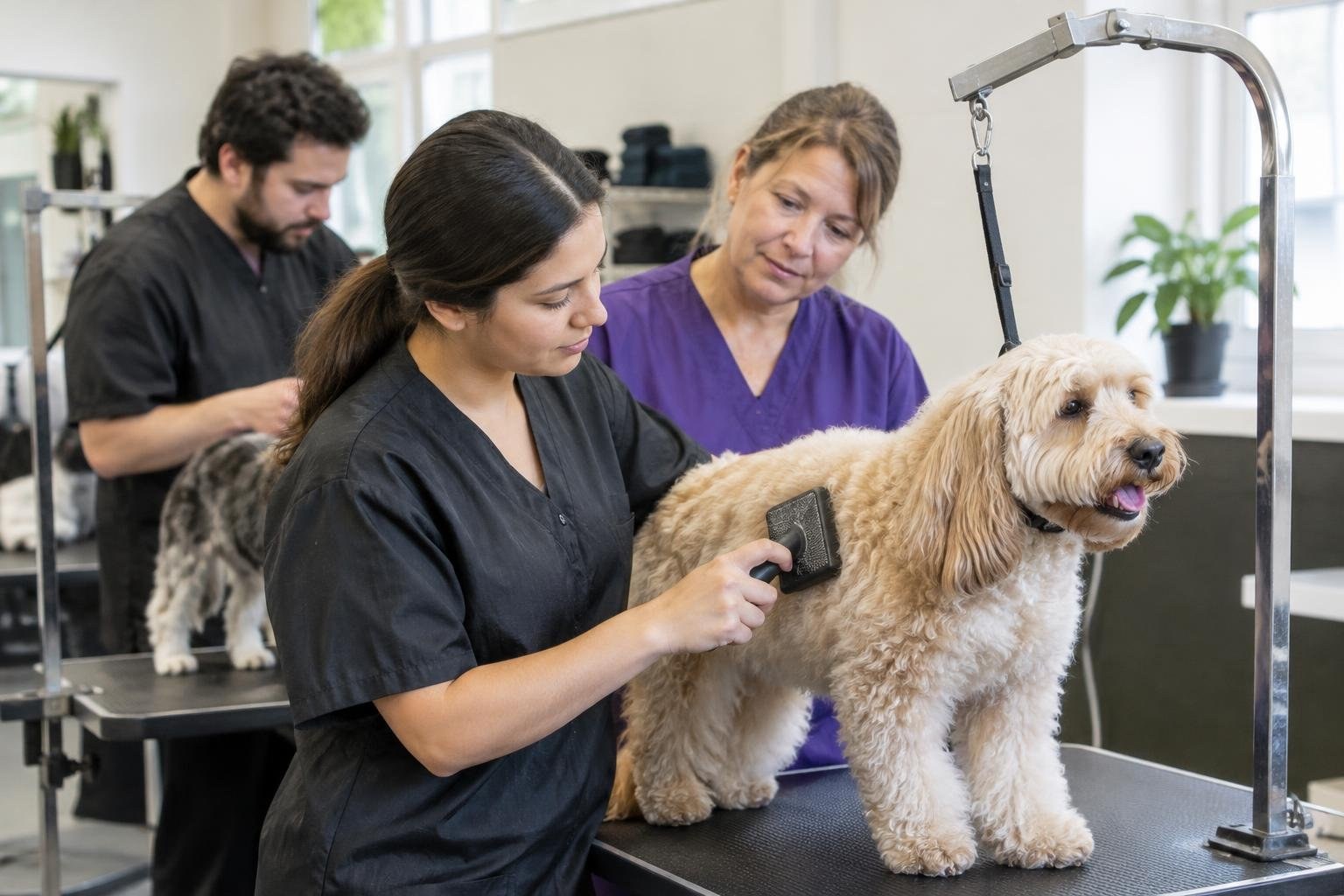
Dog grooming education is training in grooming-related care, such as preparing an animal for services, using appropriate tools, and handling pets carefully. It may be offered as a standalone course or as part of a wider animal-care program. The phrase “dog grooming degree” can be misleading: students should check the credential actually awarded, since a focused grooming course is not necessarily a college degree.
Related education includes animal-care certificates and associate degrees, animal science bachelor’s programs, and veterinary technology programs. These have different purposes. An animal-care program may cover behavior, health, nutrition, and welfare. Animal science can provide a deeper science foundation and may support graduate or veterinary-school preparation when its curriculum meets applicable prerequisites. Veterinary technology is a separate clinical pathway with its own education and credential requirements.
For instance, North Shore Community College describes its Animal Care Specialist associate program as covering behavior, health, nutrition, and welfare, with preparation for areas including training, rescue, grooming, and shelters. NC State’s animal science program describes distinct undergraduate tracks, including veterinary bioscience and industry options. Neither example means every school offers the same content or leads to identical outcomes.
What Do Students Learn?
What a student studies depends on the program. A grooming-focused course may teach coat preparation, brushing and bathing practices, safe use of grooming tools, hygiene, basic observation, and ways to make handling less stressful. Before enrolling, ask the school to identify which skills are taught, practiced, and assessed. Do not assume a course includes every service, breed type, or coat condition.
A broader animal-care program may include animal behavior, health, nutrition, and welfare. It can be useful to students who want options beyond grooming, such as shelter, rescue, training, or kennel work. A science-oriented animal program may require more biology and other science coursework. Its veterinary-preparation track should be checked against the admission prerequisites of the veterinary schools a student may later target.
Ask how practical instruction works: how much supervised practice is included, what animals students work with, how safety is taught, and whether students must supply tools. A course title alone does not demonstrate hands-on competence. Curricula, practice arrangements, and requirements vary, so get current details from the school in writing.
Skills You Can Develop
Grooming training can develop careful observation, patience, dexterity, attention to detail, time management, communication, and an understanding of safe animal handling. Students may learn to use grooming tools, follow hygiene routines, and communicate with owners about requested services and an animal’s needs. These skills can apply to grooming businesses and some broader animal-care settings.
Animal-care coursework may build additional knowledge in behavior, welfare, health, and nutrition. Animal science adds a more substantial science focus, which can be relevant to production-animal industries, research, or further study, depending on the program. The more closely a student’s chosen courses match a target job, the easier it is to explain that preparation to employers.
Work with animals is not simply time spent with pets. It can involve routine cleaning, repetitive physical tasks, time pressure, anxious animals, and conversations with people who may have different expectations. Prospective students should ask to observe a workplace or speak with working groomers before deciding.
Who Is This Training Best For?
Grooming education may suit people who like practical, detail-oriented work and are comfortable learning to handle animals calmly. It may also interest career changers seeking a hands-on route into animal care. There is no single personality type required. Students should consider whether they can work patiently, follow safety steps, and communicate with pet owners as well as care for animals.
Consider another path if your main interest is diagnosing illness, prescribing treatment, or performing clinical procedures. Those are not grooming tasks. A veterinary career requires separate, substantial education and professional qualifications. If you want a wider set of animal-care duties, compare grooming training with an animal-care credential. If you want science, research, or preparation for advanced study, compare animal science programs and their actual prerequisites.
Does Dog Grooming Match You?
Salary, job availability, and the appeal of working with animals are only part of the decision. Think about the daily work, the physical setting, customer interaction, training costs, and the career options you want over time. Assessment.com’s Free MAPP Career Assessment, Degree Matching, and Career Matching tools can help you explore preferences and compare related paths. Use them as reflection tools, not as a substitute for reviewing program requirements or speaking with people in the field.
Admissions, Time to Completion, and Academic Demands
Admissions rules are set by each provider. A focused course may have different entry requirements from an associate or bachelor’s program. Ask whether the program requires a high school diploma or equivalent, prior animal experience, an interview, or placement testing. Do not assume that a grooming course requires a particular GPA or test score unless the school states it.
Time to completion depends on course structure, practice requirements, and whether a student attends part time or full time. Cornell’s animal-careers resource describes an associate degree as a course of study usually lasting two years; individual schedules and transfer credit can change the time needed. Certificates and grooming courses vary, so request a calendar showing class dates, practice hours, breaks, and completion rules.
Students may find animal handling, tool control, safe work habits, and consistent technique challenging at first. Prepare by learning about the daily realities of grooming, asking about prerequisites, and checking whether the program offers supervised practice and feedback. For a broader animal science route, review required science coursework and confirm that any intended veterinary or graduate program accepts the planned prerequisites.
Online, Hybrid, or On Campus?
Some concepts can be studied remotely, but practical grooming skills require a credible plan for hands-on learning. Before choosing an online course, ask where students practice, who supervises them, what tools are needed, and how instructors assess technique and safe handling. A video lesson alone does not show that a student has practiced a skill with feedback.
Campus and hybrid programs may offer scheduled demonstrations or supervised practice, but the amount and setting differ. Broader animal-care programs can also include practical activities or field experience. Ask whether attendance at a specific location is required, how practice animals are sourced and cared for, and whether travel or equipment costs are separate from tuition.
Cost and Financial Aid: What to Compare
There is no reliable single price for dog grooming education across the United States. Costs depend on the provider, credential, course length, location, format, and what tuition includes. Budget for possible tools, supplies, protective equipment, transportation, books, and practice-related expenses. For a college program, also consider required fees and living costs if attendance means relocating.
Ask for the total estimated cost from enrollment through completion, not only a per-course figure. Request an itemized list of included and optional supplies, payment deadlines, refund terms, and any fees for repeating a course or meeting practice requirements. Compare the total cost with the credential and instruction offered.
Students in eligible college programs can ask the school’s financial-aid office about grants, scholarships, student aid, and payment plans. Some employers may offer education assistance; eligibility and terms vary. Community college or transfer options may reduce costs for broader academic pathways, but confirm which credits transfer before enrolling. Do not take on debt based only on an advertised job or income promise.
Careers, Pay, and What the Credential Can Support
Grooming-focused education is most directly relevant to grooming-related work. Broader animal-care programs may prepare students for a range of entry-level settings, depending on experience and the employer. North Shore Community College lists training areas that include grooming, training, rescue, and shelters. A source describing animal-care occupations also identifies veterinary assistants, who perform basic care duties, and animal nutritionists, a role for which many positions require a bachelor’s or master’s degree.
That distinction matters: an introductory credential should not be presented as qualifying a graduate for a specialized nutrition or clinical role. Animal science graduates may pursue production-animal industries or further study; NC State describes an industry track and a veterinary bioscience track with different aims. Veterinary school admission and professional practice have additional requirements beyond an undergraduate major.
Pay and employment prospects vary by occupation, location, experience, work arrangement, and employer. Look up the closest matching occupation in current U.S. Bureau of Labor Statistics or O*NET resources and compare local postings. For self-employment, distinguish revenue from take-home income after expenses.
Employers and settings can include grooming businesses and animal-care organizations; wider animal-care programs may relate to shelters, rescue organizations, and other care settings. Technology and scheduling tools may influence how services are booked and marketed, but safe handling, judgment, communication, and practical skill remain important parts of animal care. No training path guarantees a particular role or income.
Experience, Credentials, and Safe Practice
Students can strengthen their preparation through supervised practice, work experience, volunteering, or part-time roles in relevant animal-care settings. Ask about observing a groomer, helping at a shelter, or gaining experience in a kennel or care facility. Follow the organization’s safety rules and do not perform tasks beyond your training. Keep a record of instruction completed and skills practiced.
Credentials, Licenses, and Safety
Check whether the credential is issued by the school, a professional organization, or another body, and what it assesses. A grooming certificate documents a specific course or achievement; it does not substitute for veterinary licensure or authorize veterinary medicine. Confirm any local business, facility, or animal-care rules with the relevant authorities before offering services. Requirements can depend on location and the nature of the work.
How to Stand Out to Employers
Show practical experience, clear communication, reliability, and respect for animal welfare. Ask instructors for feedback and keep a concise record of training. If a program offers supervised practice, find out how performance is assessed. For a future business, seek separate guidance on budgeting, insurance, client communication, and applicable rules rather than assuming a course covers business ownership.
Compare Education Options and Weigh the Tradeoffs
Compare the pathway with the job you have in mind, rather than choosing by title alone:
- Focused grooming course: Consider this if you want concentrated grooming instruction and a clear opportunity to practice those skills.
- Animal-care certificate or associate degree: Consider this if you want broader study of behavior, health, nutrition, welfare, or multiple animal-care settings.
- Animal science: Consider this if you want more science coursework, production-animal industry options, or preparation for further academic study. Check specific prerequisites if veterinary school is a goal.
- Veterinary technology: Consider this if your interest is clinical support work. Investigate the program and credential requirements for the state and role where you intend to work.
- Dog-training education: Consider this if your main interest is behavior and training rather than coat care.
These paths differ in curriculum, length, cost, and career scope. An associate degree is usually a two-year course of study, according to Cornell’s degree definitions resource, while other course schedules vary. A grooming certificate is not a replacement for a degree or license required in a different profession. Request a written course plan and compare it with job postings and employer expectations.
Is Dog Grooming Training Worth It?
It may be worthwhile when instruction includes meaningful practice, its cost is manageable, and the credential supports a realistic goal. It may be a poor fit if the program is expensive but offers little supervised work, if the student expects veterinary duties, or if earnings claims are not clearly documented. Consider alternatives, local opportunities, and personal fit before making a decision.
How to Choose a Program: Checklist and Red Flags
Before enrolling, request written answers to these questions:
- What exact credential will I earn, and who awards it?
- What are the full tuition, supplies, equipment, and other expected costs?
- How much supervised hands-on practice is included, and how is it assessed?
- What are the program’s animal-handling, hygiene, and safety procedures?
- What experience and training do instructors have in the subject they teach?
- Can the school document completion, placement, or employer outcomes, and how are those measured?
- Which parts of the course are online, and what in-person attendance is required?
- What refund, cancellation, transfer, and financial-aid policies apply?
- Does this program meet the requirements of the job or further education I want?
- Does the school clearly explain what the credential does not qualify me to do?
Be cautious if a provider guarantees a job or income, pressures you to sign immediately, will not provide the total cost in writing, or is vague about hands-on training. A professional-looking website is not proof of a credential’s value. Verify claims with the school and, when appropriate, the credential issuer or prospective employers.
Ways to Reduce Costs Without Compromising Safety
Ways to manage costs safely include comparing more than one provider, asking whether tools are included, and avoiding duplicate purchases until an instructor confirms what is required. If pursuing a college credential, ask about eligible financial aid, transfer credits, and lower-cost routes before borrowing. Check refund terms and do not pay for optional add-ons until you understand their purpose.
Do not save money by skipping supervised practice, using unsafe equipment, or handling animals without appropriate instruction. Confirm what protective supplies are required and follow the provider’s procedures. A low advertised fee may not represent the full cost if equipment, practice, or travel is billed separately.
From Training to Work: Realistic Pathways and Common Mistakes
Common mistakes include assuming every animal-related credential leads to the same job, choosing a program based only on its name, and treating a grooming certificate as a veterinary qualification. Students can also overlook supplies, commute costs, practice expectations, or the difference between a course completion certificate and a credential valued by employers.
Think of career development as a set of possible steps, not a guaranteed ladder: grooming training → supervised practice or an entry-level animal-care role → experience and a chosen specialty → possible business ownership or expanded responsibility. Another route could be animal-care associate study → relevant care role → additional training or education. A student pursuing animal science may follow a different path into an industry role or advanced study. Advancement depends on experience, opportunities, further qualifications, and individual goals.
For broader career and program research, compare education options and use current occupational resources to verify job requirements and local prospects. Assessment.com’s Degree Matching, Career Matching, and Matching Jobs can help organize exploration, but confirm details with schools, employers, and licensing authorities where applicable.
Factors That Affect the Project
The time, cost, and likely usefulness of animal-related education depend on the kind of program and the goal it is meant to support. A focused grooming course, an animal-care associate degree, and an animal science program have different scopes, so compare their actual curricula and credentials rather than relying on titles alone. North Shore Community College describes its associate program as covering behavior, health, nutrition, and animal welfare, while NC State describes animal science tracks with different industry and science-focused aims.
For planning, ask each provider for the complete schedule, practice expectations, credential details, and total costs. Cornell describes an associate degree as a course of study usually lasting two years, but that does not establish the duration of every grooming course or certificate. The credential also affects what the program can support: a grooming certificate does not substitute for veterinary licensure. Confirm that the training matches the role or further study you have in mind before enrolling.
Frequently asked questions
Is dog grooming school hard?
Dog grooming can be physically demanding and requires patience, careful handling, attention to detail, and comfort working around animals. Students need to learn safe handling, coat and skin basics, tool use, hygiene, and how to respond when an animal is stressed. Program difficulty depends on its pace and amount of supervised practice. Consider observing a grooming workplace before enrolling to see whether the daily environment suits you.
Is a dog grooming certificate worth it?
A focused grooming program may prepare you for grooming-related work, but it does not guarantee employment or business success. Its value depends on the instruction, supervised practice, total cost, and whether employers or clients recognize the training. Compare the program with lower-cost ways to gain experience, and ask for verifiable details about curriculum and student outcomes before paying a deposit.
What jobs can I get after dog grooming school?
Training may support work as a pet groomer or bather and may complement roles in animal-care settings. Broader animal-care programs can also prepare students for areas such as shelter work, rescue, training, and kennel care, depending on their curriculum. A grooming credential is not the same as veterinary education and does not qualify someone to diagnose or treat animals.
How much do dog groomers make?
There is no single salary that applies to every groomer. Earnings can vary by location, employer, experience, schedule, service mix, tips, and whether someone works for an employer or operates a business. Check recent wage information for the closest matching occupation and compare local job postings. For self-employment, estimate expenses and client demand rather than treating gross sales as take-home pay.
Can I learn dog grooming online?
Some grooming instruction is available online, but grooming is a hands-on skill. Before choosing a remote program, find out how students practice with animals, who supervises that work, what equipment is required, and whether any in-person sessions are necessary. An online course without practical experience may not give you the same opportunity to develop handling and tool skills as supervised practice.
Does dog grooming school require math or science?
Dog grooming training is not generally centered on advanced mathematics, but students may use basic arithmetic for measurements, timing, scheduling, and business tasks such as pricing or expenses. Animal-care coursework may include science topics such as anatomy, health, nutrition, or behavior. Review the actual course list because requirements differ between a short grooming program and a broader animal-care degree.
Do I need a college degree to become a dog groomer?
A degree is not automatically required for grooming work, but requirements depend on the job, employer, and location. A focused program or supervised experience may be more relevant to grooming than a four-year degree. If your goal is veterinary technology, animal science, or a licensed animal-health profession, investigate that profession’s education and credential requirements separately.
What certifications help dog groomers?
A grooming certificate documents completion of a particular course or training program. It does not replace a veterinary license or authorize someone to practice veterinary medicine. Before enrolling in a credential program, check who issues it, what skills it assesses, whether employers value it, and whether it is required for the job you want.
How is dog grooming school different from an animal-care degree?
Animal-care training is broader than grooming and may cover behavior, health, nutrition, and welfare. North Shore Community College, for example, describes an associate program covering animal behavior, health, nutrition, and welfare and preparing students for areas such as training, rescue, grooming, and shelters. Compare course requirements and hands-on experience to determine which route better suits your intended job.
How do I choose a dog grooming program?
Choose a program by comparing hands-on instruction, animal-handling policies, tools and supplies, instructor experience, total cost, schedule, and documented outcomes. Ask how students practice, whether supervision is provided, and what support is available after graduation. Also check that the training is relevant to the work you want and does not imply a veterinary credential it cannot grant.
People Also Ask
What do you learn in dog grooming school?
Grooming training is offered in different formats, from focused courses to animal-care credentials. Compare supervised practice, curriculum, schedule, total cost, and outcomes rather than assuming every program leads to the same qualification.
How long does it take to learn dog grooming?
A focused course may be shorter than a college credential, but duration varies by provider and format. Ask for the total schedule, practice hours, and completion requirements in writing before enrolling.
Is dog grooming a college degree?
Not necessarily. Grooming-focused education may be sufficient for some grooming roles, while broader animal-care work may benefit from an associate degree or additional training. Check the requirements for the specific job you want.
Is online dog grooming training effective?
Compare hands-on opportunities and supervision. Online lessons can explain concepts, but students should know exactly how and where they will practice animal handling and grooming techniques before choosing a remote option.
Can a dog grooming certificate make you a veterinarian?
No. A grooming certificate reflects grooming education; it does not substitute for veterinary education or a veterinary license. Verify any credential’s purpose and limits with its issuer and relevant professional authorities.
What costs should I expect for grooming training?
Potential expenses may include tuition or course fees, tools, supplies, protective equipment, transportation, and any required practice costs. Ask for an itemized estimate and clarify what is included before paying.
What should I study if I want to work with animals?
Possible alternatives include an animal-care program, veterinary technology, animal science, or a focused dog-training course. The right option depends on whether you want grooming work, broader care duties, clinical support, science-based study, or behavior training.
How can I tell if a grooming school is reputable?
Look for clear course descriptions, supervised practical learning, transparent costs, sensible animal-safety policies, and verifiable instructor qualifications. Ask for written details about completion requirements and what the program does and does not qualify you to do.
Dog and pet grooming education can help you build practical animal-care skills, but the best pathway depends on the work you want to do. A focused grooming course may suit someone aiming to provide grooming services, while an animal-care associate degree can offer broader preparation for roles in shelters, training, rescue, and related settings. Compare what each program teaches, how much hands-on practice it includes, its total cost, and the outcomes it can document. If you are considering a college credential, also explore whether animal science or veterinary technology better matches your long-term plans. Before enrolling, confirm that the training fits your goals and that you understand any applicable business, safety, or professional requirements. Take the Free MAPP Career Assessment to explore how your interests and preferences may align with animal-related careers, then compare education options before making a commitment.
Want to see your options? Try our comprehensive Degree, Program & College Search tool
College Search ToolSources & Official Resources
Useful starting points include program pages from the schools being considered, official occupational information, and the relevant credential or licensing body when a regulated profession is involved. Examples cited in this guide include North Shore Community College’s animal-care program, NC State’s animal science undergraduate tracks, Cal Poly Pomona’s pre-veterinary/graduate-school option, and Cornell’s animal-careers degree definitions. These sources describe particular programs or general information; they do not establish that every school has the same curriculum or admissions rules.
- North Shore Community College: Animal Care Specialist
- NC State: Undergraduate Animal Science Programs
- Cal Poly Pomona: Pre-Veterinary/Graduate School option
- Cornell Animal Careers: Degree definitions
- U.S. Bureau of Labor Statistics: Occupational Outlook Handbook
- O*NET OnLine: Occupational information
For current costs, admission criteria, class formats, and outcomes, consult the institution directly. For wages and occupational outlook, search the closest matching occupation in current BLS or O*NET data and note the data year and geographic coverage.