Degree Library
Dairy Science Degree Guide: Courses, Careers, Requirements, and Fit
Explore what dairy science students study, which careers the degree can support, how it differs from related animal science programs, and what to ask before choosing a college.
A dairy science degree examines milk-producing animals and the biological, management, and production systems behind dairy foods. Programs can connect animal science with dairy herd management, nutrition, reproduction, and the science of milk production; the exact emphasis depends on the college and degree option. Graduates may pursue work in animal agriculture, dairy and food businesses, research, education, or related fields. Students interested in veterinary practice can use some programs as preparation for applying to veterinary school, but a dairy science degree alone does not qualify a graduate to practice veterinary medicine. Not sure whether dairy science fits you? Take the Free MAPP Career Assessment to see how your motivations, interests, and natural preferences align with this degree and the careers it can lead to.
Millions of people Take the MAPP Career assessment to see which Degrees are the best Match!
You can too,
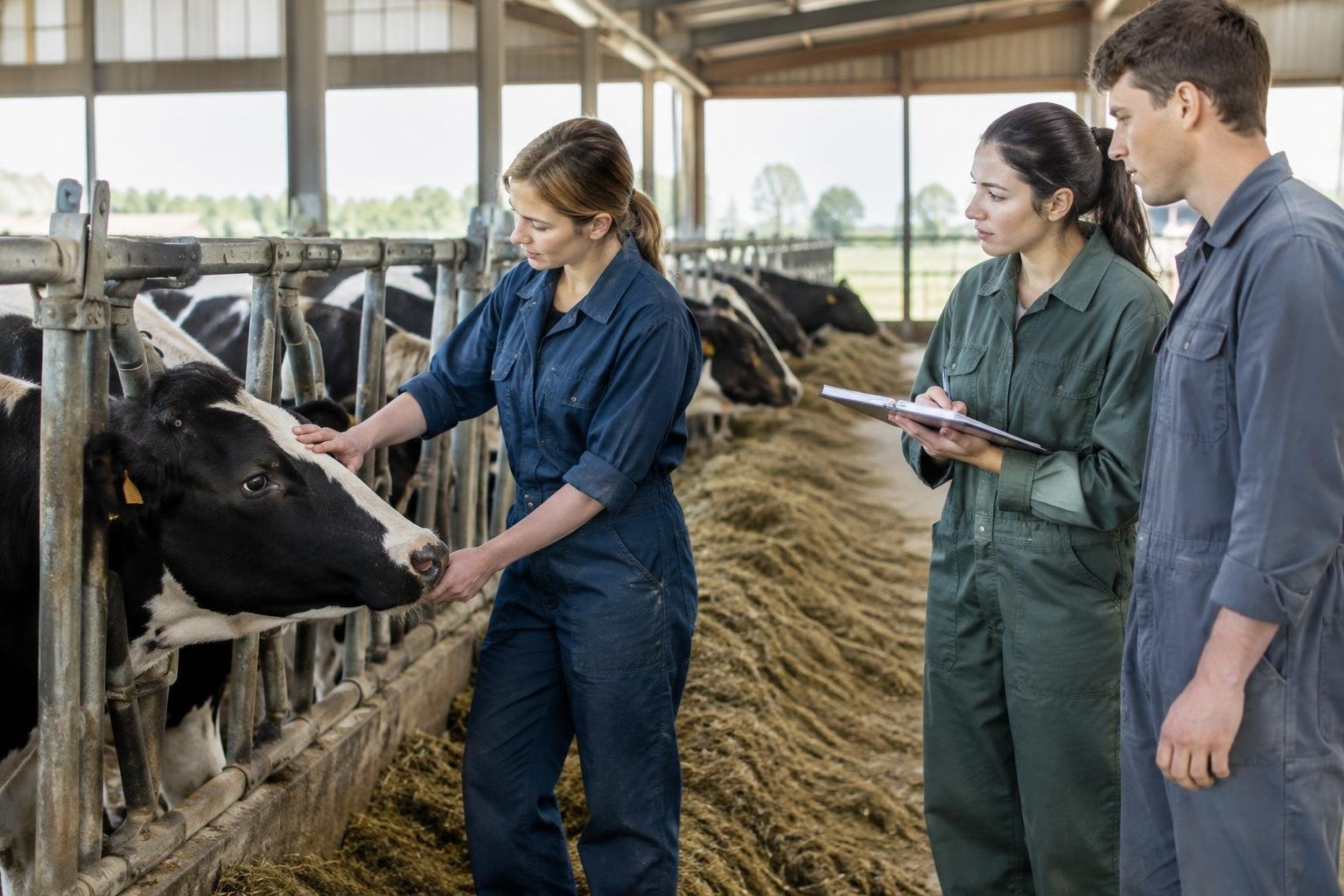
What Is a Dairy Science Degree?
Dairy science is an area of animal and agricultural study focused on dairy animals and milk production. Depending on the school, a program may sit within animal science, animal and veterinary sciences, or an agriculture department. Degree names and options vary, so applicants should compare course requirements rather than assume two similarly named programs cover the same material.
The subject can connect animal biology and management with dairy production. The University of Idaho describes its dairy science option as examining milk production from lactation physiology through management of a modern dairy. That illustrates the range a specialized program may cover, but it is not a universal curriculum.
Dairy science is related to, but not interchangeable with, animal science, veterinary medicine, and food science. Animal science can cover a wider range of species and topics. Veterinary medicine is a professional route to diagnosing and treating animals. Food science focuses on food properties, safety, processing, and products; some dairy careers overlap with that area.
What Do You Study in Dairy Science?
Coursework varies by college, but dairy science students can expect a focus on the animals and production systems that make dairy products possible. A program may examine lactation physiology and how dairy operations are managed. In broader animal and dairy science study, students may learn about selection, breeding, nutrition, reproduction, growth, and management of livestock and companion animals.
Ask colleges to show you a term-by-term degree plan. Look for the balance among animal biology, dairy-specific study, general sciences, business or communication electives, and practical learning. Check whether a program offers opportunities related to dairy production, food quality, research, or agricultural education. Do not assume that a course title means the same thing at every college.
For example, a student interested in milk production may want coursework that connects physiology with dairy management. Someone more interested in product quality might investigate food and dairy science options, including whether the program offers quality-control or product-development preparation.
Skills You Can Develop
The field can help students build a working vocabulary for animal production and an understanding of how animal selection, breeding, nutrition, reproduction, growth, and management relate to livestock systems. Career materials from Mississippi State University Extension describe these as areas where animal and dairy science graduates may apply their knowledge.
- Scientific reasoning: use evidence and animal-science concepts to understand production questions.
- Production awareness: connect animal biology with the management of dairy systems.
- Communication: explain products, practices, or technical information to customers, colleagues, or communities.
- Industry perspective: understand how animal agriculture connects with food quality, research, sales, and education.
The skills you develop depend on electives, work experience, and the program’s practical components. Ask how students gain experience applying classroom learning, rather than judging preparation from a degree title alone.
Who Is Dairy Science Best For?
Dairy science may appeal to students curious about animal biology, milk production, agriculture, and how food industries work. It can also suit students who want to explore several animal-agriculture career directions before specializing. You do not need to have grown up on a farm to investigate the major, but you should find out what practical learning the specific program expects.
Consider whether you prefer hands-on production questions, science and research, business-facing work, or education and outreach. Dairy science can connect with all of these, but not every program prepares equally for every path. The University of Wisconsin–Madison lists possible areas that include research, quality control, communications, pharmaceuticals, food testing, animal nutrition, dairy genetics, and herd management.
Does Dairy Science Match You?
Salary, reputation, and job growth are only part of a college decision. Think about whether you want to study animal systems and whether the day-to-day work of your intended career sounds engaging. Assessment.com’s Free MAPP Career Assessment, Degree Matching, and Career Matching can give you another way to explore how interests and preferences relate to potential paths. Treat an assessment as a reflection tool, not a guarantee of success.
Take the Free MAPP Assessment to explore careers and degree directions that may align with your profile.
Admissions, Time to Completion, and Academic Demands
Admissions standards are set by each institution and can differ by credential, major, and applicant. Before applying, check the current admissions page and ask whether the program has prerequisites in science or mathematics, a minimum academic standard, or additional steps beyond general college admission. If you are transferring, request a written review of how previous courses apply to the major.
Completion time depends on the credential, course load, transfer credit, and whether required courses are offered when you need them. The available research includes certificate, associate, bachelor’s, graduate, and professional study possibilities across the wider animal and agricultural field, but does not establish one standard timeline for dairy science. Use the college’s published degree plan to estimate your route.
Potential academic challenges include adjusting to scientific coursework and connecting concepts across animal biology and production management. To prepare, review sample course plans, ask advisers about recommended preparation, and talk with students or faculty about the balance of classroom and applied learning.
Online, Hybrid, or On Campus?
Online, hybrid, and campus options are determined by each college. A program may offer some lecture-based classes remotely while reserving labs or applied experiences for campus or an agricultural setting. The research sources describe dairy science programs but do not establish a universal delivery format.
Ask whether the course sequence includes in-person lab work, access to dairy facilities, field experiences, internships, or other practical requirements. If you cannot relocate or commute, get clear confirmation about where and when any in-person work occurs before enrolling. Also ask whether distance students can access advising and career services.
Dairy Science Degree Costs and Financial Aid
Tuition and total attendance cost depend on the college, residency, credential, delivery format, fees, course materials, and living arrangements. Dairy-specific expenses may also depend on the facilities or practical learning a program requires. Request a term-by-term cost estimate that includes mandatory fees and likely course materials, not tuition alone.
Ask the financial aid office about federal and state aid eligibility, institutional scholarships, work-study, payment plans, and whether an employer offers education assistance. Students comparing programs should calculate the total cost after grants and scholarships and consider how transfer credits could affect the number of terms they need to pay for.
To protect affordability, compare net cost and completion requirements together. A lower quoted tuition does not necessarily mean a lower total bill if more credits are required or travel and housing costs differ.
Careers, Jobs, and Employment Options
A dairy science degree can support a range of directions, but a major does not guarantee a job, salary, or employment outlook. Match occupation-specific requirements to the education and experience you plan to obtain. The options below are examples reflected in university and extension career materials; job titles and qualifications differ by employer.
| Career direction | Typical preparation to investigate | How dairy science may apply |
|---|---|---|
| Dairy herd or production management | Relevant animal-agriculture education and practical experience | Connects animal nutrition, reproduction, growth, and management with production systems |
| Animal nutrition or consulting | Animal-science preparation; verify role-specific employer requirements | Applies study of animal nutrition to livestock-related work |
| Dairy genetics or breeding support | Relevant science and animal-agriculture preparation | Draws on animal selection and breeding knowledge |
| Dairy or food quality control | Relevant science or dairy/food training; requirements vary | Connects scientific knowledge with quality processes |
| Food product development or consumer services | Relevant dairy, food, or science experience | Can provide context about dairy products and production |
| Agricultural or dairy sales | Product knowledge and communication skills; requirements vary | Provides background for explaining animal-agriculture products or services |
| Research or laboratory work | Requirements depend on the role; advanced study may be relevant | Can support research involving animal and dairy science |
| Extension, 4-H, or agricultural education | Role-specific education and any applicable teaching qualifications | Provides subject knowledge for outreach or instruction |
| Veterinarian | Doctor of Veterinary Medicine degree and state license | May provide relevant undergraduate preparation, but does not qualify a graduate to practice |
For salary and outlook, search current labor-market data by occupation and location. A single “dairy science salary” would obscure the differences among research, production, sales, food quality, and veterinary careers.
Career materials from Wisconsin and Kentucky describe opportunities in research, food testing, quality control, dairy and meat product development, consumer services, sales, extension, and animal agriculture. Agricultural technology and changing food systems may affect particular employers and tasks, but evaluate actual job descriptions rather than assuming that technology will eliminate or guarantee a role.
Experience, Credentials, and Licensure
Practical experience can help you test whether a career direction fits and show employers how you apply what you have learned. Ask whether the program connects students with dairy operations, research opportunities, food businesses, extension activities, or related employers. The right experience depends on your intended path: production-focused students may seek exposure to herd management, while students interested in food quality may look for relevant dairy or food-industry experience.
Build a clear record of projects, responsibilities, and skills. Keep a résumé that describes what you did, not only the name of a club or course. Seek references from instructors or supervisors, and use informational conversations with alumni and employers to learn which skills matter in your target roles.
How to Stand Out to Employers
- Choose coursework and experience that reinforce a defined career direction.
- Practice explaining animal, production, or food-quality concepts in plain language.
- Ask employers what entry-level candidates are expected to know.
- Verify any licensing or certification requirement for a specific job before investing in a credential.
Degree completion and professional authorization are not the same. Veterinarians must earn a Doctor of Veterinary Medicine degree from an accredited veterinary college and obtain a state license.
Graduate School and Veterinary Pathways
Graduate study can support a more specialized direction in animal, dairy, or veterinary science. A master’s degree may be useful for advanced subject study or research preparation; doctoral programs are commonly connected with research and university careers. Utah State University describes its animal, dairy, and veterinary sciences graduate pathways and reports that many of its PhD graduates pursue university faculty or research roles. That is an example from one program, not a promise about outcomes for every graduate.
For veterinary practice, the relevant professional credential is the Doctor of Veterinary Medicine, followed by state licensure. Some undergraduate dairy science options are designed to provide preparation for veterinary school, but students must confirm prerequisites and admissions requirements with the veterinary schools to which they plan to apply.
Related Degrees and Alternatives
Consider these alternatives if you want a different balance of breadth, specialization, or career preparation:
- Animal science: Consider this instead if you want to study animals across a wider range of species or topics.
- Veterinary medicine: Consider this professional route if your goal is to diagnose and treat animals; it requires veterinary school and licensure.
- Food science: Consider this instead if food properties, quality, processing, or product development are your main interests.
- Agricultural business: Consider this if you are more interested in management, sales, or the commercial side of agriculture.
- Agricultural education or extension: Consider this if teaching, outreach, or helping communities apply agricultural information appeals to you.
- Animal nutrition: Consider this if you want a more concentrated focus on animals’ dietary needs and related work.
Program labels are not enough to make a fair comparison. Place the required courses, hands-on options, possible careers, and additional credentials side by side. If you are undecided between dairy science and broader animal science, check how much room each program leaves for electives and career exploration.
How to Choose a Dairy Science Program
Before accepting an offer, check the program’s academic home, curriculum, facilities, and practical learning. Confirm that any professional pathway you are considering meets the relevant next-stage requirements. For veterinary preparation, speak with target veterinary schools and confirm prerequisites directly; for veterinary practice, check accreditation and state licensure rules through the appropriate official bodies.
- What is the full cost after aid, including fees, housing, books, and travel?
- Which courses and applied experiences are required, and where are they completed?
- How do transfer credits apply to the major and graduation requirements?
- What employers, research groups, or extension programs engage with students?
- What career services and advising are available?
- What do recent graduates do, and how were those outcomes measured?
- What additional education or license is required for my intended occupation?
Compare at least two program plans and talk with an adviser before committing. Assessment.com’s Degree Matching and Career Matching tools may help organize your interests and possible next steps; explore them alongside direct conversations with colleges and employers.
Explore options that fit your goals.
From Dairy Science Degree to Career
A dairy science degree can lead in more than one direction, and movement between stages is not automatic. Use these examples as planning possibilities, then verify each job’s education and experience requirements:
- Dairy production: dairy science study → an entry-level role with an animal-agriculture employer → production experience → herd management or a specialized area.
- Food quality: dairy or animal science study → quality or laboratory support work → experience in a dairy or food business → product quality, testing, or development responsibilities.
- Research: undergraduate study → research assistant or related entry-level work → graduate study or focused experience → advanced research or university work.
- Veterinary practice: undergraduate preparation that meets prerequisites → veterinary school admission and a Doctor of Veterinary Medicine degree → state licensure → veterinary practice.
These are not guaranteed career ladders. Employers, available roles, location, experience, and further education all affect what happens next.
Frequently asked questions
What is a dairy science degree?
Dairy science is the study of milk-producing animals and the systems that support dairy production. Depending on the program, students may explore animal biology, nutrition, reproduction, herd management, and milk production. A dairy science degree can lead toward roles in animal agriculture, dairy or food businesses, research, education, or preparation for further study. Veterinary practice requires a Doctor of Veterinary Medicine degree and state licensure.
Is dairy science a difficult major?
It can be challenging if you are not prepared for science-based study or practical work involving animal agriculture. Dairy science programs may draw on biology and other sciences, and the work can connect classroom learning with production systems and animal care. Before enrolling, review the actual course plan and ask about required labs, field experiences, and academic support. The difficulty depends on your preparation and the program’s structure.
What jobs can I get with a dairy science degree?
A dairy science degree may prepare graduates for work related to dairy production, animal nutrition, herd management, livestock breeding, food quality, research, sales, or agricultural education. The specific jobs available depend on the degree level, experience, location, and employer. It does not by itself qualify someone to practice as a veterinarian; that requires a veterinary degree and state license.
How much can you make with a dairy science degree?
There is no single salary for dairy science graduates because the degree leads to varied occupations. Pay depends on the job, employer, location, experience, and education. Compare current wage information for specific roles, such as agricultural or food scientist, farm manager, sales representative, or animal care professional, rather than relying on one figure for the major. Check the U.S. Bureau of Labor Statistics and local job listings when evaluating a career path.
Can you earn a dairy science degree online?
Some coursework may be offered online, but the availability and format depend on the college and program. Ask whether labs, animal handling, farm-based learning, internships, or other practical experiences must be completed in person. A program’s online label does not tell you whether every requirement can be completed remotely.
Does dairy science require a lot of math?
Dairy science is science-focused, so students should expect to work with scientific ideas and evidence. The amount of mathematics varies by program and course selection. Review the published degree plan for required science and quantitative courses, and ask an adviser what preparation is recommended if you have concerns about math or laboratory science.
Do you need graduate school after a dairy science degree?
Not for every career. An undergraduate dairy science degree can support paths in animal agriculture, food-related work, sales, and other industry roles, depending on preparation and experience. Veterinary practice requires a Doctor of Veterinary Medicine degree and state licensure. Some research, teaching, or advanced specialist roles may call for graduate study, so check the education requirements for the job you want.
What certifications or licenses do dairy science graduates need?
There is no one credential that is required for every dairy science career. Requirements depend on the occupation and state. Veterinary practice, for example, requires a Doctor of Veterinary Medicine degree and a state license. For other paths, ask prospective employers and program advisers which credentials are valued in your target industry before paying for a certification.
What is the difference between dairy science and animal science?
Dairy science focuses on milk production and dairy animals, while broader animal science programs may cover a wider range of species and animal-related topics. Programs differ, so compare required courses, electives, facilities, and career preparation rather than relying on the degree title alone. The best choice depends on whether you want specialized dairy study or broader animal science options.
People Also Ask
What do you learn in dairy science?
Dairy science focuses on milk production and related animal and production systems. Programs may address animal biology, nutrition, reproduction, and dairy management, but specific courses vary by college. Review the curriculum and practical learning options at each school.
How long does it take to get a dairy science degree?
Dairy science programs may be offered at different credential levels, but duration depends on the award, course load, transfer credit, and the institution. Check the program map and ask the registrar how prior credits affect your expected completion date.
Can you become a veterinarian with a dairy science degree?
A dairy science degree can be a route toward veterinary school, but it is not itself a veterinary qualification. Veterinary practice requires a Doctor of Veterinary Medicine degree from an accredited veterinary college and a state license. Confirm prerequisite courses and admissions expectations with each veterinary school.
Is dairy science the same as animal science?
Compare program titles by looking at required courses and hands-on learning. Dairy science is centered on dairy animals and milk production; animal science programs may address a broader set of animal topics. The names and course mix vary by institution.
What can you do with a dairy science major?
Dairy science can support roles in animal agriculture, herd management, nutrition, dairy or food businesses, research, and education. The degree does not guarantee a particular job; experience, location, and the employer’s requirements also matter.
Are dairy science programs available online?
Some programs may provide online coursework, but practical components can require in-person participation. Ask each college whether labs, animal experiences, internships, or farm-based learning are required and where they take place.
Dairy science may suit students who want to understand milk production and animal agriculture while keeping several career directions open. Its value depends on the work you want to do: some roles are accessible with an undergraduate degree and relevant experience, while veterinary practice requires a separate professional degree and state license. Compare programs by their dairy-specific learning, hands-on opportunities, total cost, and connection to your goals. Before choosing, consider whether you are more drawn to production, animal health, food quality, research, business, or education. A good fit is not only a major that sounds interesting; it is a program that prepares you for work you can picture doing.
Want to see your options? Try our comprehensive Degree, Program & College Search tool
College Search ToolSources & Official Resources
- Dairy Science, BS < University of Wisconsin-Madison - Guide
- Bachelor of Science in Animal and Dairy Science, Pre-Veterinary
- Career Opportunities With a Bachelor of Science In Animal and Dairy Sciences | Center for 4-H Youth Development
- B.S. in Animal Sciences | Animal & Food Sciences
- Animal and veterinary science | Dairy science option (B.S.A.V.S.) | University of Idaho
- Animal, Dairy, and Veterinary Sciences - MS, PhD
- Undergraduate Studies | Animal and Dairy Sciences | Mississippi State University
- Career Opportunities with a Bachelor of Science in Animal and Dairy Sciences | Mississippi State University Extension Service