Degree Library
Comparative and Laboratory Animal Medicine: Degrees, Courses, Careers, and How to Choose
Comparative and laboratory animal medicine is a broad area of study focused on animal biology, health, care, and research. Colleges may teach it through…
By Tome Fierre · Staff Writer Assessment.com · Published October 5, 2026 · Last updated October 6, 2026
Comparative and laboratory animal medicine is a broad area of study focused on animal biology, health, care, and research. Colleges may teach it through animal science, veterinary science, comparative medicine, or laboratory animal science programs rather than offer one standardized degree with this exact title. Students may study anatomy, physiology, animal behavior, microbiology, disease, research methods, and responsible animal management. Related careers can include research support and animal-care roles, while veterinary practice and advanced scientific work require additional education or qualifications. Not sure whether this field fits you? Take the Free MAPP Career Assessment to explore how your motivations, interests, and preferences relate to this degree and its career paths. Take the Free MAPP Assessment →
Comparative and laboratory animal medicine is a broad field studying animal biology, health, care, and research. Related college programs may be offered as animal science, veterinary science, or comparative medicine degrees. A related bachelor’s degree can prepare students for some animal and research-support work or further study, but it does not qualify someone to practice as a veterinarian.
What Is Comparative and Laboratory Animal Medicine?
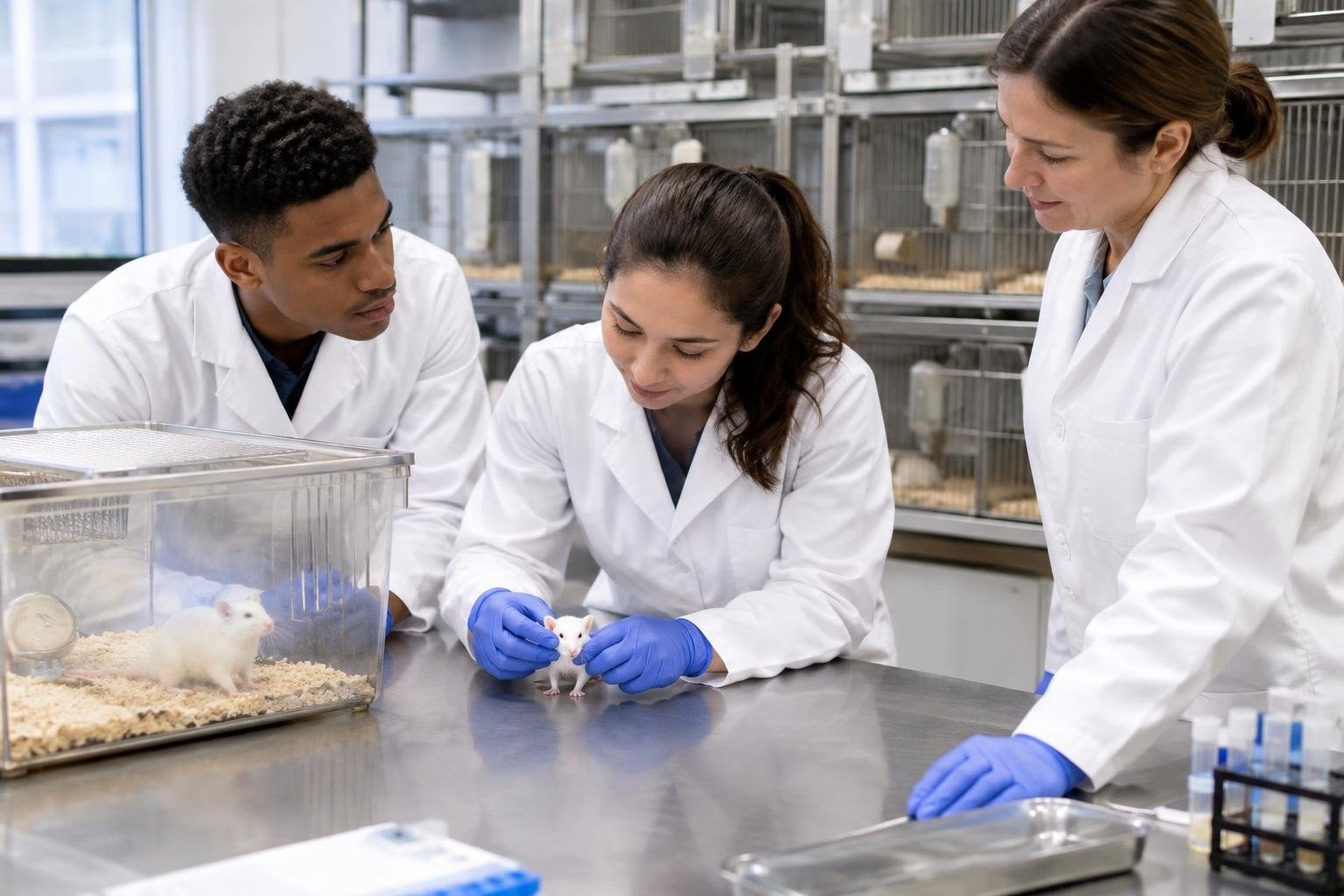
Comparative and laboratory animal medicine connects animal biology and health with research and responsible animal care. It is not one uniformly named U.S. degree. Similar preparation may be found in animal science, veterinary science, comparative medicine, or laboratory animal science programs. Award levels range from certificates and associate degrees to bachelor’s and graduate degrees, but the curriculum and career preparation can differ substantially.
Comparative animal science may examine animal systems and health across species. Laboratory animal medicine focuses on animals used in research settings and the scientific and care practices surrounding them. Veterinary medicine, by contrast, is professional clinical education for people seeking to become veterinarians. The University of Arizona describes veterinary science topics including animal reproduction, anatomy, physiology, microbiology, disease ecology, and pathology. See its veterinary science program overview.
Program names are not reliable substitutes for examining the actual degree plan. Ask whether a program is intended for industry employment, research preparation, graduate study, or prerequisites for a professional program.
What Do You Study, and What Skills Do You Develop?
Students commonly build a foundation in biological sciences and study how animal systems, behavior, care, and health relate to research or animal industries. The specific courses depend on the degree. An animal science curriculum at the University of Arkansas, for example, describes introductory study of biological sciences connected with modern livestock care and management, as well as facilities, production, processing, animal selection, meat, and milk. Review the catalog example.
Related programs may include laboratory or field experiences. Texas A&M describes direct animal contact in laboratory courses and directed field studies, together with coursework on animal systems and behavior and interaction with livestock industry leaders. Wisconsin-Madison reports hands-on opportunities in a livestock laboratory that supports work with multiple species and includes a surgery room. These are examples, not guarantees about other campuses.
At more advanced levels, students may pursue research, a specialization, or graduate study. The work can involve reading scientific literature, collecting and interpreting data, documenting procedures, and communicating findings. A capstone, internship, or clinical component is program-specific; ask for a current course sequence and practical-learning requirements rather than assuming every degree includes one.
Skills you may develop
- Scientific literacy: understanding animal biology and evaluating evidence.
- Observation and documentation: recording animal-care or research information carefully.
- Research thinking: asking testable questions and interpreting findings.
- Communication: explaining procedures and information to research teams, animal-care staff, or industry colleagues.
- Professional judgment: following established care and safety procedures and knowing when to consult a supervisor.
Specific technical skills depend on the facilities, courses, and supervised experiences available at the college.
Who Is This Field Best For?
This field may appeal to students who want to understand how animal bodies function, how disease affects animals, or how animal care and research are connected. It can suit people who are comfortable with structured procedures, careful observation, and science-based problem solving. Students do not need to have one particular personality or already know which animal career they want.
Consider whether you are interested in biology and research as well as working around animals. Animal-related work can include recordkeeping, repetitive protocols, teamwork, and responsibility for care, not only direct interaction with animals. Science-intensive programs may require sustained study in biology and related subjects.
Does Comparative and Laboratory Animal Medicine Match You?
Salary, prestige, and general job-growth claims should not outweigh the daily work and education required. Assessment.com’s Free MAPP Career Assessment, Degree Matching, and Career Matching tools can help you explore how your motivations and preferences relate to education and work options. Use them as reflection tools, then compare actual course plans and job requirements.
Take the Free MAPP Assessment →
Admissions, Length, Difficulty, and When to Explore This Path
Admissions rules depend on the college and credential. Undergraduate applicants may need to meet general admission standards and complete science prerequisites or placement requirements. Graduate programs typically set their own academic and research expectations. Do not assume standardized tests, a particular GPA, an interview, or animal experience is required unless the school says so.
There is no single standard completion time because the subject is available at several degree levels and under different program names. Full-time, part-time, transfer, and accelerated plans can change the timeline. Request a written degree map that shows credits remaining, course availability, and any required practical experience.
The academic challenge often comes from learning biological concepts while applying them accurately in laboratory or field settings. Students can prepare by reviewing prerequisite courses, strengthening study habits, asking about tutoring, and seeking advising early. For animal-care or research placements, find out whether students must compete for positions or arrange them independently.
Signs to investigate the field further
- You are drawn to animal biology, health, research, or careful animal management.
- You want to understand the work beyond simply spending time with animals.
- You are willing to compare several related program titles to find the right curriculum.
- You are prepared to check whether your intended job needs further education or credentials.
Online, Hybrid, and On-Campus Options
Online availability varies. Some lectures or general education courses may be offered remotely, but animal science and laboratory-focused programs may also rely on campus facilities, laboratory sessions, field studies, or supervised practical work. A hybrid program can combine online classes with in-person requirements.
Before applying, ask which courses must be taken on campus, whether practical placements are required, where students complete them, and whether the college helps arrange them. If you are considering an online option, ask how students get hands-on experience and how that experience is evaluated.
What to expect and how long it can take
Expect a sequence of foundational science courses followed by more specialized study, with the exact order and workload set by the program. A practical component may affect scheduling because it can depend on course rotations or placement availability. Get the school’s current recommended timeline, and confirm how transfer credits, part-time enrollment, and course cancellations could affect your plan.
Cost, Financial Aid, and Factors That Affect Your Plan
There is no single national price for this field. Cost depends on the institution, public or private status, residency, degree level, online or campus format, fees, housing, books, and any laboratory or practical expenses. Compare each program’s total estimated cost of attendance, not tuition alone.
Ask financial-aid offices about grants, scholarships, work-study, employer assistance, and transfer-credit policies. Scholarship availability is institution-specific. For example, the University of Wisconsin-Madison College of Agricultural and Life Sciences says its students receive more than $1.25 million in scholarships annually; that figure describes that college and should not be treated as a typical award or a promise to an individual applicant. Check the program information.
When comparing offers, calculate the expected cost for the full degree, including fees and living expenses, and ask whether aid is renewable and what conditions apply. Community-college transfer routes may reduce costs for some students, but confirm in writing which credits will count toward the major.
Careers, Further Education, Pay, and Job Outlook
Graduates’ options depend on their credential, skills, experience, and employer requirements. Related pathways may include animal-care and laboratory-support work, animal production or business, research support, or additional study. Cal Poly Pomona describes its animal and veterinary sciences department as preparing students for animal production, business, animal-related industries, professional schools, or doctoral study. See the department’s program information.
Career directionPossible education pathHow related study may applyAnimal-care or laboratory supportRequirements vary by employer and jobAnimal biology and care coursework may be relevant; verify experience and credential requirements.Animal production or industry rolesOften related undergraduate preparation; exact requirements varyAnimal systems, management, production, and industry exposure can be useful.Research support or laboratory workRelevant science preparation; advanced roles may require graduate educationResearch methods, documentation, and laboratory experience can be relevant.VeterinarianProfessional veterinary education and applicable authorization to practiceA related undergraduate program may help prepare for further study but is not a substitute for veterinary education.Veterinary medical officer in federal servicePosition-specific federal qualification standardsThe U.S. Office of Personnel Management lists relevant master’s specializations for GS-12 veterinary medical science positions; check the current standard and vacancy requirements.Research scientist or academic specialistGraduate education may be expected, depending on the roleGraduate study can build specialization and research experience.
Do not infer a salary or job outlook from the degree label. Pay and job requirements should be checked for the specific occupation and role. Texas A&M describes its animal science option as preparing students for graduate study and professional curricula, among other paths. Michigan State University offers graduate study in comparative medicine and integrative biology. These examples show that further study is one option, not an automatic requirement for every related job.
Experience, Credentials, Safety, and Professional Requirements
Experience can help students understand the work and demonstrate practical skills. Ask about supervised laboratory or field studies, research opportunities, internships, animal-care experiences, student organizations, and opportunities to interact with industry professionals. Texas A&M describes directed field studies and direct animal contact in laboratory courses as part of one animal science option; availability elsewhere varies.
How to stand out to employers
- Keep a clear record of relevant coursework, supervised experiences, projects, and responsibilities.
- Practice explaining how you followed procedures, documented work, and collaborated with a team.
- Seek faculty advice about research, internships, and professional connections.
- Build a focused resume for the particular job rather than listing every course equally.
- Confirm any required certificate, license, or experience with the employer or relevant authority.
Completing a degree is not the same as earning a professional license. If your goal is veterinary practice, research the separate veterinary education pathway and applicable state requirements. For federal veterinary medical science roles, OPM publishes job qualification standards; an educational specialization listed for a specific grade is not a universal rule for all animal-science careers.
Related Degrees and Graduate School
Related alternatives include:
- Animal science: consider this if you want broader study of animal systems, production, behavior, and management.
- Veterinary science: consider this if you want scientific study of animal health and may pursue further education.
- Veterinary medicine: consider this if your goal is to diagnose and treat animals as a veterinarian; this is a distinct professional pathway.
- Biology or microbiology: consider these if you prefer a broader life-science foundation or a focus on organisms and laboratory science.
- Public health or epidemiology: consider these if your strongest interest is disease patterns and health across populations.
- Animal behavior or zoology: consider these if you are more interested in behavior, ecology, or animal diversity than laboratory medicine.
Compare required courses, practical work, graduate-school preparation, and employer expectations. A program’s label may sound specialized while its curriculum is broad, or the reverse. Read the catalog and speak with a faculty advisor before deciding.
Graduate study options
Related paths may include a master’s in comparative medicine, animal science, public health, or another relevant specialization, or a doctorate for research and academic goals. The appropriate choice depends on the work you want. Michigan State University describes an MS program in comparative medicine and integrative biology, while Texas A&M notes that its animal science option can prepare students for master’s or doctoral study.
How to Choose a Program: A Practical Checklist
A program is a better fit when its curriculum and learning opportunities connect clearly to your goals. Compare the following before enrolling:
- Curriculum: Which animal, biological, research, and laboratory subjects are required?
- Hands-on experience: What facilities, field studies, internships, or supervised research are actually available?
- Faculty and facilities: Are there faculty and resources relevant to your interests?
- Cost and aid: What is the full estimated cost, and what aid is renewable?
- Format and timing: Which work is online, on campus, or at an external placement?
- Outcomes: What do recent graduates do, and how does the school define and measure those outcomes?
- Transferability: Which credits will apply to the major and to future professional or graduate programs?
- Credential preparation: Does the program prepare you for any stated examination or licensing process, or is that outside the degree?
Ask for answers in writing when they affect cost, time, transfer credit, or eligibility. Assessment.com’s Degree Matching and Career Matching tools can be a starting point for exploration, not a replacement for verifying program and employer requirements.
Questions to ask before enrolling
- What exact credential and major will appear on my transcript?
- What is the expected total cost through completion?
- Are hands-on placements guaranteed, competitive, or student-arranged?
- What are recent graduates doing, and how was that information collected?
- Does this program meet prerequisites for the graduate or professional schools I may consider?
- What is the policy for transferring credits and completing courses part time?
- What career advising and employer connections are available?
- Which credentials, if any, does the degree prepare students to pursue?
Explore colleges and programs that fit your goals →
From Degree to Career: Pathways, Savings, and Mistakes to Avoid
These are possible pathways, not guaranteed promotions:
- Animal science bachelor’s → animal-industry or research-support role → relevant experience → focused graduate study or specialization → advanced research or program responsibilities.
- Veterinary science bachelor’s → animal-health or science-related work, or application to further education → advanced scientific training → specialized research or public-health work.
- Related undergraduate science degree → preparation for veterinary professional education → completion of the professional pathway and applicable requirements → veterinary practice or later specialization.
One source-supported example of a federal path is the OPM Veterinary Medical Science Series standard, which lists relevant master’s fields for GS-12 positions. Applicants should read the current announcement and qualification standards because requirements depend on the grade and position.
Ways to save without compromising fit
Compare net cost after grants and scholarships, ask about transfer credit before enrolling, and consider whether a lower-cost institution offers the courses and hands-on opportunities you need. Do not choose a program solely because it is cheaper if it cannot support your academic or career plan. Confirm practical-learning access and transfer decisions before making a deposit.
Common mistakes and red flags
- Assuming the degree title makes you a veterinarian.
- Choosing by program name without reviewing required courses.
- Relying on an advertised salary or outcome without knowing the occupation, location, and data year.
- Assuming an online course means the entire program is online.
- Taking on costs before confirming aid, credit transfer, placement access, and graduation requirements.
- Paying for a credential based on a broad promise rather than checking the actual employer or licensing requirement.
Sources and References
Key references used for program and pathway examples:
- University of Wisconsin-Madison, Animal and Veterinary Biosciences, BS.
- Cal Poly Pomona, Department of Animal and Veterinary Sciences.
- University of Arkansas, Animal Science catalog.
- Indeed Career Advice, Veterinary Science vs. Veterinary Medicine.
- Texas A&M University, Animal Science BS, Science Option.
- University of Arizona, Veterinary Science.
- Michigan State University, College of Veterinary Medicine academic programs.
- U.S. Office of Personnel Management, Veterinary Medical Science Series 0701.
Frequently asked questions
Is comparative and laboratory animal medicine hard?
It can be demanding because students may study biology, anatomy, physiology, microbiology, disease, and research methods. The difficulty depends on the program and your preparation. Some courses include laboratory or field experiences, and advanced scientific roles may require graduate-level study. Reviewing prerequisites and sample course plans can help you judge whether the academic workload suits you.
Is a comparative and laboratory animal medicine degree worth it?
It may be worthwhile if the curriculum supports a clear goal, such as animal research, laboratory animal care, animal-health work, or preparation for further study. Compare tuition and time with the specific job requirements. A degree title alone does not guarantee a particular job or salary, and veterinary practice generally requires a separate professional pathway.
What jobs can I get with this degree?
Depending on the program and additional qualifications, graduates may pursue animal-care, research-support, laboratory, animal-production, or science-related work. Some may continue to graduate or professional school. Job titles and eligibility differ by employer, and a bachelor's degree does not by itself qualify someone to practice as a veterinarian.
How much can I make with a degree in this field?
Pay depends more on the occupation, employer, location, experience, and credentials than on this broad program label. Compare current wages for specific occupations using the U.S. Bureau of Labor Statistics and O*NET, and check whether the figures apply to the job level and region you are considering. Do not treat one salary figure as a guaranteed outcome for graduates.
Can I earn this degree online?
Some coursework may be available online, but programs focused on animal or laboratory science can involve hands-on learning, laboratories, fieldwork, or supervised experience. Ask each college which components require campus attendance and whether students must arrange placements locally. Fully online availability and practical requirements vary by program.
Does this degree require math?
Students may encounter biology, chemistry, statistics, or research methods, depending on the degree plan and specialization. The amount of quantitative work varies. Check required courses and prerequisites, rather than relying on a general program title, and ask an academic advisor about support for students who need to strengthen math or science preparation.
Do I need graduate school after this degree?
Not necessarily for every job. A bachelor’s degree may support some entry-level animal, laboratory, or research-support roles, while advanced research and certain professional positions may call for graduate or professional education. Veterinary practice follows a separate veterinary degree and licensure pathway. Confirm requirements for the exact role and jurisdiction you want.
What certifications or licenses help in this field?
There is no single credential that applies to every program or career in this broad field. Requirements depend on the job, employer, and state. Ask programs which credentials their curriculum prepares students for, and verify any examination or licensing requirement with the relevant official organization before paying for a course or credential.
How does this field compare with veterinary medicine?
Veterinary medicine is professional clinical training aimed at diagnosing and treating animals and, where authorized, practicing as a veterinarian. Comparative and laboratory animal medicine is a broader scientific area focused on animal biology, health, research, and animal care in research settings. Some people study veterinary medicine first and later specialize; others pursue science or research paths without becoming veterinarians.
How long does a degree in this field take?
There is no single standard length because schools offer related subjects at different levels, from certificates and associate degrees to bachelor’s and graduate degrees. Time depends on the credential, course load, transfer credits, and practical requirements. Request a degree map from each school and ask how internships, research, or required placements affect the expected completion date.
People Also Ask
What degree should I choose for laboratory animal medicine?
There is no single standard degree title. Related preparation may be offered through animal science, veterinary science, comparative medicine, or laboratory animal science programs. Compare required courses, practical experience, and the qualifications listed for the specific job you want.
Is comparative and laboratory animal medicine the same as veterinary medicine?
No. Veterinary medicine is professional clinical education for people seeking to become veterinarians. A related bachelor’s degree may support animal-industry work or further study, but it does not qualify someone to practice as a veterinarian.
What do students study in this field?
Coursework varies by program. Examples in related programs include animal systems and behavior, biological sciences, anatomy, physiology, microbiology, and disease. Review the current catalog and degree plan for the college you are considering.
Will I get hands-on experience with animals?
Some related programs include direct animal contact in laboratory courses or directed field studies, but hands-on opportunities are not guaranteed across all colleges. Ask whether placements are required, competitive, or student-arranged, and how students are evaluated.
What jobs can I pursue with a related bachelor’s degree?
It depends on the job and employer. Animal-care, laboratory-support, animal-production, and research-support roles may have different education and experience requirements. Check current job postings for the roles and locations you are targeting rather than relying on a program title.
How can I compare animal science and veterinary science programs?
Compare the exact credential, required courses, hands-on learning, total cost, transfer-credit rules, and graduate or professional-school preparation. Ask colleges for a current degree map and recent graduate outcomes, and verify any credential requirements with the employer or relevant authority.
This field may suit students who are curious about animal health and biology and interested in research, animal care, or related scientific work. Colleges offer related preparation through programs such as animal science, veterinary science, and comparative medicine, and the curriculum and qualifications differ by program. Before enrolling, identify the work you want to do and compare the education each path requires. A related bachelor’s degree may support animal-industry work or further study, but it does not qualify a graduate to practice as a veterinarian. Veterinary medicine is a distinct professional education pathway. Compare course plans, practical-learning opportunities, total cost, and the outcomes each school reports. Consider whether the daily work and study fit your interests as well as your career goals. Take the Free MAPP Assessment →
Sources
- Animal and Veterinary Biosciences, BS < University of Wisconsin-Madison
- Department of Animal & Veterinary Sciences
- Animal Science < University of Arkansas
- Veterinary Science vs. Veterinary Medicine: What's the Difference? | Indeed.com
- Animal Science - BS, Science Option < Texas A&M Catalogs < Texas A&M University, College Station, TX
- Veterinary Science | School of Animal and Comparative Biomedical Sciences
- Academic Programs: College of Veterinary Medicine - MSU RO
- Veterinary Medical Science Series 0701
- Guide to Animal Care Careers - Education & Specialization
- Veterinary careers in laboratory animal medicine | American Veterinary Medical Association
- 2026 Best Degrees and Career Paths for Working with Animals | Research.com
- Laboratory Animal Medicine | Penn State
- Laboratory Animal Medicine – The Department of Molecular & Comparative Pathobiology
- D.V.M./M.S. in Laboratory Animal Medicine | Cummings School of Veterinary Medicine
- Focus Area – Laboratory Animal Medicine | College of Veterinary Medicine
- Comparative and Laboratory Animal Medicine Major