Degree Library
Brewing Science Degree Guide: Courses, Careers, Costs and Program Fit
A practical guide to brewing science programs: what students may study, how to compare credentials and costs, and which related careers and degrees to explore.
A brewing science program connects the study of fermented beverages with the science and production questions behind them. Depending on the college, it may be a specialized program or part of a broader food science or fermentation offering. Students should check the actual curriculum rather than assume that programs with similar names teach the same material. Coursework may draw on food science subjects such as microbiology, chemistry, food analysis, processing, and engineering, with brewing-specific study determined by the institution. Graduates may explore beverage production and related food-processing work, but the degree name alone does not guarantee a particular job, qualification, or salary. Not sure whether brewing science fits you? Take the Free MAPP Career Assessment to see how your motivations, interests, and natural preferences align with this degree and the careers it can lead to.
Millions of people Take the MAPP Career assessment to see which Degrees are the best Match!
You can too,
What Is a Brewing Science Degree?
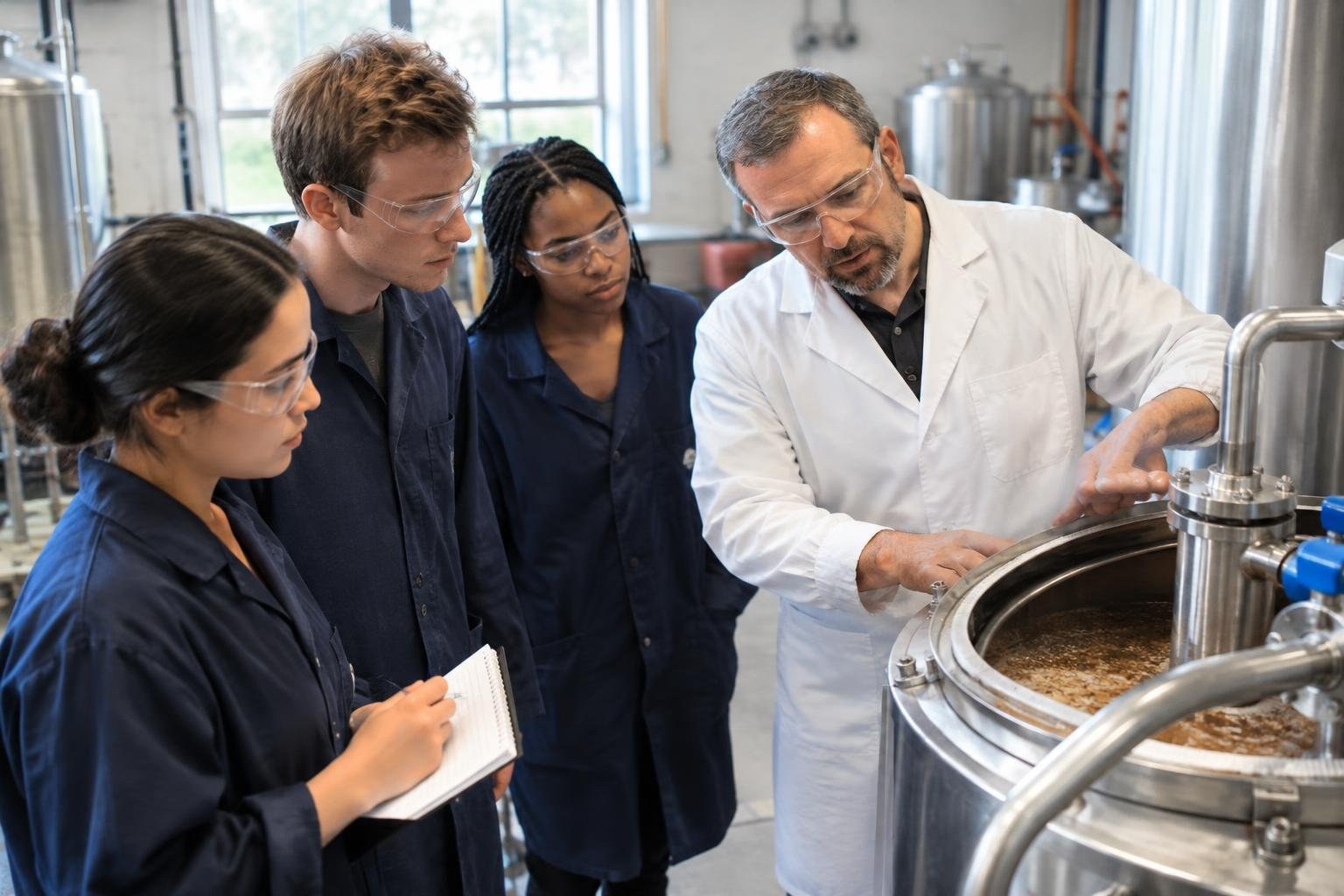
Brewing science is a focused academic area related to the science and production of fermented beverages. In college catalogs, the subject may appear as a distinct program, an option within a larger department, or a related course of study. A federal instructional-program classification list includes Brewing Science among agriculture, plant, and animal-related program titles; that classification is a way to organize fields, not a guarantee that a particular college offers a credential under that exact name.
Brewing science overlaps with food science, but the fields are not interchangeable. Food science can cover many kinds of food and processing. UC Davis describes upper-level food science study that can include food microbiology, chemistry, analysis, processing, and engineering, and separately identifies brewing as a program area. A brewing-focused curriculum may concentrate more closely on beverage production, but students must verify that emphasis in the college’s own catalog.
Look beyond the program title. Compare required courses, electives, hands-on learning, and the credential awarded. Similar names can represent different academic depth and career preparation.
What Do You Study in Brewing Science?
There is no single national course sequence for brewing science. A useful way to evaluate a program is to identify how it combines basic science, food or beverage topics, production methods, and applied learning. UC Davis’s description of upper-division food science courses offers examples of relevant foundations: microbiology, chemistry, analysis, processing, and engineering. A particular brewing program may include some, all, or different subjects.
When reviewing a catalog, ask what each required course teaches you to do. For example, does a laboratory course build skill in observing and analyzing samples? Does a processing course connect ingredients and production steps with consistent output? Are students expected to complete a project, work placement, or practical production exercise? These are questions to verify with the department, not features to assume from the degree name.
Request a sample four-year or credential-specific plan, full course descriptions, and details about equipment or laboratory access. Check whether electives are genuinely available each term and whether practical work is included in tuition or requires separate fees.
Skills You May Develop
Relevant abilities depend on a program’s curriculum and the jobs you pursue. Food science coursework can involve laboratory observation, analysis, scientific reasoning, and understanding how processing works. A brewing-focused program may apply some of those foundations to beverage production, but confirm its learning outcomes before treating any skill as a guaranteed part of the degree.
- Scientific reasoning: interpreting observations and asking testable questions.
- Careful measurement: following documented methods and recording results accurately.
- Process awareness: understanding how ingredients, equipment, and production steps fit together.
- Communication: explaining procedures, findings, and quality concerns clearly.
- Teamwork: coordinating work in settings where production, technical, and business priorities meet.
Ask colleges how these abilities are assessed. Course projects, laboratory reports, production exercises, internships, and capstones offer different kinds of evidence. When comparing programs, ask for examples of student work and the competencies listed in the official learning outcomes.
Who Might Find This Program a Good Fit?
Brewing science may interest students who like applied science and want to connect technical study with a specific type of food or beverage production. It can also appeal to learners who enjoy careful observation, practical problem solving, and understanding how a product moves through a process. Those are possible points of fit, not entry requirements or a fixed personality profile.
Be honest about what attracts you. If your interest is mainly in tasting or serving beverages, compare the academic curriculum with hospitality or business programs. If you want broad preparation for food products and processing, a general food science program may cover more ground. If laboratory science is not appealing, review the required science courses before applying.
Does brewing science match you? Salary, job prospects, and a distinctive program name are only part of the decision. Consider whether you want the actual coursework and work settings that the program prepares you to explore. The Free MAPP Career Assessment, Degree Matching, and Career Matching can help you reflect on interests and compare pathways. Treat the results as a starting point for research, not as an admissions decision or employment promise.
Take the Free MAPP Assessment →
Admissions, Credential Levels, Time and Academic Demands
Admissions rules are set by each college and differ by credential. An undergraduate program may have general college-admission requirements, while a graduate program may require prior study in a related field. For example, Southern Illinois University’s Animal Science graduate program describes a related bachelor’s degree as preparation for its program; that is an animal science example, not an admissions rule for brewing science. Use the brewing program’s own admissions page for authoritative requirements.
Ask about high-school preparation, prerequisite subjects, transfer credit, minimum grades, application materials, and whether work experience is expected. For graduate study, check whether your prior coursework meets prerequisite expectations before applying. Do not assume that a brewing program requires a particular test, portfolio, or experience unless the institution says so.
Time to completion depends on the credential, number of credits, course availability, transfer work, and whether you study full or part time. Request the program’s published credit total and a realistic term-by-term plan. An accelerated schedule may not be practical if required courses or in-person labs are offered only at set times.
Online, Hybrid and On-Campus Options
Brewing and food-science instruction may involve practical work, but delivery formats vary by institution and course. An online label does not establish that every lab or production activity can be completed remotely. Ask which classes are online, which require campus attendance, and how students gain access to laboratory equipment and applied learning.
Before choosing a format, confirm the schedule for required in-person work, internship arrangements, and any travel or housing needs. If you are considering an online option, ask whether students can complete all required activities from their location and whether any practical component involves additional expenses.
For parents and students comparing schools, request the answer in writing or consult the catalog and department. A clear plan helps avoid discovering late in the program that required coursework conflicts with work, family, or travel commitments.
Brewing Science Costs and Financial Aid
Tuition varies with the college, residency classification, credential, course load, and delivery format. The total education budget may also include student fees, books, supplies, laboratory expenses, equipment, transportation, and housing. Compare the complete estimated cost for the program, not just the per-credit tuition shown in an advertisement.
Ask each school for a current cost-of-attendance estimate and clarify which charges are mandatory. Request a term-by-term estimate, especially if laboratory or practical courses carry additional fees. If you plan to study part time, check whether that changes financial aid eligibility or the time needed to finish.
Explore federal and state financial aid, institutional scholarships, and employer tuition assistance where available. Eligibility and award terms vary, so confirm details with the school’s financial aid office. Transfer credit from an accredited institution may reduce repeated coursework, but obtain a written evaluation before assuming credits will apply to the major.
To make an affordability comparison, calculate expected borrowing and likely monthly obligations alongside your other plans. Avoid relying on a projected salary unless it is based on a specific occupation, current labor-market data, and a location relevant to you.
Careers, Jobs and Employment Outlook
A brewing science credential may be relevant to beverage production and adjacent food-processing work, but the degree alone does not determine a graduate’s job title or eligibility. Food science subjects such as processing, analysis, microbiology, and engineering connect with technical work across food production. A student interested in brewing should investigate employers and job postings directly rather than assume every role is titled “brewer.”
Potential areas to research include beverage production, production support, quality-related work, food and beverage processing, and technical sales or service. These are pathways to investigate, not guaranteed outcomes or a list of jobs available to every graduate. Some roles may value additional experience, particular technical skills, or a different credential.
| Career area to investigate | Preparation to compare | Practical next step |
|---|---|---|
| Beverage production | Relevant production courses and practical experience | Review entry-level postings and ask employers what experience they expect |
| Quality-focused work | Laboratory, analysis, documentation, and process coursework | Compare job requirements with the program’s course descriptions |
| Food and beverage processing | Food science and processing foundations | Ask about internships and applied projects |
| Technical sales or support | Product knowledge, communication, and industry exposure | Check whether local employers recruit from the program |
Pay and employment outlook depend on the occupation, location, experience, and employer. There is no single salary or outlook figure for a degree title. Use current labor-market data for the specific occupation you are considering, and compare it with postings in your target area. Changes in equipment, production methods, and employer needs are reasons to keep practical skills current, not grounds for assuming that technology will eliminate or guarantee a career.
Find out which Career or College Major is right for you!
Take the MAPP free today!Accreditation, Certification and Licensure
Brewing science is an academic subject; completing a degree is not automatically the same as holding a professional license or industry certification. The materials available for this guide do not establish a single U.S. license required for brewing science graduates. Requirements depend on the job and applicable rules, so check with employers and relevant authorities for positions that involve regulated responsibilities.
Ask programs whether they prepare students for any specific credential, whether the credential is recognized by employers in your target area, and whether exam or membership fees are separate. Request the credential’s issuing organization and published eligibility requirements. Do not enroll based only on a broad claim that a program is “industry certified.”
Institutional accreditation is also distinct from the program’s subject matter. Confirm the college’s accreditation through official channels and ask whether credits will transfer to institutions or graduate programs you may consider.
Experience, Projects and How to Stand Out
Work experience can help you test whether a production or laboratory environment suits you and build examples to discuss with employers. Ask about internships, cooperative education, research, production projects, student organizations, and connections with local food or beverage businesses. Availability differs by college, so verify that opportunities are active and accessible to students in your intended program.
Build a practical portfolio where appropriate: document class projects, laboratory methods, production-process assignments, or research contributions, while following school and employer rules about confidential information. Look for ways to practice clear technical communication as well as scientific work. Networking can begin with faculty, alumni, career services, and professional events; focus on learning what employers actually seek.
How to stand out to employers: connect your coursework to a job’s stated requirements, explain your hands-on experience accurately, and show that you can follow procedures and communicate findings. Do not claim independent production or testing qualifications you have not earned.
Related Degrees and Alternatives
Related options include food science, fermentation science, food technology and processing, and broader chemistry or biology study. The right alternative depends on whether you want a narrow beverage focus or a wider foundation that could apply to different products or technical settings. The program titles and availability vary among colleges.
- Food science: consider it if you want to study a broader range of food products and topics such as food chemistry, microbiology, analysis, and processing.
- Food technology and processing: consider it if production methods and processing systems interest you more than a brewing-specific focus.
- Fermentation science: consider it if you want to explore fermentation beyond brewing; verify the actual subjects and industries covered.
- Chemistry or biology: consider a broader science degree if you want flexibility across laboratory or research directions and are willing to identify relevant applied experience.
- Hospitality or business: consider these if your main interest is beverage service, operations, marketing, or management rather than production science.
UC Davis lists brewing and viticulture and enology as distinct program interests and describes food science as covering a broader set of food topics. Compare course requirements and career preparation rather than choosing from the title alone.
How to Choose a Brewing Science Program
Program choice is a decision about curriculum, cost, format, and the work you hope to explore. Before applying, compare at least two or three schools using the same questions:
- What credential is awarded, and what courses are required?
- How much laboratory or applied learning is included, and what equipment is available?
- Are internships or employer projects offered, and how are students selected?
- What is the full estimated cost, including fees and practical-course expenses?
- What are the institution’s accreditation status and credit-transfer policies?
- What outcomes does the school report, and how are those outcomes defined?
- Can you speak with current students, alumni, faculty, and career services?
- Do current job postings in your target region ask for this type of preparation?
Take a sample course schedule and compare it with your academic preparation, work, and family commitments. If the school advertises career outcomes, ask for the job titles, number of graduates included, reporting period, and whether results are specific to this program. Assessment.com’s Degree Matching and Career Matching tools can help you explore alternatives before making a decision.
Explore colleges and programs that fit your goals →
From Degree to Career: Possible Pathways
Career routes are possibilities, not guaranteed promotions. Use them as questions to investigate with a program adviser and employers:
- Brewing science coursework → practical class or internship experience → entry-level beverage production work → deeper responsibility in a production area, depending on performance and employer needs.
- Brewing or food science coursework → laboratory and analysis experience → an entry-level quality-focused position → specialized technical work as experience and job requirements develop.
- Brewing science plus business or communication electives → customer-facing experience → technical sales or support work → account or product responsibilities, depending on employer and individual qualifications.
For each path, review actual job listings and ask whether employers expect a particular credential, experience, or additional training. Talk with the college about graduate destinations, but distinguish verified program outcomes from broad examples of what a field might permit.
Questions to Ask Before Enrolling
Before committing, ask the college and yourself:
- Is the college institutionally accredited, and will credits transfer if plans change?
- What is the total estimated cost through completion, including required fees and practical work?
- What courses and laboratory experiences are required rather than merely advertised?
- Are internships, projects, or employer connections available to students in this program?
- What jobs have recent graduates obtained, and how does the school measure those outcomes?
- Are there any licenses or certifications relevant to the specific roles I want?
- Can I complete the program in my preferred format and schedule?
- What financial aid, scholarships, or employer support might I qualify for?
- Do current job postings match the preparation this curriculum provides?
- Would a broader food science or science degree fit my goals better?
Write down answers and compare them across schools. A clear comparison makes it easier for students and parents to discuss cost, risk, and personal fit without relying on program marketing alone.
Is Brewing Science Right for You?
Before Choosing a Degree, Find Out What Fits You
Choosing a college program can affect years of education and decades of work. Salary, job growth, and school reputation matter, but so does whether the work fits your motivations, interests, and natural preferences.
Take the Free MAPP Career Assessment to discover:
- careers that match you
- how related careers align with your profile
- degrees and educational pathways tied to those careers
- potential jobs connected with those paths
Use Degree Matching, Career Matching, and Matching Jobs to explore options alongside direct research into program requirements and employer expectations. A match can guide exploration; it cannot guarantee admission or a job.
Take the Free MAPP Assessment →
Frequently asked questions
What is a brewing science degree?
Brewing science studies the ingredients, processes, and technical decisions involved in producing fermented beverages. Depending on the program, learning may connect food science topics such as microbiology, chemistry, processing, and quality analysis with brewing-specific instruction. The name alone does not establish the exact curriculum, credential, or job qualification, so review each college’s current course catalog and program description.
Is brewing science hard?
It can be demanding for students who are uncomfortable with laboratory work, careful measurement, or science-based problem solving. A program’s level of chemistry, biology, math, and process instruction depends on its courses and credential. Ask for a sample degree plan and course descriptions, then compare them with your preparation and interests before deciding.
Is a brewing science degree worth it?
Potentially, but value depends on the program’s price, hands-on opportunities, local and regional employers, and the kind of work you want. Compare total cost with the program’s documented graduate outcomes and investigate whether relevant employers recruit from it. Do not assume that a specialized program guarantees a brewing job or a particular salary.
What jobs can I get with a brewing science degree?
Possible directions to investigate include production, quality-focused work, food and beverage processing, and technical support roles. The appropriate qualifications vary by employer and job. Review actual job postings in the region where you hope to work and compare their education and experience requirements with the program’s curriculum.
How much can you make with a brewing science degree?
There is no single salary for a brewing science degree because employers hire graduates into different occupations and locations. Compare pay using the specific job title, geography, experience level, and current labor-market data. A degree title is not a wage category, and program marketing should not be treated as a salary guarantee.
Can you study brewing science online?
Some coursework may be available online, but the format and hands-on requirements depend on the college. Ask whether laboratory, pilot-production, internship, or other practical components must be completed in person. Confirm how the school handles equipment access and whether any in-person requirements affect your travel or schedule.
Does brewing science require chemistry or math?
Science and quantitative requirements depend on the program. Food science study can include subjects such as food chemistry, microbiology, analysis, processing, and engineering, but a brewing-focused program may choose different courses. Review prerequisites and degree requirements rather than assuming every program has the same amount of math or laboratory science.
Do you need graduate school for brewing science?
Graduate study is not automatically required for every role connected with brewing or food processing. Some research, advanced technical, or academic paths may favor further education, while other positions may focus on relevant practical skills and experience. Check the education requirements for the specific jobs you want before committing to an additional degree.
People Also Ask
What do you learn in brewing science?
Brewing science programs can connect brewing-specific instruction with food science topics, but curricula differ. Check each program’s required courses and practical learning options.
How long does a brewing science program take?
Program length depends on the credential, required credits, course availability, transfer credit, and whether you study full or part time. Ask each college for its published credit total and a term-by-term plan.
Is brewing science an accredited degree?
The title does not by itself determine whether a program is accredited or recognized by employers. Confirm institutional accreditation and ask the college about any program-specific approvals or employer relationships relevant to your goals.
What degree is similar to brewing science?
Compare brewing science with food science, fermentation science, and broader biology or chemistry programs. The best alternative depends on whether you want specialized beverage instruction or broader preparation across food and laboratory topics.
How do I choose a brewing science college?
Start with current job postings in the places where you may want to work. Compare their requested education, technical skills, and experience with the program’s courses and practical opportunities.
Does brewing science require a license?
A brewing science degree does not automatically confer a professional license. Requirements depend on the job and jurisdiction, so verify any credential or regulatory requirement directly with the relevant employer or licensing authority.
Brewing science can suit students who want to understand how ingredients, microorganisms, equipment, and production decisions shape fermented beverages. Programs may be offered as a focused course of study or within a broader food science or fermentation pathway, so the degree label alone does not tell you what you will learn or which jobs you will be prepared to pursue. Compare actual course lists, hands-on learning, costs, and graduate outcomes before enrolling. If you are still weighing options, use career and degree matching to consider whether the subject and its possible work settings fit your interests.
Want to see your options? Try our comprehensive Degree, Program & College Search tool
College Search ToolSources & Official Resources
- Animal Science | Agriculture - SIU Academic Programs
- Animal Sciences - UF Catalog - University of Florida
- B.S. in Animal Sciences | Animal & Food Sciences
- Animal Science, B.S. | Penn State
- Undergraduate Programs | Animal Science
- Career Opportunities with a Bachelor of Science in Animal and Dairy Sciences | Mississippi State University Extension Service
- What Can I Do With a Food Science Degree? | UC Davis
- CIP - Classification of Instructional Program ACADEMIC CIP CODES