Degree Library
Animal Sciences, Other Degree Guide: Courses, Careers and Program Fit
Learn what an Animal Sciences, Other program may cover, how to compare degree options, what careers and further study to consider, and which questions to ask before enrolling.
Animal Sciences, Other is a broad college program category for animal-science study that does not fall neatly under a more specific program title. Depending on the college, students may study animal biology, nutrition, genetics, behavior, reproduction, welfare, husbandry, or production, with options that point toward agricultural work or further education. The label is not a promise of one standard curriculum, so course requirements and practical learning opportunities deserve close attention. Students and families often consider this kind of program when an interest in animals overlaps with science, agriculture, research, or business. Some programs offer industry-focused preparation; others provide science prerequisites for students considering veterinary or graduate study. Before comparing schools, identify the work you might want to do and check whether each program supports that direction. Not sure whether animal sciences fits you? Take the Free MAPP Career Assessment to explore how your motivations, interests, and preferences may align with this degree and related careers.
Millions of people Take the MAPP Career assessment to see which Degrees are the best Match!
You can too,
What Is an Animal Sciences, Other Degree?
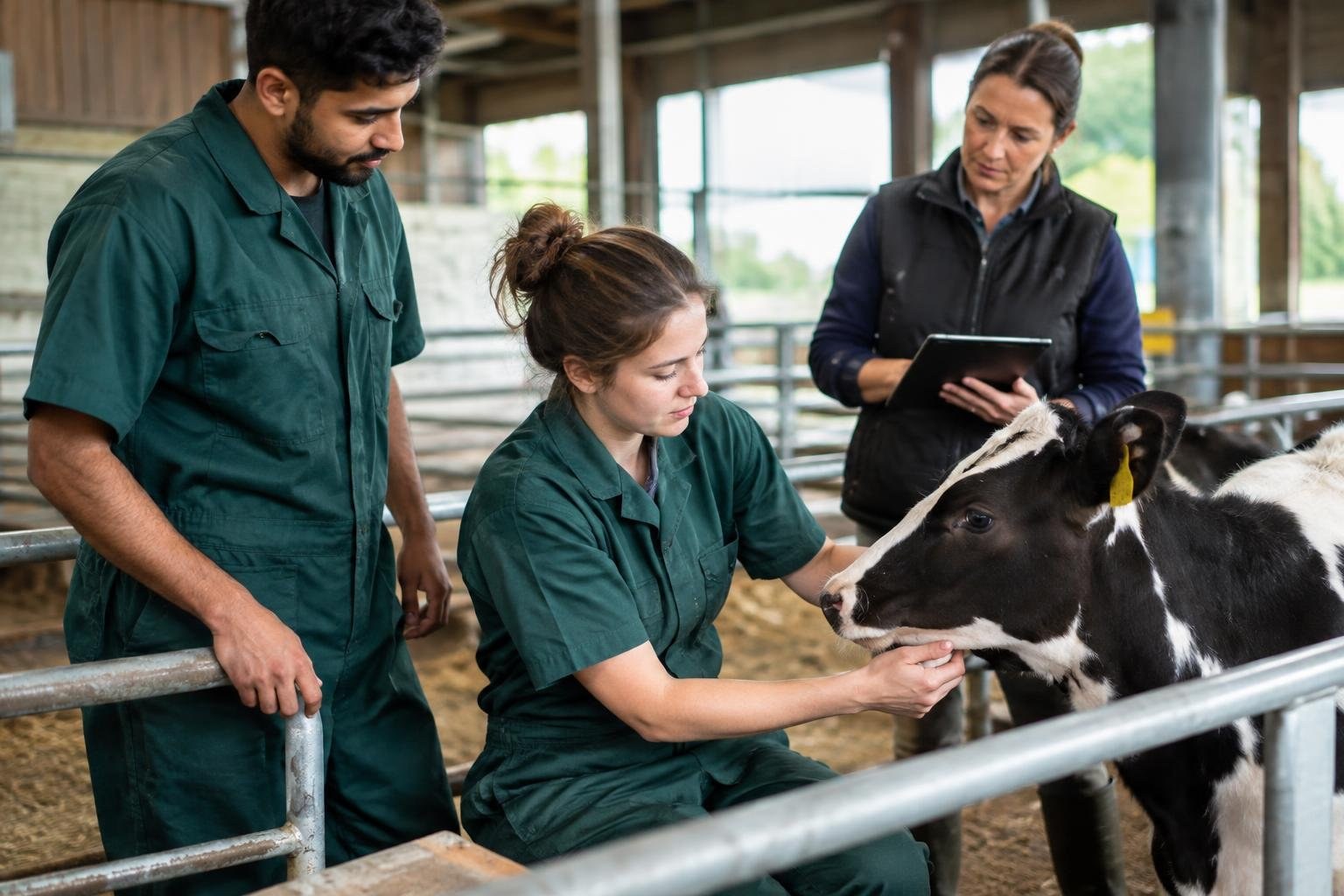
Animal Sciences, Other is a program classification rather than a single, standardized major plan. It describes animal-science study that is not assigned to a more specific category. A college may use a different name, combine animal science with veterinary science, or organize courses into tracks such as livestock production, equine science, or veterinary preparation.
Animal science examines animals in agricultural, research, and related settings. Depending on the program, the subject may include life cycles, behavior, growth, nutrition, genetics, breeding, reproduction, lactation, and husbandry. The degree title alone does not tell you which of these areas receives the most attention.
Compare the program’s official catalog, concentrations, and course sequence. A track described as pre-veterinary or veterinary bioscience can provide prerequisite coursework, but it is not a veterinary degree and does not itself authorize veterinary practice.
What Do You Study in Animal Science?
Expect a mix of animal-focused science and applied coursework, with the balance set by the college and your track. Published program descriptions identify subjects such as animal physiology, genetics, husbandry, nutrition, behavior, growth, development, breeding, and reproduction. A science-oriented option may add chemistry, biological and physical sciences, and statistics.
Courses connect scientific concepts to practical questions: how nutrition relates to animal health and production, how inherited traits inform breeding, or how behavior and husbandry affect animal management. Some colleges offer laboratory, farm, research, or other applied learning; confirm the specific requirements rather than assuming every program includes the same experiences.
Capstones, internships, research projects, and field experiences are school-specific. Ask whether they are required, how students secure placements, what facilities are available, and whether the learning experience is available to students in your intended track. Curricula change, so use the current catalog and department advising materials.
Skills You Can Develop
Students can develop a foundation in biological reasoning, animal care and management concepts, and the ability to connect scientific information to agricultural or research questions. Programs with a science-heavy plan may also strengthen quantitative skills through statistics and laboratory sciences. Industry-focused options may place more weight on production contexts and practical problem-solving.
Communication, collaboration, record-keeping, and professional judgment matter in many animal-related settings, including production, research, and business. A course plan alone does not demonstrate these abilities to an employer: seek supervised practical experience, research participation, internships, or projects when available. Choosing electives or minors can also help shape a more specific profile.
Who Is This Degree Best For?
This program may appeal to students who are curious about animal biology and welfare, enjoy learning how living systems work, or want to connect science with agriculture. It can also suit students considering animal production, an animal-related business, research, or further professional study. You do not need a single personality type to succeed; the more useful question is whether the day-to-day subjects and work settings interest you.
Consider how you feel about science courses, quantitative work, practical animal settings, and studying topics that may involve production as well as companion animals. If you are unsure, compare the course lists and speak with faculty, current students, or a career adviser about what the program actually involves.
Does Animal Sciences Match You?
Salary, reputation, and broad job-market claims cannot answer whether you will find the coursework or likely work satisfying. Consider your motivations, preferred work environment, strengths, and willingness to pursue additional education where needed. Assessment.com’s MAPP Career Assessment, Degree Matching, and Career Matching tools can help you explore possible alignments, but they should complement program research rather than replace it.
Admissions, Program Length, and Academic Difficulty
Admission rules are set by each college and by the credential level. First-year applicants generally follow the institution’s undergraduate admission process; transfer applicants should confirm required prior coursework and how credits apply to the major. Programs may have science prerequisites or progression requirements, but the supplied program descriptions do not establish one universal GPA, test, essay, or experience requirement.
Certificates and associate degrees, bachelor’s programs, graduate study, and professional or doctoral programs have different entry requirements and purposes. An associate-to-bachelor’s transfer route exists at some institutions, but participating schools and applicable credits vary. Request a transfer evaluation before enrolling elsewhere.
There is no single completion time for this broad category. Your timeline depends on credential, enrollment pace, course availability, prerequisites, and accepted transfer credit. Ask the department for a term-by-term degree map, including any classes offered only once a year.
Science sequences, quantitative coursework, and practical requirements can be demanding. Prepare by reviewing prerequisite expectations, arranging academic support early, and confirming whether work, transportation, or care responsibilities fit around scheduled labs or field learning.
Online, Hybrid, and On-Campus Options
Program format varies. Online courses may work for some theory-based subjects, but animal science can include laboratory, farm, animal-handling, research, or field requirements that require in-person participation. A program described as online may still require campus visits or approved practical experiences.
Before enrolling, request a written explanation of all in-person components, where they take place, and whether students arrange placements themselves. Ask how those requirements work for learners who live far from campus, have a full-time job, or need predictable scheduling. Do not rely on the words “online” or “hybrid” without checking the complete course and experience plan.
Tuition, Costs, and Financial Aid
Total cost depends on the college, residency status, credential, course format, fees, books, equipment, laboratory or field requirements, and living expenses. Compare the full estimated cost to completion, not just a per-credit tuition figure. Ask whether required practical experiences create transportation, housing, or supply costs.
Review federal and state aid eligibility, institutional grants and scholarships, work-study where available, and employer education benefits. Transfer credit may reduce repeated coursework, but only if the receiving college accepts it toward the degree. Get a written credit evaluation and financial-aid estimate before making a deposit. No reliable, comparable tuition figure is established for this broad program category, so use each institution’s current cost-of-attendance information.
Careers, Jobs, and Employment Outlook
Animal-science graduates may pursue work in animal production, agricultural business, or related animal industries, depending on their training and experience. Other possible directions include laboratory or biotechnology settings and research support. Some research-scientist, professor, or advanced specialist roles commonly involve further education; requirements vary by employer and position.
Examples to investigate include animal production or farm operations, agricultural sales and business support, animal-care or laboratory support, and research-related roles. These are pathways to explore, not guaranteed placements or universal qualifications. A bachelor’s degree may be sufficient for some jobs, while others require a graduate degree, a professional credential, substantial experience, or an occupational license.
Pay and outlook: There is no single salary or employment outlook for this degree because graduates enter different occupations. The research available for this guide does not provide current, occupation-level wage or job-growth figures. Identify a job title and location, then check current BLS or O*NET data and compare it with actual employer postings. Treat any salary estimate as occupation-specific, not as a guaranteed return on the degree.
Industry changes, including new technologies and data tools, may affect particular roles, but their impact differs across employers and occupations. Build adaptable skills and check current job descriptions rather than assuming a single trend applies to all animal-science work.
Find out which Career or College Major is right for you!
Take the MAPP free today!Experience, Credentials, and How to Stand Out
Work experience can help you test whether a setting fits before graduation. Ask about supervised research, internships, farm or laboratory experience, student organizations, volunteer opportunities, and projects connected with your interests. Colleges differ in the experiences they offer and whether students must find placements independently.
To stand out, connect your coursework to evidence of applied learning: describe a research task, production project, data assignment, or supervised experience and what you learned. Build relationships with instructors and advisers, and use career services to review résumés and identify relevant employers. Do not assume that a short course or certificate substitutes for a degree or a credential required by an employer.
Accreditation, Certification, and Licensure
Check the institution’s accreditation status and confirm that the program meets any requirements for your intended next step. Programmatic accreditation and professional eligibility are not interchangeable. Veterinary practice is a separate professional pathway; completing an animal-science major does not make a graduate a veterinarian. If a job or graduate program requires a specific credential, verify the rule with the relevant licensing body, school, or employer.
Graduate and Professional Study
Some students pursue veterinary medicine after completing undergraduate prerequisite coursework; others consider a master’s or doctorate for research, teaching, or specialized scientific work. Texas A&M describes a science-focused animal-science option as suitable preparation for veterinary, medical, allied-health, law, or graduate study. A separate program description from NC State identifies a veterinary bioscience track with veterinary-school prerequisites and a science-focused option for students considering graduate or medical school.
Professional-school admission is a separate process, and prerequisite completion does not guarantee admission. Confirm course requirements directly with the programs you may apply to. For graduate study, compare the research focus, faculty expertise, funding, and career purpose before deciding that an additional credential is worthwhile.
Related Degrees and Alternatives
Compare related majors by asking what subjects dominate the curriculum and which next steps the program supports:
- Animal Sciences, General: consider it if a college offers a more clearly defined broad animal-science curriculum or concentration.
- Veterinary Medicine: consider this professional pathway if your goal is to diagnose and treat animals and you are prepared for veterinary education and licensing requirements.
- Animal Nutrition: consider a focused curriculum if nutrition is your primary scientific interest.
- Dairy Science or Dairy Husbandry and Production: compare these when you want concentrated study of dairy animals or production systems.
- Equine Science or Horse Husbandry: consider a horse-focused plan if equine work is your central interest.
- Agricultural Business and Management: compare this option if business operations, rather than animal biology, are your priority.
- Agriculture, General: consider a wider agricultural foundation if you want to explore multiple areas before specializing.
Program titles and course requirements differ among schools. Compare catalogs, practical experience, graduate prerequisites, and possible occupations rather than assuming two similarly named degrees are equivalent.
Advantages, Drawbacks, and Is It Worth It?
Whether this degree is worth the time and cost depends on your intended work, the program’s practical opportunities, and whether you need further education. A flexible curriculum can be useful if it lets you combine animal science with a relevant minor or specialization. A broad title can also make it harder for employers or graduate programs to understand your preparation unless you can point to focused coursework and experience.
Before deciding, compare net cost, completion time, transferability, hands-on access, advising, and credible outcomes. Ask the college how it tracks graduate employment and whether results are specific to this major. Consider a lower-cost transfer route only after confirming that credits will apply and that the overall plan still meets your goals.
How to Choose the Right Animal Science Program
Use this checklist when comparing programs:
- What does the current degree plan require, and which tracks or electives can I choose?
- What is the estimated net cost to completion, including fees and practical-learning expenses?
- Which labs, farms, research opportunities, internships, or other applied experiences are available?
- What in-person requirements apply to online or hybrid students?
- How do transfer credits apply, and can the school provide a written evaluation?
- What career, graduate-school, and professional-program advising is available?
- What outcomes does the school report for graduates of this specific program?
- What accreditation applies to the institution or program, and does it meet my next-step requirements?
- Which employers or graduate programs recruit or collaborate with students?
- What grants, scholarships, payment plans, or employer benefits might lower my cost?
Use the answers to test whether the program supports a real plan, not just an attractive title. Assessment.com’s Degree Matching and Career Matching tools can help you investigate options, and Matching Jobs can help connect career ideas with roles to research.
From Degree to Career: Example Pathways
Possible pathways illustrate how education and experience can build over time, without guaranteeing a particular progression:
- Animal-science bachelor’s degree → entry-level role in an animal-production or agricultural business setting → build experience in operations or a product area → pursue a supervisory or specialized role if employer needs and qualifications align.
- Animal-science degree with science prerequisites → apply to veterinary or another professional program → complete that program and its applicable licensing steps → pursue a clinical or related professional career.
- Animal-science degree → research or laboratory support role → develop technical experience → consider graduate study for scientist, researcher, or academic positions.
These are examples, not guaranteed routes. Confirm each role’s education and experience requirements with employers and relevant professional programs.
Program Research and Reference Links
For program-specific information, start with current college catalogs and department pages. Useful examples in the research for this guide include animal-science program information from Cal Poly Pomona, NC State, the University of Nebraska–Lincoln, the University of Kentucky, Texas A&M, and Southern Illinois University. Their program descriptions illustrate how tracks and curricula can differ; they are not endorsements or a substitute for checking current requirements.
- Cal Poly Pomona Department of Animal and Veterinary Sciences
- NC State undergraduate animal-science programs
- University of Nebraska–Lincoln Animal Science catalog
- University of Kentucky Animal Sciences program
- Texas A&M Animal Science science option
- Southern Illinois University Animal Science program
Review the latest catalog and contact each institution to confirm current course, admission, cost, transfer, and experiential-learning details.
Frequently asked questions
What is an Animal Sciences, Other degree?
Animal Sciences, Other is a broad program classification for animal-science study that does not fit a more specific category. The actual curriculum depends on the college. Programs may emphasize animal biology, nutrition, genetics, behavior, husbandry, production, or preparation for further study, so review the course list and degree requirements rather than relying on the title alone.
Is Animal Sciences, Other hard?
It can be challenging for students who find biology, chemistry, quantitative coursework, or hands-on animal work demanding. The level depends on the program and chosen track. Some animal-science programs include substantial science preparation, while others emphasize production or industry applications. Ask for a sample plan of study and course prerequisites before enrolling.
What jobs can I get with an animal sciences degree?
Possible directions include animal production and related agricultural businesses, animal-care or research support, and further study in veterinary or graduate programs. The degree title alone does not qualify someone to practice veterinary medicine. Research positions and other specialized careers may require additional education, experience, or credentials.
How much can you make with an animal sciences degree?
Earnings depend on the specific occupation, education level, employer, location, and experience. The supplied program information does not provide comparable, current wage figures for these varied career paths. To estimate pay responsibly, identify a target occupation first and check current U.S. Bureau of Labor Statistics or O*NET information for that job.
Can I earn an animal sciences degree online?
Some coursework may be offered online, but availability varies by college and course. Animal science can include laboratory, farm, animal-handling, research, or other practical learning that may require campus or field participation. Confirm which requirements must be completed in person before enrolling in a program advertised as online.
Does animal science require math and science?
Animal-science programs commonly draw on biology and may include chemistry, statistics, or other sciences, depending on the curriculum and specialization. For example, Texas A&M describes its animal-science science option as including chemistry, biological and physical sciences, and statistics. Check the catalog for the exact math and science sequence at each college.
Do I need graduate school after an animal sciences degree?
Not necessarily for every animal-science job, but veterinary medicine requires a separate professional education and licensing pathway. Some undergraduate tracks are designed to include veterinary-school prerequisites, while research, teaching, and specialized science roles may call for graduate education. Verify requirements for the career and professional school you are considering.
What certifications or licenses help animal science graduates?
There is no single credential that applies to every animal-science graduate. The useful credential depends on the intended occupation and any applicable state or employer requirements. Ask the program which credentials its curriculum prepares students for, and confirm eligibility directly with the relevant licensing or certification organization before paying for an exam or course.
People Also Ask
Is an animal sciences degree worth it?
It can, if the curriculum matches a defined goal such as animal production, research preparation, or veterinary-school prerequisites. Compare the full cost and time commitment with the jobs or further education you want. Because earnings and eligibility vary by occupation, weigh program outcomes and personal fit rather than assuming the broad degree title guarantees a return.
What is the difference between Animal Sciences, Other and Animal Sciences, General?
The program classification indicates animal-science study outside a more specific category, but colleges may use different titles and curricula. A general animal-science major may have a more standardized or clearly defined set of concentrations at a particular school. Compare required courses and outcomes to learn what the name means in practice.
How long does an animal sciences degree take?
It depends on the college, program structure, and whether credits transfer. Certificate and associate options are shorter than bachelor's programs in general, while graduate certificates, master's degrees, professional study, and doctorates take additional time. Request the official degree map and a transfer-credit evaluation for a realistic timeline.
What can you do with an animal science major besides become a veterinarian?
Programs may prepare students for animal-production industries, agricultural business, or further study, but job titles and qualifications differ. Look at internships, research experience, practical instruction, and employer connections alongside the course list. For regulated or advanced roles, verify requirements with the relevant school, employer, or licensing authority.
Is animal science the same as pre-veterinary medicine?
A veterinary-preparation track is an undergraduate course plan intended to include prerequisites for applying to veterinary school; it is not itself veterinary school or a veterinary credential. Confirm prerequisites with the veterinary schools you may apply to, since requirements can differ and admission is a separate process.
What should I ask a college before choosing an animal science program?
Ask about the exact courses, animal and laboratory access, hands-on requirements, transfer agreements, total cost, financial aid, and career or graduate-school advising. If veterinary school is a goal, request a written prerequisite plan and ask how students receive advising on applications and relevant experience.
Animal Sciences, Other may suit students who want a flexible foundation in animal biology and agriculture but whose interests do not fit a narrowly defined specialty. The right program should make its curriculum, hands-on opportunities, transfer rules, costs, and career preparation clear. Compare those details with your goals before committing, and consider whether you want to work after an undergraduate degree or pursue veterinary, graduate, or other professional study. A degree can open useful directions, but it does not guarantee a particular job or outcome; your experience, specialization, location, and further education also matter.
Want to see your options? Try our comprehensive Degree, Program & College Search tool
College Search ToolSources & Official Resources
- Department of Animal & Veterinary Sciences
- Undergraduate Programs | Animal Science
- Animal Science < University of Nebraska–Lincoln
- Bachelor's Degree in Animal Sciences | University of Kentucky'
- Animal Science - BS, Science Option < Texas A&M Catalogs < Texas A&M University, College Station, TX
- Animal Science | Agriculture - SIU Academic Programs