Degree Library
Agronomy and Crop Science Degree Guide: Courses, Careers, Costs, and Program Fit
An agronomy and crop science degree examines crops, soils, plant biology, and agricultural production. Learn about courses, admissions, costs, online options, careers, and how to choose a program that fits your goals.
An agronomy and crop science degree studies how crops grow and how soil, climate, biology, technology, and management affect agricultural production. Students learn to evaluate crop and soil systems and apply scientific ideas to production questions, from plant health and breeding to crop management. Curricula differ by school and specialization, so one program may lean toward field production while another emphasizes laboratory science, research, or agricultural systems. Graduates may pursue technical, production, research-support, education, business, or public-sector work. Some advanced science roles may require graduate study or substantial experience. Not sure whether agronomy and crop science fits you? Take the Free MAPP Career Assessment to see how your motivations, interests, and natural preferences align with this degree and the careers it can lead to.
Millions of people Take the MAPP Career assessment to see which Degrees are the best Match!
You can too,
What Is an Agronomy and Crop Science Degree?
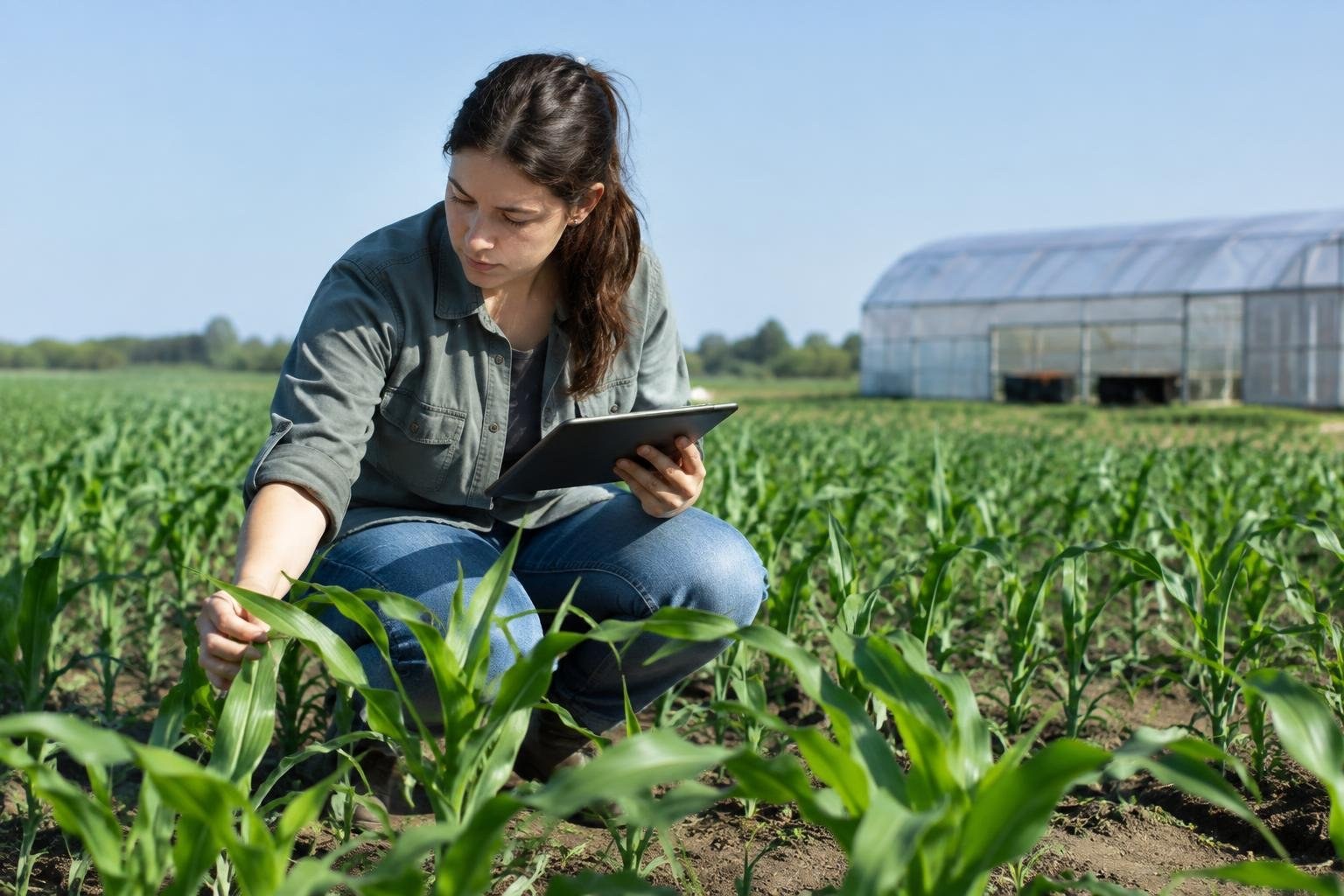
Agronomy and crop science is the study of crop plants and the systems that support their growth. It applies plant and soil science to questions about crop selection, production, management, and agricultural efficiency. An agronomy degree may be offered as a certificate, associate degree, bachelor’s degree, graduate certificate, master’s degree, or doctorate. Program names and course emphasis vary.
Agronomy commonly focuses on field crops and the relationship among plants, soils, and production practices. Plant science may encompass a wider range of plant biology and uses; horticulture often emphasizes fruits, vegetables, ornamentals, and managed landscapes. Agricultural business focuses more on markets and management, while agricultural engineering technology may emphasize equipment and systems. Compare course lists because college labels are not always used identically.
How the program works: Students build science foundations, take specialized courses, and apply what they learn through labs, field experiences, research, internships, or capstone projects where offered. SUNY describes an agriculture associate-degree option that lets students use electives and concentrations to shape study around career goals. Program structure and available concentrations differ by institution.
What Do You Study in Agronomy and Crop Science?
Students typically combine foundational sciences with courses that connect them to agricultural practice. Depending on the school, topics can include plant biology, chemistry, soil properties, crop management, plant breeding, agroecology, agricultural systems, and research methods. A crop and soil science track at Abraham Baldwin Agricultural College, for example, describes study in plant breeding, biology, chemistry, and applied crop management.
Learning may move from classroom concepts to lab or field application: observing plant growth, studying soil characteristics, interpreting measurements, comparing management approaches, or evaluating research. Some programs provide access to agricultural equipment, production sites, or faculty research. Others may emphasize business, education, or a particular crop system. Ask for a current course sequence and a description of required practical work rather than assuming all agronomy programs are alike.
Upper-level and graduate work may allow greater specialization and research. Penn State describes graduate opportunities in biological and agricultural systems engineering and research intended to improve the efficiency of agronomic and horticultural production. Such programs are distinct from every agronomy degree, but illustrate how crop science can connect with advanced research and engineering.
Useful skills: Students may develop observation, scientific reasoning, data interpretation, technical writing, teamwork, and communication skills. Depending on the curriculum, they may also gain experience with field measurements, lab methods, production planning, or agricultural technology. These capabilities can be relevant to crop services, production operations, research support, agricultural education, and related employers.
Who Is This Degree Best For? Is Agronomy a Good Fit?
This degree may suit students who are curious about how plants grow and how science can inform crop production. Programs can emphasize different subjects: ABAC’s crop and soil science track includes plant breeding, biology, chemistry, and applied crop management. Reviewing the actual course list can help you judge whether its focus matches your interests.
You do not need to arrive with a particular career goal. SUNY describes an agriculture associate-degree option that allows students to use electives and concentrations to shape study around career goals. Agricultural science preparation can also connect with areas such as agricultural services, on-farm management, research, and public-sector work, as described by SUNY Morrisville. Explore the program details and the work you might want to pursue before deciding what fits.
Does Agronomy Match You?
Do not choose solely for a salary claim or perceived prestige. Consider whether the program’s courses and focus interest you. The Free MAPP Assessment can help you explore how your preferences relate to careers; Assessment.com’s Degree Matching and Career Matching can help organize possible educational and occupational directions. Use these tools as prompts for research, not as substitutes for reviewing program requirements and speaking with people in the field.
Signs this field may be worth exploring: you are interested in plant breeding, crop management, or agricultural services. If another agricultural area interests you more, compare program course lists and concentrations before committing.
Admissions, Length, and Academic Difficulty
Admissions and preparation: Requirements depend on credential and college. Applicants may be asked for prior transcripts and prerequisite coursework; some programs have additional application materials. Do not assume a particular GPA, test score, essay, interview, or portfolio is required without checking the program’s official admissions page. Transfer students should request a credit evaluation before relying on a graduation timeline.
A bachelor’s program is commonly planned as four years of full-time study, and associate programs are commonly planned as two, but actual completion time varies with course availability, part-time attendance, transfer credit, and academic preparation. Certificates and graduate programs have their own structures. Ask each school for a sample plan that includes prerequisites, required field or lab experiences, and course sequencing.
Academic demands and preparation: Science coursework and quantitative reasoning can be challenging, especially when students are new to biology, chemistry, or data interpretation. Review course descriptions, refresh relevant math and science, and ask about tutoring, advising, and early course support. The best preparation is to understand the actual demands of the intended program rather than relying on a general label such as “easy” or “hard.”
Online vs. On-Campus Agronomy Programs
Agronomy and crop science programs may be campus-based, hybrid, or offer some online coursework. The practical components matter: field observation, lab work, research, equipment, or internships may require in-person participation. Online delivery does not necessarily mean every course or requirement can be completed remotely.
Before enrolling in an online program, ask whether any field sessions or labs are required, where they take place, whether students must arrange their own practical experience, and whether travel or equipment creates extra expenses. Also confirm that the program’s format supports your intended career and any later education you may pursue.
Cost, Financial Aid, and Ways to Reduce Expenses Safely
Compare the full cost of your plan. Request each school’s current cost estimate and financial aid information. Check what the estimate includes, such as tuition, fees, course materials, and any costs the school identifies for required study activities. Costs and aid depend on the institution and student, so use current school information rather than assuming two programs will cost the same.
Ways to reduce cost or save safely:
- Compare the total estimated cost at each school, including fees and required materials, before deciding.
- Ask the financial aid office which scholarships, grants, work-study options, or payment plans may apply to you. Confirm eligibility, deadlines, award amounts, and any conditions directly with the school.
- Before paying for courses elsewhere, ask the receiving school to evaluate whether the credits will transfer into your selected program. SUNY describes an agriculture associate-degree option with electives and concentrations, so request a course plan that shows how choices fit your goal.
- Keep written estimates, aid offers, transfer decisions, and your course plan together so you can compare the full cost and avoid relying on unconfirmed assumptions.
For example, Northeast Iowa Community College lists a scholarship for Iowa residents enrolled in specified career and technical programs. Its page states that the award is need-based, requires the FAFSA, and provides a maximum of $1,000 per year for up to two years. Confirm current eligibility and award details directly with the college before counting on the scholarship.
Questions to ask: What is my estimated total cost? Which fees or materials are not included? What aid could apply to me, and what conditions come with it? Which transfer credits count toward my selected program? Compare the answers alongside course requirements and your educational goals.
Agronomy and Crop Science Careers, Jobs, and Pay
Possible careers connect crop and soil knowledge with production, services, research, education, and agricultural businesses. The table gives examples, not guaranteed outcomes. Job titles and education expectations vary by employer and location. Confirm requirements with current job postings and the U.S. Bureau of Labor Statistics Occupational Outlook Handbook or O*NET for the particular occupation. Pay also varies by occupation, employer, experience, and geography, so a degree-wide salary would be misleading.
| Career direction | Typical preparation to investigate | How the degree may apply |
|---|---|---|
| Crop or soil technician | Relevant certificate, associate, or bachelor’s study depending on employer | Supports sampling, observation, testing, and field data work |
| Agricultural research assistant | Often relevant college science coursework; requirements vary | Builds foundations for research tasks and data collection |
| Agronomist or crop adviser | Relevant bachelor’s preparation may be expected; check credentials and state rules for specific services | Connects crop and soil science with production recommendations |
| Farm or crop-production manager | Education and substantial practical experience vary by operation | Provides production knowledge useful alongside business and supervisory skills |
| Agricultural educator or extension-related work | Requirements depend on employer and teaching role | Combines subject knowledge with communication and outreach |
| Agricultural services or sales representative | Relevant degree or experience may be requested by employers | Helps explain products and services in an agricultural context |
| Plant or crop science graduate researcher | Graduate study may be needed for advanced research roles | Provides a base for specialized study and research experience |
| Food or agricultural quality role | Employer-specific science, operations, or quality preparation | Can contribute knowledge of crop production and agricultural systems |
Potential employers include farms and production operations, agricultural service companies, research organizations, educational institutions, and public agencies. Agricultural programs can also connect students with areas such as animal care, food inspection, dairy science, agricultural education, or agricultural mechanics, but a crop-focused degree is not a substitute for specialized credentials where those are required. Morrisville describes agricultural science preparation spanning on-farm management, agricultural services, research, and public-sector roles.
Some graduates may enter support or technical work after an associate or bachelor’s program; advanced research and specialized science work can call for graduate education or experience. Automation, precision tools, and data systems are changing how some agricultural tasks are performed, but technology does not remove the need to understand local production conditions, interpret information, and communicate decisions. Evaluate the actual tools and responsibilities named in relevant job postings.
Experience, Credentials, and Preparing for Employers
Class projects, research, internships, co-ops, farm or greenhouse work, crop scouting, and participation in agricultural organizations can help students test their interests and show practical ability. The best experience depends on the intended role. A research-minded student might seek a faculty project; a production-focused student might look for field experience; a student considering agricultural services could explore customer-facing work.
How to Stand Out to Employers
- Build a portfolio of projects, reports, field observations, or research presentations where appropriate.
- Practice explaining technical findings in clear language to people with different backgrounds.
- Seek work experience that complements classroom learning, even if the first role is an assistant position.
- Ask faculty and career services about employer events, alumni, and internship opportunities.
- Verify whether a target job requires a specific license, certification, or other credential. A degree alone does not grant professional licensure.
Credentials and licensing rules are occupation- and state-specific. Do not assume that a particular certificate is mandatory or accepted everywhere. Ask the program and relevant state or professional organization what applies to the exact service or job you plan to pursue.
Graduate School Options
Students may continue into a master’s degree or doctorate in agronomy, crop science, soil science, plant science, agricultural systems, or a related area. Graduate study can support deeper specialization, research, or preparation for positions that favor advanced subject knowledge. The appropriate path depends on the job, not simply on the availability of another degree.
Before committing to graduate school, review job postings in the specialization, talk with faculty and working professionals, and compare the added cost and time with the roles it may open. Research-oriented programs may include a thesis or other substantial research, while professional or coursework-based options can have different goals and requirements.
Related Degrees and Comparisons
Compare related majors by the problems they prepare students to solve, not just by their titles:
- Plant science: Consider this instead if you want broader study of plant biology beyond crop-production systems.
- Soil science: Consider this instead if soil properties and processes are your primary interest.
- Horticulture: Consider this instead if you are most drawn to fruits, vegetables, ornamental plants, nurseries, or managed landscapes.
- Agroecology and sustainable agriculture: Consider this instead if you want a stronger focus on ecological relationships and sustainability in agriculture.
- Agricultural business and management: Consider this instead if markets, operations, finance, and business decisions interest you more than laboratory or crop science.
- Agricultural mechanics and equipment technology: Consider this instead if you prefer machinery, maintenance, and technical equipment work.
- Animal science: Consider this instead if livestock, animal production, or animal biology is your central interest.
- Environmental science: Consider this instead if your main focus is environmental systems and impacts beyond crop production.
Agronomy versus horticulture is not a strict universal divide: course offerings and career preparation vary by college. Compare required science courses, field or lab work, specialization choices, and employer connections. Graduate-school implications also depend on the research area and target position.
Pros, Cons, and Is an Agronomy Degree Worth It?
Advantages
- Connects plant and soil science with practical agricultural questions.
- Can support different directions across production, research support, services, education, and related business settings.
- Programs may offer specialization and hands-on learning, depending on the institution.
Drawbacks and tradeoffs
- Coursework may demand science and quantitative preparation.
- Some students may need field, lab, or work experience beyond classes to compete for desired roles.
- Career requirements and pay differ considerably across occupations, so the major alone does not guarantee a particular job or income.
- Graduate study may be important for some advanced research or specialized roles, adding time and expense.
Is it worth it? There is no universal answer. Evaluate tuition, aid, time to completion, local employment options, further education needs, and the work you want to do. Consider whether the program’s actual courses and practical experiences suit you. A career assessment may help clarify preferences, but it should be combined with labor-market research and conversations with employers and graduates.
How to Choose the Right Agronomy Program: A Checklist
Look beyond a major’s name and compare the specific course plan, available study options, costs, and career preparation. SUNY describes an associate-degree option that uses electives and concentrations to fit career goals, while ABAC’s crop and soil science track describes study in plant breeding, biology, chemistry, and applied crop management. These examples show why checking the actual curriculum matters.
- Curriculum and focus: Compare required courses, electives, and concentrations with your interests.
- Faculty and facilities: Ask what labs, field sites, equipment, and faculty research are available.
- Applied learning: Find out what field, lab, internship, or research work is required and how students access it.
- Total cost and aid: Request a current estimate and review which forms of aid may apply to you.
- Format and timing: Confirm the program’s current delivery format and any in-person requirements.
- Career preparation: Ask what kinds of roles graduates pursue and what additional education or experience a target role may require.
- Transfer and credentials: Get transfer-credit decisions in writing and verify requirements for any specific job or service you plan to pursue.
Use Assessment.com’s education-matching tools to explore possible directions, then validate the match by comparing course plans and talking to program staff, students, and professionals. Confirm institutional status, program requirements, and available student support directly with the school.
Questions to Ask Before Enrolling
- What is my estimated total cost after fees and aid?
- Which credits will transfer, and how will they affect my course plan?
- What field, lab, internship, or research work is required?
- What career outcomes does the school track, and how are they reported?
- Which jobs relate to this curriculum, and what extra preparation may be needed?
- How do online students complete any required practical work?
- What career services and employer connections are available?
- What safety training or supervision applies to field and laboratory work?
Red flags: Be cautious if a program cannot clearly explain its requirements, costs, transfer policies, or the basis for career claims. Do not rely on guarantees of employment or earnings. Compare the information with your goals before enrolling.
From Degree to Career and Your Next Step
Use a realistic progression as a planning example, not a promise: agronomy degree → crop or soil technician / research assistant → field or laboratory experience → crop-management or specialized service role → advanced technical, management, or research position. Another route could be an associate degree followed by work in production or agricultural services, then further study after confirming that additional education supports the student’s target. Actual progress depends on openings, performance, location, experience, and employer requirements.
Keep a written comparison of programs, required coursework, estimated total costs, practical experiences, and career paths. Revisit it with a school counselor, family member, academic adviser, or working professional before making a final decision.
Before Choosing a Degree, Find Out What Fits You
Choosing a college program can affect years of education and decades of work. Salary, job growth, and school reputation matter, but so does whether the work fits your motivations, interests, and natural preferences.
Take the Free MAPP Career Assessment to discover careers that may match you, how related careers align with your profile, degrees and educational pathways tied to those careers, and potential jobs connected with those paths. Explore Degree Matching, Career Matching, and Matching Jobs as part of your research.
Take the Free MAPP Assessment →
Frequently asked questions
Is an agronomy and crop science degree hard?
Agronomy and crop science are challenging for students who are unprepared for biology, chemistry, quantitative reasoning, or applied problem-solving. Courses may connect those subjects to real crop and soil conditions through labs, fieldwork, and data analysis. The difficulty depends on your preparation, program, and specialization. Reviewing sample course plans and asking about tutoring or introductory science support can help you judge the academic fit.
Is an agronomy degree worth it?
It may be worth pursuing if you want to work with crop production, soils, plant science, agricultural technology, or related industries and the program’s cost and opportunities fit your circumstances. Value depends on the job you want, the degree level it requires, your location, and whether you gain practical experience. Compare total cost with current occupation-specific pay and employment information before deciding.
What jobs can I get with an agronomy degree?
Possible paths include crop or soil technician, agricultural research assistant, farm or production manager, agricultural educator, and roles in agricultural services, food production, or government. Job titles and requirements vary. Some science and research positions may favor a bachelor’s degree or graduate education; management roles often also depend on experience. A degree does not automatically qualify someone for every agricultural occupation.
How much can you make with an agronomy degree?
There is no single salary for agronomy and crop science graduates. Pay depends on occupation, education, experience, employer, and location. The degree can lead to different fields, so compare the latest U.S. Bureau of Labor Statistics wage data for the specific occupation you are considering rather than relying on a single degree-wide salary estimate.
Can I earn an agronomy degree online?
Some lectures and general courses may be available online, but the amount of remote study varies by school and specialization. Crop and soil programs can include laboratories, field experiences, research, or equipment-based learning that may require in-person participation. Ask whether online students must travel for labs, practical work, or internships and how those requirements are arranged.
Does agronomy require a lot of math and science?
Many programs include biology, chemistry, statistics, or other quantitative work, although the exact requirements differ. Students may use measurements and data to understand soils, plant growth, crop production, or research results. Check the curriculum for required math and science courses, placement expectations, and available academic support before enrolling.
Do I need graduate school to work in crop science?
Not for every job. Associate and bachelor’s programs can prepare students for a range of technical, production, business, and support roles. Graduate education can be useful or expected for some advanced research, teaching, or specialized science positions. Check education requirements for specific occupations and ask employers or faculty what credentials are typical in your intended area.
How is agronomy different from plant science or horticulture?
Potential alternatives include plant science, soil science, horticulture, animal science, agricultural business, environmental science, and agricultural engineering technology. Agronomy commonly emphasizes crop and soil systems, while neighboring fields may focus more on plants beyond field crops, business, animals, ecosystems, or equipment. Compare required courses and job outcomes rather than relying on program names alone.
What experience or certifications help agronomy graduates?
Internships, research experience, crop scouting, farm work, student projects, and agricultural organization involvement can help demonstrate applied skills. The most useful experience depends on your target role. Ask programs how students access field placements, laboratories, employer connections, and faculty research, and confirm whether any credential is required for a job or is simply preferred.
People Also Ask
What do you study in agronomy and crop science?
Agronomy and crop science programs study crop production and the science of soils and plants. Coursework may include biology, chemistry, crop management, plant breeding, and applied field or laboratory work, depending on the program.
How long does an agronomy degree take?
Program duration depends on credential, enrollment pace, transfer credits, and school requirements. Many associate programs are designed around two years of full-time study and bachelor’s programs around four years, but individual plans differ.
What is the difference between agronomy and plant science?
Yes, the two fields overlap, but agronomy generally centers on crop production and the management of crop and soil systems. Plant science can cover a wider range of plant biology and applications. The exact distinction depends on the college’s curriculum.
What can you do with a crop science degree?
Potential careers span agricultural production, crop and soil services, research support, education, and agricultural businesses. The degree level and hands-on experience needed depend on the role; check specific occupation requirements before choosing a program.
How much does an agronomy degree cost?
The cost depends on public or private status, residency, fees, course format, required field or lab work, and the time needed to complete the degree. Compare each school’s full cost of attendance and financial aid offer, not just advertised tuition.
Agronomy and crop science can be a strong choice for students who want to understand how plants, soils, technology, and management decisions shape crop production. The degree can lead toward field, laboratory, business, education, and research work, but the right preparation depends on the role: some jobs are accessible with an associate degree or bachelor’s degree, while advanced research and specialized positions may require graduate study. Compare actual curricula, hands-on opportunities, total cost, and career outcomes, then consider whether the day-to-day work matches your interests. Before choosing a degree, find out what fits you. The Free MAPP Career Assessment can help connect your motivations and preferences with careers and education paths. Explore Degree Matching, Career Matching, and Matching Jobs as you compare options.
Want to see your options? Try our comprehensive Degree, Program & College Search tool
College Search ToolSources & Official Resources
Sources and further research: Program descriptions and examples were reviewed from SUNY, SUNY Morrisville, Abraham Baldwin Agricultural College, Penn State College of Agricultural Sciences, Utah State University, and New Mexico State University Global Campus. For current occupation-specific requirements, pay, and outlook, consult the relevant U.S. Bureau of Labor Statistics Occupational Outlook Handbook profile and O*NET occupation information. Confirm admissions, tuition, financial aid, and curriculum details directly with each institution because they can change.
- SUNY agriculture degrees and majors
- SUNY Morrisville Agricultural Science A.A.S.
- Abraham Baldwin Agricultural College Agriculture, B.S.
- Penn State College of Agricultural Sciences graduate programs
- Utah State University agricultural programs
- New Mexico State University Global Campus agriculture careers discussion
- 10 Agriculture Careers That Require a Master's Degree | NMSU Global Campus
- Our Graduate Degree Programs — Academics — Penn State College of Agricultural Sciences
- Agriculture Degrees and Majors - SUNY
- Agricultural Science A.A.S. | Areas of Study | SUNY Morrisville
- Agriculture, BS | Abraham Baldwin Agricultural College
- Utah State University Degrees and Programs by interests
- Degrees | AGNR | USU
- Agronomy | University of Minnesota Crookston
- Agronomy bachelor's degree guide | K-State | Kansas State University
- Agronomy and Crop Science
- Agronomy and Crop Science - Northeast Iowa Community College