Degree Library
Agriculture Degree Guide: Courses, Careers, Requirements, and Is It Right for You?
An agriculture degree is a college credential focused on some part of the systems that grow, manage, process, or support plants, animals, food, and…
By David Slack · Staff Writer Assessment.com · Published October 5, 2026 · Last updated October 6, 2026
An agriculture degree is a college credential focused on some part of the systems that grow, manage, process, or support plants, animals, food, and agricultural businesses. Depending on the program, students may study crop or animal production, soil and plant science, agricultural technology, business, or food and environmental topics. Agriculture is a broad academic category, not one standardized course of study. Graduates may pursue work in production, research, equipment, business, government, or related fields. The education needed depends on the role: a technical certificate, associate degree, bachelor’s degree, or graduate program can each suit different goals. Not sure whether agriculture fits you? Take the Free MAPP Career Assessment to explore how your motivations, interests, and natural preferences align with agriculture-related careers and degrees.
An agriculture degree is a certificate, associate, bachelor’s, or graduate credential focused on an area such as crop or animal production, plant and soil science, agricultural business, equipment, or food systems. Course content and career options vary by program, so compare curricula, hands-on experience, cost, and the requirements of specific jobs before choosing.
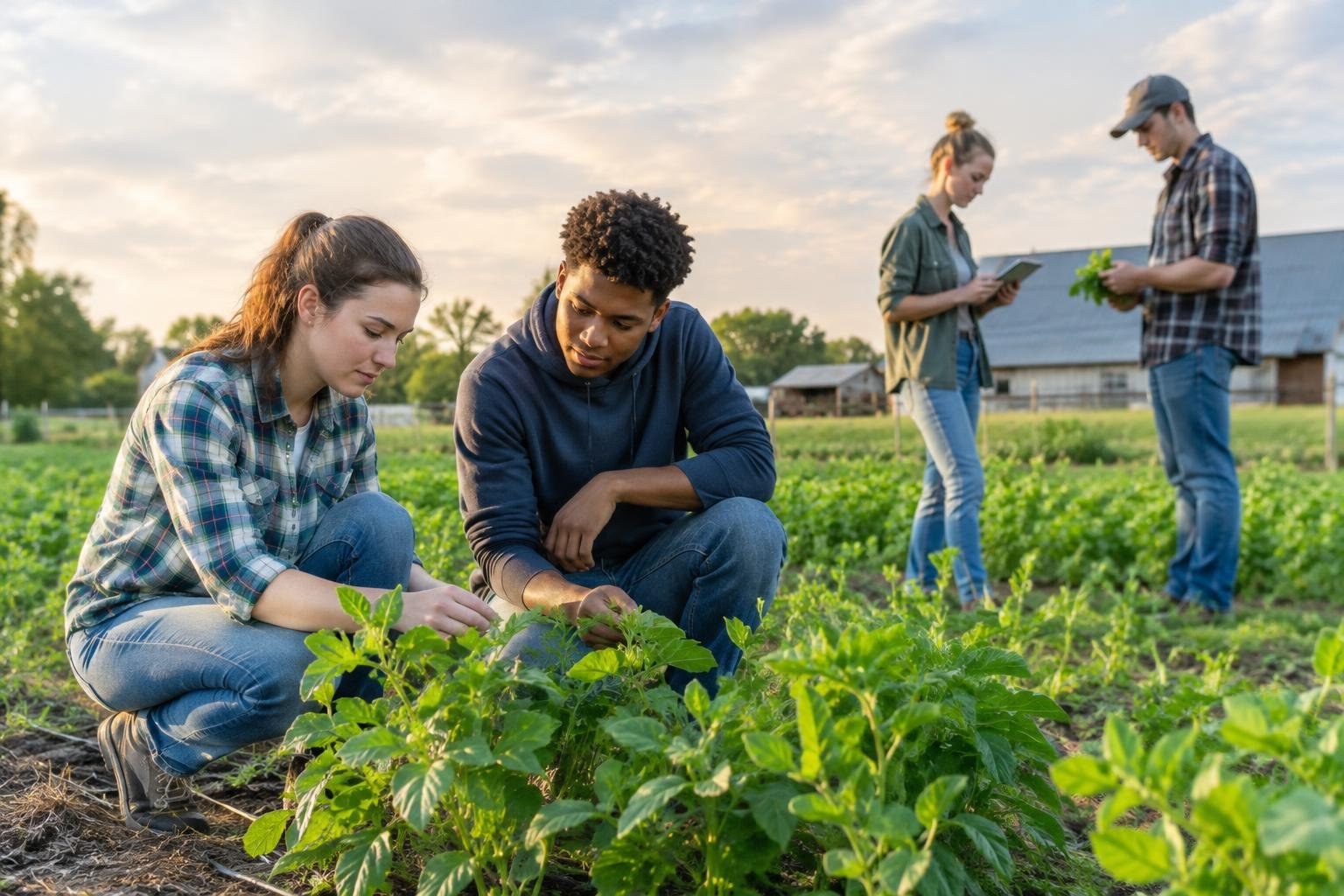
What Is an Agriculture Degree?
Agriculture is an umbrella for fields connected with producing and supporting plants, animals, food, and agricultural enterprises. A program may concentrate on crop production, animal science, horticulture, farm operations, agricultural business, equipment, or research. The name “agriculture” alone does not tell you which subjects a student will study.
U.S. federal education classifications place many agriculture-related majors within the broad agricultural, animal, plant, and veterinary science category. Individual programs can award certificates, associate degrees, bachelor’s degrees, graduate certificates, master’s degrees, or doctorates. A veterinary science or veterinary technology pathway is not the same as earning a general agriculture degree or becoming a licensed veterinarian.
Program titles also vary. A school might use names such as agricultural science, plant science, animal science, agribusiness, sustainable agriculture, or agricultural technology. Compare course requirements and learning experiences rather than relying on the title alone.
How the process works: choose a focus, then verify the pathway
Start with the kind of work you are curious about: growing crops, caring for animals, operating or maintaining equipment, conducting research, managing a business, or working with food systems. Then identify occupations connected to that work and check the education employers request. Use that information to compare majors, credentials, and schools.
What Do You Study in an Agriculture Major?
There is no single agriculture curriculum. A broad program may introduce students to biological and physical sciences, agricultural systems, production, business, and communication. A specialized major may devote more time to plants, animals, soils, agricultural machinery, or a particular production area.
Depending on the school, students may study:
- Plant, soil, and crop topics: plant biology, soils, crop production, horticulture, or pest management.
- Animal topics: animal biology, nutrition, production, welfare, or related research.
- Agricultural business: management, marketing, finance, supply chains, or farm operations.
- Technology and equipment: operation, maintenance, repair, or use of agricultural technologies.
- Research and communication: scientific methods, data interpretation, technical writing, and communicating results.
Practical learning can include laboratories, field studies, equipment instruction, internships, research projects, or a capstone. Not every program offers every experience. For example, Utah State University describes certificate and associate-level agricultural equipment training that includes operating, maintaining, and repairing equipment; California State Polytechnic University, Pomona describes animal science study that can prepare students for animal production, business, related industries, professional school, or doctoral study.
Ask for a current degree plan and course descriptions. A course title may sound practical, but the syllabus and facility access will tell you more about what students actually do.
Skills You Can Develop
Skills depend on specialization, but agriculture students may develop the ability to observe biological systems, collect and interpret information, solve practical problems, and communicate with colleagues or customers. Students in production or equipment programs may gain applied technical skills; science-oriented students may build laboratory, research, or data skills; business-focused students may practice planning, management, and decision-making.
These capabilities can connect to work in agricultural production, research, agricultural businesses, equipment services, or public agencies. For example, the U.S. Bureau of Labor Statistics says agricultural and food scientists typically need at least a bachelor’s degree in a relevant field, while some employers may prefer or require graduate study. That is one career family, not a requirement for every agriculture job.
Look for evidence of skill development in course assignments, field or lab access, internships, and projects. Ask what students produce or practice, not just what topics appear in the catalog.
Who Is an Agriculture Degree Best For?
Agriculture may interest students who want to learn about plants, animals, food production, equipment, or agricultural business. Programs and career directions differ, so start by considering the kind of work you want to explore: scientific study, animal production, equipment-related work, or business. For example, agricultural and food scientists typically need at least a bachelor’s degree in a relevant field, while some employers may prefer or require graduate study. Equipment-focused training can instead include operating, maintaining, and repairing agricultural equipment.
Use those differences to guide your questions about coursework and experience. Review actual degree plans and ask what practical learning the program offers. You do not need to settle on one career before comparing options.
Does agriculture match you?
Salary, job growth, and school reputation do not tell you whether you will enjoy a program or work setting. The Free MAPP Career Assessment is available as a way to reflect on your motivations and preferences while you explore agriculture-related careers and degrees. Treat any match as a prompt for further research, not a guarantee of success or employment.
Take the Free MAPP Assessment →
Admissions, Time to Complete, and Academic Difficulty
Admissions rules vary by institution and credential. Certificate and associate programs may have different entry requirements from bachelor’s or graduate programs. Colleges may consider prior coursework, transcripts, placement measures, essays, recommendations, or relevant experience, but do not assume that every school requires the same items. Graduate study usually requires a prior degree related to the program; check the department’s official admissions page for prerequisites and application details.
A certificate or associate degree may take less time than a bachelor’s degree, while a master’s or doctorate adds study beyond undergraduate work. The exact duration depends on credit requirements, course availability, transfer credits, enrollment pace, and whether the student studies full time. Ask schools for a sample completion plan, including any fieldwork, internships, or prerequisite courses.
Possible challenges include science coursework, technical procedures, balancing classroom work with hands-on requirements, and learning to work safely in labs, fields, or equipment settings. Prepare by reviewing course sequences, strengthening relevant science or math skills, and asking about tutoring and academic advising.
Online vs. On-Campus Agriculture Programs
Some agriculture courses may be available online, especially classes focused on concepts, business, or communication. Other learning may require access to laboratories, farms, greenhouses, animals, equipment, or research facilities. A hybrid program may combine online instruction with scheduled campus or field activities.
Before enrolling in an online program, ask which requirements must be completed in person, where they take place, how often students travel, and whether travel, supplies, or equipment add costs. Confirm that the format supports the practical learning needed for the roles you plan to pursue.
Agriculture Degree Costs and Financial Aid
The price of an agriculture degree depends on the institution, public or private status, residency classification, degree level, delivery format, and time to completion. Tuition is only part of the budget. Consider fees, books, transportation, housing, technology, field supplies, laboratory charges, and travel to required experiences where applicable.
There is no reliable single price for all agriculture programs. Request each college’s current total-cost estimate and ask which costs are not included in tuition. Compare the net cost after grants and scholarships, not only the published tuition rate. Explore federal and state aid eligibility, school-based scholarships, employer assistance, and transfer agreements. A community college route may be worth considering, but confirm in advance that credits transfer into the intended bachelor’s program.
Ways to reduce cost without compromising the plan
- Compare total program cost and likely completion time at more than one school.
- Ask about transfer-credit review before paying for courses elsewhere.
- Apply for grants and scholarships and check renewal requirements.
- Confirm whether required equipment, field experiences, and travel are included in estimates.
- Choose an affordable route only after checking that it supports your intended next step.
Agriculture Careers, Jobs, Pay, and Outlook
Agriculture graduates can work across several fields, but employers may ask for different credentials and experience. The table gives examples of directions to investigate, not a promise that a particular degree qualifies a graduate for each occupation.
Career directionTypical education or preparationPay and outlookHow agriculture study may applyAgricultural or food scientistTypically at least a bachelor’s degree in a relevant science; some employers may prefer or require graduate studyUse current BLS occupation data; pay and outlook vary by specialty and locationRelevant study in plant, animal, food, or agricultural science can provide a foundationAgricultural equipment technician or service workerRequirements vary by employer; technical training and equipment experience may be relevantCheck current occupational data and local job postingsEquipment operation, maintenance, and repair training may support technical workAnimal production or agricultural business rolesMay range from technical credentials to a bachelor’s degree, depending on positionPay and outlook depend on job, employer, region, and experienceAnimal production, management, or business coursework may be relevantPlant or crop production rolesRequirements depend on the employer and responsibilitiesCheck job-specific wage and outlook dataCrop, plant, soil, or horticulture study can support related workAgriculture-related public serviceAgency-specific education and hiring requirements applyCheck current agency vacancies and occupational dataA relevant agriculture or science background may meet some role requirements
The BLS occupational profile is a useful starting point for agricultural and food scientists, but it does not represent every agriculture graduate. For a specific job, review the employer’s stated education, experience, and credential requirements. Higher-level scientific or research roles may call for graduate education; a broad undergraduate degree alone does not establish eligibility for regulated professions such as veterinary medicine.
Agriculture employers can include farms and ranches, agricultural businesses, equipment organizations, research institutions, and public agencies. Technology and changing production practices can alter tasks within the field, but the effect varies by occupation. Focus on building adaptable skills and checking current local hiring needs rather than relying on broad claims about automation or job growth.
Internships, Credentials, and How to Prepare for Work
Fieldwork, internships, research, student projects, and part-time employment can help you test whether a specialization suits you and demonstrate applied skills. Ask whether the program helps students find placements, whether experiences are required or optional, and whether they are paid. Relevant student organizations and professional groups can also help students learn about employers and career paths.
How to stand out to employers
- Build experience connected to your target role, such as supervised field, lab, animal, business, or equipment work.
- Keep a record of projects, responsibilities, technical methods, and outcomes you can discuss in interviews.
- Practice explaining how your coursework applies to an employer’s needs.
- Ask faculty, advisers, and internship supervisors for feedback and professional references.
- Research any credential or license the specific occupation requires before graduation.
A degree does not automatically provide professional licensure. Rules and credentials vary by occupation and jurisdiction. If a career involves a regulated title or defined scope of practice, verify requirements with the relevant state licensing authority or professional organization. Do not assume that a general agriculture major qualifies someone as a veterinarian or veterinary technician.
Graduate School Options
After a bachelor’s degree, students may consider a master’s degree, graduate certificate, professional program, or doctorate. Further study can support specialization, research, teaching, or entry into professional schools, but it is not automatically necessary for every agriculture career.
Graduate admissions requirements differ by program. Some departments expect a related undergraduate background and set academic standards. For example, Cal Poly Pomona’s animal science graduate program describes an animal-related bachelor’s degree and a stated GPA threshold for unconditional admission. Treat this as one school’s requirement, not a national standard. Review each department’s current criteria, cost, funding options, and career outcomes before applying.
Related Degrees and How They Compare
- Agribusiness: Consider this if you are more interested in management, markets, or commercial operations than technical production or science.
- Animal science: Consider this if you want a more focused study of animals, animal production, or related research.
- Plant science or horticulture: Consider this if plant biology, crops, landscaping, or growing systems are your main interests.
- Food science: Consider this if you are drawn to food products, processing, or scientific study of food systems.
- Environmental or natural-resource science: Consider this if you prefer ecosystems, conservation, or resource management.
- Agricultural technology or equipment: Consider this if you prefer applied technical work with machinery and systems.
- Veterinary technology: Consider this if you want training focused on assisting veterinary professionals in animal-care settings; confirm program and jurisdictional requirements.
- Veterinary medicine: Consider this if your goal is to become a veterinarian and you are prepared to meet the separate professional education and licensing requirements.
When comparing agriculture with animal science, look at course requirements, practical experiences, and likely graduate-school paths. A broad agriculture program may cover more areas; an animal science program may concentrate more on animals. Actual differences depend on the college.
Advantages, Drawbacks, and Is an Agriculture Degree Worth It?
Potential advantages: Agriculture programs can connect science and practical problem-solving, offer several specialization directions, and provide routes from technical credentials to graduate study. Some programs include applied learning in fields, laboratories, equipment settings, or animal production.
Potential drawbacks: The broad degree label can make career planning less clear; hands-on requirements may complicate an online schedule; costs can include expenses beyond tuition; and some scientific or specialized roles may require further study. Local opportunities and job conditions vary.
Whether the degree is worth it depends on the fit between your chosen program and a realistic career plan. Compare total cost, time, aid, experience opportunities, job requirements, and the need for further education. Discuss finances and likely timelines with family, an adviser, or a college financial-aid office. Avoid choosing only on assumptions about salary or the reputation of a school.
How to Choose a Program: Accreditation, Costs, and a Practical Checklist
Use this checklist when comparing programs:
- Is the institution and program appropriately accredited for the credential and intended career?
- Do required courses match the specialization and job requirements you have researched?
- Are relevant labs, fields, equipment, animals, or research opportunities available?
- What is the full estimated cost, including fees and required experiences?
- Can you complete required practical work in the stated online, hybrid, or campus format?
- Will prior credits transfer, and can the school confirm that decision in writing?
- What support is available for internships, career advising, and employer connections?
- Does the program prepare students for any credential or license required for your target role?
- Can the college explain outcomes clearly and distinguish program data from general occupational data?
- What grants, scholarships, and aid are available, and what rules apply to keep them?
Verify accreditation through recognized authorities and confirm occupational rules with the relevant licensing body. Be cautious if a school promises a guaranteed job, license, or income without explaining the conditions. Request written answers about total cost, transferability, and required in-person participation before committing.
What to expect and how long planning takes
Application timelines and course schedules differ among colleges. Allow time to compare programs, obtain transcripts, understand aid, and ask about capacity-limited practical courses or internships. Before accepting an offer, review the degree plan semester by semester and confirm how a missed prerequisite or unavailable course could affect completion.
From Agriculture Degree to Career
Career routes are not guaranteed, but examples can make planning more concrete:
- Relevant bachelor’s study → entry-level agricultural or food science work, where employer requirements are met → research or applied experience → specialized scientific role or graduate study.
- Equipment-focused certificate or associate study → entry-level agricultural equipment work → manufacturer or employer training and experience → advanced service, technical support, or supervisory opportunities.
- Animal or production-focused study → entry-level production, business, or animal-related role → practical experience and specialization → management, research, or further education as appropriate.
These are illustrative pathways. Verify the qualifications required for each job and consider whether you would need additional education, experience, or a professional credential.
Is an Agriculture Degree Right for You?
Before choosing a degree, find out what fits you. An agriculture program can point toward different areas, including equipment training, animal production, or agricultural and food science. The education needed also varies by role: agricultural and food scientists typically need at least a bachelor’s degree in a relevant field, and some employers may prefer or require graduate study.
Take the Free MAPP Career Assessment as one way to reflect on your interests and preferences while you explore agriculture-related careers and education paths. Then compare course plans and verify specific job requirements with employers and colleges.
Take the Free MAPP Assessment →
Factors That Affect Your Agriculture Degree Plan
Several choices can shape your agriculture degree plan. First, decide which work you want to explore: agricultural equipment training, animal production, or agricultural and food science each points toward different coursework and preparation. Utah State University, for example, describes equipment programs that include operating, maintaining, and repairing equipment, while Cal Poly Pomona describes animal science study connected with animal production, business, and related industries.
Credential level matters too. A certificate or associate pathway may focus on technical preparation, while agricultural and food scientist roles typically call for at least a bachelor’s degree, and some employers may prefer or require graduate study. Practical requirements can also affect scheduling, so check whether the program includes field, lab, equipment, or research experiences and when they are offered. Finally, compare the plan with your target job’s stated education requirements before you commit.
Frequently asked questions
Is an agriculture degree hard?
Agriculture degrees vary in difficulty. Students may encounter biology, chemistry, math, lab work, research, technical equipment, or physically active fieldwork, depending on the program. The workload can be demanding, but the challenge is not the same at every school or in every specialty. Review required courses and ask about tutoring, advising, and opportunities to gain experience before enrolling.
Is an agriculture degree worth it?
It can be worthwhile for students whose interests and career goals match the program. Agriculture is a broad field, so value depends on the credential, cost, practical experience, and jobs a student wants to pursue. Compare specific programs and likely next steps rather than assuming every agriculture degree leads to the same work or earnings.
What jobs can I get with an agriculture degree?
Possible paths include agricultural or food science, animal and plant production, agricultural equipment, farm or agribusiness operations, and public service roles. Eligibility depends on the job and the graduate’s specialization, experience, and credential. Research job postings and occupational profiles to determine whether a particular degree meets employers’ stated requirements.
How much can you make with an agriculture degree?
There is no single salary for an agriculture degree. Pay depends on occupation, location, education, employer, and experience. The U.S. Bureau of Labor Statistics provides wage information for occupations such as agricultural and food scientists, but that occupation is only one possible path. Compare current occupational data with local job postings and the program’s costs.
Can you earn an agriculture degree online?
Some agriculture courses can be completed online, but availability depends on the program and subject. Labs, fieldwork, equipment training, internships, or other experiential requirements may require in-person participation. Ask each school which parts are online, where required experiences take place, and whether travel or additional fees are involved.
Does an agriculture degree require math?
It depends on the specialization. Agriculture programs may include quantitative work such as statistics, chemistry, business math, or equipment and production calculations. The amount and type of math vary by institution and curriculum. Review degree requirements and sample course syllabi to see what preparation a chosen program expects.
Do I need graduate school for an agriculture career?
Not always. Many entry-level roles have education requirements that vary by employer, while some scientific or specialized positions may favor or require graduate study. The BLS notes that agricultural and food scientists typically need at least a bachelor’s degree, and that employers may prefer or require a master’s or doctoral degree. Verify requirements for the specific job you want.
What certifications help with agriculture jobs?
Useful credentials depend on the intended occupation and may include a degree-specific certificate, equipment training, or a state or professional credential. A general agriculture degree does not automatically qualify someone for a regulated profession. Check the relevant employer, licensing authority, or professional organization before paying for a credential.
How does agriculture compare with animal science?
Agriculture programs generally cover a wider set of topics, potentially including plants, animals, food, equipment, business, or production systems. Animal science focuses more directly on animal biology and production, though curricula differ. Compare required courses, facilities, hands-on work, and graduate-school options at the schools you are considering.
What degree level should I choose for agriculture?
A four-year bachelor’s degree is a common route for scientific and professional roles, while certificates and associate degrees may offer a more focused or technical pathway. The right level depends on career requirements and personal goals. Some occupations require additional education, and a graduate credential may be useful for research or advanced specialization.
People Also Ask
What do you study in an agriculture degree?
Agriculture programs can include crop and animal science, soils, agricultural business, equipment, food systems, and field or lab experience. The exact mix depends on the major and school.
What can I do with an agriculture degree?
An agriculture degree may prepare students for several types of work, but job qualifications vary. Check the education and experience requirements listed for specific occupations and employers.
Can I get an agriculture degree online?
Some agriculture subjects are offered online, but fieldwork, labs, equipment practice, and internships may require in-person participation. Confirm the format and location of each requirement with the school.
What is the average salary with an agriculture degree?
There is no single agriculture-degree salary. Earnings depend on occupation, location, experience, education, and employer. Use occupation-specific wage data rather than a degree-wide estimate.
How much math is in an agriculture major?
Math requirements depend on the program. Students may encounter statistics, chemistry calculations, business math, or production-related measurements.
Do agriculture majors need a master’s degree?
Not every agriculture career requires graduate education. Research, advanced science, and specialized roles may favor or require a master’s or doctorate.
What is the difference between agriculture and agribusiness?
Agriculture is a broad field; agribusiness focuses more directly on the commercial and management side of agriculture. Course requirements vary by college.
How do I choose an agriculture college program?
Compare the program’s curriculum, total cost, practical learning, transfer policies, and preparation for the careers you are considering. Ask about required field experiences and employment support.
An agriculture degree can lead toward work in science, animal and plant production, business, equipment, public service, or further study, but the broad label does not identify one fixed curriculum or career. Compare the actual courses, field and lab experiences, total cost, and career preparation at each school. Then consider whether the work itself fits your interests and preferred way of learning. Before choosing a degree, use the Free MAPP Career Assessment to explore how your motivations and preferences may align with agriculture-related careers and education paths.
Sources
- 485 Agriculture and Veterinary Science Masters Degree Programs Abroad | educations.com
- Department of Animal & Veterinary Sciences
- Agriculture Specialist Qualification Aid - CBP Careers
- 26 College Degrees for Animal Lovers To Pursue | Indeed.com
- Master of Science Degree in Agriculture (Animal Science)
- Agricultural/Animal/Plant/Veterinary Science and Related Fields, Other | Appily
- Utah State University Degrees and Programs by interests
- Agricultural and Food Scientists : Occupational Outlook Handbook: : U.S. Bureau of Labor Statistics
- Online Agriculture Degrees - Degrees & Guides
- 2027 Different Types of Agriculture Degrees and Their Salaries | Research.com
- Agriculture Degrees | TopUniversities
- Field of degree: Agriculture : Occupational Outlook Handbook: : U.S. Bureau of Labor Statistics
- 2026 Different Types of Agriculture Bachelor's Degrees: Specializations, Careers, and Salaries | Research.com
- Agriculture Degree: Benefits, Careers, and How to Choose the Right Program
- Degrees and Areas of Study | Agriculture | SFA
- Agriculture degree overview