Degree Library
Agricultural Production Operations Degree Guide: Courses, Careers, Costs, and Career Fit
An Agricultural Production Operations degree prepares students to understand and support the practical systems that produce crops and livestock. Depending…
By David Slack · Staff Writer Assessment.com · Published October 5, 2026 · Last updated October 6, 2026
An Agricultural Production Operations degree prepares students to understand and support the practical systems that produce crops and livestock. Depending on the college and credential level, students may study production methods, animal or plant science, equipment, safety, business fundamentals, and how agricultural operations make day-to-day decisions. Programs can be career-oriented and hands-on, though course requirements and the balance of classroom and field learning vary. Graduates may pursue roles in production, agricultural support, technical services, sales, food-related work, or further study. The degree title is broad, so the best choice depends on the concentration, available work experience, and the careers a student has in mind. Some scientific, management, or professional careers require additional education or credentials. Not sure whether Agricultural Production Operations fits you? Take the Free MAPP Career Assessment to see how your motivations, interests, and natural preferences align with this degree and the careers it can lead to.
Agricultural Production Operations, General is an applied field of study about the systems and skills used to produce crops and livestock and support agricultural businesses. Programs may cover production practices, plant or animal science, equipment, safety, and operations. Credentials range from certificates and associate degrees to bachelor’s and graduate study; the exact curriculum and career outcomes vary by college.
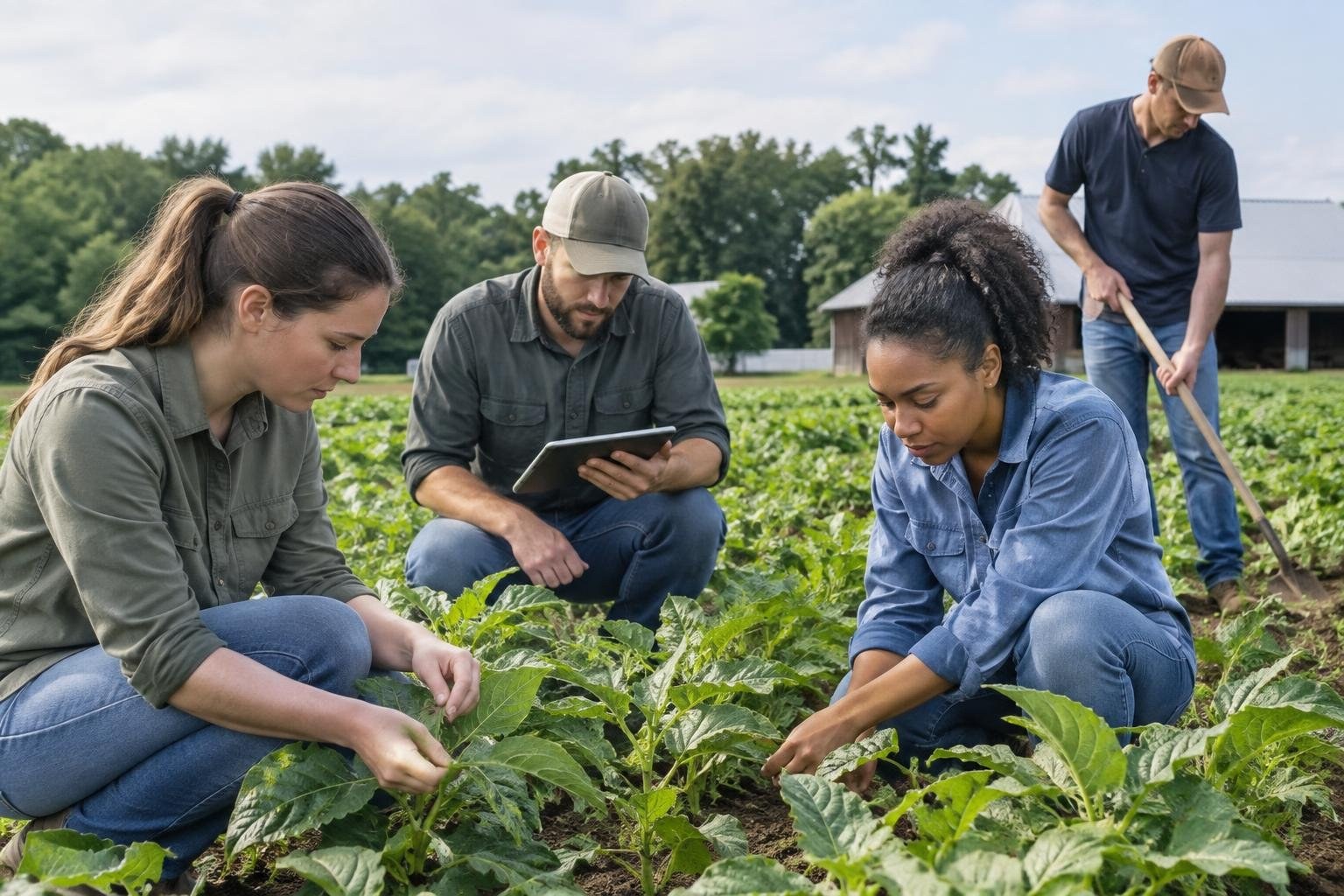
What Is an Agricultural Production Operations Degree?
Agricultural Production Operations, General is a broad program area focused on the practical organization and work of agricultural production. The federal Classification of Instructional Programs (CIP) identifies Agricultural Production Operations, General as CIP 01.0301. That classification helps describe a field of study; it does not mean every college offers an identically structured degree.
Programs may be called agricultural production, agriculture, production operations, or a related title. Some are designed as certificates or associate degrees aimed at practical or technical preparation. Other colleges offer related bachelor’s programs in agricultural technology, agribusiness, animal science, or agriculture. Graduate study is more often in a specialized subject than in a broadly named general-operations program.
Compared with animal science, a production-operations program may devote more attention to how operations function, while animal science focuses more directly on animal biology and production. Agribusiness tends to emphasize business and markets. These distinctions are not universal: compare each college’s actual course list and concentration options.
What Do You Study? Courses and Practical Learning
Students commonly begin with foundational courses in agriculture, biology, basic chemistry, communication, math, or business. Depending on the program, later coursework may address crop or livestock production, agricultural equipment, production planning, animal nutrition, soil and plant topics, recordkeeping, or agricultural markets. A student concentrating on animal agriculture may study domestic livestock species and production systems; a crop-oriented student may take a different mix.
Applied learning can include laboratory work, demonstrations, farm or facility visits, supervised equipment practice, projects, or internships. Some colleges allow students to choose electives or concentrations to focus on animal agriculture, dairy science, agricultural technology, or another area. A capstone or final project may be required, but this is not consistent across programs.
Ask for a current degree map, not only a marketing description. Check course prerequisites, field or lab hours, internship expectations, and whether required activities are offered every term. Curricula change, and the same program label can represent different levels of technical and scientific depth.
Skills You Can Develop
Students can build skills in observing production problems, following procedures, recording data, using equipment appropriately, and communicating with coworkers or customers. Science courses may strengthen the ability to interpret basic biological or production information. Operations and business classes can help students understand how scheduling, supplies, labor, and market needs relate to an agricultural enterprise.
These skills connect to different work settings. Agricultural technicians may support research or production by collecting crop or animal samples, preparing materials, maintaining equipment, or recording results. Sales and service roles use product knowledge and communication. Farm and livestock operations draw on practical judgment, organization, safety awareness, and experience with production tasks. Employers may value reliability and relevant hands-on experience alongside coursework.
Who Is This Degree Best For?
This degree may suit students who want to understand how food and agricultural products are produced and who enjoy practical problem-solving. It can appeal to people interested in plants, animals, machinery, production systems, technical support, or the business side of agriculture. Work styles vary: some jobs are outdoors or facility-based, while others involve laboratories, customer service, sales, or administrative work.
There is no required personality type. Students should, however, consider their comfort with changing conditions, hands-on tasks, routine procedures, teamwork, and potentially physical work. Some programs require science and math; students who are unsure can ask about course expectations and academic support before applying.
Does Agricultural Production Operations Match You?
Salary, job growth, and the reputation of a college matter, but they cannot tell you whether you will enjoy the work. Consider your interest in the subject, the daily tasks of likely careers, and the education those careers require. The Free MAPP Assessment, Degree Matching, and Career Matching can help you explore how your preferences relate to programs and occupations. Treat the results as a starting point for research, not a promise of a particular outcome.
Take the Free MAPP Assessment →
Admissions, Program Length, and Academic Demands
Admissions rules are set by each college. Certificate and associate programs may require a high school credential or equivalent and placement steps; bachelor’s programs may also consider prior coursework, transfer credits, or school-specific application materials. Do not assume standardized tests, a portfolio, an interview, or a particular GPA is required without checking the program’s published policy.
Time to completion depends on credential level, course load, transfer credits, prerequisites, and whether required practical courses fit the student’s schedule. A two-year associate program is one common format, but this is not a guarantee of completion in two years. Part-time study usually takes longer; accelerated schedules may be available at some schools.
Students may find science courses, equipment procedures, fieldwork, or balancing work with class challenging. Before enrolling, review the course sequence, ask about tutoring and advising, and consider taking a relevant introductory course or visiting a campus or agricultural operation. Transfer students should get written confirmation of which credits apply to the major.
Online vs. On-Campus Programs
Online, hybrid, and campus formats depend on the institution and the concentration. General education, introductory, or business courses may be available online, while equipment practice, labs, facility work, and field experience can require in-person attendance. A program described as online may still have required visits, internships, or supervised practical learning.
Ask where practical work takes place, whether the college arranges placements, how far students may need to travel, and whether the schedule works for employed or commuting students. Compare the learning format with your goals: practical experience can matter when applying to roles that involve production systems or equipment.
Cost, Financial Aid, and Ways to Compare Value
There is no single reliable price for this degree. Total cost varies with public or private status, residency, credential level, course delivery, fees, books, equipment, travel to practical learning sites, and living expenses. Ask each college for a complete estimate for the expected time to completion, including program-specific fees and any required field or internship costs.
Review federal, state, institutional, and private aid options with the college’s financial aid office. Depending on eligibility, students may investigate grants, scholarships, work-study, loans, or employer tuition assistance. Transfer credits, community-college pathways, and taking eligible general education courses at a lower-cost institution may reduce expenses, but confirm in advance that credits will transfer and fulfill the degree requirements.
Compare net cost after grants and scholarships, not only the advertised tuition rate. Also ask how changes in enrollment or course availability could affect the total time and cost.
Careers, Employers, Pay Research, and Industry Changes
The degree can connect to several kinds of work, but titles and minimum qualifications differ among employers. The following examples describe possible pathways, not guaranteed placements. For current pay and outlook, look up the precise occupation and location in the U.S. Bureau of Labor Statistics or O*NET. A degree itself does not have one median salary.
Career directionTypical preparationPay and outlookHow the degree may applyAgricultural technicianEducation and experience vary by employer and taskCheck current BLS/O*NET data for the relevant title and regionProduction, biology, sampling, equipment, and recordkeeping can be relevantFarm or livestock operations workerPractical experience is important; education expectations varyCheck current occupation-specific dataProduction coursework can support understanding of routine operationsFarm or ranch managerExperience is commonly important; requirements varyCheck current occupation-specific dataOperations knowledge may support planning and oversight; a degree alone does not ensure a management roleFeedlot or livestock production managerRelevant production experience and employer-specific preparationCheck current occupation-specific dataAnimal production knowledge may apply to livestock systemsMeat quality assurance specialistEmployer requirements vary; relevant technical preparation may helpCheck current occupation-specific dataProduction and food-system knowledge can be relevant to quality workAgricultural sales or technical service representativeProduct knowledge and communication skills; education variesCheck current occupation-specific dataAgricultural context can help explain products and services to customersFood production or processing supportRequirements depend on the role and employerCheck current occupation-specific dataProduction and quality coursework may be useful in food-related settingsAgricultural research support workerTechnician roles may require relevant training; scientist roles may require higher degreesCheck current occupation-specific dataSample collection, lab procedures, and accurate data recording can transfer to support work
Potential employers include farms and ranches, agricultural suppliers, food manufacturers, research organizations, universities, and government or cooperative-extension settings. More advanced research, teaching, or scientific positions may require graduate study. Veterinary medicine requires a veterinary professional degree and licensure; this degree alone is not a substitute.
Technology continues to change agricultural work, including how operations monitor production, maintain records, and use equipment. Rather than assuming automation will eliminate or guarantee jobs, ask programs how they teach current tools and build adaptable technical, communication, and problem-solving skills.
Internships, Experience, Credentials, and Licensure
Relevant experience can help students connect coursework to job requirements. Look for internships, farm or facility work, supervised projects, research assistance, student organizations, volunteering, or part-time roles with agricultural businesses. Keep a record of projects, equipment or systems encountered, safety training, and responsibilities. Ask faculty and career services about employer visits, networking, and placements.
How to Stand Out to Employers
- Describe practical tasks and results clearly on a resume.
- Show that you can follow procedures and communicate observations accurately.
- Build experience related to the career direction you want, not only general exposure.
- Ask employers which credentials or training they actually require.
Do not assume completion of a college program automatically grants a professional license or industry certification. Requirements vary by role and jurisdiction. If a job involves regulated work, confirm rules with the relevant licensing or certifying body and ask the college whether its curriculum prepares students for any required examination.
Graduate Study and Related Degree Comparisons
Related next steps include a bachelor’s degree in agriculture, agricultural technology, agribusiness, animal science, or a plant-focused field. Students interested in research, advanced technical work, or teaching may explore a relevant master’s or doctoral program. Those considering veterinary medicine should review veterinary-school prerequisites and admissions requirements separately; an agricultural production credential is not itself a veterinary degree.
- Animal science: Consider this if you want a stronger focus on animal biology, nutrition, breeding, or livestock science.
- Agribusiness: Consider this if your main interest is agricultural finance, markets, sales, or business management.
- Agricultural technology: Consider this if you prefer equipment, systems, or technical applications.
- Crop or plant science: Consider this if you want deeper study of crops, soils, and plant production.
- Food science or food technology: Consider this if you are more interested in food processing, safety, or product quality.
- Veterinary preparatory coursework: Consider this if you intend to meet prerequisites for veterinary school, while confirming requirements with target schools.
Compare course plans, practical requirements, graduate-school prerequisites, and occupation-specific wage data before deciding between majors. Degree names alone do not show how much science, business, equipment, or fieldwork a program includes.
Advantages, Drawbacks, and Is the Degree Worth It?
Advantages: A focused program can introduce students to agricultural production and practical systems. Some colleges offer flexible pathways, concentrations, or associate-level study. Coursework and experience may connect to multiple sectors, including livestock, crop production, technical support, food production, and sales.
Tradeoffs: Program titles and course content vary, so students must investigate closely. Some roles depend heavily on experience, location, physical or field conditions, or additional education. Practical requirements can add scheduling or travel demands, and tuition is only one part of the total cost. A broad credential may need to be paired with focused experience to match a specific job.
Whether the degree is worth it depends on the target occupation, program quality, total price, available experience, local opportunities, and the student’s preferences. Compare realistic job requirements and costs rather than relying on promises about employment or salary.
How to Compare Programs, Safety, Costs, and Red Flags
Choosing a college is similar to evaluating any major educational commitment: investigate what is included, what the student must do, and what outcomes the program can reasonably support. Ask admissions and academic departments for answers in writing when costs, transfer credits, or practical requirements are important.
What to Expect: The Program Process and Timing
Start by identifying a likely career area, then compare course plans and admissions prerequisites. Next, verify financial aid, transfer-credit decisions, and any field or internship schedule. Once enrolled, expect required courses to build in sequence; a missed prerequisite or unavailable course can affect completion time. Confirm an individual completion plan with an academic advisor.
How to Choose a Qualified Program
Check institutional accreditation through recognized U.S. Department of Education resources, then investigate program-specific quality and employer connections. Review faculty expertise, facilities, equipment access, practical learning, career services, student support, transferability, and published outcomes. Ask which employers recruit students and whether internships are arranged or student-sourced. A program’s claims should be specific and verifiable.
Credentials, Safety, and Practical Requirements
Ask what safety instruction is provided before students use equipment or enter production environments, what protective measures or training are required, and who supervises field activities. Confirm any role-specific licenses or credentials with the appropriate authority. Accreditation, a degree, a certificate, and a professional license are different things; do not treat one as proof of the others.
Costs and Ways to Save Safely
Request a full cost estimate and financial aid review. Compare transfer pathways, scholarships, grants, employer support, and course schedules. Save by choosing an affordable route only after confirming transferability and program quality. Do not skip required practical experience or safety preparation simply to reduce cost, and be cautious of high-pressure enrollment or claims of guaranteed jobs.
Questions to Ask Before Enrolling
- What is the total expected cost, including fees, equipment, travel, and practical courses?
- What is the program’s institutional accreditation, and how can I verify it?
- Which courses, field experiences, labs, and internships are required?
- What jobs do recent students pursue, and how are outcomes measured?
- Will my existing credits transfer into this specific degree plan?
- Does the program prepare students for any employer-requested credential or licensing exam?
- Which courses are online, and what in-person attendance is required?
- What career services, employer recruiting, advising, and financial aid are available?
Red flags: vague or unverifiable placement claims, unclear total costs, pressure to enroll immediately, promises of a guaranteed salary, or evasive answers about accreditation and transfer credits. Compare at least a few programs using the same questions.
Explore colleges and programs that fit your goals →
From Degree to Career: Possible Pathways and Next Steps
Career development is not automatic, but a student can plan a plausible path. For example: Agricultural Production Operations coursework → entry-level agricultural technician or production-support role → additional field experience and specialized training → a lead technician, operations supervisor, or specialized technical role. Another route might be coursework → agricultural sales or service position → product and customer experience → a specialized account or team role.
These are examples, not guaranteed promotions. Advancement depends on performance, available roles, employer needs, additional education, and local conditions. Students should use job postings and conversations with employers to check what each next step actually requires.
Before Choosing a Degree, Find Out What Fits You
Choosing a college program can affect years of education and decades of work. Salary, job growth, and school reputation matter, but so does whether the work fits your motivations, interests, and natural preferences.
Take the Free MAPP Career Assessment to discover:
- careers that match you
- how related careers align with your profile
- degrees and educational pathways tied to those careers
- potential jobs connected with those paths
Take the Free MAPP Assessment →
Use Degree Matching, Career Matching, and Matching Jobs as exploration tools, then confirm your options with college advisors, current students, employers, and official program information.
Sources and References
Sources and references:
- Michigan Technological University: CIP 01 agriculture, animal, plant, and veterinary science codes
- SUNY: Agriculture degrees and majors
- American Society of Animal Science: What is animal science?
- University of Kentucky: Bachelor of Science in Animal Sciences
- Fort Hays State University: Animal Science program
- College Raptor: Agricultural technician career description
- Michigan Technological University: Agricultural Production Operations, General, CIP 01.0301
For occupation-specific wages and outlook, consult the current U.S. Bureau of Labor Statistics and O*NET profiles for the exact job title and geographic area.
Factors That Affect the Project: Your Degree Plan
The shape of an Agricultural Production Operations degree plan depends on several choices and program features. First, credential level matters: certificates and associate degrees may emphasize practical or technical preparation, while related bachelor’s programs may have different requirements. Second, a concentration or elective choices can shift the focus toward areas such as animal agriculture or dairy science. Third, your intended career affects which courses and experiences are most relevant. Programs with similar names can differ, so compare their current course lists and ask how electives fit into the degree. These factors can change what you study and how well the program matches your goals, but they do not guarantee a particular job or outcome.
Frequently asked questions
Is Agricultural Production Operations a hard degree?
It can be demanding for students who are new to biology, chemistry, math, machinery, or outdoor work, but the challenge depends on the program and concentration. Expect a mix of classroom learning and applied problem-solving. Ask colleges about introductory support, tutoring, lab or field hours, and the specific science and math prerequisites before enrolling.
Is an Agricultural Production Operations degree worth it?
It may be worthwhile if the curriculum supports a clear career goal and the total cost is manageable. Compare program-level costs, hands-on opportunities, transferability, and the education required for the jobs you want. A degree is not a guarantee of employment or a particular salary, so consider local employers and your fit with agricultural work before committing.
What jobs can I get with an Agricultural Production Operations degree?
Depending on the program and experience, graduates may pursue agricultural technician work, farm or ranch operations, crop or livestock support, agricultural sales, and food-production or quality roles. Job titles and requirements vary. Some management, research, and professional paths may require a bachelor’s degree, graduate study, experience, or additional credentials.
How much can you make with this degree?
There is no single salary for this field because the degree can lead to different occupations, from technician and production roles to sales and management. Pay also varies by location, employer, experience, and responsibility. Compare current wage data for the exact occupation and region using the U.S. Bureau of Labor Statistics and O*NET rather than relying on one figure for the degree.
Can I earn an Agricultural Production Operations degree online?
Some agriculture-related courses may be available online, but hands-on programs can require in-person labs, equipment work, field experience, internships, or other practical activities. Ask whether those requirements take place on campus or at approved locations and whether travel or additional costs apply. Confirm that the format meets your learning needs and employer goals.
Does Agricultural Production Operations require a lot of math?
Math requirements vary by school and concentration. Students may encounter practical calculations involving measurements, production records, business decisions, or science coursework. Programs focused on equipment, business, crops, or animal production may emphasize different topics. Review the curriculum and placement requirements to understand the actual math preparation expected.
Do I need graduate school after this degree?
Not for every job. Entry-level production, technician, sales, and support roles may have different education expectations. Research, advanced scientific work, and some management or professional positions may require a bachelor’s degree or graduate education. Veterinary medicine requires a separate professional degree and licensure; an agriculture degree alone does not qualify someone to practice as a veterinarian.
What certifications or licenses help agriculture graduates?
The right credential depends on the job, employer, and state. Some roles may value training in equipment, safety, or a technical specialty, while others prioritize experience and communication skills. Check job postings and ask program advisors what credentials employers in the area request. Do not assume a degree itself grants a regulated license.
How does this degree compare with animal science or agribusiness?
Agricultural Production Operations generally emphasizes applied production, farm systems, and practical preparation. Animal science typically centers more on animal biology, nutrition, breeding, and health, while agribusiness focuses more on business, markets, and management. Program names overlap, so compare required courses and practical experiences rather than choosing by title alone.
Do agriculture graduates have to work on a farm?
Agricultural production is not exclusively farm labor. Depending on training, students may pursue technical, laboratory, sales, food-production, or support roles as well as work on farms and ranches. Still, field-based programs can involve outdoor work, variable conditions, physical tasks, and nonstandard schedules. Ask current students and program staff what a typical week actually includes.
People Also Ask
What do you learn in Agricultural Production Operations?
Programs vary, but commonly combine agriculture fundamentals with coursework or practical learning in production, equipment, crops, animals, and operations.
What degree levels are available in Agricultural Production Operations?
Credentials range from certificates and associate degrees to bachelor’s and graduate-level options. Program names and exact requirements vary by college.
Are Agricultural Production Operations programs available online?
Some coursework may be online, but practical components may require in-person labs, field experience, or internships. Check each program’s requirements.
What can you do with an Agricultural Production Operations degree?
Possible pathways include agricultural technician, production support, farm operations, sales, and food-production roles. Job requirements vary by employer and position.
What is the salary for an Agricultural Production Operations graduate?
It depends on occupation, region, experience, and employer. Research wage figures for specific job titles rather than treating the degree as a single occupation.
What is the difference between agriculture and animal science?
Compare production-focused programs with animal science, agribusiness, agricultural technology, and other related majors by required classes and practical training.
Does an agriculture degree include hands-on training?
Many programs include applied learning, but the amount and format differ. Ask about required field, lab, equipment, or internship hours.
Is an agriculture degree a good investment?
A degree can be useful when it builds relevant skills and experience for a chosen career at a reasonable cost. It does not guarantee a job or salary.
Agricultural Production Operations, General can be a practical route into crop, livestock, equipment, and agricultural-business work. The right program depends on which part of the industry you want to enter, how much science and hands-on training you want, and whether your target career requires further education or credentials. Compare programs by total cost, field experience, transfer options, and graduate outcomes, then weigh those facts against your interests and preferred work environment. A degree can open pathways, but it does not guarantee a particular job or salary. Before choosing, consider whether the day-to-day work of agriculture fits you as well as the subject matter.
Sources
- Careers for Agricultural Technicians
- Bachelor of Science in Agriculture (Animal Science)
- What is Animal Science
- Agriculture Degrees and Majors - SUNY
- B.S. in Animal Sciences | Animal & Food Sciences
- 2026 Different Types of Animal Science Degrees and Their Salaries | Research.com
- Agricultural Production Operations - Learn.org
- CIP 01 Agriculture/Animal/Plant/Veterinary Science and Related Fields | ASPIRE