Degree Library
Agricultural Mechanization, Other Degree Guide: Courses, Careers, Costs & Program Fit
Agricultural Mechanization, Other is a broad college program classification for study connected with machinery, power systems, and technology used in…
By Kieth Nelson · Staff Writer Assessment.com · Published October 5, 2026 · Last updated October 6, 2026
Agricultural Mechanization, Other is a broad college program classification for study connected with machinery, power systems, and technology used in agriculture. Depending on the school, coursework may address how equipment is operated, maintained, or applied in production and processing. The classification does not identify one uniform major or guarantee that every college teaches the same subjects, so reviewing each program’s curriculum is essential. Students and families often consider this field when they want a practical, technical education connected to agriculture, equipment, or service work. Programs may be offered at different credential levels, from certificates and associate degrees to bachelor’s programs or graduate certificates. The level, courses, and hands-on opportunities shape which jobs a graduate is prepared to pursue. Not sure whether agricultural mechanization fits you? Take the Free MAPP Career Assessment to see how your motivations, interests, and natural preferences align with this degree and the careers it can lead to.
Agricultural Mechanization, Other is a broad program category for college study related to agricultural machinery, power systems, and equipment applications. Courses and credentials vary by school. Before enrolling, compare the exact curriculum, hands-on training, total cost, and preparation for the specific equipment or technical jobs you want.
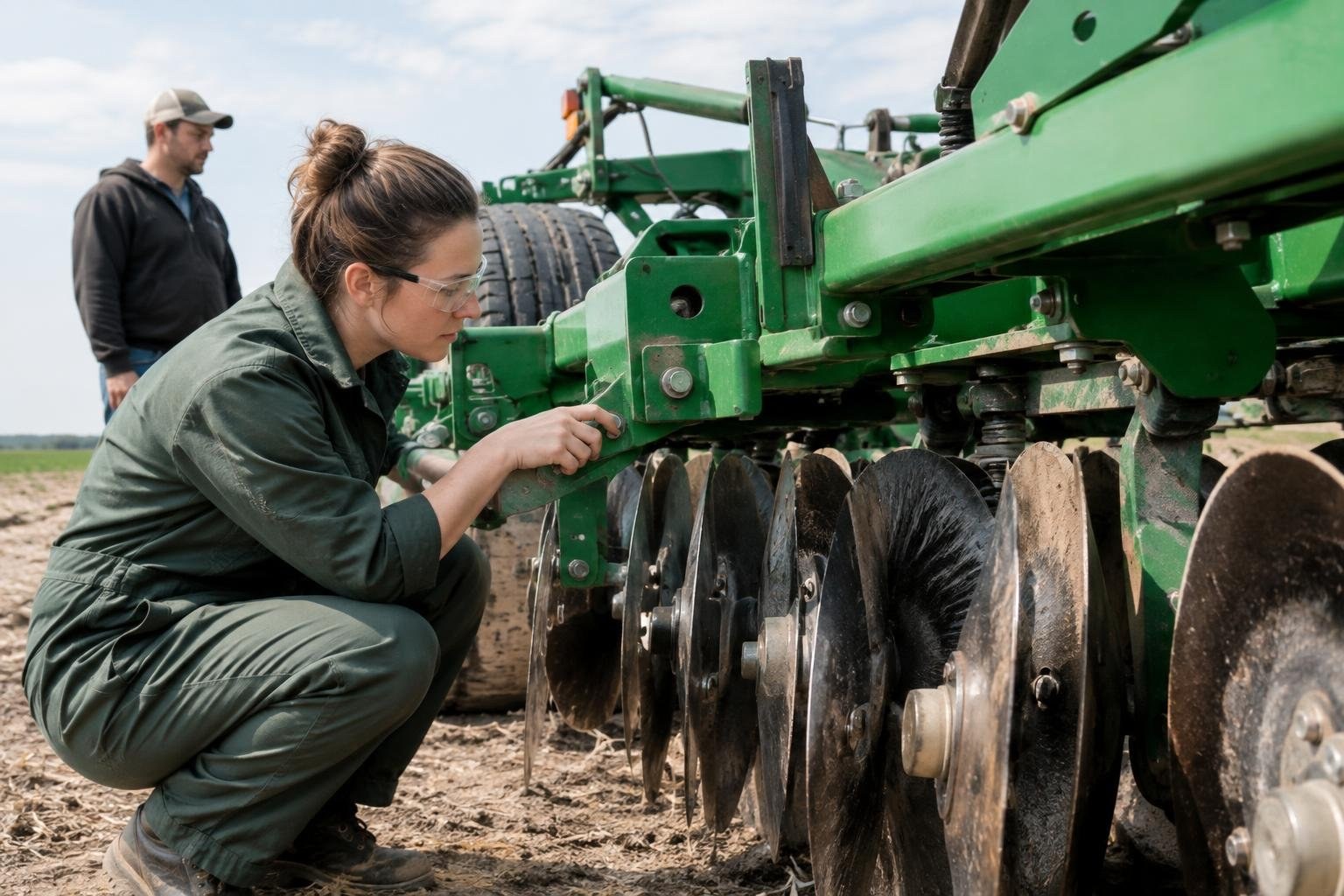
What Is an Agricultural Mechanization, Other Degree?
The U.S. Department of Education’s Classification of Instructional Programs (CIP) groups related academic programs under agriculture and associated fields. Agricultural Mechanization, Other uses CIP code 01.0299, a broad classification rather than a promise of a standard curriculum. A college may use a more specific title for a closely related program, so students should compare course requirements rather than search by title alone.
Mechanization in agriculture concerns the equipment and power systems used to support work such as planting, harvesting, irrigation, hauling, animal operations, and processing. A federal CIP description of agricultural mechanics and equipment-related instruction lists systems such as diesel, electrical, hydraulic, and mechanical, as well as agricultural machinery applications. That description helps illustrate the wider subject area, but it does not establish the required curriculum for every 01.0299 program.
Related names may include agricultural mechanics, agricultural equipment technology, agricultural power and machinery, or agricultural engineering technology. Those programs are not automatically interchangeable. Compare degree level, prerequisites, labs, and intended outcomes.
What Do You Study? Courses, Labs, and Practical Work
There is no single course list for this CIP category. A program may combine agricultural context with mechanical, electrical, or equipment-focused coursework. A relevant federal classification description includes principles of diesel, combustion, electrical, hydraulic, and mechanical systems, alongside examples of equipment used for crop spraying, planting, harvesting, irrigation, dairy operations, and processing. Treat those examples as topics associated with the broader instructional area, not as a checklist that every college must teach.
At the introductory level, students may encounter basic agricultural systems, equipment identification, safety practices, technical communication, and foundational science or math. More advanced work may focus on diagnosing equipment problems, understanding power transmission, maintaining machinery, or applying technology to production settings. Depending on the program, labs, field exercises, projects, internships, or a capstone may provide practical experience.
Ask for the current catalog and sample course descriptions. Find out which equipment students actually use, whether lab access is scheduled, and whether practical instruction is included in tuition or requires additional fees. The Texas State agriculture catalog illustrates how agricultural courses can include lecture and lab components, but its listed course is not evidence that a particular mechanization program has the same requirements.
Skills You May Develop
Students may develop a mix of technical, analytical, and workplace skills. Depending on course content and practice, these can include reading equipment information, understanding how mechanical or hydraulic systems function, following maintenance procedures, recognizing when a problem needs expert attention, and communicating technical information clearly.
- Technical: Familiarity with machinery, power systems, equipment components, and agricultural applications.
- Analytical: Observing symptoms, comparing possible causes, following diagnostic steps, and documenting work accurately.
- Communication: Explaining equipment concerns to operators, customers, supervisors, and service teams.
- Professional: Reliability, safe work habits, time management, teamwork, and attention to procedures.
- Digital: Depending on the curriculum, use of digital service information, records, or equipment technology.
Skills should be verified against the actual program. Ask what students practice in labs and how the program assesses technical competence. A course title alone may not tell you whether you will receive repeated hands-on experience.
Who Is This Program Best For?
This program may appeal to students who are curious about how machines work and want to apply technical learning in agricultural settings. It can be a good subject to explore if you like practical problem-solving, learning about mechanical systems, working with tools or equipment, and seeing how technology supports production.
There is no single personality type required. Some students enjoy troubleshooting and detail-oriented tasks; others are motivated by agriculture, field work, customer service, or the chance to combine technical knowledge with business operations. Consider whether you prefer hands-on activity, classroom theory, or a balance of both. Also think realistically about the physical setting and work schedule of jobs you are considering. Conditions vary by employer and role.
Does Agricultural Mechanization Match You?
Salary, job growth, and school reputation matter, but they do not show whether you will enjoy the day-to-day work. Compare your interests, preferred work environment, and willingness to keep learning technical systems with the tasks in actual job descriptions. Assessment.com’s Free MAPP Career Assessment, Degree Matching, and Career Matching tools can help you explore possible alignment. Use a career assessment as a starting point, not a substitute for reviewing programs and speaking with people in the field.
Take the Free MAPP Assessment to explore careers and educational paths that may fit your preferences.
Admissions, Length, and Academic Difficulty
Admission rules and completion plans are set by each college and program. Related agricultural study appears under distinct classifications, and the available award and course details can differ. Check the current catalog for the exact credential, prerequisites, required courses, and application materials.
Ask for a degree map showing the course sequence and how often required courses are offered. If you plan to transfer credits or study part time, request an estimate of how those choices affect your completion plan. Do not assume that a program title or credential level alone tells you what is required.
To gauge academic readiness, review the course descriptions and prerequisites. The broader subject area can include diesel, electrical, hydraulic, and mechanical systems, so ask what foundational preparation is expected and what academic support is available. Prior equipment experience should not be treated as a universal admission requirement unless the college confirms it.
Online vs. On-Campus Study
Online, hybrid, and campus-based options may be available, but the title alone does not reveal how a program is delivered. Online study can be convenient for lectures and some assignments. Practical training may involve equipment access, supervised demonstrations, field activities, or an internship that cannot be completed through ordinary online coursework.
Before enrolling remotely, ask which requirements are fully online, which require campus visits, and whether students must arrange their own equipment or placement. Request details about lab scheduling, travel, technology, and any extra fees. For hybrid programs, find out how often in-person sessions occur and whether they are offered at times that work for your schedule.
Cost, Financial Aid, and Salary Context
The total price depends on the college, residency status, credential, course load, and whether study is online or on campus. In addition to tuition, budget for fees, books, supplies, transportation, housing, technology, and any lab or equipment-related costs. Ask whether required safety gear, field travel, or internship expenses are included or paid separately.
Compare the full cost to completion rather than a per-credit figure alone. Check whether transfer credits reduce the number of courses you need, whether financial aid applies to your intended credential, and whether the school offers scholarships, grants, work-study, or employer tuition assistance. Eligibility and availability vary, so confirm details with the financial aid office.
Do not use a broad salary statistic as a personal earnings forecast. A source aggregating College Scorecard information reports a median of $45,096 one year after graduation for a much broader agricultural, animal, plant, and veterinary science program grouping. That figure does not isolate Agricultural Mechanization, Other, predict an individual outcome, or reflect local differences. Use occupation-specific labor data and local job postings to assess likely pay for your target role.
Careers, Pay, and Job Outlook
Agricultural Mechanization, Other does not lead to one standard occupation. Possible directions depend on the program’s technical content, credential level, practical experience, and local employer needs. The roles below are examples to investigate, not guaranteed outcomes. Salary and outlook are not presented as figures because they vary by occupation and geography; use current U.S. Bureau of Labor Statistics data and local job listings for specific comparisons.
Career directionTypical preparation to investigateHow the program may applyAgricultural equipment service technicianEmployer requirements vary; technical training and relevant experience may matter.Mechanical and equipment coursework may support service work.Farm equipment mechanicCheck employer listings for required training, experience, and equipment familiarity.Study of mechanical, diesel, electrical, or hydraulic systems may be relevant.Equipment operatorRequirements depend on equipment, employer, and operating context.Machinery knowledge may support safe, informed operation.Parts or service department associateEmployers may value product knowledge and communication skills.Equipment familiarity can help explain parts and service needs.Farm or production equipment coordinatorExperience and employer-specific responsibilities vary.Understanding equipment applications may support maintenance coordination.Agricultural equipment sales representativeEmployers may seek sales, customer service, and product knowledge.Technical context can help with customer conversations.Field service support workerRequirements vary by company, territory, and equipment line.Practical technical learning may be useful for support tasks.Agricultural science instructorEducation requirements depend on school level and employer; postsecondary teaching generally calls for advanced qualifications.A related degree may contribute subject knowledge but may not meet all teaching requirements.
In the BLS Occupational Outlook Handbook, review the occupation-specific page for farm equipment mechanics and service technicians and compare it with other roles you are considering. The BLS category is not identical to this degree classification. Technology and automation can change the equipment workers encounter, but they do not make a particular degree or job outcome certain. Ask employers which technical skills they currently value.
Experience, Credentials, and How to Stand Out
Build experience alongside coursework where possible. Ask about internships, cooperative education, supervised labs, student projects, agricultural clubs, employer visits, and opportunities to observe equipment service work. If a program does not arrange placements, ask how students find and receive credit for relevant experience.
Keep a record of completed projects, systems studied, safety training, and tasks you performed under supervision. A concise portfolio or skills summary can help you discuss your preparation with employers. Network respectfully with instructors, alumni, dealers, farms, equipment manufacturers, and service teams. Certifications or manufacturer training may be relevant for particular roles, but there is no universal credential for every job in this broad field. Verify value with target employers.
Degree Completion Is Not the Same as Job Qualification
A diploma confirms completion of a program; it does not automatically authorize every kind of equipment work or satisfy every employer’s hiring requirements. Confirm whether a job requires a particular credential, experience, safety preparation, or employer-provided training. Ask the college what it can document about practical competencies and industry connections.
Graduate Study and Longer-Term Education
Do not assume that a broad program title defines a path to graduate study or a particular job. First identify the roles you may want and check their stated education requirements. Then ask colleges which credentials they offer, how their courses fit your goals, and whether the program can support further study.
Related agricultural classifications distinguish areas such as agricultural mechanization, agricultural power machinery operation, and agricultural mechanics and equipment technology. Compare the actual course requirements and award at each institution. For teaching, research, or engineering-related plans, verify the requirements with the employer or institution before choosing additional education.
Related Degrees and Program Comparisons
Compare the program with these alternatives before applying:
- Agricultural mechanics or equipment technology: Consider this if you want a clearly equipment-centered curriculum.
- Agricultural engineering technology: Consider this if you want applied technical study with an engineering emphasis; compare exact course requirements.
- Agriculture, General: Consider this if you want a broader introduction before choosing a specialization.
- Diesel or heavy equipment technology: Consider this if your priority is mechanical service across a wider range of vehicles or equipment, not only agricultural settings.
- Agricultural business or agribusiness: Consider this if management, sales, finance, or operations appeal more than equipment systems.
- Crop production: Consider this if your main interest is growing and managing crops.
- Farm and ranch management: Consider this if you want to focus on production planning and business operations.
- Veterinary technology: Consider this if animal healthcare interests you more than machinery. Utah State University, for example, describes an associate veterinary technology program intended for students seeking animal-healthcare careers; its program is distinct from agricultural mechanization.
When comparing programs, look at required courses, lab hours, equipment access, degree level, transfer options, and graduate-school implications. A familiar or impressive title is less important than whether the program teaches the skills and knowledge you want.
Advantages, Drawbacks, and Is It Worth It?
Potential advantages: Agricultural mechanization connects agricultural applications with study of machinery and power systems. Related instructional descriptions cover mechanical, diesel, electrical, and hydraulic systems, and some program examples include practical coursework.
Potential drawbacks: The classification is broad, and related program names do not guarantee the same courses or credential. A program may not provide the particular equipment access or preparation you want, so verify those details before enrolling.
Whether a program is worth the cost depends on how well its curriculum, practical opportunities, credential, and total price fit your goals. Ask the college for current program details and compare them with the requirements in job postings you are considering.
How to Choose the Right College Program
Compare colleges using a consistent checklist:
- Curriculum: Are courses specific to agricultural machinery, power systems, and the jobs you want?
- Practical learning: What equipment, labs, projects, or supervised experience can students access?
- Credential: What award will you receive, and how does it transfer to further study?
- Cost: What is the likely total price, including fees, books, travel, and lab needs?
- Format: Which courses and practical requirements are online, hybrid, or in person?
- Outcomes: Can the school provide recent, program-specific completion and employment information?
- Employer connections: Are internships, career fairs, or employer partnerships available?
- Support: What advising, tutoring, and career services are available?
- Preparation: Does the program prepare students for any specific credentials or employer expectations, and can the school explain how?
Check institutional accreditation and any program-specific accreditation claims directly with the accreditor and college. Do not assume that an agricultural mechanization program has a specialized accreditation or leads to licensure. If considering a transfer, obtain a written course evaluation before relying on credits. Assessment.com education-matching tools can help you explore related programs, but use the college catalog and official cost information to make your final comparison.
Explore colleges and programs that fit your goals.
From Degree to Career: Possible Routes
Career steps are possibilities, not guaranteed promotions. A student might complete an equipment-focused certificate, begin in an entry-level parts or service support role, gain supervised experience with machinery, and later specialize in a particular equipment line or service function. Another student might earn an associate degree, work with an agricultural operation or dealer, and pursue additional education or training for a coordination or technical role.
Before choosing a sequence, identify three real job postings in your area. Note the education, experience, schedule, and technical skills they request. Then ask a college adviser which courses and experiences address those needs. Revisit the comparison as equipment and employer requirements change.
Questions to Ask Before Enrolling: A Practical Checklist
Use these questions when speaking with an admissions adviser, department chair, financial aid office, or current student:
- What exact credential and CIP code does this program award?
- Which courses teach machinery, mechanical systems, electricity, hydraulics, and agricultural applications?
- How much lab or field experience is required, and what equipment can students use?
- What is the estimated total cost to completion, including fees and practical requirements?
- Can I transfer credits, and will I receive a written evaluation before enrolling?
- Which courses require campus attendance, even in an online program?
- What internships or employer connections are available?
- What recent, program-specific completion and employment information can the college share?
- Does the program claim accreditation, certification preparation, or licensure eligibility? Who verifies that claim?
- What financial aid, scholarships, and payment options may apply to my situation?
- What support is available for students who need help with technical math or coursework?
Red flags include vague answers about the curriculum, pressure to enroll before you understand the total price, unverified job or salary promises, and claims that a credential qualifies you for every related occupation. Ask for written details and take time to compare alternatives.
Sources and Further Research
For primary classification context, review the U.S. Department of Education’s CIP materials and the federal agricultural mechanics description. For career research, compare occupation-specific information in the U.S. Bureau of Labor Statistics Occupational Outlook Handbook and local employer postings. College catalogs are the authority for each program’s current requirements, delivery format, and costs. Verify claims with the institution or relevant accreditor rather than relying only on a third-party directory.
- CIP classification listing
- Agriculture CIP descriptions, including agricultural mechanics
- BLS: Farm Equipment Mechanics and Service Technicians
- VA approved fields of study listing
- Assessment.com career and education exploration
Compare Related Agricultural Mechanization Programs
Related agricultural mechanization classifications have distinct labels and should not be treated as interchangeable. The VA list separates Agricultural Mechanization, General (1.0201), Agricultural Power Machinery Operation (1.0204), and Agricultural Mechanics and Equipment/Machine Technology/Technician (1.0205). A description of Agricultural Mechanization, General includes preparing students to sell, select, and service agricultural or agribusiness equipment and facilities. That description can help you identify a possible focus, but it does not establish the curriculum of an Agricultural Mechanization, Other program.
When comparing programs, check the exact classification, course list, credential, and practical training. If you are interested in equipment sales and service, ask whether those subjects appear in required courses. If you prefer machinery operation or equipment repair, compare the curriculum with that goal rather than relying on a similar program name.
Factors That Affect Your Degree Plan
Choosing and completing an Agricultural Mechanization, Other program is an education project shaped by several practical factors. First, the credential and course sequence affect the time and requirements involved. Ask the college for its current degree map, prerequisites, and how often required courses are offered. Transfer credits or part-time study may change your completion plan.
Second, curriculum and equipment access affect what you can practice. The broader instructional area can include diesel, electrical, hydraulic, and mechanical systems, but a broad program classification does not guarantee that every school covers each one. Compare required courses, lab access, and hands-on opportunities with the skills you want to develop.
Third, delivery format, total cost, and your career target influence which option makes sense. Online or hybrid coursework may still require campus or field attendance for practical work. Costs can include fees, supplies, travel, and lab-related expenses, so request a full estimate. Finally, employer requirements differ by role. Review local job postings and use them to assess whether a program’s credential and practical experience fit your intended work.
These factors are connected: a lower-cost or more convenient option may not offer the equipment access, course sequence, or preparation you need. Compare the specific program details before committing.
Frequently asked questions
What is an Agricultural Mechanization, Other degree?
Agricultural Mechanization, Other is a broad program category, not one fixed national curriculum. Programs may focus on machinery operation, maintenance, equipment systems, agricultural technology, or related topics. Review a college’s course list and hands-on training before deciding what its version covers.
Is agricultural mechanization hard?
It depends on the curriculum and the student. Coursework that combines mechanical systems, electrical concepts, hydraulics, and applied agricultural settings can be demanding. Ask to see course descriptions and prerequisites, and consider whether you are prepared to learn technical material through both classroom study and practical work.
What jobs can I get with an agricultural mechanization degree?
Potential paths include agricultural equipment service or maintenance, machinery operation, parts or service support, and technical roles with farm-equipment businesses or agricultural operations. Job titles and qualifications vary. The program itself does not guarantee a particular job, and some roles require experience, further education, or employer-specific training.
How much can you make with an agricultural mechanization degree?
Pay depends on the occupation, location, experience, employer, and credential requirements. This broad program category does not have one salary figure that applies to every graduate. Compare current U.S. Bureau of Labor Statistics data for the specific occupation you want, then check local job listings for actual requirements and pay ranges.
Can I earn an agricultural mechanization degree online?
Some classroom coursework may be available online, but a program focused on equipment and mechanical systems may include practical work that is difficult to complete entirely remotely. Ask whether labs, equipment demonstrations, internships, or assessments require campus or field attendance before enrolling in an online or hybrid option.
Does agricultural mechanization require a lot of math?
Technical programs may include math used to understand measurements, mechanical systems, electrical principles, or equipment performance. The amount varies by school and credential. Compare required courses and placement expectations, and ask about tutoring or prerequisite support if you are concerned about math.
Do I need graduate school to work in agricultural mechanization?
Not necessarily for every entry-level job connected to equipment operation or service. More advanced technical, teaching, research, or engineering-related work may call for a bachelor’s degree, graduate study, or a different specialized program. Check job postings for your target role rather than assuming one credential is required for the entire field.
What certifications help in agricultural mechanization?
There is no single certification that applies to every job associated with this broad degree category. Employers may value relevant equipment training, safety preparation, or manufacturer-specific instruction, but requirements differ. Ask target employers and the college which credentials are relevant to the roles and equipment you have in mind.
How is agricultural mechanization different from agricultural engineering technology?
Agricultural engineering technology programs may have a more defined emphasis on applying engineering principles to equipment and systems, while agricultural mechanization can include practical machinery operation, maintenance, or agricultural power topics. Names and curricula vary. Compare required courses, labs, degree level, and career preparation at each school.
Is an agricultural mechanization degree worth it?
It may be worthwhile if the program’s hands-on content, cost, and career preparation align with your goals. Compare tuition and fees with the likely requirements for jobs you want, and ask for program-specific completion and employment information. Because the title is broad, the curriculum and local employer demand matter more than the title alone.
People Also Ask
What is agricultural mechanization?
It is a broad program classification associated with agricultural machinery and related systems. Individual college curricula can differ, so check course requirements and practical training.
What can I do with an agricultural mechanization degree?
Possible work includes equipment operation, maintenance, service support, and related technical roles. Specific preparation depends on the program and employer.
How long does an agricultural mechanization degree take?
Program length depends on the credential, enrollment pace, and transfer credits. Ask the college for its published degree map and realistic completion timeline.
Can agricultural mechanization be studied online?
Some programs may offer online classes, but practical equipment training may require in-person attendance. Confirm delivery details with the school.
Does agricultural mechanization involve math?
The field can involve technical and applied coursework. The amount of math depends on the credential and curriculum, so inspect required courses before applying.
What is the difference between agricultural mechanization and agricultural engineering?
Compare it with agricultural mechanics, agricultural engineering technology, and general agriculture. Course content and career preparation vary by institution.
What is the average salary for agricultural mechanization graduates?
There is no single salary for this broad program. Compare earnings for specific occupations and locations using current labor-market data.
Do you need a bachelor's degree for agricultural equipment jobs?
Not necessarily. Some roles may be accessible through certificates or associate-level training, while specialized jobs may require more education or experience.
Agricultural Mechanization, Other may suit students who want to understand how machinery, power systems, and technology support farming and related operations. The program title is broad, so its value depends heavily on the actual curriculum, hands-on access, cost, and the jobs you want to pursue. Compare course lists and outcomes carefully, ask about equipment and internships, and consider whether a more specifically titled agricultural mechanics or agricultural engineering technology program better matches your goals. Before committing, look beyond the degree name: make sure the program builds the practical and technical skills employers in your preferred region seek.
Sources
- Agricultural/Animal/Plant/Veterinary Science and Related Fields, Other | Appily
- Agriculture (AG) | Texas State University
- Agricultural/Animal/Plant/V… at University of Arizona | Vaia
- Approved fields of study for the STEM Scholarship | Veterans Affairs
- Best institutions to study Agricultural/Animal/Plant/Veterinary Science and Related Fields | Clema.ai
- Degrees | AGNR | USU
- CIP 01 Agriculture/Animal/Plant/Veterinary Science and Related Fields | ASPIRE
- CIP - Classification of Instructional Program ACADEMIC CIP CODES
- Agricultural mechanization AAS
- Agricultural mechanics degree overview
- Mechanized Agriculture | ANCA Pathway | Bakersfield College
- 2025 Agricultural Mechanization Degree Guide
- Agricultural Mechanization, General
- Agricultural Mechanization, General - RUReady.ND.gov
- Agricultural Mechanization Major | Careers & Sample Curriculum | The Princeton Review
- 2026 Agricultural Mechanization Degree Guide