Degree Library
Agricultural Mechanization Degree Guide: Courses, Careers, Costs, and How to Choose
Agricultural Mechanization, General is a field of study focused on how machinery, equipment, and related technology support agricultural production.…
By Kieth Nelson · Staff Writer Assessment.com · Published October 5, 2026 · Last updated October 6, 2026
Agricultural Mechanization, General is a field of study focused on how machinery, equipment, and related technology support agricultural production. Depending on the college and credential, students may combine technical learning with agriculture topics such as plant science, animal science, natural resources, or production processes. The program is offered at different credential levels, including certificates, associate and bachelor's degrees, and graduate certificates. Students may explore equipment service, machinery sales, agricultural operations, and further study. The degree title alone does not determine job eligibility or salary, so compare program details with the work you hope to do. Not sure whether Agricultural Mechanization fits you? Take the Free MAPP Career Assessment to explore how your motivations, interests, and natural preferences may align with this degree and related careers. Take the Free MAPP Assessment →
Agricultural Mechanization, General is a college field focused on machinery, equipment, and related technology used in agricultural production. Programs can include mechanical and agriculture coursework, with the exact mix depending on the school and credential. Graduates may pursue equipment service, machinery sales, agricultural operations, or additional study; employers set role-specific requirements.
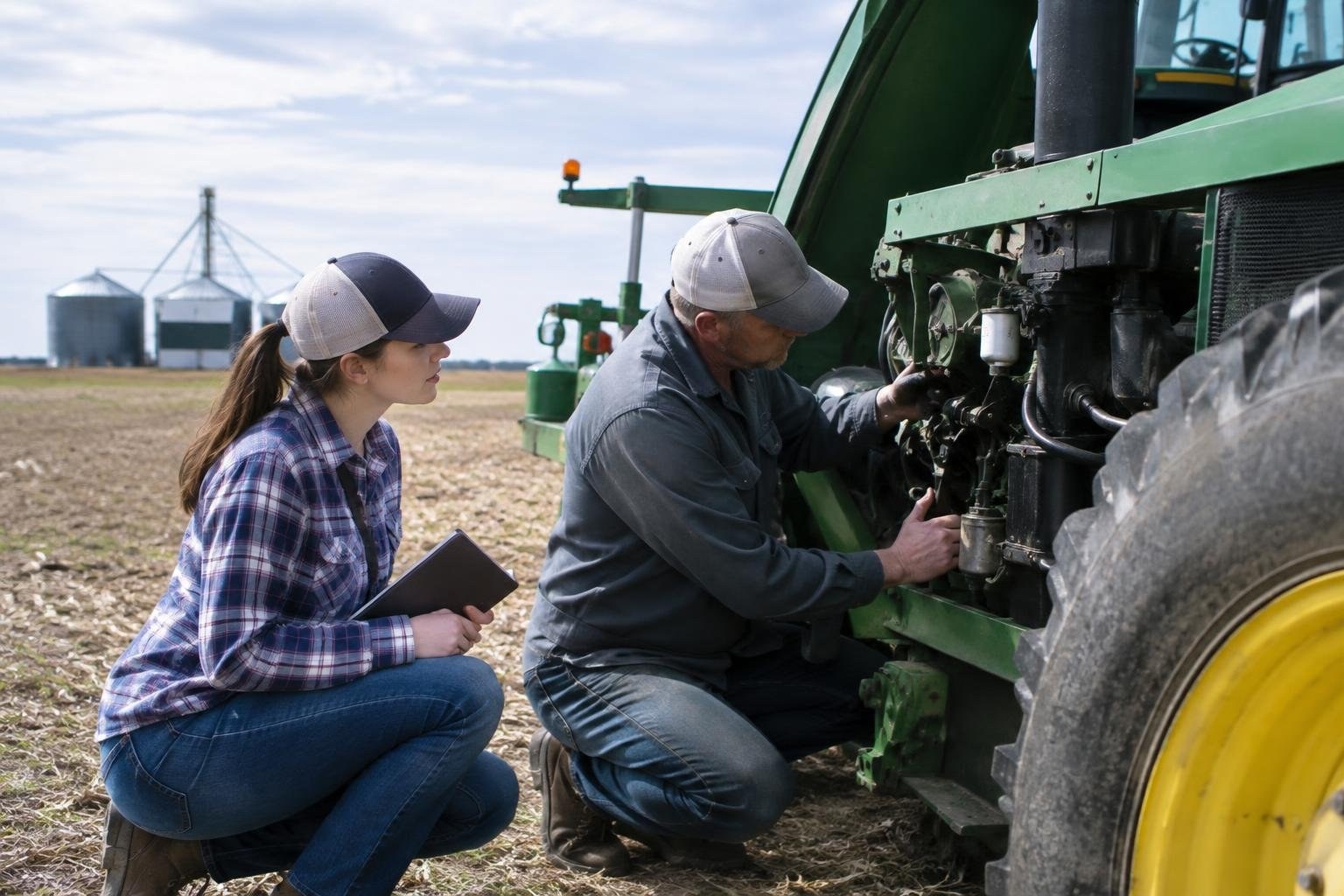
What Is an Agricultural Mechanization Degree?
Agricultural Mechanization, General is a college program area concerned with equipment and mechanical systems used in agriculture. The federal Classification of Instructional Programs (CIP) places it within the broader agriculture, animal, plant, and veterinary science family. A related program description includes preparing people to select, sell, and service agricultural or agribusiness equipment and facilities.
Colleges use different program names and organize the subject in different ways. The offered credentials can include certificates, associate degrees, bachelor's degrees, or graduate certificates. A specific college may emphasize machinery, production processes, equipment service, or a broader agriculture curriculum. Read the catalog instead of assuming that the title guarantees the same coursework everywhere.
This field differs from Agronomy and Crop Science, which is more crop-centered, and Agricultural Business and Management, which emphasizes business and operational decision-making. Some programs blend these areas. Check the courses and learning experiences to see where the emphasis lies.
Explore Degree Matching and related education pathways.
What Do Students Study?
A program can combine technical learning with agriculture subject matter. For example, Utah State University describes an emphasis that connects agricultural production processes with machinery use and includes agricultural mechanics, animal science, natural resources, and plant science. Course lists differ across institutions, so treat examples as prompts for comparison, not a universal curriculum.
Look for courses that show what students will learn and do. Ask whether instruction covers mechanical systems, equipment operation or maintenance, agricultural production, safety practices, or related technology. Some programs use laboratory or field activities; Texas State University, for example, describes a basic animal science lab involving livestock and animal-handling safety. That illustrates the kind of practical course detail to check, rather than proving that every mechanization program has the same lab.
Projects, internships, equipment demonstrations, and work experience may be available at some colleges. Ask which experiences are required, which are optional, and whether students must arrange them. A capstone or research project is not guaranteed by the degree title.
Skills You May Develop
The value of the coursework depends partly on the skills it helps you practice. Relevant skills may include reading technical information, recognizing how machinery supports production, communicating with customers or coworkers, and approaching equipment or operations problems methodically. The program's exact emphasis is school-specific, so use course descriptions and project requirements to identify the skills you will actually develop.
- Technical understanding: learn about agricultural equipment, facilities, and their uses.
- Problem-solving: assess a work need and consider suitable equipment or processes.
- Communication: explain technical choices to customers, producers, or a team.
- Workplace readiness: build practical experience through labs, projects, or employment when available.
These capabilities can connect to equipment service, sales, and agricultural operations, but employers may also require relevant experience or training.
Who Is This Degree Best For?
This field may be worth exploring if you are curious about how equipment and technology support agricultural work. A Utah State University program emphasis combines a broad understanding of agricultural production processes with depth in machinery use, alongside courses in agricultural mechanics, animal science, natural resources, and plant science. That example can help you identify subjects to look for, but each college's curriculum may differ.
Consider whether you prefer applied equipment topics or a more crop-, animal-, business-, or research-centered course of study. Read the course sequence and ask about practical activities before deciding. There is no single personality type that guarantees success, and the program's actual demands depend on its curriculum.
Does Agricultural Mechanization Match You?
Use the Free MAPP Assessment as one input, then compare Degree Matching and Career Matching results with real course catalogs and job descriptions. An assessment can prompt reflection, but it cannot promise a career outcome.
Take the Free MAPP Career Assessment →
Admissions, Length, and Academic Demands
Admission requirements are set by each institution and credential. A college may ask for a secondary-school record or prior college coursework, while some programs have particular prerequisite classes or application steps. Do not assume there is a universal GPA, test, essay, or interview rule for this field. Check the current admissions page and program catalog.
Time to completion depends on the credential, course load, transfer credits, and whether required courses are offered when you need them. A certificate may require fewer courses than a degree, while a bachelor's pathway generally involves a broader course plan. Part-time and online study can affect the timeline. Ask each college for a term-by-term plan based on your circumstances.
Common challenges may include technical material, balancing classroom learning with practical activities, or meeting course prerequisites. Before enrolling, review the course sequence, ask what equipment or lab activities are involved, and find out what academic support is available.
Online vs. On-Campus Study
Online, hybrid, and campus-based options depend on the program and the courses it requires. Some lecture-based classes may be offered remotely, while equipment-focused learning may involve in-person activities. Do not infer that an entire credential can be completed online from a college's general online-program page.
Ask for a written explanation of any campus visits, labs, field experiences, internships, or equipment access requirements. Confirm where those activities take place, whether you arrange them, and whether they add travel or other costs. If you are comparing flexible formats, check that required courses are offered often enough for your intended completion schedule.
Cost and Financial Aid
There is no single reliable price for an Agricultural Mechanization credential. Cost depends on the college, public or private status, residency, credential level, enrollment pace, and how long you attend. Budget for tuition and mandatory fees, books, transportation or housing, and any course-specific supplies or technology the program identifies.
Ask financial aid staff for a full estimate for your intended course plan, not only a per-credit figure. Compare grants, scholarships, work-study eligibility, and employer assistance if applicable. Check transfer-credit decisions before committing: a lower-cost starting institution may help, but transferability must be confirmed with the receiving college. Treasure Valley Community College describes an agriculture associate of science degree designed for transfer and advises students to work with advisers at both institutions.
Compare net cost after aid and the likely time to completion. Avoid relying on a general tuition figure that may exclude fees or living expenses.
Careers, Pay, and Job Outlook
A degree does not map to one occupation, and job titles, employer requirements, and wages vary. The paths below are examples to investigate, not guaranteed placements. For pay and outlook, search the current Bureau of Labor Statistics data for the exact occupation and compare it with job postings in your intended region.
Career directionTypical preparation to investigatePay and outlookHow the program may applyAgricultural equipment service or repairTechnical education, employer training, or relevant experience; requirements differ.Check current BLS data for the specific occupation and location.Equipment knowledge and applied agriculture context may be relevant.Agricultural machinery or equipment salesEmployer requirements vary; product knowledge and communication may matter.Pay structures and outlook vary by employer and region.Equipment selection and agricultural production knowledge can be useful.Farm or agricultural production operationsRelevant experience and operational knowledge may be important.Compare local postings and current occupation data.Can connect machinery use with production processes.Agricultural technical supportRole-specific equipment knowledge and customer communication may be sought.Verify data for the closest matching occupation.May provide a foundation in agricultural equipment and facilities.Agricultural sciences postsecondary teachingFurther education may be needed, depending on institution and role.Use BLS data for the exact teaching occupation.May be a starting point for advanced study in agriculture-related fields.
Fort Hays State University describes animal science graduates pursuing varied roles, including sales representative, and preparation for graduate study; the University of Kentucky likewise lists careers and advanced study for its animal sciences program. Those examples show that agriculture programs can connect to varied work, but they describe animal science, not guaranteed outcomes for Agricultural Mechanization.
When comparing job prospects, distinguish jobs that may be accessible after a credential from roles requiring additional education, experience, or employer training. New tools and automation can change equipment and production work over time; evaluate specific job tasks and local hiring rather than assuming technology will eliminate or guarantee a career.
Experience, Certifications, and Employer Readiness
Experience can help you test whether the work suits you and give employers evidence of practical learning. Ask about internships, co-ops, student projects, equipment demonstrations, research, agricultural organizations, and relevant part-time work. Availability differs by school and employer, so verify the details rather than assuming a placement is included.
How to Stand Out to Employers
- Keep a record of relevant coursework, projects, and practical activities.
- Describe your contribution and the tools or systems you learned about.
- Build communication skills for explaining equipment or production needs.
- Ask employers which training or credentials they value for the specific role.
Completing a degree is not the same as meeting every employer's requirements. Check whether a job calls for a particular license, credential, manufacturer training, or work experience. Requirements depend on the job and jurisdiction; confirm them with the employer or relevant authority.
Graduate School and Further Study
Possible next steps include graduate certificates or further study in an agriculture-related area, depending on your goals and prior coursework. A graduate credential may be relevant for specialized study, research, or some teaching pathways, but it is not automatically necessary for equipment sales, service, or operations work. Fort Hays State University and the University of Kentucky both describe animal science programs as preparation for advanced study in related fields; these are examples from related programs, not admission guarantees for a particular graduate school.
Before applying, ask the prospective graduate program whether your undergraduate courses satisfy prerequisites, whether work or research experience is expected, and what career outcome the credential is meant to support.
Related Degrees and Comparisons
- Agricultural Mechanization, General: Consider this if equipment and machinery in agricultural production interest you.
- Agricultural Mechanics and Equipment Technology: Consider this if you want a more concentrated technical or technician-oriented course of study; compare exact catalogs.
- Agricultural Business and Management: Consider this if business decisions, management, or agricultural commerce appeal more than equipment.
- Agronomy and Crop Science: Consider this if crops, soils, and crop production are your primary interests.
- Animal Sciences: Consider this if animal biology, care, management, or production is your main focus.
- Plant Sciences: Consider this if plant growth and plant production are more compelling than machinery.
- Agricultural Communication: Consider this if explaining agriculture to public or professional audiences is your main interest.
- Agricultural Business Technology: Consider this if your interests center on business systems and technology in agriculture.
Compare course requirements, hands-on content, likely occupations, and whether further education is needed. Two programs with similar names can have different emphases.
Advantages, Drawbacks, and Is It Worth It?
Potential advantages: the subject connects technical equipment with agricultural production; colleges may offer multiple credential levels; and the field can be relevant to equipment service, sales, and operations. A program may also provide a route toward further study.
Potential drawbacks: program content and practical access vary; the degree does not guarantee a particular job or salary; some roles may require additional training or experience; and equipment-focused work may not suit students primarily interested in biology, crops, or business.
To judge whether it is worth the investment, compare the full cost and time required with the actual job requirements and opportunities you find. Include the possibility of transfer or additional credentials in your plan. The right decision depends on your priorities, location, finances, and personal fit.
How to Choose the Right Program
Use these steps to compare colleges before applying:
- Check accreditation. Verify the institution's current status with the appropriate recognized accreditor and confirm any program-specific recognition relevant to your goal.
- Read the full curriculum. Compare required courses, technical depth, agriculture topics, and available electives.
- Ask about practical learning. Find out what labs, projects, internships, or equipment access are offered and whether participation is required.
- Compare total cost. Request an estimate that includes fees and likely non-tuition expenses, then compare aid offers.
- Confirm format and scheduling. Ask which classes are online, campus-based, or hybrid and how often required courses run.
- Verify transferability. Get written course-equivalency information from the institution you may transfer to.
- Ask about outcomes and career support. Request information on advising, internships, employer connections, and career services. Ask how outcomes are measured.
- Check role-specific credentials. If you have a target job, ask employers what education, experience, or training they expect.
Assessment.com's Degree Matching, Career Matching, and Matching Jobs tools can help organize your interests and options. Treat them as one part of the decision alongside catalogs, advisers, employers, and current occupational information.
Explore colleges and programs that fit your goals →
From Degree to Career
Career paths are not guaranteed ladders. These examples show ways education and experience might combine:
- Equipment emphasis: certificate or degree → entry-level equipment support or service role → additional employer training and experience → specialized service or technical support role.
- Sales emphasis: relevant college study → entry-level agricultural equipment sales or customer support → product and customer experience → expanded territory or product responsibilities.
- Operations emphasis: associate or bachelor's study → agricultural production support role → hands-on operations experience → supervisory or specialized operations work, if qualifications and opportunity align.
- Further study: bachelor's-level agriculture study → graduate coursework or research training → specialized research or teaching direction, depending on additional qualifications.
Discuss likely pathways with faculty, alumni, employers, and career advisers. Ask which first jobs graduates actually pursue and what additional preparation employers expect.
Questions to Ask and Red Flags to Check
Use this checklist before paying a deposit or accepting an offer:
- What credential will I earn, and what are its exact graduation requirements?
- Is the institution accredited, and can I verify that status independently?
- What is my estimated total cost after aid, including fees and other expenses?
- Which hands-on experiences and equipment access are included?
- Are internships or work placements guaranteed, competitive, or self-arranged?
- Will the courses transfer to my intended next college?
- Which classes require campus attendance, and when are they offered?
- What career advising, employer recruiting, and graduate outcome information can the school provide?
- Do target employers require additional training, experience, or credentials?
- What financial aid, scholarship, or employer-support options can I verify?
Watch for red flags: pressure to enroll before you can review costs, unclear course requirements, unsupported job or salary promises, and vague answers about transfer credits or in-person requirements. Request details in writing and confirm them with the relevant college office.
Sources and Further Reading
The resources below provide examples of how agriculture programs and course catalogs describe related study. Program details are not interchangeable; confirm current information directly with the institution.
- Utah State University: Agriculture and food programs
- Utah State University: Agriculture and Natural Resources degrees
- Michigan Technological University: CIP agriculture field descriptions
- Texas State University: Agriculture course catalog
- Treasure Valley Community College: Agriculture and Natural Resources
- U.S. Bureau of Labor Statistics Occupational Outlook Handbook: search by occupation for current pay and outlook information.
Factors That Affect the Project
The total investment in an Agricultural Mechanization program depends on more than its advertised tuition rate. Credential length, enrollment pace, residency, required fees, books, transportation or housing, and any program-identified supplies can change the amount you pay. The time needed to finish also depends on transfer credits and when required classes are available. Ask the college for a written estimate based on your intended course plan, then compare the total cost and timeline across programs. If you plan to transfer, confirm course equivalencies with both colleges before enrolling; Treasure Valley Community College advises students in its transfer-oriented agriculture associate program to work with advisers at both institutions.
Ways to Reduce Cost or Save Safely
Look for savings that do not leave you short of required courses, equipment access, or transfer progress. Ask financial aid staff for a full cost estimate and compare grants, scholarships, work-study eligibility, and employer assistance if applicable. Before starting at a lower-cost college, get written confirmation from the receiving institution about which credits will count toward your intended degree. Check whether required courses are offered often enough to keep your completion plan realistic. Avoid choosing a program based only on a low per-credit price or an unverified transfer promise; compare the likely full cost and time to completion.
Frequently asked questions
How can I tell whether I am prepared for Agricultural Mechanization coursework?
The amount of technical and mechanical coursework varies by college and credential. Review the required course sequence, prerequisites, and descriptions of labs or field activities. Ask an adviser what preparation is recommended and what academic support is available.
What kinds of work may connect to this degree?
Potential directions include agricultural equipment service or repair, machinery sales, and farm or production operations. Compare the credential and practical experience you expect to gain with local employer postings. Some teaching or research paths may involve further education.
How should I research pay for careers related to Agricultural Mechanization?
There is no single salary attached to the degree because graduates may pursue different occupations. Search current Bureau of Labor Statistics information for the specific occupation, then compare local postings and their stated experience or training requirements. A credential does not guarantee a particular wage.
What should I check before choosing an online or hybrid program?
Some lecture courses may be offered online, but equipment-focused learning may involve in-person activities. Ask the college which courses require campus attendance, labs, equipment access, or field experiences, and confirm how often required courses are offered.
How do I compare the full cost of two programs?
Request a written estimate for your full course plan, including tuition, mandatory fees, books, transportation or housing, and any identified course supplies. Compare aid offers and the time required to complete each credential rather than relying only on a per-credit price.
How can I avoid losing credits when I transfer?
Do not assume credits will transfer because a program describes an associate degree as transfer-oriented. Ask the receiving college to confirm course equivalencies and degree requirements, and consult advisers at both institutions before enrolling.
How do I find out whether a job requires a certification?
Requirements depend on the employer, role, and equipment involved. Review job postings and ask target employers whether they expect a specific license, credential, manufacturer training, or experience. Confirm any jurisdiction-specific requirement with the relevant authority.
What should I compare when choosing an Agricultural Mechanization program?
Compare required courses, machinery-focused learning, agriculture topics, practical experiences, total cost, and transfer policies. Ask each college what hands-on activities are required and what career advising or outcome information it can provide.
People Also Ask
What is Agricultural Mechanization, General?
It is a college field concerned with machinery, equipment, and related technology used in agricultural production. The exact curriculum depends on the college and credential.
What subjects are covered in an Agricultural Mechanization program?
Coursework depends on the school and may connect agricultural production with mechanical or equipment-focused study. Check the catalog for required courses and practical activities.
What jobs might relate to an Agricultural Mechanization degree?
Possible directions include equipment service or repair, machinery sales, and farm or agricultural production operations. Employers set role-specific requirements, so compare job postings with the program you are considering.
Can I complete Agricultural Mechanization coursework online?
Online, campus-based, and hybrid options depend on the program. Ask whether technical courses require labs, equipment demonstrations, or other in-person activities before enrolling.
What expenses should I include when estimating program cost?
Cost varies with the college, residency, credential, course load, time to completion, and expenses beyond tuition. Request an estimate for your full course plan and compare financial aid offers.
How can I check the math requirements for this degree?
Math requirements vary by program. Review required courses and prerequisites in the catalog, then ask an adviser about preparation, placement, and available academic support.
How can I check whether agriculture credits will transfer?
Transfer may be possible, but it is not automatic. Ask the receiving college to confirm course equivalencies and degree requirements, and consult advisers at both institutions.
Agricultural Mechanization, General may suit students who want to understand how machinery, equipment, and technology support agricultural production. Potential directions include equipment service, sales, agricultural operations, and further study, but the degree alone does not guarantee a particular job or wage. The right choice depends on the credential, the program's coursework and practical learning, total cost, and the work you hope to do. If your main interest is plant or animal science rather than equipment and production systems, compare those subjects in actual course catalogs before deciding. Ask colleges about hands-on learning, transfer options, total cost, and the career information they can provide. Before choosing a degree, consider how your interests, preferred work setting, and education plans fit together. Take the Free MAPP Career Assessment to explore careers, related education pathways, and potential jobs. Use Degree Matching, Career Matching, and Matching Jobs alongside college catalogs, advisers, and job descriptions as you compare options.
Sources
- Bachelor of Science in Agriculture (Animal Science)
- Bachelor's Degree in Animal Sciences | University of Kentucky'
- Utah State University Degrees and Programs by interests
- Agriculture (AG) | Texas State University
- Agriculture & Natural Resources
- Approved fields of study for the STEM Scholarship | Veterans Affairs
- Degrees | AGNR | USU
- CIP 01 Agriculture/Animal/Plant/Veterinary Science and Related Fields | ASPIRE
- Mechanized Agriculture | ANCA Pathway | Bakersfield College
- Agricultural Mechanization Majors: Salary, Careers & More - Course Advisor
- Agricultural Mechanization, General
- Agricultural mechanics degree overview
- Everything You Need to Know About a Bachelor's degree in Agricultural Mechanization
- Agricultural Mechanization Major | Careers & Sample Curriculum | The Princeton Review
- 2025 Agricultural Mechanization Degree Guide
- 2026 Agricultural Mechanization Degree Guide