Degree Library
Agricultural Mechanics and Equipment Technology Degree Guide: Courses, Careers, Cost & Program Fit
Agricultural mechanics and equipment technology programs combine mechanical training with agricultural applications. Learn about coursework, credentials, hands-on experience, careers, costs, and how to compare programs.
Agricultural mechanics and equipment technology programs teach students about machinery used in agriculture, including mechanical systems, maintenance, troubleshooting, and safe work practices. Courses, credentials, and practical training vary by college, so compare program plans and equipment access before choosing a school. Graduates may pursue equipment service and related technician roles, but job titles and employer requirements differ.
Millions of people Take the MAPP Career assessment to see which Degrees are the best Match!
You can too,
What Is an Agricultural Mechanics and Equipment Technology Degree?
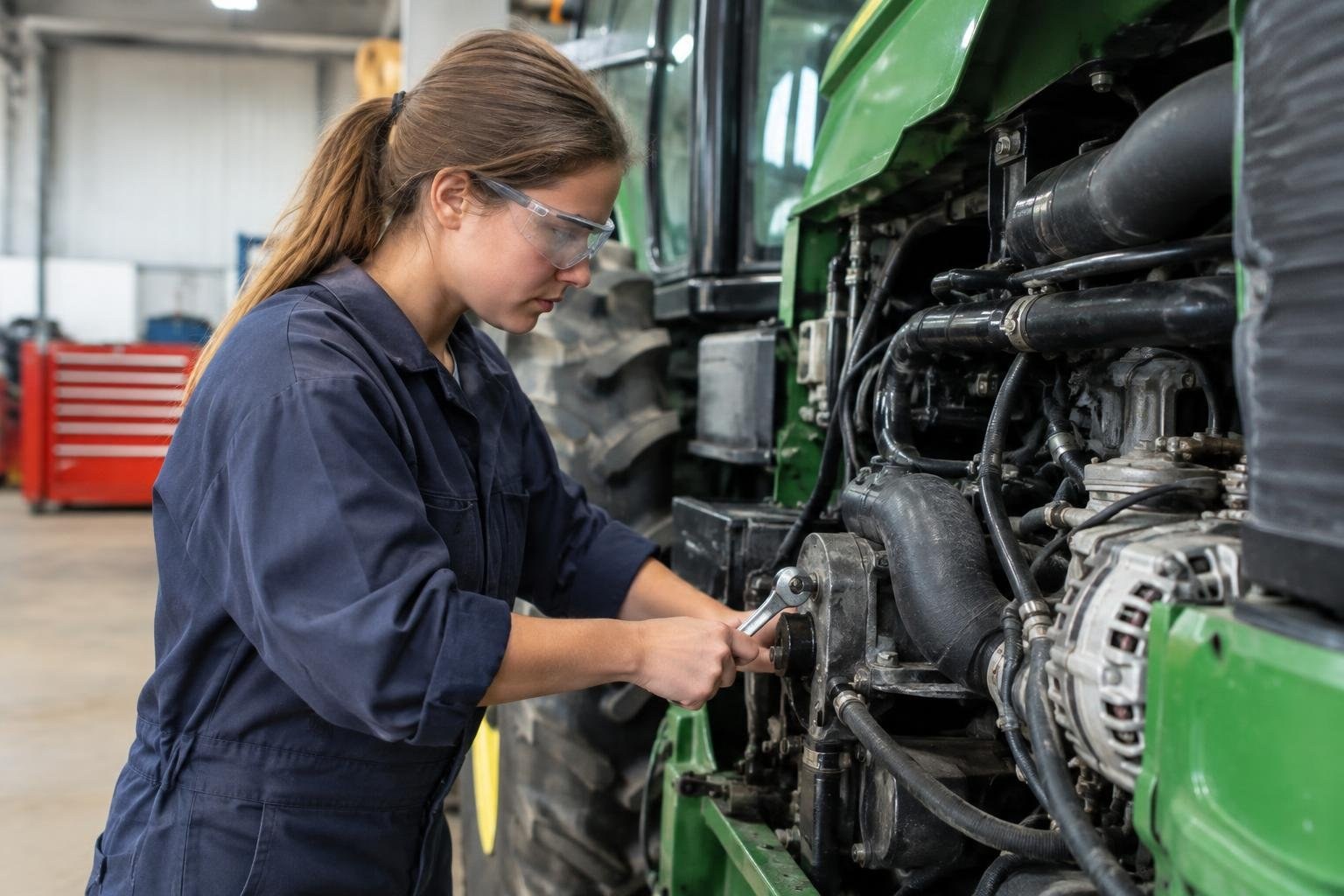
Agricultural mechanics and equipment technology is a career-focused area of study about the machinery and mechanical systems used in agricultural work. Programs may combine classroom learning with practical equipment experience. The title does not guarantee a uniform curriculum: colleges can differ in credential, facilities, courses, and the equipment available for instruction.
The U.S. Department of Veterans Affairs lists Agricultural Mechanics and Equipment/Machine Technology/Technician as a field of study within agricultural mechanization. This classification helps identify the subject area; it is not an accreditation or a statement that every program has the same content.
Related names include agricultural technology, agricultural equipment technology, agricultural mechanics, and agricultural mechanization. Compare the course list and stated learning outcomes to see whether a particular program focuses on repair and service, equipment operation, machinery systems, or a broader mix.
What the program includes
Depending on the college, a program may include general education, mechanical fundamentals, equipment-related coursework, shop or lab practice, and work experience. The College of the Sequoias, for example, lists an Associate of Science in Agriculture Technology. That example illustrates one possible credential, not a national standard.
What Do You Study? Courses and Practical Training
Students may study mechanical principles, tools and measurement, equipment systems, maintenance practices, safety, and troubleshooting. The exact course names and depth depend on the school. Ask for syllabi or a course sequence, not just a marketing overview, to understand what you will practice and what equipment is covered.
Practical instruction matters in an applied program. Find out whether labs or shop classes involve supervised inspection, maintenance tasks, interpreting technical information, and diagnosing problems. Ask which activities students perform themselves and which they only observe. Some colleges may include internships, cooperative education, employer projects, or work-based learning; do not assume these are required or available without checking.
Some agriculture coursework addresses animal and plant production, but that does not mean it is central to every equipment technology program. Review course descriptions to see how much study is mechanical, agricultural, business-oriented, or general education.
How the learning connects to work
Equipment-related learning can help prepare students to follow service procedures, recognize mechanical issues, communicate findings, and work safely. Employers may require additional on-the-job training for their machinery, systems, or service standards. A college course is a foundation, not a substitute for every employer-specific procedure.
Skills You Can Develop
Students can develop mechanical reasoning, attention to detail, measurement habits, safe tool use, and the ability to follow technical instructions. Troubleshooting involves gathering information, checking possible causes, and communicating findings. The practical activities available depend on the college and its curriculum.
Program examples show how this training can be applied. Utah State University lists equipment testing and diagnosis in its agricultural machinery technology core curriculum. Madison College describes shop-based hands-on learning in its agricultural equipment technology program. These examples do not establish that all programs offer the same facilities or activities.
Ask colleges which equipment and diagnostic tools students use, what tasks they perform themselves, and how practical work is supervised. Employers may also provide training for their specific machinery and service procedures.
Who Is This Program Best For?
This field may suit students interested in machinery, mechanical problem-solving, and practical technical learning. Montana State University Northern describes its Agricultural Mechanics Technology associate program as technical preparation for equipment technician, service specialist, and maintenance mechanic pathways. That is one program example, not a guarantee of a job or a description of every college’s curriculum.
Review course plans and ask what students practice. Compare the work with other agricultural or technical interests, and check local job postings for tasks, work settings, and qualifications. The MAPP assessment can help you explore career and degree options alongside your own research.
Admissions, Program Length, and Academic Difficulty
Admission rules are set by each college. Applicants may need a high school diploma or equivalent and may need to meet general placement or course prerequisites. Tests, essays, interviews, minimum grades, or prior work experience should not be assumed; check the official admissions page for the program and ask whether technical courses have separate requirements.
Certificates and associate degrees can have different course totals and timelines. Full-time or part-time study, course availability, transfer credits, and whether required labs run each term all affect completion time. Accelerated schedules may be available at some schools, but students should confirm that the pace is manageable and that required hands-on courses fit the schedule.
The work can be demanding if you are new to mechanical concepts, technical reading, or math used for measurements. Prepare by reviewing the published prerequisites, asking about tutoring and introductory courses, and arranging a campus visit or program conversation. No single level of prior farm experience can be assumed across programs.
Compare credentials carefully
Look at the award students receive, the courses required, whether credits transfer, and whether the credential supports your next step. A certificate may be a shorter applied pathway; an associate degree may include a broader course plan. The actual structure differs, so use the college catalog rather than a general label.
Online, Hybrid, or On-Campus Study
Ask each college whether the program is online, hybrid, or campus-based and how it delivers practical equipment instruction. The format and attendance requirements are school-specific, so verify them in the official program information rather than assuming an online option is available.
For example, Madison College describes its Agricultural Equipment Technology associate degree as a full-time program at the Truax campus. This is one campus-based example, not a statement about every program. Ask whether labs or shop sessions require attendance, how students demonstrate practical skills, and whether travel to a campus or partner site is required.
Before enrolling, confirm the schedule, equipment access, safety instruction, and any in-person requirements directly with the college. Make sure the format fits your location and learning needs.
Cost, Financial Aid, and Ways to Manage Expenses
Program expenses depend on the college, credential, course requirements, and student circumstances. Request an estimate for the full program, not just a per-credit tuition figure. Ask the college to identify tuition, mandatory fees, books, supplies, and any required tools separately so you can compare programs on the same basis.
Book costs can be separate from tuition and fees. Northwood Technical College notes that book costs vary with course selection and whether books are purchased or rented. Confirm current costs with the college, since course choices and prices can change.
For financial aid, contact the college’s financial aid office and ask which forms, deadlines, and aid options apply to your situation and program. Do not assume that a particular grant, scholarship, or funding amount is available. If you are comparing credentials, ask whether credits can transfer toward further study; Northwood Technical College states that its credits may transfer to a four-year college, but transfer decisions depend on the receiving institution.
Careers, Employers, Salary, and Job Outlook
Possible directions include agricultural equipment service and repair, farm machinery maintenance, and equipment dealership service or parts support. Montana State University Northern describes its program as technical preparation for equipment technician, service specialist, and maintenance mechanic pathways. Compare those possibilities with the duties and qualifications in current employer postings. Assessment.com also has information about farm equipment mechanics and agricultural equipment operators, which are related but distinct career directions.
Agricultural and food science technicians are a related but distinct occupation, not another name for farm equipment mechanics. The U.S. Bureau of Labor Statistics says entry requirements vary: many agricultural and food science technicians typically need an associate degree, some enter with a high school diploma or equivalent and related experience, and others may need a bachelor’s degree. Do not apply those education requirements or wage figures to equipment mechanics.
Pay and outlook depend on the exact occupation and location. Look for current, occupation-specific information and compare it with local employer postings. Avoid relying on a salary claim that does not identify the job title, year, geography, and method.
Career directions to investigate
| Career direction | What to verify | How study may apply |
|---|---|---|
| Equipment technician, service specialist, or maintenance mechanic | Check current employer requirements and duties. | Montana State University Northern describes these as pathways its Agricultural Mechanics Technology program prepares students to pursue. |
| Farm equipment mechanic | Review local postings for required education, experience, and equipment knowledge. | Compare the listed skills with the program’s mechanical and equipment coursework. |
| Agricultural or food science technician | Distinguish this occupation from machinery service work; BLS describes variable education requirements. | This is a related but distinct occupation, so evaluate it separately from equipment mechanics. |
Ask employers which credentials they recognize and whether they provide training for their specific machinery and service procedures.
Find out which Career or College Major is right for you!
Take the MAPP free today!Experience, Credentials, and How to Stand Out
Related study options serve different interests. Agricultural mechanics and equipment technology focuses on applied mechanical learning, while agricultural engineering is a different pathway. If engineering design interests you, explore agricultural engineering careers. For broader study options, browse agriculture-related degrees. Compare actual course plans and requirements rather than relying on program titles.
College catalogs may use different names for programs in agricultural technology, mechanization, diesel or automotive technology, farm management, or general agriculture. Choose comparisons based on the work you want to do, then verify prerequisites, hands-on instruction, transfer policies, and employer expectations with the schools and employers involved.
Factors to Compare When Choosing a Program
Program decisions depend on the credential, course sequence, schedule, location, practical instruction, and career goal. College examples illustrate why details should be checked individually: the College of the Sequoias lists an Associate of Science in Agriculture Technology, while Madison College describes a full-time associate degree at its Truax campus.
- Credential and course plan: Confirm the exact award and required courses.
- Schedule and location: Check when required classes and shop sessions run and whether you can attend.
- Practical instruction: Ask what equipment-related tasks students perform and how practice is supervised.
- Career fit: Compare program preparation with tasks and qualifications in local job postings.
- Cost: Request a full-program estimate, including fees, materials, and any required tools.
Gathering these details from each college helps you compare options and plan a realistic route from enrollment to completion.
Frequently asked questions
Is agricultural mechanics and equipment technology hard?
It can be challenging if you have little experience with tools, mechanical systems, or technical math, but prior farm experience is not always an admission requirement. Expect to learn by doing: interpreting instructions, diagnosing problems, and practicing safe work procedures. Ask colleges about entry-level support, shop access, and how much supervised hands-on practice students receive.
Is an agricultural mechanics degree worth it?
It may be worthwhile if the program’s cost and credential match your goals and local employers value the skills it teaches. Compare tuition, fees, equipment experience, internships, and job requirements before deciding. Career outcomes and earnings vary by occupation, location, experience, and employer, so do not treat any degree as a guarantee of a particular job or salary.
What jobs can I get with this degree?
Depending on your coursework and experience, possible directions include agricultural equipment service and repair, farm machinery maintenance, equipment dealerships, parts and service support, and related technician roles. Employers may include farms, equipment dealers, repair businesses, and other organizations that use agricultural machinery. Job titles and requirements differ, so review actual local postings before choosing a program.
How much can agricultural equipment technicians make?
There is no single salary for this program. Pay depends on the specific job, region, employer, experience, and whether the role includes field service, travel, or specialized equipment. Compare current wage information for the exact occupation you are considering, using the U.S. Bureau of Labor Statistics and local job postings. Do not substitute agricultural science technician wages for machinery technician pay.
Can I earn an agricultural equipment technology credential online?
Some courses may be available online, especially general education or theory courses, but technical preparation typically benefits from access to equipment and supervised practice. Ask whether online students must attend campus or a partner facility for labs, demonstrations, or assessments. Confirm that the format provides the practical experience employers expect.
Does agricultural mechanics require a lot of math?
Technical math is useful for measurements, specifications, and troubleshooting, but the amount and level vary by program. Courses may also require reading technical information and applying mechanical concepts. Request the course list and ask an advisor what math preparation is expected, especially if you have been away from school for a while.
Do I need a bachelor’s degree to work on farm equipment?
Not necessarily for every technician role. Employers set their own education and experience requirements, and some related technician jobs accept an associate degree while others may require different preparation. More advanced roles or engineering careers may require further education. Check job postings for your target role and ask program staff how graduates typically continue their education.
What certifications help agricultural equipment technicians?
Useful qualifications depend on the equipment, employer, and job. Programs may offer manufacturer-specific training or other credentials, but availability and recognition vary. Ask employers and the college which credentials are requested in local job postings, whether training is included in tuition, and whether a credential must be renewed. A college credential does not automatically grant a professional license.
How is agricultural mechanics different from agricultural engineering?
Agricultural mechanics and equipment technology emphasizes mechanical systems, equipment service, and practical troubleshooting. Agricultural engineering generally involves more engineering science, design, and analysis and may have different degree and career requirements. Compare actual curricula rather than titles: some programs are applied technician pathways, while others prepare students for engineering study.
How long does an agricultural mechanics program take?
Programs may be offered as certificates or associate degrees, while some colleges provide related bachelor’s or graduate options. Time to finish depends on the credential, required credits, course availability, transfer credits, and whether you study full time. Use the published program plan and ask how often required technical courses are offered.
People Also Ask
What do you learn in agricultural mechanics and equipment technology?
Programs combine mechanical and agricultural learning, but specific equipment, courses, and practical requirements vary by college. Review the program plan and ask how much supervised shop or field experience students receive.
What can I do with an agricultural mechanics degree?
Potential work includes agricultural equipment service, machinery maintenance, and related technician or dealership roles. Employers set job requirements, so compare program skills with current postings in your area.
What degree do you need to become a farm equipment mechanic?
The credential could be a certificate, associate degree, or another award, depending on the institution. Confirm the exact credential, credit requirements, and transfer options with each college.
Can I study agricultural mechanics online?
Some coursework might be online, but ask how a program handles practical equipment training. Online availability does not by itself confirm that students receive hands-on experience.
How much does an agricultural equipment technology program cost?
Cost varies with the college, residency, credential, tuition, fees, tools, and time to completion. Request a full cost estimate and ask which course materials or equipment-related expenses are included.
What is it like to work as an agricultural equipment technician?
The work may involve practical diagnosis and repair, but job duties vary. Review the tasks, work environment, travel expectations, and physical requirements in employer postings before choosing a path.
What is the difference between agricultural mechanics and agricultural engineering?
Agricultural mechanics centers on equipment and applied mechanical skills. Agricultural engineering generally focuses more on engineering design and analysis. Compare the curriculum and career prerequisites at specific schools.
Is an associate degree enough for agricultural technician work?
An associate degree is one common preparation route for some agricultural and food science technician positions, but those are not identical to agricultural machinery technician jobs. Requirements vary by occupation and employer.
Agricultural mechanics and equipment technology may fit students who enjoy practical mechanical problem-solving and agricultural machinery. Program titles do not guarantee identical courses, credentials, or shop experience, so compare the curriculum, total cost, schedule, and hands-on instruction before enrolling. Check local employer postings to see which qualifications and tasks match your goals. Explore career and degree options with the MAPP career assessment on Assessment.com.
Want to see your options? Try our comprehensive Degree, Program & College Search tool
College Search ToolSources & Official Resources
- Agriculture (AG) | Texas State University
- Agricultural Technology/Equipment Technician < College of the Sequoias
- Agricultural and Food Science Technicians : Occupational Outlook Handbook: : U.S. Bureau of Labor Statistics
- Approved fields of study for the STEM Scholarship | Veterans Affairs
- Agricultural Equipment Technology | UNOH
- Agricultural Machinery Technology - AAS, UC
- Agricultural Power and Equipment Technician - Northwood Technical College
- Agricultural Equipment Technology Associate Degree | Madison College
- Ag Mechanics Guide for Aspiring Agricultural Equipment Techs
- Agricultural Mechanics Technology AAS & Minor | MSU Northern