Degree Library
Agricultural Business Technology/Technician Degree Guide: Courses, Careers, Cost & Program Fit
Agricultural Business Technology/Technician programs prepare students to use practical technical and business skills in agriculture-related settings.…
By Kieth Nelson · Staff Writer Assessment.com · Published October 5, 2026 · Last updated October 6, 2026
Agricultural Business Technology/Technician programs prepare students to use practical technical and business skills in agriculture-related settings. Depending on the college, coursework may involve equipment, agricultural operations, applied science, laboratory procedures, data, or business systems. The degree name is not standardized, so the curriculum matters more than the label. Students may consider this field for technician roles supporting agricultural production, equipment, research, or operations. Some jobs require an associate degree; others may accept a different combination of education and experience. More advanced scientific or management roles can require additional study. Not sure whether Agricultural Business Technology/Technician fits you? Take the Free MAPP Career Assessment to explore how your motivations, interests, and natural preferences may align with this program and related careers. Take the Free MAPP Assessment →
Agricultural Business Technology/Technician is a practical college pathway that combines agriculture with applied technical, equipment, operations, and sometimes business skills. Program content and credential level vary by school. Graduates may pursue technician or support roles, but students should compare course requirements with specific employer job postings before enrolling.
What Is an Agricultural Business Technology/Technician Degree?
Agricultural Business Technology/Technician is a broad program label, not a promise of one nationally standardized curriculum. It generally describes education that applies technology and practical skills to agricultural work. Depending on the college, that can mean agricultural equipment and operations, laboratory or research support, data and records, or business processes used by agricultural employers.
Programs may be offered as certificates, associate degrees, bachelor’s degrees, or other credentials. The supplied program information lists several possible credential levels, but each school determines which it offers and what its credential covers. Related program names include agricultural technology, agricultural mechanics, agricultural operations, and agricultural business technology. These names can overlap, so inspect the required courses.
This is distinct from a traditional business degree, which may focus more broadly on subjects such as accounting, finance, and management. It is also different from a narrowly focused agricultural science degree when the program places greater emphasis on equipment, practical technical work, or operations.
What Do You Study?
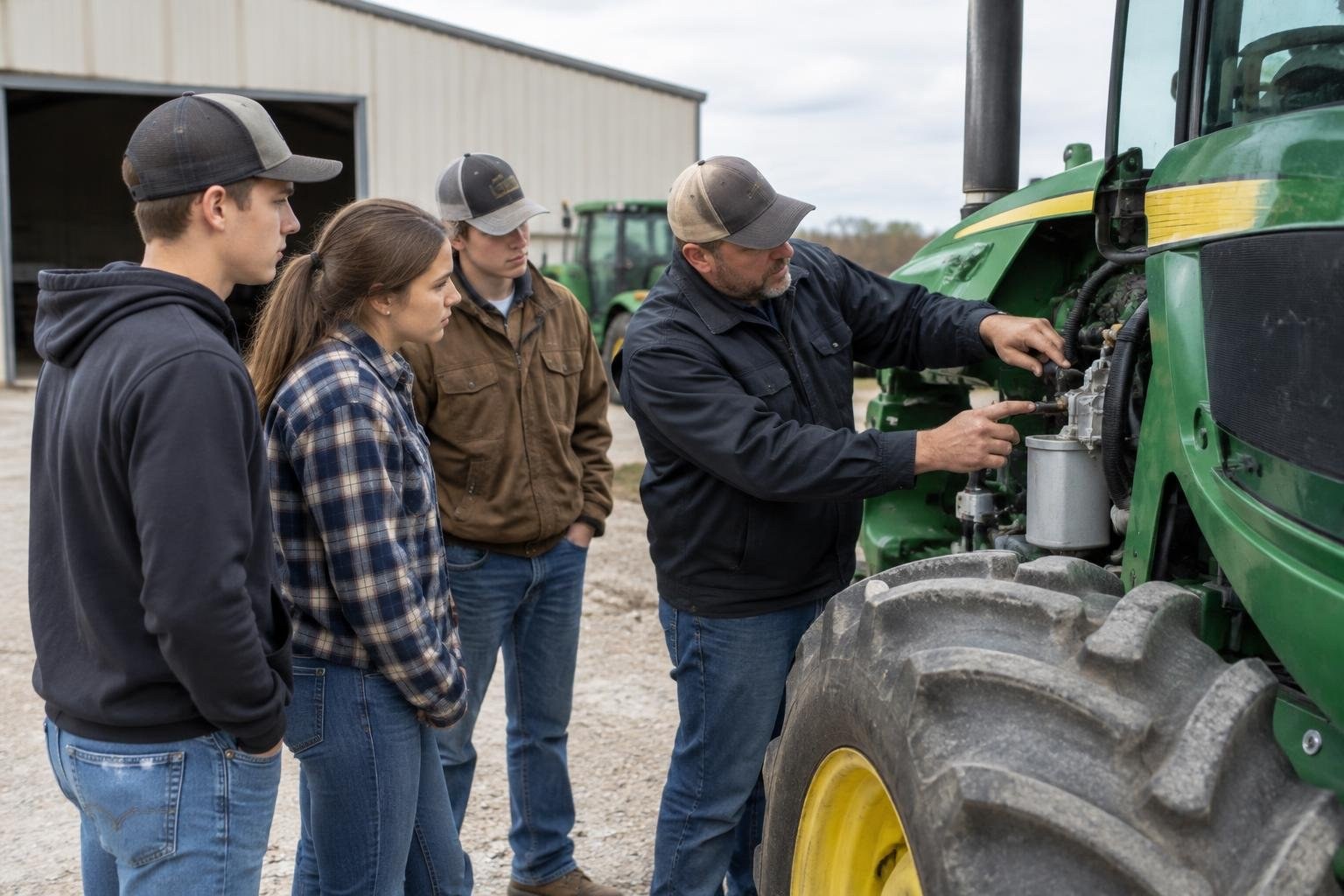
The curriculum depends on the credential and college. A student might encounter introductory agriculture, applied technology, equipment operation or maintenance, workplace safety, business processes, recordkeeping, and basic data or laboratory work. Some programs connect students with crop, animal, or food production; others concentrate on machinery or agricultural operations.
For a technical program, practical learning may include working with equipment, learning how systems function, following operating procedures, or documenting maintenance. A research-support pathway might introduce sampling, laboratory equipment, specimen preparation, or accurate data recording. The precise sequence is school-specific; do not assume every program covers all of these areas.
Ask whether internships, cooperative education, supervised fieldwork, laboratory sessions, or a capstone project are part of the degree. A program description can sound hands-on without explaining how often students use equipment or where practical learning takes place. Request course descriptions and a sample schedule.
Skills You Can Develop
- Technical skills: Depending on coursework, students may learn to operate, maintain, or troubleshoot agricultural equipment and use relevant tools or systems.
- Applied science and observation: Lab or research-support work can involve handling samples, maintaining equipment, following procedures, and recording results.
- Data and documentation: Accurate records and clear reporting matter in operations, testing, equipment service, and business support.
- Communication: Technicians may explain a problem, document a task, or coordinate with scientists, producers, customers, or supervisors.
- Professional habits: Reliability, attention to safety procedures, organization, and problem-solving are useful across agricultural workplaces.
The balance of these skills is set by the specific program. Review course outcomes and ask graduates or faculty how students use these skills in internships and entry-level jobs.
Who Is This Program Best For?
This program may appeal to students interested in practical agriculture-related work. Utah State describes a technology certificate or associate degree focused on operating, maintaining, and repairing agricultural equipment. Agricultural technician work can also involve assisting with research, maintaining laboratory equipment, collecting samples, and recording data.
Think about which of these activities interests you: working with equipment, following procedures, handling samples, keeping records, or supporting agricultural operations. Compare those interests with the actual courses and practical requirements at each college. The program title alone does not establish what a particular student will study or which job they will qualify for.
Does Agricultural Business Technology/Technician Match You?
Salary, job growth, and a college’s reputation are only part of a decision. The day-to-day tasks, learning environment, cost, and required credential should also fit your goals. Assessment.com’s Free MAPP Career Assessment, Degree Matching, and Career Matching tools can help you explore how interests and preferences relate to education and work options. Use them as planning aids, not as a substitute for reviewing course requirements or speaking with employers.
Explore career and degree matches with the Free MAPP Assessment →
Admissions, Length, and Academic Difficulty
Admission rules are set by each college. Applicants may need a high school diploma or equivalent, transcripts, placement results, or prerequisite courses. More selective or advanced programs may consider previous college work or relevant experience. Do not assume a test, GPA threshold, essay, or portfolio is required unless the institution says so.
Completion time depends on credential level, course load, transfer credits, and whether required classes are offered every term. Full-time students may follow a more concentrated schedule; part-time students can spread courses over more terms. Certificates may have a shorter course sequence than degrees, while bachelor’s programs commonly include broader coursework. Get a written degree plan that accounts for prerequisites and practical components.
Potential challenges include learning unfamiliar equipment, handling applied science or technical content, and balancing practical work with general education. Prepare by strengthening basic math and computer skills, visiting a lab or shop if possible, and asking about tutoring and academic advising.
Online vs. On-Campus Programs
Online, hybrid, and campus options depend on the college and specialization. Courses focused on concepts, records, or business systems may be easier to deliver remotely than training that depends on machinery, laboratories, or supervised field experience. A program advertised as online may still require in-person sessions or a local practical placement.
Before enrolling remotely, ask where hands-on requirements take place, whether travel is necessary, whether students must arrange access to a worksite, and whether extra equipment or software is required. Confirm that the online version has the same credential and course outcomes as the campus version.
Cost and Financial Aid
Build your budget around the specific credential and course plan. Utah State describes an agricultural equipment technology certificate or associate degree, illustrating why it is important to compare costs for the credential and coursework you plan to complete rather than relying on a broad program title.
Ask each college for a written estimate for the full program. Check what tuition, mandatory fees, books, tools, safety equipment, technology, transportation, and practical-learning requirements may cost. Ask whether equipment is provided and whether internships or field activities require travel.
Compare estimates for the same credential and enrollment pace. Ask the financial aid office which grants, scholarships, or other aid options may apply to you, and confirm whether transfer credits count toward your intended program before paying for them.
Careers, Jobs, Pay, and Outlook
Career outcomes depend on the program’s focus, work experience, location, and employer requirements. The table gives examples to investigate, not guaranteed destinations. For wages and outlook, consult current Bureau of Labor Statistics profiles for the exact occupation and compare local postings.
Career directionTypical education to investigatePay and outlookHow the program may applyAgricultural and food science technicianTypically associate degree; some enter with high school education and relevant experienceCheck current BLS data for this occupationApplied agriculture, laboratory procedures, equipment, and recordkeeping may be relevantAgricultural equipment technicianTechnical certificate or associate program may be relevant; employer requirements varyCheck local listings and occupation dataEquipment operation, maintenance, and repair training can support this directionResearch or laboratory assistant in agricultureRequirements vary; employers may seek relevant science coursework or experienceCheck the specific employer and occupationSample handling, lab equipment, and data collection may transferAnimal breeding or nutrition support workerRequirements vary by employer and responsibilitiesCheck current job postingsAnimal science coursework and production knowledge may be usefulAgricultural operations or business supportMay range from related experience to a college credentialCheck local labor-market dataRecords, technology, coordination, and applied business skills may apply
The Bureau of Labor Statistics reports that agricultural and food science technicians typically need an associate degree, while some enter with a high school diploma or equivalent and related work experience. This guidance concerns that occupation, not every job with an agricultural technology title. Agricultural and food science technicians may work with scientists, crops, animals, samples, and laboratory equipment; the actual assignment varies by employer.
Potential employers can include agricultural producers, equipment businesses, laboratories, food-related organizations, research settings, and agricultural service providers. Ask program staff which employers recruit graduates and whether outcomes are tracked by credential.
Experience, Certifications, and Licenses
Practical experience can help you test whether the work suits you and show employers how you apply classroom learning. Ask about internships, co-ops, research placements, equipment projects, supervised lab work, student organizations, and opportunities to volunteer or work part-time in an agricultural setting.
How to Stand Out to Employers
- Keep a record of projects, equipment, procedures, software, and tasks you have used.
- Describe safety practices and the results of your work clearly on a résumé.
- Build references through instructors, supervisors, or internship mentors.
- Ask employers which technical credentials or training they actually recognize before paying for an optional certificate.
A degree is not the same as a professional license or employer-specific certification. Requirements depend on the job and jurisdiction. Ask the college whether a credential is required for the role you want, and verify the requirement with the relevant employer or licensing body.
Graduate and Further Study Options
Possible next steps include a bachelor’s degree in an agricultural or related science, agricultural business, or a specialized technical field. A graduate certificate or master’s degree may make sense for students moving toward advanced research, management, education, or specialization, but it is not automatically needed for technician work.
Before committing to more education, compare job postings for the next role you want. Check whether employers request a specific degree, experience, or credential. Ask an advisor to confirm transferability and whether the proposed courses satisfy prerequisites for further study.
Related Degrees and Comparisons
- Agricultural business or agribusiness: Consider this if you prefer management, marketing, finance, or business operations over equipment-focused technical work.
- Agricultural science or animal science: Consider this if you want deeper scientific study of crops, animals, breeding, nutrition, or production.
- Agricultural mechanics or equipment technology: Consider this if your main interest is machinery operation, maintenance, and repair.
- Food science: Consider this if you are more interested in food composition, processing, or quality work.
- Biology or laboratory science: Consider this if you want broader scientific foundations that can apply beyond agriculture.
- Veterinary technology: Consider this if your goal is clinical animal care and you want a program designed for that occupational setting. Verify accreditation and state requirements for the intended role.
Titles and outcomes vary. Compare course plans, hands-on expectations, likely entry-level roles, and any further education needed. A program with a similar name may have a very different balance of science, business, and technical learning.
Advantages, Drawbacks, and Is It Worth It?
Potential advantages: a practical connection between agriculture and technology; possible preparation for technician and support jobs; exposure to applied learning; and the option to pursue different credentials depending on the college.
Potential drawbacks: program names and curricula can be inconsistent; some roles may require additional experience or education; hands-on study can add scheduling, equipment, or travel demands; and local opportunities can differ by region. A broad program may require you to build a specialty through electives, experience, or further training.
Whether it is worth the investment depends on total cost, the credential employers expect, transfer plans, and the work you want. Compare the program against current job postings and ask colleges for outcomes relevant to this specific degree, not just overall institutional employment figures.
How to Choose the Right Program
Compare programs by the preparation they offer for the work you want to do. Utah State describes a technology certificate or associate degree focused on operating, maintaining, and repairing agricultural equipment. The Bureau of Labor Statistics says agricultural and food science technicians typically need an associate degree, although some enter with a high school diploma or equivalent and related work experience. These examples concern particular pathways and occupations, not every program or agricultural job.
- Curriculum: Compare required courses, electives, and the equipment, laboratory, or field learning included.
- Credential and job fit: Compare the program credential with education and experience requested in job postings for your target roles.
- Practical experience: Ask whether internships or supervised projects are available, who arranges them, and whether travel or supplies add costs.
- Facilities and support: Ask what equipment and learning spaces students can use and what advising is available.
- Price and timeline: Request the full cost and a term-by-term plan for your enrollment pace.
- Transfer and next steps: Get confirmation of which credits apply to the credential or a future degree.
- Accreditation and job requirements: Ask which institutional or program accreditation applies, and verify any job-specific license or credential with the relevant employer or authority.
Assessment.com education-matching tools can help you connect career interests with possible programs, but use them alongside direct questions to colleges and employers.
Explore colleges and programs that fit your goals →
From Degree to Career
Career pathways are possibilities, not automatic promotions. Examples include:
- Applied agriculture: Certificate or associate coursework → entry-level operations or technician support → experience with equipment or production systems → specialization in a technical area → senior technician or team coordination, if employers and qualifications support advancement.
- Research support: Relevant science and technician coursework → laboratory or field assistant role → experience with samples, equipment, and data → advanced responsibility or further study, depending on employer requirements.
- Agricultural business support: Business and technology coursework → operations or records support → experience coordinating systems and workflows → specialized operations or supervisory opportunities where available.
Ask colleges to identify actual alumni pathways and the credentials associated with each role. Do not assume a particular degree guarantees a job title or promotion.
Questions to Ask Before Enrolling
Before paying an application fee or deposit, ask the college:
- What institution and program accreditation applies?
- What is the estimated total cost, including fees, supplies, and travel?
- What are the program’s completion and employment outcomes, and how are they measured?
- Which labs, equipment, internships, or field experiences are included?
- Does the program prepare students for any required license or credential for my intended job?
- Which courses are online, and what requires in-person attendance?
- Will my transfer credits count toward this specific credential?
- What career advising, internship support, and employer recruiting are available?
- Which grants, scholarships, and aid options may apply to me?
Red flags: pressure to enroll before you receive a full cost estimate, promises of guaranteed employment or earnings, unclear practical-learning arrangements, and claims about credentials that the college will not document. Ask for written details and verify important requirements independently.
Credentials, Safety, and Choosing a Qualified College
College students should treat “provider” choice as a decision about the institution and program. Confirm the school’s standing through official accreditation resources, then verify that the program’s content fits the intended job. For specialized work, ask an employer or appropriate licensing authority about recognized credentials. A school’s marketing claims are not a substitute for independently checking accreditation, transfer policies, or job requirements.
Ask what the student will actually do during practical training, who supervises it, what safety instruction is provided, and whether required protective equipment is included or an added expense. If the program involves equipment or laboratory work, understand the safety rules and any prerequisites before the first session.
Frequently asked questions
What do students study in Agricultural Business Technology/Technician programs?
The curriculum and credential vary by college. Utah State describes a technology certificate or associate degree focused on operating, maintaining, and repairing agricultural equipment. Review the required courses, then ask about the amount of equipment work, prerequisites, and available academic support before enrolling.
What jobs can I pursue with this degree?
Start with job postings for the roles you want and note the education and experience employers request. The Bureau of Labor Statistics says agricultural and food science technicians typically need an associate degree, though some enter with a high school diploma or equivalent and related experience. Requirements for other agricultural technician roles can differ.
How much can I make with this degree?
Use Bureau of Labor Statistics data and local job postings for the specific occupation you are considering. Pay depends on the role and employer, so do not treat one figure as a salary estimate for every program graduate. Compare job requirements and pay information in the locations where you may work.
Can I complete this program online?
Online options depend on the college and the curriculum. Ask whether equipment operation, lab work, or field experience requires in-person attendance, travel, or a placement you must arrange. Confirm that the online course plan leads to the same credential you intend to earn.
How do I compare program costs?
Ask each college for a written estimate covering the full credential, including tuition, fees, supplies, equipment, and any travel tied to practical learning. Compare estimates for the same credential and course load, and ask the financial aid office which aid options may apply to your situation.
How do I choose between a certificate and an associate degree?
Compare required courses and practical training. Utah State describes a technology certificate or associate degree focused on agricultural equipment, while the Bureau of Labor Statistics describes an associate degree as typical preparation for agricultural and food science technician work. Use job postings for your target roles to check which preparation is relevant.
How can I tell whether the program will be academically challenging?
Check the college’s course catalog and ask about prerequisites, math or science coursework, and the amount of equipment, lab, or data work. The program title alone does not show the workload. Request a term-by-term plan and ask what tutoring or advising is available if you need support.
What practical experience should I look for while studying?
Ask the college which practical activities are included, whether internships or field placements are available, who arranges them, and whether travel or supplies add costs. Agricultural technician work can involve samples, laboratory equipment, and recording data, so ask how the program builds relevant experience.
People Also Ask
What do you learn in agricultural business technology?
Course plans differ by college. They may emphasize equipment operation and repair, agricultural operations, business processes, or research support. Compare required courses and ask what practical work students complete before choosing a program.
What can I do with an agricultural technology degree?
The program may be relevant to technician or operations support roles, but the match depends on its coursework and the employer’s requirements. Compare course descriptions with job postings for the specific role and location you are considering.
Do agricultural technicians need a college degree?
For agricultural and food science technicians, the Bureau of Labor Statistics says an associate degree is typical, although some enter with a high school diploma or equivalent and related work experience. Other agricultural technician positions may set different requirements, so check individual job postings.
Are agricultural technology programs available online?
Availability depends on the college and the practical requirements of its curriculum. Ask whether equipment, laboratory, or field learning requires in-person sessions, travel, or an arranged placement before enrolling in an online option.
How can I compare agricultural technology program costs?
Request a written estimate from each college for the full credential. Ask what tuition, fees, supplies, equipment, and practical-learning travel may cost, then compare estimates for the same enrollment plan.
How can I check whether a program is hands-on?
The amount of hands-on learning varies by curriculum. Ask what equipment, laboratory sessions, projects, or field experiences are required, and request course descriptions or a sample schedule to understand the practical component.
How does agricultural technology differ from agribusiness?
Agricultural business programs may focus on business and management, while technology or technician programs may emphasize applied technical or operational preparation. Compare required courses at the colleges you are considering rather than relying on program names.
Is Agricultural Business Technology/Technician Right for You? This program may suit you if you want practical preparation for work connected with agriculture and enjoy combining technology, equipment, records, problem-solving, and communication. Depending on the curriculum, it can lead toward technician roles in agricultural operations, equipment, laboratories, or business support. The exact outcome depends on the credential, experience, local employers, and the program’s technical focus. It may be less suitable if you want a highly specialized path such as veterinary medicine, a research career that requires advanced science education, or a business degree focused mainly on finance and management. Compare actual course lists and job requirements before deciding. Ask colleges about total cost, hands-on learning, transfer credit, and graduate outcomes, and consider how the everyday work matches your interests. Choosing a college program can affect years of education and decades of work. Salary, job growth, and school reputation matter, but so does whether the work fits your motivations, interests, and natural preferences. Take the Free MAPP Career Assessment to explore careers that may fit you, related education pathways, and jobs connected with those paths. Take the Free MAPP Assessment →
Sources
- Veterinary Technology | PennWest
- 26 College Degrees for Animal Lovers To Pursue | Indeed.com
- Career Opportunities with a Bachelor of Science in Animal and Dairy Sciences | Mississippi State University Extension Service
- Careers for Agricultural Technicians
- Agriculture, Agriculture Operations, and Related Sciences - 100
- Utah State University Degrees and Programs by interests
- Agricultural and Food Science Technicians : Occupational Outlook Handbook: : U.S. Bureau of Labor Statistics
- Agricultural Technicians at My Next Move
- Agricultural Technology - Lansing Community College
- Agribusiness Technology - Edgecombe Community College
- Agronomy Technician | Mid-State Technical College
- Business (Agribusiness Innovation and Technology) - BA | Degree Details | ASU Degree Search
- Agribusiness Science & Technology | Western Technical College
- Agricultural Technology AAS | MSU Northern
- Agricultural Systems Technology and Agribusiness (Composite) - BS
- Agribusiness Science & Technology Associate Degree | Northcentral Technical College
- Agribusiness Science & Technology Program | Mid-State Technical College
- Introduction to Agriculture Business | Mid-State Technical College
- Agriculture Management Technician | Lakeshore College
- Agricultural Technology Management bachelor's degree guide
- Agribusiness Science & Technology | Mid-State Technical College
- Agronomy Technician | Mid-State Technical College
- RUReadyND - Explore Programs and Majors