Degree Library
Agricultural Business and Management, Other: Courses, Careers, Costs & How to Choose a Program
Learn what Agricultural Business and Management, Other can include, how programs differ, what students may study, potential careers, and how to compare colleges and costs.
Agricultural Business and Management, Other is a broad college program category for agricultural business or management programs that do not fit a more specific classification. It is not a single, nationally standardized major. One college may emphasize farm operations, while another may offer a wider mix of agriculture, business, and management courses. Depending on the curriculum, students may learn about agricultural production, business decisions, management, and related industries. Graduates may pursue work in agricultural businesses, production operations, sales, or management, while some continue to graduate or professional study. The specific opportunities depend on coursework, experience, employer requirements, and location. Not sure whether this field fits you? Take the Free MAPP Career Assessment to explore how your motivations, interests, and preferences may align with agricultural business and related careers.
Millions of people Take the MAPP Career assessment to see which Degrees are the best Match!
You can too,
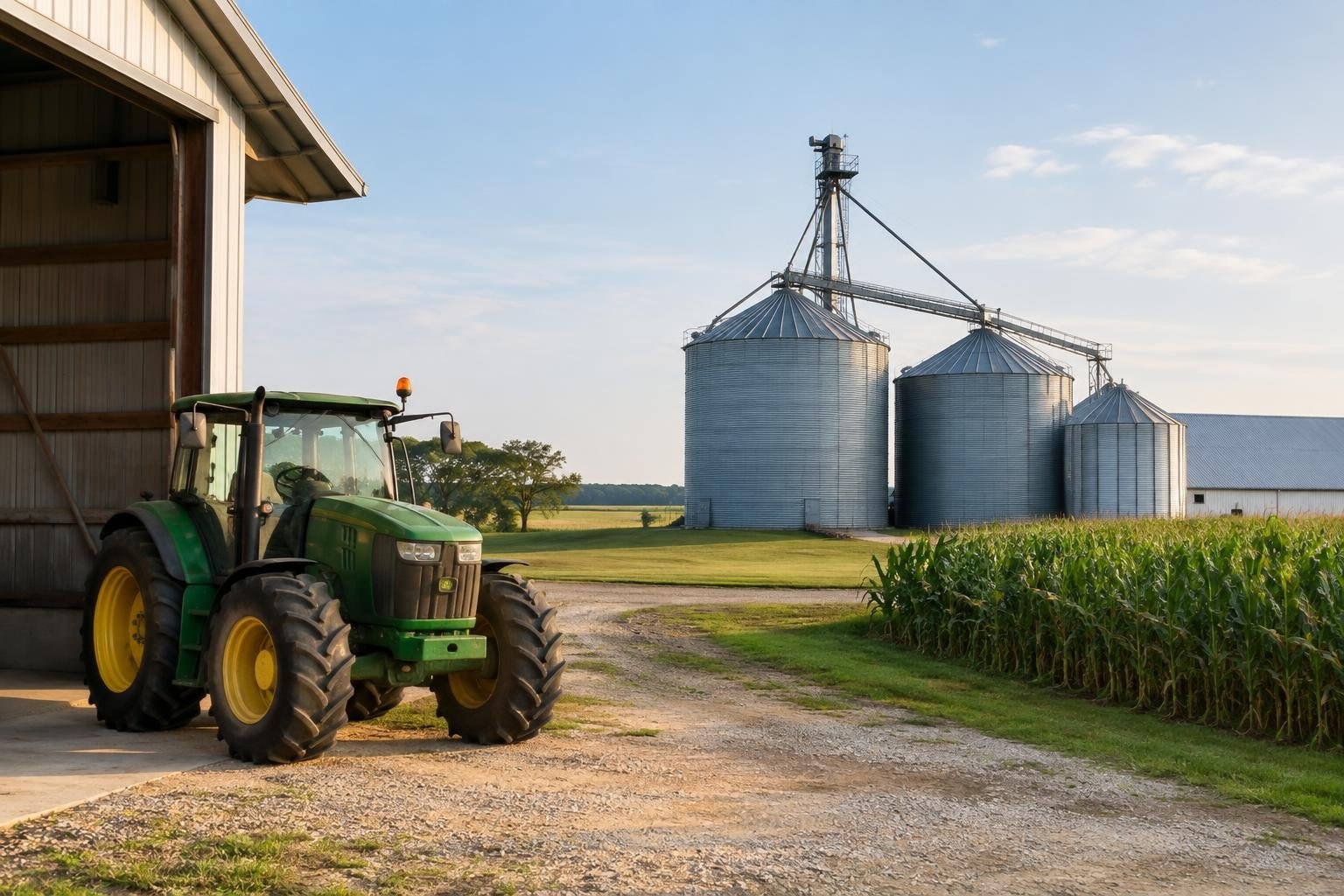
What Is Agricultural Business and Management, Other?
This guide covers the program category named Agricultural Business and Management, Other (CIP 01.0199). The category is broad: it does not prescribe one common set of classes or a universal career outcome. Colleges assign names and concentrations differently, so evaluate the program itself rather than assuming the title tells you everything.
Agriculture and related programs span business and management, animal sciences, plant sciences, and other areas. Some students want to help operate an agricultural business; others are interested in production, sales, or agricultural organizations. A clear goal makes it easier to choose electives and gain relevant experience.
What Do Students Study?
Direct answer: Students may study business and management in an agricultural context, but the exact mix is college-specific. Review required courses, electives, and hands-on components before applying.
- Business foundations: Depending on the plan, courses may address accounting, finance, marketing, economics, or organizational management.
- Agricultural context: Programs may introduce agricultural production, animal or plant-related industries, farm operations, and natural-resource topics.
- Applied learning: Some colleges offer projects, work experience, research, or practical agricultural coursework. Ask which opportunities are required, optional, or available only to selected students.
- Focused electives: Use electives to develop a direction, such as production, sales, or business operations, where the college offers relevant choices.
Examples from individual colleges illustrate the variation: SUNY describes a two-year agriculture associate pathway with elective choices and animal science or dairy science concentrations; other institutions describe animal science study that can support work in animal production or preparation for further study. These examples are not a universal curriculum for this program category.
Skills You May Develop
Useful capabilities can include interpreting business information, communicating with customers or colleagues, planning work, and understanding how agricultural operations function. The depth of each skill depends on the courses and experiences a student chooses.
- Business and analytical skills: Practice organizing information and evaluating operational or commercial decisions. These skills may support business, sales, or operations work.
- Communication: Present recommendations, prepare written materials, and work with people in agriculture-related organizations.
- Practical problem-solving: Connect classroom concepts to production or management questions through projects or field experience, when available.
- Digital skills: Ask which software or data tools the curriculum teaches. Do not assume every program includes the same technology training.
Who Is This Degree Best For?
The program may suit students who want to connect business decisions with food, farming, or other agricultural activity. It can appeal to people interested in coordinating work, solving practical problems, working with customers, or understanding how agricultural enterprises are organized. Some students prefer a mix of office, field, and people-focused tasks; others may want to specialize in analysis or operations.
Does Agricultural Business and Management Match You?
Do not choose only for a perceived salary, prestige, or job-growth claim. Consider whether the day-to-day work and courses interest you, whether you are comfortable with the program’s quantitative or science requirements, and whether the available jobs fit your preferred location and work style. The Free MAPP Assessment, Degree Matching, and Career Matching can help you explore preferences and related options; use them alongside program research, not as a substitute for it.
Try the Free MAPP Career Assessment →
Admissions, Length, and Academic Difficulty
Admission: Requirements depend on the credential and institution. Colleges set their own application, prior-course, GPA, testing, essay, or experience expectations. Confirm the current requirements with admissions and ask how transfer credits are evaluated.
Time to completion: Certificates, associate degrees, bachelor’s degrees, and graduate programs have different course loads and completion plans. Part-time study, transfer credit, prerequisites, course availability, and work or family responsibilities can change the timeline. Request a term-by-term plan rather than relying on a general estimate.
Academic demands: Potential challenges include business or quantitative coursework, learning unfamiliar agricultural concepts, and balancing coursework with practical experiences. Before classes begin, refresh relevant math, meet an adviser, and look for tutoring or academic support. A broad program may also require students to make deliberate elective choices.
Online vs. On-Campus Programs
Online, hybrid, and campus availability varies by institution. Lectures and some business courses may be delivered remotely, while fieldwork, labs, projects, or internships may require in-person participation. A college might offer online graduate courses at times that accommodate working students, but that does not establish that every agricultural program is online or that every requirement can be completed remotely.
Ask for a course-by-course delivery plan. Confirm whether students must travel to campus, farms, laboratories, or internship sites, and whether those experiences have extra fees or scheduling constraints.
Cost, Financial Aid, and Ways to Save
There is no reliable single price for this program category. Your total cost depends on the college, residency status, credential level, enrollment pace, fees, books, equipment, transportation, and any practical-learning expenses. Compare the full estimated cost to completion, not just a per-credit figure or advertised tuition rate.
Ask financial-aid staff about grants, scholarships, work-study, loans, employer assistance, and payment plans. Students considering a community-college start should check course equivalencies and transfer agreements before enrolling; a lower initial price may not save money if credits do not apply to the next program. Request a written degree map and transfer review.
Careers, Pay, and Job Outlook
Potential occupations depend on a student’s focus and experience. The table gives examples to investigate, not guaranteed outcomes or claims that this degree alone qualifies someone for each job. Pay and outlook are occupation-specific; consult the latest U.S. Bureau of Labor Statistics or O*NET profile for the actual job and location.
| Career to investigate | Typical preparation to verify | Pay and outlook | How the degree may apply |
|---|---|---|---|
| Agricultural business operations employee | Relevant education and practical experience; requirements depend on role | Check current occupation and regional data | Business and agriculture context may support operational work |
| Farm or ranch manager | Experience is important; employer and operation requirements vary | Check current occupation and regional data | Management coursework may be relevant to planning and coordination |
| Agricultural sales representative | Product knowledge and communication; role requirements vary | Check current occupation and regional data | Business and industry knowledge may support customer-facing work |
| Agricultural production supervisor | Relevant experience and employer-specific qualifications | Check current occupation and regional data | Operations and management learning may be applicable |
| Agricultural program or business coordinator | Education and experience depend on employer | Check current occupation and regional data | Organizational and communication skills may transfer |
| Agricultural researcher or specialist | Specialized study or graduate education may be required for some roles | Check the specific occupation profile | A broad degree may be a starting point, but targeted science or graduate preparation may be necessary |
Some jobs may be accessible after an undergraduate credential and relevant experience; others require advanced education, specialized knowledge, or a record of managing operations. Higher earnings, where available, are tied to specific jobs and career stages, not the degree label alone. Agricultural industries also use changing tools and data systems; ask programs how they teach relevant technology and practical decision-making rather than assuming automation will replace or create a particular job.
Find out which Career or College Major is right for you!
Take the MAPP free today!Internships, Experience, Credentials, and Safety
Internships, part-time work, research, student organizations, farm or business projects, and employer networking can help you test interests and demonstrate practical skills. Availability depends on the college and region. Ask whether the program helps students find placements and how students balance them with classes.
How to Stand Out to Employers
- Choose electives that form a coherent focus and explain why they fit your career interests.
- Keep examples of projects, work experience, and measurable responsibilities that you can discuss in interviews.
- Build communication and business skills alongside agricultural knowledge.
- Ask employers in your target field which credentials, if any, matter for the specific role.
Completing a degree does not automatically grant a professional license or certification. Requirements vary by job and jurisdiction. Verify any credential directly with the licensing authority or professional organization relevant to your intended work.
Graduate School and Further Study
Further study may make sense when a target role calls for deeper specialization, research preparation, or a professional credential. Potential directions include agricultural science, animal science, agricultural education, business, or a related graduate program. Admission prerequisites differ. For example, one university’s agricultural science master’s program expects preparation equivalent to a bachelor’s degree in animal science or agricultural education; that is an institution-specific example, not a general rule for all graduate programs.
Before committing, compare the graduate program’s prerequisites, cost, format, and outcomes with the jobs you hope to pursue. If professional school is a possibility, ask an adviser to check prerequisite courses early.
Related Degrees and Comparisons
- Agricultural Economics: Consider this if you want a more explicit focus on economic analysis, markets, or policy.
- Agricultural Business and Management: Consider a more specifically named program if you want a defined business or management curriculum rather than a broad category.
- Animal Science: Consider this if animal biology, production, or preparation for further animal-related study is central to your interests.
- Plant Science or Horticulture: Consider this if plant biology, crop production, greenhouse work, or landscape-related study is a stronger fit.
- Agriculture, General: Consider this if you want broad exposure across agriculture before choosing a focus.
- Agricultural Education: Consider this if teaching or agricultural instruction is a main goal; check preparation and credential requirements.
- Food Science: Consider this if food products, processing, or related scientific study is your primary interest.
Program names are not enough for a fair comparison. Review course requirements, practical learning, transfer options, and graduate prerequisites. A more focused major may provide a clearer direction, while a flexible plan may let you build an interdisciplinary course mix.
Advantages, Drawbacks, and Is It Worth It?
Potential advantages: The field can connect business learning with agriculture, allow students to build a focus through electives where available, and support exploration of several agriculture-related work settings. Some programs offer pathways to continued study.
Potential drawbacks: The broad label may conceal major differences between colleges. A program may not offer the specialization, practical experience, or employer connections you expect. A degree by itself does not guarantee employment, salary, licensure, or a management role.
Assess value by comparing likely total cost and time with the occupations you are targeting. Consider local opportunities, transferability, financial aid, and whether the program helps you gain relevant experience. It can be a worthwhile choice for some students, but not a universal recommendation.
How to Choose a Qualified College Program
Use this checklist when comparing programs:
- What credential and specific curriculum does the college offer?
- What is the estimated total cost to completion, including fees and practical-learning expenses?
- Which courses, concentrations, and electives are actually available?
- Are internships, research, projects, or field experiences offered, and what do they require?
- How do students transfer credits, and can the college provide a written evaluation?
- What career advising, employer connections, and graduate-school advising are available?
- Can you complete the program in your preferred format and schedule?
- What qualifications do employers request for the jobs you want?
- Does the college explain any applicable licensing or certification requirements?
- What financial aid and scholarship options apply to your circumstances?
Check institutional and program accreditation through appropriate official sources, and confirm whether any required professional credential recognizes the program. Do not rely on vague promises of guaranteed jobs, unusually high earnings, or effortless transfer. Ask for written details and compare them with independent information.
From Degree to Career: Example Pathways
Possible pathways might look like this: agricultural business coursework → entry-level operations or sales role → experience with a product, operation, or customer group → specialized responsibilities → an advanced operations or management role. Another path might be agriculture coursework → relevant project or research experience → graduate study → a specialist or research-focused role.
These are examples, not promised promotions. Advancement depends on performance, experience, employer needs, further education, and available opportunities.
Questions to Ask Before Enrolling
Before enrolling, ask whether the program’s actual courses match your interests, what the full cost will be, how practical experience is arranged, and which careers graduates pursue. Confirm admissions, transfer, delivery, and any relevant credential requirements directly with the college or licensing authority. Compare more than one option and get important answers in writing.
Is Agricultural Business and Management, Other Right for You?
Agricultural Business and Management, Other may suit students who want to connect agriculture with business or operations and are comfortable shaping a broad program into a focused plan. It may be less suitable if you need a highly defined curriculum or want a specialized occupation with strict educational prerequisites; a targeted major may be a better comparison.
Look beyond the program title. Compare courses, costs, experience opportunities, and career preparation, then consider how the work fits your interests and preferences. Salary and job prospects matter, but so does whether the day-to-day work is a good match.
Before Choosing a Degree, Find Out What Fits You
Choosing a college program can affect years of education and decades of work. Salary, job growth, and school reputation matter, but so does whether the work fits your motivations, interests, and natural preferences.
Take the Free MAPP Career Assessment to explore careers that may match you, how related careers align with your profile, degrees and educational pathways tied to those careers, and potential jobs connected with those paths. Explore Degree Matching, Career Matching, and Matching Jobs as additional planning tools.
Take the Free MAPP Assessment →
Explore colleges and programs that fit your goals →
What Can Shape Your College Course Plan?
Your course plan depends on the credential you choose, your starting point, and the options your college offers. Before enrolling, check how required courses, electives, prerequisites, and practical experiences fit together.
- Credential and starting point: Colleges may offer different awards and pathways. For example, SUNY describes a two-year associate program, while a California college listing includes certificates and associate degrees. Ask how your previous credits apply and what credential the program leads to.
- Electives and concentrations: Electives can help shape your focus. SUNY describes animal science and dairy science concentration options within its associate pathway. Confirm which choices are available and when they are offered.
- Further study: Graduate programs set their own prerequisites. Fresno State’s agricultural science master’s program, for example, expects preparation equivalent to a bachelor’s degree in animal science or agricultural education. If graduate study is a goal, check requirements early so you can plan your undergraduate courses.
- Schedule and delivery: Course schedules differ by institution. Fresno State notes that some graduate courses are offered in the late afternoon or evening for part-time students. Confirm current course times and delivery formats directly with each college.
- Practical experience: Research, minors, and other learning opportunities may be available, depending on the program. Ask how they fit into the degree requirements and whether they support your intended next step.
Request a written course plan that lists requirements, elective options, prerequisites, expected timing, and how the program can prepare you for further study or work.
Factors That Affect the Project
The shape of your agricultural business and management degree plan depends on several choices and limits. Clarify these before you commit to a course sequence or major project:
- Credential and starting point: Certificate, associate, bachelor’s, and graduate pathways can have different requirements. Transfer credits and prerequisites may also affect which courses you need and when you can take them.
- Available electives and concentrations: Some programs allow students to tailor an associate degree with electives and concentrations, while other colleges offer different options. Confirm which choices are actually available in your program and whether they fit your goals.
- Further-study requirements: Graduate programs set their own preparation requirements. If you plan to continue studying, check prerequisites early because they may influence undergraduate course choices.
- Course schedule and practical learning: Course timing and opportunities such as research or hands-on experiences vary by institution. Ask how they fit into the degree requirements and whether they affect your timeline.
Before starting a major project or setting a graduation plan, request a written course map. It should show required courses, electives, prerequisites, expected timing, and how your choices connect to your intended next step.
Frequently asked questions
Is Agricultural Business and Management, Other hard?
It depends on the program and your strengths. Students may need to combine business concepts with agricultural topics, quantitative work, and practical projects. A broad program can require self-direction because elective choices matter. Review required courses and ask an adviser how students build a coherent focus.
Is an Agricultural Business and Management degree worth it?
It may be worthwhile if the program’s curriculum and experiences support your goals at a cost you can manage. Compare total expenses, transfer options, internships, and the qualifications employers in your intended field request. The degree category alone cannot guarantee a job or a particular salary.
What jobs can I get with an agricultural business degree?
Depending on coursework and experience, graduates may pursue roles in agricultural business, farm or ranch operations, sales, production supervision, or related organizations. Some positions require substantial experience, specialized credentials, or further study. Check job postings in your preferred region to see which qualifications employers request.
How much can I make with an Agricultural Business and Management degree?
There is no single salary for this program because it can lead to different occupations, and pay varies by job, experience, employer, and location. Compare current U.S. Bureau of Labor Statistics data for the specific occupation you want rather than treating one degree-level figure as a salary promise.
Can I earn this degree online?
Some business and lecture courses may be available online, but hands-on agriculture courses, labs, fieldwork, or internships may require in-person participation. Availability depends on the college and program. Ask which courses are online, whether campus visits are required, and how practical experience is arranged.
Does this degree require math or science?
Quantitative requirements vary by college and concentration. Business-focused plans may include accounting, economics, finance, or statistics, while agriculture-focused plans may include science or production topics. Review the course catalog and ask about tutoring or prerequisite support if math is a concern.
Do I need graduate school after this degree?
Not for every job related to agriculture or agricultural business. Some roles may value a bachelor’s degree and relevant experience; research, teaching, or specialized professional paths may require graduate education. Identify the target occupations first, then compare their typical qualifications with the program’s outcomes.
What certifications help agricultural business graduates?
There is no one certification that applies to every program under this broad category. Requirements depend on the job and the work involved. Ask employers or professional organizations in your intended specialty which credentials are valued, and confirm any state-specific licensing requirements with the relevant authority.
How does Agricultural Business and Management compare with Agricultural Economics?
Agricultural Business and Management generally emphasizes business decisions and operations in an agricultural context. Agricultural Economics typically centers more directly on economic analysis, markets, policy, and resource allocation. Colleges use different course plans, so compare required classes and graduate-school prerequisites rather than relying only on program names.
How should I choose an agricultural business program?
Start by reviewing required courses, electives, practical learning, total cost, transferability, and career support. Ask the college how students choose a focus and what kinds of work graduates pursue. Compare at least two programs and check whether their curriculum matches actual job postings for your interests.
People Also Ask
What is Agricultural Business and Management, Other?
It is a broad program classification for agricultural business and management studies that do not fit a more specific program label. Colleges may use different curricula and concentrations.
What do you study in an agricultural business program?
There is no single required course plan. Programs may combine agriculture-related learning with business, management, and electives; check the college catalog for exact requirements.
What can you do with an agricultural business degree?
Possible paths include agricultural business, production operations, sales, and farm or ranch management. Job requirements differ, so compare actual postings and the program’s experience opportunities.
What is the salary for agricultural business careers?
It depends on the occupation, experience, location, and employer. Compare current BLS occupation data for each career rather than relying on a single salary figure for the degree.
Can agricultural business be studied online?
Some coursework may be available online, but practical work may involve in-person experiences. Confirm course delivery and field or internship expectations directly with each college.
Is agricultural business a lot of math?
Programs may include quantitative courses such as accounting, economics, or statistics, but requirements differ. Review the specific catalog and concentration requirements.
Is a master’s degree needed for agricultural business careers?
Not necessarily. Some career paths may favor a bachelor’s degree and experience; research, teaching, and specialized roles may call for advanced education.
How do I choose an agricultural business college?
Compare the required courses, elective choices, practical experience, costs, transfer rules, and career support. Ask how the program helps students prepare for their intended work.
Agricultural Business and Management, Other is a broad program category, not one standardized major. It may be a good fit if you want to connect agriculture with business, operations, or management, but the right choice depends on the actual courses, hands-on opportunities, cost, and career preparation at each college. Compare programs against the work you hope to do, and consider whether a more focused agriculture or business degree would provide a clearer route.