Degree Library
Agricultural and Food Products Processing Degree Guide: Courses, Careers, Cost and Program Fit
An agricultural and food products processing degree prepares students to understand how agricultural materials are handled, transformed, and managed as…
By Tome Fierre · Staff Writer Assessment.com · Published October 5, 2026 · Last updated October 6, 2026
An agricultural and food products processing degree prepares students to understand how agricultural materials are handled, transformed, and managed as products. Depending on the program, study may connect agricultural science with processing operations, equipment, quality, and business considerations. Programs differ substantially, so the course list and practical experiences matter more than the major title alone. Graduates may pursue work in agricultural and food businesses, processing operations, technical support, production, or related science and management pathways. The right credential depends on the job: a certificate, associate degree, or bachelor's degree can lead to different levels of preparation, while some scientist and advanced research roles may call for further education or experience. Not sure whether this field fits you? Take the Free MAPP Career Assessment to see how your motivations, interests, and natural preferences align with this degree and the careers it can lead to.
An agricultural and food products processing degree studies how agricultural materials are processed and managed as products. Depending on the school and credential, coursework may combine agricultural or biological science, processing operations, technical subjects, and hands-on learning. Graduates can explore jobs across agricultural and food businesses, but requirements and earnings vary by role, employer, and location.
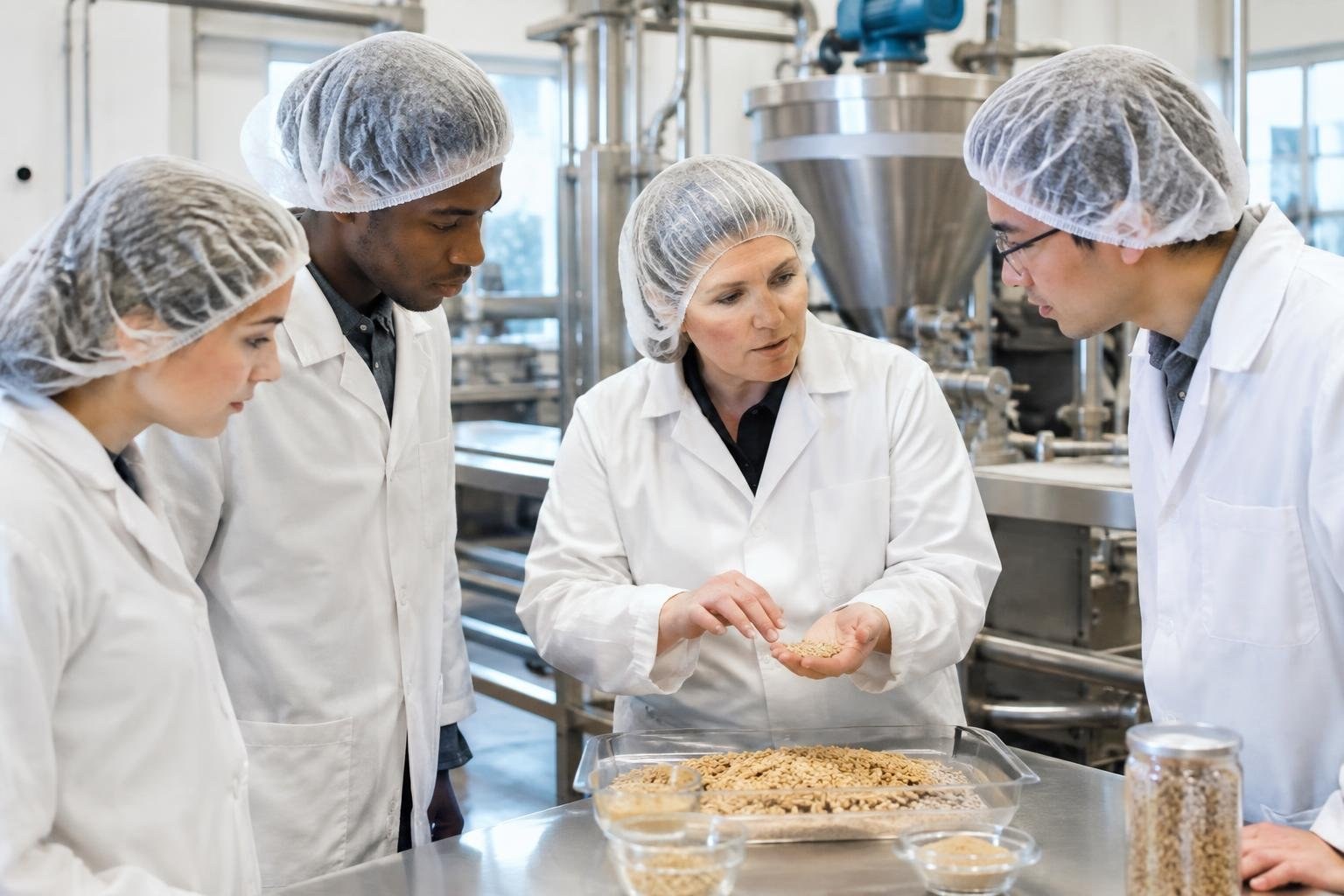
What Is an Agricultural and Food Products Processing Degree?
Agricultural and food products processing is an applied area within agriculture and related sciences. The U.S. Department of Education describes the broader agricultural, animal, plant, and veterinary science category as preparing learners to apply specific knowledge and methods to agricultural and veterinary operations. Individual programs narrow that broad scope to particular products, processes, equipment, or industries.
The degree name is not used consistently across colleges. One school may emphasize processing technology and operations; another may place the subject within food science, agricultural systems, animal science, or a broader agriculture major. Compare the official degree plan and course descriptions. The supplied CIP reference is 01.0401, but students should confirm the classification and program title in the college catalog.
This field is distinct from food science, which may emphasize food composition, quality, and scientific research; from agricultural business, which centers more on management and markets; and from animal science, which includes the science and business of domestic livestock production. These areas can overlap in a processing curriculum.
What Do You Study? Courses and Hands-On Learning
The program typically includes a mix of general education and major coursework. Depending on its focus, students may study agricultural systems, biology, chemistry, product handling, processing operations, equipment, quality concepts, safety practices, or business fundamentals. These are common subject areas to investigate, not a guarantee that every school teaches every topic.
Applied learning can be a key distinction. Ask whether the program includes laboratory work, demonstrations, field experience, internships, research, or a capstone project. Practical work can help students connect course concepts with equipment, production constraints, product characteristics, or workplace documentation. The details and facilities differ by college.
For example, a poultry science bachelor's catalog at the University of Arkansas lists a 120-hour, on-campus degree. That example illustrates why prospective students should inspect the actual catalog rather than assume all agriculture-related degrees have the same length, modality, or course mix.
Programs may also include statistics, technical writing, communication, or business courses. Review prerequisites and course sequences early, especially if the major requires science classes before advanced labs or technical courses.
Skills You Can Develop
Students may build scientific literacy, careful observation, measurement, and the ability to interpret data. Applied projects can develop problem-solving: identify a process issue, assess relevant information, and explain a workable response. Courses that include technical systems can also develop equipment awareness and operational thinking.
Communication matters in processing environments. Graduates may need to document procedures, explain findings, coordinate with coworkers, or communicate technical information to customers and suppliers. Teamwork, reliability, attention to detail, and respect for safety procedures are useful in many agricultural and food workplaces.
The balance varies by job. A production role may value operations knowledge and collaboration; a laboratory or science-related role may place more weight on careful measurement, data, and technical documentation; a sales or management path may call for customer communication and business skills. A degree provides preparation, not automatic mastery of every workplace technology or process.
Who Is This Degree Best For?
This major may appeal to students curious about how agricultural materials move through production and processing systems. It can suit people who like practical problem-solving, applied science, equipment or process questions, and work that connects technical details with real operations. Some career paths are hands-on; others involve analysis, coordination, research, sales, or supervision.
You do not need a particular personality type. Think about whether you enjoy learning through labs or projects, following detailed procedures, using evidence to make decisions, and working with people across different roles. Consider your comfort with science and quantitative coursework, then check the actual course requirements instead of relying on assumptions about the major.
Does Agricultural and Food Products Processing Match You?
Salary, prestige, and job growth are only parts of a decision. Personal interests and preferred work activities matter because they shape whether the courses and eventual work feel sustainable. The Free MAPP Assessment can help you reflect on motivations and preferences. Use Degree Matching, Career Matching, and Matching Jobs as exploration tools, then verify program and occupation requirements independently.
Admissions, Length, and Academic Difficulty
Entry requirements depend on the credential and institution. Certificate and associate programs may have different admission processes from bachelor's programs. Colleges can consider prior coursework, transcripts, placement information, essays, or other materials; do not assume a specific GPA, test, or experience requirement without checking the current admissions page.
A bachelor's degree commonly represents a longer commitment than a certificate or associate credential. Full-time students may follow a standard multi-year plan; part-time schedules, transfer credits, prerequisites, and course availability change the timeline. Ask the registrar to evaluate transfer work and request a term-by-term course map. Accelerated options, where offered, can have different workloads and schedules.
Academic challenges may include science prerequisites, technical vocabulary, applied calculations, laboratory expectations, and managing group or project work. Prepare by refreshing relevant math and science, attending advising early, and learning what equipment or lab access the program expects. The college should explain its specific demands.
Online, Hybrid, or On Campus?
Online study may work for some courses, but a fully remote route cannot be assumed. Processing and agriculture programs can depend on labs, equipment, demonstrations, field settings, internships, or other applied experiences. Hybrid study may combine remote lectures with campus or placement requirements.
Before enrolling, ask whether every required course is offered online, where hands-on activities take place, whether you must travel, and whether the school helps arrange an internship near your home. Get the answer in writing if delivery format affects work, caregiving, or relocation plans.
Cost, Financial Aid, and Affordability
There is no single reliable price for this major. Total cost depends on public or private status, residency, credential level, campus or online fees, books, laboratory or equipment charges, transportation, and living costs. Ask each school for a program-specific estimate that covers the time you expect to attend.
Compare net cost after grants and scholarships, not just published tuition. Ask about federal and state aid eligibility, institutional scholarships, work-study, payment plans, employer tuition assistance, and transfer pathways. A lower-cost starting college may be useful if credits transfer into the intended major, but confirm course equivalencies before registering.
Make a written budget that includes fees and possible travel for practical learning. Avoid borrowing based only on an advertised starting salary or a general career estimate. Compare likely debt with realistic job requirements and the occupations you are actually considering.
Careers, Jobs, Pay, and Outlook
A major does not map to one occupation, and pay depends on role, region, experience, and employer. The table offers directions to research, not guaranteed job outcomes. For current wages and outlook, search the BLS Occupational Outlook Handbook or O*NET by exact job title. The BLS agricultural and food scientists profile describes a related science occupation; it does not represent all processing jobs.
Career directionTypical education to investigatePay and outlookHow the degree may applyProcessing or production operatorEmployer-specific; relevant technical coursework may helpCheck current local postings and BLS occupation dataApplied understanding of production systems and agricultural productsQuality assurance or quality-control supportRequirements vary; technical or science study may be usefulVaries by job title and industryPotential preparation in measurement, documentation, and product processesFood or agricultural laboratory technicianEmployer-specific science coursework or a relevant credentialLook up the exact occupation and locationRelevant labs and scientific skills may support entryAgricultural or food scientistBachelor's degree is relevant; some roles may prefer advanced educationUse the BLS profile for current wage and outlook informationScience and agricultural knowledge can support related workProduction or operations supervisorOften depends on experience and employer; requirements varyCompare local listings for the specific industryOperations coursework may be relevant; leadership experience also mattersTechnical sales or customer supportMay vary by product and employerPay structure may include different components; verify postingsProduct knowledge and communication can be usefulResearch support or agricultural technicianRequirements vary with employer and research dutiesConsult current occupational data and job adsApplied science coursework and research experience can helpFood or agricultural business rolesVaries; business coursework or experience may be requestedUse the exact job title for wage comparisonsCombines sector knowledge with operations or communication skills
Some positions are accessible after a shorter credential or bachelor's degree, while research, scientist, and senior management paths may require deeper education, experience, or specialized qualifications. The University of Kentucky describes animal science graduates as pursuing veterinary medicine, animal care and management, research, agricultural industries, and advanced study, demonstrating the range of related directions, not a promise that one processing program qualifies a graduate for all of them.
Automation, sensors, and data tools may change tasks in production and quality environments. That does not mean entire occupations disappear: employers still need people who can interpret information, communicate, troubleshoot, and work responsibly with systems. Ask programs how they teach current tools and applied technical skills.
Internships, Experience, Credentials, and Licensing
Internships, co-ops, supervised projects, research, student organizations, and part-time work can help connect classroom learning with employer expectations. A portfolio might include project summaries, reports, presentations, or other work you are permitted to share. Do not disclose confidential workplace or research information.
How to Stand Out to Employers
- Build evidence of careful documentation, teamwork, and technical problem-solving.
- Seek relevant experience early and ask whether the college has employer partnerships.
- Learn to explain your role in projects clearly, including what you measured or improved.
- Ask local employers which credentials or skills they actually value before paying for optional training.
Some agricultural and food scientists, particularly in plant and soil sciences, may need a state license. The BLS notes that requirements vary by state and may involve specified education, supervised experience, and an examination. That licensing information should not be generalized to every processing job. Verify the rules with the relevant state licensing authority for the exact occupation.
Graduate School and Further Study
Graduate school can make sense for students aiming at advanced research, specialized scientific work, or certain leadership and academic roles. Possible directions include a master's degree in food science, agricultural science, or a related discipline; an MBA for business-focused goals; or doctoral study for research-intensive careers. These are examples to investigate, not automatic next steps.
Before committing, identify job postings that require or prefer graduate education and speak with faculty, employers, or career advisers. A graduate degree adds time and cost. It is not a universal requirement for employment in processing or agricultural businesses.
Related Degrees and Alternatives
- Food science: Consider this if you are more interested in food properties, laboratory science, product quality, or research.
- Animal science: Consider this if livestock biology, animal care, nutrition, breeding, or production is your central interest.
- Agricultural business or agribusiness: Consider this if management, markets, sales, or business operations interest you more than technical processing.
- Agricultural production operations: Consider this if you want a broader focus on producing agricultural products.
- Agricultural mechanics or equipment technology: Consider this if equipment operation, maintenance, and repair are your main interests.
- Food technology and processing: Consider this if a school offers a more focused technical program that matches your desired role.
- Crop or plant science: Consider this if plants, soils, and crop systems are your preferred subject area.
- Biology or chemistry: Consider this if you want broader science preparation and may pursue several industries or graduate study.
Compare required classes, access to labs and internships, entry-level jobs, and graduate-school prerequisites. Similar program names can have very different emphases. Animal science, for example, covers livestock science and production, while processing programs may focus more on product transformation and operations.
Advantages, Drawbacks, and Is It Worth It?
Potential advantages: the subject is applied, links science with real operations, and can provide routes into several agricultural and food industries. Students may build transferable problem-solving, communication, and technical skills.
Potential drawbacks: program titles and course content vary; hands-on requirements may limit fully remote study; some desired occupations require more education, experience, or state-specific licensing; and the degree does not guarantee a particular salary or job.
Whether it is worth it depends on your goals, total net cost, available experience, preferred location, and the occupations you want to pursue. Compare the credential with actual employer requirements. A shorter program may fit some operational goals, while a bachelor's or graduate path may be more appropriate for certain science or research work.
How to Choose the Right College Program
- Accreditation and recognition: Check the institution's accreditation status through authoritative education resources, and ask whether the program meets requirements for your intended next step.
- Curriculum: Compare required science, processing, equipment, business, and elective courses with jobs you want.
- Facilities and faculty: Ask what practical resources students use and how often instruction involves applied work.
- Internships and employer ties: Ask who arranges placements, what students typically do, and whether opportunities are available to all students.
- Cost and aid: Request total estimated cost, including fees, materials, transport, and living expenses, then compare net price.
- Format and timeline: Confirm online availability, required visits, course rotation, and realistic completion time.
- Outcomes and career services: Ask for the methods behind published outcomes, and whether students receive career advising and employer introductions.
- Transferability and licensing: Get transfer decisions in writing and verify any occupation-specific state requirements with the regulator.
Ask for evidence rather than relying on marketing language. Useful questions include: What recent jobs have graduates pursued? Which courses include hands-on work? How are internship opportunities allocated? Which employers recruit here? What costs are not included in the tuition figure?
Explore colleges and programs that fit your goals, then compare them against your interests and career priorities. Assessment.com's Degree Matching and Career Matching tools can support exploration, but program claims and occupational rules should be checked with colleges and official sources.
Mistakes, Red Flags, and an Enrollment Checklist
Before enrolling, watch for an unclear total price, vague promises of employment or earnings, pressure to commit before comparing programs, or a course plan that does not explain where hands-on learning takes place. Be cautious if transfer decisions are uncertain or a credential is presented as necessary without evidence that it applies to your target job.
Use this checklist to compare programs:
- Confirm the exact credential, official program title, and required courses.
- Request total estimated cost after aid, including fees and required materials.
- Ask where labs, equipment work, field activities, or internships take place.
- Get transfer-credit decisions and any remaining completion requirements in writing.
- Check several current job postings for the education and experience employers request.
- Verify any occupation-specific license requirement with the relevant state authority.
Program formats and requirements differ. For example, the University of Arkansas catalog lists a 120-hour, on-campus poultry science bachelor's program, while transfer options are also described by the Wisconsin Technical College System. Compare the specific program details rather than assuming similar subject areas have identical schedules or pathways.
From Degree to Career: Possible Pathways
Career paths are not automatic promotions, but these examples show how education and experience can build over time:
- Associate degree or technical certificate → processing or production support role → gain experience with workplace procedures and equipment → specialize in operations or quality support → pursue a supervisory role if qualified.
- Bachelor's degree with relevant applied experience → laboratory, technical, or agricultural-industry entry role → develop domain expertise → move toward specialist or project responsibilities based on employer needs.
- Bachelor's degree → agricultural or food science-related role where qualifications align → gain supervised research or industry experience → consider a relevant master's or doctorate for advanced research opportunities.
Job requirements differ, and some paths need credentials, further education, or experience. Confirm each step against current employer postings and, where relevant, state licensing rules.
Questions to Ask Before Enrolling
- What is the program's exact credential, official title, and curriculum?
- What is the total cost after grants and scholarships, including fees and required materials?
- Which courses involve labs, equipment, field work, internships, or projects?
- Can I complete the program online, and what in-person commitments remain?
- How will my previous college courses transfer into this specific major?
- What job titles do graduates pursue, and how are reported outcomes measured?
- What career services and employer connections are available?
- Do my target occupations require a license, certification, or graduate degree?
- Are optional credentials included in tuition, and what are their renewal costs?
- Can I speak with current students, alumni, or faculty before I decide?
Factors That Affect the Program Decision
Several factors can shape what you get from a program and how well it fits your plans. Start with the credential and curriculum: a certificate, associate degree, and bachelor’s program can offer different preparation, and course content varies by college. Check required science and technical classes, the sequence of prerequisites, and whether practical learning is available through labs, equipment, field work, or internships.
Delivery format and logistics matter too. Some hands-on experiences may require campus visits or travel, and course availability can affect your timeline. Transfer credits, part-time enrollment, fees, and living or transportation costs can also change the total commitment. Finally, consider the specific jobs you want: employer qualifications differ, and some science or research roles may call for more education or experience. Compare program details with current requirements for your target occupations before deciding.
Ways to Reduce College Costs Without Taking Unsafe Shortcuts
Start by comparing the full cost of each program, including fees, books, lab or equipment charges, transportation, and living expenses. Then compare the estimated amount you would pay after grants and scholarships. A lower tuition figure alone does not show which option costs less overall.
If you are considering beginning at a less expensive college and transferring, ask the intended major’s college to confirm in writing which courses will count toward your specific degree. The Wisconsin Technical College System describes an associate transfer pathway, but transfer arrangements and course equivalencies depend on the institutions and program. Do not assume that every completed course will apply.
Ask about institutional scholarships, federal or state aid eligibility, work-study, payment plans, and employer tuition assistance. Before paying for optional training or credentials, ask employers and program advisers whether those qualifications matter for the jobs you want. Avoid reducing costs by skipping required practical learning or choosing a credential without checking whether it prepares you for your target occupation.
Frequently asked questions
What courses might I take in this degree?
Programs differ, but possible subjects include agricultural systems, biology, chemistry, product handling, processing operations, equipment, quality concepts, safety practices, and business fundamentals. Compare required courses and prerequisites in each college catalog rather than assuming every program covers the same topics.
How long does an agricultural and food products processing degree take?
There is no single timeline for every program. The credential, prerequisites, course availability, part-time enrollment, and transfer credits can affect completion time. Ask the college for a term-by-term plan based on your transcript and intended course load.
Can I earn this degree online?
Do not assume the full program is available remotely. Labs, equipment demonstrations, field activities, or internships may require campus visits or travel. Ask which required courses and practical experiences are in person before enrolling.
What jobs can this degree lead to?
Possible directions to research include processing or production, quality support, laboratory work, agricultural or food science, operations supervision, technical sales, and research support. Qualifications differ by employer and job, so compare current postings for the roles you want.
Do agricultural and food processing jobs require a license?
Licensing is not a blanket requirement for every processing job. The Bureau of Labor Statistics notes that some agricultural and food scientists, particularly in plant and soil sciences, may need a state license. Check the rules for your exact occupation with the relevant state authority.
How can I estimate the total cost of a program?
Request a program-specific estimate that includes tuition, fees, books, lab or equipment charges, transportation, and living expenses. Compare the amount after grants and scholarships, and confirm transfer credits in writing before counting on a lower-cost starting college.
People Also Ask
Is agricultural and food products processing the same as food science?
It can overlap with food science, but program emphasis varies. Compare required courses and practical experiences: some programs focus more on agricultural operations and processing, while food science may emphasize food properties, quality, or scientific research.
Do I need a bachelor’s degree to work in food processing?
Not for every role. Requirements vary by employer and occupation; some operational positions may consider shorter credentials, while certain science or research jobs may require a bachelor’s degree or further education. Check job postings for your target roles.
What hands-on experience should I look for in a program?
Look for the specific experiences offered, such as laboratories, equipment demonstrations, field work, internships, research, or capstone projects. Ask where they take place, how students access them, and whether there are additional travel or scheduling requirements.
How do I know whether my credits will transfer?
Ask the college that offers your intended major to evaluate your courses and confirm in writing which credits apply to that specific degree. Do not assume that an associate degree or completed course transfers automatically.
What should I ask employers about job qualifications?
Ask what education and experience are expected for the exact job title, and whether optional credentials matter. Requirements can vary across employers and roles, so verify them through current job postings rather than assuming the degree alone qualifies you.
What affects pay for agricultural and food processing careers?
Pay and outlook depend on the exact job, location, experience, and employer. Search current occupational data and local postings by job title instead of treating one related occupation’s figures as representative of all processing careers.
Is Agricultural and Food Products Processing Right for You? This field may suit you if you want to understand how farm products become foods and other marketable goods, and you enjoy combining science with practical operations. Depending on the program, you might focus on food handling and processing, equipment and production systems, quality work, or the wider agricultural supply chain. It is not a single career license or a promise of a particular job. Outcomes depend on the degree level, program content, hands-on experience, location, and employer or occupation requirements. Compare curricula and total cost, and talk with program staff and people working in roles that interest you before enrolling. If you prefer crop production, animal care, food product development, or business, a related major may fit better. Choosing a college program can affect years of education and decades of work. Salary, job growth, and school reputation matter, but so does whether the work fits your motivations, interests, and natural preferences. Take the Free MAPP Career Assessment to explore careers that may match your preferences, related degrees and educational pathways, and potential jobs. Explore Degree Matching, Career Matching, and Matching Jobs as you compare options.
Sources
- What is Animal Science
- Bachelor's Degree in Animal Sciences | University of Kentucky'
- Agriculture, Food and Natural Resources | WTCS
- Poultry Science (POSC) < University of Arkansas
- Agricultural and Food Scientists : Occupational Outlook Handbook: : U.S. Bureau of Labor Statistics
- Utah State University Degrees and Programs by interests
- Detail for CIP Code 01
- CIP 01 Agriculture/Animal/Plant/Veterinary Science and Related Fields | ASPIRE