Degree Library
Gay/Lesbian Studies Degree Guide: Courses, Careers, Costs & Fit
Lorem ipsum dolor sit amet, consectetur adipiscing elit. Suspendisse varius enim in eros elementum tristique. Duis cursus, mi quis viverra ornare, eros dolor interdum nulla, ut commodo diam libero vitae erat. Aenean faucibus nibh et justo cursus id rutrum lorem imperdiet. Nunc ut sem vitae risus tristique posuere.
By David Slack · Staff Writer Assessment.com · Published October 6, 2026 · Last updated October 9, 2026
A Gay/Lesbian Studies degree examines LGBTQ+ histories, cultures, social experiences, and political life. Students learn to interpret evidence, analyze cultural works, and connect ideas across disciplines such as history, literature, sociology, psychology, law, and the arts. Programs may use names such as LGBTQIA+ Studies or include the subject within Women’s, Gender, and Sexuality Studies; course offerings and emphasis vary by school. Graduates may apply research, writing, and communication skills in a range of fields, but the degree does not qualify someone automatically for a particular profession. Not sure whether Gay/Lesbian Studies fits you? Take the Free MAPP Career Assessment to see how your motivations, interests, and natural preferences align with this degree and the careers it can lead to.
A Gay/Lesbian Studies degree explores LGBTQ+ histories, cultures, social experiences, and political life through interdisciplinary study. Students commonly build research, analysis, and writing skills. Possible career directions vary, and job eligibility, pay, and further-education needs depend on the occupation and employer.
Millions of people Take the MAPP Career assessment to see which Degrees are the best Match!
You can too,
Take the Free MAPP today!Try our College Search Tool
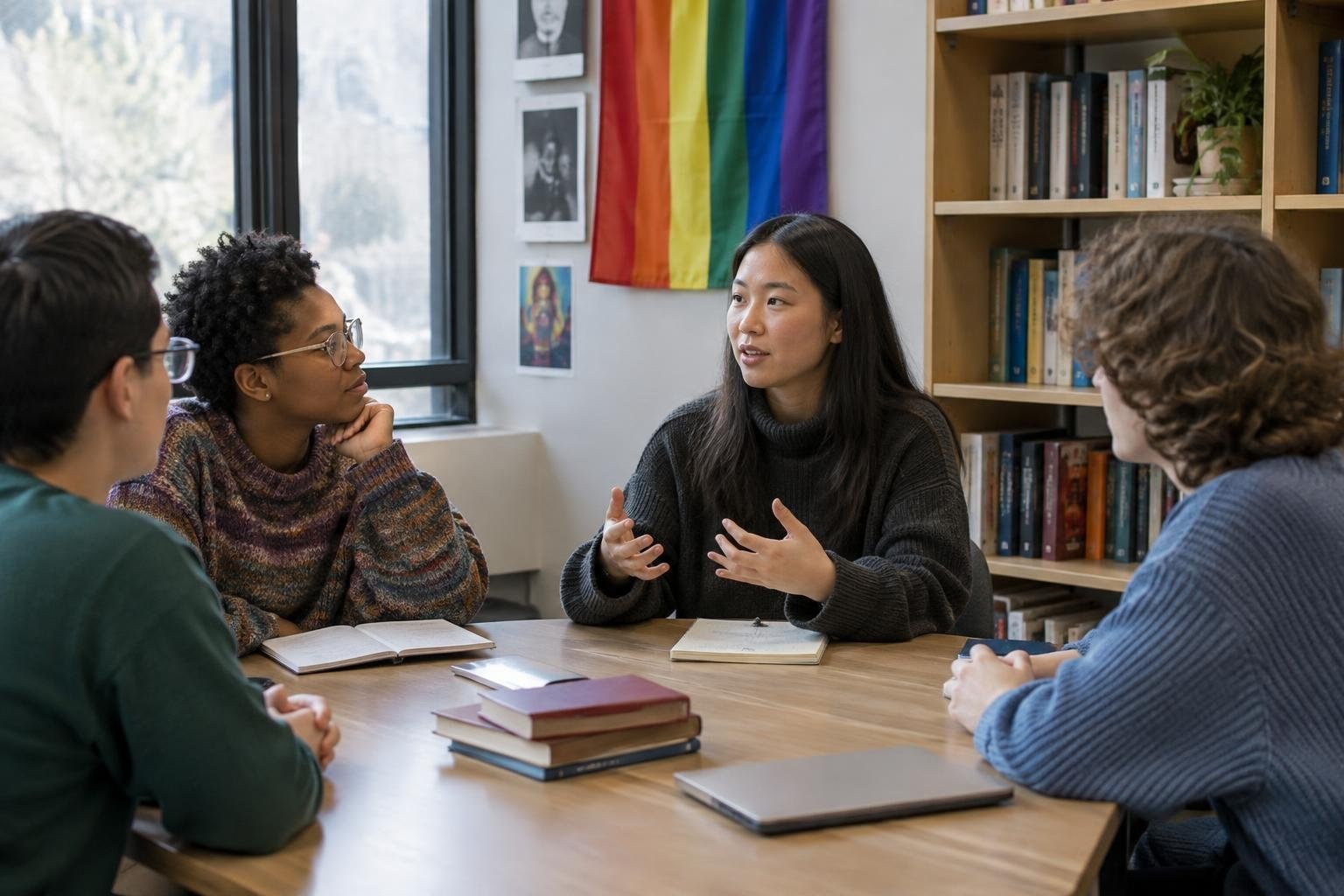
What Is a Gay/Lesbian Studies Degree?
Gay/Lesbian Studies is an interdisciplinary field focused on LGBTQ+ histories, cultures, social and political experiences, and related scholarship. The federal Classification of Instructional Programs description for CIP 05.0208 emphasizes homosexuality in history, society, politics, and cultural life, including social, literary, and artistic themes. Contemporary academic and library resources also use broader LGBTQIA+ and LGBTQ+ framing.
The field crosses conventional academic boundaries. The New York Public Library identifies connections with literature, history, religion, psychology, sociology, philosophy, anthropology, medicine, law, and fine arts. At one college, the subject may be a dedicated major or minor; elsewhere it may sit within a broader Gender and Sexuality Studies, Women’s Studies, American Studies, or interdisciplinary program. Check the actual curriculum rather than relying on a program title.
Sources: NCES CIP 05.0208; New York Public Library guide; Library of Congress LGBTQIA+ Studies guide.
What Do You Study in a Gay/Lesbian Studies Program?
Students examine how identities, communities, institutions, and cultural representations have changed over time. Depending on course choices, they may study primary historical sources, literature and art, social research, political movements, public policy, health scholarship, or legal and religious debates. The purpose is not simply to memorize dates or terminology: students practice asking who produced a source, whose experiences it represents, and how its context shapes its meaning.
Common learning activities can include close reading, essays, class discussion, presentations, library research, and longer independent projects. Cross-disciplinary study means one course might interpret a novel or film while another examines a historical record or social question. Some programs may include research methods or an internship, but those opportunities are not universal. Ask for the current course catalog, sample syllabi, and major requirements.
Because programs differ, compare what students actually study: required courses, electives, research expectations, and whether the program includes community-based or applied learning. The Library of Congress and NYPL research guides offer examples of the breadth of relevant scholarship and collections.
Sources: New York Public Library guide; Library of Congress subject guide; Library of Congress resource guide.
Skills You Can Develop
Coursework can strengthen skills that travel across fields. Reading scholarship and interpreting historical or cultural material develop research and critical-analysis habits. Essays, presentations, and discussion build written and spoken communication. Comparing perspectives can also help students explain complex subjects to different audiences.
- Research: finding credible sources, framing questions, and supporting conclusions with evidence.
- Analysis: interpreting texts, social contexts, historical records, and cultural representation.
- Communication: writing clearly, presenting an argument, and adapting explanations for an audience.
- Interdisciplinary thinking: connecting ideas across fields rather than treating a question as belonging to one subject alone.
These abilities may be relevant to research, communications, writing, public programming, community organizations, and further study. They are not job guarantees. Build practical experience and occupation-specific skills alongside the degree.
Sources: New York Public Library guide; Seattle University Women, Gender & Sexuality Studies program description.
Who Is This Degree Best For?
This field may suit students who are curious about culture, history, identity, social institutions, politics, literature, and how ideas shape people’s lives. It can appeal to readers who like asking questions, weighing evidence, and making connections among different disciplines. Strong interest in discussion and writing can be useful because many humanities and social-science courses involve interpreting sources and explaining arguments.
There is no single personality type required. Students with practical or career-focused goals can look for programs that offer internships, research projects, or a clear connection to another area of study. Students who prefer lab-centered or narrowly technical coursework should inspect course descriptions before enrolling; programs in this field generally emphasize human experience and interpretation, but exact methods vary.
Does Gay/Lesbian Studies match you? Salary, reputation, and job-market headlines are only part of a decision. Consider whether the subject keeps your attention, whether you enjoy the likely work, and whether the full education plan fits your goals. The Free MAPP Assessment can help you reflect on motivations and preferences. Use Degree Matching and Career Matching to compare options, not as a substitute for reviewing program requirements and job postings.
Take the Free MAPP Assessment →
Sources: New York Public Library guide; Seattle University program description.
Credential Levels, Admissions, and Time to Completion
Programs can exist at different credential levels, including certificates, associate’s and bachelor’s degrees, post-bachelor’s certificates, graduate certificates, master’s degrees, and doctoral or professional study. This list describes possible award levels, not a promise that every school offers each one specifically in Gay/Lesbian Studies. NCES assigns the field a CIP classification; individual institutions may use a different program name or place the subject in a larger department.
Admission rules, prerequisites, credit requirements, and completion times are set by each institution and credential. A certificate may involve a shorter course sequence than a degree, while time to finish a degree depends on enrollment pace, transfer credits, and school structure. Do not rely on a generic estimate. Request a written program map showing required courses and likely completion dates for full-time, part-time, transfer, or online study.
Applicants should check whether a school expects prior coursework, essays, transcripts, recommendations, or other materials. Ask an admissions office for requirements that apply to your specific program and entry term. If transferring, obtain a credit evaluation before assuming previous courses will count.
Sources: NCES CIP 05.0208; Library of Congress resource guide.
Academic Demands and How to Prepare
Reading-intensive courses, research papers, and discussions of contested histories or social questions can require careful preparation. Students may need to distinguish evidence from interpretation, represent sources fairly, and revise arguments when new evidence challenges an initial view. These are skills developed through practice, not fixed prerequisites.
To prepare, review a sample syllabus, read an introductory book or research guide, and ask how instructors support students learning academic research and writing. If a topic is personally significant, consider what classroom discussion and scholarly analysis may involve. The academic task is to study evidence and ideas, not to assume that every class or source will present a single viewpoint.
Programs vary in how they address research methods, community perspectives, and material related to health, law, or public policy. Ask how courses handle those topics and what advising is available. The Institute of Medicine report on LGBT health research provides an example of a specialized research area, not a universal curriculum requirement.
Source: Institute of Medicine, The Health of Lesbian, Gay, Bisexual, and Transgender People.
Online, Hybrid, and On-Campus Study
Online availability is institution-specific. A school may offer an online course, a hybrid program, or only campus-based study; an online class does not necessarily mean the entire credential can be completed remotely. Ask whether classes meet at set times, whether any activities require campus attendance, and whether online students have access to advising, libraries, and career support.
For an in-person program, consider travel, schedule, and access to faculty, campus collections, student groups, or community activities that matter to you. For an online program, check course rotation and interaction with instructors and classmates. Compare the complete format and student support rather than treating online and campus delivery as interchangeable.
Do not assume this degree includes clinical training or leads to a professional license. If you plan to enter a regulated occupation, verify its separate education, supervised-practice, examination, and licensing requirements with the relevant official body.
Sources: Library of Congress resource guide; Seattle University program page.
Tuition, Costs, and Financial Aid
There is no single tuition price for Gay/Lesbian Studies. A student’s bill depends on the institution, credential, residency classification where applicable, enrollment level, fees, and course format. Budget for more than tuition: include books and course materials, transportation or housing, technology, and any program-specific costs disclosed by the college.
Compare each school’s published cost of attendance and request a student-specific estimate. Ask whether aid is renewable, what academic or enrollment conditions apply, and which costs are not covered. Review grants, scholarships, federal student aid eligibility, payment plans, employer tuition assistance, and transfer-credit options. Eligibility and awards depend on the student and institution, so confirm details with the financial-aid office.
For affordability, compare the amount you would need to borrow with the total time and education required for your career goal. A lower advertised tuition may not mean a lower total cost if credits do not transfer or the course schedule extends your enrollment. Before depositing, get a written breakdown of direct and indirect costs.
Sources: NCES field classification; Library of Congress research guide.
Careers, Jobs, Salary, and Employment Outlook
Graduates may explore work that values research, writing, cultural analysis, communication, and knowledge of LGBTQ+ communities. Potential directions include nonprofit or community organizations, communications and publishing, libraries or museums, public programming, policy-related work, and research support. These are examples of areas to investigate, not a list of occupations guaranteed by the degree.
Possible directionHow the degree may applyWhat else to verifyResearch or program supportResearch, source evaluation, and subject knowledgeResearch tools, relevant experience, and employer qualificationsWriting, publishing, or communicationsClear writing, editing, cultural analysis, and audience awarenessPortfolio, digital skills, and role-specific experienceCommunity or nonprofit workKnowledge of social and cultural contexts; communicationEmployer mission, practical experience, and any required trainingLibrary, museum, or public programmingResearch and interpretation of cultural or historical materialCollections, education, or library qualifications relevant to the positionTeaching or academic researchSubject foundation and research preparationSpecific graduate degree, experience, and hiring requirements
Pay and employment outlook attach to occupations, not to a degree title. Before choosing a pathway, search current job listings in your target area and record the stated education, experience, skills, and pay range. Compare several employers, since requirements can differ. For a longer-term academic path, ask departments what graduate preparation is expected.
The Library of Congress and NYPL describe a field that spans many subject areas, which helps explain why graduates may consider varied directions. It does not establish hiring demand, salary, or job growth for any occupation.
Sources: New York Public Library guide; Library of Congress subject guide.
Find out which Career or College Major is right for you!
Internships, Experience, Certifications, and Licensure
Experience can help translate academic learning into evidence employers can evaluate. Look for supervised research, an internship, a community project, student publications, public presentations, or volunteer work connected to your interests. Keep examples of research and writing that you are permitted to share, and describe your contribution clearly.
How to stand out to employers:
- Build a writing or research sample relevant to the roles you want.
- Pair subject knowledge with practical skills such as editing, event coordination, database research, or digital communications when relevant to the job.
- Ask faculty, career services, and community organizations about appropriate experience opportunities.
- Use informational interviews and job postings to learn which qualifications recur in your target occupation.
A degree does not itself confer a counseling, legal, teaching, or other professional license. If your intended work is regulated, check the licensing authority and employer requirements before choosing a program. The Association for Gay, Lesbian and Bisexual Issues in Counseling’s professional journal is one example of field-specific counseling scholarship; it is not a credential or license.
Sources: APA Divisions journal resource; Institute of Medicine research overview.
Related Degrees and Alternatives
Related study choices include Women’s, Gender, and Sexuality Studies; History; Sociology; Anthropology; American Studies; Ethnic Studies; Political Science; and English or Literature. The best alternative depends on the questions you want to study and the work you hope to do.
- Women’s, Gender, and Sexuality Studies: consider it if you want a broader gender-focused curriculum that may also include sexuality.
- History: consider it if you want deeper training in historical periods, methods, and evidence.
- Sociology or Anthropology: consider these if social structures, communities, or research methods are your main interest.
- American or Ethnic Studies: consider these if you want a broader focus on identity, culture, and social history.
- Political Science: consider it if institutions, political behavior, and public policy are central to your goals.
- English or Literature: consider it if literary interpretation and writing are your preferred emphasis.
Program names do not tell the whole story. Compare required courses, faculty interests, research opportunities, and how much LGBTQ+ content is actually available. A related major with relevant electives may fit better than a specialized title, or the reverse. The NYPL describes Gay and Lesbian Studies as cross-disciplinary, while university program descriptions show how some institutions place related study within broader Women, Gender, and Sexuality Studies.
Sources: New York Public Library guide; Seattle University program description.
Accreditation, Program Quality, and How to Choose
Before applying, check the institution’s recognized accreditation status and confirm that the credential meets any further-study or employer requirements that matter to you. Do not assume that a program’s subject matter, online format, or professional language means it has a specialized accreditation or leads to a license. Ask the school which accreditor applies and independently verify the information with the accrediting organization and relevant licensing authority.
For a career in counseling, education, law, health, or another regulated field, identify the exact license or credential needed in the state where you intend to work. Then ask the licensing body whether the proposed degree and required supervised experience satisfy its rules. Requirements are occupation- and jurisdiction-specific; a Gay/Lesbian Studies degree should be viewed as subject-area study, not as a substitute for professional preparation.
Also compare curriculum, available courses, faculty expertise, research and internship options, advising, total cost, online support, transfer policies, graduation information, and career services. Ask for outcomes data with definitions and time periods, and distinguish institution-wide figures from results for the specific program.
Sources: NCES CIP description; APA Divisions counseling-journal resource.
From Degree to Career: Build a Realistic Path
Map a plausible education-to-work pathway before enrolling. For example: a bachelor’s program with research and writing projects → an entry-level communications or program-support position → experience producing content or coordinating projects → a focused role in community programming, research, or public communication. Another possible route is undergraduate study → further academic preparation → a research or teaching pathway, subject to the qualifications and hiring requirements for those roles.
These are planning examples, not promised outcomes. To test a pathway, find several current job postings and note repeated skills, experience, and credentials. Then ask a college adviser whether its courses, internships, and alumni resources can help you build that profile. Matching Jobs can help you move from a broad interest to actual job titles; compare those titles with your program options.
Explore Matching Jobs and Career Matching as starting points for your research.
Sources: New York Public Library guide; Library of Congress subject guide.
Questions to Ask Before Enrolling
- What credential will I receive, and which courses are required?
- How much will tuition, fees, materials, housing, and transportation cost for my circumstances?
- Which grants, scholarships, aid, payment plans, or employer benefits may apply?
- How many relevant courses are offered each term, and can I finish on my expected schedule?
- Can transfer credits count, and will I receive a written evaluation?
- Are internships, research, community projects, or faculty advising available?
- Can I complete the entire program online, and what support is available remotely?
- What accreditation applies, and will the credential meet my next-step requirements?
- What do graduates do, and how are the program’s outcomes measured?
- What extra education, experience, certification, or license would my intended career require?
Ask for answers in writing when they affect cost, transfer, completion time, or professional eligibility. Compare more than one program and include a broader related major if it offers a better combination of courses, affordability, and practical experience.
Sources: NCES CIP resource; Library of Congress resource guide.
Is a Gay/Lesbian Studies Degree Right for You?
Gay/Lesbian Studies can make sense for students who want to study LGBTQ+ history, culture, politics, and social experience while developing research and communication skills. It may be less suitable as a stand-alone plan for someone who expects a direct professional license or a guaranteed job title from the degree. In those cases, identify the required professional pathway first and decide whether this subject belongs as a major, minor, elective area, or complementary credential.
Before choosing, compare program content, total cost, completion plan, practical experience, further-education needs, and current job requirements. A useful next step is to compare a dedicated program with related majors and look at actual courses rather than labels alone. Explore your preferences with the Free MAPP Assessment, then use Degree Matching, Career Matching, and Matching Jobs to investigate possible education and work directions.
Before Choosing a Degree, Find Out What Fits You
Choosing a college program can affect years of education and decades of work. Salary, job growth, and school reputation matter, but so does whether the work fits your motivations, interests, and natural preferences.
Take the Free MAPP Career Assessment to discover careers that match you, how related careers align with your profile, degrees and educational pathways tied to those careers, and potential jobs connected with those paths.
Take the Free MAPP Assessment →
Sources: New York Public Library guide; Seattle University program description.
Frequently asked questions
What is Gay/Lesbian Studies?
Gay/Lesbian Studies examines LGBTQ+ histories, cultures, political experiences, social life, and related ideas. Programs may draw on subjects such as history, literature, sociology, psychology, law, religion, and the arts. The exact focus depends on the institution and course choices.
Is a Gay/Lesbian Studies degree hard?
The difficulty depends on your strengths and the program. Expect substantial reading, writing, discussion, interpretation, and research. Students may work with historical materials, cultural works, and social questions. Review sample syllabi and course descriptions to see whether the workload and methods suit you.
What jobs can I get with a Gay/Lesbian Studies degree?
Potential directions include research, writing, communications, community organizations, public programming, and further study. A degree alone does not guarantee a specific role. Employers may require related experience, technical skills, another credential, or graduate education, so check actual job postings for careers you are considering.
How much can you make with a Gay/Lesbian Studies degree?
There is no single salary for this degree because graduates pursue different occupations and employers. Compare current pay information for specific job titles in your location, and check the education and experience employers request. Consider likely additional education and the total cost of your degree when assessing value.
Can I earn a Gay/Lesbian Studies degree online?
Some programs may offer online or hybrid coursework, while others are campus-based. Availability and course requirements vary by institution. Ask whether classes are synchronous, whether any activities require campus attendance, and whether you can complete the full program online rather than only selected courses.
Does Gay/Lesbian Studies require math?
The field is not defined by a single quantitative subject. Course demands depend on the program and any related fields you choose. Some research may involve interpreting evidence or data, but review course descriptions and prerequisites to understand the actual methods and level of quantitative work.
Do you need graduate school after Gay/Lesbian Studies?
Not necessarily for every career direction. A bachelor’s degree may support preparation for entry-level work in fields that value research and communication, while some academic, counseling, legal, or other professional roles require additional qualifications. Verify requirements for the specific occupation and jurisdiction before planning your education.
How does Gay/Lesbian Studies compare with Gender Studies?
Possible alternatives include Women’s, Gender, and Sexuality Studies; History; Sociology; Anthropology; American Studies; Ethnic Studies; Political Science; and English or Literature. Compare required courses, the populations or questions emphasized, and the careers or graduate programs you hope to pursue.
People Also Ask
What does Gay/Lesbian Studies study?
It is an interdisciplinary field that studies LGBTQ+ histories, cultures, social experiences, politics, and related scholarship. The specific subjects depend on the program.
What classes are in a Gay/Lesbian Studies major?
No one course list applies to every college. Look for classes in history, literature, cultural studies, social sciences, and research methods that reflect your interests.
How long does it take to complete a Gay/Lesbian Studies degree?
The credential’s time to completion depends on the award, transfer credits, course load, and school calendar. Ask colleges for a degree map based on your circumstances.
How can I pay for a Gay/Lesbian Studies program?
Compare the full cost of attendance and program-specific fees, then investigate grants, scholarships, federal aid eligibility, employer support, and transfer-credit policies.
Is Gay/Lesbian Studies useful for a career?
The degree may develop transferable research, writing, analysis, and communication skills. The roles available depend on employers’ requirements and any additional experience or credentials you build.
Is Gay/Lesbian Studies a major at every college?
Check the individual program’s courses and department. Some colleges offer a dedicated program; others include LGBTQ+ topics in a broader interdisciplinary major or concentration.
Does a Gay/Lesbian Studies degree lead to professional licensure?
Ask whether a role has formal licensing or certification rules in your state or profession. A degree in this subject should not be assumed to satisfy requirements for counseling, law, or other licensed work.
Gay/Lesbian Studies may be a strong fit if you want to examine LGBTQ+ histories, cultures, politics, and lived experiences through more than one academic lens. The degree can develop research, writing, and critical-analysis skills that apply across fields, but it does not guarantee a particular job or salary. Compare the curriculum, total cost, practical experience, and requirements for your intended career before enrolling. If you are unsure whether the subject or its potential career paths fit you, explore your interests and motivations with the Free MAPP Career Assessment, then use Degree Matching and Career Matching to investigate options.
Want to see your options? Try our comprehensive Degree, Program & College Search tool
Sources & Official Resources
- Fairly Recent Research - Lesbian Studies - Research Guides at University of Kentucky
- Conducting Research on the Health Status of LGBT Populations - The Health of Lesbian, Gay, Bisexual, and Transgender People - NCBI Bookshelf
- Home - Lesbian Studies - Research Guides at University of Kentucky
- Research LGBTQ+ by Subject - LGBTQIA+ Studies: A Resource Guide - Research Guides at Library of Congress
- Introduction - LGBTQIA+ Studies: A Resource Guide - Research Guides at Library of Congress
- Detail for CIP Code 05.0208
- Women, Gender & Sexuality Studies, BA | All Programs | Academics | Seattle University