Degree Library
Balkans Studies Degree Guide: Courses, Careers, and How to Choose
Lorem ipsum dolor sit amet, consectetur adipiscing elit. Suspendisse varius enim in eros elementum tristique. Duis cursus, mi quis viverra ornare, eros dolor interdum nulla, ut commodo diam libero vitae erat. Aenean faucibus nibh et justo cursus id rutrum lorem imperdiet. Nunc ut sem vitae risus tristique posuere.
By David Slack · Staff Writer Assessment.com · Published October 7, 2026 · Last updated October 9, 2026
Research on the Balkans and Anatolia examines cultural, economic, and military connections across historical periods. Columbia’s Harriman Institute also documents the contributions of scholars and specialists trained in southeastern European studies. If you are considering a Balkans Studies program, compare its curriculum, research opportunities, and costs with your goals.
Balkans Studies programs can focus on different questions and disciplines. Research on the Balkans and Anatolia, for example, has examined cultural, economic, and military connections. Compare each program’s courses and research opportunities with your interests and goals.
Millions of people Take the MAPP Career assessment to see which Degrees are the best Match!
You can too,
Take the Free MAPP today!Try our College Search Tool
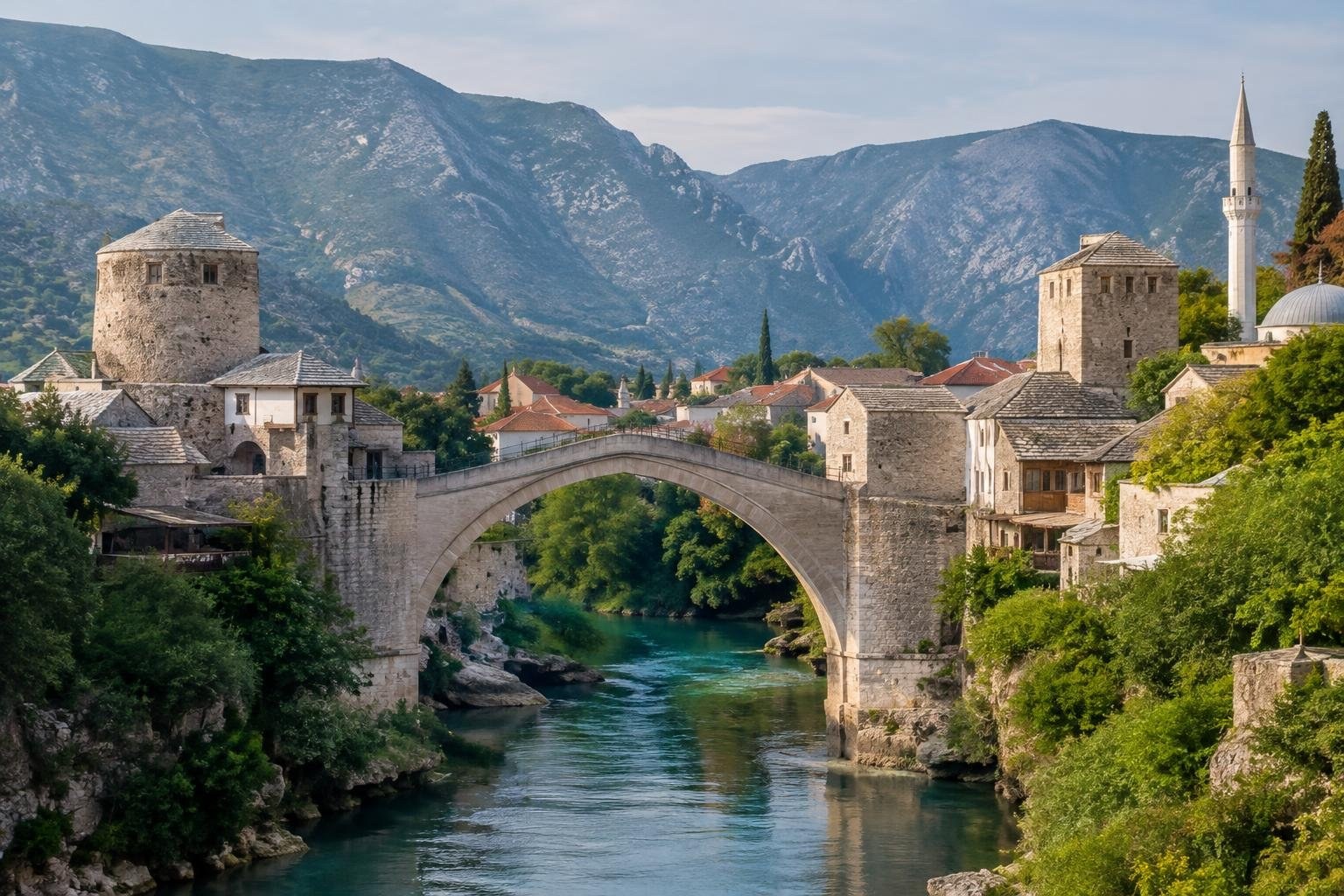
What Is a Balkans Studies Degree?
Research on the Balkans and Anatolia has examined cultural, economic, and military connections across the first millennium AD. This example illustrates one kind of historical inquiry associated with the region; it does not establish a standard curriculum for every program.
When comparing programs, review their course catalogs and ask what regional topics and research opportunities they offer. Check whether the available courses align with the questions you want to explore.
What Do You Study in Balkans Studies?
Research on the Balkans and Anatolia has examined cultural, economic, and military connections across the first millennium AD. Columbia’s Harriman Institute also describes contributions by scholars and specialists in southeastern European studies.
Course offerings and research opportunities are institution-specific. Review the catalog and ask whether students can pursue research or work with faculty on topics that interest them.
Skills You Can Build
A regional, interdisciplinary program can give students practice in interpreting evidence from different fields and placing events or cultural works in context. The specific skills you develop depend on assignments and electives. Ask for course syllabi to see whether the program emphasizes archival or library research, close reading, writing, language learning, policy analysis, presentations, or other methods.
- Research and analysis: Find and assess material, distinguish evidence from interpretation, and develop a focused question.
- Writing and communication: Explain regional issues clearly to readers who may not share your background knowledge.
- Comparative thinking: Examine similarities and differences between countries or between the region and other parts of the world.
- Interdisciplinary understanding: Connect historical, political, cultural, and economic questions without treating them as interchangeable.
These are useful capabilities to seek in a program, not guaranteed outcomes from a degree title alone. Look for concrete opportunities to practice them through assessed projects, research, presentations, or other documented work.
Who Is Balkans Studies For?
The subject may appeal to students who want to understand a region through more than one lens, enjoy asking how history shapes present-day societies, or are curious about comparisons across countries and communities. You do not need to arrive with a fixed career plan, but you should be ready to investigate what a specific program teaches and how you might apply your learning.
There is no single personality type required. Some students may prefer archival research and careful reading; others may focus on politics, cultural production, or language. The important question is whether the program’s actual assignments and subjects interest you enough to sustain your effort.
Does Balkans Studies Match You?
Do not judge fit only by a major’s perceived prestige or by broad claims about job prospects. Consider the day-to-day academic work, the subjects that hold your attention, and the additional experience you may want to pursue. Assessment.com’s MAPP Career Assessment, Degree Matching, and Career Matching tools can be one starting point for reflecting on interests and possible directions; use them alongside conversations with college advisers and people working in fields you are considering.
Admissions, Program Length, and Academic Expectations
Admissions rules, prerequisites, required credits, and completion time are set by each college. The field’s title does not establish a universal GPA, test score, essay, language prerequisite, or application process. Check the institution’s current admissions page and ask whether the program has separate departmental requirements.
Likewise, do not assume that every school offers every credential level or that the same timeline applies to full-time, part-time, transfer, accelerated, or online students. Ask the registrar or department for an individualized degree plan showing required courses, sequencing, transfer-credit decisions, and any courses that are offered only on a particular schedule.
To assess academic demands, read sample syllabi and look at the balance of reading, writing, research, language, and quantitative coursework. If you have been away from school, ask about library research support, writing help, tutoring, and advising before enrollment. These questions are more useful than trying to label the field as universally easy or difficult.
Online, Hybrid, and Campus Options
Delivery format is determined by each institution, not by the subject’s name. Confirm whether the program is fully online, hybrid, or campus-based, and whether required courses are available in the format you need. Ask how remote students access advising, library materials, faculty support, and any research or language opportunities that matter to them.
For an online option, check meeting times, course sequence, technology requirements, and whether any in-person activity is required. For a campus program, consider travel and living expenses alongside tuition. A program’s format should work with your schedule while still giving you access to the learning resources you plan to use.
Tuition, Costs, and Financial Aid
There is no single price for a Balkans Studies degree. Total cost depends on the college, credential, residency classification where relevant, enrollment pace, fees, books, housing, and the length of your individual study plan. Request an itemized estimate from each institution rather than comparing only a headline tuition rate.
Ask the financial-aid office which grants, scholarships, work opportunities, loans, or employer benefits may apply to your situation, and whether aid depends on enrollment level or academic progress. Confirm the net price after grants and scholarships, not just the published charge. If you may transfer, get written guidance on which credits will count toward the program before paying for coursework elsewhere.
To manage affordability, compare more than one institution, ask about payment schedules, and calculate the likely total cost of finishing the degree. Keep a separate budget for indirect expenses such as transportation or housing if they apply. Do not commit based on an estimated cost until the school explains how it calculated the figure for your circumstances.
Careers, Jobs, and Employment Outlook
Balkans Studies is an academic focus, not a guarantee of a particular occupation. The region’s subject matter can connect with research, teaching, public service, cultural work, communications, and international organizations, but the requirements and hiring prospects differ from one role to another. Research in this field also appears in scholarly settings; Columbia’s Harriman Institute notes the contributions of faculty and alumni to southeastern European studies.
For career planning, start with real job postings and identify their requested education, experience, languages, and technical abilities. Then ask a program adviser how students can build relevant evidence of those abilities. Consider combining regional expertise with a second academic focus, language study, internships, or practical work experience where available.
There is no supported single median salary or job-growth figure for graduates of this major. Pay and outlook belong to specific occupations, not to the degree title by itself. Avoid assuming that a regional studies major leads directly to a high-paying or guaranteed role; verify current requirements and labor-market information for each job you are considering.
Possible Directions to Investigate
- Research and higher education: Explore research assistant, scholarly, or teaching pathways and verify the education and experience expected for the specific role.
- Public service and policy: Review job descriptions carefully to identify relevant experience, language, and credential requirements.
- Cultural and communications work: Look for roles where regional knowledge complements writing, research, interpretation, or project skills.
- International or nonprofit work: Check the requirements of each employer and seek practical experience aligned with its mission.
These are directions for investigation, not outcomes promised by a degree. Job duties and qualifications vary by employer.
Find out which Career or College Major is right for you!
Research Experience, Credentials, and Licensure
The sources describing Balkans Studies establish an academic field, not a single professional license or certification tied to the major. Do not assume that earning the degree automatically qualifies you for regulated work. If a target occupation has a license or credential requirement, check the relevant employer and official licensing authority for the applicable state and role.
Ask programs whether undergraduates can pursue research projects, faculty mentorship, internships, language study, or other applied experiences. The Library of Congress’s Balkan Studies guide offers access to research guidance and librarian assistance, a useful example of the kinds of research support students can investigate. Keep work samples or project descriptions that help explain what you learned and how you applied it.
How to Stand Out to Employers
- Choose a focused research or writing project and be ready to explain your methods and conclusions.
- Build practical experience related to the roles you are pursuing, rather than relying on the degree name alone.
- Ask employers which skills and qualifications they actually screen for.
- Document language ability or other specialized skills accurately; do not overstate proficiency.
Graduate School and Further Study
Further study may be worth considering if your goal requires deeper specialization, advanced research, or an academic career. Columbia’s Harriman Institute describes a history of training scholars and specialists in southeastern European studies. That is an example of an academic pathway, not a requirement for every student or every job connected with the region.
Before applying to graduate school, identify the work you hope to do and confirm whether it requires an advanced degree. Compare program focus, faculty expertise, funding, expected research, and the career outcomes the institution can document. You might also consider a related discipline or a professional program if its curriculum better matches your intended work.
Related Degrees and Alternatives
Because Balkans Studies combines topics from several disciplines, it is useful to compare it with majors that emphasize a particular method or subject. The right choice depends on the courses you want and the kind of questions you want to investigate.
- History: Consider this if you want a broader historical-method focus and would rather choose a region through electives or research.
- Political science: Consider this if your main interest is politics and institutions, with regional study added through selected courses.
- Anthropology: Consider this if you want a stronger emphasis on people, societies, and anthropological methods.
- European Studies: Consider this if you want a wider European scope rather than concentrating on the Balkans and Southeastern Europe.
- Language or linguistics: Consider this if language structure, communication, or proficiency is your central academic priority.
- Cultural Studies: Consider this if you want to focus on cultural interpretation and media or artistic forms across a broader or different scope.
Balkans Studies vs. a Single-Discipline Major
Balkans Studies organizes learning around a region and can draw on history, politics, culture, economics, and other subjects. A single-discipline major generally makes that academic discipline the organizing focus. Compare course requirements, methods, faculty interests, research options, and the qualifications needed for your intended next step. A regional focus may be a strong fit if you want interdisciplinary context; a discipline-based major may fit better if you want deeper training in one field’s methods.
How to Choose a Balkans Studies Program
Program names are not enough to make a sound comparison. Use the same checklist for every college you are considering and ask the department to clarify any answer you cannot find in its catalog.
- Curriculum: Which countries, communities, periods, and disciplines are represented in required courses?
- Faculty and research: Do faculty interests align with the questions you hope to explore, and what research support is available?
- Course access: Can students take the electives they need, and are there prerequisites or scheduling limits?
- Language and applied learning: Are language courses, internships, or research opportunities available and relevant to your goals?
- Cost and aid: What is the estimated total cost for your specific degree plan, and what aid can you reasonably expect?
- Format and timeline: What courses are online or in person, and how would transfer credits or part-time enrollment affect completion?
- Outcomes and career support: What information can the school provide about graduates, advising, internships, and employer connections?
- Transferability: Which credits will apply to the major, and can the decision be confirmed in writing?
- Accreditation: Verify the institution’s current accreditation status through the appropriate recognized accreditor or official education resource. Do not treat a program’s description as proof of accreditation.
Compare written answers and degree plans, not just promotional summaries. Assessment.com’s Degree Matching and Career Matching tools may help you reflect on possible paths while you evaluate actual college offerings.
From Degree to Career
From Degree to Career: Plan in Stages
A degree does not guarantee advancement, but planning in stages can help you connect study with work. Treat these examples as possibilities to investigate, not fixed career ladders:
- Regional coursework → research or project experience → a role requiring research and communication skills → deeper subject specialization.
- Regional coursework → additional language or professional preparation → entry-level public-service or cultural work → expanded responsibility as experience grows.
- Regional coursework → graduate study, if appropriate to your goal → academic research or teaching pathway.
At each stage, check the specific role’s requirements and seek guidance from faculty, career services, alumni, and employers. Columbia’s account of scholars and specialists trained through its Balkan and southeastern European studies community shows one route into scholarly work, but individual pathways differ.
Questions to Ask Before Enrolling
- What courses are required, and what countries, periods, and disciplines do they cover?
- Which faculty research areas and research opportunities could I explore?
- What is the total estimated cost for my individual study plan, including fees and living expenses where relevant?
- What grants, scholarships, and other forms of financial aid may apply to me?
- What is the program’s delivery format, and are all required courses available in that format?
- How will transfer credits be evaluated, and can I receive a written decision?
- What internships, language courses, research projects, or career services can students access?
- What employment or graduate-school information can the department document for its graduates?
- Does my intended career require a separate license, certification, or advanced degree?
- Can I speak with a current student, graduate, faculty member, or adviser before deciding?
Write down the answers and compare them alongside your academic interests, schedule, budget, and career goals. If you are unsure whether the subject itself is a good fit, use the MAPP Career Assessment and Assessment.com’s Degree Matching and Career Matching resources as reflection tools, not as substitutes for program research.
Is Balkans Studies Worth It?
The answer depends on what you want from college and how you plan to use the education. The field can offer a coherent regional lens across history, politics, culture, society, and economics, and it can support focused research into the Balkans and Southeastern Europe. Its interdisciplinary range may be an advantage for a student who wants to connect subjects, while a student seeking a narrowly defined professional credential may need to compare other programs or add further preparation.
Weigh the curriculum against tuition, time, available academic support, and the work you hope to pursue. Ask schools for documented outcomes and compare those with requirements in current job postings. Be cautious of promises that a specific major will guarantee employment, salary, or a particular career progression.
Is Balkans Studies Right for You?
You may enjoy the field if you are curious about the region and want to examine it from multiple academic perspectives. You may prefer an alternative if you are more interested in one discipline’s methods, a different geographic scope, or a clearly defined professional credential. Your next step is to compare course plans, costs, and opportunities at specific colleges, then decide whether the subject and its possible pathways justify the investment for you.
Frequently asked questions
What is a Balkans Studies degree?
Balkans Studies is an interdisciplinary area of study focused on the Balkans and Southeastern Europe. Depending on the program, students may examine the region’s history, society, politics, culture, and economics, including different peoples and historical periods. Courses and emphasis vary by institution, so compare actual catalogs rather than assuming every program covers the same countries or subjects.
Is Balkans Studies hard?
It depends on the program and on your preparation. The subject can involve close reading, research, historical context, and comparing perspectives across societies and periods. Some courses may emphasize political or economic analysis, while others may focus on culture, language, or history. Review sample syllabi and course requirements to judge whether the reading, writing, and research work suits you.
What jobs can I get with a Balkans Studies degree?
Possible directions include research, teaching, public service, cultural organizations, communications, and international work, but a degree does not guarantee a particular job. The right route depends on the role’s requirements and the experience, language skills, or further education it may call for. Speak with program advisers and alumni, and examine job postings for positions that interest you.
How much can you make with a Balkans Studies degree?
There is no single salary for Balkans Studies graduates. Pay depends on the occupation, employer, location, experience, and any additional qualifications. Compare salary information for specific jobs you are considering rather than treating a major as a direct salary predictor.
Can I earn a Balkans Studies degree online?
Online availability is institution-specific. Check whether a program offers the full curriculum remotely, whether courses are scheduled or self-paced, and whether any language, research, or other requirements involve in-person participation. Confirm the delivery format with the department and ask whether online students can access advising, library resources, and relevant research opportunities.
Does a Balkans Studies major require math?
There is no single math requirement established for this field. Course requirements depend on the college and the student’s chosen path. If you are concerned about quantitative work, review the degree audit and required courses, then ask an adviser whether economics, statistics, or other quantitative classes are included in the specific program you are considering.
Do I need graduate school after Balkans Studies?
Graduate study may be useful for students aiming at advanced academic research or certain specialized roles, but it is not automatically required for every job related to the region. Start with the careers you are considering and check their actual education requirements. Columbia’s Harriman Institute describes scholars and specialists in southeastern European studies, illustrating one academic direction without making it the only possible outcome.
How is Balkans Studies different from history or international relations?
Balkans Studies centers on a geographic region, while related disciplines may organize study around a method or a broader subject such as history, political science, or anthropology. A regional program can bring several disciplines together; a traditional major may offer greater depth in one method or subject. Compare required courses, regional coverage, research options, and the credentials needed for your intended next step.
People Also Ask
What does Balkans Studies include?
It is a regional, interdisciplinary field that studies the Balkans and Southeastern Europe through subjects such as history, politics, society, culture, and economics. Program emphasis differs by institution.
How long does a Balkans Studies degree take?
There is no standard completion time established across all Balkans Studies programs. Ask each college how its credential is structured, how many credits are required, and how transfer, part-time, or online study affects your individual plan.
What is the CIP code for Balkans Studies?
Balkans Studies is identified with CIP code 05.0116 in the supplied program information. The title and actual curriculum can still vary by institution, so review the catalog and ask the school how it classifies the program.
Is Balkans Studies a useful major?
Potentially, but the answer depends on the program and career goal. Regional expertise can be combined with other study and experience; examine job requirements and ask departments about internships, research, language study, and alumni paths before deciding.
How much does a Balkans Studies degree cost?
The cost depends on the institution, credential, enrollment status, and individual financial-aid package. Compare each school’s published tuition and fees, ask for a full degree-cost estimate, and check eligibility for grants, scholarships, and other aid before committing.
How do I choose a Balkans Studies program?
Compare the subjects and regions covered, course sequence, faculty interests, language or research opportunities, format, total cost, and the program’s guidance on next steps. Ask for a sample degree plan and speak with an adviser before enrolling.
Balkans Studies can offer a focused way to explore the region’s histories, societies, politics, cultures, and economies through more than one academic lens. Its value depends on the program’s actual curriculum and on how you connect regional knowledge with language study, research, writing, internships, or another career-relevant skill. Compare course offerings, faculty expertise, total cost, and possible next steps before enrolling. If you are still weighing options, use Assessment.com’s MAPP Career Assessment, Degree Matching, and Career Matching tools to consider how your interests and preferences align with this field and related pathways.