Commercial Photography Degree Guide: Courses, Careers, Costs, and Program Fit
Explore what commercial photography programs teach, how certificates and degrees differ, what careers they may support, and how to compare cost, format, portfolio-building, and program fit.
By Kieth Nelson · Staff Writer Assessment.com · Published October 12, 2026 · Last updated November 5, 2026
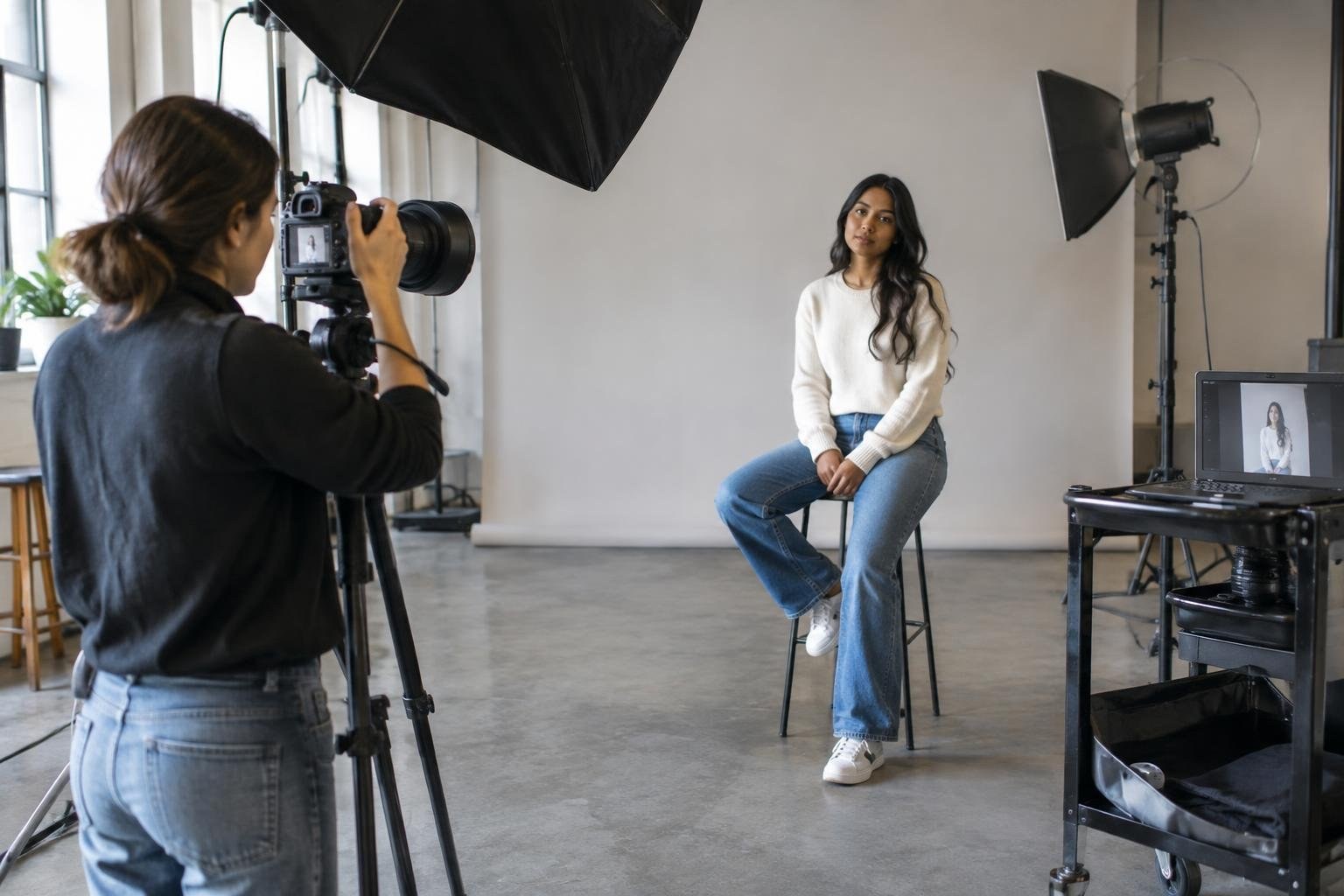
A commercial photography program teaches students to create photographs that communicate ideas, document people or events, and meet business or client needs. Depending on the school and credential, students may practice camera operation, lighting, image processing, visual style, portfolio development, and photography business skills. Specialties can include product, food, advertising, portrait, and event photography. Programs range from certificates and associate degrees to bachelor’s and selected graduate options, but a credential’s name alone does not show exactly what a student will learn. Compare the curriculum, equipment access, portfolio expectations, and total cost before choosing. Not sure whether commercial photography fits you? Take the Free MAPP Career Assessment to explore how your motivations, interests, and preferences may relate to creative careers and education paths.
Degree & Program Decision Insights
Explore your personal fit, education requirements, career potential and next steps.
01Motivational Fit
Discover whether this program fits you
Explore your preferences against the focus of Commercial Photography. These prompts are not personal MAPP results.
Practical problem solving. Does learning specialized camera and equipment operation and maintenance appeal to you, with patient practice and careful checks of the result?
Breadth of interest. Consider the place of “applications to commercial and industrial needs” in this field. Is this another part you would choose to explore, or mainly a requirement you would tolerate?
Work reality. Related work can involve this task: “Set up, mount, or install photographic equipment and cameras.” Would you want that activity to be a regular responsibility?
Interest in studying a field can differ from enjoying its related work.
Which part would you want to do repeatedly, and what would you try before deciding?
Discover Your Personal Program Fit
Before investing your time and money in your education, discover how this program aligns with your natural motivations, work preferences and career goals.
Typical occupational entry: master's degree (BLS). Postsecondary teaching is a separate appointment and may require advanced study; this programme alone is not a promise of a teaching post.
U.S. occupational wages are not guaranteed graduate earnings; OEWS excludes self-employed workers.
Projected openings include replacements as well as growth.
U.S. national estimates. A crosswalk does not establish entry-level eligibility; advanced, management and teaching roles can require further qualifications.
Compare the actual offering and credential before committing your time or money.
Request the itemized fees, materials and equipment associated with “specialized camera and equipment operation and maintenance”; confirm what tuition includes.
Compare the full attendance budget, course availability and time away from paid work, rather than tuition alone.
No institution- and credential-matched cost, debt or graduate-earnings amount is reported here; occupational pay is not program ROI.
Financial aid depends on the school, program and student’s eligibility.
Design and Visual Communications, GeneralCIP 50.0401. Compare the official Design and Visual Communications, General field description and actual course requirements; confirm which parts support your intended specialization.
Industrial and Product DesignCIP 50.0404. Compare its emphasis on designing in a wide variety of plastic and digital media and prototype construction with this program’s focus.
Explore your motivations. Use MAPP as a starting point for reflecting on your interest in “specialized camera and equipment operation and maintenance”, then test that interest against a sample learning task.
Examine the work. Compare Photographers and Art, Drama, and Music Teachers, Postsecondary on daily work and entry qualifications, as well as pay. Explore Photographers.
Compare actual providers. Ask for the exact credential, course sequence and assessment methods. Compare how each provider teaches “applications to commercial and industrial needs”, its entry criteria and its itemized costs.
Check the evidence before applying. Confirm prerequisites and any recognition or professional requirements for your intended route; ask for applicable rules and published outcome definitions in writing.
Verify the institution’s current offering, admissions requirements and outcomes; a search result does not establish your eligibility.
Commercial photography is applied visual communication: students learn to plan and make photographs that serve a purpose, such as presenting a product, illustrating a service, or recording an event. Programs combine practical image-making with aesthetic decision-making and, in some cases, business operations.
The credential may be titled commercial photography, professional photography, or photography with a commercial emphasis. CIP code 50.0406 is associated with this field of study, but a code does not guarantee a particular set of courses or credential at every school. Degree labels also differ: a certificate may focus on career preparation, an associate degree may be designed for employment or transfer, and a bachelor’s program may combine photography with broader visual arts study.
It is not identical to studio art, graphic design, or film production. Commercial photography centers on still or moving photographic images created for communication needs. Related programs can share visual skills while emphasizing different tools, outcomes, or creative processes.
For examples of how programs describe this work, see Los Angeles Mission College’s commercial photography certificate and Appalachian State University’s BFA in Commercial Photography.
What Do You Study in Commercial Photography?
Expect a mix of instruction, practice, critique, and independent projects. A curriculum may start with camera controls, composition, exposure, image organization, and lighting. Students learn not only how to operate equipment but how choices such as viewpoint, light quality, background, and timing affect the message of an image.
Intermediate work may involve styling and photographing products, food, portraits, or events. Students can learn to prepare a shoot, select equipment, manage a set, direct subjects, and edit images for a specific use. Programs may also teach image-processing techniques and encourage students to develop a recognizable visual approach.
Portfolio assignments are especially important: students select and present work that demonstrates both technical competence and creative judgment. Some courses may introduce studio operations or photography business practices, while a longer program may add general education and broader art study. The exact mix is school-specific, so ask for a current course sequence and examples of student work.
For instance, Harford Community College describes equipment, lighting, image processing, aesthetics, personal style, and portfolio development in its certificate description. LaGuardia Community College lists both an associate degree and a one-year certificate in its photography program. These examples illustrate options, not a universal curriculum.
Skills You Can Develop
Students develop an interconnected set of creative, technical, and professional skills. The balance depends on the courses and projects offered.
Camera and equipment practice: understanding camera systems and specialized equipment, and learning to use and care for them.
Lighting and visual control: shaping light to make a subject clear, appealing, or appropriate to a project.
Image processing: editing and preparing images to meet a brief or presentation need.
Visual judgment: using composition, aesthetics, and personal style to create purposeful photographs.
Communication: clarifying a client’s or project’s needs, directing people when appropriate, and explaining creative choices.
Planning and reliability: preparing for shoots, managing project steps, and delivering work in the required format.
Portfolio presentation: selecting work that shows range and a clear approach to prospective clients or employers.
These skills can support photography and imaging-related work, including product, advertising, food, portrait, event, fashion, and architectural photography. Program evidence specifically identifies several of these specializations and highlights equipment, lighting, image processing, and portfolio development.
Who Is This Program Best For?
This field may appeal to students who enjoy making visual choices, working with cameras and lighting, and solving practical communication problems. You might like deciding how to show an object, person, or place so that a viewer notices the right details. Some assignments involve careful setup and repeatable technical work; others require adapting quickly to people, locations, or changing creative direction.
Commercial photography is not only about artistic freedom. A student should be willing to take feedback, revise work, meet project expectations, and learn the tools needed to produce a consistent result. Patience with detail and comfort with hands-on practice can help. No single personality type is required, and students can build skills over time.
Does Commercial Photography Match You?
Do not choose a program based only on prestige, a creative image of the job, or a hoped-for salary. Daily work and personal motivation matter too. Consider whether you want to create images for clients and audiences, whether you enjoy learning equipment, and whether you are comfortable building a portfolio through repeated projects.
The Free MAPP Career Assessment can be one input as you explore motivations and work preferences. Use an assessment to generate questions and options, then verify those options through course plans, conversations with instructors, and hands-on photography experience.
Admissions, Preparation, and Academic Challenges
Entry requirements are set by each institution and vary by credential. A school may ask applicants to meet general college admission requirements; a photography program may also recommend prior experience or ask for a portfolio, interview, or prerequisite course. Do not assume any of these are required unless the current admissions page says so.
Ask the department whether beginners can enter, whether students need a camera or computer before the first class, and what foundational skills are expected. If a portfolio is requested, ask what it should include and whether work made with a phone is acceptable. Transfer students should request a written review of prior credits before relying on an estimated graduation date.
Commercial photography coursework can challenge students to master equipment while developing visual judgment. Common pressure points include controlling light, producing consistent images, editing carefully, accepting critique, and planning projects. Practice with a simple subject, study how light changes, and keep notes about camera settings and decisions. These habits can make early coursework more manageable.
Credential Levels, Program Format, and Time to Completion
Commercial photography is offered at different credential levels, but the same title does not mean the same duration or curriculum everywhere. The supplied program examples include a one-year certificate and an associate degree option at LaGuardia Community College, an associate of applied science program at Antelope Valley College, a BFA at Appalachian State University, and a graduate commercial photography track at Ohio University.
These examples show that students can find different routes; they do not establish that every credential is widely available or that a student will finish within a fixed time. Full-time enrollment, part-time study, transfer credits, course availability, and individual schedules affect completion. Confirm the expected credits and a term-by-term plan with the department.
Online and hybrid delivery also varies. Before enrolling, check how students access camera and lighting equipment, whether studio sessions or critiques happen in person, and what projects require a physical location or subject. Ask whether online students receive equivalent faculty feedback and portfolio support. A course delivered online does not necessarily mean every practical requirement can be completed remotely.
Commercial Photography Program Costs and Financial Aid
Tuition is only one part of the cost of studying photography. Compare the institution’s tuition and fees with expenses for course materials, equipment, software or technology requirements, transportation, and housing if you will relocate. Some of these expenses may be required by a program; others depend on what equipment you already own and what you choose to buy.
Ask each school for a complete estimate for the credential you intend to earn, not a broad institutional average. Check whether course fees cover studio access or supplies, whether equipment can be borrowed, and whether a computer must meet specified requirements. Compare the total cost to the number of credits that will actually apply to graduation.
Financial Aid and Affordability
Submit the required financial-aid applications on time and ask the financial aid office about grants, scholarships, work-study, payment plans, and institutional awards. Students transferring from another school should confirm in writing which credits will count. If you are working, ask whether your employer offers education assistance and whether the program’s schedule is compatible with your job.
Build a side-by-side budget before deciding. Include likely equipment costs and living expenses, and distinguish required purchases from optional upgrades. Avoid borrowing based on an assumed future photography income: the credential itself does not promise a particular job or earnings level.
Commercial Photography Careers, Jobs, and Outlook
Commercial photography can lead toward work in several image-making specialties. Program descriptions identify advertising, product, food, portrait, event, fashion, architectural, and interior-design photography, as well as photography and imaging-related fields more broadly. Examples of employers or clients may include businesses, studios, agencies, publications, organizations, or individuals seeking photography, but opportunities depend on a graduate’s portfolio, experience, location, and ability to find work.
Photographer is the most direct career direction represented by the program evidence. Postsecondary art, drama, or music teaching is another possible longer-term direction, but teaching jobs may have additional education and experience expectations. A photography credential by itself should not be treated as proof of eligibility for a faculty position.
Employment arrangements can differ: a graduate may pursue a staff role, assist an established photographer, take contract assignments, or develop an independent business. A commercial photography credential does not guarantee clients, steady assignments, or progression into a higher-paying role. Consider the type of work you want and ask programs what opportunities students have to practice it.
For occupation exploration, see Assessment.com’s guides to professional photographers and postsecondary art, drama, and music teachers. Consult current official occupational information when researching pay or employment projections; these vary by occupation and year, and a degree title is not a salary category.
Find out which Career or College Major is right for you!
Experience, Portfolios, Credentials, and Professional Requirements
A practical credential from a college and a professional license are different things. The cited commercial photography program descriptions focus on education and skill development; they do not establish a universal photography license or certification requirement. Check state and local rules if you plan to operate a business, and verify any requirements that apply to a particular client, venue, or employer.
Students should ask whether the department teaches contracts, pricing, copyright, client communication, or other business topics. The supplied program descriptions do identify photography business operations as part of the field and note business aspects of operating a studio, but coverage may differ by course and institution. Request course details rather than assuming a credential includes specific legal or business instruction.
To stand out, build a portfolio around a clear specialty while showing enough range to demonstrate adaptability. Keep project files organized, document your role in collaborative work, and practice explaining the goal and choices behind each image. Seek internships, assisting opportunities, campus projects, community assignments, or faculty-led work when available. Verify any opportunity’s scope and expectations before committing.
Graduate School and Further Study
Further study may make sense if you want advanced visual development, a specialized practice, research, or preparation for teaching. The available examples include a graduate commercial photography track covering interests such as advertising, product and still-life, fashion and portrait, architectural and interior-design photography, and studio business. That is an institution-specific option, not a general requirement for working as a photographer.
Before pursuing graduate school, identify the specific outcome you need. Ask whether it requires a graduate degree, whether the curriculum offers the specialization you want, and whether the added time and cost are reasonable for your goals. Students considering teaching should check the education and experience requirements for the type of institution and role they hope to pursue.
Related Degrees and Alternatives
Compare commercial photography with nearby fields by looking at the work students actually make, the tools they use, and the careers they intend to explore.
Studio art: consider this if you want broader artistic study or an associate of arts transfer route rather than a career-focused photography curriculum. Arapahoe Community College lists commercial photography and studio art as distinct pathways.
Graphic design: consider this if you are more interested in arranging visual elements, typography, and layouts than in producing photographs as the central work.
Film or video production: consider this if you want moving-image production and related crew roles rather than primarily still photography.
Fine art photography: consider this if personal artistic inquiry is a stronger priority than making images for client or business communication.
Visual communication or media studies: consider this if you want a wider mix of visual media, theory, or communication coursework.
These are broad distinctions, not guarantees about every school. Compare required projects, equipment access, electives, transfer pathways, portfolio expectations, and total cost. A commercial photography program may be a better fit for students who want focused photographic practice; a related program may offer a better route when the intended work uses different tools or emphasizes a broader art education.
See Arapahoe Community College’s overview of commercial photography and studio art for an institution-specific example of distinct options.
How to Choose a Commercial Photography Program
Use these questions to compare programs with a parent, counselor, or college adviser. Ask for clear answers before paying a deposit.
What is the exact credential and current course sequence?
Are the institution and program appropriately accredited? Which recognized agency accredits the institution, and what does that accreditation cover?
What is the full estimated cost, including fees, equipment, software, and living expenses?
Which financial aid, scholarships, transfer credits, or employer benefits may apply?
What camera, lighting, studio, and image-processing resources can students use?
How often do students receive individual feedback on their work?
What portfolio projects are required, and can you review examples?
Are internships, assisting roles, or client-based projects available, and are they guaranteed or competitive?
Can students complete the program online, and which activities require campus attendance?
Does the school provide current completion and career outcome information, and how is it measured?
What career services, alumni connections, or employer relationships are relevant to photography students?
Will the credential or credits transfer to a school you might attend later?
Accreditation, course offerings, and transfer policies need school-specific confirmation. Do not rely on a program title or a recruiter’s verbal estimate alone. Request the catalog, written cost information, and a degree plan for your circumstances.
From Degree to Career: Possible Pathways
Career progress depends on the person, the work available, and the skills developed. These examples are possible routes, not guaranteed outcomes:
Commercial photography certificate → assistant or junior photography work → practice and a focused product or portrait portfolio → independent assignments or a specialized studio role.
Commercial photography associate degree → entry-level photography or imaging work → client and project experience → more specialized commercial assignments or business ownership.
Photography bachelor’s degree → portfolio-based creative work → professional experience and an identifiable specialty → advanced practice, creative leadership, or further study.
Photography degree plus graduate study → advanced creative or academic preparation → appropriate experience and additional qualifications → possible teaching or other specialized work.
For each route, check the requirements of real jobs and programs. A degree can provide structured learning and a portfolio environment, but it cannot guarantee a job, client base, salary, or career progression.
If you are still weighing choices, Assessment.com’s college major decision resource and MAPP career assessment can support exploration. Use these alongside actual program information, sample projects, and conversations with people doing the work.
Is a Commercial Photography Degree Worth It?
Commercial photography may be worth the investment when the program gives you the practice, guidance, equipment access, and portfolio development you need at a cost that fits your plan. A shorter credential may be appealing if you want focused training; a longer degree may be useful if you want broader study or a particular educational pathway. Neither option is automatically better.
Potential advantages include structured technical practice, feedback, opportunities to explore specialties, and a portfolio developed through coursework. Tradeoffs can include equipment and tuition costs, substantial project time, uncertain work arrangements, and the need to keep developing skills after graduation. The program’s value depends on your goals, finances, location, and fit with the work, not on a general promise of earnings.
Before enrolling, visit a class or portfolio show if possible, review current student work, compare course plans, and try a small photography project. Discuss costs and career questions openly with your family or adviser. A grounded decision combines practical program evidence with a realistic sense of what you want to do.
Frequently asked questions
What do you study in a commercial photography program?
Commercial photography programs teach students to create images for business, editorial, and other client needs. Depending on the program, study may include camera operation, lighting, image processing, visual style, portfolio development, and photography business practices. The balance between technical work and artistic development differs by school and credential.
Is commercial photography hard to study?
It can be demanding because students must develop both technical control and visual judgment. Projects may require planning a shoot, working with equipment and light, editing images, responding to feedback, and meeting deadlines. Students also need to build a coherent portfolio, which takes practice beyond simply completing class assignments.
What jobs can I get with a commercial photography degree?
Possible directions include product, food, portrait, advertising, fashion, architectural, and event photography, as well as related imaging work. A credential does not guarantee employment in a particular role. Employers and clients may also consider portfolio quality, experience, communication, reliability, and the type of photography a student has practiced.
How much can you make with a commercial photography degree?
There is no single salary for a commercial photography degree. Earnings depend on the kind of work, location, experience, employment arrangement, client base, and business expenses. Before enrolling, investigate current pay information for specific occupations and ask programs how they prepare students for the business side of working with clients.
Can you earn a commercial photography degree online?
Some photography coursework can be taught online, especially lessons in image editing, visual analysis, and business. However, camera and lighting practice, studio work, critiques, and portfolio projects may benefit from access to equipment and in-person feedback. Ask whether the online program requires campus visits, specific gear, or local project arrangements.
What is the difference between commercial photography and studio art?
Commercial photography centers on creating images for clients, organizations, and audiences. Studio art programs may emphasize broader artistic practice and transfer pathways. Compare actual course lists and project requirements rather than relying only on program names, because institutions define their offerings differently.
Do photographers need a degree or certificate?
A dedicated commercial photography credential is not a universal prerequisite for doing photography work. Programs can provide structured practice, equipment access, feedback, and portfolio development, but hiring and client decisions may also depend on demonstrated ability and experience. Check specific employer requirements and the expectations in your chosen specialty.
How long does it take to study commercial photography?
A certificate may offer focused study, while an associate or bachelor’s degree can provide a longer course of study and potentially broader general education or art coursework. Graduate offerings are also available in some institutions. Requirements and durations vary, so confirm the exact curriculum and completion plan with each school.
People Also Ask
What does a commercial photography major teach?
Commercial photography programs teach image-making for client and business purposes, including equipment use, lighting, image processing, visual development, and portfolio work. The subjects and depth vary by credential and institution.
Is there a certificate in commercial photography?
Yes. Some institutions offer commercial photography certificates intended to prepare students for professional specializations. A certificate can offer focused coursework, but students should compare its equipment access, portfolio outcomes, and total costs with degree options.
Why is a portfolio important for photography students?
A photography portfolio is a curated selection of work that demonstrates visual judgment, technical ability, and range. Many programs include portfolio development, and prospective students should ask how often faculty review work and what kinds of projects students complete.
What specializations can commercial photographers pursue?
Commercial photography students may focus on product, food, portrait, advertising, fashion, architectural, or event photography, depending on the program. Ask schools which subjects appear in required courses and whether students can develop projects in a preferred specialty.
What affects the cost of a photography degree?
Program costs depend on school, residency, credential, fees, materials, equipment, and living arrangements. Request a complete cost estimate, including required camera or computer purchases, and ask about grants, scholarships, payment plans, and transfer credit.
Can you earn a bachelor's or master's in commercial photography?
The available program materials describe certificates, associate degrees, a BFA, and a graduate commercial photography track at different institutions. Availability is school-specific, so confirm that the exact credential and concentration are currently offered with the institution.
Commercial photography may suit students who want to combine visual problem-solving with hands-on camera, lighting, and editing work. Programs can range from focused certificates to associate and bachelor’s degrees, and some graduate-level options also exist. The right choice depends on your preferred specialization, budget, learning format, and whether the curriculum helps you build a strong portfolio and practical business skills. Compare program details carefully, talk with faculty and current students, and consider how the work itself fits your interests before committing. Before Choosing a Degree, Find Out What Fits You. Choosing a college program can affect years of education and decades of work. Salary, job growth, and school reputation matter, but so does whether the work fits your motivations, interests, and natural preferences. Explore career and degree options with the MAPP career assessment.
Want to see your options? Try our comprehensive Degree, Program & College Search tool
We use cookies to offer you a better browsing experience, analyze site traffic and personalize content.
Read about how we use cookies and how you can control them in our
Privacy Policy.
If you continue to use this site, you consent to our use of cookies.
×
Exciting News!
Be one of the first to Beta Test the new AI-Powered Assessment.com Platform.