Fashion/Apparel Design Degree Guide: Courses, Careers, Costs, and Fit
A practical guide to fashion/apparel design degrees: what students learn, credential options, admissions, cost questions, career paths, and how to compare programs.
By Kieth Nelson · Staff Writer Assessment.com · Published October 26, 2026 · Last updated November 5, 2026
A fashion/apparel design degree prepares students to develop ideas for clothing and accessories and communicate those ideas through visual, technical, and production-focused work. Depending on the program, students may study illustration, garment design, patternmaking, textiles, fashion history, styling, computer-assisted design, and the business considerations behind bringing a product to market. Graduates may pursue fashion design or related work in styling, merchandising, buying, and production. The credential alone does not guarantee a particular job: practical skills, a portfolio, experience, and the program’s industry connections can all matter. Programs also vary widely, from certificates and associate degrees to bachelor’s and graduate study. For students and families, the most useful question is not only whether fashion is exciting, but whether a program’s actual work, cost, and outcomes align with the student’s goals. Compare course plans and student work, ask what facilities and projects are included, and investigate likely entry-level roles before committing.
Degree & Program Decision Insights
Explore your personal fit, education requirements, career potential and next steps.
01Motivational Fit
Discover whether this program fits you
Explore your preferences against the focus of Fashion/Apparel Design. These prompts are not personal MAPP results.
Subject curiosity. Would you choose to explore “apparel design” in depth? Ask for a sample learning activity to test that interest.
Breadth of interest. Consider the place of “accessory design” in this field. Is this another part you would choose to explore, or mainly a requirement you would tolerate?
Work reality. Related work can involve this task: “Select materials and production techniques to be used for products.” Would you want that activity to be a regular responsibility?
Interest in studying a field can differ from enjoying its related work.
Which part would you want to do repeatedly, and what would you try before deciding?
Discover Your Personal Program Fit
Before investing your time and money in your education, discover how this program aligns with your natural motivations, work preferences and career goals.
Typical occupational entry: master's degree (BLS). Postsecondary teaching is a separate appointment and may require advanced study; this programme alone is not a promise of a teaching post.
U.S. occupational wages are not guaranteed graduate earnings; OEWS excludes self-employed workers.
Projected openings include replacements as well as growth.
U.S. national estimates. A crosswalk does not establish entry-level eligibility; advanced, management and teaching roles can require further qualifications.
Compare the focus and route of these distinct instructional fields; their credentials and admission requirements are not interchangeable.
Apparel and Textile ManufactureCIP 19.0902. Compare its emphasis on functional and aesthetic design and human factors research with this program’s focus.
Graphic DesignCIP 50.0409. Compare its emphasis on computer-assisted art and design and printmaking with this program’s focus.
Industrial and Product DesignCIP 50.0404. Compare its emphasis on designing in a wide variety of plastic and digital media and prototype construction with this program’s focus.
Explore your motivations. Use MAPP as a starting point for reflecting on your interest in “apparel design”, then test that interest against a sample learning task.
Examine the work. Compare Fashion Designers and Art, Drama, and Music Teachers, Postsecondary on daily work and entry qualifications, as well as pay. Explore Fashion Designers.
Compare actual providers. Ask for the exact credential, course sequence and assessment methods. Compare how each provider teaches “accessory design”, its entry criteria and its itemized costs.
Check the evidence before applying. Confirm prerequisites and any recognition or professional requirements for your intended route; ask for applicable rules and published outcome definitions in writing.
Verify the institution’s current offering, admissions requirements and outcomes; a search result does not establish your eligibility.
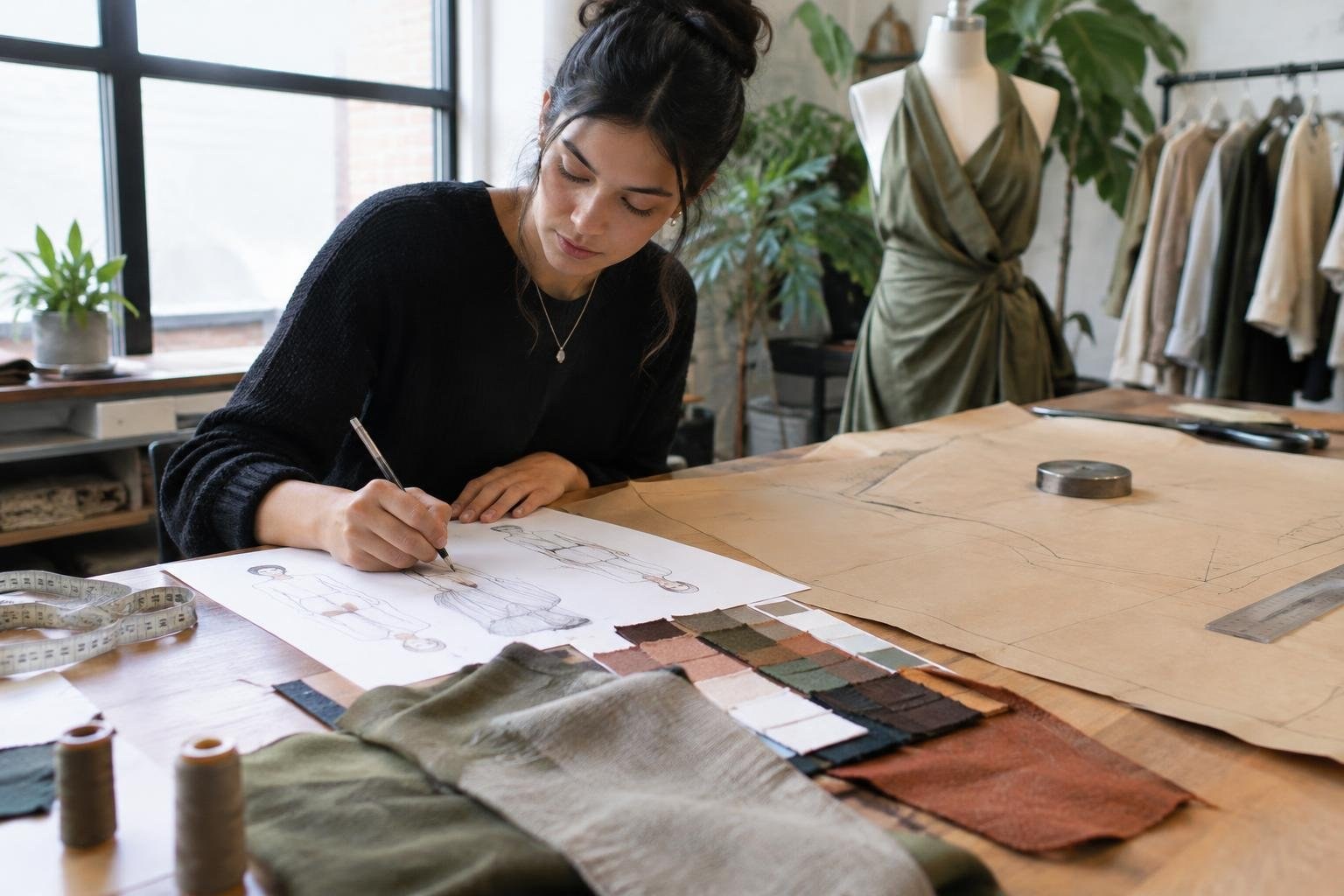
A student’s design process from initial sketch and material selection to a garment pattern
What Is a Fashion/Apparel Design Degree?
Fashion/apparel design is the study and practice of developing concepts for clothing and accessories and translating them into designs that can be evaluated, refined, and produced. The field brings visual choices together with technical decisions about materials, fit, construction, and presentation.
The federal Classification of Instructional Programs identifies fashion/apparel design as CIP 50.0407. Program titles may use terms such as fashion design, apparel design, or fashion design technology. Read the course plan closely: similar names do not ensure identical coursework or career preparation.
For example, the Fashion Institute of Technology describes design study informed by market research, history, art, and culture, with concentrations including children’s wear, intimate apparel, knitwear, special occasion, and sportswear. See its Fashion Design program overview.
What Do Fashion Design Students Study?
Students learn to turn an idea into a design that another person can understand and evaluate. Depending on the curriculum, this can involve sketching, illustration, fabric exploration, garment construction, pattern development, styling, and presentation. A program may also address how a design fits a target market or production context.
Course names and depth vary. One community college describes instruction in garment design and creation, fashion show production, styling, and illustration. A separate associate-level curriculum describes apparel product design, flat pattern, pattern draping, and current computer technologies. These examples illustrate possible study areas, not a universal course list.
Look for evidence of both concept work and technical execution. Ask whether students make samples, develop patterns, present collections, work with particular materials, or complete a culminating project. A curriculum that matches your preferred specialty may be more useful than a broad program title.
Skills You Can Develop
Fashion/apparel design can build visual communication, design development, material awareness, and the ability to explain choices to an audience. Technical courses may develop pattern and garment skills; presentation work can help students show how a concept responds to a design brief or market direction.
Some programs explicitly include technology and market research. FIT’s described BFA concentrations pair design choices with market research, historical and cultural references, advanced technologies, and presentation skills. Pasadena City College’s described curriculum includes flat pattern, draping, and computer technology.
Those skills connect to different kinds of work. Design and illustration may support a design portfolio; technical garment skills can relate to product development or production settings; research and presentation may be useful in merchandising, styling, or buyer support. The depth of each skill depends on courses, independent practice, and experience.
Who Is This Program Best For?
This field may appeal to students who enjoy creating visual concepts and also want to work through practical constraints. Design involves more than choosing colors or following trends: it can require revisions, attention to construction, communication of technical details, and consideration of how a product will be made or presented.
You do not need to fit a single personality profile. Some students are drawn to illustration and concept development; others prefer working with materials, patterns, styling, or project coordination. Think about whether you would enjoy combining open-ended creative work with specific requirements and feedback.
Does fashion/apparel design match you?
Salary, reputation, and general job-market claims should not be the only reasons to choose a major. Consider what tasks energize you, how you respond to critique, whether you like hands-on making, and whether the available career directions fit your goals. Assessment.com’s MAPP career assessment can be one tool for exploring interests and possible degree or career connections. Use it as a starting point for reflection, not as a substitute for reviewing actual programs and occupations.
Admissions, Preparation, and Academic Demands
There is no single admissions rule for fashion/apparel design. Requirements can differ by institution and credential. Before applying, check the current official admissions page for prerequisites, prior education, application dates, portfolio or audition materials, essays, interviews, and any required general education coursework. Do not assume that a portfolio is required or optional without confirmation.
Difficulty depends on the student and curriculum. Design projects may require iterative work, time management, technical precision, and clear presentation. A student who has not sewn or drawn professionally may still be able to begin, but should ask whether introductory instruction is available and what skills are expected at entry.
To prepare, collect examples of work that show process as well as finished ideas, practice explaining design decisions, and speak with an academic adviser about course sequencing. For transfer students and adult learners, ask how prior credits are evaluated and whether required studio courses are offered at times that fit work or family commitments.
Credential Levels, Format, and Completion Time
Fashion/apparel design credentials include certificates, associate degrees, bachelor’s degrees, and graduate study, but availability and structure vary by institution. Do not assume that every credential level in a field-wide classification is offered at a particular college.
Catalog examples show why the exact program matters: FIT lists a one-year associate program and a two-year associate program, and its Fashion Design MFA is described as a two-year, full-time, 60-credit program. Drexel lists a post-baccalaureate Fashion Design Technology certificate as nine credits, campus-based, and expected to take one year. These are examples, not estimates for other schools.
Ask how many credits remain after transfer, whether the program is full-time or part-time, how often required courses are offered, and whether studio or project requirements must be completed on campus. Confirm the current schedule with the school before planning work, caregiving, or housing around a published duration.
Tuition, Costs, and Financial Aid
Program costs depend on the institution, residency classification, credential, course load, and materials or facilities required.
Ask the financial aid office to separate tuition and required fees from books, supplies, equipment, software, transportation, housing, and any costs tied to studio work. Find out whether materials are included in course fees, whether equipment can be borrowed, and what expenses may recur each term.
Funding and affordability questions
Complete the financial aid application process required by the institution and ask which grants, scholarships, and work opportunities may apply.
Check whether the program itself offers awards or whether design-specific materials have separate funding.
Ask your employer about tuition assistance if you are working while studying.
Compare a public institution, private institution, or community college pathway using total cost to completion, not just the cost of one term.
For transfer plans, get a written credit evaluation before enrolling so you can estimate the remaining courses and expenses.
Do not treat a short credential as automatically cheaper overall or a longer degree as automatically better value. Compare cost against the skills, portfolio work, transferability, and career support that you can verify.
Careers, Jobs, and Employment Outlook
There is no single occupation or guaranteed employment outcome for every graduate. A fashion/apparel design program may prepare students for design work and adjacent roles, but hiring requirements vary by employer and job. Pasadena City College names design assistant, product merchandiser, junior buyer, stylist, production manager, and design room manager among possible workplace roles connected to its curriculum.
Career direction
How study may apply
What to verify
Fashion designer
Design development, illustration, garment and material knowledge, and portfolio projects may be relevant.
Review job postings for portfolio expectations, experience, and specific technical tools.
Design assistant
Technical drawings, pattern knowledge, sample work, and support for a design team can be relevant.
Ask programs about project work and employer connections for early-career roles.
Stylist
Styling, visual judgment, fashion knowledge, and presentation work may transfer to this direction.
Check whether the program offers styling coursework or relevant experience.
Product merchandiser or junior buyer
Market research and product knowledge can help connect design decisions with customer and product needs.
Look for business, merchandising, or buying coursework if this is a goal.
Production or design-room work
Pattern, draping, product design, and computer skills can be relevant to coordination and development tasks.
Confirm the level of technical and production instruction in the curriculum.
Postsecondary art, drama, or music teacher
Fashion study may contribute subject knowledge, but teaching roles can require further education or other qualifications.
Check the requirements of the institution and teaching role; do not assume a fashion degree alone qualifies you.
Fashion designers are one relevant career direction; explore the fashion designer career guide alongside local job postings. The sources available for this article do not provide current BLS pay or employment-outlook data, so this guide does not state a median salary or growth rate. Research the exact occupation, location, and year before comparing earnings or demand.
AI and digital tools may change parts of design communication and development, but the supplied sources do not quantify effects on employment. Ask programs how students learn current technologies and build skills that complement rather than depend on a single tool.
Find out which Career or College Major is right for you!
Accreditation, Certification, and Professional Requirements
Fashion/apparel design is generally a creative field rather than a licensed profession, but the research available here does not establish a universal licensing rule. For the specific work you want, check employer requirements and any applicable state or local rules, particularly if the role extends beyond design into teaching or another regulated area.
Ask each college whether it holds institutional accreditation recognized for your intended use of federal aid, transfer, or further study. Also distinguish institutional accreditation from program-level recognition; do not rely on an ambiguous claim in marketing material. Confirm the accreditor and the institution’s current status through official, independent resources before paying a deposit.
A degree or certificate documents educational completion. It does not by itself promise professional certification, a job, or permission to work in every role. The post-baccalaureate certificate example at Drexel, for instance, has its own listed admission and delivery details; prospective students should verify those details in the current catalog.
Online, Hybrid, and On-Campus Study
Fashion programs can be campus-based, online, or blended, but the label does not tell you how much practical work takes place in person. Some curricula include garment creation, pattern draping, styling, or other applied activities. Ask what equipment students need, where they complete physical work, how critiques are conducted, and whether any required sessions or projects take place on campus.
Compare a program’s delivery format against your access to a suitable workspace, technology, materials, and support. An online option may reduce travel needs but should not be assumed to remove material or equipment expenses. Request a sample weekly schedule and a list of required supplies before deciding whether the format is workable.
How to Choose the Right Fashion Design Program
When comparing schools, assess the work students actually complete, not just the school’s presentation of its program. Start with the curriculum and ask whether it gives meaningful practice in your preferred area, such as apparel construction, illustration, styling, knitwear, or sportswear. FIT, for example, describes several concentration options; availability of similar concentrations elsewhere should be verified directly.
Curriculum: Compare required courses, electives, technical learning, and the amount of project work.
Faculty and facilities: Ask who teaches studio courses and what equipment, software, or workspaces students can use.
Portfolio development: Review student work and ask when students begin building a portfolio.
Experience: Ask whether internships, industry projects, exhibitions, or other practical opportunities are required or optional.
Career support: Find out how the program supports job searches and connections with employers.
Cost and transfer: Compare the full estimated cost and get a credit evaluation in writing.
Outcomes: Ask how the school defines and measures completion, employment, and graduate outcomes.
Format: Confirm which classes and projects require physical attendance or special equipment.
Assessment.com’s college major decision guidance can complement these checks by helping students consider personal fit alongside academic and career questions.
Questions to Ask Before You Enroll
Before enrolling, ask the admissions office and department to answer these questions in writing where possible:
What are the current admissions requirements, and is a portfolio required?
What is the total estimated cost through graduation, including supplies, fees, and equipment?
Which courses are hands-on, and what facilities or software will I need?
Can I see recent student projects or portfolio examples?
What internships, projects, or employer connections are available?
How are transfer credits evaluated, and which courses must be completed in sequence?
What does the online or hybrid format require in person?
What career services are available specifically to students in this program?
How does the institution describe and verify its accreditation?
Which grants, scholarships, or aid options could apply to me?
Be cautious about choosing based only on a famous location, an attractive course title, or a broad promise of career success. Ask for concrete details about student work, costs, and support, then compare the answers across programs.
Related Degrees and Alternatives
Fashion/apparel design overlaps with several fields, but each alternative emphasizes different work. Compare required courses and likely day-to-day tasks before switching direction.
Fashion merchandising: Consider this instead if you are more interested in products, market needs, buying, or retail decisions than making design concepts.
Textile or fabric design: Consider this instead if materials, surface patterns, prints, or fabric development are your main interest.
Costume design: Consider this instead if you want to focus on clothing for performance, character, or production contexts.
Graphic design: Consider this instead if you prefer visual communication and digital or print media over garments and materials.
Industrial or product design: Consider this instead if you want to design a wider range of physical products and user-facing objects.
Fashion business: Consider this instead if business operations, marketing, or brand strategy appeal more than garment design.
Art and design: Consider this instead if you want broader studio exploration before choosing a specialized medium.
These are comparison directions, not claims about standardized degree titles or licensing. Check what each specific program teaches. For related creative career exploration, browse Assessment.com’s arts and design career area.
Is a Fashion/Apparel Design Degree Worth It?
There is no universal return on investment for a fashion/apparel design degree. Its value depends on the student’s educational goals, the price of the program, the quality and relevance of the work produced, available experience, and the roles they intend to pursue.
Potential advantages
Structured practice in visual and technical design skills.
Opportunities to develop work samples and communicate a design process.
Potential exposure to specialties and related roles beyond garment design.
Access to faculty, facilities, peers, and program projects that may support learning.
Tradeoffs to weigh
Course materials, equipment, and studio needs may add costs beyond tuition.
A degree does not guarantee a job, salary, or preferred specialization.
Some roles may require experience or a strong portfolio in addition to education.
Program formats and access to facilities may not fit every student’s schedule or location.
Calculate your likely total cost and compare it with realistic early-career roles, not only senior or highly visible positions. Ask the school for clear outcomes and independently compare job requirements. The right choice depends on personal fit and the options available to you, not a universal verdict.
From Degree to Career: Experience and Portfolio
Career progression is not automatic, but students can use projects and experience to build a path toward more specialized work. Examples of possible pathways include:
Design study with market research → product or merchandising support role → experience with product decisions → buyer or product-focused work.
Styling coursework and portfolio → styling assistant or related entry-level opportunity → broader styling and presentation work.
Technical pattern and draping study → production or design-room support → deeper technical responsibility as experience grows.
These are illustrative possibilities, not promised outcomes. Pasadena City College lists several related roles connected with its curriculum, but individual employers set their own requirements. Build a portfolio around the work you want to do and seek feedback from instructors and professionals.
How to stand out to employers
Document your process, not only finished looks. Show how research informed a concept, how you addressed construction or material choices, and how you revised work after feedback. Seek relevant practical projects, internships, volunteer opportunities, or campus experiences when available. Learn the software and tools used in your chosen area, and tailor your portfolio to the role rather than sending the same collection to every employer.
Frequently asked questions
What is a fashion/apparel design degree?
Fashion/apparel design studies the creative and technical work involved in designing clothing and accessories. Depending on the program, students may learn illustration, garment construction, pattern development, fashion history, styling, computer-assisted design, and how to present a design concept. Some programs also cover the business and production side of fashion. Course requirements and specializations differ by school, so compare curricula rather than assuming every program teaches the same skills.
Is fashion design a hard major?
It can be demanding because students often need to develop visual ideas and then communicate them through technical drawings, patterns, samples, and presentations. Projects may require repeated revision and careful attention to fit, materials, and construction. The balance between studio practice, technical work, and general education varies by credential and school. Reviewing sample student work and asking about studio time can help you judge whether a program’s workload fits you.
What jobs can I get with a fashion design degree?
Graduates may pursue design-assistant work or related roles in styling, merchandising, buying, production, or design-room coordination, depending on their experience and portfolio. Pasadena City College lists several of these as workplace roles its fashion curriculum prepares students to pursue. A degree does not guarantee a particular job, and employers may weigh practical work and portfolio evidence alongside education.
How much can you make with a fashion design degree?
There is no single salary figure that applies to all fashion/apparel design graduates. Pay varies with job title, experience, employer, location, and whether someone works in design, styling, merchandising, production, or another area. Compare current wage information for a specific occupation and region, then assess likely entry-level roles separately from long-term career possibilities. The research supporting this guide does not provide current wage estimates.
Can I earn a fashion design degree online?
Some parts of fashion study can be delivered online, but the experience depends on the course and program. Ask whether students must use campus sewing or design facilities, attend critiques, produce physical samples, or complete in-person projects. Do not assume that a program described as online eliminates material, equipment, or studio-related costs. Confirm the exact delivery format and requirements with the institution before applying.
Does fashion design require a lot of math?
Fashion design is not typically presented as a math-centered field, but design work can involve practical measurement, proportions, pattern dimensions, material use, and cost considerations. The amount of quantitative work depends on the program and specialization. Check required courses and ask faculty what mathematical or technical skills students use in patternmaking, production planning, or related coursework.
Do you need a master’s degree to become a fashion designer?
Graduate study is not a universal requirement for working in fashion design. Some students pursue advanced education to deepen their design practice or specialize, while others seek work after an undergraduate credential. For example, FIT describes a two-year, full-time, 60-credit Fashion Design MFA. Check job requirements and program outcomes for the particular role you want before deciding whether graduate school is a worthwhile investment.
What is the difference between a fashion design certificate and a degree?
Fashion design programs can award different credentials, including certificates, associate degrees, bachelor’s degrees, and graduate credentials. The level and availability of a program vary by institution. Compare the curriculum, duration, transfer options, and career purpose of each credential. A short certificate may focus on a narrower set of skills, while a longer degree may combine design study with broader coursework, but confirm the actual course plan rather than relying on the credential name.
People Also Ask
What do you learn in fashion and apparel design?
Fashion/apparel design education combines creative concept development with technical skills for communicating and developing clothing and accessory designs. Depending on the program, students may study illustration, garment construction, styling, pattern development, computer-assisted design, and fashion history.
Is fashion design mostly hands-on?
Yes. Fashion design study can involve drawing and concept development as well as hands-on work with garment forms, patterns, materials, and presentation. The balance varies by curriculum, so review course descriptions and ask how often students complete physical projects or studio critiques.
How long does it take to study fashion design?
Program timelines depend on the credential and institution. Examples in the supplied institution catalogs include one-year and two-year associate degree formats, a two-year full-time MFA, and a post-baccalaureate certificate listed as one year. These are examples, not universal timelines; confirm the format and course sequence for the specific school.
Do fashion design programs require a portfolio?
A portfolio can help show how a student thinks, develops concepts, and communicates design decisions. Admissions requirements vary, so ask each program whether it requests a portfolio, what work it expects, and whether applicants can receive guidance about acceptable formats before submitting materials.
What is the difference between fashion design and fashion merchandising?
Fashion/apparel design is centered on creating garments and accessories, while fashion merchandising and related business programs may focus more on product selection, markets, buying, and sales. Program names are not standardized enough to assume the distinction: compare required courses and projects to see where each degree places its emphasis.
Do fashion designers use computer software?
Fashion design work can use computer-assisted technologies as well as drawing and physical material work. One fashion design program describes advanced technologies as part of its curriculum, while another describes current computer technologies in coursework. The tools taught can change, so ask which software and equipment students use now.
Is a fashion design degree worth it?
Potentially, but the degree’s value depends on the student’s goals, program cost, learning experience, portfolio development, and access to relevant opportunities. Compare total expenses and likely first roles with alternatives such as shorter credentials or related fields. Avoid treating a degree as a promise of employment or a specific salary.
Fashion/apparel design may suit students who want to turn ideas about clothing and accessories into designs that can be communicated, developed, and produced. The education can include both creative work and technical problem-solving, and programs differ in their focus, length, cost, and level of hands-on instruction. Before enrolling, compare the actual curriculum, facilities, portfolio expectations, total cost, and career support rather than relying on a program title alone. Consider whether the daily work and possible career paths fit your interests as well as your financial and educational goals. Assessment.com’s MAPP assessment can help you explore how career interests relate to educational options.
Want to see your options? Try our comprehensive Degree, Program & College Search tool
We use cookies to offer you a better browsing experience, analyze site traffic and personalize content.
Read about how we use cookies and how you can control them in our
Privacy Policy.
If you continue to use this site, you consent to our use of cookies.
×
Exciting News!
Be one of the first to Beta Test the new AI-Powered Assessment.com Platform.