Physical Sciences, Other Degree Guide: Courses, Careers, Cost & Fit
Physical Sciences, Other is a broad field-of-study category for programs that do not fit a more specific physical science title. Learn what students may study, how transfer pathways work, what careers to explore, and how to compare program costs and fit.
By Tome Fierre · Staff Writer Assessment.com · Published October 9, 2026 · Last updated November 5, 2026
Physical Sciences, Other is a broad field-of-study category for instructional programs in physical sciences that are not listed under a more specific program name. Depending on the college, students may encounter subjects such as astronomy, chemistry, geology, environmental science, physical geography, and physics. The label describes a category, not one standardized curriculum, so course plans differ. Some programs are designed to introduce students to several sciences before transfer to a university. Others may be part of broader undergraduate or graduate offerings. Possible directions after study include further education and work connected to science, research, government, education, and the private sector. What a credential prepares you to do depends on its level, courses, and any additional qualifications a target job requires. Not sure whether Physical Sciences, Other fits you? Take the Free MAPP Career Assessment to see how your motivations, interests, and natural preferences align with this degree and the careers it can lead to.
Degree & Program Decision Insights
Explore your personal fit, education requirements, career potential and next steps.
01Motivational Fit
Discover whether this program fits you
Explore your preferences against the focus of Physical Sciences, Other. These prompts are not personal MAPP results.
Subject curiosity. Would you choose to explore “physical sciences not listed above” in depth? Ask for a sample learning activity to test that interest.
Choosing a learning environment. Compare actual Physical Sciences, Other offerings. Would their reading, projects or practical work suit how you prefer to learn? Confirm the format rather than assuming one from the field name.
Work reality. What would an actual workday connected with Physical Sciences, Other involve? Investigate the setting and entry requirements separately from your interest in studying the field.
Interest in studying a field can differ from enjoying its related work.
Which part would you want to do repeatedly, and what would you try before deciding?
Discover Your Personal Program Fit
Before investing your time and money in your education, discover how this program aligns with your natural motivations, work preferences and career goals.
Typical occupational entry: bachelor's degree (BLS). BLS lists 5 years or more of related work experience as typical for this occupation; this programme is not a direct promise of entry.
U.S. occupational wages are not guaranteed graduate earnings; OEWS excludes self-employed workers.
Projected openings include replacements as well as growth.
U.S. national estimates. A crosswalk does not establish entry-level eligibility; advanced, management and teaching roles can require further qualifications.
Compare the focus and route of these distinct instructional fields; their credentials and admission requirements are not interchangeable.
Materials Sciences, OtherCIP 40.1099. Any instructional program in materials sciences not listed above.
Physical Sciences, GeneralCIP 40.0101. A program that focuses on the major topics, concepts, processes, and interrelationships of physical phenomena as studied in any combination of physical science disciplines.
Explore your motivations. Use MAPP as a starting point for reflecting on your interest in “physical sciences not listed above”, then test that interest against a sample learning task.
Examine the work. Compare Physical Scientists, All Other and Natural Sciences Managers on daily work and entry qualifications, as well as pay.
Compare actual providers. Ask for the exact credential, course sequence and assessment methods. Compare how each provider teaches “Physical Sciences, Other”, its entry criteria and its itemized costs.
Check the evidence before applying. Confirm prerequisites and any recognition or professional requirements for your intended route; ask for applicable rules and published outcome definitions in writing.
Verify the institution’s current offering, admissions requirements and outcomes; a search result does not establish your eligibility.
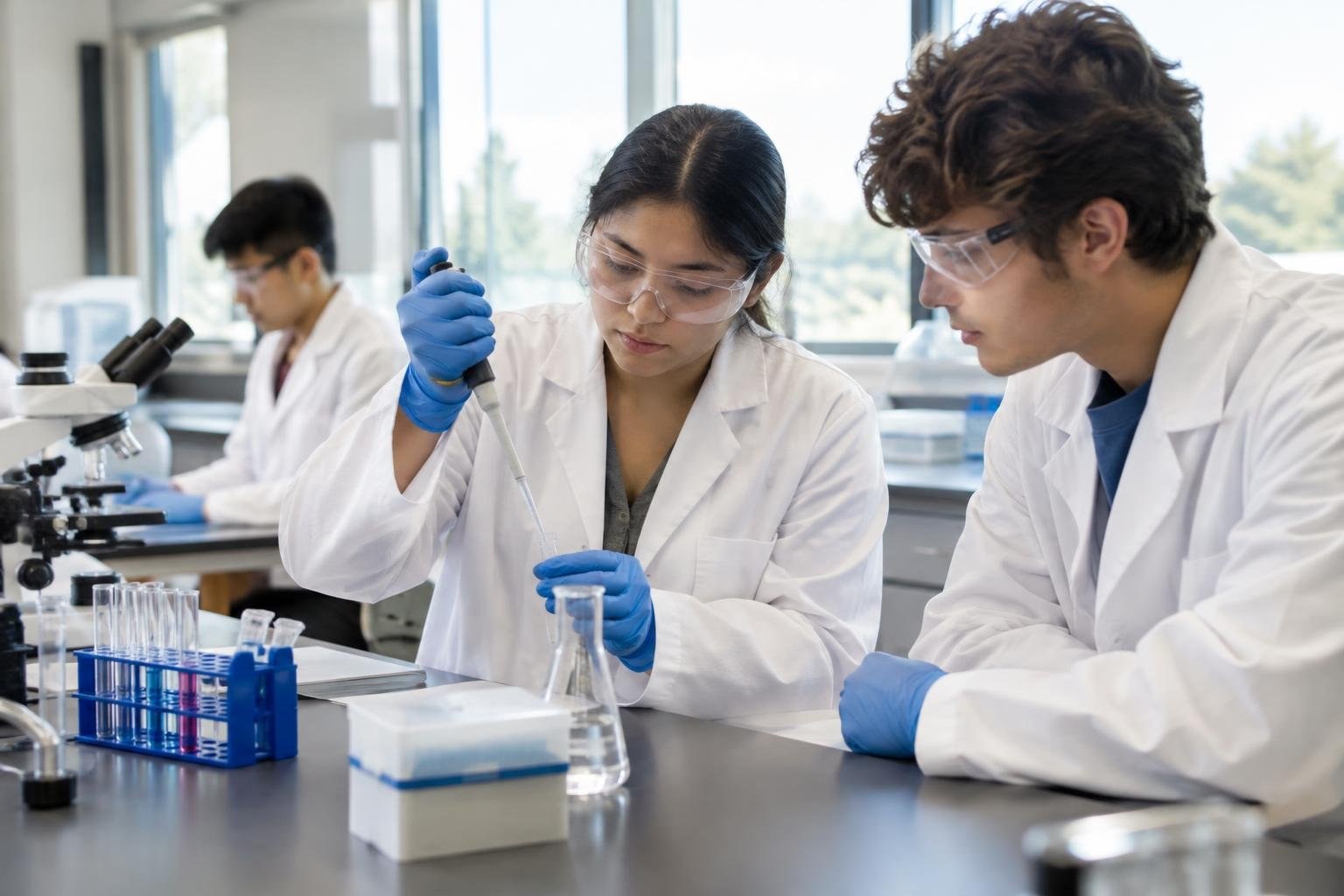
College students learning in a physical science laboratory
What Is a Physical Sciences, Other Degree?
Physical Sciences, Other corresponds to instructional programs in physical sciences that are not listed under a more specific program title. In practice, the category can cover different combinations of physical science subjects, so it should not be treated as a single standardized major.
For example, Long Beach City College describes offerings in astronomy, chemistry, environmental science, geology, physical geography, and physics, alongside lower-division coursework intended to prepare students for transfer. The College of Southern Nevada describes its Associate of Science in Physical Science as a general transfer program. Those examples illustrate why the institution’s own curriculum matters more than the broad category name.
Physical sciences examine the natural and material world through observation, measurement, experiments, and models. Depending on the courses selected, a student may encounter matter and chemical change, forces and energy, earth processes, or astronomical phenomena. A more specific physics, chemistry, or geology major usually concentrates more consistently on one discipline; a broad program may combine introductory study across subjects or support transfer.
Review Long Beach City College’s physical sciences program description and compare it with the course plan at colleges you are considering.
What Do You Study in Physical Sciences, Other?
There is no universal course list for Physical Sciences, Other. One college may introduce students to several sciences, while another may organize a program around transfer preparation. Use the required-course list, not the program label, to understand what you will study.
Depending on the institution and degree plan, coursework may introduce students to areas such as astronomy, chemistry, environmental science, geology, physical geography, and physics. These subjects offer different ways to investigate nature: laboratory observations and measurements, explanations of physical systems, or analysis of earth and environmental processes. Specific course availability and sequence must be verified with the college.
Expect science study to involve careful reading, quantitative reasoning, interpreting evidence, and explaining conclusions. Whether a course includes a lab, field activity, research project, internship, or capstone is program-specific; ask for the syllabus and degree map rather than assuming these experiences are included. If transferring, check that introductory courses match the receiving school’s prerequisites.
For an associate pathway, Midlands Technical College presents its Physical Sciences Associate in Science as foundational work for continuing toward a bachelor’s degree and later study in areas such as astronomy, physics, geology, or meteorology. This is an example, not a guarantee that another college’s credits will transfer in the same way.
Skills You Can Develop
Students can build scientific habits that transfer across several fields, though the emphasis depends on coursework and experience. These may include:
Quantitative reasoning: using measurements, calculations, and mathematical relationships to interpret scientific questions.
Evidence evaluation: comparing observations, recognizing uncertainty, and explaining what results do or do not show.
Technical communication: describing methods and findings clearly in written reports, presentations, or team discussions.
Practical problem-solving: following procedures, checking results, and revising an approach when evidence calls for it.
Scientific technology: familiarity with instruments or software may develop through particular courses, labs, or projects; ask which tools the program actually teaches.
These abilities can support further study and may be relevant to work in science settings, research organizations, government, education, or private industry. The program alone does not guarantee a particular job or qualify a graduate for every scientific occupation.
Who Is This Program Best For?
A broad physical sciences program may appeal to students who enjoy asking how natural systems work, comparing evidence, and learning through scientific explanations. It can also make sense for students who want a foundation before choosing a more specialized field, provided the course plan supports their next step.
Students and families should discuss the nature of the work, not just the degree name. Would the student enjoy a course that includes careful calculations or detailed observation? Are they curious about several areas, or already committed to one discipline? How comfortable are they with lab-based or technical learning? There is no single personality type required, and interest can grow with experience, but a student should understand the academic demands before committing.
Does Physical Sciences, Other Match You?
Salary, reputation, and employment projections are only part of a degree decision. Day-to-day interest, preferred ways of learning, available support, and willingness to pursue additional study matter too. Assessment.com’s Free MAPP Career Assessment can help students explore how motivations and preferences relate to possible work. Use the results as a starting point, then compare degree options and career requirements rather than treating an assessment as a final answer.
Admissions, Time to Completion, and Academic Demands
Admissions requirements are set by each institution and may differ by credential and student type. Review the official admissions page for prerequisites, placement steps, application materials, and any requirements for entering a particular science course. A broad category does not establish one GPA threshold, test policy, portfolio requirement, or admissions standard.
Time to completion also varies. Certificates, associate degrees, bachelor’s degrees, graduate certificates, master’s degrees, and doctoral study represent different educational commitments. The credential levels listed for this field describe possible levels associated with the category, not a promise that every college offers each one. A full-time student, part-time adult learner, transfer student, and student taking prerequisite courses may follow different timelines.
Science courses can be demanding when they require cumulative concepts, regular practice, and mathematical reasoning. Before starting, check placement recommendations, identify any prerequisite gaps, and ask an adviser to map a realistic course load. If transferring, plan the sequence with both institutions so that a class does not delay entry into the next program.
Online, Hybrid, or On-Campus Study
Physical science courses may be offered in campus, online, or hybrid formats, but the available format depends on the institution and the individual course. A fully online schedule may not be available for every subject or every required activity.
Ask whether labs, field experiences, exams, research, or other requirements take place in person. For an online program, confirm how laboratory work is completed, whether any campus visits are required, and whether the format is compatible with the transfer destination’s course rules. A convenient delivery format is useful only if it still meets the academic requirements of the next step.
Compare course availability as well as format. If a required class is offered only once a year or at a specific time, that can affect a student’s plan. Request a degree map and discuss scheduling with an academic adviser before registering.
Tuition, Costs, and Financial Aid
There is no single tuition figure for Physical Sciences, Other. Total cost depends on the college, residency classification, credential level, course load, and delivery format. In addition to tuition and mandatory fees, compare books, laboratory or course materials, equipment, technology, transportation, and housing if applicable. Ask whether any specific science courses carry additional fees.
Compare the full cost of the intended route, not only the first term. For a transfer plan, include the expected time at both institutions and verify how many credits the receiving university will accept toward the intended major. An inexpensive starting program may not save money if courses do not meet transfer requirements.
Ways to Plan for Affordability
Request an itemized estimate from each college’s financial aid office.
Ask about grants, scholarships, work-study, payment plans, and employer education assistance where applicable.
Compare the net cost after aid, not just the advertised tuition rate.
Consider a transfer pathway only after confirming course equivalencies in writing or through official transfer resources.
Budget for course-specific supplies and the possibility that a required class affects the time to completion.
Eligibility and aid amounts depend on the student and institution. Get current details directly from the college and official financial aid sources before making a financial commitment.
Careers, Jobs, and Employment Outlook
A Physical Sciences, Other credential can support continued study, but it does not point to one guaranteed occupation. The U.S. Bureau of Labor Statistics groups physical science as a field of degree and provides information about occupations and educational backgrounds associated with it. Use that resource as a starting point, then review occupational profiles for current education expectations and labor-market details.
Possible direction
How study may connect
What to verify
Science or laboratory support
Introductory science knowledge can provide context for further technical preparation.
Whether the employer requires a specific major, lab experience, or additional credentials.
Research-related work
Scientific reasoning and evidence evaluation are relevant foundations.
Role-specific education, research experience, and whether graduate study is expected.
Earth and environmental science pathways
Geology, environmental science, or physical geography courses may help prepare for focused study.
Required field methods, specialized coursework, experience, and degree level.
Teaching or education-related work
Science background may support further preparation for education roles.
State and employer requirements, including teacher preparation or licensure if relevant.
Science-focused government or private-sector work
A physical science foundation can be relevant to a range of organizations.
The exact technical qualifications and hiring requirements for the specific opening.
The BLS field-of-degree overview describes broad connections, not a salary promise for this program. Pay and outlook belong to specific occupations and vary by job, location, experience, and education. For example, geologists, physicists, and meteorologists represent distinct paths with their own preparation needs. A broad associate degree may be a transfer step rather than a direct qualification for advanced scientific work.
Potential employers across the field can include private-sector organizations, academia, research centers, government, and secondary education. These are broad destinations identified by UA Little Rock’s physical sciences department, not a placement guarantee. Digital measurement, data tools, and automation may change how some scientific tasks are carried out, so students should seek current technical experience and learn to evaluate results rather than relying only on a general credential.
Find out which Career or College Major is right for you!
Completing a degree is not the same as earning a professional license or qualifying for every job. Requirements depend on the occupation, employer, and sometimes state law. The research and program descriptions available here do not establish a field-wide license or certification for Physical Sciences, Other.
Before choosing courses, identify the job or next degree you have in mind. Check official employer, state, or professional requirements for that destination. Ask whether a program provides laboratory experience, research opportunities, internships, or preparation for any required examination or credential. Do not assume a general science credential by itself meets specialized hiring or licensing rules.
How to Stand Out to Employers
Choose a concentration or elective sequence that supports a specific next step.
Seek supervised lab, field, research, or internship experience when the program offers it.
Keep examples of projects and reports that show careful methods and clear communication.
Build practical familiarity with tools and software actually used in the target occupation.
Ask faculty and career services about employer connections and opportunities to present or contribute to research.
Graduate School and Further Study
Further study can turn a broad foundation into a more focused academic or professional direction. Depending on preparation and institutional offerings, students may consider a bachelor’s program in physics, chemistry, geology, astronomy, meteorology, environmental science, or another related area. Graduate certificates, master’s degrees, and doctorates are options at some institutions, but requirements and availability differ.
UA Little Rock describes physical science programs spanning undergraduate and graduate levels and notes preparation for graduate, post-graduate, and professional programs as well as careers in several sectors. A doctoral degree is generally research-oriented, but students should consult each university for program-specific expectations, funding, research commitments, and prerequisites. Consider graduate study when a target occupation, research goal, or advancement path calls for deeper specialization, not simply because a credential is available.
Related Degrees and Alternatives
Compare Physical Sciences, Other with a more defined major by looking at the student’s intended next step. A broad program may offer exposure to several sciences or a transfer foundation. A focused program is usually a clearer route when a student already knows the discipline and needs a particular sequence of courses.
Physics: consider it if the student wants a more concentrated study path centered on physical systems and mathematical models.
Chemistry: consider it if interest is focused on chemical substances, reactions, and laboratory-based study.
Geology or earth science: consider it if the student is especially interested in Earth materials and processes.
Astronomy: consider it if the student wants a defined focus on celestial objects and the universe.
Meteorology: consider it if atmospheric science and weather-related study are the priority.
Environmental science: consider it if the desired coursework and career questions center on environmental systems.
Environmental studies: consider it if the student wants a wider environmental perspective and the specific program’s curriculum fits their interests.
These comparisons describe possible academic directions, not a claim that every college offers each one or that course content is identical. Check prerequisites, required mathematics, lab expectations, transfer rules, and career requirements. A focused major may offer greater depth in one subject; a broad pathway may be more useful for exploration or transfer when its courses are carefully planned.
Advantages, Drawbacks, and Is It Worth It?
The value of a Physical Sciences, Other program depends on its cost and what it helps the student do next. It may be worthwhile for a student who wants a science foundation, has a confirmed transfer plan, or values the opportunity to explore several disciplines. It may be less suitable for someone who needs a direct professional qualification or wants a clearly defined major with a known sequence of specialized courses.
Weigh tuition and time against transferability, course access, academic support, and the education required for the intended career. A broad label alone cannot establish job prospects or a return on investment. Compare actual program outcomes and requirements, then make the decision in light of the student’s goals, location, interests, and willingness to continue studying.
How to Choose the Right Program
Do not choose solely by the words “physical sciences” in a college’s program title. Compare the structure and practical usefulness of the program before applying.
Curriculum: Which courses are required, and do they match the student’s intended subject or transfer major?
Transfer: Has the receiving institution confirmed course equivalencies and accepted credits toward the major?
Experience: Are labs, research, internships, or field learning available and required?
Faculty and resources: Can students access relevant laboratories, advising, tutoring, and undergraduate research?
Format and schedule: Are needed classes available in the desired online, hybrid, or campus format?
Cost: What is the total estimated cost, including fees and course-specific expenses, after financial aid?
Outcomes: What can the college document about completion, transfer, and graduate destinations?
Accreditation: Is the institution appropriately accredited, and are any program-specific approvals relevant to the intended pathway?
Career preparation: Does the department help students find relevant experience and understand occupation-specific requirements?
Ask for clear answers from admissions, the academic department, and the financial aid office. Assessment.com’s major-selection guidance can support a discussion about educational fit; confirm academic and transfer details directly with the colleges.
Questions to Ask Before Enrolling
Use this checklist with a parent, counselor, or college adviser before committing:
What is the exact credential, and what courses are required to complete it?
What mathematics and science preparation is expected before enrollment?
Which credits will transfer to the intended university and count toward the intended major?
What is the total estimated cost after aid, including course-related expenses?
Are laboratories or other activities in person, even in an online program?
Does the college provide advising that can map the route from this program to the next credential?
What internships, research projects, or hands-on experiences are available?
What do graduates do next, and how does the college document those outcomes?
Do intended occupations require a particular degree level, license, certification, or experience?
What financial aid, scholarship, payment, or employer-assistance options should the student investigate?
A realistic plan should connect the course schedule to the student’s next educational or career step, not merely to the end of the first credential.
Frequently asked questions
What is a Physical Sciences, Other degree?
Physical Sciences, Other is a broad program category for physical science instruction that is not classified under a more specific listed program. Its scope can differ by institution. One program might combine astronomy, chemistry, geology, environmental science, physical geography, and physics, while another may emphasize a transfer foundation. Read the actual course plan rather than assuming every program covers the same subjects.
Is a Physical Sciences, Other degree hard?
It can be challenging because physical science study often involves quantitative reasoning, technical concepts, and sustained problem-solving. The exact demands depend on the courses a college includes. Ask for sample syllabi and placement guidance, and review the mathematics and laboratory requirements before enrolling. Students can prepare by strengthening prerequisite math and building consistent study habits.
What jobs can I get with a Physical Sciences, Other degree?
Possible roles associated with physical science education include science and technical support work, research-related positions, and roles connected to environmental or natural science organizations. The degree alone does not qualify graduates for every scientific occupation. Some jobs require a specialized bachelor’s degree, graduate study, experience, or other credentials. Check employer requirements for the specific job you want.
How much can you make with a Physical Sciences, Other degree?
There is no single salary for this field-of-study category because programs vary and graduates pursue different occupations. Pay depends on job title, education, experience, employer, and location. Use current U.S. Bureau of Labor Statistics occupational profiles for specific roles, and compare their education requirements as well as pay. Do not treat a field-of-degree average as a guaranteed starting salary.
Can you earn a Physical Sciences, Other degree online?
Some coursework may be available online, but availability depends on the institution and course. Science programs may require in-person laboratory experiences or other campus activities, and transfer partners may have specific course requirements. Before enrolling in an online option, confirm how labs are completed, whether all required courses are offered remotely, and whether the credits will transfer to your intended institution.
Does a Physical Sciences, Other program require math?
Expect math to be part of many physical science pathways, but the level depends on the curriculum and intended transfer major. Physics, chemistry, geology, and related fields can have different quantitative requirements. Compare course sequences at the starting college and the transfer destination, and ask an adviser whether your planned classes satisfy the receiving program’s prerequisites.
Do I need graduate school after studying physical sciences?
A graduate degree is not automatically required for every job connected to physical science, but advanced research and specialized scientific roles may require further study. A broad associate-level program is commonly positioned as a foundation for transfer, while institutions may offer physical science study through bachelor’s and graduate levels. Work backward from job postings and graduate program prerequisites to decide what level you need.
How does Physical Sciences, Other compare with a physics or chemistry degree?
Physical Sciences, Other is broader than a focused major such as physics, chemistry, or geology. A broad program can help students build a foundation or explore disciplines, particularly before transfer. A focused degree typically organizes more coursework around one subject. Compare course requirements and transfer rules, then choose according to whether you value exploration or a defined disciplinary pathway.
People Also Ask
What does Physical Sciences, Other mean?
It is a broad classification for physical science programs that do not fit a more specific program title. The exact subjects and credential level vary by institution, so review the college’s catalog and degree map.
What courses are in a physical sciences program?
Courses vary, but a program may include introductory astronomy, chemistry, environmental science, geology, physical geography, or physics. Confirm the actual required courses with each college.
Can I transfer a physical sciences associate degree?
Some associate-level physical science programs are described by colleges as foundational or transfer programs. Check the receiving university’s course equivalencies and major requirements before choosing classes.
How long does a physical sciences degree take?
Program duration depends on credential level, course load, transfer credit, and course availability. Ask the college for a degree map showing the expected sequence for full-time and part-time students.
How much does a physical sciences degree cost?
There is no one tuition price for this broad category. Compare each school’s tuition and mandatory fees, then include course-specific expenses, books, equipment, commuting or housing, and the effect of transfer credits.
What degree is similar to Physical Sciences, Other?
Possible choices include a focused major in physics, chemistry, geology, or environmental science. A broad program may be useful for exploration or transfer, while a specialized major can provide a more defined course sequence.
Can I become a scientist with a physical sciences degree?
Some related research careers require graduate study or substantial specialized experience. Review the education requirements for the particular role instead of assuming that a general physical science credential is sufficient.
Physical Sciences, Other may suit students who want a broad scientific foundation but have not settled on one physical science discipline. The flexibility can be useful, especially in a transfer program, but it also makes it important to plan courses around a specific next step. Before enrolling, confirm what the curriculum covers, how credits transfer, what the total cost will be, and which further education or experience the careers you are considering require. Compare the program with more focused science degrees and consider whether its mix of quantitative study, laboratory work, and scientific problem-solving fits your interests.
Want to see your options? Try our comprehensive Degree, Program & College Search tool
We use cookies to offer you a better browsing experience, analyze site traffic and personalize content.
Read about how we use cookies and how you can control them in our
Privacy Policy.
If you continue to use this site, you consent to our use of cookies.
×
Exciting News!
Be one of the first to Beta Test the new AI-Powered Assessment.com Platform.