Photographic and Film/Video Technology Programs: Courses, Careers and How to Choose
Learn what photographic and film/video technology programs cover, how to compare credentials and schools, and what to consider before choosing a media-focused education path.
By David Slack · Staff Writer Assessment.com · Published October 6, 2026 · Last updated November 5, 2026
Photographic and film/video technology programs teach students about the tools and processes used to create, capture, and support visual and audiovisual media. Depending on the school, study may span photography, video, audio, television production, computer graphics, image capture, design, and equipment troubleshooting. The specific mix matters: one program may emphasize production work, while another may focus more on technical support or a wider range of communications technologies. Schools may offer credentials at several levels, from certificates and associate degrees to bachelor's and graduate-level options. A program’s title does not guarantee a standard curriculum, career outcome, or professional credential. Prospective students and families should compare course requirements, hands-on learning, equipment access, total cost, and the qualifications employers expect for roles of interest. Not sure whether this field fits you? Take the Free MAPP Career Assessment to explore how your motivations, interests, and natural preferences may align with related education and work options.
Degree & Program Decision Insights
Explore your personal fit, education requirements, career potential and next steps.
01Motivational Fit
Discover whether this program fits you
Explore your preferences against the focus of Photographic and Film/Video Technology/Technician. These prompts are not personal MAPP results.
Subject curiosity. Would you choose to explore “equipment setup and maintenance” in depth? Ask for a sample learning activity to test that interest.
Breadth of interest. Consider the place of “lighting” in this field. Is this another part you would choose to explore, or mainly a requirement you would tolerate?
Work reality. Related work can involve this task: “Perform minor repairs and routine cleaning of audio and video equipment.” Would you want that activity to be a regular responsibility?
Interest in studying a field can differ from enjoying its related work.
Which part would you want to do repeatedly, and what would you try before deciding?
Discover Your Personal Program Fit
Before investing your time and money in your education, discover how this program aligns with your natural motivations, work preferences and career goals.
Typical occupational entry: postsecondary nondegree award (BLS). BLS lists short-term on-the-job training as typical occupational training.
U.S. occupational wages are not guaranteed graduate earnings; OEWS excludes self-employed workers.
Projected openings include replacements as well as growth.
U.S. national estimates. A crosswalk does not establish entry-level eligibility; advanced, management and teaching roles can require further qualifications.
Compare the focus and route of these distinct instructional fields; their credentials and admission requirements are not interchangeable.
Recording Arts Technology/TechnicianCIP 10.0203. Compare its emphasis on sound equipment operation and maintenance and music, dialogue, and sound effects recording with this program’s focus.
Explore your motivations. Use MAPP as a starting point for reflecting on your interest in “equipment setup and maintenance”, then test that interest against a sample learning task.
Examine the work. Compare Audio and Video Technicians and Lighting Technicians on daily work and entry qualifications, as well as pay. Explore Audio and Video Technicians.
Compare actual providers. Ask for the exact credential, course sequence and assessment methods. Compare how each provider teaches “lighting”, its entry criteria and its itemized costs.
Check the evidence before applying. Confirm prerequisites and any recognition or professional requirements for your intended route; ask for applicable rules and published outcome definitions in writing.
Verify the institution’s current offering, admissions requirements and outcomes; a search result does not establish your eligibility.
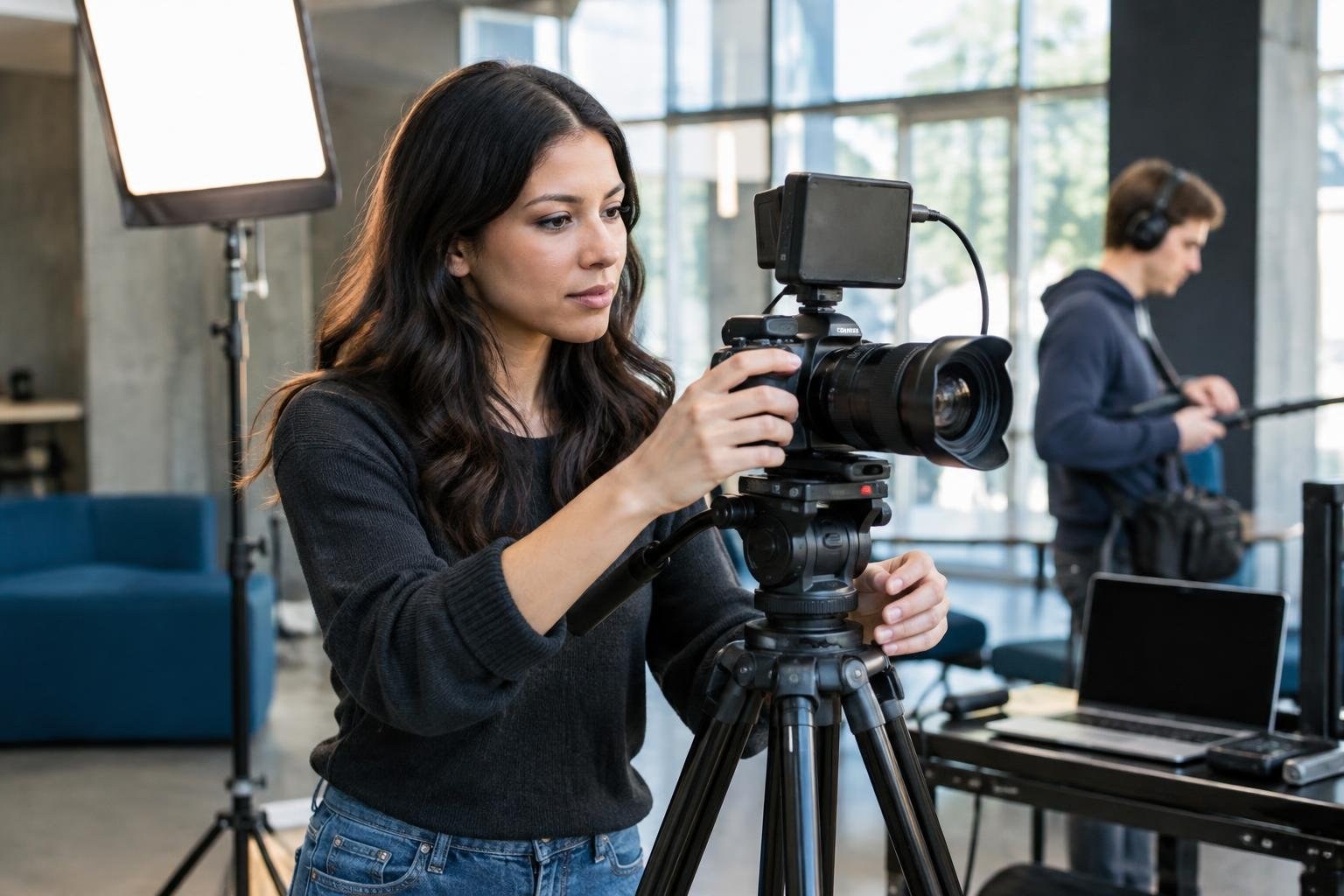
A college student using camera and audiovisual equipment
What Is a Photographic and Film/Video Technology Program?
This is a field of study focused on technologies and practical skills used in photography, film, video, and related audiovisual work. Its scope can include both the creative decisions involved in making media and the technical tasks involved in operating, maintaining, and troubleshooting equipment and systems.
The Classification of Instructional Programs (CIP) identifies Photographic and Film/Video Technology/Technician as code 10.0201. It appears within the broader area of communications technologies, technicians, and support services. CIP codes classify fields of study; they are not a guarantee that two programs with similar names have identical courses or outcomes. See the Michigan Tech CIP listing and the University of North Texas CIP codes.
Names vary across colleges. A school might use a title that highlights photography, film/video, audiovisual technology, or technician training. Look beyond the program name to its catalog description, required courses, equipment, and student work.
What Do You Study?
There is no universal course sequence for this field. A broad instructional description associated with communications technology identifies possible areas such as audiovisual technology, troubleshooting, computer operation and maintenance, data transmission and management, oral and written communication, math and physics, concept development, layout and design, computer graphics, and image capture. Individual programs select and organize subjects according to their focus and credential level.
Technical and creative learning
Students may learn how to work with audiovisual tools, understand basic equipment operation, and identify or address technical problems. Design and concept-development work can help students plan how a visual idea will be communicated. Photography and video projects may involve decisions about image capture, composition, and how recorded material supports a message.
Projects and hands-on practice
Ask what practical work is included rather than assuming a course title means students receive extensive equipment time. Find out whether projects use school equipment, personal equipment, simulations, or a combination. If an internship, lab, portfolio, or capstone is advertised, confirm whether it is required, how it is assessed, and whether all students can access it.
Course names and requirements vary by college. Request the current catalog and a term-by-term plan, then check whether the courses you care about are actually required or only electives.
Skills You May Develop
Depending on its course mix, a program may help students build technical, communication, and creative skills. The field’s instructional areas can include computer operation and maintenance, troubleshooting, data management, oral and written communication, math and physics, concept development, layout, design, computer graphics, and image capture.
Technical: familiarity with audiovisual technology and equipment-related problem solving.
Visual and creative: practice developing concepts, making layout choices, and working with images or graphics.
Communication: experience explaining ideas and handling written or oral communication related to media work.
Analytical: opportunities to apply structured troubleshooting and, where included, math or physics concepts.
Organizational: practice managing files, project materials, and data as required by assignments.
These are potential areas of learning, not a promise that every program teaches each skill to the same depth. Review assignments and student work samples, and ask how students demonstrate their abilities to employers or transfer institutions.
Who Might This Program Suit?
Admissions and preparation
Admission standards are set by each institution, not by the CIP code. Check the school’s current requirements for prior education, transcripts, prerequisites, application materials, and any portfolio or interview. Do not assume a portfolio is required just because a program is media-focused. Ask whether applicants without prior equipment experience can begin with introductory coursework.
Does this field match you? Day-to-day tasks, the learning environment, cost, and the creative or technical problems you want to solve all matter when choosing a path. Explore career and degree options with the MAPP career assessment as one part of your education and career research.
Credential Levels, Format, and Completion Time
Credential titles and requirements vary by institution. Compare the options listed in each college’s current catalog rather than assuming that programs with similar names offer the same credentials or curriculum.
There is no single completion time that applies to every program. It depends on the credential, course load, prior credits, scheduling, and whether the student studies full time or part time. Ask for a written plan showing required credits, typical course availability, transfer rules, and the effect of taking fewer courses per term.
Online, hybrid, and campus-based delivery may be offered, but the format alone does not tell you how practical learning works. Ask whether students need to attend campus, use specialized equipment, complete in-person projects, or arrange their own tools. For online programs, get clear answers about equipment specifications, technical support, and how assignments are evaluated before enrolling.
Tuition, Costs, and Financial Aid
The full cost is more than the advertised tuition rate. Compare tuition and mandatory fees for the entire program, then ask whether course materials, software, equipment, storage, travel, or project expenses may add to the total. Costs and aid eligibility vary by school, location, enrollment status, and student circumstances; verify current figures directly with the institution.
Request a written estimate for the full credential, not just the first term. Ask which charges are recurring, which are optional, and whether online students pay technology or distance-learning fees. For any equipment students must supply, request a specific list and confirm whether borrowing or campus access is available.
Ways to manage the expense
Complete the appropriate financial aid application and ask the college’s aid office about grants, scholarships, and work-study options that may apply.
Ask whether the school offers payment plans or program-specific scholarships, and check all eligibility and renewal rules.
Compare transfer-credit policies before taking courses elsewhere; confirm in writing that credits will apply to the intended program.
If employed, ask whether an employer provides education assistance and what conditions apply.
Compare the total cost and learning opportunities across programs, rather than choosing based on tuition alone.
Do not assume a quoted award is guaranteed for every year or that all credits will transfer. Review financial aid terms and the degree audit with the appropriate college office.
Careers, Jobs, and Employment Outlook
Potential work areas relate to photography, video, audio, television production, animation, computer graphics, and audiovisual technology. Depending on their preparation and experience, graduates may explore production assistance, photography or video support, media-equipment support, or other roles connected to a program’s concentration. These are directions to investigate, not guaranteed job titles or outcomes.
Explore possible roles such as audio and video equipment technicians, broadcast technicians, camera operators, professional photographers, film and video editors, sound engineering technicians, and producers and directors. A program does not guarantee employment in any of these occupations. Requirements vary by employer and role, so compare current job postings in locations where you may want to work. Note the education, experience, technical skills, and work samples employers request.
Ask colleges for program-level graduate outcomes and how those numbers are defined. If a school shares salary, employment, or placement data, ask for the reporting period, number of graduates included, kinds of jobs counted, and whether results are specific to this program.
How to build evidence of your skills
Use class projects, independent work, volunteer assignments, or supervised production opportunities to create examples of your work. Keep a clear record of your role and the tools or processes you used. A concise portfolio can help explain what you can contribute where an employer requests one.
Find out which Career or College Major is right for you!
A CIP code identifies a field of study; it does not prove that a college or program is accredited, meets a licensing rule, or prepares students for a particular certification. Verify institutional accreditation through authoritative education sources and ask the school which accreditor applies. If a particular occupation or credential matters to your goal, contact the relevant licensing or certification organization to confirm current requirements.
Do not treat a certificate of completion from a college as equivalent to professional certification or state licensure. Ask whether an external credential is included, optional, or separate, and whether students must pay additional fees or meet experience requirements. Requirements depend on the occupation and jurisdiction, so confirm them before selecting a program.
For an audiovisual or media-related goal, ask employers and working professionals which credentials, if any, are valued for the roles you are considering. Avoid paying for a credential based only on promotional claims; verify that it is relevant to your intended work.
How to Choose a Program
Compare the program students actually complete, not just its title or marketing description. Use these questions to evaluate each option:
Curriculum: Which courses are required, and how much study is devoted to photography, video, audio, design, graphics, and technical support?
Equipment and facilities: What tools can students use, when are they available, and are there extra costs?
Practical work: Are projects, internships, or work placements required or optional? How are they arranged and assessed?
Faculty: Who teaches core courses, and what kinds of work or subject areas do they cover?
Cost and aid: What is the estimated total cost after fees and materials, and which aid is renewable?
Format: What must online students do in person, and how are equipment-based assignments completed?
Transferability: Will credits apply to a future program? Get confirmation from the receiving institution.
Outcomes: What do graduates do, and how does the school define and report those results?
Career support: What help is offered with portfolios, internships, job searches, or employer connections?
Accreditation: Which recognized accrediting organization reviews the institution, and are there field-specific requirements for your intended next step?
Request answers in writing when they affect cost, transfer, or completion. Assessment.com’s education-matching resources can support exploration, but compare program facts directly with colleges and relevant employers.
Related Degrees and Alternatives
Related programs can share subjects with photographic and film/video technology while emphasizing different work. Compare actual course plans because schools use titles differently.
Graphic communications: Consider this if you are more interested in visual design, layout, and graphics than camera-based work.
Graphic and printing equipment technology: Consider this if production equipment and print processes are a stronger draw than video or photography.
Communications technology: Consider this if you want a broader view of audiovisual tools, technical support, and related communications systems.
Recording arts technology: Consider this if audio recording and sound work are more appealing than image capture.
Animation: Consider this if you prefer creating moving images through animation techniques and digital tools.
Photography: Consider this if you want a narrower focus on still images and related production work.
Film or media production: Consider this if your priority is production planning and storytelling rather than technician-focused study.
These are comparison directions, not standardized degree definitions. Check course requirements, student work, transfer options, and the qualifications requested in relevant job postings before deciding.
Advantages, Tradeoffs, and Is It Worth It?
A program can be valuable when its courses, equipment access, and practical assignments help you build capabilities that connect to a specific next step. Studying a field that combines technology and creative work may also let you explore several media areas before choosing a focus.
Tradeoffs deserve equal attention. Program titles can be broad, hands-on access may differ, and a credential by itself does not guarantee a job or a particular income. Students may need to invest time in projects and independent practice, and some job paths may expect experience or a portfolio. The costs of equipment and materials can also affect the overall value.
Decide whether the program is worth it for your circumstances by comparing its full cost and completion plan with your goals, the qualifications relevant employers request, available lower-cost pathways, and your willingness to do the work. A parent or student can ask a school to connect each major course to a learning outcome and explain how students demonstrate that outcome.
From Education to Career
From Education to Career: Possible Pathways
Career progression is not automatic, and employers set their own requirements. Use pathways such as these as planning examples, then confirm the job titles and qualifications in current postings:
Certificate or associate-level study → seek an assistant or support role related to photography, video, or audiovisual work → build practical experience and examples of completed projects → specialize in a media or equipment area.
Bachelor’s-level study → pursue an entry-level role aligned with a chosen concentration → develop a portfolio and deeper technical or production skills → consider responsibility for more complex projects or specialized work.
Further education → continue into a related advanced program when it serves a clear goal, such as deeper study or a change in direction → confirm whether the additional credential is requested for the roles you want.
Ask program advisors how students identify internships or projects, and talk with employers about the skills they look for. A realistic plan should include more than a degree title: it should name target roles, the work samples or experience expected, and the steps you will take to build them.
Questions to Ask Before Enrolling
What are the complete program requirements, and which courses are currently offered each term?
What is the total estimated cost, including fees, materials, equipment, and any required travel?
What equipment and facilities can students use, and are there limits on access?
Which projects or practical experiences are required, and how do students arrange them?
What are the institution’s accreditation details, and are there separate requirements for my intended career?
Can online students complete the program without regular campus visits?
How are transfer credits evaluated, and will they apply to this credential?
What financial aid is available, and what conditions affect renewal?
What career services are available to students in this program?
Can the school share program-specific graduate outcomes and explain how they were measured?
What skills or work examples should I have by graduation?
Before committing, compare the answers from more than one school. Save program plans, cost estimates, aid offers, and transfer evaluations so that you can review the tradeoffs with a parent, counselor, or advisor.
Want to see your options? Try our comprehensive Degree, Program & College Search tool
Program classification and curriculum references in this guide draw on official educational sources. Classifications describe fields of study; they are not substitutes for a college’s current catalog, accreditation information, or occupation-specific requirements.
Michigan Technological University: CIP 10 Communications, Technologies/Technicians and Support Services
University of North Texas: Academic CIP Codes
Pennsylvania Department of Education: CIP Code 10.9999
For enrollment decisions, confirm current courses, costs, admissions requirements, accreditation, and outcomes with the college and the appropriate official organizations.
Frequently asked questions
What is a photographic and film/video technology program?
A photographic and film/video technology program focuses on technical and creative work related to making visual and audiovisual media. Depending on the curriculum, students may study photography, video, audio, television production, computer graphics, image capture, design, and troubleshooting. The exact emphasis differs by school, so review required courses and hands-on work before choosing a program.
Is photographic and film/video technology hard?
It may be challenging if you are new to camera, audio, or editing technology, or if you find it difficult to combine creative decisions with technical problem-solving. Programs can include communication, math, physics, computer operation, and troubleshooting alongside media work. Ask schools about introductory courses, equipment access, project expectations, and support for students who are building these skills.
What jobs can I get with this program?
Potential paths include work involving photography, video production, audiovisual support, television production, image capture, and media technology. A program can develop relevant technical and creative skills, but it does not guarantee a particular job. The roles you can pursue depend on the program, your portfolio and experience, employer expectations, and any additional credentials required for a specific position.
How much can I make after studying film and video technology?
There is no single salary for this program because it can lead to different occupations, and pay varies by job, location, experience, employer, and education. Compare current wage information for the exact job titles you are considering, rather than relying on a degree-wide estimate. Also ask colleges whether they publish outcomes by program and how they define employment or salary results.
Can I earn this credential online?
Some courses may be available online, but a fully online program may not fit every student or curriculum. Photography, video, audio, and equipment-focused learning can involve practical work, specialized tools, or projects that are easier to complete with campus resources. Ask whether equipment is supplied, whether in-person sessions are required, and how online students complete hands-on assignments.
Does this program require math?
Math may be part of the curriculum, but the amount and level depend on the school and credential. The program description for this field includes math and physics among possible instructional areas, along with technology, communication, design, and image capture. Check the degree plan and course prerequisites to see which quantitative courses are required and what preparation the school recommends.
Do I need a graduate degree for a career in this field?
Not necessarily. Credential options in this field include certificates, associate degrees, bachelor's degrees, post-bachelor's certificates, graduate certificates, and master's degrees. Which level makes sense depends on your intended role and the qualifications employers request. Before pursuing further education, compare job postings for your target positions and speak with program advisors about relevant pathways.
What does CIP code 10.0201 mean?
The classification code associated with photographic and film/video technology/technician is CIP 10.0201. It sits within the broader communications technologies/technicians and support services area. CIP classifications help describe fields of study, but they do not by themselves establish that a particular program is accredited, meets a professional requirement, or leads to a specific job.
People Also Ask
What do you learn in a film and video technology program?
Programs may include photography, video, audio, television production, computer operation, troubleshooting, communication, design, computer graphics, and image capture. Course requirements vary by school and credential, so compare official program plans rather than relying on a broad field description.
What is the CIP code for photographic and film/video technology?
The CIP classification for Photographic and Film/Video Technology/Technician is 10.0201. CIP codes classify programs of study; they are useful for identifying a field but do not determine a program’s course content or accreditation status.
How long does a film and video technology program take?
It depends on the credential and school. Certificate, associate, bachelor’s, and graduate options are available in this area, but their credit requirements and completion schedules are not uniform. Ask each school for its published plan of study, transfer-credit policy, and part-time options.
What is the difference between communications technology and film/video technology?
A communications technology program may cover several media and technical areas, while a photographic and film/video technology program may concentrate more closely on image-making and video-related work. Program names are not standardized descriptions of every course, so compare curricula, equipment use, and required projects directly.
Will this degree guarantee me a job in video production?
A program can provide relevant study, but it cannot guarantee employment. Review job postings for roles you want, note the education and experience they request, and ask colleges for program-specific outcome information. Projects, practical experience, technical skills, and a portfolio may also matter to employers, depending on the position.
How do I choose a photography or video technology school?
Start by looking for courses and learning experiences that match your goals, then verify total cost, equipment access, delivery format, transfer rules, and available student support. Ask what work students complete, whether practical projects can be done remotely, and where graduates have gone, using clearly defined and program-specific outcomes.
A photographic and film/video technology program may suit students who want to develop practical skills for creating, capturing, and supporting visual or audiovisual media. Before enrolling, compare the actual course sequence, equipment access, hands-on opportunities, total cost, and the jobs graduates pursue. The credential title alone cannot tell you whether a program matches your interests or career plans. Consider how the day-to-day work sounds to you, what education it requires, and whether the program offers a realistic path toward your next step.
We use cookies to offer you a better browsing experience, analyze site traffic and personalize content.
Read about how we use cookies and how you can control them in our
Privacy Policy.
If you continue to use this site, you consent to our use of cookies.
×
Exciting News!
Be one of the first to Beta Test the new AI-Powered Assessment.com Platform.