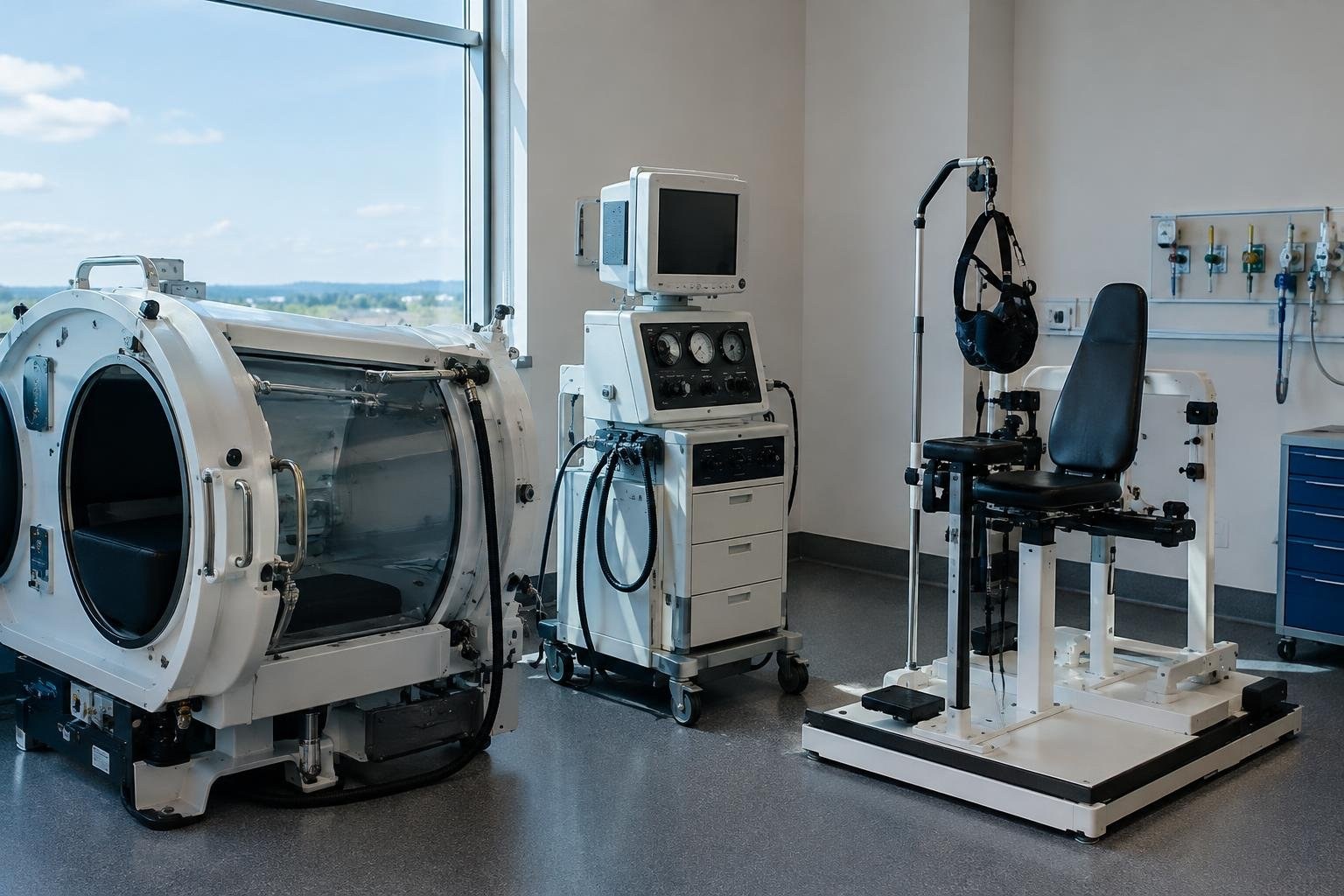
Aerospace Physiology and Medicine Degree Guide: Programs, Courses, Careers, and Fit
Learn what to check before choosing an Aerospace Physiology and Medicine program, from degree format and science coursework to career planning, cost, and related pathways.
By Tome Fierre · Staff Writer Assessment.com · Published October 7, 2026 · Last updated November 5, 2026
Aerospace Physiology and Medicine is a specialized-sounding name for a science pathway concerned with physiology and health in aerospace-related contexts. The exact meaning can depend on the college: a program may offer a focused curriculum, or the title may sit within a broader biological or biomedical sciences degree. Do not assume that every school uses the same name, courses, or career preparation. Related biomedical sciences programs can cover subjects such as biochemistry, genetics, cell biology, immunology, pharmacology, and physiology, with an emphasis on human health and disease. Students considering this field should check whether a program includes aerospace-specific study, what degree level it awards, and what further training their career goals require. Not sure whether this path fits you? The Free MAPP Career Assessment can help you reflect on how your interests, motivations, and preferences align with possible careers and educational pathways.
Degree & Program Decision Insights
Explore your personal fit, education requirements, career potential and next steps.
01Motivational Fit
Discover whether this program fits you
Explore your preferences against the focus of Aerospace Physiology and Medicine. These prompts are not personal MAPP results.
Subject curiosity. Would you choose to explore “anatomy” in depth? Ask for a sample learning activity to test that interest.
Breadth of interest. Consider the place of “molecular and cellular basis of muscle contraction” in this field. Is this another part you would choose to explore, or mainly a requirement you would tolerate?
Work reality. Related work can involve this task: “Write and publish articles in scientific journals.” Would you want that activity to be a regular responsibility?
Interest in studying a field can differ from enjoying its related work.
Which part would you want to do repeatedly, and what would you try before deciding?
Discover Your Personal Program Fit
Before investing your time and money in your education, discover how this program aligns with your natural motivations, work preferences and career goals.
Typical occupational entry: bachelor's degree (BLS). BLS lists 5 years or more of related work experience as typical for this occupation; this programme is not a direct promise of entry.
U.S. occupational wages are not guaranteed graduate earnings; OEWS excludes self-employed workers.
Projected openings include replacements as well as growth.
U.S. national estimates. A crosswalk does not establish entry-level eligibility; advanced, management and teaching roles can require further qualifications.
Explore your motivations. Use MAPP as a starting point for reflecting on your interest in “anatomy”, then test that interest against a sample learning task.
Examine the work. Compare Medical Scientists, Except Epidemiologists and Natural Sciences Managers on daily work and entry qualifications, as well as pay. Explore Medical Scientists, Except Epidemiologists.
Compare actual providers. Ask for the exact credential, course sequence and assessment methods. Compare how each provider teaches “molecular and cellular basis of muscle contraction”, its entry criteria and its itemized costs.
Check the evidence before applying. Confirm prerequisites and any recognition or professional requirements for your intended route; ask for applicable rules and published outcome definitions in writing.
Verify the institution’s current offering, admissions requirements and outcomes; a search result does not establish your eligibility.
College student comparing a science curriculum and career options
What Is an Aerospace Physiology and Medicine Degree?
Aerospace Physiology and Medicine describes a possible interdisciplinary study path connecting physiology and health with aerospace settings. The title alone does not tell you exactly what you will study. A college could offer a dedicated focus, place related coursework inside a broader science degree, or use a different program name. Ask for the official degree title and a current course plan before treating two programs as equivalent.
Biomedical sciences provides one useful point of comparison. Penn State describes its graduate program as training focused on human health and disease, with options including biochemistry, genetics and genomics, cancer biology, cellular and integrative physiology, translational therapeutics, and virology and immunology. These examples show the range of disciplines that may sit under a broad biomedical sciences umbrella; they do not establish that every such program includes aerospace coursework.
When comparing titles, distinguish the degree awarded from a concentration, certificate, or research area. A bachelor’s degree, graduate certificate, master’s degree, and doctorate represent different levels of study. The program’s catalog should explain which credential appears on a student’s transcript.
What Do Students Study?
There is no single standard course list attached to this title. Biomedical sciences can apply biological and chemical principles to human health, disease, and medical research. Depending on the program, students may encounter physiology, genetics, biochemistry, cell biology, immunology, pharmacology, microbiology, or related areas.
For an aerospace-related focus, ask the department to identify the courses, projects, or research that make the program distinct. Ask whether students can take relevant electives, join faculty research, or complete a capstone or thesis in a related area. Confirm the practical requirements directly rather than assuming them from the degree title.
Curricula vary by institution and credential. A graduate program may allow concentration in a specific discipline, while a certificate may provide a narrower set of courses. Compare required courses, electives, laboratory expectations, and culminating work side by side.
Skills You May Develop
Related biological and biomedical sciences training can build a foundation in understanding biological processes and human health and disease. The specific skills depend on the curriculum and the practical experiences it includes.
Scientific reasoning: connect concepts in biology and chemistry to questions about health and disease.
Data interpretation: learn to assess scientific information and explain what evidence does and does not show.
Communication: describe technical ideas clearly in writing, presentations, and team discussions.
Research habits: frame questions and understand how evidence informs conclusions.
Ask the department how students practice these skills and whether the program includes laboratory or research experience. A course plan may list relevant topics without showing the amount of practical work or communication practice students receive.
Who Is This Program Best For?
This path may suit students who are curious about how biological systems work and want to connect science learning with questions about human health. Interest in research, laboratory methods, physiology, or the relationship between science and medicine may be useful. There is no single personality profile required, and a student does not need to know a final job title before exploring the subject.
It may be less satisfying if you want a direct route into a licensed clinical profession but do not plan to complete that profession’s required training. A science degree and a clinical license are not interchangeable. Before choosing, identify whether you want to conduct research, support laboratory work, pursue professional school, or explore another path.
Does Aerospace Physiology and Medicine Match You?
Salary, reputation, and projected demand are only part of a degree decision. Daily tasks, preferred work settings, tolerance for extended education, and interest in the subject matter also matter. Use Assessment.com’s MAPP Career Assessment as a reflection tool, then explore Degree Matching, Career Matching, and Matching Jobs to compare related options. Treat the results as prompts for research, not guarantees of admission or employment.
Check prerequisites before applying. Requirements are set by each institution and may include prior science coursework or other academic conditions. A combined or accelerated pathway may impose additional criteria: one Marshall University program page, for example, lists a minimum overall GPA and recommendations from specified research faculty. That is an example of a particular pathway, not a general admissions rule.
Credential Levels, Format, and Completion Time
Related study can be available at several levels, including undergraduate degrees, post-baccalaureate or graduate certificates, master’s degrees, and doctoral programs. The credential matters: a certificate is not the same award as a degree, and a graduate credential generally assumes earlier education. For example, a university certificate may offer biomedical science competencies for students preparing for professional schools, while a post-baccalaureate certificate may be designed for college graduates seeking additional preparation.
Completion time depends on the credential, enrollment pace, transfer credits, prerequisites, and course scheduling. Do not rely on a generic timeline when the institution can provide a degree map. Request the expected sequence for a full-time student and ask how part-time study, repeated courses, or limited course availability could change it.
Online options also vary. Harvard Extension lists an online graduate certificate in topics in biomedical science, showing that some related advanced study can be offered online. That does not mean all science degrees or laboratory components can be completed remotely. Ask whether labs, research, internships, or other activities require attendance in person.
Admissions, Preparation, and Academic Difficulty
Admission requirements differ by school and credential. Before applying, confirm the required prior coursework, application materials, deadlines, and any minimum academic standards. Graduate and combined programs may look for research preparation or recommendations, while a post-baccalaureate certificate may be intended for students who already hold a college degree. The admissions office can explain which requirements apply to your specific route.
The academic workload may involve several connected science disciplines and, in some programs, laboratory practice or research. Students who have been away from school may want to review foundational biology and chemistry before starting. Ask about tutoring, advising, lab onboarding, and support for students returning to college.
Do not infer that a program is easy or difficult from its name. Request sample syllabi, ask current students how courses are structured, and check how much time students spend in class, lab, and independent study. If you are comparing an accelerated option with a standard program, verify the pace, academic expectations, and consequences of falling behind.
Tuition, Total Cost, and Financial Aid
The total price depends on the institution, credential, enrollment status, course format, and the fees associated with laboratory or research work. Include more than tuition in your estimate: account for required fees, books, supplies, technology, transportation, and living expenses where relevant. Request a term-by-term cost estimate for your individual plan.
Compare the published price with the financial aid offer and ask whether aid applies to the credential and enrollment intensity you intend to pursue. Look into institutional scholarships, federal and state aid eligibility, employer tuition assistance, and payment plans. Eligibility and availability vary, so confirm details with the financial aid office rather than budgeting around an award you have not received.
To manage cost, compare public and private options, ask whether previous credits can transfer, and check whether a lower-cost route preserves access to the courses or experiences you need. A certificate may require fewer courses than a degree, but it may not meet the same career or graduate-school objective. Compare total cost against the credential’s purpose before deciding.
Careers, Jobs, and Employment Planning
A degree title does not guarantee a particular job, salary, or employment outcome. Career options depend on the courses completed, practical experience, degree level, location, and any further education or credentials required by an employer. Related biomedical sciences study connects to broad areas of research and human health, but students should verify requirements for each occupation they are considering.
Potential directions to investigate include research support, laboratory-based science work, biomedical research, and preparation for professional or graduate education. These are areas to explore, not claims that every graduate qualifies for every position. Some research or specialized roles may favor graduate training; regulated clinical work can require a separate professional degree and license.
Rather than relying on a single “degree salary,” identify specific job titles and check current occupational information, employer postings, and location-specific pay data. Ask colleges for clear explanations of graduate-school destinations and employment outcomes, including how they define and measure those outcomes. If a program advertises a career pathway, ask what additional qualifications it assumes.
Technology and research methods change over time. Ask faculty how students learn to evaluate data and use current laboratory or analysis tools. Strong scientific judgment and the ability to explain evidence can complement technical training, but no program should promise immunity from changes in a particular industry.
Accreditation, Licensure, and Certification
Before enrolling, check the institution’s accreditation status and ask whether any program-specific approval matters for your intended next step. Accreditation, degree recognition, and professional licensure are different questions. Verify information with the appropriate accreditor, licensing board, or professional school rather than relying only on a college’s marketing materials.
Completing a biological or biomedical sciences degree does not by itself authorize someone to practice medicine or another licensed profession. If your goal is clinical practice, identify the professional degree, examination, supervised training, and state requirements that apply to that occupation. If your goal is research, ask employers or graduate programs which coursework and experience they expect.
Certificates also vary in purpose. Some are designed to build biomedical science competencies or provide additional preparation for professional school applications; a certificate does not guarantee admission. Confirm what the credential represents, what prerequisites it requires, and how receiving institutions or employers evaluate it.
Internships, Research, and Ways to Stand Out
Practical experience can help you test whether you enjoy laboratory or research work and give you examples to discuss with employers or graduate programs. Ask whether undergraduates can join faculty research, complete a supervised project, or take part in an internship. Confirm eligibility, time commitments, supervision, and whether opportunities are available to students in your exact program.
Build a record of what you can do: document research tasks, laboratory methods, presentations, writing samples, and collaborative projects where appropriate. Follow institutional rules for confidential or sensitive information. Seek feedback from instructors and supervisors, and learn to explain the question behind a project, your role, and what the evidence did or did not establish.
How to stand out to employers: connect coursework to the specific job description, give concrete examples of relevant tasks, and be accurate about your level of responsibility. Do not describe a classroom exercise as professional experience or imply that a degree makes you licensed. If you are considering further study, ask potential programs what research preparation they value.
Graduate School and Further Study
Graduate school may make sense for students seeking deeper research training, an advanced specialization, or preparation for a profession that requires additional education. Biomedical sciences graduate programs can offer focused study across fields such as genetics, biochemistry, physiology, and immunology. Southern Illinois University, for example, describes a multidisciplinary graduate program offering master’s and doctoral degrees across a variety of disciplines.
Other options include a graduate certificate or a post-baccalaureate certificate. These can serve different purposes: advanced study in a life-science topic, exposure to biomedical science competencies, or additional preparation before applying to a professional program. Compare admission requirements, course content, cost, and how the credential is viewed by the next school or employer.
For any path, work backward from the intended outcome. Contact professional schools or graduate departments before enrolling in a preparatory certificate, and ask whether its courses meet their expectations. A credential can strengthen preparation, but it cannot promise admission.
Related Degrees and Alternatives
If a program with the exact Aerospace Physiology and Medicine title is not available, compare adjacent subjects by curriculum and outcome rather than assuming they are interchangeable.
Biological sciences: consider this if you want a broad foundation in living systems. A program may offer a biomedical concentration, but verify the specific courses.
Biomedical sciences: consider this if you want study centered on human health and disease across areas such as genetics, physiology, and immunology.
Physiology: consider this if your primary interest is how body systems function; check whether the curriculum offers the aerospace context you want.
Biochemistry: consider this if you want a stronger emphasis on chemical processes in biological systems.
Genetics or genomics: consider this if you want to focus more heavily on heredity, genes, or related biological questions.
Microbiology or immunology: consider these if you want narrower study of microorganisms or immune-system topics.
Professional health programs: consider these if your central goal is a regulated clinical role, after confirming prerequisites and licensing requirements.
These are comparison categories, not guarantees about a particular college’s offerings. Review catalog requirements, labs, research opportunities, and graduate-school prerequisites. Ask the department to explain what an aerospace-specific option adds beyond a related general science degree.
How to Choose the Right Program
Compare programs using documents and answers you can verify. Start with the official catalog, then speak with an academic adviser and, where possible, students currently enrolled.
Curriculum: Which required courses are specifically relevant to aerospace physiology or medicine?
Practical learning: How much laboratory, research, internship, or project work is available, and is it required?
Faculty and research: Can students participate in work related to their interests?
Credential: What exact degree or certificate will the institution award?
Accreditation: Is the institution accredited by a recognized accreditor, and does a career goal require additional approval?
Format and time: Can required courses be completed online, and what in-person attendance is necessary?
Cost and aid: What is the estimated total cost for your schedule after aid?
Outcomes: What do graduates do next, and how does the program document those outcomes?
Transferability: Will credits apply to the next degree or professional program you may pursue?
Assessment.com’s degree and career matching tools can help you generate options to investigate. Use them alongside program catalogs, employer requirements, and conversations with advisers. Fit should be evaluated through both personal reflection and evidence about the program.
Questions to Ask Before Enrolling
What is the exact credential and official program name?
Which courses specifically address aerospace-related physiology or medicine?
What prior courses and grades are required for admission?
What is the estimated total cost for my enrollment plan, including fees and required supplies?
Which grants, scholarships, employer benefits, or payment options might apply?
Are lab, research, internship, or clinical activities required, and where do they take place?
Can I complete the program online, part time, or with transfer credits?
What accreditation applies to the institution, and does my intended career require a separate license?
What jobs or graduate programs have recent graduates pursued, and what additional qualifications did they need?
What advising and career services are available to students in this program?
Request a degree plan and cost estimate before making a deposit. If a college makes a career claim, ask how it is measured and whether the outcome applies to students in the same credential and program.
Is Aerospace Physiology and Medicine Worth It?
The value of this path depends on the program’s actual content and your intended next step. It may be worthwhile if the coursework aligns with your interest in biological or biomedical science and the program offers a realistic route toward your education or career goal. It may be a poor fit if you expect the title alone to guarantee an aerospace job, a clinical license, or a particular salary.
Weigh tuition and time against the credential awarded, the need for further education, practical experience, and the availability of relevant courses. A broad biological or biomedical sciences degree may offer more flexibility if a dedicated aerospace focus is unavailable. Conversely, a focused program may be attractive if its curriculum and opportunities clearly match your plans.
Make the decision using three checks: confirm what you will learn, verify what the target job or next degree requires, and assess whether the daily work associated with that path interests you. The Free MAPP Career Assessment and Assessment.com’s Degree Matching and Career Matching tools can help you reflect on fit while you verify the facts directly with schools and employers.
From Degree to Career: Possible Planning Sequences
Science degree → research or laboratory support role → additional experience → specialized research work: confirm the education and experience listed for each target position.
Biomedical science study → post-baccalaureate preparation → application to a professional school: check each school’s prerequisites and admissions rules before selecting courses.
Undergraduate study → graduate certificate or master’s program → advanced subject focus: confirm that the additional credential supports a defined academic or career objective.
These are planning examples, not guaranteed progressions. Keep a written list of the qualifications required for your intended next step and revisit it as you compare programs.
Frequently asked questions
What is Aerospace Physiology and Medicine?
Aerospace Physiology and Medicine focuses on biological and health questions in the context of aerospace. The exact curriculum can vary, so review each program’s course list and confirm whether it includes dedicated aerospace content or primarily offers broader biomedical sciences training.
Is Aerospace Physiology and Medicine a difficult degree?
It can be challenging for students who are uncomfortable with sustained science coursework, laboratory work, or interpreting technical information. The demands depend on the program. Review prerequisites and sample course plans, and ask how much biology, chemistry, mathematics, and laboratory work students complete.
What jobs can I get with an Aerospace Physiology and Medicine degree?
Possible preparation may include roles connected to biological or biomedical research, laboratory work, or health-related science. The degree name alone does not qualify graduates for clinical practice or guarantee a particular job. Check the specific job requirements and whether employers expect further education or credentials.
How much can I earn with this degree?
There is no single salary for this degree because pay depends on the job, education level, experience, employer, and location. Compare salary information for specific occupations rather than treating the program title as a salary category. For clinical careers, confirm the required professional degree and license.
Can I earn this degree online?
Online availability depends on the institution and the specific courses. A university may offer some science classes online while requiring in-person laboratory, research, or other practical work. Ask whether the program can be completed fully online and whether any required activities involve travel or campus attendance.
Does Aerospace Physiology and Medicine require math?
Science programs commonly include courses in biology and related subjects, but the exact mathematics requirement varies by curriculum. Examine prerequisites and degree requirements for statistics, calculus, chemistry, and quantitative research methods before applying.
Do I need graduate school for an aerospace physiology career?
Not necessarily for every role, but advanced research or specialized professional work may require graduate education. Decide by reviewing the requirements for the particular jobs you want and the training pathways offered by employers and professional schools.
How should I compare Aerospace Physiology and Medicine with biomedical sciences?
Compare the course plans, research opportunities, practical training, total cost, delivery format, and career preparation. Ask each school how its program differs from biological sciences, biomedical sciences, or other health-science degrees, and request evidence about graduate or employment outcomes.
People Also Ask
What does aerospace physiology study?
The phrase refers to a potential focus on physiological and health questions connected with aerospace. Ask each college what the title means in its curriculum and whether aerospace-specific coursework is offered.
How long does an Aerospace Physiology and Medicine degree take?
There is no standard completion time that can be stated for every program under this title. Timing depends on the credential, transfer credits, course availability, and whether a student attends full time or part time. Request a written degree plan from each school.
How do I know if an aerospace physiology program is accredited?
A relevant program should make its curriculum and institutional accreditation information available. Confirm the institution’s status through the appropriate recognized accreditor and ask the school whether the program prepares students for any specific credential or license.
Does this degree qualify me to practice medicine?
A degree may build a science foundation, but it does not by itself establish eligibility for medical practice. Clinical occupations have their own education, examination, and licensing requirements, which vary by profession and state.
What is the difference between aerospace physiology and biomedical sciences?
Compare the actual courses rather than relying only on titles. Biomedical sciences programs commonly span disciplines such as genetics, biochemistry, physiology, and immunology. An aerospace-focused option should explain what additional or distinct aerospace-related study it provides.
What can you do with a degree related to aerospace physiology?
Possible research-oriented directions may connect to biological or biomedical science, but job titles and requirements vary. Search specific occupations and employers, then ask programs what graduates do and what further education is typical.
Aerospace Physiology and Medicine may appeal to students who want to connect biological science with questions about human health and performance in aerospace settings. Before enrolling, confirm that a program actually offers this focus, understand the full cost and curriculum, and identify the jobs or further education you hope it will support. If the degree title is not offered locally, a broader biological or biomedical sciences program may provide a related foundation, but the right choice depends on your goals and the coursework available.
Find out which Career or College Major is right for you!
We use cookies to offer you a better browsing experience, analyze site traffic and personalize content.
Read about how we use cookies and how you can control them in our
Privacy Policy.
If you continue to use this site, you consent to our use of cookies.
×
Exciting News!
Be one of the first to Beta Test the new AI-Powered Assessment.com Platform.