Crafts/Craft Design Degree Guide: Courses, Careers and Program Fit
Learn what a Crafts/Craft Design, Folk Art and Artisanry program teaches, how studio-based programs differ, what to compare before enrolling, and how craft study can connect with creative careers.
By David Slack · Staff Writer Assessment.com · Published October 26, 2026 · Last updated November 5, 2026
A Crafts/Craft Design, Folk Art and Artisanry degree is a program of study in the creative practice of designing and making objects using handcraft or folk-art techniques. Depending on the school, study may focus on a particular medium or combine several approaches to making, material exploration, and design. The field's federal Classification of Instructional Programs code is 50.0201, and programs may be offered at several credential levels. Students considering this path often want sustained studio practice, a stronger understanding of craft traditions, or preparation for creative work. The title alone does not tell you what materials, facilities, or career preparation a program includes, so compare the actual curriculum and outcomes before applying.
Degree & Program Decision Insights
Explore your personal fit, education requirements, career potential and next steps.
01Motivational Fit
Discover whether this program fits you
Explore your preferences against the focus of Crafts/Craft Design, Folk Art and Artisanry. These prompts are not personal MAPP results.
Exploring an open field. The classification for Crafts/Craft Design, Folk Art and Artisanry does not provide a detailed curriculum. Which questions within this field would you want to investigate? Ask for actual course and project examples before deciding.
Choosing a learning environment. Compare actual Crafts/Craft Design, Folk Art and Artisanry offerings. Would their reading, projects or practical work suit how you prefer to learn? Confirm the format rather than assuming one from the field name.
Work reality. Related work can involve this task: “Sketch or draw objects to be crafted.” Would you want that activity to be a regular responsibility?
Interest in studying a field can differ from enjoying its related work.
Which part would you want to do repeatedly, and what would you try before deciding?
Discover Your Personal Program Fit
Before investing your time and money in your education, discover how this program aligns with your natural motivations, work preferences and career goals.
Crafts/Craft Design, Folk Art and Artisanry. CIP 50.0201 (2020).
The classification alone does not establish a credential level, duration or delivery format.
Duration is not established by this classification; confirm the actual schedule, enrollment intensity and completion requirements.
Field focus (not a school course list):
the aesthetics, techniques, and creative processes for designing and fashioning objects in one or more of the handcraft or folk art traditions, and that prepares individuals to create in any of these media
Entry prerequisites and delivery format depend on the actual offering; verify its catalog.
Typical occupational entry: master's degree (BLS). Postsecondary teaching is a separate appointment and may require advanced study; this programme alone is not a promise of a teaching post.
U.S. occupational wages are not guaranteed graduate earnings; OEWS excludes self-employed workers.
Projected openings include replacements as well as growth.
U.S. national estimates. A crosswalk does not establish entry-level eligibility; advanced, management and teaching roles can require further qualifications.
Compare the focus and route of these distinct instructional fields; their credentials and admission requirements are not interchangeable.
Art/Art Studies, GeneralCIP 50.0701. Compare its emphasis on art and photography with this program’s focus.
Graphic DesignCIP 50.0409. Compare its emphasis on computer-assisted art and design and printmaking with this program’s focus.
Visual and Performing Arts, GeneralCIP 50.0101. A general, undifferentiated program that focuses on the visual and performing arts and that may prepare individuals in any of the visual artistic media or performing disciplines.
Explore your motivations. Use MAPP as a starting point for reflecting on your interest in “Crafts/Craft Design, Folk Art and Artisanry”, then test that interest against a sample learning task.
Examine the work. Compare Craft Artists and Art, Drama, and Music Teachers, Postsecondary on daily work and entry qualifications, as well as pay. Explore Craft Artists.
Compare actual providers. Ask for the exact credential, course sequence and assessment methods. Compare how each provider teaches “Crafts/Craft Design, Folk Art and Artisanry”, its entry criteria and its itemized costs.
Check the evidence before applying. Confirm prerequisites and any recognition or professional requirements for your intended route; ask for applicable rules and published outcome definitions in writing.
Verify the institution’s current offering, admissions requirements and outcomes; a search result does not establish your eligibility.
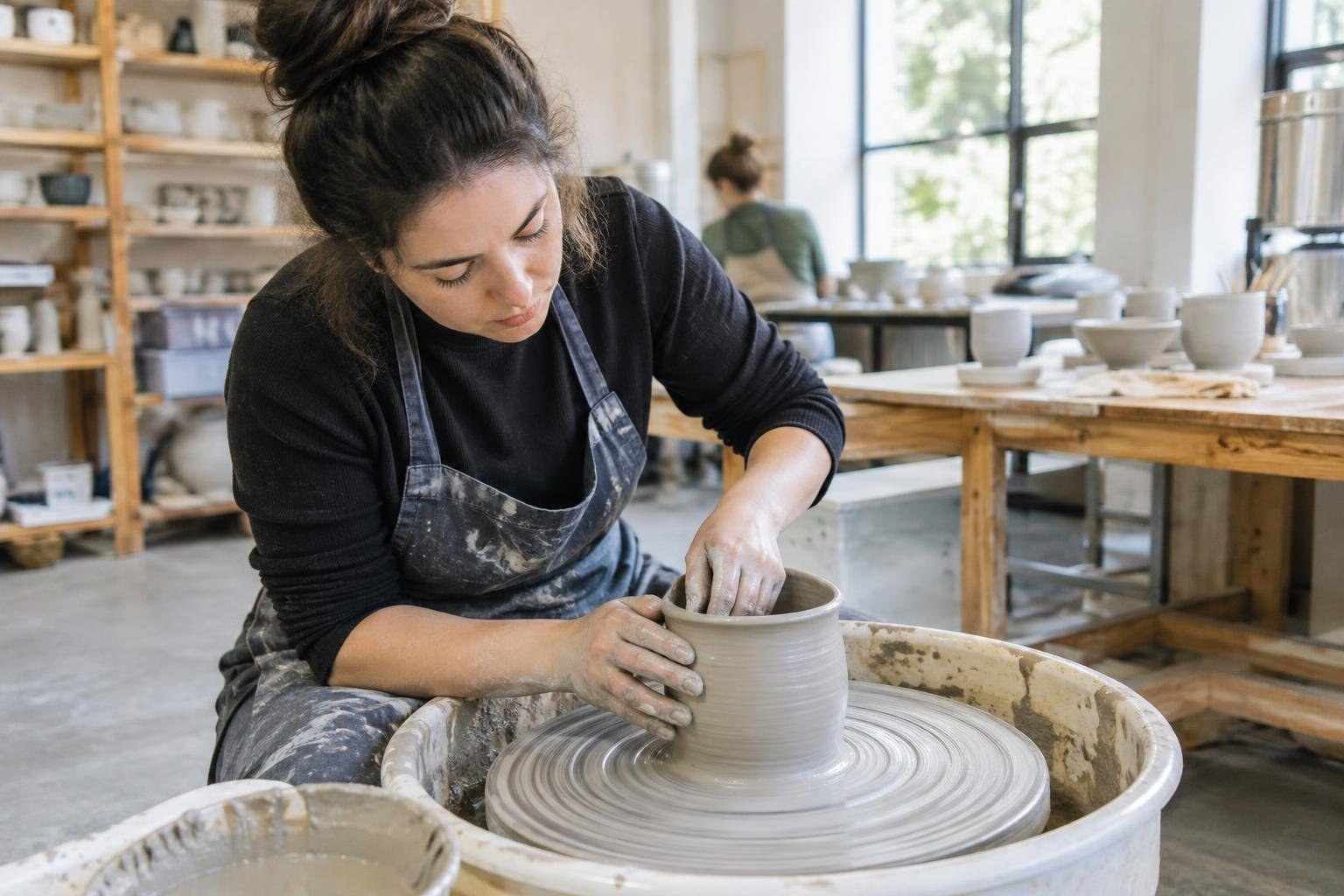
A student working with clay at a pottery wheel in a supervised craft studio
What Is a Crafts/Craft Design Degree?
Crafts/Craft Design, Folk Art and Artisanry is a defined area of study in the visual and performing arts. The National Center for Education Statistics (NCES) assigns it CIP code 50.0201. Its description centers on the aesthetics, techniques, and creative processes used to design and fashion objects in one or more handcraft or folk-art traditions. That definition provides a useful starting point, but it does not prescribe a uniform list of courses or media.
Schools may use labels such as craft design, artisanry, folk art, or a material-specific program name. A program might concentrate on one studio area or let students work across media. Do not rely on a broad title to infer what you will make: check required courses, electives, facilities, and faculty expertise. The NCES CIP record for 50.0201 identifies the field, while the college catalog explains the individual program.
How it differs from nearby fields
Craft study connects design decisions with the making of physical objects. A fine arts program may emphasize other forms of artistic practice, while industrial or product design may place more emphasis on designing products for manufacture or broad use. These are general distinctions, not fixed boundaries: departments and course offerings differ. Compare student work and course descriptions, not just program names.
What Do Students Study?
Expect a program to combine making with learning how to make intentional design choices. The precise course sequence depends on the school and credential. Introductory work may build familiarity with a medium and its processes; later projects may give students more room to set a direction, refine a body of work, and explain their decisions. Check the course catalog for confirmed requirements rather than assuming a standard national curriculum.
When you review a course description, look for what students actually do: practice a technique, test materials, develop an object, study a craft tradition, or present completed work. Ask whether projects happen in a shared studio, whether access is available outside class time, and what tools or supplies students must obtain. These details can shape both learning and the real cost of attendance.
Questions to ask about studio learning
Which media and techniques are taught as required courses?
Do students have access to the relevant workspaces and equipment?
How much of the program involves individual projects, critique, or collaborative work?
Is there a final exhibition, portfolio, capstone, or other culminating project?
These questions are more useful than assuming a studio feature exists because a program uses the word “artisanry.” For example, UMass Dartmouth describes an online graduate certificate in artisanry focused on ceramics and studio development. Its example illustrates why applicants should read the details of a particular program rather than generalize from the major name.
Skills You Can Develop
Craft study can help students build practical making skills and the ability to think through design decisions. A completed object reflects choices about form, technique, material, and intended use or meaning. Students also need to manage a project from early trials through revision and final presentation. The importance of each skill varies with the medium and program.
Technical practice: using and refining techniques associated with the program's studio areas.
Visual and material judgment: noticing how form, surface, structure, and material affect an object.
Creative problem-solving: responding when an idea, process, or material does not work as planned.
Communication: describing a project's purpose and explaining choices to instructors, peers, clients, or audiences.
Organization: planning work, tracking materials, and meeting project deadlines.
For students hoping to sell work or work independently, business skills can matter alongside studio ability. Ask whether the program offers relevant electives or practical guidance, and plan to seek additional learning if it does not. A degree's title alone cannot confirm that it includes marketing, pricing, or business training.
Who Is This Program Best For?
This field may be worth exploring if you enjoy making objects, experimenting with materials, and improving work through repeated practice. You may also be drawn to how objects express a tradition, idea, function, or point of view. Those interests can be developed in different ways; there is no single personality profile that a student must have.
Consider the work behind the finished object. Studio learning may involve planning, practice, trial and error, attention to technique, and taking feedback. If you prefer fast, predictable tasks or want a course of study tied to a tightly defined job title, ask whether the open-ended parts of creative work appeal to you. A parent or counselor can help a student explore these preferences without treating an interest assessment as a verdict.
Does craft design match you?
Salary, reputation, and interest in art are not enough on their own to determine fit. Think about the everyday activities you want to do, your willingness to practice and revise, the types of work settings you would consider, and how much financial uncertainty you can manage. Assessment.com's MAPP career assessment can be one starting point for exploring motivations and career possibilities. Use the results as a prompt for further research, then compare them with actual course plans and occupations.
Admissions, Credential Levels, Time, and Difficulty
There is no single admissions checklist for every craft program. Certificate, associate, bachelor's, and graduate programs may set different academic and application requirements. Check the current admissions page and catalog for prerequisites, application materials, deadlines, transfer-credit policies, and any portfolio or interview expectations. Do not assume a portfolio is required or unnecessary without checking.
Credential levels and time to completion also vary by institution and by a student's enrollment plan. A part-time student, transfer applicant, or person taking a focused certificate may follow a different schedule from a full-time student completing a degree. Credit totals, course sequence, and course availability affect the timeline. Ask an adviser to map your prior credits and intended course load against the published program plan.
How to evaluate difficulty and readiness
Studio work can be demanding because it asks students to combine process, technique, time management, and revision. Before enrolling, review the required weekly studio time and the expectations for independent practice. If you have little experience in a particular medium, ask whether introductory courses begin with foundational instruction or require prior preparation. Visiting a studio or viewing student work, where available, can make the program's demands easier to picture.
Online, Hybrid, or On Campus?
Craft study may be campus-based, hybrid, or online, but those labels do not tell you how students complete practical work. Online offerings can organize instruction and feedback remotely; students still need to understand what materials, tools, and workspace are expected. Campus and hybrid programs may offer access to facilities, but applicants should confirm the hours, supervision, equipment, and any related fees.
UMass Dartmouth describes its graduate certificate in artisanry as an online, one-year, nine-credit program focused on studio development. Its ceramics certificate is intended for students who have already earned a bachelor's degree. This is one institution's specific offering, not a standard duration, format, or admission rule for every craft program. Review the program's current catalog and ask how online students complete studio projects and receive feedback.
Questions about online access
Which activities are online, and which require in-person attendance?
Must students purchase or find access to particular tools, materials, or workspace?
How are work-in-progress reviews and final presentations handled?
Are there scheduled classes or studio sessions that conflict with work or family responsibilities?
Tuition, Studio Costs, and Financial Aid
Program costs depend on the institution and the student's circumstances. Compare the full cost of attendance, not tuition alone. Ask about mandatory fees, studio or facility charges, supplies, tools, equipment, technology, and any costs associated with presenting or transporting work. The amount and type of materials needed may vary by course and medium, so ask a department adviser for a realistic estimate for the specific plan of study.
For an apples-to-apples comparison, request a written estimate for the same number of terms or credits at each school. Include living and transportation costs if they change with the format or location. Confirm whether online students pay additional technology or course fees and whether they need to buy equipment that campus students can access through a school studio.
Funding and affordability
Check the financial-aid office for federal and institutional aid eligibility, scholarship deadlines, payment plans, and rules for part-time enrollment. Ask the department about awards or work opportunities available to students in its programs. If you already have college credit, request a formal transfer evaluation before committing; only the institution can confirm what it will accept. Avoid borrowing based on an assumed future income. Compare expected payments with several possible career outcomes, including work that may require building a portfolio or an independent practice.
Careers, Jobs, and Employment Outlook
Craft study can connect to more than one occupational direction, so research the work rather than relying on a broad major-to-job promise. The program description identifies preparation to create in craft or folk-art media. Craft artist is one relevant occupation to investigate; postsecondary art, drama, and music teaching is another possibility for students considering further academic and teaching preparation. A program does not guarantee work in either path.
For each role you are considering, identify the actual job title, common work setting, required experience, and any education or credential expectations. For teaching, distinguish postsecondary teaching from school teaching and verify the requirements of the specific employer or institution. Review current occupation-specific labor-market information before drawing conclusions about pay or hiring. A single salary or outlook estimate for the major would be misleading because graduates may pursue different kinds of work.
Experience can shape the route
Graduates may develop work in a studio, seek employment connected to making or creative practice, or continue their education. Some may build an independent practice; others may combine creative work with another job. These routes differ in stability, income structure, and the need to find customers or collaborators. Consider which path you are willing to explore, and ask the department for recent graduate examples and the method behind any outcomes it publishes.
Find out which Career or College Major is right for you!
There is no basis for treating a field-of-study classification as a professional license. A degree or certificate documents completion of a particular program; it does not, by itself, establish eligibility for every occupation connected to art or teaching. Check requirements with the employer, state authority, or other organization relevant to the exact job you want. Requirements can differ by role and location.
Ask the college whether the program holds any relevant accreditation and what that status means for your intended next step. Confirm whether a credential is required by a prospective employer or graduate program rather than assuming every craft program needs the same specialized approval. For a teaching pathway, ask about additional study or qualifications expected by the school or college where you hope to teach. Keep the response in writing and verify it with the authority that sets the requirement.
Related Degrees and Alternatives
Compare craft study with programs that reflect the kind of work you want to do. A fine arts degree may offer a broader artistic framework; a design program may emphasize design problems and users; and a material-specific program may provide a more concentrated studio focus. These are starting points for comparison, not guarantees about a particular curriculum.
Fine arts: consider it if you want to explore artistic practice beyond the making of craft objects.
Graphic or visual communication design: consider it if your main interest is communicating ideas through visual media.
Industrial or product design: consider it if you want to focus on designing products and how people use them.
Fashion or textile study: consider it if you want a focused path around clothing, fabric, or related material practice.
Art education: consider it if teaching is central and you want to investigate a program designed around education.
Studio art with a material concentration: consider it if you want hands-on practice but prefer a broader art program structure.
To compare two actual programs, place course lists side by side and mark the studio methods, electives, general education, portfolio requirements, and final projects. Also compare the careers each school describes and the qualifications those jobs require. Explore degree resources and arts and design career areas as starting points, then verify details with institutions and employers.
How to Choose the Right Program
Look beyond the program name. Two programs with similar titles may differ in their teaching approach, medium, facilities, cost, or flexibility. Use the following checklist when speaking with admissions staff, faculty, and current students:
Curriculum: What techniques and materials are required? Can students develop a focused practice?
Studio access: What workspace and equipment are available, and when can students use them?
Faculty and student work: Does the work shown reflect the areas you want to study?
Format: How are hands-on projects, feedback, and critiques handled online or in person?
Cost: What is the estimated total, including fees, supplies, equipment, and living expenses?
Completion plan: What is the expected course sequence, and can you take required courses on your schedule?
Outcomes: What kinds of work or further study have recent graduates pursued, and how does the school measure that information?
Transfer and aid: Which prior credits may count, and what aid is available for your enrollment status?
Ask for concrete answers rather than relying on general promotional language. If you are a parent helping a student, focus the discussion on the student's interests and choices as well as cost and logistics. Assessment.com's major-choice guidance can support that conversation; it should complement, not replace, a review of the course catalog.
From Degree to Career: Build a Realistic Path
A practical way to evaluate career fit is to sketch more than one possible route. For example: craft program → portfolio of completed work → experience through projects or relevant employment → a chosen craft specialization or further study. Another possible direction is craft program → additional education and teaching preparation → a postsecondary teaching role, if the person meets that institution's requirements. These are illustrative routes, not guaranteed outcomes.
While studying, keep records of projects, processes, and revisions. Ask instructors what documentation is useful when presenting work. Seek opportunities to show work, collaborate, or learn about the practical side of a creative practice, while checking that any opportunity is suitable and safe. Build a portfolio that represents your development and the kind of work you want to pursue. If independent practice interests you, seek additional guidance on planning, presentation, and selling work rather than assuming the degree covers those topics.
For a clearer decision, compare occupations as well as programs. The postsecondary arts teaching career overview can help you investigate one related role. Research the education and experience needed for each specific position, and use current official labor-market resources for salary and outlook data.
Questions to Ask Before Enrolling
Before paying a deposit or accepting an offer, use these questions to check whether the program matches your needs:
What credential will I earn, and what are the exact graduation requirements?
Which courses and studio areas are required, and do they match the work I want to learn?
What is the total estimated cost, including supplies, tools, fees, and workspace?
What equipment and facilities can I use, and are there limits on access?
How does the program deliver critique and feedback, especially for online students?
What admissions materials are required, and can I speak with an adviser about my preparation?
Will my prior credits transfer, and can I see the evaluation before enrolling?
What financial aid and scholarships may apply to my enrollment plan?
What do graduates do next, and how does the institution verify those outcomes?
What additional education, experience, or qualifications may be needed for my preferred career?
If a school cannot give a clear answer, ask who can. A careful comparison helps students and parents separate a program's actual resources from assumptions based on its title.
Frequently asked questions
What is a Crafts/Craft Design, Folk Art and Artisanry degree?
Crafts/Craft Design, Folk Art and Artisanry is a field of study focused on the aesthetics, techniques, and creative processes used to design and make objects in handcraft or folk-art traditions. The program may emphasize one or more materials or forms, depending on the school. The federal CIP code for the field is 50.0201.
Is a craft design degree hard?
Difficulty depends on the student and the program. Studio courses require sustained practice, attention to materials and technique, and a willingness to revise work. Students also need to manage projects and explain creative choices. Ask a program about studio hours, equipment access, assignment expectations, and how work is assessed before deciding whether its demands suit you.
What degree levels are available for craft design?
Programs in this field can be offered at different credential levels, including certificates, associate degrees, bachelor's degrees, graduate certificates, and master's degrees. Availability varies by institution. Check the specific program's catalog for its credential, prerequisites, credit requirements, and course plan rather than assuming every school offers every level.
Can I study crafts or artisanry online?
Online study can be possible for some kinds of craft-related education, but the format and amount of hands-on studio work vary. UMass Dartmouth, for example, describes an online graduate certificate in artisanry focused on ceramics and studio development. Ask how students access materials, equipment, feedback, and any in-person experiences before enrolling.
Does craft design require math?
The field's CIP definition centers on creative processes, aesthetics, and craft techniques, not on a single math or science requirement. Individual programs set their own general education and course prerequisites. Review the catalog and ask admissions whether the program requires quantitative coursework, material-science study, or other preparation.
What jobs can I get with a craft design degree?
Possible directions include making and selling craft work, developing a studio practice, or pursuing further study. Postsecondary teaching is another potential long-term direction, but the program itself does not establish a teaching qualification. Research the education and experience expected for specific roles before treating a degree as a direct route to employment.
How much can you make with a craft design degree?
There is no single salary for graduates of this major because the degree can connect to different kinds of work, and earnings depend on occupation, experience, employment arrangement, and location. Look up current pay data for the exact job title you are considering, then compare it with likely program costs and the possibility of self-employment or additional education.
Do I need a graduate degree to become a craft artist?
A graduate certificate may help someone extend prior study in a focused area. UMass Dartmouth describes its artisanry ceramics graduate certificate as intended for people who already hold a bachelor's degree and want further ceramics study. Other certificate programs may have different entry requirements and purposes, so check the institution's own description.
People Also Ask
What do you learn in craft design?
The field focuses on the aesthetics, techniques, and creative processes used to design and make objects in handcraft or folk-art traditions. The materials and studio emphasis depend on the program.
What degree is best for becoming a craft artist?
Not every program offers every credential. The field appears at certificate, associate, bachelor's, graduate-certificate, and master's levels, but students should verify the exact award and requirements with each institution.
Are craft classes available online?
It depends on the curriculum and teaching format. Online study may suit some projects or advanced studio development, while other courses may require access to tools, equipment, or materials. Ask how hands-on practice and instructor feedback work in the specific program.
What is the difference between craft design and fine arts?
The federal field description includes designing and fashioning objects through craft techniques. A specific curriculum may include related study, but applicants should inspect the course catalog rather than assume that every program teaches the same media or methods.
Can you teach with a craft design degree?
Potential directions include independent craft practice and further education. Postsecondary teaching is also a possible longer-term direction, but it may require additional education or experience. Research the requirements for each job rather than assuming a degree guarantees eligibility.
How much does a craft design degree cost?
Compare the total program cost, including tuition, fees, materials, tools, and any required studio access. Ask the institution for a student-specific estimate and financial-aid information. A published tuition rate alone may not reflect the full cost of a studio-based program.
Do craft design programs require a portfolio?
A portfolio can help you evaluate your development and show work to reviewers or employers, if a specific application or opportunity requests one. Ask each school what it expects; admissions requirements vary, and a portfolio should not be assumed to be required everywhere.
Crafts/Craft Design, Folk Art and Artisanry may suit students who want to develop hands-on creative practice and learn how objects are designed and made. The program can lead toward studio practice, craft-related work, or further study, but a degree does not guarantee a particular job or income. Before enrolling, compare the actual studio curriculum, materials and facility costs, program format, and the work graduates hope to pursue. Consider how well the daily activities of making, revising, documenting, and presenting work fit your interests, alongside the practical costs and career possibilities. Explore career and degree options with the MAPP career assessment.
Want to see your options? Try our comprehensive Degree, Program & College Search tool
We use cookies to offer you a better browsing experience, analyze site traffic and personalize content.
Read about how we use cookies and how you can control them in our
Privacy Policy.
If you continue to use this site, you consent to our use of cookies.
×
Exciting News!
Be one of the first to Beta Test the new AI-Powered Assessment.com Platform.