Graphic and Printing Equipment Operator Program Guide
Learn what a Graphic and Printing Equipment Operator, General Production program may teach, which credentials and related pathways to compare, and how to evaluate costs, hands-on experience, and career fit.
By Tome Fierre · Staff Writer Assessment.com · Published October 6, 2026 · Last updated November 5, 2026
A Graphic and Printing Equipment Operator, General Production program is a career-focused education pathway connected to graphic communications and the operation or support of production equipment. Programs in the broader communications technology field prepare students for equipment-operator, support-technician, and operations-management work in graphic communications, film/video, and recording. The name and emphasis can vary by college, so the course list matters more than the title alone. Depending on the school, students may find certificate, associate, bachelor’s, or post-baccalaureate study options in the larger communications technologies field. Related program names include graphic communications, printing management, prepress and digital imaging, and animation or special effects. These are not interchangeable: each can emphasize different tools, production stages, and job goals. If you are comparing options with a student, start by asking what kind of work sounds appealing: setting up and operating equipment, solving production problems, preparing digital files, creating visual content, or coordinating a production team. Then compare programs by hands-on learning, total cost, and the kinds of roles graduates pursue.
Degree & Program Decision Insights
Explore your personal fit, education requirements, career potential and next steps.
01Motivational Fit
Discover whether this program fits you
Explore your preferences against the focus of Graphic and Printing Equipment Operator, General Production. These prompts are not personal MAPP results.
Subject curiosity. Would you choose to explore “the operation and maintenance of mechanical, electronic, and digital graphic, printing, and finishing equipment” in depth? Ask for a sample learning activity to test that interest.
Breadth of interest. Consider the place of “related processes” in this field. Is this another part you would choose to explore, or mainly a requirement you would tolerate?
Work reality. Related work can involve this task: “Verify that paper and ink meet the specifications for a given job.” Would you want that activity to be a regular responsibility?
Interest in studying a field can differ from enjoying its related work.
Which part would you want to do repeatedly, and what would you try before deciding?
Discover Your Personal Program Fit
Before investing your time and money in your education, discover how this program aligns with your natural motivations, work preferences and career goals.
Typical occupational entry: high school diploma or equivalent (BLS). BLS lists moderate-term on-the-job training as typical occupational training.
Data Entry KeyersSOC 43-9021 · O*NET 43-9021.00$41,340/year median (May 2025); -25.5% projected change (2025–2035); 7,700 projected openings/year.
Typical occupational entry: high school diploma or equivalent (BLS). BLS lists short-term on-the-job training as typical occupational training.
U.S. occupational wages are not guaranteed graduate earnings; OEWS excludes self-employed workers.
Projected openings include replacements as well as growth.
U.S. national estimates. A crosswalk does not establish entry-level eligibility; advanced, management and teaching roles can require further qualifications.
Compare the actual offering and credential before committing your time or money.
Request the itemized fees, materials and equipment associated with “the operation and maintenance of mechanical, electronic, and digital graphic, printing, and finishing equipment”; confirm what tuition includes.
Compare the full attendance budget, course availability and time away from paid work, rather than tuition alone.
No institution- and credential-matched cost, debt or graduate-earnings amount is reported here; occupational pay is not program ROI.
Financial aid depends on the school, program and student’s eligibility.
Compare the focus and route of these distinct instructional fields; their credentials and admission requirements are not interchangeable.
Printing Press OperatorCIP 10.0307. A program that prepares individuals to apply technical knowledge and skills to set up, operate, and maintain printing presses.
Printing ManagementCIP 10.0302. Compare its emphasis on the principles of graphic communications design and production and quality control with this program’s focus.
Explore your motivations. Use MAPP as a starting point for reflecting on your interest in “the operation and maintenance of mechanical, electronic, and digital graphic, printing, and finishing equipment”, then test that interest against a sample learning task.
Examine the work. Compare Printing Press Operators and Data Entry Keyers on daily work and entry qualifications, as well as pay.
Compare actual providers. Ask for the exact credential, course sequence and assessment methods. Compare how each provider teaches “related processes”, its entry criteria and its itemized costs.
Check the evidence before applying. Confirm prerequisites and any recognition or professional requirements for your intended route; ask for applicable rules and published outcome definitions in writing.
Verify the institution’s current offering, admissions requirements and outcomes; a search result does not establish your eligibility.
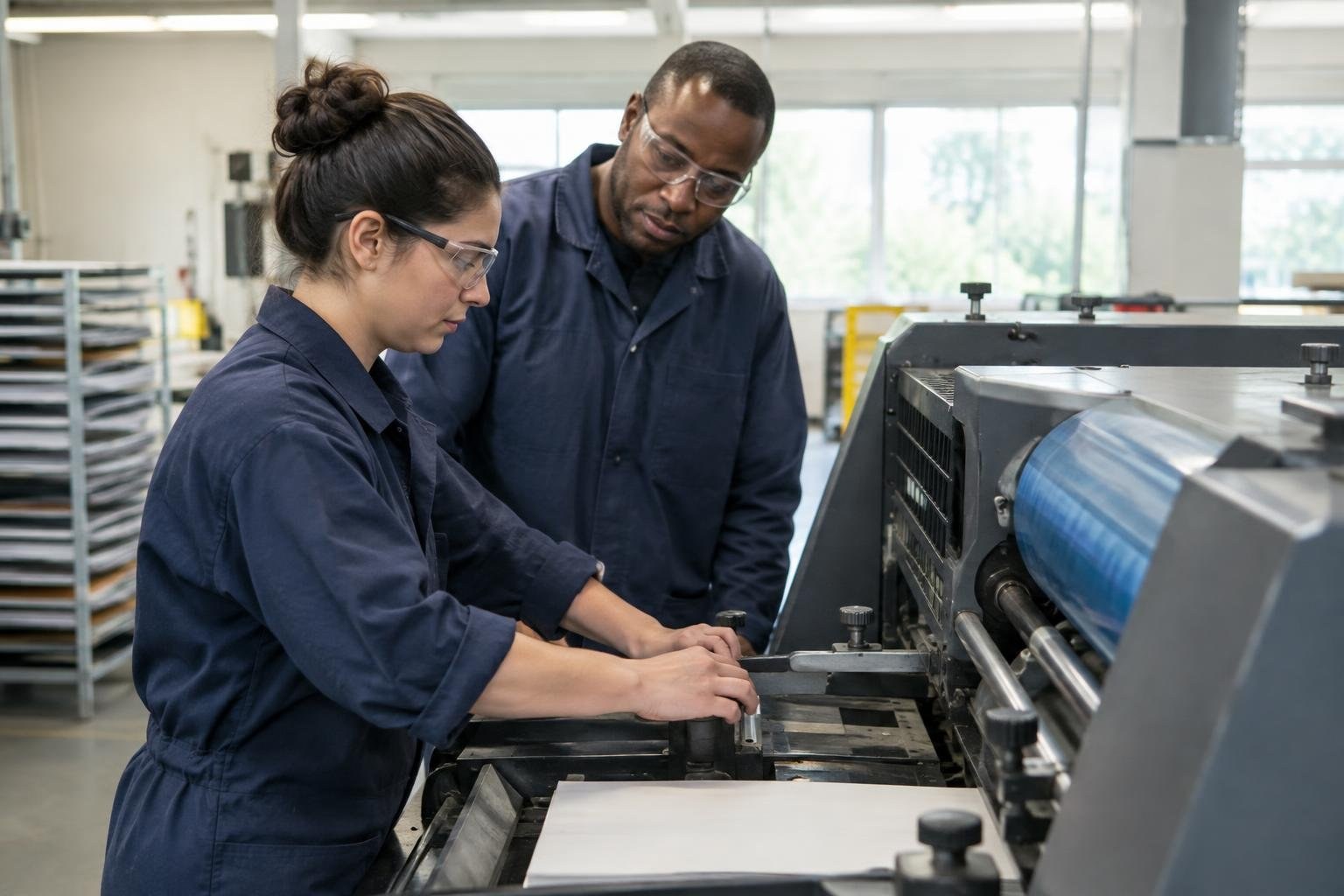
Student working with production equipment under instructor supervision
What the Program Covers
What Is a Graphic and Printing Equipment Operator Program?
This program title describes a production-oriented area associated with graphic communications. It sits within the larger Communications Technologies/Technicians and Support Services instructional field, which includes programs preparing students for equipment-operator, support-technician, and operations-management work in graphic communications, film/video, and recording.
In federal instructional-program classification listings, related names include Graphic Communications, General; Printing Management; Prepress/Desktop Publishing and Digital Imaging Design; Animation, Interactive Technology, Video Graphics, and Special Effects; and Graphic and Printing Equipment Operator, General Production. Those labels describe related but distinct study areas. A college’s title alone does not tell you exactly what machines, software, or production tasks its students will learn.
When comparing programs, ask whether the focus is operating production equipment, preparing files for output, designing visual materials, managing a production workflow, or creating animation and video effects. These distinctions can shape both the student experience and the jobs for which a program is relevant.
Courses, Skills, and Practical Learning
What Might You Study?
Program plans vary. A production-oriented curriculum may be organized around the tools and workflow used in its particular field, but students should verify the actual course list rather than assume every program covers the same subjects.
Ask whether students learn to prepare a job for production, set up or operate equipment, monitor output quality, identify production problems, and complete work to a specification. Also ask which kinds of projects students complete and whether coursework includes supervised practice. The broader communications technology field spans graphic communications, film/video, and recording, so a school specializing in one area may not provide substantial instruction in the others.
Questions to ask about the curriculum
Which production processes and equipment are covered?
What software, if any, is used in required courses?
Do students complete individual projects or team-based production work?
Are lab hours, internships, or work placements required or optional?
How does the program assess accuracy, quality, and troubleshooting?
Course descriptions and sample student work can help families determine whether the program is technical, creative, managerial, or a mix. Ask an adviser to explain how each required course connects to the program’s stated employment goals.
Student Fit and Entry Requirements
Who Might This Program Suit?
This path may appeal to students who like working with equipment, following production steps, solving practical problems, and contributing to a finished product. Depending on the curriculum, it may also suit students interested in digital production and the technical side of communications work.
No single personality type is required. Some students are drawn to hands-on tasks and precise setup; others enjoy troubleshooting or coordinating a process. A student who mainly wants to create original visual concepts may prefer a design-focused program. Someone more interested in running a business or coordinating production teams may want to compare management coursework.
Before applying, check the college’s stated entry requirements. Requirements can differ by institution and credential. Ask about high-school preparation, placement or prerequisite courses, application materials, portfolio expectations if applicable, and whether previous credits or experience can count. Do not assume a portfolio, test, or particular GPA is required unless the college confirms it.
Does the field match your interests?
Consider whether you enjoy learning tools, working through a sequence of steps, paying attention to detail, and improving a process when an output is not right. Compare those preferences with the daily tasks described by employers and with the actual assignments in a program. Assessment.com’s Free MAPP Career Assessment, Degree Matching, and Career Matching tools can provide another perspective on how your motivations and preferences relate to educational and work options.
Credentials, Format, and Completion Time
Credential Levels, Study Formats, and Time to Completion
The broader communications technologies program group appears across several credential levels, including certificates, associate’s and bachelor’s degrees, post-bachelor’s certificates, graduate certificates, and master’s degrees. This does not mean every school offers this exact general-production specialization at every level. Confirm the award and curriculum directly with each institution.
Program length depends on the credential, required credits, course availability, attendance pace, and whether previously earned credits apply. Ask for the typical full-time completion time and how a part-time schedule changes it. If you are considering an online or hybrid option, confirm whether instruction is fully remote or includes in-person labs, equipment access, or other campus requirements.
Compare the learning format with the work you want to practice. A program built around production equipment may require access to specialized tools or supervised practice. Ask how online students complete those requirements, whether they must travel, and whether any equipment or software costs are separate from tuition.
Cost and Financial Aid
Tuition, Program Costs, and Financial Aid
There is no single price for this program. Total cost can depend on the school, credential, residency classification, delivery format, required supplies, and any program-specific equipment or technology expenses. Ask for a written estimate covering tuition, fees, books, supplies, software, equipment access, and transportation or housing if relevant.
Compare net cost rather than headline tuition. Review grants, scholarships, work-study eligibility, employer tuition assistance, and payment plans with the college’s financial-aid office. Students transferring from another institution should request a credit evaluation before enrolling; accepted credits may affect the number of courses still needed, but transfer decisions are made by the receiving school.
Ways to keep the decision affordable
Compare public and private institutions and ask how residency affects the quoted price.
Ask whether required tools or software are included in tuition or billed separately.
Check whether general-education credits can transfer from a lower-cost institution.
Request an estimate of the total program cost, not only the first term.
Review aid conditions and ask how changing enrollment pace could affect eligibility.
Before committing, discuss borrowing with the student and family using the actual aid offer and a realistic completion plan. Avoid choosing solely on advertised tuition or an assumed future salary.
Careers, Jobs, and Employment Outlook
Find out which Career or College Major is right for you!
The broader field is designed to prepare people for equipment-operator, support-technician, and operations-management functions in graphic communications, film/video, and recording. A particular general-production program may concentrate on only some of those settings. Ask each college for the job titles its curriculum is meant to support and the roles reported by recent graduates.
Career direction
How study may relate
What to verify
Graphic or printing equipment operator
May connect to learning production equipment and workflow.
Which equipment and production processes are included in coursework?
Production support technician
May align with technical support functions in communications production.
What troubleshooting, maintenance, or workflow skills are taught?
Graphic communications production role
May be relevant to work supporting graphic communications output.
Are students trained in the production stages used by local employers?
Film/video or recording equipment support
Relevant only where a program includes these areas of the wider field.
Does the curriculum actually include film/video or recording equipment?
Production operations coordination
May connect to operations-management preparation in the broader field.
Does the program include management or supervisory coursework?
The table describes broad directions, not guaranteed job outcomes. The U.S. Bureau of Labor Statistics and O*NET report information by occupation, not by this program title. To evaluate pay and outlook, first identify specific job titles from the school and employers, then review current occupation-level data for your location and experience level. Earnings and hiring prospects can differ substantially among occupations grouped under a broad education category.
Ask about internships, employer projects, placement services, and graduate job titles. New tools and automation can change production tasks, but the supplied program information does not establish how a particular occupation will change. Evaluate technology by asking employers what software and equipment they use and whether the program updates its training accordingly.
Accreditation and Professional Credentials
Accreditation, Licensure, and Certifications
Confirm the institution’s accreditation status and whether the specific program has any additional approval relevant to your goals. Ask the college which agency accredits it, how to verify that status, and whether credits are likely to transfer to schools you may attend later. Accreditation and transfer acceptance are separate questions; receiving institutions set their own transfer policies.
The program information here does not establish a universal license or certification requirement for general graphic and printing equipment operation. Requirements may depend on the job, equipment, employer, or jurisdiction. Ask colleges and prospective employers whether a specific credential is expected, and verify any requirement with the issuing organization or relevant authority before paying for a course or exam.
Completing a college program and earning a professional license or certification are not necessarily the same thing. Get a clear answer about what credential the college awards and what, if anything, graduates must do separately to qualify for a job.
Related Programs and Pathways
Related Degrees and Alternatives
Several programs sit near this pathway in the instructional classification system. Their shared category does not mean they teach the same skills. Compare course requirements and examples of student work before deciding.
Graphic Communications, General: Consider this if you want a broader introduction to graphic communications rather than a primarily equipment-operation emphasis.
Printing Management: Consider this if your main interest is coordinating production or learning about printing operations.
Prepress/Desktop Publishing and Digital Imaging Design: Consider this if preparing and refining digital materials for production interests you more than operating production equipment.
Animation, Interactive Technology, Video Graphics, and Special Effects: Consider this if you are drawn to animated or digital visual content and effects.
Recording Arts Technology/Technician: Consider this if audio or recording technology is a stronger interest than graphic production.
Radio and Television Broadcasting Technology/Technician: Consider this if broadcast technology better matches the work you want to explore.
Photographic and Film/Video Technology/Technician: Consider this if your interests center on photographic, film, or video production technology.
These are alternatives to investigate, not automatic substitutes. A college may use a similar title while offering a different course mix. Compare the credential, practical assignments, facilities, and job-related preparation side by side.
Choosing a College and Program
How to Choose a Program
Use the program title as a starting point, then verify what students actually do and learn. A careful comparison can prevent the common mistake of enrolling in a program that sounds relevant but emphasizes a different part of production.
Program comparison checklist
Curriculum: Request a complete course plan and identify the equipment, processes, and production settings covered.
Practical learning: Ask about labs, projects, internships, and access to equipment, including requirements for online students.
Credential: Confirm the award level, total credits, and whether courses apply to a later degree.
Cost: Get a full estimate including tuition, fees, supplies, technology, and any travel.
Outcomes: Ask for typical job titles graduates pursue and how the college collects outcome information.
Employer links: Ask about employer projects, internships, career fairs, and other connections relevant to the program.
Support: Compare advising, tutoring, career services, and help finding practical experience.
Transfer: Have a receiving institution evaluate transfer plans before assuming credits will count.
Speak with an instructor or program adviser and, if possible, current students. Ask what surprised them about the coursework and which skills they wish they had practiced earlier. Students can also use Assessment.com Degree Matching and Career Matching to explore adjacent study and work options, then compare those suggestions with course plans and local employer requirements.
Internships, Projects, and Employer Readiness
Experience and Preparation Before Graduation
Practical experience can help a student understand the production environment and show employers what they can do. Ask whether the program includes an internship, co-op, employer project, or substantial portfolio of completed work. If none is built in, explore relevant campus projects, part-time work, volunteering, or opportunities to observe a production setting.
Keep examples of work where you have permission to share them, and be ready to explain your role, tools used, decisions made, and how you handled a production problem. If a job posting names particular software, equipment, or credentials, use that information to guide additional learning. Do not pay for a certificate just because it sounds useful; first confirm that employers in your target area value it.
How to stand out to employers
Show that you can follow specifications and check completed work carefully.
Describe relevant projects with clear details about your contribution.
Ask instructors and internship supervisors for feedback and references.
Build familiarity with the tools employers actually use.
Demonstrate reliable communication and teamwork alongside technical skills.
Value, Tradeoffs, and Next Steps
Is This Program Worth It?
Whether the program is worthwhile depends on the student’s goals, the college’s training, the total price, and the opportunities available in the places where the student hopes to work. A shorter credential may provide a focused route into a field, while a longer degree may offer a different range of coursework or progression options. Do not assume the highest credential is automatically the best value.
Compare the cost and time commitment with the skills the program teaches and the jobs graduates actually pursue. Consider whether the curriculum is current, whether students get meaningful practice, and whether the credential is recognized by employers you may approach. Also compare related options such as prepress, graphic communications, printing management, and animation if their day-to-day work sounds more appealing.
A practical next step is to identify three programs, request written cost and course information, and talk to an adviser at each. Then compare the choices against the student’s interests and preferred work activities. Assessment.com’s Matching Jobs and career tools may help broaden that exploration, but use them alongside college and employer information rather than as a guarantee of an outcome.
Frequently asked questions
What is a Graphic and Printing Equipment Operator, General Production program?
This program is generally connected to graphic communications and prepares students for equipment operation and production work. Programs in the broader field can also prepare students for support technician and operations-management roles in graphic communications, film/video, and recording. Exact courses and career preparation depend on the school and credential.
Is this program hands-on?
It may involve practical equipment and production learning, but the amount of hands-on training depends on the program. Ask schools which equipment and software students use, how much work takes place in labs or production settings, and whether students complete projects or internships before graduating.
How long does it take to complete the program?
There is no single timeline for every program. The available credential level and required coursework vary by institution. Ask for the total credits, typical full-time completion time, part-time options, and how transfer credits or prior learning may affect your schedule.
How much does a graphic and printing equipment program cost?
Costs depend on the college, credential, residency status, delivery format, and program-specific fees. Request an itemized estimate that includes tuition, equipment or technology costs, supplies, books, and fees. Compare the net price after grants and scholarships rather than tuition alone.
How does this program differ from graphic communications?
The program is related to graphic communications, a wider educational area that can include printing management, prepress and digital imaging, animation and special effects, recording arts, and other communications technology programs. Choose based on the work you want to do and the curriculum offered.
Do I need a license or certification to operate graphic production equipment?
A particular credential does not by itself establish professional licensure or certification requirements. Ask the college whether its program prepares students for any credential relevant to the equipment, software, or employers they have in mind, and verify requirements directly with the credentialing organization or employer.
How much can I earn with this program?
Do not rely on a single salary estimate for this broad program title. Earnings depend on the specific occupation, experience, location, employer, and responsibilities. Identify likely job titles from the college’s graduate outcomes, then check current U.S. Bureau of Labor Statistics or O*NET information for each occupation.
What alternatives should I consider before enrolling?
Related programs may focus more directly on graphic design, prepress and digital imaging, printing management, animation, recording arts, or audiovisual technology. Compare the actual courses and practical work, not only program names, because similar titles can lead to different kinds of preparation.
People Also Ask
What does a graphic and printing equipment operator study?
It is a career-oriented program within the wider communications technologies field, focused on preparation for equipment operation and related production work. Program content differs by school, so prospective students should review course plans and lab experience.
What careers are related to communications technologies?
The broader field includes preparation for equipment operators, support technicians, and operations managers in graphic communications, film/video, and recording. A specific program may prepare students for a narrower set of roles, so ask for its graduate job titles.
What degree levels are available in communications technology?
The credential options listed for the broader field include certificates, associate’s and bachelor’s degrees, post-bachelor’s certificates, graduate certificates, and master’s degrees. Not every college offers every level or this exact specialization.
How do I choose a graphic production program?
Compare the curriculum, equipment access, lab or project work, total cost, transfer policies, and graduate outcomes. Ask whether students learn the specific tools and production processes expected in the kinds of jobs they want.
Is graphic equipment operation the same as graphic design?
The program category is broad and includes several related fields. A graphic and printing equipment pathway is most relevant to students interested in production equipment and workflows; design, animation, recording, or management programs may better match other goals.
How can I make a production-technology program more affordable?
Costs vary by institution and student circumstances. Ask each college for a complete cost estimate and a financial-aid offer, then compare the amount you would actually pay after grants and scholarships.
A Graphic and Printing Equipment Operator, General Production program may suit students who want practical preparation for operating or supporting equipment used in graphic communications and related production settings. The program’s exact emphasis, credential, and hands-on opportunities can differ by school, so compare course plans, facilities, costs, and employer connections before enrolling. If your interests lean more toward design, animation, recording, or management, compare those pathways too. The best choice is the one that fits your goals, learning preferences, and willingness to build job-specific experience.
Want to see your options? Try our comprehensive Degree, Program & College Search tool
We use cookies to offer you a better browsing experience, analyze site traffic and personalize content.
Read about how we use cookies and how you can control them in our
Privacy Policy.
If you continue to use this site, you consent to our use of cookies.
×
Exciting News!
Be one of the first to Beta Test the new AI-Powered Assessment.com Platform.