Museology and Museum Studies Degree Guide: Courses, Careers, and Program Fit
Explore museum studies courses, credentials, career paths, online options, program costs, and questions to ask before choosing a museology program.
By David Slack · Staff Writer Assessment.com · Published October 26, 2026 · Last updated November 5, 2026
Museum studies, also called museology, is an interdisciplinary field focused on how museums and galleries develop, organize, preserve, interpret, and share collections. Students learn about museum practice, including curation, collections care, exhibit development, administration, and public engagement. Programs can range from certificates to master’s degrees, and their emphasis and delivery format vary widely. Graduates may pursue museum-related work in collections, exhibitions, education, conservation support, or administration. The degree alone does not determine a job title: subject expertise, practical experience, and the requirements of individual employers also matter. Prospective students should compare the actual courses and fieldwork available, not just the program name.
Degree & Program Decision Insights
Explore your personal fit, education requirements, career potential and next steps.
01Motivational Fit
Discover whether this program fits you
Explore your preferences against the focus of Museology/Museum Studies. These prompts are not personal MAPP results.
Subject curiosity. Would you choose to explore “institutional management” in depth? Ask for a sample learning activity to test that interest.
Breadth of interest. Consider the place of “acquisition” in this field. Is this another part you would choose to explore, or mainly a requirement you would tolerate?
Work reality. Related work can involve this task: “Prepare artifacts for storage and shipping.” Would you want that activity to be a regular responsibility?
Interest in studying a field can differ from enjoying its related work.
Which part would you want to do repeatedly, and what would you try before deciding?
Discover Your Personal Program Fit
Before investing your time and money in your education, discover how this program aligns with your natural motivations, work preferences and career goals.
U.S. occupational wages are not guaranteed graduate earnings; OEWS excludes self-employed workers.
Projected openings include replacements as well as growth.
U.S. national estimates. A crosswalk does not establish entry-level eligibility; advanced, management and teaching roles can require further qualifications.
Compare the focus and route of these distinct instructional fields; their credentials and admission requirements are not interchangeable.
Fine and Studio Arts ManagementCIP 50.1002. Compare its emphasis on business and financial management and marketing and fundraising with this program’s focus.
Textual StudiesCIP 30.5203. Compare its emphasis on archiving texts and bibliography with this program’s focus.
Explore your motivations. Use MAPP as a starting point for reflecting on your interest in “institutional management”, then test that interest against a sample learning task.
Examine the work. Compare Museum Technicians and Conservators and Curators on daily work and entry qualifications, as well as pay. Explore Museum Technicians and Conservators.
Compare actual providers. Ask for the exact credential, course sequence and assessment methods. Compare how each provider teaches “acquisition”, its entry criteria and its itemized costs.
Check the evidence before applying. Confirm prerequisites and any recognition or professional requirements for your intended route; ask for applicable rules and published outcome definitions in writing.
Verify the institution’s current offering, admissions requirements and outcomes; a search result does not establish your eligibility.
Museum studies students planning an exhibit and discussing collection materials
What Is a Museology or Museum Studies Degree?
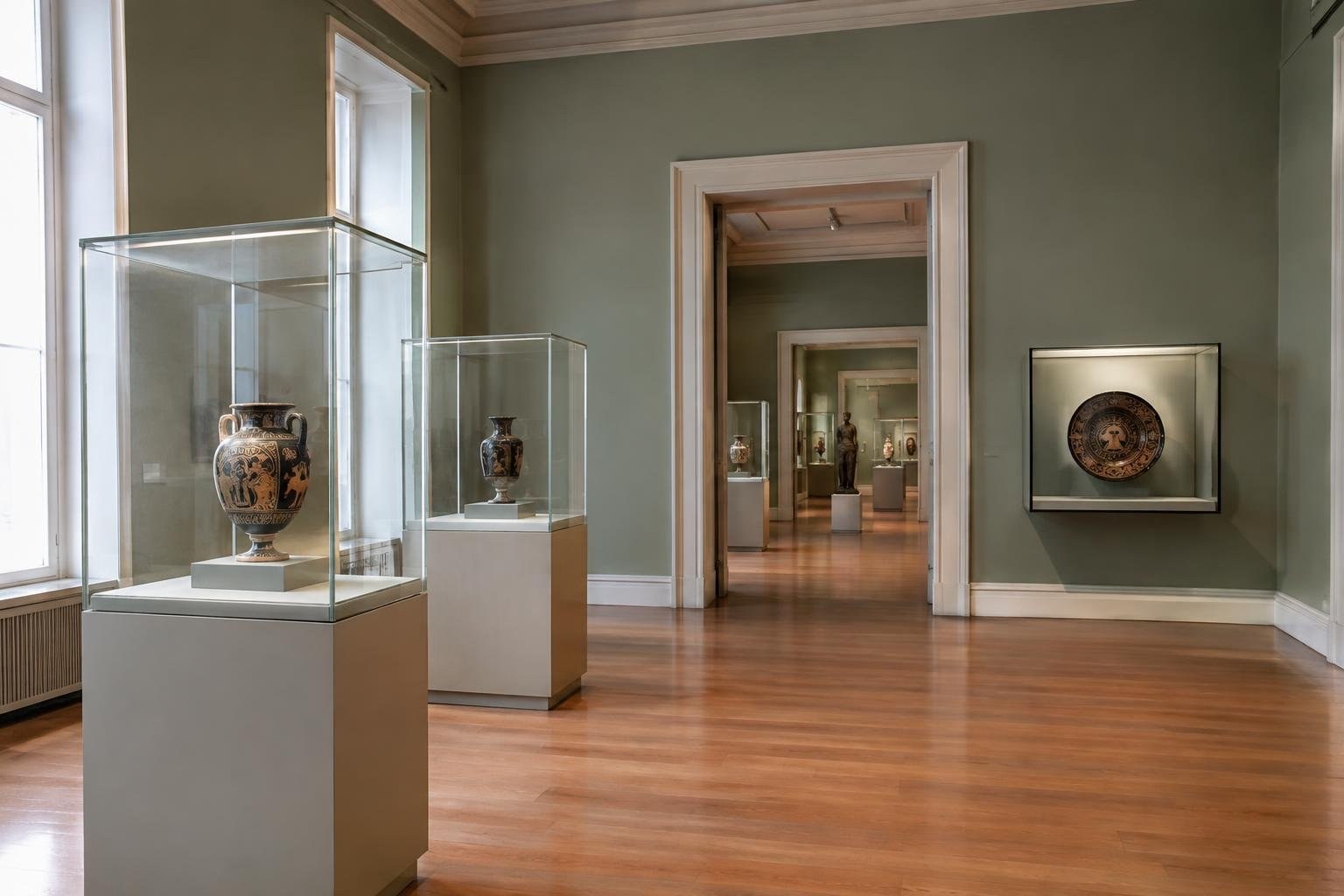
Museology, often called museum studies, is the interdisciplinary study and practice of museums and galleries. It covers how institutions acquire, organize, preserve, interpret, exhibit, and manage collections while communicating with the public. The field connects subject knowledge in areas such as art, history, science, or culture with the practical work of operating a museum.
Programs are offered under different titles and at different credential levels. A program may be a standalone field of study or a certificate that complements a student’s main discipline. For example, Utah State University presents its museum studies certificate as a complement to other majors, while the University of Memphis describes an online graduate certificate pathway.
Museum studies is not identical to art history, history, library science, or conservation training. Those fields may provide useful subject knowledge or specialized skills, but each program’s balance of theory, collections practice, and institutional work can differ. Read the curriculum rather than assuming that every program with “museum” in its title teaches the same material.
Program examples: Utah State University’s museum studies certificate and the University of Memphis online graduate certificate.
What Do You Study in Museum Studies?
Museum studies courses introduce the ideas and practical methods used to care for collections and make them meaningful to visitors. Depending on the school and level, students may study museology, museum history, collections management, curation, exhibit development, conservation, education, institutional management, or public communication. These subjects help students understand how decisions about objects, interpretation, access, and resources shape museum work.
Coursework may ask students to research an object or collection, explain its context, plan an exhibit, or consider how an institution communicates with different audiences. A program’s course list is the best guide to how much it emphasizes research, management, design, conservation, or education. The University of New Mexico describes its program as interdisciplinary and says students can tailor learning to career objectives.
Look for practical learning, not just course titles
Some programs include an internship or practicum. The University of Oregon’s graduate certificate requirements include an internship among its minimum credits, and Tufts describes a graduate certificate with museum studies courses and a practicum. These are examples, not universal requirements. Ask whether placements are arranged by the school, whether students must compete for them, and what work they complete.
A project, practicum, or internship can help a student connect classroom concepts with the responsibilities of a museum workplace. It may also help clarify whether the student is more drawn to collections, interpretation, exhibits, education, or administration. Check each program’s current catalog for its specific requirements.
Program details: University of New Mexico Museum Studies, University of Oregon certificate requirements, and Tufts program options.
Skills You Can Develop
Museum work draws on several kinds of skills. A student may practice close observation and research, clear writing, careful documentation, and the ability to explain information to different audiences. Collections-related work calls for attention to detail and consistent procedures; exhibit or education work also benefits from planning, collaboration, and accessible communication.
Research and analysis: examine objects, sources, and context; assess information before using it in interpretation.
Communication: write labels, interpretive materials, proposals, or public-facing content in a clear way.
Organization: track collections information, prepare projects, and follow workflows.
Collaboration: work across subject, design, education, collections, and administrative perspectives.
Technology: become comfortable with the digital tools and collection systems used by a particular institution; ask programs what software students actually use.
The exact skills depend on the curriculum and hands-on opportunities. A student considering museum technician or conservator careers should check a program’s practical preparation and compare it with employers’ stated qualifications. Someone interested in exhibit development can explore exhibit design careers and consider whether design coursework or a portfolio would strengthen their path.
Who Is Museum Studies Best For?
Museum studies may appeal to students who like learning about objects, people, and ideas and want to connect that interest with practical work. You might enjoy the field if you value careful research, preservation, interpretation, thoughtful organization, or helping people engage with collections. There is no single personality type required: museum teams need people with different strengths and subject interests.
Think about the balance of work you prefer. Would you rather research and interpret material, plan exhibitions, care for collections, teach visitors, or help manage an institution? Do you enjoy detailed, methodical tasks as well as collaboration and public communication? Your answers can help you choose electives and experiential learning, but they do not guarantee a particular role.
Does museum studies match you?
Salary, reputation, and broad claims about job growth should not be the only reasons to choose a major. Consider the activities you would perform day to day, the learning you want, the cost of the credential, and the experience you may need after graduation. Assessment.com’s MAPP career assessment can be one input as you explore motivations, interests, and possible career directions. Use it alongside conversations with advisors and working professionals, not as a substitute for reviewing programs and job requirements.
Explore Assessment.com’s college major guidance and career resources as part of a broader decision process.
Admissions, Credential Levels, Completion Time, and Difficulty
Admissions requirements are set by each college and vary by credential. An undergraduate program may admit students through the institution’s general admissions process, while a graduate certificate or master’s program may require previous college study. Do not assume that every museum studies program requires a portfolio, particular major, test score, or work history. Check the official admissions page and ask an advisor about prerequisites.
Completion time likewise depends on the credential, course load, transfer credit, and scheduling. The field includes certificates and master’s programs; some offerings are designed to complement an existing degree. Tufts describes a certificate with museum studies courses and a practicum that students may pursue at their own pace, while its master’s options combine museum studies courses with additional graduate study. Those examples are not a universal timeline.
Courses can involve sustained reading, research, writing, and careful project work. A required internship or practicum can add scheduling demands, especially if placement is in person. Before enrolling, ask for a term-by-term plan and confirm how transfer credits, part-time study, and fieldwork affect the expected completion date.
Check the current Tufts program descriptions alongside the admissions and degree requirements for your prospective school.
Online vs. On-Campus Museum Studies
Online, hybrid, and campus-based study may all be possible, depending on the institution and credential. The University of Memphis describes its interdisciplinary graduate certificate as a fully online pathway. That example shows that remote coursework exists; it does not mean that every museum studies program is online or that every kind of practical experience can be completed remotely.
Before choosing an online program, ask how it supports internships, practicum work, access to collections, group projects, and professional networking. For an in-person or hybrid option, consider travel, work schedules, and whether the program’s practical components require regular campus attendance. Get the delivery format and any in-person requirements in writing before committing.
Read the institution’s current online certificate information and ask what has changed for the term you plan to attend.
Cost, Tuition, and Ways to Fund Your Education
There is no single tuition figure for museum studies. Total cost depends on the school, credential, residency classification, number of credits, learning format, and any required travel or field experience. Ask each institution for a written estimate covering tuition, fees, books, supplies, technology, transportation, and living expenses where relevant. Compare the total expected cost to the number of credits you need, not only the advertised cost per course.
Check financial aid eligibility and scholarship options with the institution’s financial aid office. Depending on your circumstances and program, investigate grants, employer education assistance, payment plans, and transfer credits that the college will accept. For a certificate, confirm whether the credits can apply to another credential before assuming they will reduce future costs.
Because program structures differ, one useful comparison is the required coursework and experiential learning. The University of Oregon lists a minimum of 24 credits for its graduate certificate, including a core course, internship, and electives; that requirement is specific to its program and should not be treated as a field-wide cost or credit benchmark. Request current program-specific figures before making a decision.
See the University of Oregon program requirements and contact schools directly for current tuition and aid details.
Museum Studies Careers, Jobs, and Employment Outlook
Museum studies graduates may pursue roles connected to curation, collections, conservation support, museum education, exhibit development, or institutional administration. The program description for this field includes curatorial, technical, and managerial preparation, and university program pages describe training in topics such as collections management, exhibit development, and conservation. Actual hiring qualifications vary by position and employer.
Career direction
How museum studies may apply
What to verify
Collections or museum technician
Relevant coursework may introduce collections methods and museum practice.
Ask employers about required experience, handling skills, and technical preparation.
Curatorial work
Museum coursework can complement deep knowledge of a subject area and collection.
Review education and experience expectations for specific curator openings.
Conservation support
Coursework can provide context about preservation and collections care.
Distinguish general museum studies training from specialized conservation preparation.
Exhibit development or design
Exhibit-focused study can connect research, interpretation, and presentation.
Check whether design skills or a portfolio are expected.
Museum education or public programs
Training in interpretation and communication can relate to audience-facing work.
Compare the role’s teaching, program-planning, or subject-area requirements.
Museum administration
Institutional and management coursework may be relevant to operational work.
Look for experience, budgeting, or leadership requirements in job descriptions.
These are career directions, not guaranteed outcomes. Entry opportunities, pay, and hiring patterns depend on the specific occupation, region, institution, and candidate experience. Use current job postings and official occupational data to research salaries and outlook for the job title you want; a degree title does not have one uniform salary or employment forecast. Explore related arts and design careers to compare adjacent work.
Institutions and employers may include museums and galleries, but program training can also be relevant to organizations that collect, interpret, or care for cultural and scientific materials. Match your subject expertise and work samples to the roles you pursue. Digital cataloging, online interpretation, and new tools may alter how institutions organize and share information; students should ask programs how current practice is addressed rather than assume technology will replace or guarantee particular jobs.
Find out which Career or College Major is right for you!
Accreditation, Certification, and Professional Requirements
An academic credential and permission to practice a regulated profession are different things. The supplied university program descriptions establish that museum studies certificates and degrees exist, but they do not establish a single field-wide license or certification requirement. Check requirements for the exact position and location you are considering, especially for specialized conservation or technical work.
When comparing schools, verify the institution’s accreditation status through appropriate official channels and ask whether the program’s credits or credential will meet your academic or employer goals. Review the stated learning outcomes and look for supervised applied work. A certificate may complement another degree, but it should not be assumed to replace subject expertise, relevant experience, or specialized preparation.
For example, the University of Cincinnati describes its graduate certificate as covering areas including museum history, curation, preservation, science communication, and education. New Mexico State University lists topics including museology, methods, exhibit development, collections management, conservation, and curation. Use current catalog information and confirm whether the curriculum matches the role you want.
Program references: University of Cincinnati graduate certificate and New Mexico State University catalog.
Internships, Experience, and Building a Strong Application
Useful experience can help you determine which museum functions suit you and give you concrete examples to discuss with employers. Look for internships, practicums, research projects, exhibit work, volunteer roles, or student projects that relate to your interests. Ask whether a program actively arranges placements, provides supervision, or expects students to find their own opportunity.
How to stand out to employers
Keep a record of projects, responsibilities, and the skills you used.
Build a small portfolio when your target work involves exhibit concepts, interpretation, writing, or design.
Practice explaining the context and significance of a collection or project in plain language.
Seek experience that matches the role, such as collections tasks for collections work or audience-facing activities for education roles.
Talk with faculty, museum professionals, and career advisors about local opportunities and role requirements.
Practical requirements differ by program. The University of Oregon includes an internship in its graduate certificate credit structure, while Tufts describes a practicum in its certificate pathway. Ask what students actually do during these experiences and what arrangements are available to you.
Graduate School and Further Study
Graduate study can deepen subject expertise or provide a more advanced route into a chosen museum function. Options in the field include graduate certificates and master’s programs. A certificate may add museum-focused training to a student’s existing degree, while a master’s program can combine museum coursework with additional graduate study. The best choice depends on the qualifications expected for your target role and whether the added time and cost are justified.
Tufts describes both graduate certificate and master’s entry points, and the University of Memphis presents an online graduate certificate. These offerings illustrate different pathways, not a universal sequence. Before applying, compare the curriculum, practicum or internship access, admission requirements, and the role-specific qualifications you see in current job postings.
Students interested in research or academic teaching should separately investigate the graduate preparation required in their subject discipline. Do not assume that a museum studies credential alone qualifies someone for every advanced or specialized role.
Related Degrees and Alternatives
Related academic pathways can give you a different balance of subject knowledge and practical preparation. Compare course lists and experience requirements rather than choosing by title alone.
Art history: consider this if you want deeper study of art, artists, and historical interpretation.
History: consider this if you want broad historical research and may add museum experience separately.
Anthropology or archaeology: consider these if your interests center on people, cultures, material evidence, or archaeological research.
Fine arts or design: consider this if making, visual communication, or exhibit design is your priority. Explore arts and design careers, including exhibit designers.
Library and information studies: consider this if you are more interested in information organization and access than exhibition or museum operations.
Conservation-focused study: consider specialized preparation if your goal is hands-on preservation work; verify the education and experience employers require.
Public history: consider this if you want to interpret history for audiences in museums and other public settings.
Museum studies can also be combined with a major in a relevant subject. Utah State University explicitly describes its certificate as complementary to other majors and minors. The right combination depends on the subject matter you hope to work with and the responsibilities you want to take on.
Browse Assessment.com’s degree information and consider how an alternative major would change the courses, experience, and additional education needed for your preferred career.
Advantages, Tradeoffs, and Is Museum Studies Worth It?
There is no universal answer to whether museum studies is worth the investment. It may be a practical choice when the curriculum, experience, and credential align with a clear set of goals. It may be a less direct choice if you need a particular technical qualification that the program does not provide, or if the expense would be difficult to manage without a realistic plan for gaining experience.
Weigh the total cost and time against the roles you are considering. Check whether you can build relevant experience while studying, whether a certificate can complement an existing degree, and whether a broader subject major would better support your plans. For example, students might pair a museum studies certificate with an established area of expertise, as some university program descriptions propose. That does not guarantee employment, but it can help students focus their learning.
Ask programs for outcomes they can document, and interpret any figures carefully: cohort size, time period, job definitions, and whether the data include further study all matter. Compare more than one institution, and speak with people doing the work you hope to pursue.
How to Choose the Right Museum Studies Program
Evaluate programs on details that affect both learning and cost. Compare required courses, electives, faculty interests, available collections or facilities, and opportunities for applied work. If there is an internship or practicum, learn whether it is required, how placements are found, and what students are expected to produce.
Credential and curriculum: confirm what you will earn and whether classes match your career interests.
Accreditation: verify institutional status and ask how the credential will be recognized for your intended next step.
Experiential learning: establish the format, supervision, placement process, and timing for practical work.
Cost and aid: request a full estimate and identify scholarships, grants, employer support, and transfer-credit policies.
Format and schedule: confirm online access, on-campus demands, and whether required experiences fit your life.
Career support: ask about advising, employer connections, job-search support, and documented graduate outcomes.
Transferability: get written confirmation about which credits can apply to another program.
Use program catalogs and official department pages to verify requirements, then compare what they say with your goals. Assessment.com’s education resources and major-choice guidance can help you think through fit alongside the school-by-school research.
From Degree to Career: Illustrative Paths
Career paths are possibilities, not promised promotions. A student might develop a path such as:
Museum studies coursework or certificate → internship, volunteer work, or entry-level museum support role → experience in collections or visitor services → specialization in collections, education, exhibits, or administration.
Subject-area bachelor’s degree plus museum studies coursework → project or practicum experience → assistant-level role related to that subject or collection → deeper specialization through experience or graduate study.
Design or communication background plus museum training → exhibit or interpretation project → exhibit-related role → expanded responsibility based on portfolio and experience.
Each step depends on opportunities, performance, employer requirements, and the student’s developing interests. Use career matching and job research to test whether the daily work described in postings fits you before choosing a particular pathway.
Questions to Ask Before You Enroll
Before enrolling, use this checklist in a conversation with an admissions or program advisor:
What credential will I earn, and what courses are required?
What is the total estimated cost, including fees, materials, and any travel or field experience?
What financial aid, scholarships, employer assistance, and payment options may apply?
Is the institution accredited, and how can I verify its status?
Does the curriculum match the specific museum work I hope to pursue?
Is an internship or practicum required, and who arranges the placement?
Can the program be completed online, and which activities require in-person attendance?
How do transfer credits work, and can certificate credits apply to further study?
What career advising, employer connections, and documented outcome information can the program provide?
What qualifications do current employers request for the roles I want?
Write down the answers and compare them across programs. If possible, speak with a current student or graduate and ask what they wish they had known about the coursework and practical experience.
Frequently asked questions
Is a museum studies degree hard?
Museum studies can be demanding because it combines research and writing with practical work involving collections, interpretation, exhibits, and institutions. Some programs also require an internship or practicum. The level of difficulty depends on the curriculum and your preparation. Before enrolling, review course requirements and ask how hands-on opportunities fit your schedule.
Is a museum studies degree worth it?
It can be worthwhile for students who want museum-focused training and can connect the program to relevant experience and a realistic career plan. Before deciding, compare total cost, hands-on learning, and the kinds of roles graduates want to pursue. Museum studies is not a job guarantee, and the value depends on your goals and the opportunities you build during study.
What jobs can I get with a museum studies degree?
Museum studies can prepare students for work related to collections, exhibitions, museum education, administration, and visitor engagement. The specific roles available depend on the program, prior subject knowledge, experience, and an employer’s requirements. Some positions, such as curatorial or conservation work, may call for specialized graduate training or additional experience.
How much can you make with a museum studies degree?
There is no single salary for museum studies graduates. Pay depends on the specific occupation, employer, location, education, experience, and responsibilities. Compare wage information for the job titles you are targeting rather than treating the degree itself as a salary category. Ask programs how they help students research roles and employment outcomes.
Can you study museum studies online?
Some museum studies offerings are online, while others include in-person coursework, an internship, practicum, or access to collections and facilities. The University of Memphis, for example, describes a fully online graduate certificate pathway, while other programs include practical experiences. Confirm the current format and any on-site requirements directly with each institution.
Does museum studies require math?
There is no universal math requirement for museum studies. Course expectations vary by institution and emphasis. Students may encounter data, budgeting, or collection-related documentation in some contexts, but the supplied program examples emphasize museum practice, curation, exhibit development, and collections work. Check the degree plan and prerequisites for the specific program you are considering.
Do you need a master's degree to work in a museum?
Graduate school is not required for every museum-related position, but some specialized or advanced roles may call for graduate study, subject expertise, or relevant experience. Programs range from certificates to master’s degrees. Compare job postings in your intended area with the qualifications you would earn from each credential before committing to additional study.
What certifications or licenses help in museum work?
Museum studies programs may include practical training in areas such as museology, collections management, conservation, curation, exhibit development, or an internship. The appropriate credential depends on your target work and the employer’s expectations. Ask a program whether it prepares students for a particular credential or license, and verify any professional requirements independently.
How does museum studies compare with art history?
Art history usually centers on the study of art and its historical contexts, while museum studies focuses more directly on museum work and practices such as collections, exhibitions, and institutional operations. Programs differ, so compare actual course lists and experiential requirements. A student can also study a subject area and add museum studies coursework or a certificate.
People Also Ask
What is a museum studies program?
Museum studies programs prepare students to understand museum collections, exhibitions, conservation, institutional practices, and public engagement. The exact mix depends on the school and credential. Some programs combine museum-focused coursework with internships or practicum experiences, while others offer certificates that complement a student’s existing major or professional background.
What do you study in museum studies?
Museum studies courses commonly address museology and museum methods, along with areas such as curation, collections management, exhibit development, conservation, and museum education. Specific course lists vary. Review the catalog and ask whether students can gain supervised practical experience through an internship, practicum, research project, or collection-based work.
How long does it take to complete museum studies?
Completion time depends on the credential, course load, and institution. Museum studies offerings include certificates and master’s programs, and some certificates allow students to take courses at their own pace or by course. Check the official degree plan for required credits, course scheduling, internship timing, and any residency or in-person requirements.
Are museum studies programs available online?
Yes, online study is available for some museum studies credentials. The University of Memphis describes a fully online graduate certificate pathway. Online availability does not necessarily mean every program or experience can be completed remotely, so confirm internship placement, practicum arrangements, and any on-campus requirements before applying.
What can you do with a museum studies degree?
Potential directions include museum administration, curation, collections work, conservation support, exhibit development, and education. The best fit depends on your subject background, experience, and the qualifications employers request. A program’s internship and project opportunities can help you test which part of museum work interests you most.
How do I choose a museum studies program?
Students should compare the curriculum, internship or practicum access, program format, full cost, faculty expertise, and the credential awarded. Ask for examples of student projects and clarify whether field experience is guaranteed, competitive, or arranged independently. Then compare those details with the responsibilities and qualifications in relevant job postings.
Museum studies can suit students who want to connect cultural, historical, scientific, or artistic interests with caring for collections and serving the public. Compare each program’s curriculum, practical experience, and total cost with the work you hope to do. For another perspective as you explore degree and career options, visit Assessment.com’s education resources.
Want to see your options? Try our comprehensive Degree, Program & College Search tool
We use cookies to offer you a better browsing experience, analyze site traffic and personalize content.
Read about how we use cookies and how you can control them in our
Privacy Policy.
If you continue to use this site, you consent to our use of cookies.
×
Exciting News!
Be one of the first to Beta Test the new AI-Powered Assessment.com Platform.