Digital Arts Degree Guide: Courses, Careers, Costs, and Program Fit
A Digital Arts degree combines creative practice with digital image-making and media tools. Explore what students study, program formats, costs, career paths, portfolio preparation, and how to compare programs.
By David Slack · Staff Writer Assessment.com · Published October 12, 2026 · Last updated November 5, 2026
A Digital Arts degree teaches students to use digital images and media as tools for creative expression and communication. Depending on the program, students may explore digital imaging, animation, motion graphics, video, photography, interactive media, or 3D visualization. The name covers a wide field, so one college's curriculum may differ substantially from another's. Students often consider Digital Arts when they want to create visual or media work and are also interested in learning the software and production methods used to make it. Career directions can include graphic design, animation, photography, video, and other creative fields. A degree can provide structured practice, but students should also expect to develop a portfolio and gain experience relevant to their chosen path.
Degree & Program Decision Insights
Explore your personal fit, education requirements, career potential and next steps.
01Motivational Fit
Discover whether this program fits you
Explore your preferences against the focus of Digital Arts. These prompts are not personal MAPP results.
Exploring an open field. The classification for Digital Arts does not provide a detailed curriculum. Which questions within this field would you want to investigate? Ask for actual course and project examples before deciding.
Choosing a learning environment. Compare actual Digital Arts offerings. Would their reading, projects or practical work suit how you prefer to learn? Confirm the format rather than assuming one from the field name.
Work reality. Related work can involve this task: “Hire, train, and direct staff members who develop design concepts into art layouts or who prepare layouts for printing.” Would you want that activity to be a regular responsibility?
Interest in studying a field can differ from enjoying its related work.
Which part would you want to do repeatedly, and what would you try before deciding?
Discover Your Personal Program Fit
Before investing your time and money in your education, discover how this program aligns with your natural motivations, work preferences and career goals.
The classification alone does not establish a credential level, duration or delivery format.
Duration is not established by this classification; confirm the actual schedule, enrollment intensity and completion requirements.
Field focus (not a school course list):
the use of computerized digital images as the primary medium of expression in the visual and performing arts, and that may prepare individuals for a wide variety of careers using new media, including graphic design, digital animation, motion graphics, 3D visualization, game and interactive media design, music and sound design, video production, web design, photography, and other fields
Entry prerequisites and delivery format depend on the actual offering; verify its catalog.
Explore these official instructional-field associations. They describe possible occupational routes, not measured outcomes of this program.
Art DirectorsSOC 27-1011 · O*NET 27-1011.00$114,850/year median (May 2025); +4.2% projected change (2025–2035); 12,200 projected openings/year.
Typical occupational entry: bachelor's degree (BLS). BLS lists 5 years or more of related work experience as typical for this occupation; this programme is not a direct promise of entry.
Typical occupational entry: master's degree (BLS). Postsecondary teaching is a separate appointment and may require advanced study; this programme alone is not a promise of a teaching post.
U.S. occupational wages are not guaranteed graduate earnings; OEWS excludes self-employed workers.
Projected openings include replacements as well as growth.
U.S. national estimates. A crosswalk does not establish entry-level eligibility; advanced, management and teaching roles can require further qualifications.
Compare the focus and route of these distinct instructional fields; their credentials and admission requirements are not interchangeable.
Digital Communication and Media/MultimediaCIP 09.0702. Compare its emphasis on computer and telecommunications technologies and processes and design and development of digital communications with this program’s focus.
Visual and Performing Arts, GeneralCIP 50.0101. A general, undifferentiated program that focuses on the visual and performing arts and that may prepare individuals in any of the visual artistic media or performing disciplines.
Fine/Studio Arts, GeneralCIP 50.0702. Compare its emphasis on theory of art and color theory with this program’s focus.
Explore your motivations. Use MAPP as a starting point for reflecting on your interest in “Digital Arts”, then test that interest against a sample learning task.
Examine the work. Compare Art Directors and Art, Drama, and Music Teachers, Postsecondary on daily work and entry qualifications, as well as pay. Explore Art Directors.
Compare actual providers. Ask for the exact credential, course sequence and assessment methods. Compare how each provider teaches “Digital Arts”, its entry criteria and its itemized costs.
Check the evidence before applying. Confirm prerequisites and any recognition or professional requirements for your intended route; ask for applicable rules and published outcome definitions in writing.
Verify the institution’s current offering, admissions requirements and outcomes; a search result does not establish your eligibility.
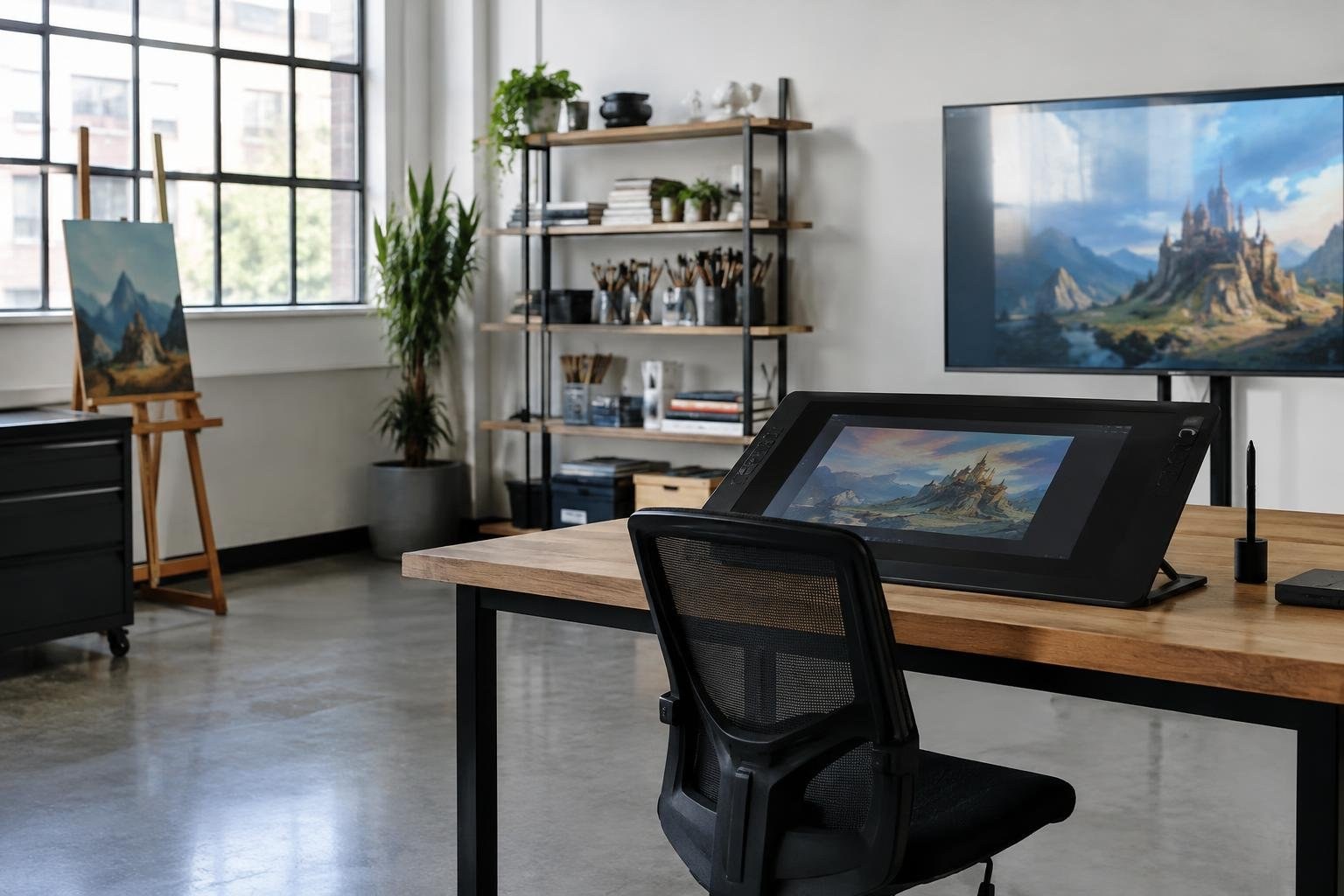
A student creating and revising a digital illustration at a workstation
What Is a Digital Arts Degree?
Digital Arts is a broad area of study focused on creating and communicating through digital images and media. The federal Classification of Instructional Programs (CIP) identifies Digital Arts as code 50.0102. Its scope can span graphic design, animation, motion graphics, 3D visualization, game and interactive media, video, photography, and sound or web-based work. The label does not promise that every program teaches all of these areas.
Colleges use related names such as digital art, digital media, digital imaging, or digital arts and sciences. A school may offer a certificate, associate degree, bachelor's degree, or graduate-level program, but credential availability depends on the institution. Check the college catalog and department page rather than assuming a title means the same thing everywhere. The NCES CIP listing for Digital Arts is useful for understanding the classification, not for confirming a specific college's offerings.
Digital Arts is not identical to graphic design or fine arts. Graphic design often focuses on visual communication for a purpose or audience. Fine arts programs may emphasize artistic practice and concepts across media. Digital Arts can overlap with both while adding a broader digital production focus. Review projects and required courses to see which direction a program actually takes.
What Do You Study in Digital Arts?
Digital Arts students learn how to turn an idea into a finished digital work. A program may begin with visual fundamentals and digital image-making, then move into specific media such as animation, interactive art, video, digital painting, or 3D work. Some programs combine hands-on production with study of artistic concepts and the choices that shape an image or experience.
For example, Bowling Green State University describes study areas that include digital arts, 3D animation, digital imaging, interactive art, video art, gaming, mobile web apps, and digital painting. Louisiana State University describes digital art concentrations within Studio Art programs as combining creative insight, theoretical grounding, and practical expertise. These examples show why the words “Digital Arts” alone are not enough to judge a curriculum.
Projects are central to this kind of learning. Students may develop individual pieces, respond to a creative brief, revise work after critique, and assemble selected projects into a portfolio. The format and requirements differ by school; ask whether courses include studio access, group production, capstone work, internships, or other applied experience.
Before choosing a program, find out what students actually make. Request links to recent student work and compare it with the kind of work you hope to do. Look for opportunities to practice both creative decision-making and the production tools relevant to your target area.
Skills You Can Develop
Digital Arts develops a mix of creative, technical, and professional abilities. The balance varies by program and concentration, but students may practice:
Visual communication: making deliberate choices about images, composition, style, and how work communicates an idea.
Digital production: using computer-based tools to create, edit, and prepare visual or media projects.
Creative problem-solving: testing approaches and adapting a concept to a brief, audience, or medium.
Critique and revision: evaluating work, receiving feedback, and making purposeful changes.
Presentation and collaboration: explaining creative decisions and contributing to projects with other people.
Portfolio development: selecting and presenting work that shows abilities relevant to a specific role.
These skills can connect to graphic design, animation, photography, video production, interactive media, and other creative work. The tools alone are not the whole skill set: employers and clients also need to understand what a student can make, how they approach a brief, and whether they can deliver and explain finished work.
Who Is Digital Arts Best For?
Digital Arts may suit students who enjoy making visual work, exploring digital tools, and improving a project through experimentation. It can also appeal to people who like combining concept development with hands-on production. There is no one personality type required: artists may be highly structured or exploratory, work independently or collaboratively, and focus on technical precision or expressive ideas.
Consider how you feel about open-ended assignments, critique, deadlines, and revising a piece that you have already spent time on. A student who enjoys the result but dislikes repeated production work may prefer a different way to study art. Likewise, someone drawn to computers but primarily interested in coding or systems should compare Digital Arts with programs centered on computing or interactive technology.
Does Digital Arts Match You?
Salary, reputation, and projected job growth matter, but they do not tell you whether you will enjoy the work or persist through the training. Think about the activities you want to do most days: making images, refining animation, collaborating on media, or developing interactive projects. Assessment.com's MAPP career assessment can be one input as you explore career and degree options. Use a result to prompt further research, not as a substitute for reviewing classes, creating sample work, or talking with students and faculty.
Admissions, Program Length, Difficulty, and Format
Admissions requirements are set by each institution and credential. Ask whether applicants need a high school diploma or equivalent, transcripts, a portfolio, prior coursework, or any other materials. Confirm current rules directly with the admissions office and academic department.
Completion time also depends on the credential, full- or part-time enrollment, transfer credit, and how often required courses are offered. Digital Arts appears across a range of credential levels in program classifications, but that does not mean every college offers each level. A concrete example is Penn State's Digital Arts certificate, described as 15 credits. That is one program's credit total, not a universal standard.
Online, hybrid, and in-person formats are possible. Penn State describes a certificate blending classroom and online learning, while Penn State World Campus lists an online undergraduate certificate. Confirm whether a particular program requires campus attendance, special equipment, in-person critiques, or other activities. Students should also plan for the time needed to complete creative projects, not just scheduled class hours.
Common challenges include learning new tools, balancing technical practice with creative work, meeting project deadlines, and responding constructively to feedback. Before enrolling, try a small project in a medium that interests you, organize time for regular practice, and ask the department what incoming students are expected to know.
Digital Arts Tuition, Costs, and Financial Aid
There is no reliable single tuition figure for Digital Arts: price depends on the college, credential, residency, enrollment pattern, campus or online fees, and the equipment or materials a student needs. A certificate's credit count does not reveal its total price. Ask each school for an estimated full-program cost, including tuition, required fees, software or equipment, supplies, and any travel or housing costs that apply.
Compare the amount you are likely to pay after grants and scholarships, not only the published tuition rate. Ask the financial aid office about federal and state aid eligibility, institutional scholarships, payment plans, work-study where available, and whether an employer offers education assistance. Transfer credit or beginning with a lower-cost institution may reduce costs for some students, but confirm in writing which credits will apply to the program you want.
For a fair comparison, calculate the expected cost for the credential you plan to complete and check the refund, withdrawal, and transfer-credit policies. If equipment is needed, ask whether students can use campus facilities or must provide their own. Avoid assuming that “online” automatically means less expensive; fees and required technology vary.
Digital Arts Careers, Jobs, and Employment Outlook
Digital Arts can lead toward several creative fields, but there is no standard salary or employment outlook attached to the degree itself. Pay and hiring conditions are tied to the occupation, location, experience, and the work a candidate can show. Use current occupational data for each job you are considering, and distinguish entry-level possibilities from advanced roles.
Career direction
Typical preparation to investigate
Pay and outlook
How Digital Arts may help
Graphic designer
Relevant study and a design-focused portfolio; employer expectations vary.
Check current occupational data and local postings.
Digital image-making and visual communication can support design work.
Animator or special effects artist
Media-specific coursework, technical practice, and a relevant portfolio.
Varies by role, employer, and location.
Animation and digital production may provide a useful foundation.
Photographer
Photography practice, editing ability, and samples suited to the work.
Depends on specialization, client base, and employment setting.
Digital imaging and visual skills may apply to image production.
Video or motion-graphics work
Relevant production projects and experience with the required medium.
Compare occupation-specific data and job requirements.
Programs may include video, motion graphics, or related media.
Interactive or game media work
Projects that demonstrate the specific artistic or technical contribution.
Varies across jobs and employers.
Interactive art, gaming, or web-focused study may be relevant.
Art director
Creative experience and evidence of leading or shaping visual work.
Often a longer-term direction; verify current role requirements.
Digital Arts can contribute creative foundations, but does not guarantee advancement.
Postsecondary art teacher
Graduate education may be expected; requirements vary by institution.
Review current requirements for the institution and position.
Digital art study can support subject knowledge; further study may be needed.
Graduates may look at employers and clients in design, media, arts, entertainment, education, or organizations that produce digital content. A realistic path could be a digital arts program followed by a junior production or design role, then focused experience and a specialty. Moving into art direction or teaching may require additional experience or education. These are possible sequences, not guaranteed outcomes.
Digital tools and automation are changing how creative work is produced. Rather than betting on one tool, students can focus on transferable abilities: visual judgment, understanding a brief, selecting suitable methods, revising work, and explaining their choices. Keep learning as workflows change and evaluate the rules and expectations of the employers or clients you hope to serve.
Find out which Career or College Major is right for you!
Portfolio, Experience, Certifications, and Licensure
For many digital creative roles, a portfolio is a practical way to show what you can do. Build pieces related to the work you want, and document your contribution when a project involves collaborators. A few carefully selected projects can make your focus clearer than a large collection without context.
Seek internships, campus projects, student organizations, or volunteer work that lets you produce relevant work.
Ask instructors and peers for specific critique, then show how you revised a project.
Practice presenting a project: explain its purpose, your decisions, and the tools or methods involved.
Follow employers and practitioners in your area of interest to learn what work they request.
Keep learning the tools used in your target field, while emphasizing judgment and creative problem-solving.
A degree is not the same as a professional license or a job-specific credential. Requirements depend on the role, employer, and state or institution where applicable. The available program information does not identify a universal Digital Arts license or certification. Check actual job postings and relevant public or professional requirements before paying for a credential. For teaching, LSU notes graduate-level Studio Art pathways, and GCU identifies a master's or doctoral degree for postsecondary art teaching; verify requirements for the specific position.
Graduate School and Advanced Study
Possible next steps after an undergraduate Digital Arts program include graduate study in studio art, digital art, digital media, or a related interdisciplinary area. Students may pursue advanced study to deepen artistic practice, develop a specialty, prepare for research or teaching, or explore a broader combination of art and technology. Louisiana State University, for example, describes digital art concentrations in Studio Art at the BFA and MFA levels and also lists a master's program in Digital Media Arts & Engineering.
Graduate school is not automatically necessary for every design, production, photography, or media job. Decide based on the role you want, its stated requirements, the work you hope to create, and the cost and time involved. Ask graduate programs about prerequisites, portfolio expectations, faculty areas, funding, and the kinds of work students complete.
Related Degrees and Alternatives
Compare Digital Arts with neighboring fields by looking at the work you want to make, not just the title of a major.
Graphic design: consider this if your main interest is visual communication and designing for audiences, organizations, or products.
Studio art or fine arts: consider this if you want an art-centered education that may include digital work alongside other studio practices.
Animation: consider this if character, movement, or animated storytelling is your primary focus.
Film or video production: consider this if you are most interested in producing, shooting, or editing moving images.
Photography: consider this if image-making and photographic practice are your strongest interests.
Game or interactive media design: consider this if you want to make interactive experiences and want to compare art-focused curricula with more technical ones.
Web or digital media: consider this if you want your education to focus more on web-based content or the technical production of digital experiences.
Art education: consider this if teaching art is your goal; investigate the education and licensing requirements where you plan to work.
These categories can overlap, and schools may combine them in one department or concentration. Compare required courses, student portfolios, faculty expertise, internship access, and graduate-school implications. Look closely at the amount of hands-on production versus theory, and the type of work students are expected to complete.
How to Choose a Digital Arts Program
Program names alone do not establish quality, career outcomes, or accreditation. Check whether the institution and program hold the accreditation relevant to your goals, and confirm the status through the appropriate official accreditor or institutional source. Ask the school how credits transfer and whether the credential meets requirements for any career you are considering.
Compare these practical details:
Required courses and available concentrations, including the balance of art concepts and technical production.
Access to software, equipment, studio space, and technical support.
How often students receive critiques and whether projects can become portfolio pieces.
Internships, client projects, industry connections, and career services.
Total program cost after aid, fees, materials, and technology needs.
Online, hybrid, and campus expectations, including any required in-person activity.
Transfer-credit rules, completion patterns, and how required courses are scheduled.
Published outcomes and how the school defines and measures them.
Ask for concrete examples: a current course plan, recent student work, the full cost estimate, and a written answer about transfer credits. Assessment.com's college-major guidance can help structure the decision, while the college guidance resource can help students and parents consider fit and next steps.
Questions to Ask Before Enrolling
Before paying a deposit or accepting an offer, ask the college and yourself:
What credential will I earn, and which required courses define it?
What is my estimated total cost after aid, including supplies and technology?
Which projects will I complete, and can I review recent student portfolios?
Are admissions materials such as a portfolio required?
Can I complete the program online, and are there campus or equipment requirements?
How will transfer credits apply to this specific degree plan?
What internships, critiques, career services, and employer connections are available?
What job requirements or further education apply to the careers I have in mind?
What financial aid and scholarships can I realistically receive?
Does the program fit the kind of creative work I want to practice regularly?
Write down answers from each program so you can compare them on the same terms. If you are undecided between several creative fields, compare sample assignments and student work across programs before choosing.
Frequently asked questions
Is a Digital Arts degree hard?
Digital Arts programs can be challenging because they combine creative decisions, technical learning, project deadlines, and frequent revision. Students may need to learn unfamiliar software while developing visual ideas and explaining their choices. The difficulty depends on the program focus and a student's prior experience. A willingness to practice, seek feedback, and revise work matters more than arriving with advanced technical skills.
What jobs can you get with a Digital Arts degree?
Students may pursue work in areas such as graphic design, animation, video, photography, interactive media, and digital imaging. The specific jobs available depend on the student's concentration, portfolio, experience, and local opportunities. Some related roles, such as postsecondary teaching, generally require education beyond a bachelor's degree. A program is preparation, not a job placement guarantee.
How much can you make with a Digital Arts degree?
There is no single salary for a Digital Arts degree because graduates work in different occupations and industries. Pay can depend on the specific role, location, employer, experience, and the strength of a candidate's portfolio. Compare current occupational pay data for the jobs you are considering rather than relying on one average for the degree name.
Is a Digital Arts degree worth it?
Digital Arts can be worth the investment for students whose goals match the program's creative and technical focus, especially when they choose a curriculum that produces relevant portfolio work at a manageable cost. Compare tuition and fees with the program's actual courses, access to equipment, project opportunities, and career services. The value is personal, not automatic.
Can you earn a Digital Arts degree online?
Yes, some digital arts certificates and programs are offered online or in hybrid formats. For example, Penn State describes a 15-credit Digital Arts certificate that blends classroom and online learning, and Penn State World Campus lists an online undergraduate certificate. Availability, required campus attendance, and course schedules differ, so confirm details with the institution.
Does a Digital Arts major require math?
Digital Arts usually centers on digital creative tools and visual or media production rather than a single required math sequence. Individual programs may include technical or quantitative work, especially in areas such as 3D visualization or interactive media. Review the degree plan and ask the department about prerequisites for the concentration you want.
Do you need graduate school after a Digital Arts bachelor's degree?
Not for every digital arts career. Many creative roles focus on demonstrated skills, a portfolio, and relevant experience, while particular positions may set additional education requirements. Postsecondary teaching is one example where graduate education may be expected; check the requirements for the specific job and institution before deciding on further study.
What certifications help Digital Arts graduates?
There is no single certification that applies to every Digital Arts career. Employers and clients may value evidence of tool proficiency, specialized training, or project experience, but the most relevant credential depends on the job and software or medium. Ask program faculty and review job postings in your target field before paying for an additional credential.
How is Digital Arts different from graphic design?
Graphic design programs generally emphasize visual communication and design for specific audiences and uses. Digital Arts is often broader, potentially covering digital imaging, animation, interactive work, video, photography, and other media. Program names are not consistent across colleges, so compare required courses, student work, and portfolio outcomes rather than choosing by title alone.
People Also Ask
What is the CIP code for Digital Arts?
The CIP classification for Digital Arts is 50.0102. CIP is a way to classify programs of study; individual colleges may use different program names and award different credentials.
What do you learn in a Digital Arts program?
Digital Arts programs can include digital imaging, animation, interactive art, video, gaming, digital painting, and related media. The exact mix depends on the college and the chosen concentration.
What degree levels are available in Digital Arts?
A Digital Arts credential may be offered at different levels, but the availability of each level varies by institution. Check the individual college's catalog to confirm its current degree or certificate options.
How long does it take to complete a Digital Arts program?
Program length depends on credential level, course load, transfer credit, and course availability. A Penn State example is a 15-credit certificate, but that number should not be treated as the length of every certificate or degree.
Do Digital Arts students need a portfolio?
A portfolio gives employers or clients a direct way to review a student's creative work. Build projects that match the role you want, explain your contribution, and show that you can revise work in response to a brief or critique.
How do I choose a Digital Arts college program?
Compare the program's actual courses, specializations, student work, access to tools, total cost, and online or in-person requirements. Ask how students get feedback and complete projects that can become portfolio pieces.
Digital Arts may be a strong choice if you want to combine visual creativity with digital tools and are willing to build a portfolio through repeated projects and feedback. It can lead toward varied creative work, but a degree alone does not guarantee a particular job, salary, or career path. Compare the actual curriculum, total cost, opportunities to create work, and the occupations you want to pursue. Before choosing a degree, consider how well its day-to-day work fits your interests and motivations. Explore career and degree options with the MAPP career assessment.
Want to see your options? Try our comprehensive Degree, Program & College Search tool
We use cookies to offer you a better browsing experience, analyze site traffic and personalize content.
Read about how we use cookies and how you can control them in our
Privacy Policy.
If you continue to use this site, you consent to our use of cookies.
×
Exciting News!
Be one of the first to Beta Test the new AI-Powered Assessment.com Platform.